Seaweed causes shutdown of nuclear reactor
Torness nuclear reactor shut down over seaweed concern http://www.bbc.com/news/uk-scotland-edinburgh-east-fife-38070241 A reactor at the Torness Nuclear Power Station in East Lothian has been shut down because of seaweed.
Reactor one was shut down just before 09:00 when the seaweed began to threaten a cooling water inlet at the power plant near Dunbar.
DF Energy said there was never any risk to safety at the facility but added the shut down was “unusual.”
The reactor is not expected to resume production on Tuesday.
Stark choices face communities in drought afflicted Africa
 Battle of the Desert (I): To Fight or to Flee? http://www.ipsnews.net/2016/11/battle-of-the-desert-i-to-fight-or-to-flee/
“After the rains failed for a few years, some neighbours claimed our trees were drawing too much water from the ground. We cut them down. Our harvests fell. My mother closed her stall at the local market. That is when my father and I moved from the midlands to the Ruvu Mferejini river valley.”
Maria, whose dramatic story has been told by the United Nations organization leading in combating desertification, goes on to say: “My brother quit school to help the family. He went to find work but he does not earn enough. My mother stayed in Bangalala so that my daughter could go to school because there are no schools in the valley.”
“But where we moved to, my crop also failed last year. That is why early this year I moved yet again, but I left my father behind. I hope to farm here much longer, as I am sure the people I left behind with my father will have to move too. But when will this moving end? I cannot afford it anymore.”
This is not an isolated case–Maria is in the same situation that women in Darfur, Mali, Chad or Afghanistan were in before local conflicts over water or land turned into civil wars, sexual violence or genocide, reports the United Nations Convention to Combat Desertification (UNCCD).
“Nor is this situation unique to sub-Saharan Africa where half a billion inhabitants are rural, a majority lives off the land and desertification is a constant threat to their livelihoods,” it alerts in its report Desertification, the Invisible Frontline.
According to the Bonn-based UNCCD, more than 1.5 billion people in the world depend on degrading land, and 74 per cent of them, like Maria, are poor.
Desertification is a silent, invisible crisis that is destabilising communities on a global scale, says this international legal framework for tackling desertification, land degradation and drought, 169 of its 194 Parties have declared they are affected by desertification.
The consequences are dire. “As the effects of climate change undermine livelihoods, inter-ethnic clashes are breaking out within and across states and fragile states are turning to militarisation to control the situation.”
The effects of desertification are increasingly felt globally as victims turn into refugees, internally displaced people and forced migrants or they turn to radicalisation, extremism or resource-driven wars for survival, UNCCD continues.
“If we are to restore peace, security and international stability in a context where changing weather events are threatening the livelihoods of more and more people, survival options are declining and state capacities are overburdened, then more should be done to combat desertification, reverse land degradation and mitigate the effects of drought.’
Otherwise, many small-scale farmers and poor, land-dependent communities face two choices: fight or flight.
UP to 30% of World’s Land Affected by Desertification
For its part, the United Nations Environment Programme (UNEP) estimates that desertification currently affects approximately twenty-five to thirty per cent of the world’s land surface area. About 1,2 billion people in at least 100 states are at risk.
Over 42 billion dollars in lost productivity or human support occurs each year on account of it. According to UNEP, the global rate of desertification is increasing, although the local rates vary by region.
“Africa, with around sixty-six per cent of its land either desert or drylands, is particularly affected by desertification. Already, a number of large-scale famines have occurred in the Sahelian region, resulting in migration of people towards more hospitable lands.”
Desertification occurs mainly through over-cropping, over-grazing, improper irrigation practices, and deforestation. These activities arise from poor land management, which, in turn, stems from the socio-economic conditions in which the farmers live.
Monique Barbut, UNCCD Executive Secretary, gives specific figures.
“Globally, only 7.8 billion hectares of land are suitable for food production. About 2 billion hectares are already degraded, and of these 500 million hectares have been totally abandoned. These lands could be restored to fertility for future use.”
With 99.7 per cent of our food calories coming from the land –Barbut underlines– land degradation is a threat to our food security. But its effects are especially harsh for the poorest people who rely directly on the land for survival – food, employment and water. When their lands cannot produce any more, they have little choice but to migrate or fight over what little is left.
“Unless we change our approach, when drought comes and the rains fail, the future of the 400 million African farmers who rely on rain fed subsistence agriculture, for example, is put in jeopardy,” Barbut wroteon IPS.
Rain-fed agriculture accounts for more than 95 per cent of farmed land in sub-Saharan Africa. And water scarcity alone could cost some regions 6 per cent of their Gross Domestic Product, she added.
“Unless we change our approach, people are going to be increasingly forced to decide whether to ride out a drought disaster and then rebuild. Or simply leave.”
According to Barbut, “It is a form of madness that we force our people to make these difficult choices.”
Food Insecurity Triggering Riots
In 2008, food insecurity triggered riots in over 30 countries, ccording to the UNCCD. But it is rural communities like those of Bangalala, who depend on rainfed agriculture that contribute to global food security.
The livelihoods of over 2 billion people worldwide depend on 500 million small-scale farmers. Drylands, which make up nearly 34 per cent of the land mass and are a major source of food security especially for the poor, are being degraded day-by-day, it adds.
“Desertification does not always lead to conflict. But it is an amplifier of displacement, forced migration, radicalisation, extremism and violence.”
The US National Security Strategy refers to climate change as a key global challenge that will lead to conflicts over refugees and resources, suffering from drought and famine, catastrophic natural disasters, and the degradation of land across the globe, it reminds.
Therefore, “investing in practical solutions that transform lives and reduce the vulnerability of communities like Maria’s would be cheaper and work better than investing in walls, wars and relief.”
Economic and Social Research Institute tots up the cost of a nuclear disaster in Europe – €160bn
European nuclear disaster would cost €160bn, Peter O’Dwyer November 22 2016, http://www.thetimes.co.uk/edition/ireland/european-nuclear-disaster-would-cost-160bn-trb3bcrp9
A nuclear disaster in northwest Europe could cost Ireland as much as €161 billion. A report compiled by the Economic and Social Research Institute found that agricultural production would grind to a halt, with the tourism industry and exports also incurring substantial damage.
The estimated cost of a disaster like that in Chernobyl in 1986 or Fukushima in Japan five years ago could be almost twice the €85 billion bailout Ireland received in 2010.
The UK has 15 active reactors and there are a further 58 in France and eight in Germany, according to the World Nuclear Association. EDF, the French nuclear company, is building an £18 billion (€21.2 billion) plant at Hinkley Point in Somerset, about 150 miles from Rosslare, Co Wexford, on the east coast.
Even under the most benign scenario considered by the ESRI, where no contamination occurs, the total loss is estimated at €4 billion. By comparison, the total value of corporation tax collected in the first nine months of the year was €4.16 billion.
The report focused on the potential impact of a nuclear disaster on tourism, agriculture and food, including both the initial shock and the long-run reputational damage.
The report’s authors said that their analysis was likely to omit several additional losses and could underestimate the true extent of the potential cost to the Irish economy. Concerns over the health risks associated with high levels of contamination could, for example, put a significant strain on the health service.
The total cost of a low-level contamination scenario, which requires the imposition of food controls to reassure the public, and which would cause restrictions on food imports from Ireland, would be about €18 billion.
The third scenario considered would require food controls be put in place for months and steps taken to protect agricultural production. Irish exports would be severely impacted, as in the previous scenario, while Irish consumers would also shun Irish food produce in a further setback for the sector.
The impact on tourism would also be significant, with long-term reputational damage resulting in an economic cost of €80 billion.
The most severe economic shock would arise where the contamination warrants the imposition of food controls for years. Under this scenario, the impact could persist for 60 years, though the most substantial economic impacts would arise in the first 30 years.
It is assumed that Irish agricultural production would cease entirely for three years, costing about €5 billion, and that EU member states would begin importing Irish produce after this period. Trade with international partners would take another 12 years to restart.
Culling and disposing of contaminated livestock could cost more than €5 billion.
Not only would exports be decimated but the need to import much of the country’s food would lead to far higher domestic costs. There could also be significant emigration.
Under this worst-case scenario, the estimated economic loss was €161 billion.
A spokesman for the Department of Communications, Climate Action and Environment was not available for comment.
Trump keeping ‘open mind’ on climate
 US President-elect Donald Trump thinks there is some connection between climate change and human activity and “clean air is vitally important,” a New York Times reporter has tweeted.
Trump, who met Times reporters and editors in New York, “says he is keeping ‘an open mind'” on the issue, the Times’ reporter wrote on Twitter on Tuesday.
Trump has previously called man-made global warming a hoax.
“I think there is some connectivity” between humans and climate change, Trump said in the Times interview.
UK government’s huge legal fees for Hinkley nuclear project
Slaughters earns £12m for advice to government on Hinkley Point nuclear power plant http://www.legalweek.com/sites/legalweek/2016/11/22/slaughters-rakes-in-12m-for-advice-to-government-on-hinkley-point-c-nuclear-power-plant/?slreturn=20161022154621 James Booth Slaughter and May has received £12m in legal fees from the government in relation to its advice on the Hinkley Point C nuclear power plant project.
The magic circle firm has been advising the Department of Energy and Climate Change in connection with the £18bn plans to build Hinkley Point C, which will be the UK’s first new nuclear power station for 20 years.
The fees were revealed in a freedom of information (FoI) request by The Times, which showed that Slaughters received nearly three times more in fees than the next best paid adviser, big four accountant KPMG, which received £4.4m. Financial adviser Lazards has been paid £2.6m, with management consultancy Leigh Fisher securing £1.2m according to the FoI.
Slaughters’ team on the long-running matter is being led by financing partner Paul Stacey, banking partner Robert Byk, corporate partner Robert Chaplin and competition special adviser Jackie Holland.
The controversial development has secured roles for numerous firms, including Herbert Smith Freehills (HSF), which advised French energy company EDF on its planning application; Pinsent Masons, which advised the local authorities on the planning application; Eversheds, which advised China National Nuclear Corporation (CNNC) on its investment in the project; and Ashurst, which acted for China General Nuclear Power Corporation on the deal.
HSF fielded a team of more than 30 lawyers on the project, led by planning partner Matthew White. Other HSF partners to have been involved in the project include UK real estate head Julian Pollock, energy partner Julia Pyke and disputes partner Nusrat Zar.
Clifford Chance (CC) is also acting for EDF on matters such as the £6bn investment in the project by CNNC and on helping secure European state aid approval from the European Commission.
The CC team is being led by London energy partner John Wilkins and also includes Paris energy partner Richard Tomlinson, London corporate partner Jenine Hulsmann and Paris corporate partner Thierry Schoen.
Pinsents’ team for the local authorities was led by planning partners Richard Ford and Jonathan Riley, Eversheds’ was led by Beijing corporate partner Jay Ze and London energy partner Rob Pitcher, and the lead Ashurst partners were energy lawyer David Wadhamand corporate partner Robert Ogilvy-Watson.
The Somerset-based power plant is expected to be first operational in 2025.
Slaughters declined to comment.
Ameren Illinois opposes Exelon’s Illinois nuclear energy bill
Ameren opposes Exelon’s Illinois nuclear energy bill, Utility Dive, Peter Maloney, Nov. 22, 2016
Dive Brief:
- Ameren Illinois is opposing a bill now before the state’s general assembly that includes provisions aimed at shoring up two financially strapped Exelon nuclear plants, the Herald & Review reports.
- Ameren is concerned about the impact the bill would have in its current form on its 1.2 million customers in central and south Illinois.
- The bill, which faces a short legislative session, could come to a vote early next week.
Dive Insight:
In addition to funding support for the Exelon’s Clinton and Quad City nuclear plants, the bill, SB 2814, includes add-on payments for south Illinois coal plants, potentially including some owned by Ameren, as well as a range of other provisions including funding for utility energy efficiency measures, community solar programs and microgrids, as well as a shift in rate structure to demand charges and the elimination of retail net metering for solar power.
A previous version of the bill would have shifted ratepayers to demand charges based on the peak demand for the month. The latest version of the bill uses average demand over the course of the month.
Two earlier versions of the energy bill have also faced opposition and not been passed by the state’s General Assembly.
Craig Nelson, Ameren’s senior vice president of regulatory affairs and financial services, last week told a legislative committee that Ameren would not be able to shift to the new rate structure until it finishes installing smart meters for all its customers, which is not expected to be completed until late in 2019……http://www.utilitydive.com/news/ameren-opposes-exelons-illinois-nuclear-energy-bill/430887/
Tsunami Evacuation Hindered by Traffic in Iwaki
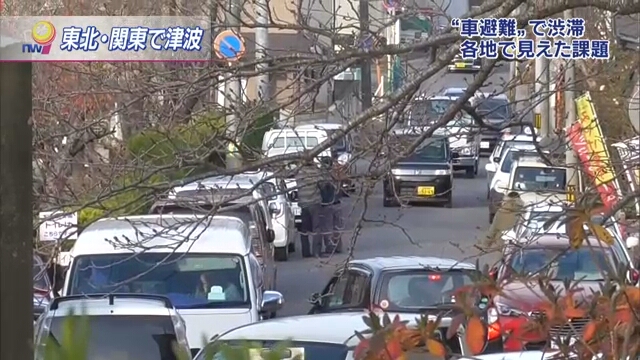
Some residents who attempted to drive to higher ground after tsunami warnings in northeastern Japan early Tuesday found themselves caught in traffic.
An official of Iwaki City, Fukushima Prefecture, says a main road from the coastal district to inland areas was filled with cars apparently trying to evacuate.
The official says he saw many cars carrying entire families and that the traffic congestion was unusual for that time of day. He says the atmosphere was tense, as the residents were apparently reminded of the March 2011 tsunami.
He called on residents not to use their cars if they are able to evacuate on foot, as part of the road is designated as an area that could be submerged in the event of a tsunami.
In Ishinomaki City, Miyagi Prefecture, more than 100 people evacuated to a park on higher ground.
But a narrow road leading to the park soon became jammed.
Some drivers parked their cars on the roadside, hindering others from getting by. Traffic was backed up for a long way as a result.
The city has been asking residents to evacuate on foot in principle.
Ice Wall at Fukushima Plant Examined

A Natural Resources and Energy Agency official explains the state of the ice wall meant to surround the reactor buildings at the Fukushima No. 1 Nuclear Power Plant, on Nov, 21, 2016.
Ice wall at Fukushima plant examined
Government officials have examined an underground ice wall built around Japan’s crippled Fukushima Daiichi nuclear plant to confirm whether the soil has frozen.
Work is ongoing to build a 1.5 kilometer barrier of frozen soil encircling reactor buildings. The goal is to prevent underground water from seeping into the plant premises, resulting in more tainted water.
Coolants are being circulated from pipes buried around the reactor site.
Work to build an ice wall began in March, and is almost completed.
State minister for industry, Yosuke Takagi and others on Monday looked at an exposed section of the ice wall.
They said the ice wall had hardened enough to withstand being hit with a hammer.
Officials say prior to construction of the ice wall, workers collected some 350 tons of underground water on a daily basis. The amount has shrunk to about 200 tons.
Japan’s nuclear regulator is also planning to assess the effectiveness of the ice wall installment.
http://www3.nhk.or.jp/nhkworld/en/news/20161121_22/
Ice wall at Fukushima nuclear plant revealed for first time
FUKUSHIMA — The Economy, Trade and Industry Ministry on Nov. 21 showed the media for the first time the visual inspections conducted on the condition of the subterranean ice wall around the nuclear reactors at the stricken Fukushima No. 1 Nuclear Power Plant to block groundwater from flowing into the plant buildings.
The ice wall project calls for freezing the soil around the No. 1 to No. 4 reactor buildings that stretches some 1.5 kilometers to a depth of about 30 meters to create a solid barrier by hammering in equidistant cooling pipes and circulating coolant chilled to minus 30 degrees Celsius.
The industry ministry on Nov. 21 dug a part of the ice wall to approximately 1.2 meters in depth on the mountain side of the No. 4 reactor building. The soil temperature around the cooling pipes 40 centimeters deep was about minus 10.3 degrees, while an area of 1.5 meters in radius around the cooling pipes was frozen at a depth of 1.2 meters.
While plant operator Tokyo Electric Power Co. claims that the ice wall could reduce the amount of groundwater flowing into the reactor buildings from some 400 metric tons a day to 100 tons or less, the Nuclear Regulation Authority cast doubt on the project during an August meeting, with a member saying that the plan was a failure.
http://mainichi.jp/english/articles/20161122/p2a/00m/0na/014000c
Leaks Unlikely, “presumes” Tepco
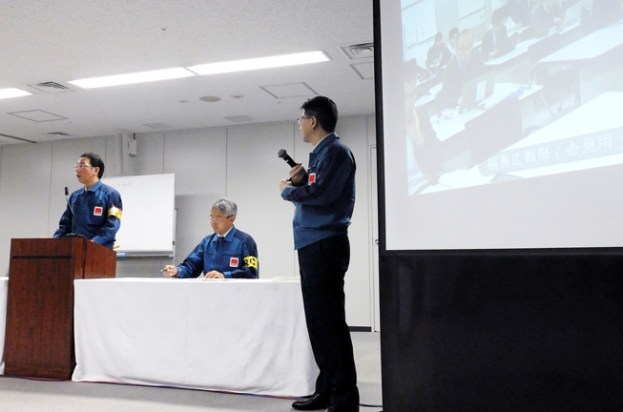
Naohiro Masuda, left, president of Fukushima Daiichi Decontamination & Decommissioning Engineering Co., speaks at the podium in a news conference at the Tokyo Electric Power Co.’s head office on Nov. 22.
Tokyo Electric Power Co. said radioactive water likely did not leak from its stricken Fukushima No. 1 nuclear plant following the morning earthquake that spawned a tsunami on Nov. 22. TEPCO declared that everything was ok at Fukushima Daiichi before even to be able to go inspect the facilities.
TEPCO officials said the company manually shut down equipment that was transferring contaminated water from reactor buildings after the magnitude-7.4 earthquake struck off the coast of Fukushima Prefecture. The measure was taken because water being transferred could have spilled out if a pipe in the system was fractured in the quake, and because they would be unable to check the system for leaks.
Naohiro Masuda, president of Fukushima Daiichi Decontamination & Decommissioning Engineering Co., TEPCO’s in-house organization, explained during a news conference at the utility’s head office in Tokyo why the company halted operations of the water transfer facility: “The biggest risk is a tsunami causing contaminated water that has accumulated (in the reactor buildings) to leak and pollute the environment.”
After the Japan Meteorological Agency issued a tsunami warning at 6:02 a.m., the company ordered workers in lower areas of the plant to evacuate to higher ground. The workers stayed out of the lower areas as the tsunami warning lasted for hours. They have been unable to check for possible leaks around the reactor buildings and the turbine buildings near the sea.
“It is a bit inappropriate that we’ve been unable to do so,” Masuda said. “That’s why we suspended the transfer facility. We think that no water will leak now.”
Groundwater mixing with contaminated water in damaged reactor buildings has been a serious problem at the plant since the nuclear disaster unfolded in 2011.
TEPCO also reported that pumps to cool water in the spent nuclear fuel pool at the No. 3 reactor building of the Fukushima No. 2 nuclear power plant shut down after the quake. The company said this was an automatic mechanism that kicked in after the water level changed in the tank that adjusts water conditions in the pool. “It is a result of the fact that the automatic suspension device worked normally,” Masuda said. The pumps were later restarted.
In the evening of 11/22/2016, Tepco announced the radiation monitoring post in the sea has been suspended due to the quake. The post is situated at the end of the breakwater of Fukushima plant port. They cannot monitor the radioactive substance spreading to the Pacific with this monitoring post out of order.
TEPCO declared “everything is safe” soon after the quake. They may have visually confirmed nothing large and significant happened such as a vent tower collapsing or larger building damage, but they were unable to go in to inspect to actually confirm nothing was damaged, to check for damage in more detail and to check every system now in place at the plant could easily take an entire day.
TEPCO’s prompt claim of no damage after the earthquake at the disaster site, as always was not done after inspections would have confirmed no damage.
465 suspected of working illegally at Fukushima nuke plant in 2015
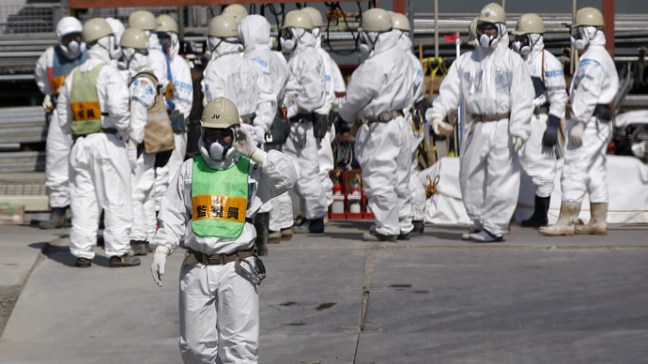
A total of 465 workers at the disaster-stricken Fukushima No. 1 nuclear plant may have been employed under “disguised contracts,” according to the results of a 2015 Tokyo Electric Power Co. (TEPCO) questionnaire.
Under a “disguised contract,” people are given work without official employment or are made to work under the instruction of parties other than those who place the original orders, obscuring the party responsible for their safety. The revelation comes after the Mainichi Shimbun reported that seven foreign nationals worked at the plant in 2014 under suspected illegal contracts. TEPCO had subsequently concluded that it had identified no problems over the issue based on its questionnaires.
The utility recognized that 118 of the 465 workers — whose employers TEPCO says it could identify and whom it checked with by way of the original contractors — were “all in appropriate employment statuses.”
In response to the TEPCO announcement, however, a former Japanese worker at the plant testified to the Mainichi that he “couldn’t write about the truth” in those surveys. Furthermore, at least one subcontractor related to work at the plant has admitted to the existence of disguised contract work.
The Employment Security Act and other regulations ban “disguised contract work” in which workers receive instructions from companies other than those they have employment or business contracts with as it obscures the party responsible for safety management. The seven foreign nationals — mostly Japanese-Brazilians — who worked at the Fukushima No. 1 nuclear plant in 2014 received work instructions from a subcontractor, but they were in fact sole proprietors with business contracts.
TEPCO started handing out surveys in fiscal 2011 to all non-regular workers engaged in the decommissioning of reactors at the plant in a bid to improve their work environment. The utility has released the results of the past surveys on its website.
A questionnaire conducted between August and October last year, whose results were recently released, received responses from 86.4 percent of all workers at the Fukushima No. 1 plant, or 6,527 individuals, most of whom are believed to be Japanese. Among them, 465 workers (14.2 percent) of 3,268 workers (excluding supervisors and managers) answered that “the company that gives me work instructions and the one that pays me are different.” Of them, TEPCO asked the original contractors to conduct a survey on 118 workers and concluded that their employment statuses were appropriate based on their reports.
A former male Japanese worker for a second-tier subcontractor that undertook work to build storage tanks for radiation contaminated water at the plant between 2014 and 2015 revealed to the Mainichi that when he responded to a TEPCO survey, he enclosed his answer sheet in an envelope and handed it over to a first-tier subcontractor without sealing it. The answer sheets submitted by workers were ultimately collected by the original contractor before being submitted to TEPCO.
“Although the surveys were anonymous, they could tell who wrote the answers by the handwriting. I couldn’t write about working under harsh conditions, in which many people collapsed due to heatstroke. The way the surveys are conducted now wouldn’t lead to uncovering the realities at the job sites,” he said.
The president of a construction company in Fukushima Prefecture that undertakes decommissioning work at the Fukushima No. 1 plant told the Mainichi in February that the company was making workers dispatched by another firm work at the plant by disguising them as its own regular employees. “I’m aware it constitutes disguised contract work, which is illegal. But it’s a common practice.”
Meanwhile, TEPCO’s public relations section, when asked whether its questionnaires can uncover the realities of work conditions for those engaged in decommissioning work at the plant, said, “We see no problems with them.”
http://mainichi.jp/english/articles/20161122/p2a/00m/0na/012000c
NRA Says Weak Steel Components Not Used in Japan Nuclear Plants
If you believe the nuclear “regulator”, all the bad nuclear parts were the ones that were sent overseas to France, and the Japanese ones went thru better quality control.
If you don’t believe them, at least 11 reactors have defective reactor pressure vessel lids. That’s the part of the nuclear reactor that blows high in the air when the reactor overheats, explodes, and melts down.

The Nuclear Regulation Authority says potentially weak steel components manufactured by a Japanese company have not been used in domestic nuclear facilities, after its French counterpart ordered reactors that used the company’s parts to be checked.
The NRA determined at a regular meeting Tuesday there is no comparable risk at the domestic nuclear facilities of 11 companies as portions of steel with excessive carbon concentrations had been removed from the components manufactured by Kitakyushu-based Japan Casting & Forging Corp.
The NRA concluded that the removal of portions with higher levels of carbon was insufficient in the components used in the French reactors.
The authority also determined there were no problems with critical parts at domestic facilities that were manufactured by other companies, including Tokyo-based Japan Steel Works Ltd.
The French Nuclear Safety Authority said in June it had found potential weaknesses at a number of nuclear facilities due to steel with higher levels of impurities supplied by Japan Casting & Forging, prompting the NRA to commence its own investigation.
Utilities in Japan checked their facilities and submitted reports to the NRA last month.
According to the reports, Japan Casting & Forging manufactured pressure vessel lids for 11 reactors at seven nuclear power stations, including the No. 2 reactor at Kansai Electric Power Co.’s Takahama power plant in Fukui Prefecture.
The company’s pressure vessel lids were also used at the No. 2 reactor at Kansai Electric’s Mihama plant in Fukui Prefecture and the No. 1 reactor at Kyushu Electric Power Co.’s Genkai plant in Saga Prefecture, both of which are set to be decommissioned.
Fukushima Radiation Measuring on Nov. 22, After the 6.9 Magnitude Earthquake

Following the November 22, 2016 earthquake striking at 5:59am, the Tarachine Mothers’ Radiation Lab in Iwaki city Fukushima kept measuring ambiant radiation every hour for the sake of precaution.
According to TEPCO, cooling to the spent nuclear fuel pool for the No. 3 reactor at the Fukushima Daini nuclear plant resumed at 7:47 am. It had stopped after the earthquakes this morning.
Radiation measurement 6:30 am on November 22nd, Izumigaoka, Iwaki city, Fukushima Prefecture, Japan, indoor 0.05µSv/h measured by PA-1000 Environmental Radiation Monitor Radi.
Radiation measurement 7:00 am on November 22nd, Izumigaoka, Iwaki city, Fukushima Prefecture, Japan, indoor 0.05µSv/h measured by PA-1000 Environmental Radiation Monitor Radi.
Radiation measurement 7:30 am on November 22nd, Izumigaoka, Iwaki city, Fukushima Prefecture, Japan, indoor 0.05µSv/h measured by PA-1000 Environmental Radiation Monitor Radi.
Radiation measurement 8:00 am on November 22nd, Izumigaoka, Iwaki City, Fukushima Prefecture, Japan, indoor 0.05 μSv/h, outdoor 0.08μSv/h measured by PA-1000 Environmental Radiation Monitor Radi.
Radiation measurement 8:30 am on November 22nd, Izumigaoka, Iwaki City, Fukushima Prefecture, Japan, indoor 0.05 μSv/h, outdoor 0.09μSv/h measured by PA-1000 Environmental Radiation Monitor Radi.
Radiation measurement 9:00 am on November 22nd, Izumigaoka, Iwaki City, Fukushima Prefecture, Japan, indoor 0.05 μSv/h, outdoor 0.09μSv/h measured by PA-1000 Environmental Radiation Monitor Radi.
Radiation measurement 10:00 am on November 22nd, Hanabatake-cho,Onahama, Iwaki City, Fukushima Prefecture, Japan, indoor 0.06 μSv/h, outdoor 0.08μSv/h measured by ALOKA γSURVEY METER TCS-172
Radiation measurement 11:00am on November 22nd, Hanabatake-cho,Onahama, Iwaki City, Fukushima Prefecture, Japan, indoor 0.06 μSv/h, outdoor 0.08μSv/h measured by ALOKA γSURVEY METER TCS-172
Radiation measurement 12:00am on November 22nd, Hanabatake-cho,Onahama, Iwaki City, Fukushima Prefecture, Japan, indoor 0.06 μSv/h, outdoor 0.08μSv/h measured by ALOKA γSURVEY METER TCS-172
Radiation measurement 15:00am on November 22nd, Hanabatake-cho,Onahama, Iwaki City, Fukushima Prefecture, Japan, indoor 0.06 μSv/h, outdoor 0.07μSv/h measured by ALOKA γSURVEY METER TCS-172
Radiation measurement 23:15pm on November 22nd, Izumigaoka, Iwaki City, Fukushima Prefecture, Japan, indoor 0.05 μSv/h measured by PA-1000 Environmental Radiation Monitor Radi.
Source : Tarachine, Mothers’ Radiation Lab, Iwaki city, Fukushima Prefecture
Fuel removal unlikely by March 2018
566 fuel assemblies, 514 spent fuel assemblies and 52 unused ones, Tepco has always said so. But since the fuel pool was cleaned up, Tepco only released partial photos of the fuel pool, never any photo of the whole fuel pool. So as of now it is just impossible to verify Tepco’s claim by counting the assemblies. Since the fuel pool also exploded some fuel assemblies must be missing. How many are gone how many remain is still a non answered question, especially as Tepco is not well known for being straightforward.
Will Tepco dare to start decommissioning the reactor 3 fuel pool before the 2020 Tokyo Olympics? I doubt so. In my opinion, Tepco will keep postponing it for after the Olympics, to avoid difficulties and critics

Fuel removal unlikely by March 2018
A government official has suggested that fuel removal from a reactor at the crippled Fukushima Daiichi nuclear plant will not start by March 2018, as planned.
566 nuclear fuel units remain in the No. 3 reactor’s fuel pool. To reach their target period, plant operator Tokyo Electric Power Company must begin placing a cover over the damaged reactor building by this April.
It’s now expected the cover installation will not start until January next year or later. It was determined that stronger measures are needed to protect workers from radiation exposure.
An official with the industry ministry overseeing reactor decommissioning inspected the plant on Monday. He said starting fuel removal within the next fiscal year is difficult.
Tokyo Electric says the cover installation has been slow, but the company will continue decommissioning work with safety as their highest priority.
November 22 Energy News

Opinion:
¶ “Everything I Learned About Renewable Energy Contracts By Talking To Developers” – Utilities put together their portfolio of renewable energy contracts so that they will be able to deliver the capacity needed for each time of day, combining wind and solar with baseload renewables: geothermal, hydro, and landfill gas. [CleanTechnica]
 Renewable energy (Image Credit: Chauncey Davis)
¶ “With Trump, China Emerges As Global Leader on Climate” How has China, the country that had been seen as the bad boy of climate policy, transformed itself into a potential global climate leader? And why do China’s leaders see their efforts on climate change as the key to the next phase of China’s growth? [Yale Environment 360]
Science and Technology:
¶ In recent years researchers have shown a correlation between oil and gas fracking and seismic activity, but not a direct causal link. Now, a study published…
View original post 767 more words
Japan Offshore Earthquake Upgraded to M 7.4, Strong Ground Acceleration at Fukushima Nuclear Site; Felt as a IX Fukushima Area; Loss of Cooling, Loss of Power at Fukushima Nuclear Site (Reported as Restored)

According to the Japan Meteorological Agency, the recent earthquake in Japan (05:59 JST, 22 Nov. 2016, Fukushima-Ken Oki) has been upgraded to a Magnitude of 7.4, with a depth of about 30 km. The location was Latitude 37.4N Longitude 141.6E. The earlier report was 7.3 Magnitude at 37.3 N and 141.6 E, with a 10 km depth.
http://www.jma.go.jp/en/tsunami/info_03_20161122080929.html
The US government (USGS) initially reported a 7.3 Magnitude earthquake, located at 37.272 N and 141.644 E, 61 km ESE of Namie, Japan at 20.59.46 UTC (2016-11-21) or 05.59.46 JST (2016-11-22).
Very quickly they changed both the location and the magnitude of their report to a 6.9 Magnitude earthquake, 37 km ESE of Namie at 20.59.49 UTC (5.59.49 JST), 37.392°N 141.403°E, with a depth of 11.3 km. With a location, time and depth change one can but wonder if this is a different interpretation of the same earthquake or is…
View original post 680 more words
1 This Month

of the week – Shut Down Drone Warfare!


Tell the Ukrainian Government to Drop Prosecution of Peace Activist Yurii Sheliazhenko

Petition to revoke the licensing of the Near Surface Nuclear Disposal Facility (NSDF) at Chalk River. https://www.ourcommons.ca/petitions/en/Petition/Details?Petition=e-7247
To see nuclear-related stories in greater depth and intensity – go to https://nuclearinformation.wordpress.com
-
Archives
- April 2026 (114)
- March 2026 (251)
- February 2026 (268)
- January 2026 (308)
- December 2025 (358)
- November 2025 (359)
- October 2025 (376)
- September 2025 (257)
- August 2025 (319)
- July 2025 (230)
- June 2025 (348)
- May 2025 (261)
-
Categories
- 1
- 1 NUCLEAR ISSUES
- business and costs
- climate change
- culture and arts
- ENERGY
- environment
- health
- history
- indigenous issues
- Legal
- marketing of nuclear
- media
- opposition to nuclear
- PERSONAL STORIES
- politics
- politics international
- Religion and ethics
- safety
- secrets,lies and civil liberties
- spinbuster
- technology
- Uranium
- wastes
- weapons and war
- Women
- 2 WORLD
- ACTION
- AFRICA
- Atrocities
- AUSTRALIA
- Christina's notes
- Christina's themes
- culture and arts
- Events
- Fuk 2022
- Fuk 2023
- Fukushima 2017
- Fukushima 2018
- fukushima 2019
- Fukushima 2020
- Fukushima 2021
- general
- global warming
- Humour (God we need it)
- Nuclear
- RARE EARTHS
- Reference
- resources – print
- Resources -audiovicual
- Weekly Newsletter
- World
- World Nuclear
- YouTube
-
RSS
Entries RSS
Comments RSS
 nuclear-news