Economic and Social Research Institute tots up the cost of a nuclear disaster in Europe – €160bn
European nuclear disaster would cost €160bn, Peter O’Dwyer November 22 2016, http://www.thetimes.co.uk/edition/ireland/european-nuclear-disaster-would-cost-160bn-trb3bcrp9
A nuclear disaster in northwest Europe could cost Ireland as much as €161 billion. A report compiled by the Economic and Social Research Institute found that agricultural production would grind to a halt, with the tourism industry and exports also incurring substantial damage.
The estimated cost of a disaster like that in Chernobyl in 1986 or Fukushima in Japan five years ago could be almost twice the €85 billion bailout Ireland received in 2010.
The UK has 15 active reactors and there are a further 58 in France and eight in Germany, according to the World Nuclear Association. EDF, the French nuclear company, is building an £18 billion (€21.2 billion) plant at Hinkley Point in Somerset, about 150 miles from Rosslare, Co Wexford, on the east coast.
Even under the most benign scenario considered by the ESRI, where no contamination occurs, the total loss is estimated at €4 billion. By comparison, the total value of corporation tax collected in the first nine months of the year was €4.16 billion.
The report focused on the potential impact of a nuclear disaster on tourism, agriculture and food, including both the initial shock and the long-run reputational damage.
The report’s authors said that their analysis was likely to omit several additional losses and could underestimate the true extent of the potential cost to the Irish economy. Concerns over the health risks associated with high levels of contamination could, for example, put a significant strain on the health service.
The total cost of a low-level contamination scenario, which requires the imposition of food controls to reassure the public, and which would cause restrictions on food imports from Ireland, would be about €18 billion.
The third scenario considered would require food controls be put in place for months and steps taken to protect agricultural production. Irish exports would be severely impacted, as in the previous scenario, while Irish consumers would also shun Irish food produce in a further setback for the sector.
The impact on tourism would also be significant, with long-term reputational damage resulting in an economic cost of €80 billion.
The most severe economic shock would arise where the contamination warrants the imposition of food controls for years. Under this scenario, the impact could persist for 60 years, though the most substantial economic impacts would arise in the first 30 years.
It is assumed that Irish agricultural production would cease entirely for three years, costing about €5 billion, and that EU member states would begin importing Irish produce after this period. Trade with international partners would take another 12 years to restart.
Culling and disposing of contaminated livestock could cost more than €5 billion.
Not only would exports be decimated but the need to import much of the country’s food would lead to far higher domestic costs. There could also be significant emigration.
Under this worst-case scenario, the estimated economic loss was €161 billion.
A spokesman for the Department of Communications, Climate Action and Environment was not available for comment.
Trump keeping ‘open mind’ on climate
 US President-elect Donald Trump thinks there is some connection between climate change and human activity and “clean air is vitally important,” a New York Times reporter has tweeted.
Trump, who met Times reporters and editors in New York, “says he is keeping ‘an open mind'” on the issue, the Times’ reporter wrote on Twitter on Tuesday.
Trump has previously called man-made global warming a hoax.
“I think there is some connectivity” between humans and climate change, Trump said in the Times interview.
UK government’s huge legal fees for Hinkley nuclear project
Slaughters earns £12m for advice to government on Hinkley Point nuclear power plant http://www.legalweek.com/sites/legalweek/2016/11/22/slaughters-rakes-in-12m-for-advice-to-government-on-hinkley-point-c-nuclear-power-plant/?slreturn=20161022154621 James Booth Slaughter and May has received £12m in legal fees from the government in relation to its advice on the Hinkley Point C nuclear power plant project.
The magic circle firm has been advising the Department of Energy and Climate Change in connection with the £18bn plans to build Hinkley Point C, which will be the UK’s first new nuclear power station for 20 years.
The fees were revealed in a freedom of information (FoI) request by The Times, which showed that Slaughters received nearly three times more in fees than the next best paid adviser, big four accountant KPMG, which received £4.4m. Financial adviser Lazards has been paid £2.6m, with management consultancy Leigh Fisher securing £1.2m according to the FoI.
Slaughters’ team on the long-running matter is being led by financing partner Paul Stacey, banking partner Robert Byk, corporate partner Robert Chaplin and competition special adviser Jackie Holland.
The controversial development has secured roles for numerous firms, including Herbert Smith Freehills (HSF), which advised French energy company EDF on its planning application; Pinsent Masons, which advised the local authorities on the planning application; Eversheds, which advised China National Nuclear Corporation (CNNC) on its investment in the project; and Ashurst, which acted for China General Nuclear Power Corporation on the deal.
HSF fielded a team of more than 30 lawyers on the project, led by planning partner Matthew White. Other HSF partners to have been involved in the project include UK real estate head Julian Pollock, energy partner Julia Pyke and disputes partner Nusrat Zar.
Clifford Chance (CC) is also acting for EDF on matters such as the £6bn investment in the project by CNNC and on helping secure European state aid approval from the European Commission.
The CC team is being led by London energy partner John Wilkins and also includes Paris energy partner Richard Tomlinson, London corporate partner Jenine Hulsmann and Paris corporate partner Thierry Schoen.
Pinsents’ team for the local authorities was led by planning partners Richard Ford and Jonathan Riley, Eversheds’ was led by Beijing corporate partner Jay Ze and London energy partner Rob Pitcher, and the lead Ashurst partners were energy lawyer David Wadhamand corporate partner Robert Ogilvy-Watson.
The Somerset-based power plant is expected to be first operational in 2025.
Slaughters declined to comment.
Ameren Illinois opposes Exelon’s Illinois nuclear energy bill
Ameren opposes Exelon’s Illinois nuclear energy bill, Utility Dive, Peter Maloney, Nov. 22, 2016
Dive Brief:
- Ameren Illinois is opposing a bill now before the state’s general assembly that includes provisions aimed at shoring up two financially strapped Exelon nuclear plants, the Herald & Review reports.
- Ameren is concerned about the impact the bill would have in its current form on its 1.2 million customers in central and south Illinois.
- The bill, which faces a short legislative session, could come to a vote early next week.
Dive Insight:
In addition to funding support for the Exelon’s Clinton and Quad City nuclear plants, the bill, SB 2814, includes add-on payments for south Illinois coal plants, potentially including some owned by Ameren, as well as a range of other provisions including funding for utility energy efficiency measures, community solar programs and microgrids, as well as a shift in rate structure to demand charges and the elimination of retail net metering for solar power.
A previous version of the bill would have shifted ratepayers to demand charges based on the peak demand for the month. The latest version of the bill uses average demand over the course of the month.
Two earlier versions of the energy bill have also faced opposition and not been passed by the state’s General Assembly.
Craig Nelson, Ameren’s senior vice president of regulatory affairs and financial services, last week told a legislative committee that Ameren would not be able to shift to the new rate structure until it finishes installing smart meters for all its customers, which is not expected to be completed until late in 2019……http://www.utilitydive.com/news/ameren-opposes-exelons-illinois-nuclear-energy-bill/430887/
Tsunami Evacuation Hindered by Traffic in Iwaki
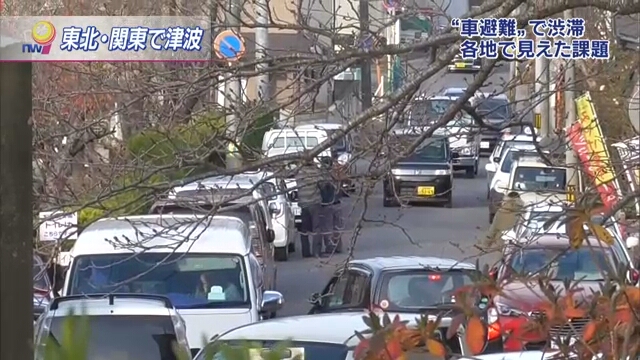
Some residents who attempted to drive to higher ground after tsunami warnings in northeastern Japan early Tuesday found themselves caught in traffic.
An official of Iwaki City, Fukushima Prefecture, says a main road from the coastal district to inland areas was filled with cars apparently trying to evacuate.
The official says he saw many cars carrying entire families and that the traffic congestion was unusual for that time of day. He says the atmosphere was tense, as the residents were apparently reminded of the March 2011 tsunami.
He called on residents not to use their cars if they are able to evacuate on foot, as part of the road is designated as an area that could be submerged in the event of a tsunami.
In Ishinomaki City, Miyagi Prefecture, more than 100 people evacuated to a park on higher ground.
But a narrow road leading to the park soon became jammed.
Some drivers parked their cars on the roadside, hindering others from getting by. Traffic was backed up for a long way as a result.
The city has been asking residents to evacuate on foot in principle.
Ice Wall at Fukushima Plant Examined

A Natural Resources and Energy Agency official explains the state of the ice wall meant to surround the reactor buildings at the Fukushima No. 1 Nuclear Power Plant, on Nov, 21, 2016.
Ice wall at Fukushima plant examined
Government officials have examined an underground ice wall built around Japan’s crippled Fukushima Daiichi nuclear plant to confirm whether the soil has frozen.
Work is ongoing to build a 1.5 kilometer barrier of frozen soil encircling reactor buildings. The goal is to prevent underground water from seeping into the plant premises, resulting in more tainted water.
Coolants are being circulated from pipes buried around the reactor site.
Work to build an ice wall began in March, and is almost completed.
State minister for industry, Yosuke Takagi and others on Monday looked at an exposed section of the ice wall.
They said the ice wall had hardened enough to withstand being hit with a hammer.
Officials say prior to construction of the ice wall, workers collected some 350 tons of underground water on a daily basis. The amount has shrunk to about 200 tons.
Japan’s nuclear regulator is also planning to assess the effectiveness of the ice wall installment.
http://www3.nhk.or.jp/nhkworld/en/news/20161121_22/
Ice wall at Fukushima nuclear plant revealed for first time
FUKUSHIMA — The Economy, Trade and Industry Ministry on Nov. 21 showed the media for the first time the visual inspections conducted on the condition of the subterranean ice wall around the nuclear reactors at the stricken Fukushima No. 1 Nuclear Power Plant to block groundwater from flowing into the plant buildings.
The ice wall project calls for freezing the soil around the No. 1 to No. 4 reactor buildings that stretches some 1.5 kilometers to a depth of about 30 meters to create a solid barrier by hammering in equidistant cooling pipes and circulating coolant chilled to minus 30 degrees Celsius.
The industry ministry on Nov. 21 dug a part of the ice wall to approximately 1.2 meters in depth on the mountain side of the No. 4 reactor building. The soil temperature around the cooling pipes 40 centimeters deep was about minus 10.3 degrees, while an area of 1.5 meters in radius around the cooling pipes was frozen at a depth of 1.2 meters.
While plant operator Tokyo Electric Power Co. claims that the ice wall could reduce the amount of groundwater flowing into the reactor buildings from some 400 metric tons a day to 100 tons or less, the Nuclear Regulation Authority cast doubt on the project during an August meeting, with a member saying that the plan was a failure.
http://mainichi.jp/english/articles/20161122/p2a/00m/0na/014000c
1 This Month

Petition to revoke the licensing of the Near Surface Nuclear Disposal Facility (NSDF) at Chalk River. https://www.ourcommons.ca/petitions/en/Petition/Details?Petition=e-7247

18 March Webinar @ 1 PM EST: An Assessment of SMR Projects: The Case of Canada
register for the zoom:
https://us02web.zoom.us/webinar/register/WN_o8BIIOUvQ2ONJR1nta65DQ#/registration


of the week – STOP SMALL MODULAR REACTORS IN CANADA
To see nuclear-related stories in greater depth and intensity – go to https://nuclearinformation.wordpress.com
-
Archives
- March 2026 (146)
- February 2026 (268)
- January 2026 (308)
- December 2025 (358)
- November 2025 (359)
- October 2025 (376)
- September 2025 (258)
- August 2025 (319)
- July 2025 (230)
- June 2025 (348)
- May 2025 (261)
- April 2025 (305)
-
Categories
- 1
- 1 NUCLEAR ISSUES
- business and costs
- climate change
- culture and arts
- ENERGY
- environment
- health
- history
- indigenous issues
- Legal
- marketing of nuclear
- media
- opposition to nuclear
- PERSONAL STORIES
- politics
- politics international
- Religion and ethics
- safety
- secrets,lies and civil liberties
- spinbuster
- technology
- Uranium
- wastes
- weapons and war
- Women
- 2 WORLD
- ACTION
- AFRICA
- Atrocities
- AUSTRALIA
- Christina's notes
- Christina's themes
- culture and arts
- Events
- Fuk 2022
- Fuk 2023
- Fukushima 2017
- Fukushima 2018
- fukushima 2019
- Fukushima 2020
- Fukushima 2021
- general
- global warming
- Humour (God we need it)
- Nuclear
- RARE EARTHS
- Reference
- resources – print
- Resources -audiovicual
- Weekly Newsletter
- World
- World Nuclear
- YouTube
-
RSS
Entries RSS
Comments RSS
 nuclear-news