
 New type of #ExxonKnew lawsuit could open floodgates for more cases, Mashable, Andrew Freedman, 2 Oct 16, Exxon’s climate change-related legal problems are growing by the day.
The suit, filed by the Conservation Law Foundation (CLF), is significant because it is the first to allege that a private company is violating the Clean Water Act and hazardous waste laws by failing to adequately prepare for climate change impacts such as sea level rise and stormwater runoff from increased instances of heavy rainfall events.
This case could also open the floodgates for more litigation against Exxon and the many other oil and gas companies that operate low-lying coastal facilities.
According to the suit — filed with the U.S. District Court for the District of Massachusetts — the Exxon facility in Everett, Massachusetts, just to the northwest of Boston, has a stormwater drainage system that is easily overrun during extreme precipitation events, which are becoming more frequent due to climate change.
The suit contends that climate change-fed heavy rainfall is flooding the facility, which emits harmful contaminants into a tributary of the Mystic River in violation of the facility’s permit.
The reporting revealed that instead of incorporating the risks into its planning and being transparent about them, the company chose to fund climate denial groups and withhold its research from shareholders.
The reporting has sparked a public campaign against Exxon, known together with the reporting by the hashtag #ExxonKnew………
The lawsuit could pave the way for many more similar legal actions, and not just against Exxon, but other oil and gas companies too.
“If the suit succeeds it will be an important precedent,” said Michael Gerrard, director of the Saban Center for Climate Change Law at Columbia University, in an email.
“America’s coastlines are dotted with oil and chemical tanks and other facilities that are at risk from rising seas.” http://mashable.com/2016/09/29/exxon-knew-lawsuit-massachusetts/#rjmvgqrODuq7
October 3, 2016
Posted by Christina Macpherson |
Legal, USA |
Leave a comment
 Is Toxic Trade in Your Backyard? https://www.sierraclub.org/trade/mapping-isds [excellent interactive map]
Looming Trade Deals Threaten Efforts to Keep Fossil Fuels in the Ground
If passed by Congress, two pending U.S. trade deals – the Trans-Pacific Partnership (TPP) and the Transatlantic Trade and Investment Partnership (TTIP) – would give some of the world’s largest fossil fuel corporations broad new rights to challenge our climate protections in private tribunals. For the first time, these corporations could ask unaccountable panels of corporate lawyers to order U.S. government compensation if such protections interfered with their widespread fossil fuel projects.
This interactive map shows more than 400 of these polluting projects across 48 states, each of which would get extraordinary protections under the TPP or TTIP. This includes:
- More than 300 polluting facilities, including over 70 coal mines, 30 oil refineries, and more than 100 gas power plants;
- Tens of thousands of miles of fossil fuel pipelines and oil trains;
- More than 10.8 million acres of oil and gas drilling leases; and
- Fracking operations from California to Pennsylvania.
Click on a fossil fuel project for more information on the corporations that could use these trade deals to try to prevent, or gain compensation for, U.S. efforts to keep fossil fuels in the ground. Using satellite view, zoom in to see pictures of the polluting projects in your backyard. For a full explanation of this new climate threat, click here for Sierra Club’s “Climate Roadblocks” report.
October 3, 2016
Posted by Christina Macpherson |
climate change, USA |
Leave a comment
http://www.cleanairalliance.org/lrp/ Angela Bischoff, Outreach Director September 29, 2016
Citing a surplus of power, the Wynne government pulled the plug Tuesday on its Large Renewable Procurement (LRP) process for acquiring wind and solar power at highly competitive prices.
But what the Minister of Energy didn’t mention was that the reason we have a glut of power is the government’s insistence on keeping high-cost nuclear plants running despite plenty of better options.
The Pickering Nuclear plant is an excellent case in point. Our new factsheet shows that Pickering’s power is just not needed. Almost half of the power the station produces is exported, often at a loss. The rest can easily be replaced with lower cost water power from Quebec, energy efficiency improvements, Ontario green power or some combination of all three. This is true even if one or more of the aging Darlington reactors are shut down for re-building.
Pickering’s power it is also more costly than these other options. Just last week, Ontario Power Generation was at the Ontario Energy Board seeking a 180% increase in the price it is paid for nuclear power. Water power from Quebec and energy efficiency savings are both substantially cheaper than power from Pickering today. Meanwhile, power from renewable sources just gets cheaper and cheaper, with wind power already more economical than power from Pickering (based on the last LRP round’s prices) and solar likely to be competitive in the near future.
What our factsheet makes clear is that there is no excuse for continuing to run a 45-year-old nuclear plant surrounded by two million people beyond its design lifetime. And now OPG is applying for a licence to run the station for another decade. This is not only reckless – it is economically backward because it is only going to lead to electricity bills going up and up, not down.
Please click here to sign our petition to close the Pickering Nuclear Station in 2018 when its licence expires.
October 3, 2016
Posted by Christina Macpherson |
ACTION |
Leave a comment
Steve Dale Nuclear Fuel Cycle Watch South Australia, 1 Oct 16 In Geraldine Thomas’s recent talk she showed dosimeter data from students in Japan, but she didn’t make it clear that the students were kept out of the “Restricted zone” (funny about that). But if you read the paper, it mentions that a teacher went into the zone for 2 hours (to Okuma) and had readings of 5 microSieverts per hour. Thought I would show how the graph would look with this data included. (Note: Okuma is not the “hottest” area, some areas in the restricted zone are over 20 microSieverts per hour) [relevant graph can be seen on original on Facebook] Facebook https://www.facebook.com/groups/1021186047913052/
Measurement and comparison of individual external doses of high-school students living in Japan, France, Poland and Belarus—the ‘D-shuttle’ project— N Adachi1, V Adamovitch2, Y Adjovi3, K Aida4, H Akamatsu5, S Akiyama6, A Akli7, A Ando8, T Andrault9,H Antonietti3 Show full author list 27 November 2015 Journal of Radiological Protection, Volume 36, Number 1
Twelve high schools in Japan (of which six are in Fukushima Prefecture), four in France, eight in Poland and two in Belarus cooperated in the measurement and comparison of individual external doses in 2014. In total 216 high-school students and teachers participated in the study. Each participant wore an electronic personal dosimeter ‘D-shuttle’ for two weeks, and kept a journal of his/her whereabouts and activities. The distributions of annual external doses estimated for each region overlap with each other, demonstrating that the personal external individual doses in locations where residence is currently allowed in Fukushima Prefecture and in Belarus are well within the range of estimated annual doses due to the terrestrial background radiation level of other regions/countries………..
A large value of 5 μSv h−1 was recorded for one participant from Fukushima high school (figure10 top) [on orioginal]. This was when this person (teacher) visited Okuma town in the restricted zone, close to the Fukushima Dai-ichi Nuclear Power Plant (figure 1) for research purposes. For two hours, 15:00 and 16:00, high hourly doses were recorded, and this coincided with the activity journal entry of this person……..http://iopscience.iop.org/article/10.1088/0952-4746/36/1/49
October 3, 2016
Posted by Christina Macpherson |
AUSTRALIA, spinbuster |
Leave a comment
Cherie Shore, LA Times, 25 July 16 Southern California Edison caused the radiation leak at the San Onofre Nuclear Generating Station by misusing the reactor, resulting in the power plant’s shutdown in 2013, according to a former Edison engineer. (“San Onofre reactor leaked radiation after being misused, report says,” July 20)
Or, according to Edison, the leak was the result of faulty generators, which Edison commissioned and accepted from Mitsubishi Heavy Industries.
Either way, the cost of shutting down San Onofre should be borne by Edison and its shareholders, not the ratepayers. Edison either used bad judgment in selecting Mitsubishi or operated the reactor outside allowable limits. Regardless, Edison customers shouldn’t be stuck with any part of the bill. http://www.latimes.com/opinion/readersreact/la-ol-le-edison-nuclear-plant-shutdown-20160725-snap-story.html
October 3, 2016
Posted by Christina Macpherson |
general |
Leave a comment
By Lulu Chang — October 1, 2016 It’s not that often that we hear about major breakthroughs in nuclear research, and now such announcements, at least in the U.S., may become more infrequent. That’s because our nation’s “flagship experimental fusion reactor” is no longer working. This problem is made all the more frustrating by the fact that scientists just completed a four-year, $94 million upgrade on the machine. Researchers at the Princeton Plasma Physics Laboratory (PPPL) in New Jersey are now trying to determine what exactly was behind the reactor’s failure, which could turn out to be a lengthy engagement……..http://www.digitaltrends.com/cool-tech/nuclear-fusion-reactor-malfunction/k
October 3, 2016
Posted by Christina Macpherson |
general |
Leave a comment

Abstract
Ingestion of contaminated soil is one potential internal exposure pathway in areas contaminated by the Fukushima Daiichi Nuclear Power Plant accident.
Doses from this pathway can be overestimated if the availability of radioactive nuclides in soils for the gastrointestinal tract is not considered.
The concept of bioaccessibility has been adopted to evaluate this availability based on in vitro tests.
This study evaluated the bioaccessibility of radioactive cesium from soils via the physiologically-based extraction test (PBET) and the extractability of those via an extraction test with 1 mol/L of hydrochloric acid (HCl).
The bioaccessibility obtained in the PBET was 5.3% ± 1%, and the extractability in the tests with HCl was 16% ± 3%. The bioaccessibility was strongly correlated with the extractability. This result indicates the possibility that the extractability in HCl can be used as a good predictor of the bioaccessibility with PBET.
In addition, we assessed the doses to children from the ingestion of soil via hand-to-mouth activity based on our PBET results using a probabilistic approach considering the spatial distribution of radioactive cesium in Date City in Fukushima Prefecture and the interindividual differences in the surveyed amounts of soil ingestion in Japan.
The results of this assessment indicate that even if children were to routinely ingest a large amount of soil with relatively high contamination, the radiation doses from this pathway are negligible compared with doses from external exposure owing to deposited radionuclides in Fukushima Prefecture.
http://onlinelibrary.wiley.com/doi/10.1111/risa.12694/full
October 2, 2016
Posted by dunrenard |
Fukushima 2016 | children, Fukushima continuing, Radiation Doses, Soil Ingestion |
Leave a comment
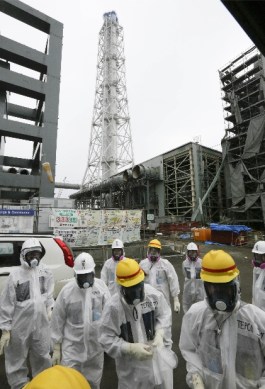
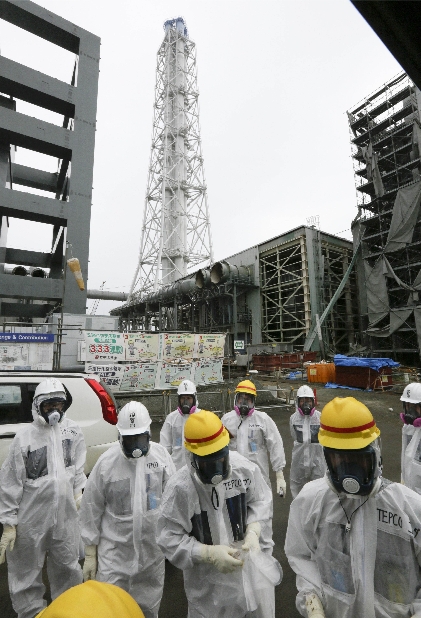
The government might stay involved in the management of Tokyo Electric longer than planned, given the ballooning costs of scrapping the Fukushima No. 1 nuclear power plant, sources close to the matter said.
The delay in reactivating the Kashiwazaki-Kariwa nuclear plant in Niigata Prefecture, the main pillar of the utility’s reconstruction plan, is another factor prompting the government rethink, the sources said Saturday. It had planned to end state control next April.
The government is leading the business operations of struggling Tokyo Electric Power Co. Holdings, which is facing huge compensation payments and other problems from the 2011 Fukushima nuclear disaster, because it has acquired 50.1 percent of the firm’s voting rights via the state-backed Nuclear Damage Compensation and Decommissioning Facilitation Corp.
Some bureaucrats at the Ministry of Economy, Trade and Industry have been dispatched to Tepco.
Tepco said in a business plan in 2014 that it would turn itself from a “temporarily publicly managed” company to a self-managed one starting next April.
The industry ministry will hold the first panel meeting Wednesday to discuss additional government support for the utility.
Tepco faces swelling costs for decommissioning the Fukushima No. 1 plant and compensating those affected beyond the previously estimated ¥11 trillion ($108 billion). Two reactors at the Kashiwazaki-Kariwa plant are under prolonged safety examinations by nuclear regulators.
The prospect of restarting the giant plant is also being complicated by impending changes in the leadership of the Niigata Prefectural Government, which hosts it.
To restart the plant, approval from the Niigata governor is needed.
Hirohiko Izumida, the current governor, was cautious about restarting the reactors because of Tepco’s failure to fully examine the cause of the Fukushima disaster. He withdrew his bid for re-election at the end of August.
Of the four candidates running for the Oct. 16 election, former Nagaoka Mayor Tamio Mori, 67, backed by the Liberal Democratic Party-Komeito ruling coalition, and Ryuichi Yoneyama, a 49-year-old doctor, are leading the race. Yoneyama has said he will follow Izumida’s stance and is opposed to any discussion of restarts unless the Fukushima disaster is thoroughly explained.
Tepco’s new business plan, including the revised schedule for ending state control, is expected to be compiled next January.
http://www.japantimes.co.jp/news/2016/10/02/business/japanese-government-considers-longer-support-tepco/#.V_GLUyTKO-d
October 2, 2016
Posted by dunrenard |
Fukushima 2016 | Fukushima Daiichi, Japan Government, Tepco |
Leave a comment
In the event of a serious nuclear accident, the government is considering capping the liability of electric power companies and placing the burden beyond that on the public in the form of taxes or higher electricity rates.
The Cabinet Office plans to submit the plan to an experts’ panel along with the current program, which does not contain such caps, sources said.
The experts’ panel will start to discuss both from Oct. 3 and issue the results of its discussions within this fiscal year, which ends in March 2017. After that, the science ministry will consider revising the related laws, they added.
In the accident at the Fukushima No. 1 nuclear power plant in March 2011, the compensation paid by the operator, Tokyo Electric Power Co., has reached 6 trillion yen (about $60 billion).
The amount is much higher than the 120 billion yen in total that can be currently covered by a private insurance program and governmental expenditures.
Because of that liability, electric power companies are asking the government to place a cap on the compensation they must pay at the time of serious nuclear accidents.
According to the sources, the setting of an upper limit would require utilities to shoulder a considerably higher amount of compensation.
In the event that the actual compensation exceeds that amount, the utility would also have to pay the portion beyond the limit if the nuclear accident is completely attributable to their actions.
If the nuclear accident is mainly caused by natural disasters, however, the portion beyond the upper limit would be chiefly covered by governmental compensation and only a part of that portion would fall on the utilities, depending on the extent of their culpability.
The government’s compensation would be eventually shouldered by taxpayers.
The push to set a cap is apparently being led by the belief of electric power companies that now is a good time to ask the public to share part of the burden with the prevailing mood in the current administration to restart nuclear reactors.
However, some experts say that if an upper limit is adopted, electric power companies will become less concerned about safety.
“There is a possibility that those companies will place less importance on investing in safety measures,” said Tadashi Otsuka, professor of law at Waseda University, an expert on environmental laws and compensation systems.
http://www.asahi.com/ajw/articles/AJ201610020022.html
October 2, 2016
Posted by dunrenard |
Japan | Liability Caps, nuclear, Utilities |
Leave a comment

The government is considering staying involved in Tokyo Electric Power Co.’s business management longer than currently planned, given larger-than-expected costs for scrapping the Fukushima Daiichi nuclear power plant, sources close to the matter said Saturday.
A delay in the process for reactivating its Kashiwazaki-Kariwa nuclear power plant in Niigata Prefecture, a main pillar of the utility’s reconstruction plan, is another factor prompting the government to think it would be too soon to end state control next April as initially planned, they said.
The government is leading business operations of the utility facing huge compensation payments and other problems from the 2011 Fukushima nuclear disaster as it has acquired 50.1 percent of the firm’s voting rights through the state-backed Nuclear Damage Compensation and Decommissioning Facilitation Corp.
Some bureaucrats of the Ministry of Economy, Trade and Industry are dispatched to the utility, known as TEPCO.
TEPCO said in a business plan in 2014 it would turn itself from the “temporarily publicly managed” company to a self-managed one starting next April.
The industry ministry will hold the first panel meeting Wednesday to discuss additional government support for the utility.
TEPCO faces swelling costs for decommissioning the Fukushima Daiichi plant and compensating those affected beyond the previously estimated 11 trillion yen ($108 billion). Two reactors at the Kashiwazaki-Kariwa plant are under prolonged safety examinations by nuclear regulators.
TEPCO’s new business plan including the revised schedule for ending state control is expected to be compiled next January.
http://m.4-traders.com/TOKYO-ELECTRIC-POWER-COMP-6491247/news/Tokyo-Electric-Power-Gov-t-planning-to-stay-involved-in-TEPCO-s-management-longer-23147373/
October 2, 2016
Posted by dunrenard |
Fukushima 2016 | Fukushima Daiichi, Japan Government, Tepco |
Leave a comment
Rice was among a number of products from Fukushima being promoted at the festival today, in order to help the recovery of the region. Young women were making their way through the throng holding up huge peaches and apples from Fukushima.
Members of Kick Nuclear London, Japanese Against Nuclear and friends handed out a few hundred copies of the following leaflet to visitors at the festival this afternoon :
Kick Nuclear has created a web page for those who want to find out more: https://kicknuclear.com/fukushima-rice/


October 2, 2016
Posted by dunrenard |
Fukushima 2016 | Contaminated Food, Export, Fukushima continuing, UK |
Leave a comment
“Tokyo believes it would be difficult to gain public support to spend several hundreds of billion yen to upgrade the Monju facility, which has been plagued by accidents, missteps and falsification of documents.”
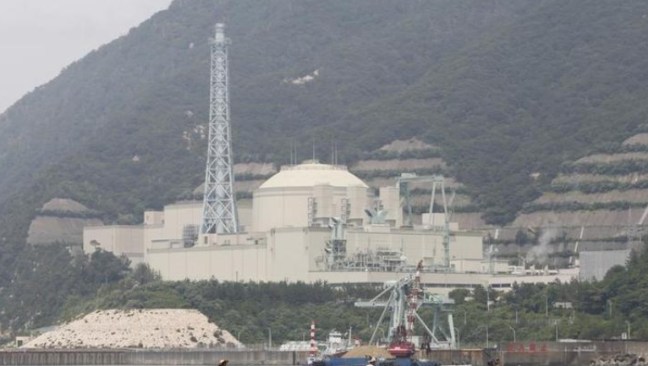
Japan signalled on Wednesday it would scrap a costly prototype nuclear reactor that has operated for less than a year in more than two decades at a cost of 1 trillion yen (£7.6 billion).
Tokyo believes it would be difficult to gain public support to spend several hundreds of billion yen to upgrade the Monju facility, which has been plagued by accidents, missteps and falsification of documents.
There is also a strong anti-nuclear sentiment in Japan in reaction to the 2011 Fukushima atomic disaster and calls to decommission Monju have been growing in the ruling Liberal Democratic Party, with scant results from using around 20 billion yen of pubic money a year for maintenance alone.
Monju was designed to burn plutonium from spent fuel at conventional reactors to create more fuel than it consumes. The process is appealing to a country whose limited resources force it to rely on imports for virtually all its oil and gas needs.
Science Minister Hirokazu Matsuno, Trade Minister Hiroshige Seko and others had decided to shift policy away from developing Monju, a fast-breeder nuclear reactor in the west of the country, the government said.
They had also agreed to keep the nuclear fuel cycle intact and would set up a committee to decide a policy for future fast reactor development by the end of the year.
A formal decision to decommission Monju is likely to be made by the end of the year, government officials said.
The decision would have no impact on Japan’s nuclear recycling policy as Tokyo would continue to co-develop a fast-breeder demonstration reactor that has been proposed in France, while research will continue at another experimental fast-breeder reactor, Joyo, which was a predecessor of Monju.
“The move will not have an impact on nuclear fuel balance or nuclear fuel cycle technology development or Japan’s international cooperation,” Tomoko Murakami, nuclear energy manager at the Institute of Energy Economics, Japan, said.
Before the Fukushima disaster, Japan had planned to build a commercial fast-breeder before 2050, but that may be delayed given the difficulties at Monju, the International Energy Agency said on Wednesday.
http://uk.reuters.com/article/uk-japan-nuclear-idUKKCN11R0LD
October 2, 2016
Posted by dunrenard |
Japan | Monju Reactor, Scrapped |
Leave a comment
 geoharvey
Opinion:
¶ “Climate change deniers, listen up: your end is nigh” • Climate change deniers need to be singing from the same hymn sheet. For it is, of course, more urgent than ever now that science is crowding in, now that the climate is changing before the people’s very eyes, and denials are exposed as ever more ludicrous. [The Sydney Morning Herald]
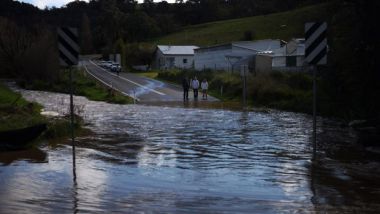 Flooding in New South Wales (Photo: Nick Moir)
World:
¶ Vikram Solar, a solar module manufacturer based in India, has announced plans to expand its manufacturing capacity to 2 GW by 2019. The current manufacturing capacity of the company stands at 500 MW. The company signed a Memorandum of Understanding with the German company Teamtechnik to support its expansion plans. [CleanTechnica]
¶ India plans to have a renewable energy capacity of 175 GW by March 2022. The Central Electricity Authority reports that thermal power…
View original post 551 more words
October 2, 2016
Posted by Christina Macpherson |
Uncategorized |
Leave a comment
 jpratt27
We the undersigned members of the U.S. national security community conclude that the effects of climate change present a strategically-signficant risk to U.S. national security and international security, and that the U.S. must advance a comprehensive policy for addressing this risk.
Our conclusion is due in part, but not limited to, the following determinations:
Climate change increases stress on water, food and energy security both in the U.S. and globally, resulting in unique and hard-to-predict security risks, based on a combination of rapidly changing physical, environmental, economic, social and political conditions;
Stresses resulting from climate change can increase the likelihood of intra or international conflict, state failure, mass migration, and the creation of additional ungoverned spaces, across a range of strategically-signi cant regions, including but not limited to the Middle East and North Africa, Central Asia, the Indo-Asia-Pacific, and the Arctic regions;
•
Climate change is causing significant change in…
View original post 349 more words
October 2, 2016
Posted by Christina Macpherson |
Uncategorized |
Leave a comment
 Mining Awareness +

Nuclear Submarine HMS Vanguard Passes HMS Dragon Returns to HMNB Clyde, Scotland
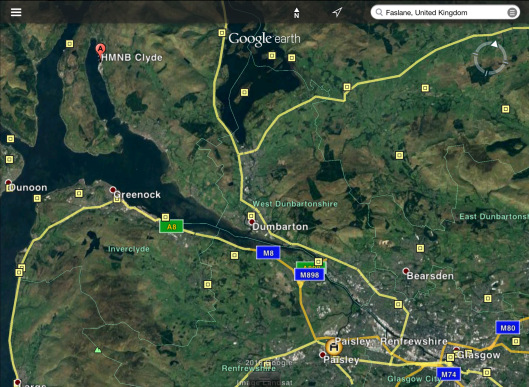
https://en.wikipedia.org/wiki/Paisley,_Renfrewshire
“House of Commons Hansard: UK’s Nuclear Deterrent
18 July 2016 Volume 613
8.26 pm
Mhairi Black (Paisley and Renfrewshire South) (SNP)
Government Members seem to have the idea that we in the Scottish National party are against nuclear weapons for some kind of romanticised reason, but the reality is that we are against nuclear weapons and renewing Trident for logical reasons.
First, we have to remember the fact that, fundamentally, Trident is a weapon.
We have already established that we would not fire first, so the only time that we would ever use this weapon would be if somebody launched a nuclear strike against us.
To be frank, that would mean that we were all dead anyway. If I am dying, I do not care if we send a weapon back; I am more worried about the…
View original post 598 more words
October 2, 2016
Posted by Christina Macpherson |
Uncategorized |
Leave a comment




 nuclear-news