Reconstruct ‘difficult-to-return zones’ in keeping with residents’ wishes
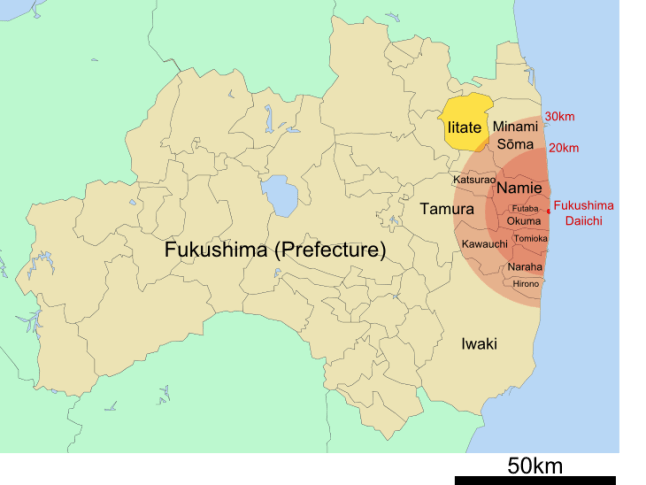
In consideration of the feelings of evacuees who want to return home, it is important to promptly present a specific picture of how towns affected by the nuclear disaster will be reconstructed.
Regarding the “difficult-to-return zones” designated following the disaster at Tokyo Electric Power Company Holdings, Inc.’s Fukushima No. 1 nuclear power plant, the government has announced a policy of designating priority areas and carrying out full-scale decontamination work there starting next fiscal year.
Entry remains strictly restricted for the difficult-to-return zones, where the yearly dose of radiation was higher than 50 millisieverts as of March 2012. This is the first time for the government to announce a policy of allowing evacuees to eventually return home in the zones.
The zones spread over seven municipalities around the Fukushima plant, including the towns of Okuma, Futaba and Namie.
The latest policy is characterized by the government establishing “reconstruction bases” that center around town offices and railway stations, and drawing up development plans exclusively for the base areas. The government will implement the development of infrastructure, including roads, concurrently with the decontamination work. It aims to lift the evacuation orders for residents in the year 2022, making it possible for evacuees to return home.
To decontaminate the entire area within the difficult-to-return zones will require a sizable amount of money. It is an appropriate measure to move ahead with the decontamination work by narrowing down the target area from the viewpoint of pursuing efficiency.
In areas where the radiation dose is relatively low, namely areas where residence is restricted and where preparations are being made for the lifting of evacuation orders, evacuation orders have already been rescinded for five municipalities. Another four municipalities have also taken such measures as allowing residents to return home for long-term stays, with the aim of lifting the evacuation orders next spring.
Limited progress in returns
However, in areas where evacuation orders have already been lifted, there has not been as much progress in residents’ return as was hoped. Even in the town of Naraha, for which evacuation orders were lifted last autumn and which is considered a model case for residents’ return, only about 10 percent of residents have come back.
There has not been sufficient development of bases closely linked to people’s daily life, such as medical institutions and commercial facilities. This can be a primary factor in evacuees’ reluctance to return home. Younger generations also have strong concerns about their jobs and their children’s education following their return.
Even if residents of the difficult-to-return zones were able to return, that would be six years from now. It would be difficult for residents to plan for their daily life.
At the moment, matters such as where the reconstruction bases can be located and the details of development plans have yet to be decided. It is important to show residents early on how their hometowns would be reconstructed, so as to fulfill evacuees’ wishes of returning home.
Many evacuees have given up on returning home and rebuilt their lives within or outside Fukushima Prefecture. According to a survey taken last year by the Reconstruction Agency, only 11 percent of evacuees from Okuma and 13 percent of those from Futaba — the towns straddled by the plant — said they want to return home.
How should towns be reconstructed to induce evacuees to consider returning? Each municipality is urged to carefully take up the wishes of evacuees and reflect them in the development plans.
As Fukushima’s reconstruction progresses, the government needs to continue doing its utmost in assisting the prefecture so as not to have the difficult-to-return zones become “left-behind areas.”
No comments yet.
1 This Month

of the week – Shut Down Drone Warfare!


Tell the Ukrainian Government to Drop Prosecution of Peace Activist Yurii Sheliazhenko

Petition to revoke the licensing of the Near Surface Nuclear Disposal Facility (NSDF) at Chalk River. https://www.ourcommons.ca/petitions/en/Petition/Details?Petition=e-7247
To see nuclear-related stories in greater depth and intensity – go to https://nuclearinformation.wordpress.com
-
Archives
- April 2026 (91)
- March 2026 (251)
- February 2026 (268)
- January 2026 (308)
- December 2025 (358)
- November 2025 (359)
- October 2025 (376)
- September 2025 (257)
- August 2025 (319)
- July 2025 (230)
- June 2025 (348)
- May 2025 (261)
-
Categories
- 1
- 1 NUCLEAR ISSUES
- business and costs
- climate change
- culture and arts
- ENERGY
- environment
- health
- history
- indigenous issues
- Legal
- marketing of nuclear
- media
- opposition to nuclear
- PERSONAL STORIES
- politics
- politics international
- Religion and ethics
- safety
- secrets,lies and civil liberties
- spinbuster
- technology
- Uranium
- wastes
- weapons and war
- Women
- 2 WORLD
- ACTION
- AFRICA
- Atrocities
- AUSTRALIA
- Christina's notes
- Christina's themes
- culture and arts
- Events
- Fuk 2022
- Fuk 2023
- Fukushima 2017
- Fukushima 2018
- fukushima 2019
- Fukushima 2020
- Fukushima 2021
- general
- global warming
- Humour (God we need it)
- Nuclear
- RARE EARTHS
- Reference
- resources – print
- Resources -audiovicual
- Weekly Newsletter
- World
- World Nuclear
- YouTube
-
RSS
Entries RSS
Comments RSS
 nuclear-news
Leave a comment