The Chinese energy group investing in the UK’s proposed nuclear plant at Hinkley point is now facing nuclear espionage charges in the US. The news comes after the UK government decided to delay final approval on the Hinkley Point project until later this year.Indicted by the US Department of Justice, the China General Nuclear Power Group (CGN) is accused of stealing US nuclear secrets in a bid to expedite China’s nuclear development. Szuhsiung Ho, a CGN senior engineer, allegedly tried to recruit US experts and acquire information over a 19 year period without authorisation from the US Department of Energy. Such a charge can carry a life sentence in the US.
The charges only add to a growing sense of uncertainty around the Hinkley Point project. Earlier this month, the UK government announced it will reassess the investment plan and only make a final decision on whether the plant should be built this autumn.
Although the main investor, EDF Energy, has played down fears the project will be scrapped, China has warned the UK it must reach a decision quickly. Writing in the Financial Times, the Chinese ambassador to the UK, Liu Xiaoming, said: ‘Right now, the China–UK relationship is at a crucial historical juncture.’
Ho, who is a US citizen with dual residency in China, is set to appear in court next week.
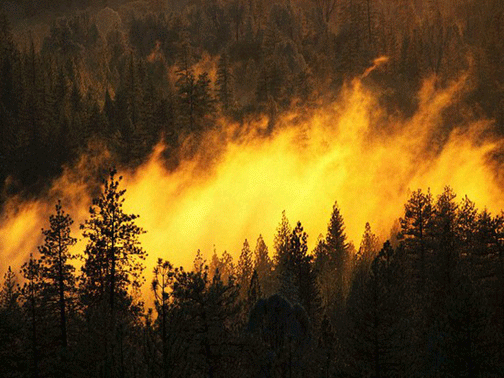
Threat of wildfires expected to increase as global temperatures rise http://www.enn.com/wildlife/article/49892The United Nations Office for Disaster Risk Reduction (UNISDR) has warned that wildfires could become more frequent and more destructive as global temperatures rise and drought conditions plague many regions of the world.
“Last year was the hottest year on record and was above average for the number of reported major droughts and heatwaves. This year we are seeing a similar pattern with new temperature records being set on a monthly basis,” UNISDR chief Robert Glasser said yesterday in a news release issued by the Office.
He noted that a number of risk factors, such as lack of forest management, growth of urban areas in proximity to forests and human induced fires need to be addressed by disaster management authorities.
“The most frightening scenario is when major towns are threatened as we have seen this week in the case of Funchal and Marseille,” the senior UN official added.
Ontario Clean Air Alliance, 12 Aug 16,Residents in the Scarborough Rouge River riding oppose keeping the Pickering Nuclear Station operating beyond 2018 by a wide margin. Informed about Pickering’s high costs and large surrounding population – including all the homes in this riding — close to 70% of voters said the plant should be shut down in 2018 when its current licence expires. (Click here for full polling results.)
Voters in Scarborough-Rouge River will head to the polls on Sept. 1st to elect a new MPP in a provincial by-election. Currently, it is a race between PC candidate Raymond Cho (49%) and Liberal candidate Piragal Thiru (43%). Liberal supporters overwhelmingly support closing the plant, as do a strong majority of PC voters concerned about costs. NDP and Green supporters support closure in even greater numbers.
Living as little as 10 kilometers from Canada’s oldest nuclear plant – which is also the 4th oldest nuclear plant in North America – residents also felt they had been poorly informed about emergency measures in case of an accident at the aging plant. Fifty-nine percent rated safety-related communications poor or very poor.
Riding residents overwhelmingly supported closing Pickering when told that the province has a large surplus of electricity and lower cost options for keeping the lights on. We hope local candidates — and party leaders — will listen to Scarborough voters and promise to direct Ontario Power Generation to drop its plan to apply for a ten-year licence extension for the old and trouble-prone Pickering station.
N.Y. Public Service Commission OKs multi-billion dollar nuclear industry bailout funded by ratepayers statewide, Riverhead Local, by Karl Grossman Aug 12, 2016 Riverhead and Southold Town residents, indeed people throughout Suffolk County and New York State, will be getting higher utility bills because the State Public Service Commission this month approved — despite strong opposition — a $7.6 billion bailout of aging nuclear power plants in upstate New York. Their owners have said are uneconomic to run without government support.
As a result, there will be a surcharge for 12 years on electric bills paid by residential and industrial customers through the state.
Governor Andrew Cuomo — who appoints the members of the PSC — has called for the continued operation of the nuclear plants in order to, he says, save jobs at them.
The bailout would be part of a “Clean Energy Standard” advanced by Mr. Cuomo. Under it, 50 percent of electricity used in New York by 2030 would come from “clean and renewable energy sources” — with nuclear power considered clean and renewable.
A North Fork resident, PSC member Patricia Acampora of Mattituck, joined the other three members of the commission in voting Aug. 1 for the bailout and “Clean Energy Standard.” She is a former New York State assemblywoman representing a district including Riverhead and Southold Towns. She is also ex-chairwoman of the Suffolk County Republican Party.
“Nuclear energy is neither clean nor renewable,” testified Pauline Salotti, vice chair of the Green Party of Suffolk County, at a recent hearing in Riverhead on the plan.
“Without these subsidies, nuclear plants cannot compete with renewable energy and will close. But under the guise of ‘clean energy,’ the nuclear industry is about to get its hands on our money in order to save its own profits, at the expense of public health and safety,” Jessica Azulay, program director of the Syracuse-based Alliance for a Green Economy, declared. Moreover, she emphasized, “Every dollar spent on nuclear subsidies is a dollar out of the pocket of New York’s electricity consumers—residents, businesses and municipalities” that should “instead” go towards backing “energy efficiency, renewable energy and a transition to a clean energy economy.”
The “Clean Energy Standard” earmarks twice as much money for the nuclear power subsidy than it does for renewable energy sources such as solar and wind. Its claim is that nuclear power is comparable because nuclear plants don’t emit carbon or greenhouse gasses—the key nuclear industry argument for nuclear plants nationally and worldwide these days because of climate change. What the industry does not mention, however, is that the “nuclear cycle” or “nuclear chain”—the full nuclear system—is a major contributor to carbon emissions. Numerous statements sent to the New York PSC on the plan pointed to this.
“Nuclear is NOT emission-free!” Manna Jo Greene, environmental director of the Hudson River Sloop Clearwater, wrote the PSC. The claim of nuclear power having ‘zero-emission attributes’ ignores emissions generated in mining, milling, enriching, transporting and storing nuclear fuel.” Further, “New York no longer needs nuclear power in its energy portfolio, now or in the future.
“Nuclear power is not carbon-free,” wrote Michel Lee, head of the Council on Intelligent Energy and Conservation Policy. “If one stage,” reactor operation itself, “produces minimal carbon…every other stage produces prodigious amounts.” Thus the nuclear “industry is a big climate change polluter…Nuclear power is actually a chain of highly energy-intensive industrial processes which—combined—consume large amounts of fossil fuels and generate potent warming gasses. These include: uranium mining, milling enrichment, fuel fabrication, transport” and her list went on. Further, “New York no longer needs nuclear power in its energy portfolio, now or in the future. Ten years ago the transition to a renewable energy economy was still a future possibility. Today it is well underway.”
In opposing the New York nuclear subsidy, Dr. Mark Z. Jacobson, professor of civil and environmental engineering and director of the Atmosphere/Energy Program at Stanford University, wrote in an op-ed in Albany Times Union, the newspaper in the state’s capitol, that he was “shocked” by the PSC’s “proposal that the lion’s share of the Clean Energy Standard funding would be a nuclear bailout.” He said “allowing the upstate nuclear plants to close now and replace them with equal energy output” from offshore wind and solar power “would be cheaper and would create more jobs.” The closure of the upstate plants “would jeopardize fewer than 2,000 jobs” while a “peer-reviewed study” he has done “about converting New York State to 100 percent clean, renewable energy – which is entirely possible now — would create a net of approximately 82,000 good, long-term jobs.”
The upstate nuclear power plants to be bailed out under the plan would be FitzPatrick, Nine Mile Point 1 and 2 and Ginna.
Reported Tim Knauss of the Post-Standard of Syracuse: “Industry watchers say New York would be the first state to establish nuclear subsidies based on environmental attributes, a benefit typically reserved for renewable energy sources such as wind and solar.” The ‘zero emission credits’ would be paid to nuclear plants based on a calculation of the economic value of avoiding greenhouse gas emissions that contribute to climate change.” Cuomo “directed the PSC to create subsidies for upstate reactors,” he wrote.
Reuters has reported that the nuclear “industry hopes that if New York succeeds, it could pressure other states to adopt similar subsidies” for nuclear plants. The headline of the Reuters story: “New York could show the way to rescue U.S. nuclear plants.”
The two Indian Point nuclear power plants 26 miles north of New York City are not now included in the plan but it “leaves the door open to subsidies” for them, Azulay says.
Huge Step for Zero-Carbon Replacement of Diablo Canyon, NRDC August 11, 2016 Ralph CavanaghOperating California’s Diablo Canyon nuclear power plant past its 2025 license expiration would cost more than twice what many had anticipated, and significantly more than replacing it with energy efficiency and renewable resources, according to an analysis submitted today to the California Public Utilities Commission (CPUC) by the plant owner. The filing can be found here. NRDC continues to believe that substituting those zero-carbon resources for Diablo Canyon will save electricity users at least $1 billion.
The operating cost estimate (more than 10 cents per kilowatt-hour) is among the important new details that Pacific Gas & Electric Company (PG&E) filed with the CPUC on the widely supported Joint Proposal to retire and replace Diablo Canyon. NRDC helped negotiate and joined that proposal, announced in late June, and while critics claim that polluting natural gas will fill the gap, today’s filing reaffirms that this is incorrect (as has been clearly stated from the start)……..
Important information in today’s filing
The PG&E analysis concludes with a telling statement : “Finally, as California continues to move closer to a cleaner energy future, a large non-dispatchable unit such as Diablo Canyon no longer ‘fits’ the needed generation profile of the changing energy landscape.”
PG&E reinforces this point with specific references to California’s climate and clean energy leadership, which the utility fully embraces. Important excerpts from the filing include:
“Over the course of the past decade, California has continued to lead in creating a new energy future for the State, a future that is focused on reducing greenhouse gas emissions by providing additional energy supply options . . . Policies to support this vision have accelerated in the past several years, including the passage of Senate Bill (SB) 350, which calls for a doubling of energy efficiency goals and achieving a 50 percent Renewable Portfolio Standard (RPS) by 2030.”
“PG&E has conducted extensive analysis on the cumulative impacts of these policy changes . . . These forecasts show that a substantial portion of [Diablo Canyon’s] energy output is anticipated to not be needed to serve PG&E’s [customers] beyond 2025. In addition, if [Diablo Canyon] were not retired but instead its license renewed, the generation from Diablo Canyon could exacerbate the challenges of integrating increasing amounts of wind and solar into the system . . . PG&E’s analysis projects that it would be more expensive from a consumer perspective to continue to operate Diablo Canyon . . . than to retire Diablo Canyon when the licenses expire in 2024 and 2025 and implement the joint proposal.”
In conclusion: “the most efficient and effective path forward for achieving California’s SB 350 policy goal for deep reductions in GHG (greenhouse gas) emissions would be to retire Diablo Canyon at the expiration of its current operating licenses and replace it with a portfolio of GHG-free resources, as provided in the Joint Proposal.”
These are not quotes from NRDC, remember, although we are in full support: these are the carefully considered findings of one of the nation’s largest natural gas and electric utilities, with more than three decades of experience in nuclear power generation……
PG&E files plan to shut down Diablo Canyon nuclear power plant, http://www.latimes.com/business/la-fi-nuclear-power-pacific-gas-20160811-snap-story.htmlRob Nikolewski , 11 Aug 16A joint proposal calling for the shutdown of California’s lone remaining nuclear power plant was formally submitted by Pacific Gas & Electric to the California Public Utilities Commission on Thursday.
A number of environmental organizations and labor unions joined PG&E in the proposal to close both units at the Diablo Canyon nuclear facility near San Luis Osbispo by 2025. The plan would replace Diablo Canyon’s 2,160 megawatts of electricity generation with a combination of renewable sources, energy storage, better energy efficiency and changes to the power grid.
“Today’s action represents a major milestone,” PG&E President Geisha Williams said in an email to the utility’s employees. The proposal was first announced on June 21.
PG&E plans to pay nearly $50 million to San Luis Obispo County to help offset property taxes that would decline because of the plant closing.
“Retiring nuclear power plants and replacing them with energy efficiency and solar is good for California’s environment and good for our economy,” said Dan Jacobson, legislative director for Environment California, one of the environmental groups involved in crafting the joint proposal.
PG&E officials say they don’t expect long-term customer rates will increase if Diablo Canyon is shut down. They believe re-licensing the plant and operating it through 2044 will be more expensive than adopting the joint proposal. The proposal anticipates declining costs for renewable power, as well as lower demand from customers.
Following the shuttering of the San Onofre Nuclear Generating Station in January 2012, Diablo Canyon is the last nuclear power plant in California. According to the most recent data from the California Energy Commission, nuclear power accounted for 9.2% of the state’s power mix. rob.nikolewski@sduniontribune.com
University of Auckland collaborative research found about 90 per cent of the Northern Hemisphere’s most populous cities will become too hot and humid over the next 70 years to safely hold the Games.
Professor Alistair Woodward said the study focused on whether cities in the Northern Hemisphere would be able to stage the marathon without posing a significant risk to athletes.
“Only three cities in North America, two in Asia and none in Africa will fall in the low risk category,” he said.“Projections suggest the last cities with low-risk summer conditions will be Belfast, Dublin, Edinburgh and Glasgow.
“Increasing restrictions on when, where, and how the Games can be held owing to extreme heat are a sign of a much bigger problem,” Woodward said.
“If the world’s most elite athletes need to be protected from climate change, what about the rest of us?”
The study has been published in British medical journal the Lancet.
There is quite some – sometimes tiresome – rhetoric of thorium enthusiasts. Let’s call them thor-bores. Their arguments have little merit but they refuse to go away.
Here are some facts:
There is no “thorium reactor.” There is a proposal to use thorium as a fuel in various reactor designs including light-water reactors–as well as fast breeder reactors.
You still need uranium – or even plutonium – in a reactor using thorium. Thorium is not a fissile material and cannot either start or sustain a chain reaction. Therefore, a reactor using thorium would also need either enriched uranium or plutonium to initiate the chain reaction and sustain it until enough of the thorium has converted to fissile uranium (U-233) to sustain it.
Using plutonium sets up proliferation risks. To make a “thorium reactor” work, one must (a) mix the thorium with plutonium that has been stripped of the highly radioactive fission products; (b) use the mixed-oxide thorium-plutonium fuel in a reactor, whereby the plutonium atoms fission and produce power while the thorium atoms absorb neutrons and are turned into uranium-233 (a man-made isotope of uranium that has never existed in nature); (c) strip the fission products from the uranium-233 and mix THAT with thorium in order to continue the “cycle”. In this phase, the U-233 atoms fission and produce power while the thorium atoms absorb neutrons and generate MORE uranium-233. And so the cycle continues, generating more and more fission product wastes.
Uranium-233 is also excellent weapons-grade material. Unlike any other type of uranium fuel, uranium-233 is 100 percent enriched from the outset and thus is an excellent weapons-grade material and as effective as plutonium-239 for making nuclear bombs. This makes it very proliferation-prone and a tempting target for theft by criminal and terrorist organizations and for use by national governments in creating nuclear weapons.
Proliferation risks are not negated by thorium mixed with U-238. It has been claimed that thorium fuel cycles with reprocessing would be much less of a proliferation risk because the thorium can be mixed with uranium-238. In fact, fissile uranium-233 must first be mixed with non-fissile uranium-238. If the U-238 content is high enough, it is claimed that the mixture cannot be used to make bombs with out uranium enrichment. However, while more U-238 does dilute the U-233, it also results in the production of more plutonium-239, so the proliferation problem remains.
Thorium would trigger a resumption of reprocessing in the US. In most proposed thorium fuel cycles, reprocessing is required to separate out the U-233 for use in fresh fuel. Reprocessing chemically separates plutonium and uranium and creates a large amount of so-called low-level but still highly radioactive liquid, gaseous and solid wastes.
Using thorium does not eliminate the problem of long-lived radioactive waste. Fission of thorium creates long-lived fission products including technetium-99 (half-life of over 200,000 years). Without reprocessing, thorium-232 is itself extremely long-lived (half-life of 14 billion years) and its decay products will build up over time in irradiated fuel. Therefore, in addition to all the fission products produced, the irradiated fuel is also quite radiotoxic. Wastes that pose long-term hazards are also produced at the “front end” of the thorium fuel cycle during mining, just as with the uranium fuel cycle.
Attempts to develop “thorium reactors” have failed for decades. No commercial “thoriumreactor” exists anywhere in the world. India has been attempting, without success, to develop a thorium breeder fuel cycle for decades. Other countries including the US and Russia have researched the development of thorium fuel for more than half a century without overcoming technical complications.
Fabricating “thorium fuel” is dangerous to health. The process involves the production of U-232 which is extremely radioactive and very dangerous in small quantities. The inhalation of a unit of radioactivity of thorium-232 or thorium-228 produces a far higher dose than the inhalation of uranium containing the same amount of radioactivity. A single particle in the lung would exceed legal radiation standards for the general public.
Fabricating “thorium fuel” is expensive. The thorium fuel cycle would be more expensive than the uranium fuel cycle. Using a traditional light-water (once-through) reactor, thorium fuel would need both uranium enrichment (or plutonium separation) and thorium target rod production. Using a breeder reactor makes costly reprocessing necessary.
The bottom line is this.Thorium reactors still produce high-level radioactive waste. They still pose problems and opportunities for the proliferation of nuclear weapons. They still present opportunities for catastrophic accident scenarios–as potential targets of terrorist or military attack, for example. Proponents of thorium reactors argue that all of these risks are somewhat reduced in comparison with the conventional plutonium breeder concept. Whether this is true or not, the fundamental problems associated with nuclear power have by no means been eliminated.
by SAFCEI on August 2, 2016 In July we were excited to receive the news of a large-scale withdrawal of the uranium mining developers Australian Tasman Pacific Minerals Limited and Lukisa JVCo in the Karoo.
On 6 July they announced that they would withdraw their current uranium mining application and reapply for a much smaller area – in essence only 12% of the original application – and start the process at the beginning again. This we celebrated as an important step towards stopping uranium mining in its tracks, as well as nuclear down the line.
One must stop nuclear industries in (their) tracks because it leaves future generations with an immeasurable task and legacy. The best point to start is at the source, where the whole cycle of nuclear technology begins, and that is at uranium mining. Uranium mining is very much the dirtiest part of the entire industry,” he says.
Kim Kruyshaar writes on Green Audits that choosing between renewable energy and nuclear is about much more than just an energy option. Instead it is “a choice between two divergent socio-economic opportunities and the consequent legacies.” This rings even more true when one looks at the building blocks of nuclear energy.
Uranium mining will leave us with our iconic Karoo damaged for centuries to come and many people without a future or income as the jobs gained through uranium mining would in no way compensate for those lost in the agricultural, tourism and renewable industry businesses.
Mining will also deplete the already scarce water reserves of the Karoo and present serious health problems to all living beings there, as the radioactive dust can be carried for kilometres by winds.
Renewable energy in contrast presents us with a far brighter future that, very importantly, doesn’t contain a radioactive legacy. Far more jobs are created in the renewable energy industry than the nuclear industry ever can.
The speed in which renewable energy projects can be installed and the lower investment costs also make it highly attractive to a country like South Africa, where many people need access to energy now, not in 15 years time when a nuclear reactor would only come online.
Decentralising the power from Eskom and putting it into the hands of individuals and local companies would also only serve to empower South Africans and the economy. Nuclear energy would instead indebt us and future generations to a foreign company and leave us with the further enormous cost of decommissioning.
So it’s not simply a choice between two energy options, as Kim sums it up, it is a choice about what path we would like to take South Africa down.
What is needed to stop uranium mining and nuclear for good?
Phelim Mac Cafferty: Nuclear is a dirty expensive relic, Brighton and Hove Independent by Phélim Mac Cafferty on August 12, 2016 I was relieved to hear the government delay its final decision on the Hinkley Point C new nuclear power plant. Nuclear power is a dirty, expensive relic from a bygone era. Construction costs are estimated by EDF energy at £18.5 billion, while the National Audit Office (NAO) estimates that the taxpayer could face up to £30bn in costs from top up payments. Costs for the whole project will be far higher, particularly when ‘disposal’ of radioactive waste is factored in. It seems it is one rule for councils to ‘tighten their belts’ but quite another for nuclear power or Trident……..
Nuclear isn’t a clean energy as many of its backers claim. Mining uranium results in waste rock which is toxic for hundreds of thousands of years. Pollution from radioactive toxic waste hangs around for millenia. Waste is also created as a by-product of generating nuclear power itself. The Irish Sea is the most radioactively contaminated sea in the world with millions of litres of nuclear waste discharged into it daily from Sellafield. The fact that massive subsidies continue to be needed for the nuclear energy industry after over 60 years is testament to the rip off that is nuclear power. All this while the government continues to cut subsidies for renewables, particularly solar, arguing the industry must stand on its own two feet. 20,000 jobs have been shed in the fledgling industry as a result.
What is environmentally reprehensible is also economically illiterate. In Brighton and Hove, we have a considerable number of small and medium-sized energy, engineering and construction firms that would all benefit from a government investment programme in renewable energy. A major boost to our local economy and thousands of new jobs, it would simultaneously help us to cut carbon emissions and tackle climate change. This week scientists warned us we will miss global climate change targets so we have no choice but to abandon dated energy that threatens to make us the first species on the planet to consciously make itself extinct. The pressure continues to ensure the Conservative government abandon the white elephant that is Hinkley and provide energy for the 21st century by 21st century means. Councillor Phélim Mac Cafferty is convenor of the Green Group on Brighton and Hove City Council. http://brightonandhoveindependent.co.uk/phelim-mac-cafferty-nuclear-dirty-expensive-relic/
Bulgaria to revive Belene nuclear power project with private help http://www.reuters.com/article/us-bulgaria-nuclear-idUSKCN10N154Bulgaria wants private investors to help it restart the Belene nuclear power project after a court ruled Sofia must pay hefty compensation to Russia over equipment ordered for it, Prime Minister Boiko Borisov said on Friday.
The Balkan country had canceled the 2,000 megawatt project on the Danube River in 2012 due to financial constraints and after pressure from Brussels and Washington, who said it would only increase Bulgaria’s dependence on Russian energy imports.
An international arbitration court ruled in June that Sofia should pay more than 550 million euros ($623 million) in compensation to Russian nuclear giant Rosatom over the two nuclear reactors ordered.
“We have a very changed situation,” Borisov told local media. “We are obliged to pay for these two reactors.”
Borisov, however, said that the Black Sea state still does not have enough financial resources to build the nuclear plant.”Let us make it a private project through the privatization agency with various options for the state’s share. This is the solution,” he said.
Bulgaria had been hoping to sell the equipment or the whole project to Iran and Borisov visited Tehran in July to test the ground for a possible deal, for which the consent of Rosatom was also needed. (Reporting by Tsvetelia Tsolova and Angel Krasimirov)
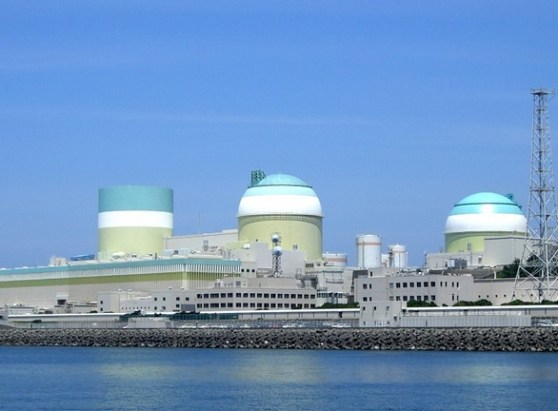
The three-unit Ikata nuclear power plant in the south of Japan.Its 890MW unit 3 is the only reactor in Japan that has a chance of restarting in 2016.
For all Japan’s talk of 43 ‘operable’ nuclear reactors, only two are actually running, writes Jim Green, as renewables and a 12% fall in demand eat into the power market. And while Japan’s ‘nuclear village’ defends safety standards, the IAEA, tasked with promoting nuclear power worldwide, has expressed deep concerns over the country’s weak and ‘fragmented’ safety regulation.
According to the World Nuclear Association, Japan has 43 ‘operable’ power reactors (they are ‘operational’ according to the IAEA), three under construction, nine ‘on order or planned’, and three ‘proposed’.
The numbers suggest that Japan’s nuclear industry is finally getting back on its feet after the Fukushima disaster – but nothing could be further from the truth.
“[I]t has been 17 years since Japan’s nuclear output peaked at 313 TWh in 1998. The noticeably sharp decline during 2002-2003, amounting to a reduction of almost 30%, was due to the temporary shutdown of all 17 of Tokyo Electric Power Company’s (TEPCO) reactors – seven at Kashiwazaki Kariwa and six at Fukushima Daiichi and four at Fukushima Daini.
“The shutdown was following an admission from TEPCO that its staff had deliberately falsified data for inclusion in regulatory safety inspections reports. During 2003, TEPCO managed to resume operations of five of its reactors.
“The further noticeable decline in electrical output in 2007 was the result of the extended shutdown of the seven Kashiwazaki Kariwa reactors, with a total installed capacity of 8 GWe, following the Niigata Chuetsu-oki earthquake in 2007. TEPCO was struggling to restart the Kashiwazaki Kariwa units, when the Fukushima earthquake occurred.”
How many of Japan’s reactors are really ‘operable’?
Nuclear power accounted for 29% of electricity generation in Japan in 2010, down from the historic peak of 36% in 1998, and plans were being developed to increase nuclear’s share to 50%. But all of Japan’s reactors were shut down in the aftermath of the Fukushima disaster. Reactors didn’t power a single light-bulb from September 2013 to August 2015.
Japan had 55 operable reactors before Fukushima (including the ill-fated Monju fast reactor). In addition to the six reactors at Fukushima Daiichi, the permanent shutdown of another six reactors has been confirmed – all of them smallish (<559 MWe) and all of them ageing (grid connections between 1969 and 1977): Kansai Electric’s Mihama 1 and 2, Kyushu Electric’s Genkai 1, Shikoku’s Ikata 1, JAPC’s Tsuruga 1, and Chugoku Electric’s Shimane 1.
So Japan now has 43 ‘operable’ or ‘operational’ reactors, and it isn’t hard to identify some with little or no prospect of ever restarting, such as the four Fukushima Daini reactors (or Monju for that matter).
Two reactors at Sendai in Kagoshima Prefecture were restarted in August and October 2015. And that’s it – only two of Japan’s 43 ‘operable’ or ‘operational’ reactors are actually operating. Moreover an anti-nuclear candidate, Satoshi Mitazono, was elected governor of Kagoshima Prefecture in early July 2016 and he announced that he will seek the shut-down of the two Sendai reactors – he can prevent their restart after they shut down for inspection later this year.
As of 1 July 2016, 11 utilities had applied to the Nuclear Regulatory Authority (NRA) for safety assessments of a total of 26 reactors, including seven reactors that have completed the assessment process. Apart from whatever hurdles the NRA might put in their way, there are other obstacles: citizen-led lawsuits; local political and public opposition; economic factors, in particular the questionable economics of large investments to upgrade and restart aging reactors; and the impact of electricity deregulation and intensified market competition.
It’s anyone’s guess how many reactors might restart, but the process will continue to be drawn out – the only strong candidate for restart this year is the Ikata 3 reactor in Ehime Prefecture.
The government’s current energy policy calls for a 22-24% nuclear share of electricity generation by 2030. That is less than half of the pre-Fukushima plans for future nuclear growth (the 50% target), and considerably lower than the 29% nuclear share in 2010. Currently, nuclear power – the two Sendai reactors – account for less than 1%.
To reach the 20-22% target would require the operation of around 35 reactors by 2030, which seems highly improbable.
Cheap renewables picking up high-level support
The use of both fossil fuels and renewables has increased since the Fukushima disaster, while energy efficiency has made the task considerably easier – national power consumption in 2015 was 12% below the 2010 level.
The World Nuclear Industry Status Reportcomments on energy politics in Japan:
“Japanese utilities are insisting on, and the government has granted and reinforced, the right to refuse cheaper renewable power, supposedly due to concerns about grid stability – hardly plausible in view of their far smaller renewable fractions than in several European countries – but apparently to suppress competition.
“The utilities also continue strenuous efforts to ensure that the imminent liberalization of the monopoly-based, vertically integrated Japanese power system should not actually expose utilities’ legacy plants to real competition.
“The ability of existing Japanese nuclear plants, if restarted, to operate competitively against modern renewables (as many in the U.S. and Europe can no longer do) is unclear because nuclear operating costs are not transparent. However, the utilities’ almost complete suppression of Japanese wind power suggests they are concerned on this score.
“And as renewables continue to become cheaper and more ubiquitous, customers will be increasingly tempted by Japan’s extremely high electricity prices to make and store their own electricity and to drop off the grid altogether, as is already happening, for example, in Hawaii and Australia.”
The Japan Association of Corporate Executives, with a membership of about 1,400 executives from around 950 companies, recently issued a statement urging Tokyo to remove hurdles holding back the expansion of renewable power – which supplied 14.3 percent of power in Japan in the year to March 2016.
The statement also notes that the outlook for nuclear is “uncertain” and that the 20‒22% target could not be met without an improbably high number of restarts of idled reactors along with numerous reactor lifespan extensions beyond 40 years.
Andrew DeWit, a professor at Rikkyo University in Tokyo, said the push signalled “a profound change in thinking among blue-chip business executives.” DeWit added:
“Many business leaders have clearly thrown in the towel on nuclear and are instead openly lobbying for Japan to vault to global leadership in renewables, efficiency and smart infrastructure.”
Safety concerns – the case of Takahama
The restart of the Takahama 3 and 4 reactors in Fukui Prefecture is indicative of the nuclear industry’s broader problems. Kansai Electric Power Company (KEPCO) first applied to the NRA for permission to restart the reactors in July 2013. In February 2015, the NRA gave its permission for KEPCO to make the required safety upgrades. The restart process was delayed by an injunction imposed by the Fukui District Court in April 2015, but the ruling was overturned in December 2015.
Takahama 3 was restarted in late January 2016, and TEPCO was in the process of resolving technical glitches affecting the start-up of Takahama 4, when the Otsu District Court in neighbouring Shiga Prefecture ruled on 9 March 2016 that the reactors must be shut down in response to a petition by 29 citizens.
The court found that investigations of active fault lines and other safety issues were not thorough enough, it expressed doubts regarding the plant’s ability to withstand a tsunami, and it questioned emergency response and evacuation plans. Citizens and NGOs also questioned the use of arbitrary figures in KEPCO’s safety analysis, and fire protection.
Nuclear Engineering Internationalreported on 2 February 2016:
“While there are plans on paper to evacuate some Fukui residents to Hyogo, Kyoto, and Tokushima prefectures, many municipalities there have no detailed plans for receiving evacuees. Kyoto Governor Keiji Yamada said he did not feel adequate local consent had been obtained, citing concerns about evacuation issues. Shiga Governor Taizo Mikazuki said there was a lack of sufficient disaster planning.”
On July 12, the Otsu District Court rejected KEPCO’s appeal and upheld the injunction preventing the operation of Takahama 3 and 4. KEPCO plans to appeal the decision to the Osaka High Court.
Meanwhile, KEPCO is considering whether it is worth investing in upgrades required for the restart of the Takahama 1 and 2 reactors. The NRA controversially approved 20-year lifespan extensions for the two reactors (grid connected in 1974 and 1975), but citizens have initiated a lawsuit to keep them shut down.
Japan’s ‘lax’ and’ inadequate’ regulatory regime
While safety and regulatory standards have improved in the aftermath of Fukushima, there are still serious problems. Citizens and NGOs have raised countless concerns, but criticisms have also come from other quarters.
When the NRA recently approved lifespan extensions for two Takahama reactors, a former NRA commissioner broke his silence and said“a sense of crisis” over safety prompted him to go public and urge more attention to earthquake risks. Kunihiko Shimazaki, a commissioner from 2012 to 2014, said: “I cannot stand by without doing anything. We may have another tragedy …”
Professor Yoshioka Hitoshi, a Kyushu University academic who served on the government’s 2011-12 Investigation Committee on the Accident at the Fukushima Nuclear Power Stations, said in October 2015:
“Unfortunately, the new regulatory regime is … inadequate to ensure the safety of Japan’s nuclear power facilities. The first problem is that the new safety standards on which the screening and inspection of facilities are to be based are simply too lax. While it is true that the new rules are based on international standards, the international standards themselves are predicated on the status quo.
“They have been set so as to be attainable by most of the reactors already in operation. In essence, the NRA made sure that all Japan’s existing reactors would be able to meet the new standards with the help of affordable piecemeal modifications – back-fitting, in other words.”
Even the IAEA has slammed the feeble NRA
An International Atomic Energy Agency (IAEA) review in early 2016 made the following recommendations (among others) regarding the NRA:
To attract competent and experienced staff, and develop competencies relevant to nuclear and radiation safety.
To amend relevant legislation with the aim of allowing NRA to improve the effectiveness of its inspections. The NRA inspection programme “needs significant improvement in certain areas. NRA inspectors should be legally allowed to have free access to any site at any time. The decision process for initiating reactive inspections should be shortened.”
To strengthen the promotion of safety culture including a questioning attitude.
To give greater priority to the oversight of the implementation of radiation protection measures.
To develop requirements and guidance for emergency preparedness and response in relation to radiation sources.
The IAEA further noted that the NRA’s enforcement provisions are inadequate:
“There is no clear written enforcement policy in place at the NRA. There is no documented process in place at NRA for determining the level of sanctions. NRA inspectors have no power to enforce corrective actions if there is an imminent likelihood of safety significant event. They are required to defer to NRA headquarters. … NRA processes for enforcement are fragmented and some processes are not documented.
“NRA needs to establish a formal Enforcement Policy that sets forth processes clearly addressing items such as evaluation of the severity level of non-conformances, sanctions for different levels of non-conformances, processes for issuance of Orders, and expected actions of NRA inspectors if significant safety issues develop.”
As the industry declines, expect new safety cutbacks
The narrative from government and industry is that safety and regulatory standards in Japan are now adequate – or they soon will be once teething problems with the new regime are sorted out. NRA Chair Shunichi Tanaka claims that Japanese regulatory standards are “the strictest in the world.”
But Japan’s safety and regulatory standards aren’t strict. Improvements are ongoing – such as NRA actions in response to the IAEA report, and reports that legislation will be revised to allow unscheduled inspections of nuclear sites. But improvements are slow, partial and piecemeal and there are forces pushing in the other direction. An Associated Press report states that nuclear laws will be revised in 2017 but not enacted until 2020.
Reactor lifespan extensions beyond 40 years were meant to be “limited only to exceptional cases” according to then Prime Minister Yoshihiko Noda, speaking in 2012. Extensions were considered an emergency measure against a possible energy crunch. But lifespan extensions have been approved in the absence of an energy crunch, and more will likely follow.
If Japan’s nuclear history is any guide, already flawed safety and regulatory standards will be weakened over time. Signification elements of Japan’s corrupt ‘nuclear village’ are back in control just a few years after the Fukushima disaster. Add to that aging reactors, and utilities facing serious economic stress and intense competition, and there’s every reason to be concerned about nuclear safety in Japan.
Tomas Kåberger, Professor of Industrial Energy Policy at Chalmers University of Technology in Sweden, noted in the foreword to the latest edition of the World Nuclear Industry Status Report:
“A nuclear industry under economic stress may become an even more dangerous industry. Owners do what they can to reduce operating costs to avoid making economic loss. Reduce staff, reduce maintenance, and reduce any monitoring and inspection that may be avoided.
“While a stated ambition of ‘safety first’ and demands of safety authorities will be heard, the conflict is always there and reduced margins of safety may prove to be mistakes.”
¶ “Vote with Your Utility Bill for Wind Energy” • Some politicians and utilities say renewable power raises utility costs and sacrifices reliability. But real examples tell a different story. In Colorado, renewable energy is replacing coal plants and driving down costs of electricity service without sacrificing reliable service. [Red, Green, and Blue]
Arcadia Power image.
¶ “Why Bill Gates Is Hugely Misinformed About Renewables & Loves Impractical Nuclear” • Why does Bill Gates not understand that we have all the science we need to stop climate change without nuclear power? Why does he not see that renewables are less costly and faster to install than nuclear power. There is an answer. [CleanTechnica]
¶ “Climate science: revolution is here” • It takes a long time to heat up a world. Even if emissions are stopped, climate change will continue for a long time. But week…
Mitsubishi Urakami Ordance Plant. Atomic Bomb Area Nagasaki.
Movie by US National Archives and Records Administration (Transcript at bottom of blog post).
“The hurriedly-targeted weapon ended up detonating almost exactly between two of the principal targets in the city, the Mitsubishi Steel and Arms Works to the south, and the Mitsubishi-Urakami Torpedo Works to the north… The official Manhattan Engineer District report on the attack termed the damage to the two Mitsubishi plants ‘spectacular.” http://www.osti.gov/manhattan-project-history/Events/1945/nagasaki.htm
It also destroyed the Urakami Roman Catholic Church, at the time the largest in the east, and killed the worshippers within, as well as many others in Nagasaki.
PROPOSED bribes for communities near fracking sites are “small fry” compared to the hundreds of millions of pounds of taxpayers’ cash used to buy off those affected by the nuclear power industry, campaigners said yesterday.
Cumbria in north-west England “is in the grip of a far-reaching nuclear bribery scandal,” according to Radiation Free Lakeland, with taxpayers’ cash for public projects filtered through the privately owned nuclear power industry.
Campaigner Marianne Birkby said: “Compared to the nuclear industry, the frackers are in the third division where bribery is concerned, as we know all too well in Cumbria.
“The nuclear industry leads the super league — and has…










 Apologies to Friends of the Earth – the “Bribery: Its Working Well in *Numbria” is all ours…

 nuclear-news