Romania Denies Accepting US Nuclear Weapons
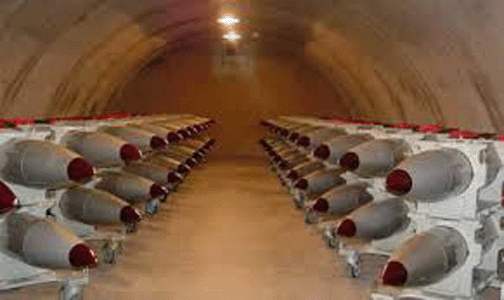 http://www.balkaninsight.com/en/article/romania-denies-nuclear-weapons-transfer-on-its-soil-08-18-2016 Bucharest officials have denied media reports that US nuclear weapons stationed in Turkey are being transferred to Romania after the coup attempt against the Ankara government. Marian Chiriac
BIRN Bucharest -The Romanian foreign ministry, MAE on Thursday dismissed claims that the US has started transferring nuclear weapons from Turkey to Romania amid tensions in relations between Washington and Ankara.
“The MAE firmly rejects these pieces of information,” the ministry said in a press release, without elaborating.
Defence Minister Mihnea Motoc said that such media reports were just speculation and “so far there have not been any plans or discussions [among NATO members] on this topic”.
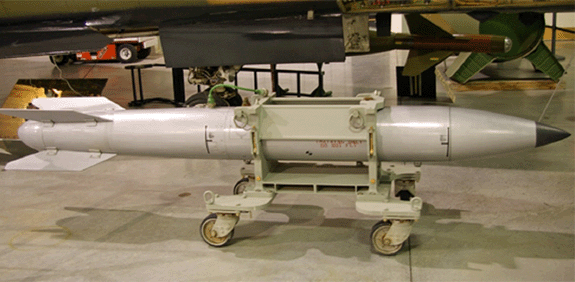
The statements came after website Euractiv reported on Thursday morning that more than 20 B61 nuclear weapons were being moved from Turkey’s Incirlik air base to the Deveselu base in Romania.
According to one of the two anonymous sources quoted by Euractiv, “US-Turkey relations had deteriorated so much following the [recent attempted] coup that Washington no longer trusted Ankara to host the weapons”.
US and Turkish officials made no immediate response to Euractiv’s request for a comment. NATO said however that US allies must ensure that “all components of NATO’s nuclear deterrent remain safe, secure, and effective”.
In Romania, analysts said they doubted whether the transfer would happen. “Such a transfer is very challenging in technical and political terms. I doubt the Alliance would run against its political commitments to cooperation with Moscow, based on the Founding Act of mutual relations and security between NATO and Russia,” said political analist Andrei Tarnea.
The Founding Act, signed in 1997, says NATO allies “have no intention, no plan and no reason to deploy nuclear weapons on the territory of new members [such as Romania], nor any need to change any aspect of NATO’s nuclear posture or nuclear policy – and do not foresee any future need to do so”.
Jeffrey Lewis, director of non-proliferation studies at the Middlebury Institute of International Studies in Monterey, said in a Twitter post that Romania does not have the capacity to store the weapons. “For one thing, there are no WS3 vaults at Deveselu – or anywhere in Romania – to store the B61s,” Lewis said.
In December 2015, the US Navy formally inaugurated its new missile defence base in Deveselu in southern Romania. The base became operational in mid-May this year. It is one of two European land-based interceptor sites for a NATO missile shield, a scheme which is viewed with deep suspicion by Russia.
Russia has warned Romania to abandon the anti-missile system that the US is installing at Deveselu. Relations between Bucharest and Moscow are already rocky. Romania has been among the strongest regional backers of the package of Western sanctions imposed on Russia in connection with the crisis in Crimea and eastern Ukraine.
Romania also hosts another major US military base, at Mihail Kogalniceanu airport, near the Black Sea, which became operational in 2007.
Report: U.S. Transfers Nukes From Turkish Airbase to Romania
We can’t solve the problem of a nuclear-armed North Korea without talking to them

 To Address Nuclear Threat, We Must Talk To North Korea http://www.huffingtonpost.com/lee-h-hamilton/to-address-nuclear-threat_b_11572840.html Isolated and secretive, North Korea presents the United States with a unique challenge we cannot ignore. The North Korean nuclear arsenal is becoming steadily more alarming, and it is past time for the United States to get serious about the threat.
The Obama administration has pursued a policy of “strategic patience,” which includes applying international sanctions and waiting for North Korea to move away from its nuclear program or for the government to collapse. It hasn’t been enough.
The good news is that the region has been relatively stable. But our policy has not changed North Korea’s behavior. Economic sanctions imposed in response to nuclear tests and missile launches are hurting, but they have not threatened the regime’s survival.
Meanwhile, North Korea’s nuclear arsenal continues to grow in defiance of United Nations resolutions; and so does its capacity to threaten its neighbors and even the U.S. It is time to revise our strategy.
For North Korea, its nuclear program is essential to its identity as a nation. It has an estimated 10 to 20 nuclear devices and is developing a new nuclear weapon every six weeks or so. It has both short- and long-range missiles and is constantly trying to improve their effectiveness. It hopes to be able to target the U.S. mainland. An underground nuclear test and unsuccessful satellite launch early this year suggest it is seriously pursuing that goal.
North Korea is the weakest power in Northeast Asia, but it has played its limited hand fairly well. With no real allies, it may well be the most isolated nation on Earth. Life for most of its citizens is unrelentingly harsh. Poverty is widespread, and the country’s per-capita GDP is among the lowest outside of Africa, according to the CIA.
Little is known about its young ruler, 32-year-old Kim Jong Un. He is mysterious, unpredictable and dangerous. He has consolidated power, purging many government officials and promoting others. He obviously wants to keep control and has continued to maintain a rigidly nationalistic and repressive state.
China has more influence with North Korea than any other country, in part because up to 90 percent of North Korea’s international trade is with China. In the U.S., we are continually urging China to get tougher with North Korea.
But while China is no fan of North Korea’s nuclear program, it does not see the country as an imminent threat. China benefits from its neighbor’s stability, fearing a collapse there would create chaos and violence on the Korean peninsula and send refugees surging across the border into China.
For the United States, North Korea’s nuclear program should be cause for alarm but not panic. We can’t do much to influence such an isolated country, but we should not ignore the options we do have. We urgently need to pursue a political process aimed at freezing North Korea’s nuclear weapons program.
And like it or not, we can’t solve the problem of a nuclear-armed North Korea without talking to them. Talking with North Korea will not be popular, but it has become necessary.
Previous multi-party talks addressing North Korea’s nuclear program fell apart in the face of North Korean intransigence. Since then, the U.S. has said we will return to the negotiating table only if North Korea moves away from its nuclear weapons program, a precondition that has ensured no talks.
To continue that stance would be a mistake. We should be prepared to resume talks without preconditions. It may be that the Obama administration is moving away from such preconditions. But we have not yet sat down to talk.
None of this is to suggest that talks with North Korea would be easy or would yield prompt results. We should continue using sanctions and attempting to hold government leaders responsible for their decisions. But along with pressure, we need to add a strong political and diplomatic component to our efforts.
At the same time, the U.S. and its partners must be prepared in the event North Korea collapses. The immediate challenge for the international community would be to seize or destroy North Korea’s nuclear arsenal to prevent it from falling into the wrong hands.
In all of these efforts, we need to work closely with other Asian nations – especially China. We must find a way to persuade North Korea that the path to security and stability lies in moving away from isolation and secrecy, not in pursuing nuclear strength.
Lee H. Hamilton is a Distinguished Scholar, Indiana University School of Global and International Studies; Professor of Practice, IU School of Public and Environmental Affairs; and Senior Advisor, IU Center on Representative Government. He served as U.S. Representative from Indiana’s 9th Congressional District from 1965-1999.
Bill Gates is so misinformed about renewable energy and nuclear power
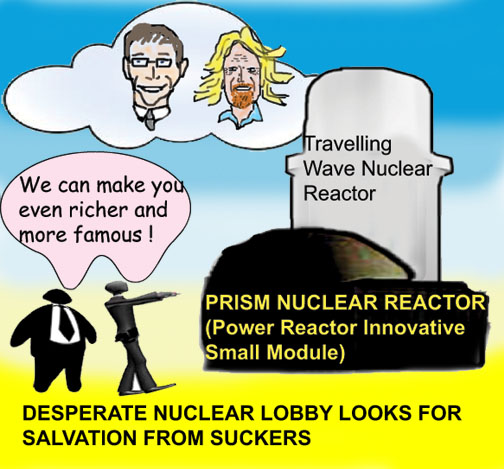 Why Bill Gates Is Hugely Misinformed About Renewables & Loves Impractical Nuclear, Clean Technica August 11th, 2016 by Zachary Shahan There’s a problem in human logic that creeps in on a regular basis, and that I would say always has and always will. If someone is very successful in one area of business or life, we have a tendency to give their opinion too much weight in other areas. This happens even more so when someone is highlighted as “extremely smart” or “a genius.” Granted, with regards to some topics that are on the surface “outside of their areas of success,” but maybe have loose but important connections, we probably should give their opinion a bit more weight than the average human or humanoid. However, we have a tendency to do so far too much, and with topics that they really don’t have legitimate expertise in.
Regarding the broad topic of energy, a couple of notable people who get a lot of attention for their anti-renewables opinions are billionaire Bill Gates and highly renowned climate scientist James Hansen. I’ve illuminated their mistakes in logic in several articles, but I’ve never really known why these two people have been so anti-renewables and pro-nuclear in recent years.
Andrew Beebe apparently uncovered a (or the) key reason for Bill’s bias (h/t Greentech Media), and it’s surprisingly simple and superficial. In this piece, I’ll tackle that a little bit, highlight the huge underlying mistakes, and wax poetic write boringly about the role of media and genuine experts in spreading good information in a world of TMI (too much information).
The Curious Case of Bill Gates & Energy “Information” Andrew Beebe, in his efforts to decode the “energy bug” Bill Gates has in his logic, highlighted a key phrase that typically gets passed over: “The kernel of Gates’ mistake goes back to his reliance on ‘the top scientists.’ “……The future is solar- and wind-powered electric vehicles. If Bill Gates, Vaclav Smil, and James Hansen don’t see that, they need to read more CleanTechnica. The future isn’t even up for debate — the future is arriving. http://cleantechnica.com/2016/08/11/bill-gates-hugely-misinformed-renewables-loves-impractical-nuclear/
Focus on Nuclear at World Social Forum
NUCLEAR FORUM AT WSF HIGHLIGHTS WASTE PROBLEMS , West Mount Magazine, By Byron Toben, 18 Aug 16
Shake hands with the Devil, who, in George Bernard Shaw’s 1903 masterpiece Don Juan in Hell, points out that…
In the arts of Peace, Man is a bungler. But in the arts of war, man is a true genius.
Only he could invent the maxim machine gun, the submarine and (even now is seeking to unlock)
The hidden molecular energies of the Universe…
Note that this was written two years before Einstein (who later became a friend of Shaw) announced E=mc2 and the race toward an atomic bomb, culminating in Little Boy devastating Hiroshima on August 6, 1945, followed by Fat Man doing same to Nagasaki three days later.
In the interim 71 years, much has transpired in nuclear arms growth, the expansion of nuclear plants for use for power and concomitant protest groups. Suffice it to say, nuclear myths of clean, safe and inexpensive have been gradually discredited and new plant construction has ceased. So the focus has shifted to nuclear waste disposal, which is no easy matter as the stuff has half-lives of thousands of years.
Professor Gordon Edwards (Hampstead, Quebec) head of the Canadian Coalition For Nuclear Responsibility (CCNR) one of the key speakers at this nuclear forum, (which consisted of 12 workshops. the most numerous of the hundreds of other themed subjects at the recent World Social Forum) opined that we have left the nuclear age and are now in the nuclear waste age.
What are the industry’s plans to get rid of the waste? There are none. There are only plans to package it, transport it and dump it somewhere. But the packaging is inadequate, the transport doubly dangerous and no feasible mid or long-term dumps nominated.
Thus, by default, the best approach, for now, is to leave the waste in situ with constant monitoring.
Edwards even dislikes the term “disposal” as it implies a final solution. He prefers the term “abandonment”, which is dangerous as it leads to amnesia as to where burial sites may be and over time, loss of technical expertise or knowledge of geographic locations……abandonment requires institutional safeguards of regular inspection by trained personnel and funding to boot, which can persist despite political changes.
Other key participants ……
GUIDING SPIRITS (MOSTLY WOMEN)
Karen Silkwood, a nuclear union activist and whistle blower, whose mysterious death in 1976 spawned a movie about her. She had alleged corruption and lax safety standards at the McGee-Kerr facility in Oklahoma.Rosalee Bertell, a nun and mathematician, whose book No Present Danger documented the dangers of low level radioactive tailings, dumped mostly on native American lands.
Native lands were a target of nuclear waste producers, as all 50 states rejected such dumps and the selection of Yucca mountain was rejected as being in an earthquake one and near underground aquifers.
Many native persons have protested this practice. Two of note are the late Grace Thorpe (daughter of great Olympics athlete Jim Thorpe) and Winona La Duke, twice US vice presidential candidate for the Green Party with Ralph Nader.
Apparently, women are more prone to nuclear exposure ailments than men by a 2-3 times ratio.
CURRENT LAWSUIT
On the last day of this Nuclear Forum, a lawsuit was filed in federal courts to delay the pending shipments of dangerous nuclear waste by truck and barge, without public consultation on secret routes, mostly thousands of miles to South Carolina. Readers who wish to read the court document can contact me through this web site at info@westmountmag.ca http://www.westmountmag.ca/nuclear-forum/?utm_source=Westmount+Magazine+Newsletter&utm_campaign=c961272cc5-2016-08-18&utm_medium=email&utm_term=0_5b5eeef0cc-c961272cc5-94434617&ct=t%282016-08-18%29&mc_cid=c961272cc5&mc_eid=d8693ec04e
Britain’s Hinkley fiasco should give Pakistan pause to reconsider its nuclear power plans
It would make sense therefore not to invest in projects that are destined to be overtaken by superior alternatives. The funds going into nuclear power stations would be better spent on making use of wind and solar power for which Pakistan has substantial potential.
No one can predict what the energy scene would look like in 2050, when all of the planned nuclear power stations are to become operational. What is clear is that they won’t remain competitive as new technologies come along to elbow out some of the old ones.
 A case for reviewing nuclear power plants http://aaj.tv/2016/08/a-case-for-reviewing-nuclear-power-plants/ August 18, 2016 by Farah Jamil Last month, something interesting and unusual happened in Britain that should give a pause to Islamabad as it walks in a certain direction without thinking what lies in store. Continue reading
Nuclear reactors, old or new designs, doomed without hefty tax-payer subsidies
 under the 1957 Price-Anderson Act, each plant owner’s accident liability is limited to some $300 million per year, even though the Fukushima disaster showed that nuclear accident costs can exceed $100 billion. If private companies that own U.S. nuclear power plants had been responsible for accident liability, they would not have built reactors. The same is almost certainly true of responsibility for spent fuel disposal.
 free or low-carbon-emitting –What they discovered is that each nuclear power plant releases huge amounts of Radioactive Carbon14 which converts to CO2 in the atmosphere.
 Bradford, The Conversation, August 18, 2016 “…….The nuclear industry, led by the forlornly named lobbying group Nuclear Matters, still obtains large subsidies for new reactor designs that cannot possibly
compete at today’s prices. But its main function now is to save operating reactors from closure brought on by their own rising costs, by the absence of a U.S. policy on greenhouse gas emissions and by competition from less expensive natural gas, carbon-free renewables and more efficient energy use.
“Small Nuclear” companies keen to market their wares to UK government
 Nuclear Developers Have Big Plans for Pint-sized Power Plants in UK, VOA News 18 Aug 16 “……NuScale, majority owned by U.S. Fluor Corp, is developing 50 megawatt (MW) SMRs using PWRs which could be deployed at a site hosting up to 12 units generating a total of 600 MW. The 50 MW units would be 20 meters (65 feet) tall, roughly the length of two busses, and 2.7 meters (9 feet) in diameter…..
Costs, viability questioned Critics, however, say there is no guarantee that SMR developers will be able to cut costs enough to make the plants viable.
“SMR vendors say factory production will save a lot of money, but it will take a long time and a lot of units to achieve what they are calling economies of mass production,” said Edwin Lyman, nuclear expert at the U.S.-based Union of Concerned Scientists (UCS). “Factory manufacture is not a panacea. Just because you are manufacturing in a factory, it doesn’t mean you are certain to solve problems of cost overruns,” he said…..
But anti-nuclear green groups such as Greenpeace argue that with advances in renewable technology, such as offshore wind, Britain may not need any new nuclear plants.
This week Britain approved Dong Energy’s plans to expand an offshore wind farm project that could ultimately span an area of the North Sea more than twice the size of London and produce up to 4 GW of electricity, more than Hinkley Point……..
Britain said this year SMRs could play an important part in the country’s energy future, and committed 250 million pounds to research, including a competition to identify the best-value SMR design for the country.
NuScale, Rolls Royce and Toshiba Corp’s Westinghouse were among 33 companies the government has identified as eligible for the competition. The Department for Business, Energy & Industrial Strategy has given no further details and had no further comment on SMRs. http://www.voanews.com/a/britain-nuclear-power/3470331.html
General Electric Co. and Hitachi sell Canadian nuclear technology buisness
BWXT to buy Ontario nuclear business from GE-Hitachi, double presence in Canada, Globe and Mail, MISSISSAUGA, Ont. — The Canadian Press, Aug. 18, 2016 General Electric Co. and Hitachi Ltd. are selling a Canadian joint venture that supplies nuclear fuel and equipment for Candu nuclear reactors – a key source of electricity for Ontario.
The buyer is a Canadian subsidiary of BWX Technologies Inc., a U.S. publicly traded company headquartered in Virginia.
BWXT says the acquisition will nearly double its presence in Canada and “signals a long-term strategic commitment” to the Candu nuclear power segment.
August 18 Energy News

Science and Technology:
¶ July was the world’s hottest month ever, according to NASA, the tenth month in a row to break temperature records globally. Since October 2015, every month has set a new global record for hottest temperatures, but the rise may slow down soon. A developing La Nina weather pattern may help, though probably not until 2017. [CNN]
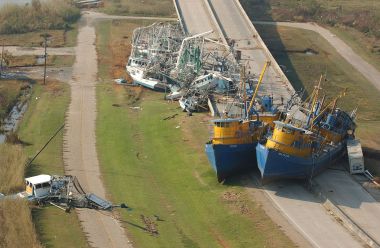 Road closed due to weather. FEMA photo, after Hurricane Katrina.
Public domain. Wikimedia Commons.
World:
¶ Scotland’s next generation of onshore wind farms could be at least 20% cheaper if the Scottish and UK governments work with industry and regulators to remove barriers, according to Scottish Renewables. A Scottish Renewables study said industry could cut onshore wind costs by more than £150 million per year. [reNews]
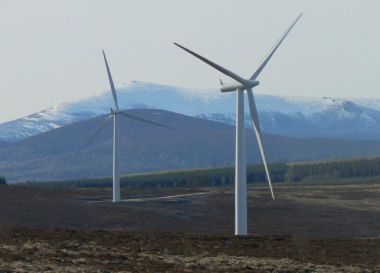 Hill of Towie wind farm in Scotland (reNEWS)
¶ Under an agreement with China, Egypt is to construct a 1,000-MW…
View original post 751 more words
Uranium Miner Cameco’s Tax Avoidance Cost Canada Over $2 Billion in Lost Revenue – Canadian House of Commons Income Tax Debate


Cameco Headquarters Saskatoon, Saskatchewan, Canada
“Cameco is a company that mines uranium in Saskatchewan. In 1999, it signed a deal with its own subsidiary in Zug, Switzerland to sell that uranium to Switzerland at a fixed price of $10 per pound. Switzerland was not the ultimate destination or user of that uranium. The subsidiary in Zug was just reselling it to other jurisdictions around the world at market prices. Of course, the market price of uranium is variable, but it has consistently been quite a bit more than $10 a pound. It is currently around $30 a pound. It was up to as high as $140 a pound in 2007. The only real effect of this arrangement was to transfer billions of dollars of profits from Canada to this Swiss tax haven. The Canada Revenue Agency has calculated that from 2003 through 2015, that cost the governments of Canada…
View original post 1,581 more words
August 17 Energy News
Opinion:
¶ “Global climate is spinning out of control – but now, we have the technology!” • Heatwaves of more than 50° C in Iraq and India in recent weeks show climate disruption is a present-day reality, not something for a leisurely response. But almost by the week, real-world advances provide a more positive prognosis. [The Ecologist]
 Installation of a new 3-MW Siemens offshore
wind turbine. Image: artist’s impression by Siemens.
World:
¶ A Solar Citizens consumer campaigner said that in the first five months of this year, the uptake of small-scale solar in Tasmania had been up by at least 25%. He attributes the turnaround to the recent energy crisis when Basslink was disabled, coupled with an extremely dry year which depleted Hydro’s water reserves. [ABC Online]
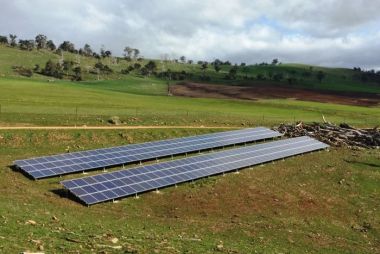 Solar irrigation shaves more than six thousand
dollars off this farmer’s annual power bill. (Margot Foster).
¶ The…
View original post 710 more words
The Mysterious Case Of The Missing Fukushima Fuel
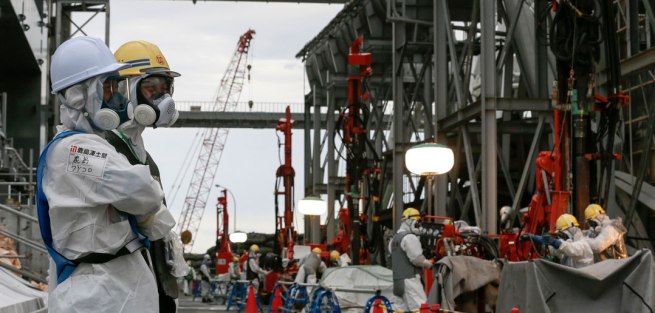
By Richard Wilcox, PhD
As the world forever hurtles toward Armageddon, the Fukushima nuclear disaster has largely faded from the front pages. But the issue is far from resolved. Radiation from nuclear accidents is not easily dispelled with estimates of clean-up time at Fukushima ranging from 40 to 500 years, and nearly six years have already passed. Even safely stored nuclear material is dangerous for 100,000 years (1).
Elvis Has Left The Building
The major question regarding the situation at Japan’s Fukushima Dai-ichi (no.1 nuclear power plant) regards the location of the melted fuel at reactor units 1, 2 and 3.
Recent evidence of the location of the fuel in unit 2 was disputed, with Tokyo Electric Co. (Tepco) and the mainstream media taking one view and independent scientists taking another. Is the melted fuel still inside the container in the reactor building, or has it leaked out and is now penetrating in scattered areas laterally and vertically into the ground?
Large amounts of melted fuel could reach the ground water, and even the aquifer which is ultimately connected to the Tokyo water supply.
Let’s compare two assessments on this important issue based on the use of “Muon tomography”:
According to the Asahi Shimbun (newspaper) version of reality which relies solely on the Tepco report:
Most of the nuclear fuel inside the No. 2 reactor at the Fukushima No. 1 nuclear power plant apparently did not melt through the pressure vessel (2).
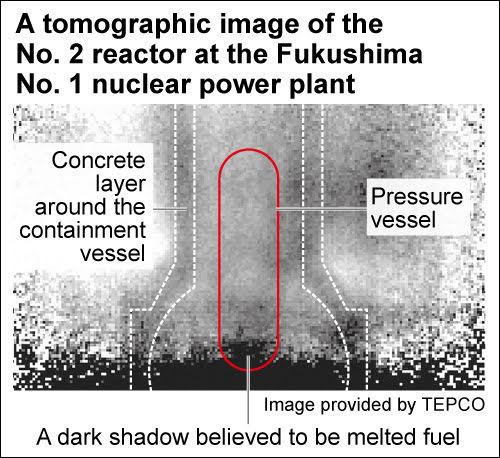
Is it that simple? Tepco’s record of reliability has become rather tarnished over the years.
Note that in the graphic image above, the word “believed” is used, which reinforces the word “apparently” used in the text of the article referring to the uncertainty of the location of the melted fuel. However, the title of the article is more confident, stating that “most fuel was contained.” The title is blatantly misleading and since most readers just skim the news, that will be what they take away from the report.
On the other hand, the independent scientists at the Simply Info website differ about the location of the fuel in relation to the container, the “Reactor Pressure Vessel” (RPV):
Tepco’s superimposed mask demarcates the bottom head too low including fuel inside the rpv which according to the refined image is clearly shown below the bottom head….”there is no fuel in the bottom of the RPV in any significant amount” (3).

This graphic indicates that a different method was used by these scientists to view the location of the melted fuel.
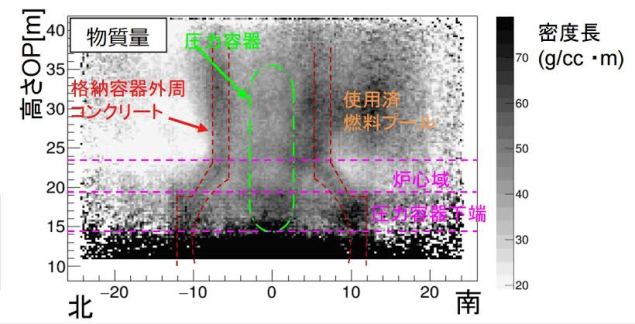
In this graphic the Simply Info scientists argue that the container drawing was placed too low in the Tepco version, whereas in their version, it is higher, making it less obvious that the fuel is in the container.
Careful reading of this article reveals that Tepco’s analysis, as so glibly presented by the mainstream media, was based on technological smoke and mirrors, clearly intended to deceive. Tepco and the media should report on the range of plausible possibilities, not only the small slice of reality they wish the public to see (4; 5).
So will the Asahi Shimbun correct their fallacious reporting? Both the Japan Times and the Asahi Shimbunare heavily owned and controlled by foreign investors and media. TheAsahi shares offices with the New York Times in Tokyo and many Japanese English dailies rely on Western news wires such as the agenda driven, oligarchic news sources, Reutersand the Associated Press (6).
Decommissioning Or Out Of Commission?
In fact, in over five years much progress has been made to control the situation at the destroyed Fukushima nuclear plant. Much of the rubble has been cleaned up and fresh coats of paints are on the buildings, but the place is still intensely radioactive, and no human can approach the specific reactor meltdown sites.
The second major issue at Dai-ichi concerns the future plans for the decommissioning of the plant. All along Tepco has said they will retrieve the melted fuel and complete decommissioning within 40 years. In fact the technology to retrieve the fuel has not yet been invented. Not only is it impossible for human workers to approach the area, but even robots break down due to the radiation short circuiting their wires.
It was recently revealed that Japan is still considering an option that many people feel would be very dangerous in the long term, and that is the “sarcophagus” solution (7). The only time this has been tried is at Chernobyl — it looks like a high-tech barn placed over the site (8). Unlike Chernobyl where the ground is rock hard, at Fukushima the ground is akin to a wet sponge with soft topsoil, so while covering it will reduce radioactive atmospheric fallout, the radiation will continue to leak downwards to the aquifer and outwards to the ocean unless appropriate engineering measures are taken.
Nevertheless, progress is slow with efforts “underway to develop the equipment needed to retrieve corium (melted fuel) samples from inside the containment structures of units 1-3 at the plant. No solid time frame” has yet been was mentioned (9).
The Nuclear Story
In an interesting aside, the best documentary film on Fukushima I have see so far, Fukushima: A Nuclear Story was released in 2015 (10). It is an Italian production but with English narration and subtitles. The plot follows journalist Pio d’Emilio during the nuclear crisis as he tries to uncover the real situation in Fukushima. The film is engaging and educational at the same time, covering new ground and combining dramatic events as they unfold at the time with scientific explanations done in an entertaining, “manga” comic book style.
The film emphasizes the near catastrophe of Tepco’s panic during the accident, and the courage and wisdom of then prime minister Naoto Kan, and the Fukushima 50, led by the plant manager Masao Yoshida whose snap judgement literally “saved the world.”
The film raises one very interesting piece of information that I did not know about which is that it was only the luck of the pool fuel gate at unit 4 not closing, in other words, malfunctioning, which allowed water in to cool the scorching fuel rods. Had that not occurred, the fuel rods could have caught fire spreading massive radiation for hundreds of miles.
Note that had the Fukushima accident happened at night or on the weekend there would have been far fewer workers at the plant to tackle the problem, possibly leading to a completely out-of-control situation.
The Ice Wall Cometh…
The “ice wall” that Tepco built in order to freeze the ground around the plant to block water flow in and out of the plant, continues to have problems. It is a very expensive operation to build and maintain, prone to technical problems and no one really knows when or if it will ever be fully implemented (i.e., taxpayer boondoggle) (11; 12). Even if the ice wall operates as intended it will not stop all of the water flow allowing some to be contaminated (13).
Is this why the sarcophagus option is still on the table? Critics have argued that the ice wall was poorly conceived from the start because it did not address dealing with the source of water flow which is at the water shed above the plant in the nearby mountains (Tepco balked at the project due to the high cost).
Japan Nuke News
Various nuclear related issues pop up from time to time around country. Since the nuclear accident in 2011, the overwhelming public sentiment has been strongly anti nuclear, despite efforts by the Abe administration to downplay the accident and restart as many of the reactors around the country as possible. The logic of the restarts against public opinion is in order to satisfy the big banks who have financed Japanese utility company operations while reactors have remained idle (expensive but not profit producing) over the past years.
Ever since the hugely destructive earthquakes earlier in 2016 on the island of Kyushu, nuclear plant restarts along the path of the fault line, which basically travels through the middle of the entire country, have been in doubt. Still we see for example in Shikoku that nuclear reactors are restarting despite local opposition (14).
Although prime minister Abe keeps pushing for resumption of nuclear operations, he probably would not want to work at the Fukushima nuclear disaster clean up site himself. It was recently reported by Japanese scientists that insoluble radioactive cesium has been detected in workers exposed to high levels of radiation at the plant (15).
Indeed, the wildlife in Fukushima prefecture has long been reported to be contaminated with radiation, recently a wild boar was detected with massive levels of radiation in its body (16). This is an indication of the general contamination of the environment there.
This doesn’t stop the Fukushima tourist board from advertising how safe and wonderful life is there. In order to drum up tourist dollars the national government has carried out a massive public relations campaign despite the lingering possibility of numerous radioactive hotspots in the area (17; 18).
Trump Threatens Nuclear Cartel
Maybe things will change a bit if Donald Trump can be elected president in the United States. Trump has promised to reduce US military presence in Japan and let them sort out their own military affairs. This does not bode well for the US-Japan military racket which siphons off billions of dollars in tax revenue to satisfy the greed of both country’s military industrial complexes, which are intensely tied up with the nuclear weapons and power industries (20).
Isn’t it ironic that the bogeyman of North Korea which is constantly conjured by Japan to justify its own growth in militarism, obtained its original nuclear weapon technology from Britain, a supposed Japan ally (21).
Funny old world ain’t it.
* Special thanks to the Simply Info website for their continuous work on the Fukushima issue; and to Activist Post for their continued reporting.
Richard Wilcox is a contributing editor and writer for the book: Fukushima: Dispossession or Denuclearization? (2014) and a Tokyo-based teacher and writer who holds a PhD in environmental studies. He is a regular contributor to Activist Post. His radio interviews and articles are archived athttp://wilcoxrb99.wordpress.com and he can be reached at wilcoxrb2013@gmail.com.
References
1 – Nuclear waste: keep out for 100,000 years
http://www.ft.com/cms/s/2/db87c16c-4947-11e6-b387-64ab0a67014c.html#axzz4EtlF3Xds
2 – New study on Fukushima reactor shows most fuel was contained
http://www.asahi.com/ajw/articles/AJ201607290050.html
3 – Something Incredible Found In Fukushima Muon Scan
http://www.fukuleaks.org/web/?p=15666
4 – First Fukushima Unit 2 Muon Scans Dispute New Scan Results
http://www.fukuleaks.org/web/?p=15650
5 – Fukushima Unit 2 Muon Scan Not So Conclusive
http://www.fukuleaks.org/web/?p=15637
6 – Democracy in Peril: Twenty Years of Media Consolidation Under the Telecommunications Act
http://www.truth-out.org/news/item/34789-democracy-in-peril-twenty-years-of-media-consolidation-under-the-telecommunications-act;
7 – NDF Tries To Walk Back Fukushima Daiichi Sarcophagus Admission
http://www.fukuleaks.org/web/?p=15607
8 – The Chernobyl Gallery: Sarcophagus
http://chernobylgallery.com/chernobyl-disaster/sarcophagus/
9 – Melted Fuel To Be Sampled From Fukushima Reactors Containment
http://www.fukuleaks.org/web/?p=15608
10 – Fukushima: A Nuclear Story
http://www.nuclearstory.com
11 – Fukushima Frozen Wall Sees Small Progress From Concrete Addition
http://www.fukuleaks.org/web/?p=15659
12 – Fukushima Frozen Wall Report For June 23 2016
http://www.fukuleaks.org/web/?p=15569
13 – Fukushima No. 1 plant’s ice wall won’t be watertight, says chief architect
http://www.japantimes.co.jp/news/2016/04/29/national/fukushima-plants-new-ice-wall-will-not-be-watertight-says-chief-architect/#.V7JtD-lMaRk
14 – Shikoku MOX plant restarts amid outcry over fresh quake fears
http://www.japantimes.co.jp/news/2016/08/12/national/shikoku-electric-poised-fire-ehime-plant-mox-reactor-amid-protests/#.V66L_ulMaRk
15 – THREE-YEAR RETENTION OF RADIOACTIVE CAESIUM IN THE BODY OF TEPCO WORKERS INVOLVED IN THE FUKUSHIMA DAIICHI NUCLEAR POWER STATION ACCIDENT
http://rpd.oxfordjournals.org/content/early/2016/03/14/rpd.ncw036
16 – 960 Bq/kg of Cs-134/137 detected from wild boar in Fukushima
http://fukushima-diary.com/2016/07/960-bqkg-of-cs-134137-detected-from-wild-boar-in-fukushima/
17 – Tokyo to Fukushima: Route to enjoy modern, old Japan
http://showcase.japantimes.co.jp/tokyo/news/?key=tokyo1
18 – Fukushima tourism making strong progress on recovery
http://www.japantimes.co.jp/news/2016/08/14/national/fukushima-tourism-making-strong-progress-recovery/#.V7Eoo-lMaRk
19 – Trump rips U.S. defense of Japan as one-sided, too expensive
http://www.japantimes.co.jp/news/2016/08/06/national/politics-diplomacy/trump-rips-u-s-defense-japan-one-sided-expensive/#.V6bc2elMaRk
20 – North Korea used British technology to build its nuclear bombs
http://www.theecologist.org/News/news_analysis/2987935/what_theresa_may_forgot_north_korea_used_british_technology_to_build_its_nuclear_bombs.htm
Source:
http://www.wakingtimes.com/2016/08/16/the-mysteriously-case-of-the-missing-fukushima-fuel/
Kansai Electric starts removing fuel from Takahama reactor No. 4
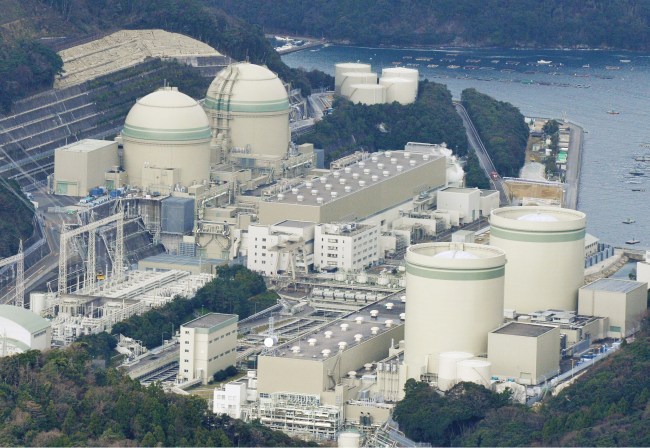
FUKUI – Kansai Electric Power Co. on Wednesday began removing fuel assemblies from the No. 4 reactor at its Takahama nuclear plant in Fukui Prefecture.
The removal is the result of a preliminary injunction issued in early March by the Otsu District Court in neighboring Shiga Prefecture ordering the power utility to halt operations of the No. 3 and No. 4 reactors at the plant. The court upheld a petition filed by a group of residents who live near the plant in Shiga and are concerned over safety.
The work to remove 157 nuclear fuel assemblies from the No. 4 reactor started at noon and is slated to end around 7 p.m. Friday. The fuel assemblies will be transferred to a spent fuel storage pool.
Kansai Electric will begin to remove fuel from the No. 3 reactor on Sept. 5.
The No. 3 reactor, which was brought back online on Jan. 29, was shut down following the injunction. The No. 4 unit was reactivated on Feb. 26, but it automatically shut down on its own three days later due to a technical glitch.
Kansai Electric filed an appeal against the injunction but was turned down by the Otsu court in June.
The utility then filed an appeal with the Osaka High Court in July requesting the cancellation of the district court’s injunction.
President Reagan worked with Russia to defuse the nuclear arms race; time that President Obama did that, too

 An Urgent History Lesson in Diplomacy with Russia, CounterPunch,
 12 Aug 16 by RENEE PARSONS As prospects for peace appear dim in places like the Ukraine, Syria, Yemen, Iraq and Afghanistan and now with a renewed bombing of Libya, the President of the United States (and his heiress apparent) continue to display an alarming lack of understanding of the responsibilities as the nation’s highest elected officer. As has been unsuccessfully litigated, Article II of the Constitution does not give the President right to start war; only Congress is granted that authority (See Article I, Section 8).
So for the nation’s Chief Executive Officer to willy-nilly arbitrarily decide to bomb here and bomb there and bomb everywhere in violation of the Constitution might be sufficient standard for that CEO to be regarded as a war criminal. Surely, consistently upping the stakes with a strong US/NATO military presence in the Baltics with the US Navy regularly cruising the Black and Baltic Seas, accompanied by a steady stream of confrontational language and picking a fight with a nuclear-armed Russia may not be the best way to achieve peace……
 Reagan, who was ready to engage in extensive personal diplomacy, was an unlikely peacemaker yet he achieved an historic accomplishment in the nuclear arms race that is especially relevant today as NATO/US are reintroducing nuclear weapons into eastern Europe……
According to Jack Matlock who served as Reagan’s senior policy coordinator for Russia and later US Ambassador to Russia in his book, “Reagan and Gorbachev: How the Cold War Ended,” one of Reagan’s pre-meeting [with Russia’s Mikhail Gorbachev] notes to himself read “avoid any demand for regime change.” From the beginning, one of Reagan’s goals was to establish a relationship that would be able to overcome whatever obstacles or conflicts may arise with the goal of preventing a thermonuclear war. …
After a lengthy personal, private conversation, it became obvious that the two men had struck a cord of mutual respect…. At the conclusion of Geneva, a shared trust necessary to begin sober negotiations to ban nuclear weapons had been established. Both were well aware that the consequences of nuclear war would be a devastation to mankind, the world’s greatest environmental disaster. At the end of their Geneva meeting, Reagan and Gorbachev agreed that “nuclear war can never be won and must never be fought.”……
In December of 1987, Soviet General Secretary Mikhail Gorbachev arrived in Washington DC to sign the bilateral Intermediate-Range Nuclear Forces (including Short Range Missiles) known as the INF Treaty. The Treaty eliminated 2,611 ground launched ballistic and cruise missile systems with a range of between 500 and 5500 kilometers (310 -3,400 miles). Paris is 2,837 (1,762 miles) kilometers from Moscow.
In May 1988, the INF Treaty was ratified by the US Senate in a surprising vote of 93 – 5 (four Republicans and one Democrat opposed) and by May, 1991, all Pershing I missiles in Europe had been dismantled. Verification of Compliance of the INF Treaty, delayed because of the USSR breakup, was completed in December, 2001.
At an outdoor press briefing during their last meeting together and after the INF was implemented, Reagan put his arm around Gorbachev. A reporter asked if he still believed in the ‘evil empire’ and Reagan answered ‘no.” When asked why, he replied “I was talking about another time, another era.”……..
As the current US President and Nobel Peace Prize winner prepares to leave office with a record of a Tuesday morning kill list, unconscionable drone attacks on civilians, initiating bombing campaigns where there were none prior to his election and, of course, taunting Russian President Vladimir Putin with unsubstantiated allegations, the US-backed NATO has scheduled AEGIS anti ballistic missile shields to be constructed in Romania and Poland, challenging the integrity of INF Treaty for the first time in almost thirty years.
In what may shed new light on NATO/US build-up in eastern Europe, Russian Foreign Secretary Sergei Lavrov denied US charges in June, 2015 that Russia had violated the Treaty and that the US had “failed to provide evidence of Russian breaches.” Commenting on US plans to deploy land-based missiles in Europe as a possible response to the alleged “Russian aggression” in the Ukraine, Lavrov warned that ‘‘building up militarist rhetoric is absolutely counterproductive and harmful.’ Russian Deputy Defense Minister Anatoly Antonov suggested the United States was leveling accusations against Russia in order to justify its own military plans.
In early August, the US Department of Energy’s National Nuclear Security Administration authorized the final development phase (prior to actual production in 2020) of the B61-21 nuclear bomb at a cost of $350 – $450 billion. A thermonuclear weapon with the capability of reaching Europe and Moscow, the B61-21 is part of President Obama’s $1 trillion request for modernizing the US aging and outdated nuclear weapon arsenal.
Isn’t it about time for the President to do something to earn that Peace Prize? http://www.counterpunch.org/2016/08/12/an-urgent-history-lesson-in-diplomacy-with-russia/

1 This Month
Chernobyl: The Lost Tapes – A good documentary on Chernobyl on SBS available On Demand for the next 3 weeks– https://www.sbs.com.au/ondemand/tv-program/chernobyl-the-lost-tapes/2352741955560

of the week–London Campaign for Nuclear Disarmament

Tell the Ukrainian Government to Drop Prosecution of Peace Activist Yurii Sheliazhenko
To see nuclear-related stories in greater depth and intensity – go to https://nuclearinformation.wordpress.com
-
Archives
- April 2026 (139)
- March 2026 (251)
- February 2026 (268)
- January 2026 (308)
- December 2025 (358)
- November 2025 (359)
- October 2025 (376)
- September 2025 (257)
- August 2025 (319)
- July 2025 (230)
- June 2025 (348)
- May 2025 (261)
-
Categories
- 1
- 1 NUCLEAR ISSUES
- business and costs
- climate change
- culture and arts
- ENERGY
- environment
- health
- history
- indigenous issues
- Legal
- marketing of nuclear
- media
- opposition to nuclear
- PERSONAL STORIES
- politics
- politics international
- Religion and ethics
- safety
- secrets,lies and civil liberties
- spinbuster
- technology
- Uranium
- wastes
- weapons and war
- Women
- 2 WORLD
- ACTION
- AFRICA
- Atrocities
- AUSTRALIA
- Christina's notes
- Christina's themes
- culture and arts
- Events
- Fuk 2022
- Fuk 2023
- Fukushima 2017
- Fukushima 2018
- fukushima 2019
- Fukushima 2020
- Fukushima 2021
- general
- global warming
- Humour (God we need it)
- Nuclear
- RARE EARTHS
- Reference
- resources – print
- Resources -audiovicual
- Weekly Newsletter
- World
- World Nuclear
- YouTube
-
RSS
Entries RSS
Comments RSS
 nuclear-news
