Anxieties grow over the security of America’s Nuclear Weapons in Europe
 How Secure are America’s Nuclear Weapons in Europe?, The National Interest, Lydia Dennett, 24 July 16, After the recent military coup attempt in Turkey, multiple organizations have raised appropriate concerns about the 50 U.S. nuclear bombs stored at a Turkish Air Base less than 70 miles away from the Syrian border. And while this new interest is warranted, the security vulnerabilities of the 131 American B61 nuclear bombs currently deployed at military bases in Belgium, Italy, Germany, and the Netherlands have been a growing concern for almost a decade.
These nuclear bombs are relics of Cold War perceptions of reassurance, and are now more of a liability than a legitimate international security strategy. Given how uncertain the security situation is in Europe, particularly in Belgium andTurkey, it’s time to consider just how useful, or not, these weapons actually are.
In 2012, and again in 2013, the Project On Government Oversight (POGO) wrote letters to the Secretary of Defense questioning the military efficacy of keeping these bombs in Europe when faced with mounting costs and troubling security concerns. Although these weapons are protected by U.S. military personnel, the overall security of the sites where they’re stored is the responsibility of the host nation. This can be dangerous if, in the case of Turkey, there is an abrupt change in national leadership. Dan Lamothe of The Washington Post reported that one of the Turkish officers detained after the coup was the commander of the base where the nukes are kept.
A 2008 U.S. Air Force Blue Ribbon review found that security at the European sites varied widely, and most did not meet U.S. nuclear weapons protection standards. Some security requirements—including armored vehicles and perimeter fencing—were underfunded, leading the review to conclude: “the [United States Air Force] must continue to emphasize to its host nation counterparts their requirement to honor security commitments.”
Just two years later, a group of peace activists jumped the fence around the Kleine Brogel Airbase in Belgium. They wandered around the base for an hour, near buildings containing nuclear weapons vaults, before they were finally stopped by a soldier carrying an unloaded rifle and without readily available ammo. They posted a video of their break-in on YouTube.
In the wake of the terrorist attacks in Belgium earlier this year, Belgian authorities discovered video surveillance footage of a nuclear power facility, indicating the Islamic State’s possible interest in nuclear materials. The New York Times reported, “This is especially worrying in a country with a history of security lapses at its nuclear facilities, a weak intelligence apparatus and a deeply rooted terrorist network.”
All of these incidents should have set off major alarm bells given how catastrophic the results would be if access to nuclear material ended up in the wrong hands. POGO has found that the U.S. considers three main potential terrorism scenarios when assessing security:
– The creation of an improvised nuclear device on site by suicidal terrorists.
– The use of conventional explosives on site to create a radiological dispersal device, also known as a dirty bomb.
– The theft of nuclear materials in order to create a crude nuclear weapon off-site………..
With a new Administration coming this January, there is an opportunity to re-evaluate how the U.S. deploys its assets. Is the presence of U.S nukes in Europe really a meaningful way to reassure our allies that we are committed to their security, or is it instead creating an expensive and unnecessary risk to the region? http://nationalinterest.org/blog/the-buzz/how-secure-are-americas-nuclear-weapons-europe-17098
Diablo Canyon’s nuclear shutdown – a planned process, an example for Indian Point Nuclear Station
 Nuclear reactors in California and New York State are on different paths, PRI Living on Earth July 24, 2016 Writer Adam Wernick The Diablo Canyon nuclear power station in California, which was built in an earthquake zone 30 years ago, is now scheduled to close by 2025. But not far from New York city, the operators of Indian Point, an even older reactor with a history of problems, are resisting calls to shut down.
The plans for Diablo Canyon and the conflict over Indian Point illustrate starkly different views about the future of nuclear energy in the US. One side continues to see nuclear energy as safe, clean and crucial to the nation’s energy future; the other sees an outdated, dangerous energy source that can and should be replaced by renewable sources of energy.
In New York, the Nuclear Regulatory Commission recently extended Indian Point’s license to operate, and Entergy, the company that owns it, claims the reactor is still safe.
Opponents of the plant disagree. Indian Point is only about 30 miles away from midtown Manhattan, they point out. A major accident at Indian Point would endanger millions of people and could become a trillion dollar disaster.
“It is the most precariously located reactor, from a demographic point of view, if there were an accident,” says Arjun Makhijani, the president of the Institute for Energy and Environmental Research. “And Indian Point has had plenty of problems. It has had a history of tritium leaks. It has had a history of transformer fires. For a reactor situated like Indian Point, I think it’s pretty egregious that it has had so many problems and is still operating.”……..
out on the West Coast, a different scenario is playing out. Pacific Gas & Electric has begun the process of shutting down its controversial Diablo Canyon reactors and replacing them with renewable energy sources by 2025.
“I have to congratulate them. I think this is a very, very historic achievement,” says Arjun Makhijani.
Diablo Canyon is located in a seismic zone and information about the geology of the region and the seismic activity continues to evolve. There are questions as to whether the reactors could withstand a worst-case-scenario earthquake.
“There’s a fault much closer to these reactors — just offshore — than was previously known, and renewables and efficiency are cheaper — so they are seeing the handwriting on the wall,” Makhijani says.
In addition, California now is requiring its utilities to transition to 50 percent renewables, mainly solar and wind, by 2030. But unlike in New York State, there is no worry that California can replace the power from the Diablo Canyon nuclear complex with renewables.
“If you plan a shutdown the way the Diablo Canyon shutdown is planned, [in which] there are explicit targets in the agreement, then you can build up your efficiency, you can build up the jobs that go with that and you can build up renewables,” Makhijani says. “Planning a shutdown is the best way forward for what is really a 20th century technology.”
Indeed, Makhijani believes the future for all nuclear energy has passed. Existing plants will be phased out one way or another as they become more and more expensive to operate, while renewables, efficiencies and storage become so cheap in combination.
“In such a circumstance I think nuclear power will go away,” he says. “The question is how fast, and whether we can do it in an orderly way. I think the Diablo Canyon agreement is historic because it is showing an orderly way to go from an old, centralized, inflexible model to a new model that is more democratized, renewable, more dispersed and more resilient.”……….. http://www.pri.org/stories/2016-07-24/nuclear-reactors-california-and-new-york-state-are-different-paths
New Zealand has maintained its anti nuclear stance
 NZ’s nuclear resolve, Otago Daily Times, 25 Jul 2016 “……In 1987, Labour passed the New Zealand Nuclear Free Zone, Disarmament and Arms Control Act, meeting an election promise.
In a largely symbolic response, the US Congress retaliated with the Broomfield Act, downgrading New Zealand’s status from ally to friend.
Former prime minister David Lange said if the security alliance was the price New Zealand must pay to remain nuclear-free, it was the price the country was prepared to pay.
In 1989, 52% of New Zealanders indicated they would rather break defence ties than admit nuclear-armed ships. By 1990, National had signed up to the anti-nuclear stance.
There the situation has remained until Mr Biden accepted an invitation for the US to send a ship to the Royal New Zealand Navy’s 75th birthday in November……..
New Zealand is consistently said to have made a difference in peace-keeping activities around the world, being an independent thinker when it comes to solving complex security issues.
New Zealand is part of the Five Eyes intelligence sharing network.
Although New Zealand is not seen as reliable as Australia as an ally, it does have qualities which it can bring to any situation.
So despite the urging of Mr Key, the return to New Zealand waters by a US ship in November cannot be taken lightly. It is a win for the resolve of Kiwis to keep this country nuclear free.
It is not known if the US ship will be a warship or something tamer.
Under New Zealand’s law, Mr Key has to sign a declaration he is satisfied the ship complies with New Zealand law, something he says he has done about 40 times since he became prime minister.
Publicly available information will make it possible for watchers of maritime issues to identify if the ship is nuclear-armed or nuclear-powered……..http://www.odt.co.nz/opinion/editorial/391403/nz-s-nuclear-resolve
BBC reveals its plans for nuclear war during the Cold War period

 The BBC’s detailed plans for nuclear war, BBC News 23 July 2016 For the first time, the BBC has given detailed access to the plans it drew up in the Cold War for a Wartime Broadcasting System to operate in the event of nuclear war. Paul Reynolds, a former BBC diplomatic and foreign correspondent, has been studying the secrets of what was known as the “War Book”.
The War Book reveals a world of meticulous BBC planning. The Wartime Broadcasting System (WTBS) – referred to in the book as “Deferred Facilities” – would have operated from 11 protected bunkers spread across the UK.
Known as “Regional Seats of Government”, these would also have sheltered government ministers and staff from government departments during what is termed a “nuclear exchange”. The BBC had a studio in each, usually with five staff drawn mostly from nearby local radio stations.
The BBC’s headquarters would have been a bunker at the Engineering Training Department at Wood Norton in Worcestershire, where 90 BBC staff would have been assembled, including engineers, announcers, 12 news editors and sub-editors and ominously “two nominations from Religious Broadcasting”. Output would have been controlled by the government…….http://www.bbc.com/news/magazine-36865345
Russia marketing its nuclear clean-up business to Japan
 Take our tech
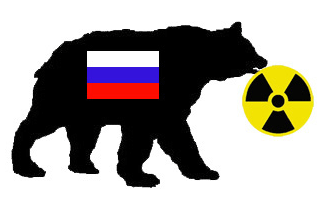
Around a 100km drive west of St. Petersburg, on the Gulf of Finland, sits Sosnovy Bor, home to state nuclear energy giant Rosatom’s waste disposal operations. Inside a controlled perimeter, subsidiary RosRAO, the facility’s manager, has created a prototype water decontamination plant for use at Tokyo Electric Power Co. Holdings‘ Fukushima Daiichi nuclear power station — the site of Japan’s largest nuclear disaster in March 2011.
The scrubbing facility, unveiled in June, is capable of removing tritium, or radioactive hydrogen, from nuclear-tainted water, something beyond the capabilities of the Fukushima plant’s current cleanup equipment. Distillation and electrolysis isolate and concentrate the isotope, which is then locked away in titanium. Experiments under conditions similar to those on the ground reportedly show the technology cutting wastewater’s radioactive material content to one-6,000th the initial level, making it safe for human consumption or release into the ocean.
Duplicating the facility near the Fukushima site and running it for the five years necessary to process 800,000 cu. meters of contaminated water would cost around $700 million in all. Companies in Japan and the U.S. are at work on their own facilities for tritium disposal, but the Russian plan’s cost and technological capability make it fully competitive, according to the project’s chief.
Rosatom has made other overtures to Japan. Executives from a mining and chemical unit have visited several times this year for talks with Japanese nuclear companies, aiming to cooperate on decommissioning the Fukushima plant and upgrading a reprocessing plant in Aomori Prefecture for spent nuclear fuel. Russia has amassed a wealth of expertise dealing with damaged nuclear reactors in the wake of the Chernobyl disaster, and would like Japan to draw on that knowledge, the subsidiary’s chief executive said.
Nuclear expertise
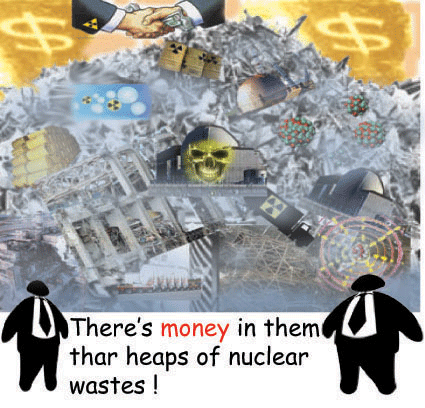
Revving up nuclear technology exports is essential to re-energizing Russia’s domestic industry and breaking free of dependence on the resource sector, Moscow has decided. The nuclear business, along with the space industry, is one of the few tech-intensive sectors where the country is internationally competitive. President Vladimir Putin has leaned more heavily on leaders in Europe and emerging countries in recent years to agree to deals with Russia’s nuclear companies………..http://asia.nikkei.com/Politics-Economy/International-Relations/Japan-nuclear-cleanup-next-target-in-Russian-economic-offensive
Nuclear power salesmen vie with each other to sell nukes to South Africa
Eskom Influence Growing In Proposed South African Nuclear Tender, AFK Insider,

While South Africa’s energy department will choose the successful vendor, Eskom, as the owner-operator of the new nuclear plants, will have a large input. David Nicholls, chief nuclear officer at Eskom, gave delegates a glimpse this week of Eskom’s vision for nuclear by defining a leading role for the state utility at the Power-Gen and DistribuTech Africa conference in Johannesburg.
A chosen vendor will lead the early process with Eskom’s input. This is how South Africa’s only operating nuclear plant, Koeberg, north of Cape Town, was built in the 1980s, he said.
Once the design base has been established with the first plant, South Africa will increasingly take charge.
Nicholls’ remarks show that Eskom is in favor of a proven standardized fleet of reactors, with sibling international plants to learn from. This indicates South Africa is likely to choose one vendor and stick with them……….. Vendors from Russia, France, South Korea, the U.S. and China are all hoping to win the lucrative South African nuclear contract.South Africa has opted for a pressurized water reactor technology,……..http://afkinsider.com/130186/eskom-influence-growing-in-proposed-south-african-nuclear-tender/
South Korean nuclear company to staff Emirates nuclear reactors
 Hydro & Nuclear staff to operate Abu Dhabi’s Barakah plant, New agreement will see KHNP staff stationed at Barakah until 2030 Gulf Business, By Robert Anderson, 23 July 16
Emirates Nuclear Energy Corporation has signed an operating support services deal with Korea Hydro & Nuclear Power that will see the company dispatch personnel to the Barakah Nuclear Power Plant until 2030.
Under the agreement, the Korean firm will provide main control room operators and local operator to support ENEC’s recently launched local operating subsidiary Nawah Energy Company……http://gulfbusiness.com/korea-hydro-nuclear-power-staff-operate-abu-dhabis-barakah-plant/#.V5UxYtJ97Gg
North Korea seek ‘nuclear nation’ status at ASEAN forum
 NK to seek ‘nuclear nation’ status at ARF Pyongyang’s top diplomat attends ASEAN forum, Korea Times, By Rachel Lee Ri Yong-ho, 23 July 16
North Korean Foreign Minister Ri Yong-ho is expected to call on the international community to accept his country as a nuclear state at the ASEAN Regional Forum (ARF) in Laos, officials here said Sunday……..
The North has stepped up its nuclear weapons program this year. It fired a Hwasong-10 intermediate range ballistic missile on June 22, after carrying out its fourth nuclear test on Jan. 4 and a series of ballistic missile tests afterwards.
This year’s ARF, the region’s largest security gathering, attracted diplomats from 27 countries, including all members of the six-party talks aimed at Pyongyang’s denuclearization as well as the 10 ASEAN-member states……..
“The ARF will discuss some of the very complex issues surrounding terrorism, the South China Sea and North Korea’s nuclear and missile threats after its fourth nuclear test early this year,” Yun said, expressing his will to have the majority of participating countries strictly follow the U.N. Security Council’s latest sanctions on Pyongyang.
On the sidelines of the forum, Yun will hold talks with Vietnam, Myanmar and Laos _ all of which have been friendly with Pyongyang _ as part of his efforts to attract participation in sanctioning the North. High on the agenda will also be the deployment of the Terminal High-Altitude Area Defense battery on the Korean Peninsula. …..http://www.koreatimes.co.kr/www/news/nation/2016/07/120_210172.html
Heatwave deaths linked to climate change
 Study links heatwave deaths in London and Paris to climate change, Skeptical Science 23 July 16 [good charts etc] This is a re-post from Carbon Brief by Robert McSweeney In 2003, more than 70,000 people across Europe died in a sweltering heatwave that spanned much of the summer. France was among the worst-affected countries, with 15,000 deaths in August alone. In the UK, the summer saw more than 2,000 heat-related fatalities.
A new first-of-a-kind study works out how many of the deaths in Paris and London are down to the heatwave being intensified by human-caused climate change. The findings suggest that 506 of the 735 summer fatalities in Paris in 2003, and 64 of the 315 in London, were a result of human influence on the climate.
Human influence The European summer heatwave of 2003 has been something of a focal point for scientists looking at if and how human-caused climate change influences extreme weather events.
In 2004, the heatwave was the subject of the first ever attribution study, which found thatclimate warming from human activity had at least doubled the likelihood of such an event. In 2014, another study found that a similar “extremely hot” summer in Europe has become 10 times more likely over the last 10-15 years because of climate change.
Taking this a step further, the new study, published in Environmental Research Letters, attributes the number of deaths during the 2003 heatwave to our warming climate.
The study makes use of the weather@home project, where members of the public offer spare capacity on their home computers for scientists to run model simulations.
The researchers ran thousands of simulations of European weather in 2003. One set of model runs simulated the weather according to the climate as it was – i.e. in a world warmed by past greenhouse gas emissions. The second set simulated the weather in a hypothetical world with no human influences on climate.
The researchers then compared the heat and humidity between the hypothetical world and the one better matched to reality to see how they affect the number of premature deaths in the summer of the same year. Lead author Dr Daniel Mitchell, a researcher in the Department of Physics at the University of Oxford, explains to Carbon Brief:
“We have a statistical relationship between the number of additional deaths per degree of warming. This is specific to a certain city, and changes a lot between cities. We use climate simulations to calculate the heat in 2003, and in 2003 without human influences. Then we compare the simulations, along with the observations.”
The authors’ comparison shows that human-induced climate change was responsible for 70% of heat-related deaths in central Paris, and 20% in Greater London.
This means, of the 735 heat-related deaths in Paris during the summer of 2003, 506 were due to human-caused climate change. For London, it was 64 out of 315.
Heat-related deaths …….Between June and August 2003, the total rate of heat-related deaths was 4.5 per 100,000 people for London and 34 per 100,000 for Paris, the paper says. Note, these figures differ from those in the charts below [on original] because they’re totals for the whole summer, rather than the heat-deaths per day, which the charts show.
As the study looked at just two affected cities, the total number of deaths due to the influence of climate change on the heatwave will be much higher, the paper notes:
“London and Paris are just two of a large number of cities that were impacted by the 2003 heatwave, therefore the total European-wide mortality count attributable to anthropogenic climate change is likely to be orders of magnitude larger than this.”
Future heatwaves The study is the first to apply a standard attribution methodology to look at mortality during a specific extreme weather event, says Dr Nikos Christidis from the Met Office, who wasn’t involved in this study, but authored another about European heatwaves. He tells Carbon Brief about the benefits of using this approach:
“An obvious one is that the study analyses mortality – i.e. a direct impact measure – rather than temperature – an indirect impact measure, which might be more useful to some decision makers.”……..http://www.skepticalscience.com/study-links-heatwave-deaths-london-paris-climate-change.html
|

General Electric’s dreams of commercialising small nuclear reactors could be fading away
The company has long supported nuclear energy and is making big bets on next-generation reactors, but backlash against atomic power and a lost opportunity in the United Kingdom may stall development efforts.
July 24 Energy News

Opinion:
¶ “The Switch: soon solar will be the cheapest power everywhere” • Solar is already the cheapest available power across large swathes of the tropics, writes Chris Goodall – its cost down 99.7% since the early 70s. Soon it will be the cheapest electricity everywhere, providing clean, secure, affordable energy for all. [The Ecologist]
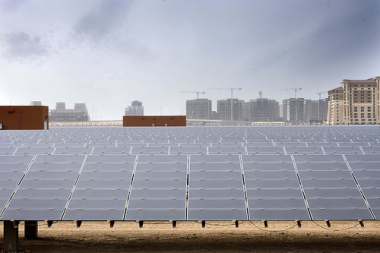 Solar power plant in Abu Dhabi, where solar already provides the
least costly electricity. Photo: Masdar Official via Flockr (CC BY-NC-SA).
¶ “Are General Electric’s Nuclear Ambitions Doomed?” • Once heralded as a reliable and clean power source capable of expediting the shift away from fossil fuels, nuclear power faces an uncertain future. Several nations in the EU have announced plans to rid their grids of nuclear power entirely, and plants are closing in the US. [Motley Fool]
Science and Technology:
¶ According to the United Nations weather agency, global temperatures…
View original post 552 more words
July 23 Energy News
Science and Technology:
¶ What if rather than using fuels that add carbon dioxide, we could create fuels that recycle carbon dioxide from the atmosphere? Researchers at Arizona State University are exploring the idea of creating fuels that do just that. They are synthesizing carbon-neutral liquid fuels. Think of them as fuels created out of thin air. [AZoCleantech]
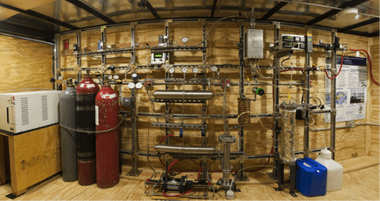 Interior of a mobile methanol synthesis trailer, where hydrogen is
produced and mixed with carbon dioxide. Photo courtesy of Steve Atkins.
World:
¶ India has invited its first-ever bids for solar energy projects that include storage as a requirement as part of a trial program aimed at making the renewable resource more reliable. Solar Energy Corp of India sought bids for 300-MW of solar power to be built in the southern states of Andhra Pradesh and Karnataka. [Bloomberg]
¶ Japan’s nuclear power is unlikely to meet a government…
View original post 556 more words
Stop Moorside – Spiked CONsultation

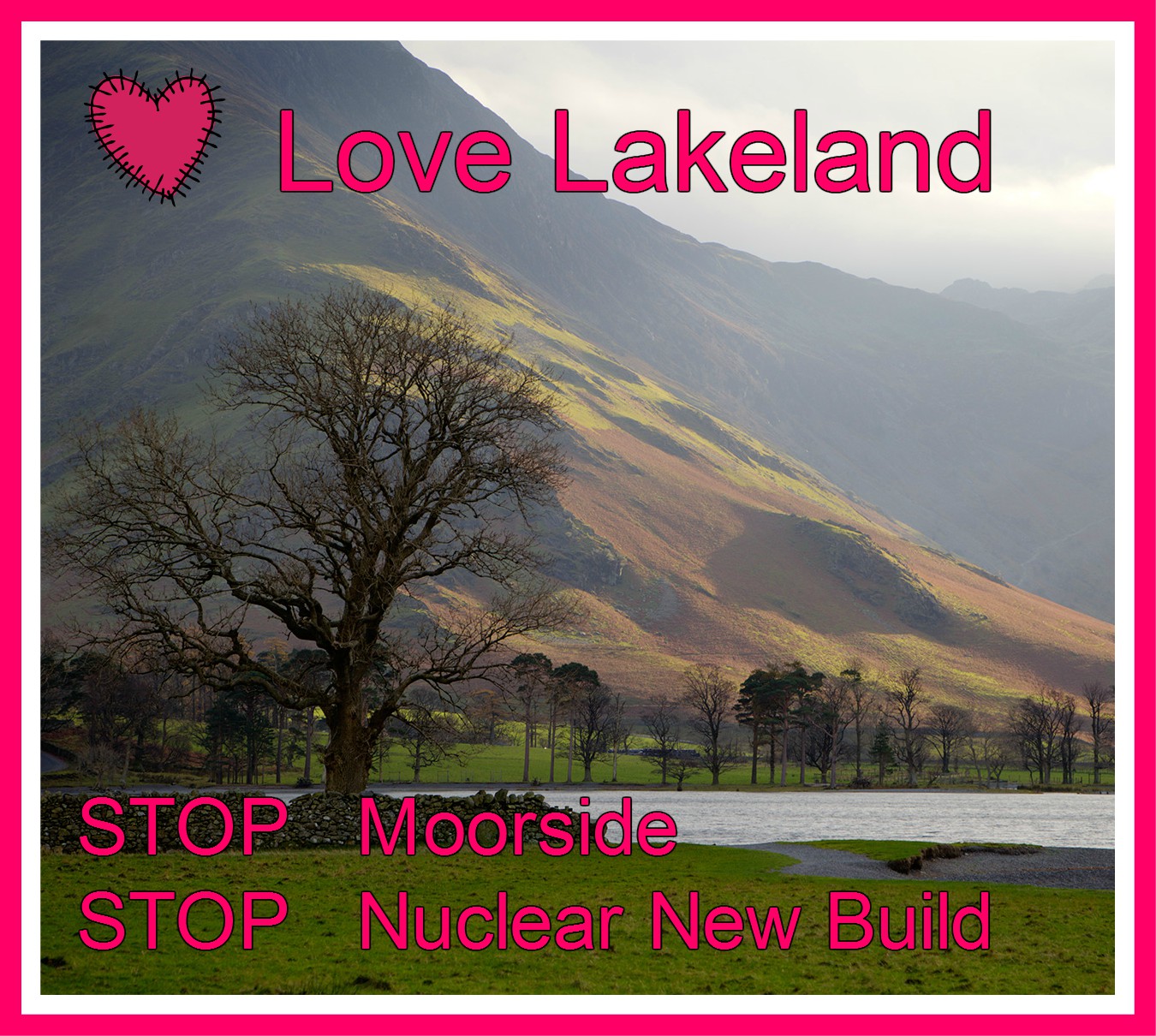 Stop Moorside Petition- Please Sign and Share SHARE SHARE!!!
The 2nd Moorside Consultation for the “biggest nuclear development in Europe” finishes on 30th July.
‘Too Big and Too Nasty to Fight‘ is the View of the Proposed Moorside Plan from so many good people like the Director of Cumbria Wildlife Trust who feel utterly defeated by the nuclear juggernaught coming our way. This is of course what the industry wants you to think. BUT WE CAN DEFEAT THEM, ALL IT TAKES IS YOU. Thousands of people have already joined the Resistance
We advise that as many people as possible write, phone, email to tell NuGen in your own words that : “I do not recognise this Consultation as valid….”
Email: info@nugeneration.com or go through their CONsultation page. Our letter is below for ideas. Even one or two lines on a Lakeland postcard to FREEPOST – MOORSIDE HAVE…
View original post 2,298 more words
From the Arctic to Africa to the Amazon, More Troubling Signs of Earth Carbon Store Instability

The time for debate is over. The time for rapid response is now. The Earth System just can’t take our fossil-fueled insults to her any longer.
*****
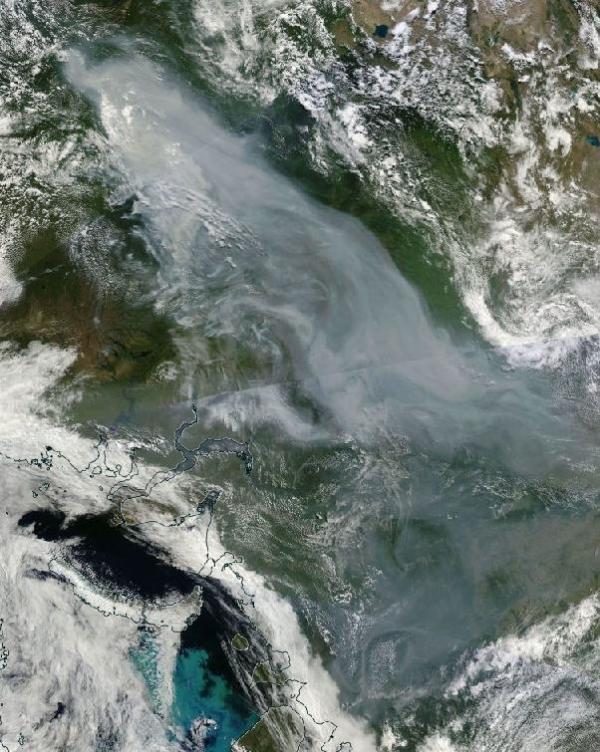
(These Arctic and Siberian wildfires just keep getting worse and worse, but what’s really concerning is they’re burning a big hole through one of the Earth’s largest carbon sinks, and as they do it, they’re belching out huge plumes of greenhouse gasses. Image source: LANCE MODIS.)
Carbon Spikes over the Arctic, Africa, and the Amazon
Today, climate change-enhanced wildfires in Siberia and Africa are belching out two hellaciously huge smoke clouds (see images below). They’re also spewing large plumes of methane and carbon dioxide, plainly visible in the global atmospheric monitors. Surface methane readings in these zones exceed 2,000 parts per billion, well above the global atmospheric average.
Even as the fires rage, bubbles of methane and carbon dioxide are reportedly seeping…
View original post 1,281 more words
There’s no end to Fukushima crisis while melted fuel remains
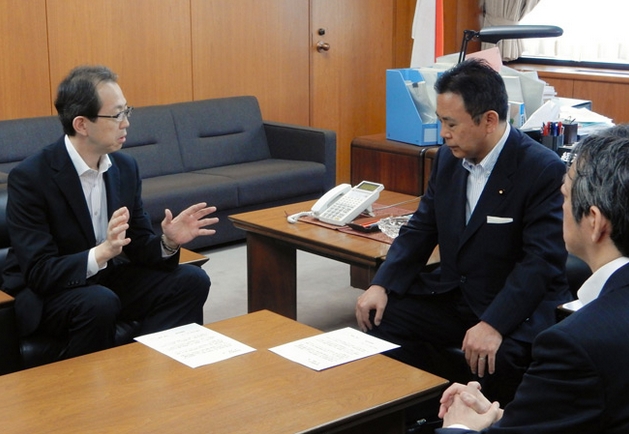
Fukushima Governor Masao Uchibori, left, speaks with Vice Industry Minister Yosuke Takagi
A massive concrete structure encases the wrecked No. 4 reactor at the Chernobyl nuclear power plant, site of the catastrophic 1986 accident.
Dubbed the “sarcophagus,” it was erected to contain the fuel that could not be extracted from the crippled reactor.
I never expected this word (“sekkan” in Japanese) to crop up in connection with the 2011 Fukushima nuclear crisis.
Local governments raised objections to the use of this word in a report compiled by a government organ that supports the decommissioning of the Fukushima No. 1 nuclear power plant.
While the report discusses the extraction of melted fuel as a requirement, it is written in such a way as to suggest that the construction of a sarcophagus is an option that should not be dismissed out of hand.
This outraged the governor of Fukushima, Masao Uchibori, who lashed out, “Containing (the melted fuel) in a sarcophagus spells giving up hope for post-disaster reconstruction and for returning home.”
The government organ has since deleted the word from the report, admitting that it was misleading and that constructing a sarcophagus is not under consideration.
The report lacked any consideration for the feelings of local citizens. But more to the point, just deleting the word does not settle this case.
Even though five years have passed since the disaster, nothing has been decided yet on how to extract the melted fuel. How, then, can anyone guarantee that the fuel will never be “entombed”?
I am reminded anew of the sheer difficulty of decommissioning nuclear reactors. The Fukushima edition of The Asahi Shimbun runs a weekly report on the work being done at the Fukushima No. 1 plant.
The report portrays the harsh realities at the site, such as leaks of contaminated water and accidents involving workers. Efforts to decommission the crippled reactors continue day after day, but the task is expected to take several decades.
Elsewhere in Japan, the rule that requires nuclear reactors to be decommissioned after 40 years is becoming toothless, and preparations are proceeding steadily for restarting reactors that have remained offline.
“Normalcy” appears to be returning, but there is a huge gap between that and the unending hardships in the disaster-affected areas.
1 This Month

of the week – Shut Down Drone Warfare!


Tell the Ukrainian Government to Drop Prosecution of Peace Activist Yurii Sheliazhenko

Petition to revoke the licensing of the Near Surface Nuclear Disposal Facility (NSDF) at Chalk River. https://www.ourcommons.ca/petitions/en/Petition/Details?Petition=e-7247
To see nuclear-related stories in greater depth and intensity – go to https://nuclearinformation.wordpress.com
-
Archives
- April 2026 (114)
- March 2026 (251)
- February 2026 (268)
- January 2026 (308)
- December 2025 (358)
- November 2025 (359)
- October 2025 (376)
- September 2025 (257)
- August 2025 (319)
- July 2025 (230)
- June 2025 (348)
- May 2025 (261)
-
Categories
- 1
- 1 NUCLEAR ISSUES
- business and costs
- climate change
- culture and arts
- ENERGY
- environment
- health
- history
- indigenous issues
- Legal
- marketing of nuclear
- media
- opposition to nuclear
- PERSONAL STORIES
- politics
- politics international
- Religion and ethics
- safety
- secrets,lies and civil liberties
- spinbuster
- technology
- Uranium
- wastes
- weapons and war
- Women
- 2 WORLD
- ACTION
- AFRICA
- Atrocities
- AUSTRALIA
- Christina's notes
- Christina's themes
- culture and arts
- Events
- Fuk 2022
- Fuk 2023
- Fukushima 2017
- Fukushima 2018
- fukushima 2019
- Fukushima 2020
- Fukushima 2021
- general
- global warming
- Humour (God we need it)
- Nuclear
- RARE EARTHS
- Reference
- resources – print
- Resources -audiovicual
- Weekly Newsletter
- World
- World Nuclear
- YouTube
-
RSS
Entries RSS
Comments RSS
 nuclear-news