President Obama’s nuclear disarmament dream has turned into a nuclear arms race nightmare
 Obama’s Nuclear Paradox: Pushing For Cuts, Agreeing To Upgrades, NPR , PHILIP EWING May 25, 2016 President Obama came into office with a dream of a world without nuclear weapons, and he’s sure to touch on this theme Friday when he becomes the first sitting U.S. president to visit Hiroshima, site of the world’s first atomic bombing.
Yet Obama also has put the U.S. on course to spend around $1 trillion on upgrading its nuclear arsenal over the next three decades and, critics say……..
president who has opposed nuclear weapons all his life has wound up asking Congress to fund a new class of ballistic missile submarine, a new stealth bomber, upgrades to the current stock of nuclear weapons, a new cruise missile and billions of dollars of other programs.
The world’s other nuclear superpower, Russia, is rejuvenating its own nuclear arsenal and threatening to develop whole new weapons, including an intermediate range missile and what it claims is a new nuclear torpedo.
China, Russia, India and the United States all are developing new missiles that travel at least three times the speed of sound. Disarmament activists say no country should have these weapons.
“Obama and his successor, along with Russian President Vladimir Putin, have a responsibility to pull back from a nuclear action-reaction cycle that would put both countries at greater risk and block further nuclear reductions for many more years to come,” declared Daryl Kimball, head of the Arms Control Association.
Kimball has called on Obama to propose new negotiations on global restraint, urge China, India and Pakistan to freeze their nuclear stockpiles and call for “a new push for a world without nuclear weapons.”…………
This year’s nuclear safety summit in Washington was viewed as a mere victory lap – which Russia boycotted. And by the final year of Obama’s term, it has become clear that the administration will have wound up spending more on new weapons than on nonproliferation. A lot more. …….http://www.npr.org/sections/parallels/2016/05/25/479498018/obamas-nuclear-paradox-pushing-for-cuts-
The USA Pentagon’s budget labyrinth for a planned $1 trillion splurge
 The Pentagon’s War on Accountability: Slush Funds, Smoke and Mirrors, and Funny Money Equal Weapons Systems Galore By William D. Hartung, Tom Dispatch, Reader Supported News, 24 May 16 Slush Funds Galore
“………If smokescreens and evasive maneuvers aren’t enough to hide the Pentagon’s actual priorities from the taxpaying public, there’s always secrecy. The Secrecy Project at the Federation of American Scientists recently put the size of the intelligence portion of the national security state’s “black budget“ — its secret spending on everything from spying to developing high-tech weaponry — at more than $70 billion. That figure includes a wide variety of activities carried out through the CIA, the NSA, and other members of the intelligence community, but $16.8 billion of it was requested directly by the Department of Defense. And that $70 billion is just the tip of the iceberg when it comes to secret spending programs, since billions more in secret financing for the development and acquisition of new weapons systems has been squirreled away elsewhere.
The largest recent project to have its total costs shrouded in secrecy is the B-21, the Air Force’s new nuclear bomber. Air Force officials claim that they need to keep the cost secret lest potential enemies “connect the dots” and learn too much about the plane’s key characteristics. In a letter to Senator McCain, an advocate of making the cost of the plane public, Ronald Walden of the Air Force’s Rapid Capabilities Office claimed that there was “a strong correlation between the cost of an air vehicle and its total weight.” This, he suggested, might make it “decisively easier” for potential opponents to guess its range and payload.
If such assessments sound ludicrous, it’s because they are. As the histories of other major Pentagon acquisition programs have shown, the price of a system tells you just that — its price — and nothing more. Otherwise, with its classic cost overruns, the F-35 would have a range beyond compare, possibly to Mars and back. Of course, the real rationale for keeping the full cost estimate for the B-21 secret is to avoid bad publicity. Budget analyst Todd Harrison of the Center for Strategic and International Studies suggests that it’s an attempt to avoid “sticker shock” for a program that he estimates could cost more than $100 billion to develop and purchase.
The bomber, in turn, is just part of a planned $1 trillion splurge over the next three decades on a new generation of bombers, ballistic missile submarines, and ground-based nuclear missiles, part of an updating of the vast U.S. nuclear arsenal. And keep this in mind: that trillion dollars is simply an initial estimate before the usual Pentagon cost overruns even begin to come into play. Financially, the nuclear plan is going to hit taxpayer wallets particularly hard in the mid-2020s when a number of wildly expensive non-nuclear systems like the F-35 combat aircraft will also be hitting peak production.
Under the circumstances, it doesn’t take a genius to know that there’s only one way to avoid the budgetary equivalent of a 30-car pile up: increase the Pentagon’s already ample finances yet again. Principal Deputy Undersecretary of Defense Brian McKeon was referring to the costs of building new nuclear delivery vehicles when he said that the administration was “wondering how the heck we’re going to pay for it, and probably thanking our lucky stars we won’t be here to answer the question.” Of course, the rest of us will be stuck holding the bag when all those programs cloaked in secrecy suddenly come out of hiding and the bills come fully due.
At this point, you may not be shocked to learn that, in response to McKeon’s uncomfortable question, the Pentagon has come up with yet another budgetary gimmick. It’s known as the “National Sea-Based Deterrence Fund,” or as Taxpayers for Common Sense more accurately labels it, “the Navy’s submarine slush fund.” The idea — a longstanding darling of the submarine lobby (and yes, Virginia, there is a submarine lobby in Washington) — is to set up a separate slush fund outside the Navy’s normal shipbuilding budget. That’s where the money for the new ballistic missile submarine program, currently slated to cost $139 billion for 12 subs, would go.
Establishing such a new slush fund would, in turn, finesse any direct budgetary competition between the submarine program and the new surface ships the Navy also wants, and so avoid a political battle that might end up substantially reducing the number of vessels the Navy is hoping to buy over the next 30 years. Naturally, the money for the submarine fund will have to come from somewhere, either one of the other military services or that operations and maintenance budget so regularly raided to help pay for expensive weapons programs.
Not to be outmaneuvered, Air Force Secretary Deborah Lee James has now asked Congress to set up a “strategic deterrence fund” to pay for its two newest nuclear delivery vehicles, the planned bomber and a long-range nuclear-armed ballistic missile. In theory, this would take pressure off other major Air Force projects like the F-35, but as with the submarine fund, it only adds up if a future president and a future Congress can be persuaded to jack up the Pentagon budget to make room for these and other weapons systems.
In the end, however the specifics work out, any “fund” for such weaponry will be just another case of smoke and mirrors, a way of kicking the nuclear funding crisis down the road in hopes of fatter budgets to come. Why make choices now when the Pentagon and the military services can bet on blackmailing a future Trump or Clinton administration and a future Congress into ponying up the extra billions of dollars needed to make their latest ill-conceived plans add up?
If your head is spinning after this brief tour of the Pentagon’s budget labyrinth, it should be. That’s just what the Pentagon wants its painfully complicated budget practices to do: leave Congress, any administration, and the public too confused and exhausted to actually hold it accountable for how our tax dollars are being spent. So far, they’re getting away with it.
William D. Hartung, a TomDispatch regular, is the director of the Arms and Security Project at the Center for International Policy and a senior adviser to the Security Assistance Monitor. He is the author of, among other books, Prophets of War: Lockheed Martin and the Making of the Military-Industrial Complex.
Follow TomDispatch on Twitter and join us on Facebook. Check out the newest Dispatch Book, Nick Turse’s Next Time They’ll Come to Count the Dead, and Tom Engelhardt’s latest book, Shadow Government: Surveillance, Secret Wars, and a Global Security State in a Single-Superpower World. http://readersupportednews.org/opinion2/277-75/37052-the-pentagons-war-on-accountability-slush-funds-smoke-and-mirrors-and-funny-money-equal-weapons-systems-galore
America’s risks of catastrophic fire in spent nuclear fuel pools
 Spent fuel fire on U.S. soil could dwarf impact of Fukushima, Science, By Richard Stone May. 24, 2016 A fire from spent fuel stored at a U.S. nuclear power plant could have catastrophic consequences, according to new simulations of such an event.
A major fire “could dwarf the horrific consequences of the Fukushima accident,” says Edwin Lyman, a physicist at the Union of Concerned Scientists, a nonprofit in Washington, D.C. “We’re talking about trillion-dollar consequences,” says Frank von Hippel, a nuclear security expert at Princeton University, who teamed with Princeton’s Michael Schoeppner on the modeling exercise.
The revelations come on the heels of a report last week from the U.S. National Academies of Sciences, Engineering, and Medicine on the aftermath of the 11 March 2011 earthquake and tsunami in northern Japan. The report details how a spent fuel fire at the Fukushima Daiichi Nuclear Power Plant that was crippled by the twin disasters could have released far more radioactivity into the environment.
The nuclear fuel in three of the plant’s six reactors melted down and released radioactive plumes that contaminated land downwind. Japan declared 1100 square kilometers uninhabitable and relocated 88,000 people. (Almost as many left voluntarily.) After the meltdowns, officials feared that spent fuel stored in pools in the reactor halls would catch fire and send radioactive smoke across a much wider swath of eastern Japan, including Tokyo. By a stroke of luck, that did not happen.
But the national academies’s report warns that spent fuel accumulating at U.S. nuclear plants is also vulnerable. After fuel is removed from a reactor core, the radioactive fission products continue to decay, generating heat. All nuclear power plants store the fuel onsite at the bottom of deep pools for at least 4 years while it slowly cools. To keep it safe, the academies report recommends that the U.S. Nuclear Regulatory Commission (NRC) and nuclear plant operators beef up systems for monitoring the pools and topping up water levels in case a facility is damaged. The panel also says plants should be ready to tighten security after a disaster.
At most U.S. nuclear plants, spent fuel is densely packed in pools, heightening the fire risk. NRC has estimated that a major fire at the spent fuel pool at the Peach Bottom nuclear power plant in Pennsylvania would displace an estimated 3.46 million people from 31,000 square kilometers of contaminated land, an area larger than New Jersey. But Von Hippel and Schoeppner think that NRC has grossly underestimated the scale and societal costs of such a fire…….http://www.sciencemag.org/news/2016/05/spent-fuel-fire-us-soil-could-dwarf-impact-fukushima
Exelon and its allies rally for a bailout of nuclear power, despite its known dangers
 Illinoisans Sound Off On Exelon/ComEd Bill As Report Unveils Dangers At Their Local Nuclear Sites http://www.progressillinois.com/news/content/2016/05/24/illinoisans-sound-over-exeloncomed-legislation With the end of the regular Illinois legislative session looming, supporters of an Exelon and ComEd energy proposal were at the State Capitol Tuesday to advocate for the measure.
Exelon workers and their allies were among those rallying for the controversial Next Generation Energy Plan. Without the legislation, Exelon has warned that it will have to shutter its Clinton and Quad Cities nuclear power plants, which are reportedly struggling financially.
State Sen. Chapin Rose (R-Mahomet), whose district includes the Clinton nuclear plant, supports the legislation. …
Illinois AFL-CIO President Michael Carrigan added: “We cannot afford to see a nuclear plant close.”
But Illinois Attorney General Lisa Madigan says the legislation is essentially a bailout for Exelon and its subsidiary ComEd.
“It’s outrageous that Exelon and ComEd are again requesting a bailout when they are both profitable companies,” Madigan said in a statement about her opposition to the legislation, SB 1585. “This proposal would force consumers to pay more only to boost the companies’ profits further. The legislature has more important matters to address than padding ComEd and Exelon’s profits.”
Abraham Scarr with the Illinois Public Interest Research Group (PIRG) also weighed in on the energy legislation Tuesday. He told consumers not to believe “the hype” around the bill:
ComEd and Exelon want you to believe their ‘Next Generation Energy Plan’ will put Illinois on the path to a clean energy future. Don’t believe the hype. They claim their bill will jump start solar, but the solar industry opposes it. They claim their new rate structure helps consumers, but consumer advocates oppose it. They ask for ‘equal footing’ with wind and solar, without counting the $5.58 billion Illinois ratepayers have already poured into their nuclear fleet.
The ComEd-Exelon bill prioritizes private profits over public good. Demand charges, the nuclear bailout, the grossly overpriced micro-grid proposal and many other policies all aim to deliver more, and more consistent, revenue for ComEd and Exelon.
It is time to transition to a clean, renewable energy economy and do so in a way that is fair to consumers and to the communities most impacted by our energy system. But instead of rising to these challenges, the ComEd-Exelon bill seeks to forestall this transition and wring as much profit from ratepayers as possible while delivering little in return.
In other news, Exelon’s Illinois nuclear facilities were mentioned in a new report released Tuesday by Greenpeace.
The environmental group analyzed “near misses or accident precursors at U.S. nuclear power plants over the past decade.” The report adds that “risk analysts have determined” these events to be “precursors to a meltdown.”
The incidents were reported to the U.S. Nuclear Regulatory Commission. From 2004 through 2014, NRC recored “61 events and 102 conditions at US nuclear plants that were near misses to a meltdown,” the report says.
All but three of Exelon’s 11 nuclear reactors in Illinois are reported to have had “near misses” over that decade, according to the research.
“As legislators and the governor move to decide Illinois energy future and whether to bailout three of Exelon’s aging and financially failing reactors, they should well consider the potential safety risks of staying with nuclear power, and whether or not the federal regulators are doing their job to adequately protect Illinois from enormous economic and environmental harm,” Dave Kraft, director of the Chicago-based Nuclear Energy Information Service, an anti-nuclear group, said in reaction to the new Greenpeace report. SOURCES News links: Journal Gazette & Times-Courier
Illinois the perfect illustration of the plight of the nuclear and coal industries

 Where Free Wind Meets Cheap Gas in U.S., Power Dynamics Changing
-
Illinois could lose more than 10 percent of power capacity
-
Exelon, Dynegy asking legislature to save aging plants
-
For a snapshot of the woes of the U.S coal and nuclear industries, take a look at Illinois.
Following a four-year drop in electricity demand, power companies there announced the closing of coal and nuclear plants that account for more than 10 percent of generating capacity. The shutdowns come amid a fourfold increase in cheap wind from neighboring states and growing competition from generators burning low-cost natural gas.
- Exelon Corp., the operator of 11 nuclear reactors in Illinois, and Dynegy Inc., which has 10 coal-fired plants in the state, are asking lawmakers to bail out their money-losing assets to prevent further job-cutting, closures
- “You’ve got free wind power coming from the west and cheap gas coming from the east and that’s not a good place to be for coal and nuclear power plants,” said Travis Miller, a utility analyst for Morningstar Inc., an investment research firm.
- Illinois isn’t alone. The power industry upheaval is playing out in more than a dozen states that deregulated their electricity markets, opening their borders to competition, over the past two decades. In those locations, owners of aging generators are particularly vulnerable as the average wholesale power price has dropped by about half since 2008. In response, electricity providers in places like Ohio and New York are asking for millions of dollars to keep their units running.
Nowhere has the confluence of market forces produced such a profound dislocation as in Illinois. Continue reading


Weaponising the planet – the Pentagon’s secret “war budget”

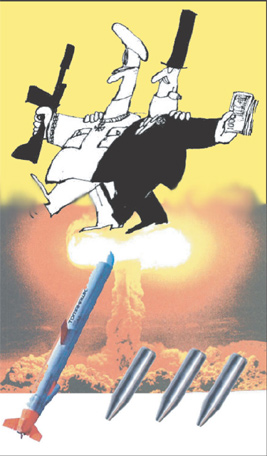 The Pentagon’s War on Accountability: Slush Funds, Smoke and Mirrors, and Funny Money Equal Weapons Systems Galore By William D. Hartung, Tom Dispatch, Reader Supported News, 24 May 16 How to Arm the Planet
“……..In recent years, keeping tabs on how the Pentagon spends its money has grown even more difficult thanks to the “war budget” — known in Pentagonese as the Overseas Contingency Operations (OCO) account — which has become a nearly bottomless pit for items that have nothing to do with fighting wars. The use of the OCO as a slush fund began in earnest in the early years of the Bush administration’s war in Iraq and has continued ever since. It’s hard to put a precise number on how much money has been slipped into that budget or taken out of it to pay for pet projects of every sort in the last decade-plus, but the total is certainly more than $100 billion and counting.
The Pentagon’s routine use of the war budget as a way to fund whatever it wants has set an example for a Congress that’s seldom seen a military project it wasn’t eager to pay for. Only recently, for instance, the House Armed Services Committee chair, Texas Republican Congressman Mac Thornberry, proposed taking $18 billion from the war budget to cover items like an extra 11 F-35 combat aircraft and 14 F-18 fighter-bombers that the Pentagon hadn’t even asked for.
This was great news for Lockheed Martin, which needs a shot in the arm for its troubled F-35 program, already slated to be the most expensive weapons system in history, and for Boeing, which has been lobbying aggressively to keep its F-18 production line open in the face of declining orders from the Navy. But it’s bad news for the troops because, as the Project on Government Oversight has demonstrated, the money used to pay for the unneeded planes will come at the expense of training and maintenance funds.
This is, by the way, the height of hypocrisy at a time when the House Armed Services Committee is routinely sending out hysterical missives about the country’s supposed lack of military readiness. The money to adequately train military personnel and keep their equipment running is, in fact, there. Members of Congress like Thornberry would just have to stop raiding the operations budget to pay for big ticket weapons systems, while turning a blind eye to wasteful spending in other parts of the Pentagon budget.
Thornberry’s gambit may not carry the day, since both President Obama and Senate Armed Services Committee chair John McCain oppose it. But as long as a separate war budget exists, the temptation to stuff it with unnecessary programs will persist as well.
Of course, that war budget is just part of the problem. The Pentagon has so many budding programs tucked away in so many different lines of its budget that even its officials have a hard time keeping track of what’s actually going on. As for the rest of us, we’re essentially in the dark.
Consider, for instance, the proliferation of military aid programs. The Security Assistance Monitor, a nonprofit that tracks such programs, has identified more than two dozen of them worth about $10 billion annually. Combine them with similar programs tucked away in the State Department’s budget, and the U.S. is contributing to the arming and training of security forces in 180 countries. (To put that mind-boggling total in perspective, there are at most 196 countries on the planet.) Who could possibly keep track of such programs, no less what effect they may be having on the countries and militaries involved, or on the complex politics of, and conflicts in, various regions?
Best suggestion: don’t even think about it (which is exactly what the Pentagon and the military-industrial complex want you to do). And no need for Congress to do so either. After all, as Lora Lumpe and Jeremy Ravinsky of the Open Society Foundations noted earlier this year, the Pentagon is the only government agency providing foreign assistance that does not even have to submit to Congress an annual budget justification for what it does. As a result, they write, “the public does not know how much the DoD is spending in a given country and why……….”http://readersupportednews.org/opinion2/277-75/37052-the-pentagons-war-on-accountability-slush-funds-smoke-and-mirrors-and-funny-money-equal-weapons-systems-galore
China readies nuclear armed submarines for the Pacific
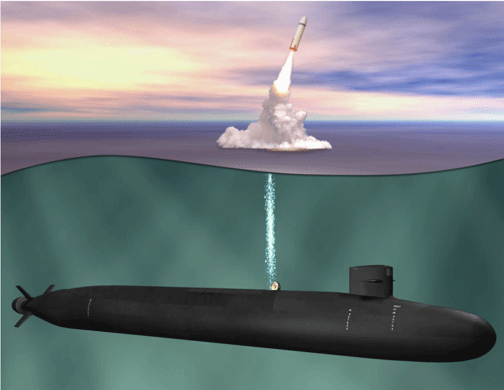
 China to send nuclear-armed submarines into Pacific amid tensions with US
Beijing risks stoking new arms race with move although military says expansion of the US missile defence has left it with no choice, Guardian, Julian Borger , 26 May 16 [ video, excellent graphics] The Chinese military is poised to send submarines armed with nuclear missiles into the Pacific Ocean for the first time, arguing that new US weapons systems have so undermined Beijing’s existing deterrent force that it has been left with no alternative.
Chinese military officials are not commenting on the timing of a maiden patrol, but insist the move is inevitable.
They point to plans unveiled in March to station the US Thaad anti-ballistic system in South Korea, and the development of hypersonic glide missiles potentially capable of hitting China less than an hour after launch, as huge threats to the effectiveness of its land-based deterrent force.
A recent Pentagon report to Congress predicted that “China will probably conduct its first nuclear deterrence patrol sometime in 2016”, though top US officers have made such predictions before…….
Last Tuesday, a US spy plane and two Chinese fighter jets came close to colliding 50 miles of Hainan island, where China’s four Jin-Class ballistic missile submarines are based. A fifth is under construction.
The two countries’ navies have also come uncomfortably close around disputed islands in the same region, and the chance of a clash will be heightened by cat-and-mouse submarine operations, according to Wu Riqiang, an associate professor at the School of International Studies at the Renmin University in Beijing.
“Because China’s SSBNs [nuclear missile submarines] are in the South China Sea, the US navy will try to send spy ships in there and get close to the SSBNs. China’s navy hates that and will try to push them away,” Wu said.
The primary reason Chinese military officials give for the move towards a sea-based deterrent is the expansion of US missile defence, which Moscow also claims is disturbing the global strategic balance and potentially stoking a new arms race.
The decision to deploy Thaad anti-ballistic interceptors in South Korea was taken after North Korea’s fourth nuclear test, and the stated mission of the truck-launched interceptors is to shield the south from missile attack.
But Beijing says the Thaad system’s range extends across much of China and contributes to the undermining of its nuclear deterrent. It has warned Seoul that relations between the two countries could be “destroyed in an instant” if the Thaad deployment goes ahead……
Under Xi’s assertive leadership, China seems determined that the Chinese nuclear deterrent will take finally to the ocean, and it has already taken thestep of putting multiple warheads on its missiles. Those steps are mostly in response to US measures, which in turn were triggered by unrelated actions by the North Koreans.
The law of unintended consequences is in danger of taking the upper hand. “The two sides may thus be stumbling blindly into severe crisis instability and growing competition by China with respect to strategic forces,” Lewis argues. “A competition between unevenly matched forces is inherently unstable.”http://www.theguardian.com/world/2016/may/26/china-send-nuclear-armed-submarines-into-pacific-us
Donald Trump will pull the US out of the UN global climate accord, push coal, oil
 Trump to undo climate agenda, push coal, THE AUSTRALIAN BY VALERIE VOLCOVICI AND EMILY STEPHENSON AAP MAY 27, 2016
Donald Trump, the presumptive Republican presidential nominee, has promised to roll back some of America’s most ambitious environmental policies, actions that he said would revive the ailing US oil and coal industries and bolster national security.
Among the proposals, Trump said he would pull the US out of the UN global climate accord, approve the Keystone XL oil pipeline from Canada, and rescind measures by President Barack Obama to cut US emissions and protect waterways from industrial pollution……..
It was Trump’s first speech detailing the energy policies he would advance if elected president. He received loud applause from the crowd of oil executives.
The comments painted a stark contrast between the New York billionaire and his Democratic rivals for the White House, Hillary Clinton and Bernie Sanders, who advocate a sharp turn away from fossil fuels and towards renewable energy technologies to combat climate change.
Trump slammed both rivals in his speech, saying their policies would kill jobs and force the US “to be begging for oil again” from Middle East producers.
Trump’s comments drew quick criticism from environmental advocates, who called his proposals “frightening”.
“Trump’s energy policies would accelerate climate change, protect corporate polluters who profit from poisoning our air and water, and block the transition to clean energy that is necessary to strengthen our economy and protect our climate and health,” said Tom Steyer, a billionaire environmental activist.
But industry executives cheered the stance……..
Until Thursday, Trump had been short on details of his energy policy. He has said he believes global warming is a hoax, that his administration would revive the US coal industry, and that he supports hydraulic fracturing – an environmentally controversial drilling technique that has triggered a boom in US production……http://www.theaustralian.com.au/news/latest-news/trump-would-approve-keystone-pipeline/news-story/3ad66f7f374ab34cddf3d1a48fd14a56
Climate change leading to mass migration crises if world does not act
 French minister warns of mass climate change migration if world doesn’t act
Hundreds of millions of people could be displaced by the end of the century due to conflict caused by global warming, says Ségolène Royal, Guardian, Adam Vaughan, Global warming will create hundreds of millions of climate change migrants by the end of the century if governments do not act, France’s environment minister has warned.
Ségolène Royal told ministers from 170 countries at the UN environment assembly in Nairobi that climate change was linked to conflicts, which in turned caused migration.
“Climate change issues lead to conflict, and when we analyse wars and conflicts that have taken place over the last few years we see some are linked to an extent to climate change, drought is linked to food security crises,” she said.
“The difficulty of having access to food resources leads to massive migration, south-south migration [migration within developing countries]. The African continent is particularly hit by this south-south migration.
“If nothing is done to combat the negative impact of climate change, we will have hundreds of millions of climate change migrants by the end of the century.”……..http://www.theguardian.com/environment/2016/may/26/french-minister-warns-of-mass-climate-change-migration-if-world-doesnt-act
Pentagon successfully keeps extent of military spending secret from the American public
The Pentagon’s War on Accountability: Slush Funds, Smoke and Mirrors, and Funny Money Equal Weapons Systems Galore By William D. Hartung, Tom Dispatch, Reader Supported News, 24 May 16 “……..Now you see it, now you don’t. Think of it as the Department of Defense’s version of the street con game, three-card monte, or maybe simply as the Pentagon shuffle. In any case, the Pentagon’s budget is as close to a work of art as you’re likely to find in the U.S. government — if, that is, by work of art you mean scam.
The United States is on track to spend more than $600 billion on the military this year — more, that is, than was spent at the height of President Ronald Reagan’s Cold War military buildup, and more than the military budgets of at least the next seven nations in the world combined. And keep in mind that that’s just a partial total. As an analysis by the Straus Military Reform Project has shown, if we count related activities like homeland security, veterans’ affairs, nuclear warhead production at the Department of Energy, military aid to other countries, and interest on the military-related national debt, that figure reaches a cool $1 trillion.
The more that’s spent on “defense,” however, the less the Pentagon wants us to know about how those mountains of money are actually being used. As the only major federal agency that can’t pass an audit, the Department of Defense (DoD) is the poster child for irresponsible budgeting.
It’s not just that its books don’t add up, however. The DoD is taking active measures to disguise how it is spending the hundreds of billions of taxpayer dollars it receives every year — from using the separate “war budget” as a slush fund to pay for pet projects that have nothing to do with fighting wars to keeping the cost of its new nuclear bomber a secret. Add in dozens of other secret projects hidden in the department’s budget and the Pentagon’s poorly documented military aid programs, and it’s clear that the DoD believes it has something to hide.
Don’t for a moment imagine that the Pentagon’s growing list of secret programs and evasive budgetary maneuvers is accidental or simply a matter of sloppy bookkeeping. Much of it is remarkably purposeful. By keeping us in the dark about how it spends our money, the Pentagon has made it virtually impossible for anyone to hold it accountable for just about anything. An entrenched bureaucracy is determined not to provide information that might be used to bring its sprawling budget — and so the institution itself — under control. That’s why budgetary deception has become such a standard operating procedure at the Department of Defense.
The audit problem is a case in point. The Pentagon along with all other major federal agencies was first required to make its books auditable in the Chief Financial Officers Act of 1990. More than 25 years later, there is no evidence to suggest that the Pentagon will ever be able to pass an audit. In fact, the one limited instance in which success seemed to be within reach — an audit of a portion of the books of a single service, the Marine Corps — turned out, upon closer inspection, to be a case study in bureaucratic resistance.
In April 2014, when it appeared that the Corps had come back with a clean audit, Secretary of Defense Chuck Hagel was so elated that he held a special ceremony in the “Hall of Heroes” at the Pentagon. “It might seem a bit unusual to be in the Hall of Heroes to honor a bookkeeping accomplishment,” he acknowledged, “but damn, this is an accomplishment.”
In March 2015, however, that “accomplishment” vanished into thin air. The Pentagon’s Office of Inspector General (OIG), which had overseen the work of Grant Thornton, the private firm that conducted the audit, denied that it had been successful (allegedly in response to “new information”). In fact, in late 2013, as Reuters reported, auditors at the OIG had argued for months against green-lighting Grant Thornton’s work, believing that it was full of obvious holes. They were, however, overruled by the deputy inspector general for auditing, who had what Reuters described as a “longstanding professional relationship” with the Grant Thornton executive supervising the audit.
The Pentagon and the firm deny that there was any conflict of interest, but the bottom line is clear enough: there was far more interest in promoting the idea that the Marine Corps could pass an audit than in seeing it actually do so, even if inconvenient facts had to be swept under the rug. This sort of behavior is hardly surprising once you consider all the benefits from an undisturbed status quo that accrue to Pentagon bureaucrats and cash-hungry contractors.
Without a reliable paper trail, there is no systematic way to track waste, fraud, and abuse in Pentagon contracting, or even to figure out how many contractors the Pentagon employs, though a conservative estimate puts the number at well over 600,000. The result is easy money with minimal accountability………http://readersupportednews.org/opinion2/277-75/37052-the-pentagons-war-on-accountability-slush-funds-smoke-and-mirrors-and-funny-money-equal-weapons-systems-galore
Australia got UN to remove climate topics from climate change report!

 Australia scrubbed from UN climate change report after government intervention http://www.theguardian.com/environment/2016/may/27/australia-scrubbed-from-un-climate-change-report-after-government-intervention#comment-75076075
Exclusive: All mentions of Australia were removed from the final version of a Unesco report on climate change and world heritage sites after the Australian government objected on the grounds it could impact on tourism
Revealed: Guardian Australia has obtained the Unesco report Australia didn’t want the world to see. Read it now Guardian, Michael Slezak, 27 May 16
Every reference to Australia was scrubbed from the final version of a major UN report on climate change after the Australian government intervened, objecting that the information could harm tourism.
Guardian Australia can reveal the report “World Heritage and Tourism in a Changing Climate”, which Unesco jointly published with the United Nations environment program and the Union of Concerned Scientists on Friday, initially had a key chapter on the Great Barrier Reef, as well as small sections on Kakadu and the Tasmanian forests.
But when the Australian Department of Environment saw a draft of the report, it objected, and every mention of Australia was removed by Unesco. Will Steffen, one of the scientific reviewers of the axed section on the reef, said Australia’s move was reminiscent of “the old Soviet Union”.
No sections about any other country were removed from the report. The removals left Australia as the only inhabited continent on the planet with no mentions.
Explaining the decision to object to the report, a spokesperson for the environment department told Guardian Australia: “Recent experience in Australia had shown that negative commentary about the status of world heritage properties impacted on tourism.”
 As a result of climate change combined with weather phenomena, the Great Barrier Reef is in the midst of the worst crisis in recorded history. Unusually warm water has caused 93% of the reefs along the 2,300km site to experience bleaching. In the northern most pristine part, scientists think half the coral might have died.
The omission was “frankly astounding,” Steffen said. Steffen is an emeritus professor at the Australian National University and head of Australia’s Climate Council. He was previously executive director of the International Geosphere Biosphere Programme, where he worked with 50 countries on global change science.
“I’ve spent a lot of my career working internationally,” Steffen said. “And it’s very rare that I would see something like this happening. Perhaps in the old Soviet Union you would see this sort of thing happening, where governments would quash information because they didn’t like it. But not in western democracies. I haven’t seen it happen before.”
The news comes less than a year after the Australian governmentsuccessfully lobbied Unesco to not list the Great Barrier Reef in its list of “World Heritage Sites in Danger”.
The removals occurred in early 2016, during a period when there was significant pressure on the Australian government in relation to both climate change and world heritage sites.
At the time, news of the government’s science research agency CSIRO sacking 100 climate scientists due to government budget cuts had just emerged; parts of the Tasmanian world heritage forests were on fire for the first time in recorded history; and a global coral bleaching event was beginning to hit the Great Barrier Reef – another event driven by global warming.
The environment department spokesperson told Guardian Australia: “The department was concerned that the framing of the report confused two issues – the world heritage status of the sites and risks arising from climate change and tourism.” Continue reading
United Arab Emirates setting a solar power trend in the Gulf
 Could UAE solar push lead a trend for the Gulf? BY SAKET S. DUBAI (Thomson Reuters Foundation), 23 May 16 – As the Gulf states take steps to expand their use of clean energy, a bold plan by the United Arab Emirates to boost its use of renewable electricity from less than 1 percent to 24 percent in the next five years could be a game-changer for the region, experts say.
Much of the world is moving away from oil for its electricity generation, according to the International Energy Agency (IEA), which says that globally the fossil fuel has dropped from a 25 percent share to 3.6 percent over the last four decades…….
dropping oil prices and growing concerns about climate change have exposed the downsides of relying on oil. As the Gulf’s demand for power continues to rise, the UAE is leading the way in shifting to greener energy resources .
.
“The implications of unmitigated climate change for the UAE make its cities unbearably hot, water even more scarce and the region more unstable,” Rachel Kyte, the CEO of the United Nations’ Sustainable Energy for All initiative, told the Thomson Reuters Foundation.
“Action alone and collectively to live in balance with the planet is fundamental for UAE’s future prosperity,” she said.
SOLAR GIANT?
At the Middle East and North Africa Renewable Energy Conference in Kuwait last month, the Gulf Cooperation Council (GCC) states – Bahrain, Kuwait, Oman, Qatar, Saudi Arabia and the UAE – pledged to mobilize $100 billion into renewable energy projects over the next 20 years.
One of the projects in the UAE’s renewables push is the $13.6 billion Mohammed bin Rashid Al Maktoum Solar Park in Dubai, which aims to become the biggest solar power plant in the Middle East.
It is expected to generate 5 gigawatts of electricity – enough to power 1.5 million homes – by 2030.
Dubai also plans to install around 100 electric car charging stations as part of its Green Charger Initiative.
By 2050, Dubai wants to reduce its carbon emissions by 6.5 million tons every year, with the aim of becoming the city with the world’s lowest carbon footprint, according to the Dubai Electricity and Water Authority.
Meanwhile, Saudi Arabia has said it wants to add another 9.5 GW of renewable energy capacity to its current capacity of 80 GW by 2030, And Oman’s power sector regulator, the Authority for Electricity Regulation Oman, has announced it will expand rooftop soar installations across residential homes, industrial and commercial buildings.
In Qatar, French energy giant Total SA has announced a joint venture worth $500 million with state-run petroleum, electricity and water companies to develop a solar-power project with a capacity of 1,000 megawatts (MW).
And with a 70 MW solar project due to be operational by 2017, Kuwait plans to meet 15 percent of its energy needs with renewables by 2030, according to the Kuwait Institute of Scientific Research…..
The region already has some of the infrastructure it needs to become a major clean-power hub. The Gulf Cooperation Council countries are linked by a 1,200-km electrical grid, built to help provide backup power in case of a blackout in one part of the system.
Expanded to other countries, that electricity highway could be the backbone of future power trading, experts say.
“The Gulf has an exportable resource in solar energy that could eventually be on a comparable level to oil and gas,” said Jonathan Walters, a former director at the World Bank……..(Reporting by Saket S.; editing by Jumana Farouky and Laurie Goering http://www.reuters.com/article/us-emirates-solar-electricity-idUSKCN0YE1SJ
Pentagon’s “small” giant military footprint in Africa
The Pentagon’s War on Accountability: Slush Funds, Smoke and Mirrors, and Funny Money Equal Weapons Systems Galore By William D. Hartung, Tom Dispatch, Reader Supported News, 24 May 16 Colonel Mark Cheadle, a spokesman for U.S. Africa Command (AFRICOM), recently made a startling disclosure to Voice of America (VOA). AFRICOM, he said, is currently mulling over 11 possible locations for its second base on the continent. If, however, there was a frontrunner among them Cheadle wasn’t about to disclose it. All he would say was that Nigeria isn’t one of the countries in contention.
Writing for VOA, Carla Babb filled in the rest of the picture in terms of U.S. military activities in Africa. “The United States currently has one military base in the east African nation of Djibouti,” she observed. “U.S. forces are also on the ground in Somalia to assist the regional fight against al-Shabab and in Cameroon to help with the multinational effort against Nigeria-based Boko Haram.”
A day later, Babb’s story disappeared. Instead, there was a new article in which she noted that “Cheadle had initially said the U.S. was looking at 11 locations for a second base, but later told VOA he misunderstood the question.” Babb reiterated that the U.S. had only the lone military base in Djibouti and stated that “[o]ne of the possible new cooperative security locations is in Cameroon, but Cheadle did not identify other locations due to ‘host nation sensitivities.’”
U.S. troops have, indeed, been based at Camp Lemonnier in Djibouti since 2002. In that time, the base has grown from 88 acres to about 600 acres and has seen more than $600 million in construction and upgrades already awarded or allocated. It’s also true that U.S. troops, as Babb notes, are operating in Somalia — from at least two bases — and the U.S. has indeed set up a base in Cameroon. As such, the “second” U.S. base in Africa, wherever it’s eventually located, will actually be more like the fifth U.S. base on the continent. That is, of course, if you don’t count Chabelley Airfield, a hush-hush drone base the U.S. operates elsewhere in Djibouti, or the U.S. staging areas, cooperative security locations, forward operating locations, and other outposts in Burkina Faso, Central African Republic, Chad,Ethiopia, Gabon, Ghana, Kenya, Mali, Niger, Senegal, the Seychelles, Somalia, South Sudan, and Uganda, among other locales. When I counted late last year, in fact, I came up with 60 such sites in 34 countries. And just recently, Missy Ryan of the Washington Post added to that number when she disclosed that “American Special Operations troops have been stationed at two outposts in eastern and western Libya since late 2015.”
To be fair, the U.S. doesn’t call any of these bases “bases” — except when officials forget to keep up the fiction. For example, the National Defense Authorization Act for Fiscal Year 2016 included a $50 million request for the construction of an “airfield and base camp at Agadez, Niger.” But give Cheadle credit for pushing a fiction that persists despite ample evidence to the contrary.
It isn’t hard, of course, to understand why U.S. Africa Command has set up a sprawling network of off-the-books bases or why it peddles misinformation about its gigantic “small” footprint in Africa. It’s undoubtedly for the same reason that they stonewall me on even basic information about their operations. The Department of Defense, from tooth to tail, likes to operate in the dark.
Today, TomDispatch regular Bill Hartung reveals another kind of Pentagon effort to obscure and obfuscate involving another kind of highly creative accounting: think slush funds, secret programs, dodgy bookkeeping, and the type of financial malfeasance that could only be carried out by an institution that is, by its very nature, too big to fail (inside the Beltway if not on the battlefield).
Rejecting both accurate accounting and actual accountability — from the halls of the Pentagon to austere camps in Africa — the Defense Department has demonstrated a longstanding commitment to keeping Americans in the dark about the activities being carried out with their dollars and in their name. Luckily, Hartung is willing to shine a bright light on the Pentagon’s shady practices……..-Nick Turse, TomDispatch http://readersupportednews.org/opinion2/277-75/37052-the-pentagons-war-on-accountability-slush-funds-smoke-and-mirrors-and-funny-money-equal-weapons-systems-galore
Chicago’s electricity costs to be twice as much as for others in the grid
Chicago to pay twice as much for electricity reliability as others in grid http://www.chicagobusiness.com/article/20160525/NEWS11/160529907/chicagoans-to-pay-double-for-reliability-than-others-in-its-power-grid By STEVE DANIELS Chicagoans will pay more than twice as much to keep their lights on during high-demand periods as the rest of the regional power grid they’re part of.
Beginning in mid-2019, the Chicago region will pay about $9 per megawatt-hour in extra “capacity” charges to ensure power plants deliver when they’re most needed. The charges are set per a power-generator auction conducted by PJM Interconnection, which oversees the power grid from Chicago east to the Mid-Atlantic states.
Results of the auction were unveiled May 24. PJM conducts the bidding three years in advance. The prices will take effect in June 2019 and be embedded in the energy costs all commercial and residential customers pay.
The results are good news for Exelon, which has campaigned for higher revenues both through the PJM auction and also from the state of Illinois for its five Illinois nuclear plants in the PJM.
But the company’s bidding behavior will limit the revenue windfall it might have received. Its Quad Cities plant bid too high to get any revenue at all, and only a portion of the capacity at its Byron plant qualified.
If all of Byron had cleared the auction, Exelon would have received $653 million in revenue beginning in mid-2019. As it is, the company will see about $513 million, according to calculations based on a Securities and Exchange Commission filing.
That’s still higher than the $495 million it will get in the year beginning this coming June 1. And that’s with all the plants—Quad Cities and all of Byron included—getting paid.
Exelon says it will close Quad Cities as soon as mid-2018 without passage of a state law hiking electricity rates statewide to make that money-losing facility profitable. Had it cleared, Quad Cities would have received more than $100 million.
As it is, that’s money Chicago-area ratepayers will have to replace if the bill Exelon is pushing in Springfield passes. Exelon’s legislation demands a surcharge on electric bills sufficient to pay Quad Cities and the downstate Clinton nuke (which isn’t in PJM and isn’t eligible for the auction) $42 per megawatt-hour. The $9 Quad Cities isn’t getting because it didn’t qualify would have to be made up through the surcharge under the bill.
Of course, had Quad Cities qualified under the auction, Exelon would have been committed to keep it open until mid-2020. As of now, Exelon can close it as early as mid-2018.
In a statement, Exelon CEO Chris Crane said the high PJM-set prices aren’t enough to save Quad Cities.
“The capacity market alone can’t preserve zero-carbon emitting nuclear plants that are facing the lowest wholesale energy prices in 15 years,” Crane said.
Critics decried the outcome of the auction.
“There is a surplus of nuclear and coal in Northern Illinois,” said Howard Learner, executive director of Chicago-based Environmental Law and Policy Center. “Electricity demand is dropping. . . . There’s no reason revenues in the ComEd region should be twice as high as the rest of the region.”
A PJM spokeswoman said the price for ComEd was so much higher than the rest of PJM, which includes all or part of 12 other states and Washington, D.C., because of “transmission constraints inhibiting the ability to import cheaper power.”
Transmission is tighter than it used to be to move power generated to the west into Illinois, she said. And coal-plant retirements also are playing a part.
The fact that Quad Cities didn’t qualify for the PJM payments, though, also means that the 1,871-megawatt plant isn’t needed to meet Chicago-area electricity demand even during the hottest summer days. So, while Exelon has made the argument that reliability would suffer with the plant’s closure, PJM believes there’s enough capacity without Quad Cities to keep the lights on and provide a substantial cushion above that.
PJM last year overhauled its capacity market to boost prices consumers pay to power generators that promise to deliver even during the most extreme weather events like the polar vortex two years ago that crippled some plants.
Power generators face steeper penalties if they don’t produce under the new system, and consumers pay them more for the ironclad promise.
Exelon is pushing hard in Springfield for wide-ranging energy legislation, including the rescue package for the two money-losing nukes. The company has said it will move to close the plants, putting at risk about 1,500 high-paying jobs in parts of the state that aren’t flourishing economically.
Exelon had issued a May 31 deadline for Springfield action, but observers believe if anything happens at all, it won’t be until summer or early fall.
USA’s Nuclear Weapons System Technology is Outdated
Report: U.S. Nuclear System Relies On Outdated Technology Such As Floppy Disks NPR, May 26, 2016 MERRIT KENNEDY The U.S. nuclear weapons system still runs on a 1970s-era computing system that uses 8-inch floppy disks, according to a newly released report from the Government Accountability Office.
That’s right. It relies on memory storage that hasn’t been commonly used since the 1980s and a computing system that looks like this: [photo] Beyond the nuclear program, much of the technology used by the federal government is woefully outmoded, the report says. About 75 percent of the government’s information technology budget goes toward operations and maintenance, rather than development, modernization and enhancement.
“Clearly, there are billions wasted,” GAO information technology expert David Powner said at a congressional hearing Wednesday, The Associated Press reports.
The GAO report found that the Pentagon’s Strategic Automated Command and Control System — which “coordinates the operational functions of the United States’ nuclear forces, such as intercontinental ballistic missiles, nuclear bombers, and tanker support aircrafts” — runs on an IBM Series/1 Computer, first introduced in 1976.
The system’s primary function is to “send and receive emergency action messages to nuclear forces,” the report adds, but “replacement parts for the system are difficult to find because they are now obsolete.”
Pentagon spokeswoman Lt. Col. Valerie Henderson told The Two-Way via email:
“This system remains in use because, in short, it still works.
“However, to address obsolescence concerns, the floppy drives are scheduled to be replaced with Secure Digital devices by the end of 2017. Modernization across the entire Nuclear Command, Control, and Communications (NC3) enterprise remains ongoing.”
The report also found that the Treasury Department uses 1950s-era assembly language code (which it says is “a low-level computer code that is difficult to write and maintain”) on the individual master file (“the authoritative data source for individual taxpayers where accounts are updated, taxes are assessed, and refunds are generated.”) The report adds that the department has no firm plans to modernize the system……..http://www.npr.org/sections/thetwo-way/2016/05/26/479588478/report-u-s-nuclear-system-relies-on-outdated-technology-such-as-floppy-disks
1 This Month

of the week – Shut Down Drone Warfare!


Tell the Ukrainian Government to Drop Prosecution of Peace Activist Yurii Sheliazhenko

Petition to revoke the licensing of the Near Surface Nuclear Disposal Facility (NSDF) at Chalk River. https://www.ourcommons.ca/petitions/en/Petition/Details?Petition=e-7247
To see nuclear-related stories in greater depth and intensity – go to https://nuclearinformation.wordpress.com
-
Archives
- April 2026 (103)
- March 2026 (251)
- February 2026 (268)
- January 2026 (308)
- December 2025 (358)
- November 2025 (359)
- October 2025 (376)
- September 2025 (257)
- August 2025 (319)
- July 2025 (230)
- June 2025 (348)
- May 2025 (261)
-
Categories
- 1
- 1 NUCLEAR ISSUES
- business and costs
- climate change
- culture and arts
- ENERGY
- environment
- health
- history
- indigenous issues
- Legal
- marketing of nuclear
- media
- opposition to nuclear
- PERSONAL STORIES
- politics
- politics international
- Religion and ethics
- safety
- secrets,lies and civil liberties
- spinbuster
- technology
- Uranium
- wastes
- weapons and war
- Women
- 2 WORLD
- ACTION
- AFRICA
- Atrocities
- AUSTRALIA
- Christina's notes
- Christina's themes
- culture and arts
- Events
- Fuk 2022
- Fuk 2023
- Fukushima 2017
- Fukushima 2018
- fukushima 2019
- Fukushima 2020
- Fukushima 2021
- general
- global warming
- Humour (God we need it)
- Nuclear
- RARE EARTHS
- Reference
- resources – print
- Resources -audiovicual
- Weekly Newsletter
- World
- World Nuclear
- YouTube
-
RSS
Entries RSS
Comments RSS
 nuclear-news