May 29 Energy News

A Tribute to Pioneers:
 Carol Levin and her husband, the late Richard Gottlieb. Courtesy photo.
¶ Carol Levin and her late husband Richard Gottlieb, who co-founded Sunnyside Solar in the 1980s, are among the 25 renewable-energy innovators honored in an exhibit at the Vermont Folklife Center in Middlebury. They have been an inspiration to a generation of solar enthusiasts. [Commons]
(Richard Gottlieb installed PVs on the first space satellites powered by the sun.)
Science and Technology:
¶ A glitzy new process, under development at the National Energy Technology Laboratory, uses gold nanoparticles to convert CO2 into usable chemicals efficiently. The breakthrough is “carbon negative” and might lead to an effective industrial-scale way to reduce CO2 emissions. [Energy.gov]
¶ Aiming to help make electricity more available in rural parts of India, students at the University of Wisconsin-Madison have designed a wind turbine that could be mounted on…
View original post 688 more words
Not too Bright US Nuclear Navy Man Dumps Phone with Classified Nuclear Sub System Pics in Garbage

We may never know his motive. But, he apparently wasn’t technically inclined enough to figure out how to remove the photos from his phone before disposal. And, yet, he was supposed to be operating and maintaining nuclear subs from September of 2007 to March of 2012.
“On January 19, 2009, at approximately 4:00 a.m., SAUCIER took two photos, one of the auxiliary steam plant panel and the other of the reactor compartment viewed through a portal. On March 22, 2009, at approximately 1:30 a.m., SAUCIER took two photos that, when placed side by side, provided a panoramic array of the Maneuvering Compartment, the room from which the propulsion system of the boat is operated. On July 15, 2009, at 12:47 p.m., SAUCIER took two photos documenting the reactor head configuration of the nuclear reactor and a view of the reactor compartment from within that compartment.” (USDOJ, 27…
View original post 1,358 more words
Abrupt Sea Level Rise Looms As Increasingly Realistic Threat by Nicola Jones: Yale Environment 360

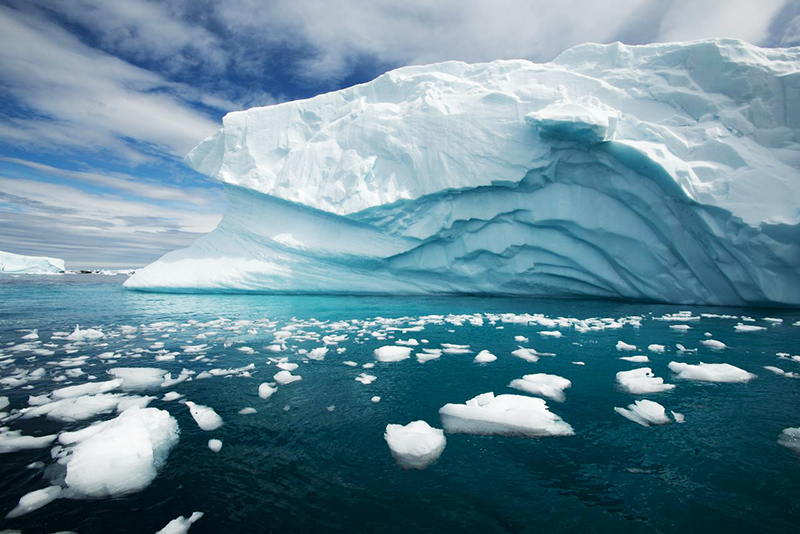 Ninety-nine percent of the planet’s freshwater ice is locked up in the Antarctic and Greenland ice caps. Now, a growing number of studies are raising the possibility that as those ice sheets melt, sea levels could rise by six feet this century, and far higher in the next, flooding many of the world’s populated coastal areas.
Last month in Greenland, more than a tenth of the ice sheet’s surface was melting in the unseasonably warm spring sun, smashing 2010’s record for a thaw so early in the year. In the Antarctic, warm water licking at the base of the continent’s western ice sheet is, in effect, dissolving the cork that holds back the flow of glaciers into the sea; ice is now seeping like wine from a toppled bottle.
The planet’s polar ice is melting fast, and recent satellite data, models, and fieldwork have left scientists sobered by the speed…
View original post 107 more words
Electric aircraft Sun Flyer – Business Insider
 A small Denver, Colorado, manufacturer has rolled out the first prototype of a new all-electric aircraft, suggesting that the same revolution currently sweeping through the auto industry may soon become airborne. Source: Electric aircraft Sun Flyer – Business Insider
May 28 Energy News
Opinion:
¶ “All-in for Offshore Wind in Massachusetts” • These two words should guide Beacon Hill on offshore wind: Go big. On the surface, the new House energy bill is a miracle for offshore wind. But the case for renewables in Massachusetts is more urgent than ever. [The Equation]
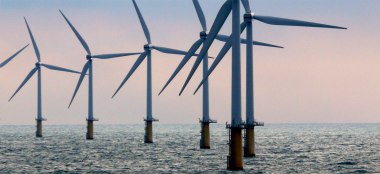 Offshore windpower in the Netherlands.
Science and Technology:
¶ A recent decade-long study following the lives of over 6,000 US residents has shed some new light on the connection between air pollution and heart disease. It showed that people living in areas with more outdoor air pollution accumulate deposits in the arteries that supply the heart. [CleanTechnica]
World:
¶ The innovative Eco Wave Power wave energy station has been installed on the ammunition jetty in Gibraltar. It is a big moment for both Gibraltar and a company with big plans for a promising green energy tech…
View original post 510 more words
Meteorologists are seeing global warming’s effect on the weather | Paul Douglas | Environment | The Guardian
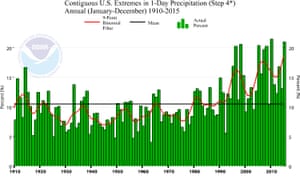 GR: Read my last post to see how forecasters failed to predict the extreme rainfall and flooding that hit Texas today.
“Whatever happened to normal weather? Earth has always experienced epic storms, debilitating drought, and biblical floods. But lately it seems the treadmill of disruptive weather has been set to fast-forward. God’s grandiose Symphony of the Seasons, the natural ebb and flow of the atmosphere, is playing out of tune, sounding more like a talent-free second grade orchestra, with shrill horns, violins screeching off-key, cymbal crashes coming in at the wrong time. Something has changed.” Source: Meteorologists are seeing global warming’s effect on the weather | Paul Douglas | Environment | The Guardian
The Tories faulty logic on nuclear

The Tories are overwhelmingly pro-nuclear, but their reasons for this stance don’t add up.
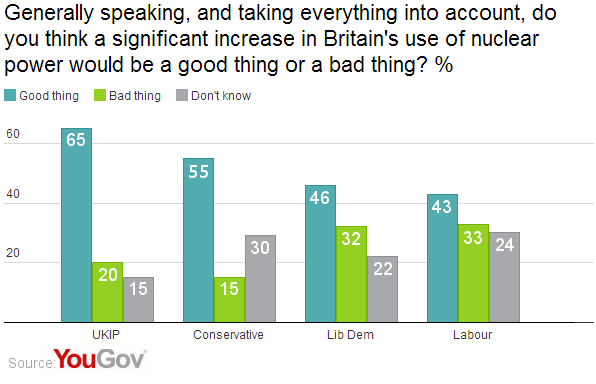 Figure 1: Attitudes to nuclear power by party [Source: YouGov, 2012] Now many in the party will claim, oh that’s because we want “value for money” with the least government involvement. Of course the reality is that nuclear energy is very expensive. And most of the companies involved in this industry are state owned (or count the govumint as their main if not only customer).
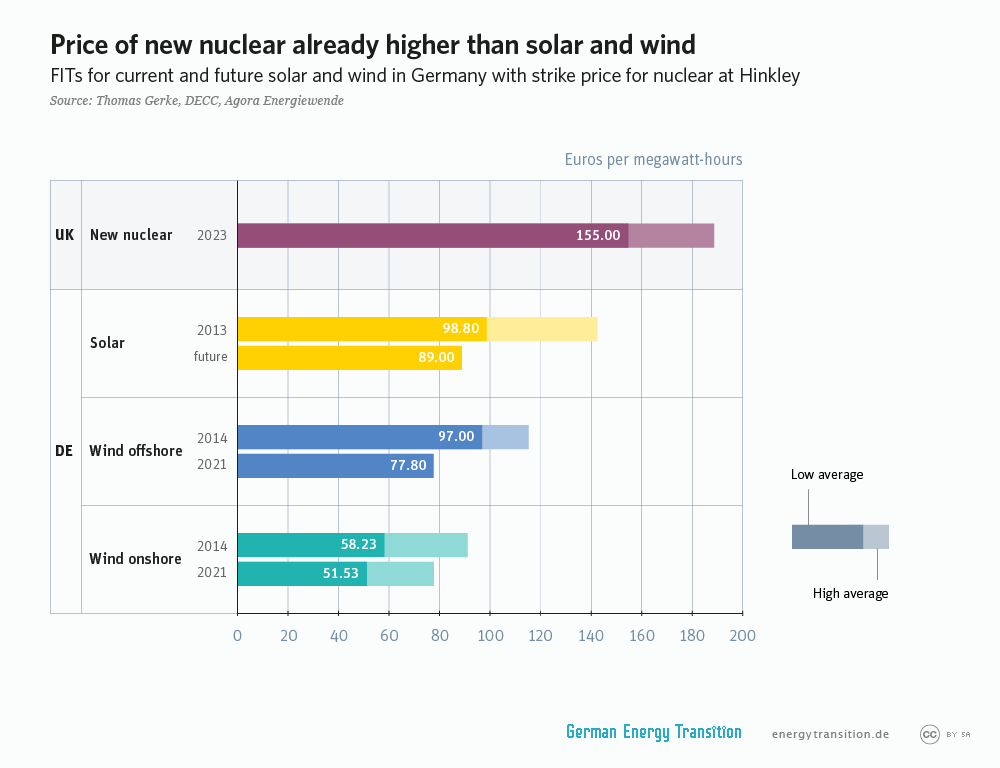 Figure 2: LCoE costs for Hinkley C compared to German Renewables [Source: energytransition.de 2015] Any future UK nuclear reactors will be built by foreign mulitnationals that are owned by foreign governments, so its difficult to conclude nuclear power will be less subject to the whims of events in foreign countries. The approval or disapproval of Hinkley C is essentially a decision that will be taken by…
View original post 654 more words
New Nuclear Reactor Unit: No Weld Leaks Found After 10 Minute Pressure Test at Non-Operating Temperature for Japan (Toshiba) AP1000 in China

Japanese (Toshiba) owned Westinghouse announced (26-May-2016) completion of a cold hydrostatic pressure test for Sanmen Nuclear Power Unit 1 (AP 1000) in China. The reactor unit is more than three years behind schedule, and has been under construction for over 8 years.
The test showed that welds held at a pressure of 3,107 psig (21.4 MPa) for a whole 10 minutes didn’t appear to leak. This was apparently not at operating temperatures, so is not reflective of the real system stresses. The entire test was completed within 4 hours.
Compare to the California Code which says 30 minutes “without leakage, undue distortion, excessive permanent expansion or evidence of impending failure“. The Westinghouse press release merely says that “Inspection of the more than 1800 welds found no leaks“.
This 10 minutes of maximum pressure was around 1.48 times the operating pressure for the AP 1000 reactor. 1.5…
View original post 1,592 more words
Fukushima evacuation order to be lifted in July

TOKYO — The Japanese government decided Friday to lift an evacuation order put in place after the March 2011 disaster at the Fukushima Daiichi nuclear power plant.
The order covering part of the nearby city of Minamisoma will now expire July 12, allowing over 10,000 people to return to their homes. The central government, the city and Fukushima Prefecture all approved the measure, the scale of which would be one of the largest of its kind in Japan.
“We have met our objectives concerning decontamination and critical infrastructure construction, fulfilling the conditions needed to cancel the order,” said Yosuke Takagi, who heads the government’s on-site nuclear disaster response headquarters.
“After considering resident arguments for and against the cancellation, we have decided that lifting the restrictions is necessary given that there are people who wish to quickly move forward on the road to recovery,” said Minamisoma Mayor Katsunobu Sakurai.
The Silencing of Japan’s Free Press
Under the heavy hand of Prime Minister Shinzo Abe, Japan’s media is being forced to toe the government line. Or else.

TOKYO — As the leaders of the G-7 liberal democracies convened in the Japanese shrine town of Ise-Shima this week, host Prime Minister Shinzo Abe used the event to showcase his nation as a regional beacon of democratic values and a counterweight to authoritarian China. However, recent events have raised doubts about his commitment to at least one of those values — freedom of the press.
There have been alarming signs of deteriorating media freedoms in Japan. In March, three of the country’s most outspoken television anchors were removed almost simultaneously by three different networks. While the networks were acting on their own, the dismissals were widely seen as orchestrated by the Abe government: The three were some of the last high-profile media critics of its agenda, which includes restarting Japan’s nuclear power industry and rolling back its postwar pacifism. The sacked anchors joined a growing list of critical media voices that have been muted since Abe took office in December 2012. And their ouster came just weeks after the country’s communications minister, Sanae Takaichi, declared in Japan’s parliament, the Diet, that the government had the legal power to shut down TV broadcasters that it deemed to be politically biased. That announcement capped a difficult year-and-a-half for independent media that saw the largest liberal newspaper, the Asahi Shimbun, subdued and other critical commentators removed from the airwaves.
The taming of Japan’s media watchdogs has attracted growing attention from overseas. On April 19, David Kaye, the U.N. special rapporteur on freedom of expression, wrapped up a weeklong fact-finding mission to Japan by expressing “deep and genuine concern” about declining media independence in Asia’s richest democracy. The following day, the Paris-based media advocacy group Reporters Without Borders lowered Japan’s place in its annual ranking of world press freedom to 72nd out of 180 nations, between Tanzania and Lesotho — down from 61st the previous year. “The Abe administration’s threats to media independence, the turnover in media personnel in recent months and the increase in self-censorship within leading media outlets are endangering the underpinnings of democracy in Japan,” the group said.
According to one Japanese news source, the Abe government’s efforts to suppress critics may have taken a more ominous turn. In its June edition, Facta, a monthly business magazine noted for its scoops, reported that the administration had used Japan’s spy agency, the Cabinet Intelligence and Research Office, to keep tabs on a Japanese lawyer who helped Kaye during his visit. (On her blog, the lawyer, Kazuko Ito, proclaimed she would never yield even if the government monitored her.) The allegations of surveillance conjured the same heavy-handed tactics that Reporters Without Borders and other international media watchdogs have warned might follow Japan’s passage in late 2013 of a new state secrecy law. They say the vagueness of the law, and the draconian prison terms of up to 10 years for revealing secrets, will put a damper on journalists, as well as the whistleblowers within government who may try to help them.
Japan’s mainstream media have never been noted for hard-hitting, independent coverage, instead emphasizing cozy relations with power and a brand of access journalism that can seem extreme even by the standards of the Washington press corps. The Japanese press’s symbiotic relationship with the government is institutionalized in the so-called press clubs, monopolistic arrangements that give reporters from the big national newspapers and broadcasters privileged access to officials, whose perspectives they end up sharing.
But press watchers now warn that Japan is losing even that limited press independence. Consider the case of the Asahi Shimbun, the world’s second-largest newspaper with a daily circulation of 6.8 million. The Asahi, the intellectual flagship of Japan’s political left, had been endeavoring to beef up its investigative coverage following the 2011 Fukushima nuclear disaster, when it and other Japanese mainstream media lost public trust for dutifully repeating the official line that all were safe — even as reactor buildings exploded. What it lacked in investigative prowess, the liberal Asahi had tried to make up for in editorial spunk, opposing the revisionist right’s efforts to whitewash sordid aspects of Japan’s World War II-era history like the “comfort women” forced to work in military brothels.
But in August 2014, the Asahi pulled back from both its comfort women coverage and its investigations into Fukushima following harsh right-wing attacks, led by Abe himself, on missteps in some of its articles. On Oct. 3, 2014, Abe attacked the Asahi for damaging Japan’s reputation after the newspaper belatedly admitted that more than a dozen stories published a quarter-century ago about comfort women had been based on the sourcing of a discredited Japanese army veteran. “It is a fact that its misreporting has caused numerous people to feel hurt, sorrow, suffering, and outrage,” Abe told the lower house budget committee. “It has caused great damage to Japan’s image.”
Japanese government officials and other journalists have pushed back against the criticism of Japan’s press freedoms, calling the pessimistic assessments unfairly harsh. In an April 27 article on Yahoo Japan, journalist Shoko Egawa said “it didn’t make sense” for Reporters Without Borders to rank Japan below places like Hong Kong and South Korea, where there are much more real pressures on journalists. “While it is okay to take as a reference the evaluation of a foreign NGO, there is no need to get all worked up about the low ranking,” she wrote.
There are also few in Japan who believe Takaichi would ever actually try to close down broadcasters. Takaichi raised alarms on Feb. 8, when she told the Diet that the 1950 Broadcast Law, which regulates the nation’s airwaves, allowed the government to shut down broadcasters that fail to remain “politically neutral” by highlighting “only one aspect of a polarizing political issue.” However, when questioned by legislators a day later, she seemed to back down a bit. “I don’t think I would resort to such measures myself,” she said, “but there is no guarantee that future [communications] ministers won’t.”
Japanese and foreign media observers agree that the pressures visibly placed on journalists in Japan can seem quite tepid by international standards. After all, there have been no arrests of journalists or forced closures of media outlets. Nor has the new secrecy law been used to pursue journalists, as the George W. Bush and Obama administrations have done by subpoenaing investigative reporter James Risen of the New York Times in an attempt to force him to reveal his sources of classified information.
What has been worrying, however, is the willingness of major Japanese media to silence themselves in response to a level of behind-the-scenes chiding by Abe administration officials that most U.S. journalists would probably just laugh off. A dramatic example of this was exposed in March 2015, when one of Japan’s biggest networks, TV Asahi, removed Shigeaki Koga, an ex-Trade Ministry official turned sharp-tongued TV commentator, from its Hodo Station evening news program.
Koga drew the administration’s ire when he protested its ineffective handling of a hostage crisis in Syria on air by holding up a placard in January 2015 that read “I’m not Abe.” Before the Abe era, such antics would not have raised eyebrows on Hodo Station, which was known for its feisty commentary. However, the government’s top media handler, Chief Cabinet Secretary Yoshihide Suga, told reporters at a background briefing how unhappy he was with the “completely mistaken” comments of an unnamed commentator at an unspecified network, according to an internal memo of the conversation recorded by a TV Asahi reporter who was present.
That internal memo was passed back to network executives. Koga says this was enough to convince TV Asahi to remove both himself and a highly regarded producer on the show, Fumie Matsubara. Their departure was followed a year later by TV Asahi’s decision in March to remove the host of Hodo Station, Ichiro Furutachi, who was one of the three anchors ousted this spring.
Other journalists relay similar stories, saying that TV executives quickly take the hint to avoid an actual confrontation with the administration. “It’s not that the media have cowered in the face of some obvious pressure, but this all takes place out of sight, until you suddenly notice that they have retreated,” Shuntaro Torigoe, a veteran TV newscaster, said at a March 2016 press conference at the Foreign Correspondents’ Club of Japan, where he and four other top TV journalists warned of growing efforts to intimidate the press. “The administration’s will is passed along to the media executives, becoming part of the atmosphere inside the newsroom that leads to self-censorship and restrained coverage.”
According to Torigoe, the result has been a form of self-censorship that Japanese journalists call sontaku, a term with no exact English translation but that refers to a Japanese social strategy of trying to please others, usually superiors, by preemptively acting in accordance with their perceived whims. Journalists say that while conformity has always been prevalent within Japan’s homogeneous society, the feeling has grown more intense recently as anxieties about the rise of neighboring China have increased the pressure to toe the line.
This conformity has been enforced by the verbal attacks and intimidation from the so-called Net Right, a loose-knit community of shrilly nationalistic netizens whom some members of the Abe government have openly embraced. “Recently, I feel a growing pressure for conformity,” Hiroko Kuniya, another of the three TV anchors ousted in late March, wrote in the May edition of the magazine Sekai, a highly regarded liberal opinion magazine. “This is a pressure that says you must conform to the majority without resisting, that such conformity is normal and expected. It seems even the media have become a party in exerting this pressure.”
Besides the Sekai article, Kuniya has said nothing else about her removal after 23 years at the helm of Close-Up Gendai, the prime-time showcase for investigative journalism on national broadcaster NHK. (She has also declined interview requests.) However, other NHK reporters say they have come under blatant pressure to tamp down criticism of the administration from the broadcaster’s president, Katsuto Momii, a conservative businessman whom Abe installed at the helm in December 2013. Momii has made no secret of his desire for NHK to toe the government line. After April’s deadly earthquake in the southern city of Kumamoto, when there were concerns about damage at a nearby nuclear plant, Momii told his journalists that their coverage must be “based on official government announcements,” not independent reporting.
At private broadcasters, where the government cannot just appoint executives, the administration has found other means of pressure, say journalists and media scholars. They say it has done this by skillfully exploiting structural weaknesses in the media. One of the biggest weaknesses is the extreme emphasis on access to inside information via the press clubs. This results in an intense competition for scoops, in which news agencies vie to be the first to report on the future intentions of government officials or agencies. Reporters’ careers can be made or broken based on their ability to curry enough favor with officials to be tipped off ahead of rival journalists.
Toshio Hara, a former reporter with the Japanese wire service Kyodo News who now writes on media issues, says the Abe administration has manipulated this exaggerated version of access journalism by limiting the prime minister’s press conferences and group interactions with the press gaggle in favor of exclusive interviews. These are bestowed upon only cooperative reporters, who are also favored with advanced leaks about future actions by the administration. News organizations deemed critical are excluded and cut off from the flow of scoops given to other journalists. This preferential access can also take the form of private dinners with the prime minister himself: The Tokyo Shimbun newspaper reported that Abe dined with top political journalists and media executives more than 40 times during his first two years in office alone.
Hara says the administration has made an unprecedented use of access to reward friendly journalists and punish critics. He notes that this has been part of an aggressive push to control media messages — a lesson of Abe’s first stint as prime minister in 2007, when he resigned after only 12 months following intense criticism from the press regarding scandals in his administration. “The power relationship between the prime minister’s office press corps and the prime minister has been completely changed,” Hara wrote in the 2015 book How Ready Is Journalism for the Abe Government? “With a few exceptions, the media have become supplicants.”
Selective granting of access has also allowed the administration to pursue a divide-and-conquer strategy, in which media organizations try to stay in Abe’s good graces by turning on each other. This is what happened to the Asahi, which lost the will to fight after finding that every other major media outlet had ganged up against it, say journalists in the newspaper. “We found ourselves standing all alone,” said Ryuichi Kitano, a senior Asahi reporter. “The administration didn’t even have to criticize us because the media did it for them.”
Shigetada Kishii, another of the three anchors removed this year, says media infighting prevented them from presenting a united front against the threat by Takaichi. The outspokenly liberal Kishii left the TBS network’s News 23, a highly regarded nightly news program, after crossing the Abe government by criticizing the 2015 passage of new laws to expand the role of Japan’s military. “There is something structural in the Japanese media, when it comes to why they couldn’t object as a group” to Takaichi’s comments, said Kishii, who also spoke at the Foreign Correspondents’ Club press conference in March. “Rivalry between newspapers and TV stations prevents them from even thinking about coordinating.”
Lack of solidarity among news companies was also one of the factors cited by Kaye, the U.N. special rapporteur, to explain the Japanese media’s apparent inability to resist political pressure. He linked this to a broader lack of shared professional identity among Japanese journalists, who spend entire careers at the same newspaper or broadcaster, unlike their more peripatetic Western counterparts.
This made them more loyal to company than profession, preventing them from taking a united stand, or forming some sort of effective union or lobby group to defend their interests. Kaye also faulted Tokyo for failing to create a political environment that tolerates the expression of diverse opinions, including dissenting ones. This was all too apparent in his own visit to Japan, which ran into problems created by an administration that appears overly thin-skinned to criticism regardless of its high approval ratings.
Originally scheduled for December, Kaye’s trip to Japan was abruptly canceled just weeks before when Tokyo said it was “unable to arrange meetings.” Even after he managed to make the visit in April, Kaye received a cold shoulder from the Abe government. Despite repeated requests, Takaichi refused to meet him, as did other top officials and media executives — including NHK’s Momii. The highest-ranking member of the administration who agreed to talk with him was a vice minister of communications, who gave him just 15 minutes. Kaye said the vice minister just repeated what Takaichi had said — without elaborating or even trying to explain her comments.
Political experts say that such undiplomatic behavior only further damages Japan’s credibility as a purveyor of democratic values. “Japan’s slide down the global rankings for press freedom and its skewering by the U.N. rapporteur on his recent visit are a black eye for Abe and the nation,” said Jeff Kingston, the director of Asian studies at Temple University in Tokyo. “They undermine Japan’s democratic identity and its constitutional freedoms.” Kingston and others say that Japan needs a vigorous democracy, including robust media freedoms, to compete for influence with a larger and richer China. But with the press either suppressed or in submission, one wonders whether that important warning is even reaching Abe — or likely to appear on the nightly news anytime soon.
http://foreignpolicy.com/2016/05/27/the-silencing-of-japans-free-press-shinzo-abe-media/
Climate, nuclear news to 28 May
Investigative journalism lives! This one is brilliant. NBC4 is revealing LA’s Nuclear Secret – investigative journalism spells it out
 CLIMATE Drastic impact of climate change: NASA shows these effects. Climate change leading to mass migration crises if world does not act. Donald Trump will pull the US out of the UN global climate accord, push coal, oil. Canadian wildfires – huge release of carbon to the atmosphere. New Tar Sands Impact on Climate, Air Quality Found. ExxonMobil must be made accountable for their climate change deception.
NUCLEAR
Outcome of United Nations open-ended working group on nuclear disarmament.
Nuclear marketing propaganda abounds: USA desperately wants to market nuclear power to India, China – to Sudan, USA – to Vietnam, USA and Japan – to North Wales, UK , Russia- to Vietnam , Russia – to South East Asia, Russia– to Iran, Russia – to Africa
USA Despite Obama’s calls for nuclear disarmament, U.S. disarmament is slowest since 1980. Obama meets Hiroshima survivors, calls for a ‘Moral Revolution’ for nuclear disarmament. Hiroshima survivors tell of that day on 6th August 1945. The USA Pentagon’s budget labyrinth for a planned $1 trillion splurge.
- NBC4 is revealing LA’s Nuclear Secret – investigative journalism spells it out.
- USA using Westinghouse nuclear reactors and fuel to compete with Russia for European dominance.
- Illinois Attorney General slams nuclear bailout legislation. Exelon and its allies rally for a bailout of nuclear power, despite its known dangers.
- Change the word “renewable” to “clean” – Exelon’s plan to get taxpayer money for nuclear power.
- Nuclear energy has no place in New York State renewable energy plan.
- America’s NRC changing nuclear fee structure to help Small Nuclear reactors: Shillenberger delighted.
- Californians want to palm off their nuclear waste problem onto Texas.
- Former radioactive waste workers take legal action over their radiation caused illnesses.
- After 26 year battle for justice, Rocky Flats residents get some kind of deal from nuclear weapons plant operators.
- Death of long-term and highly respected anti nuclear activist Michael Mariotte.
CHINA readies nuclear armed submarines for the Pacific.
JAPAN. Japanese government to announce a shift away from nuclear power? Low-level nuclear waste to be buried 70 meters underground. Tokyo Accused of Cooking Fukushima Radiation Data. Fukushima clean-up chief still hunting for 600 tonnes of melted radioactive fuel.
CANADA. Canada’s wildfires – surrounding a radioactive trash site. Canadian nuclear company SNC-Lavalin Named In Panama Papers.
GERMANY. German State close to Belgium prepares iodine tablets, in concern about neighbouring nuclear stations. LITHUANIA, and environmentalists not happy with Belarus’ nuclear power plan
SWEDEN heads for 100% renewable energy
SOUTH AFRICA . Political scandal hangs over South Africa’s nuclear energy plans. Nuclear programme could set south Africa back trillions of rand.
UK. Hinkley nuclear project’s future is in doubt – French unions not happy with Hinkley plan. UK designs for more beautiful nuclear reactors.
IRAN. UN Agency Reports Iran Has Complied With Nuclear Deal.
UNITED ARAB EMIRATES setting a solar power trend in the Gulf.
Special Report on Nuclear America
Nuclear America: RT special report on state of US nuclear facilities 27 May, 2016 Over the past 18 months, a number of nuclear facilities across the country have experienced problems. From the Hanford Site in Washington state to Indian Point in New York, RT America takes a close look at the disastrous conditions at US nuclear sites.
Nuclear America: Special Report
Taking a look at the past, present and future of nuclear facilities in the US, Friday’s special report seeks to fill in the gap about America’s crumbling radioactive infrastructure that the mainstream media has ignored….https://www.rt.com/usa/344636-nuclear-america-special-report/
Change “renewable” to “clean” – Exelon’s plan to get taxpayer money for nuclear power
With hard times setting in for some nuclear power plants, Illinois state legislators are trying to decide whether they should put nuclear facilities on life support, or lay them to rest early…….

Despite Obama’s calls for nuclear disarmament, U.S. disarmament is slowest since 1980
 Obama calls for end to nuclear weapons, but U.S. disarmament is slowest since 1980 https://www.washingtonpost.com/news/the-fix/wp/2016/05/27/obama-calls-for-end-to-nuclear-weapons-but-u-s-disarmament-is-slowest-since-1980/ By Philip Bump Speaking from Hiroshima, the site of the first war-time atomic weapon detonation, President Obama on Friday called for the pursuit of “a world without nuclear weapons.”
Only a few days prior, his Department of Defense published new data revealing that the government Obama oversees — a government which manages the second-largest nuclear stockpile in the world — had dismantled fewer of its nuclear devices than in any year since at least 1980.
Every year, the Department of Defense declassifies data on the size of the country’s nuclear stockpile and the number of warheads dismantled. Its most recent data, released this week, shows that the U.S. stockpile numbered 4,571 at the end of 2015, about 15 percent of its size at its peak during the Cold War in 1967. The number of weapons dismantled was 109, the lowest figure since at least 1980.
n 1945, the size of the stockpile matched the number of weapons deployed — two. The biggest reductions came in the early 1990s during the administration of George H.W. Bush and, a decade later, during his son’s. At the end of 2008, the stockpile numbered 5,273; over the course of Obama’s two terms, it has dropped to 4,571.
It is, of course, easier to reduce the size of a stockpile when it is much larger. As a fraction of the total weapon count, Obama has sliced the total by a bit more than one-tenth — 13 percent. But the Federation of American Scientists is still critical of Obama’s progress in this regard. That 13 percent is “the smallest reduction of the stockpile achieved by any previous post-Cold War administration;” the 109 dismantlings last year continues “a trendline of fewer and fewer warheads dismantled” under Obama. The FAS notes that there are reasons outside of the administration’s control for the lower number last year — but also that political pressure discourages a push for reduction.
Why does the size of our stockpile matter? As data from the Stockholm International Peace Research Institute shows, the United States still controls about half of the weapons controlled by recognized nuclear states.
Obama meets Hiroshima survivors, calls for a ‘Moral Revolution’ for nuclear disarmament
At Hiroshima Memorial, Obama Says Nuclear Arms Require ‘Moral Revolution’, NYT 27 May 16 HIROSHIMA, Japan — President Obama laid a wreath at the Hiroshima Peace Memorial on Friday, telling an audience that included survivors of America’s atomic bombing in 1945 that technology as devastating as nuclear arms demands a “moral revolution.”
Thousands of Japanese lined the route of the presidential motorcade to the memorial in the hopes of glimpsing Mr. Obama, the first sitting American president to visit the most potent symbol of the dawning of the nuclear age. Many watched the ceremony on their cellphones.
In an emotional moment afterward, Mr. Obama embraced and shook hands with survivors of the attack, which exposed humanity to risks the president has repeatedly said the world must do far more to resolve.
……..For weeks, the White House had refused to say whether Mr. Obama, would meet survivors. It was a delicate decision. Many survivors long for an apology for an event that destroyed just about everyone and everything they knew, and there were small demonstrations near the ceremony on Friday by protesters demanding an apology. But Mr. Obama said before his trip that he would not apologize for the attack.
Still, Mr. Obama’s homage to the victims and his speech were welcomed by many Japanese. “I am simply grateful for his visit,” said Tomoko Miyoshi, 50, who lost 10 relatives in the Hiroshima attack and wept as she watched Mr. Obama on her cellphone.
In his speech, Mr. Obama, using the slow and deliberate cadence that he uses on only the most formal and consequential occasions, said that the bombing of Hiroshima demonstrated that “mankind possessed the means to destroy itself.”
In a striking example of the gap between Mr. Obama’s vision of a nuclear weapons-free world and the realities of purging them, a new Pentagon census of the American nuclear arsenal shows his administration has reduced the stockpile less than any other post-Cold War presidency.
“We must have the courage to escape the logic of fear and pursue a world without them,” he said, although he quickly added: “We may not realize this goal in my lifetime, but persistent effort can roll back the possibility of catastrophe.” http://www.nytimes.com/2016/05/28/world/asia/obama-hiroshima-japan.html?_r=0
1 This Month

of the week – Shut Down Drone Warfare!


Tell the Ukrainian Government to Drop Prosecution of Peace Activist Yurii Sheliazhenko

Petition to revoke the licensing of the Near Surface Nuclear Disposal Facility (NSDF) at Chalk River. https://www.ourcommons.ca/petitions/en/Petition/Details?Petition=e-7247
To see nuclear-related stories in greater depth and intensity – go to https://nuclearinformation.wordpress.com
-
Archives
- April 2026 (103)
- March 2026 (251)
- February 2026 (268)
- January 2026 (308)
- December 2025 (358)
- November 2025 (359)
- October 2025 (376)
- September 2025 (257)
- August 2025 (319)
- July 2025 (230)
- June 2025 (348)
- May 2025 (261)
-
Categories
- 1
- 1 NUCLEAR ISSUES
- business and costs
- climate change
- culture and arts
- ENERGY
- environment
- health
- history
- indigenous issues
- Legal
- marketing of nuclear
- media
- opposition to nuclear
- PERSONAL STORIES
- politics
- politics international
- Religion and ethics
- safety
- secrets,lies and civil liberties
- spinbuster
- technology
- Uranium
- wastes
- weapons and war
- Women
- 2 WORLD
- ACTION
- AFRICA
- Atrocities
- AUSTRALIA
- Christina's notes
- Christina's themes
- culture and arts
- Events
- Fuk 2022
- Fuk 2023
- Fukushima 2017
- Fukushima 2018
- fukushima 2019
- Fukushima 2020
- Fukushima 2021
- general
- global warming
- Humour (God we need it)
- Nuclear
- RARE EARTHS
- Reference
- resources – print
- Resources -audiovicual
- Weekly Newsletter
- World
- World Nuclear
- YouTube
-
RSS
Entries RSS
Comments RSS
 nuclear-news