50% fall in solar power price, over 16 months

 The price of solar power just fell 50% in 16 months – Dubai at $.0299/kWh!, Electrec, John Fitzgerald Weaver 2 May 16, Dubai received bid of $.0299/kWh for 800MW of solar power. This price represents the lowest yet recorded for solar power (and might not represent the end of the price drops…).
Dubai Electricity and Water Authority (DEWA) has received 5 bids from international organisations for the third phase of the Mohammed bin Rashid Al Maktoum Solar Park, said HE Saeed Mohammed AlTayer, MD & CEO of DEWA. The lowest recorded bid at the opening of the envelopes was US 2.99 cents per kilowatt hour. The next step in the bidding process will review the technical and commercial aspects of the bids to select the best one.
In the USA, in 2014 and with incentives, utility scale solar projects averaged $.05/kWh. On this bid alone, five companies bid below $.045/kW – without subsidies!
In 2015, we saw Dubai sign a deal at a fixed rate of $0.0584 cents over 25 years with no incentives. In the summer of 2015 Autin, TX received almost 1,300MW`of bids at under $.04/kWh. Shortly afterwards, we saw Berkshire Hathaway Inc.’s NV Energy agreed to pay $.0387/kWh for power from a 100-megawatt project that First Solar Inc. is developing. Lastly, just this month Enel Green powersigned contracts for $.036/kWh in in Mexico and $.03/kWh in Morroco.
The price per kWh just fell 50% – and it did it in less than sixteen months…….http://electrek.co/2016/05/02/price-solar-power-fell-50-16-months-dubai-0299kwh/
China trebling its wind power capacity
 China’s wind-power installed capacity will escalate to 495 GW by 2030, says Global Data Wind Power Engineering, May 5, 2016 Michelle Froese Wind power installed capacity in China will more than treble from approximately 149 Gigawatts (GW) in 2015 to over 495 GW by 2030, representing a Compound Annual Growth Rate (CAGR) of 9%, according to research and consulting firm GlobalData.
The company’s latest report* states that China has the highest wind power globally by far, accounting for a third of cumulative wind power capacity worldwide in 2015, followed by the U.S. with 17% of the global share…….
Srivatsava comments: “China’s quick adoption of wind power can be attributed to a wider global trend driven by depleting fossil fuel reserves, the declining cost of wind power generation and a growing sensitivity towards environmental issues.
“China’s 13th Five Year Plan raised the 2020 wind target to 250 GW, and aims to shift focus from scale expansion towards quality and efficiency. In order to tackle rising pollution levels and reduce its dependence on imported oil, the country is promoting renewable energy sources such as wind. The government has a number of financial incentives such as feed-in tariffs in place to continue the development of wind power.”…….http://www.windpowerengineering.com/policy/reports/chinas-wind-power-installed-capacity-will-escalate-495-gw-2030-says-globaldata/
Widespread concern about Nuclear Reactor Baffle Bolt Problems
 Nuclear Reactor Baffle Bolt Problems Are Widespread Concern, POWER, 05/04/2016 | Aaron Larson Public Service Enterprise Group (PSEG) anticipates extending Salem Nuclear Generating Station’s Unit 1 refueling outage, which began on April 14, so it can inspect, repair, and replace damaged baffle bolts within the plant’s reactor vessel, according to information presented in the company’s first quarter earnings announcement.
A PSEG spokesperson told POWER that visual inspections at Salem had identified 18 of the metal insert liner’s 832 baffle-former bolts exhibit degradation, which means they had at least some indication of cracking. The news comes roughly a month after inspections at the Indian Point nuclear plant determined that 227 of its Unit 2 baffle-former bolts were degraded.
“As part of our license renewal commitments to the Nuclear Regulatory Commission [NRC], Salem Unit 1 was scheduled to conduct ultrasonic testing of the baffle bolts in 2019. Based on the visual inspections, we made the decision to conduct ultrasonic testing of the bolts now to determine the full extent of condition and to make appropriate repairs,” the PSEG spokesperson said.
Problems in Europe
It’s the first time that Salem has identified any problems with baffle bolts on either unit, but it is far from the first time for the industry. As far back as the 1980s, cracking was identified in French pressurized water reactor (PWR) baffle bolts.
In March 1998, the NRC issued an Information Notice to alert U.S. PWR license holders of the cracking found in reactor vessel internal baffle-former bolts at “several foreign PWRs.” The intent of the notice was to inform recipients of the problem so they could consider actions to avoid similar troubles. The suggestions in the notice were not necessarily requirements, however.
Are There More Potential Problems?
Neil Sheehan, public affairs officer for NRC Region I, told POWER that all U.S. PWRs—of which, there are currently 65 licensed to operate—utilize baffle plates as part of their reactor core internals. The baffle plates help direct water up through the nuclear fuel assemblies………
The NRC is still weighing the significance of the recent inspection findings. It expects analysis performed by both Entergy and PSEG will help in its assessment. http://www.powermag.com/nuclear-reactor-baffle-bolt-problems-are-much-more-widespread/?pagenum=2
Exxon fighting to the death with its fraudulent claims about climate change
Exxon will fight this new battle even more ferociously, for the “Exxon Knew” scandal poses an immeasurably graver threat. Exxon’s potential exposure on the Valdez spill was a $5 billion fine, a sum it could have paid with ease. By contrast, Exxon Knew could involve hundreds of billions of dollars in damages, enough to bankrupt the company. It also comes when the world’s governments have committed to phasing out Exxon’s products over the next decades. These twin threats endanger not merely Exxon’s revenue but its very identity as a company that made its name by pulling oil out of the ground. For Exxon, this is shaping up as a fight to the death, and the First Amendment offers scant protection against that.
 Note to Exxon: Lying About Climate Change Isn’t Free Speech—It’s Fraud, The Nation, Facing hundreds of billions of dollars in potential damages, the fossil-fuel giant is trying to change the subject.By Mark Hertsgaard Twitter MAY 5, 2016
New York Attorney General Eric Schneiderman raised the same question when he subpoenaed Exxon in November. The oil giant turned over some 10,000 pages of documents, which Schneiderman’s staff is reviewing. But when Virgin Islands Attorney General Claude Walker requested many of the same documents, Exxon not only refused; it went on the offensive. The company’s countersuit asserted that Walker’s subpoena was an attempt “to deter ExxonMobil from participating in ongoing public deliberations about climate change…. The chilling effect of this inquiry, which discriminates based on viewpoint to target one side of an ongoing policy debate, strikes at protected speech at the core of the First Amendment.”
Soon, in an exercise in mass ventriloquism, myriad voices on the right—including the Heritage Foundation, National Review, the New York Post,Reason, and the Hoover Institution—took up the refrain.
Outraged that 16 other state attorneys general had pledged action against the fossil-fuel industry, Washington Postcolumnist George Will charged that the law-enforcement officials were trying “to criminalize skepticism about the supposedly ‘settled’ conclusions of climate science.” Fox News accused the AGs of “collusion” with activists, citing a meeting that a member of Schneiderman’s staff had with a representative of the Union of Concerned Scientists.
The right-wing chorus predictably glided past the fact that, as a matter of law, the First Amendment is no shield for fraud. And telling one thing to investors while privately knowing the opposite to be true, as Big Tobacco once did, is plainly fraud. But now, it was all about Exxon as the victim, with the usual left-wing villains—overreaching government and environmental extremists—trampling the oil company’s free-speech rights because it had dared to take an unconventional position on climate change. Exxon even used the same law firm that defended Big Tobacco—Paul, Weiss, Rifkind, Wharton & Garrison—to file its countersuit.
Will crying “free speech” succeed in blunting the effort to bring Exxon and its fellow fossil-fuel giants to justice? It’s too soon to know, and compelling evidence runs in both directions….
Exxon will fight this new battle even more ferociously, for the “Exxon Knew” scandal poses an immeasurably graver threat. Exxon’s potential exposure on the Valdez spill was a $5 billion fine, a sum it could have paid with ease. By contrast, Exxon Knew could involve hundreds of billions of dollars in damages, enough to bankrupt the company. It also comes when the world’s governments have committed to phasing out Exxon’s products over the next decades. These twin threats endanger not merely Exxon’s revenue but its very identity as a company that made its name by pulling oil out of the ground. For Exxon, this is shaping up as a fight to the death, and the First Amendment offers scant protection against that. http://www.thenation.com/article/note-to-exxon-lying-about-climate-change-isnt-free-speech-its-fraud/
Microbial Transformations of Plutonium and Other Actinides in Radioactive (Transuranic-TRU) Wastes

“Microorganisms have been detected in TRU wastes, Pu-contaminated soils, low-level radioactive wastes, backfill materials, natural analog sites, and waste-repository sites slated for high-level wastes. Seventy percent of the TRU waste consists of cellulose and other biodegradable organic compounds. Biodegradation of cellulose under the hypersaline conditions such as in the WIPP repository can produce CO2 and methane gas, as well as affect the solubility of actinides. Microbially produced gases could have significant ramifications for the long-term stability of the repository (up to 10,000 years).” (A. J. Francis, Brookhaven National Lab, 2003)
A decade later, WIPP in May of 2014 at around 15 years…
Transuranic elements, such as plutonium, are radioactive metals and are subject to both corrosion and reactions with other metals, as well as changes due to radioactive disintegrations. Microbial corrosion is an important part of the reason that radioactive waste cannot be buried and facilities cannot be…
View original post 2,219 more words
May 8 Energy News

World:
¶ The failure of monsoon last year led to declining water levels at dams across the river Kali in the Indian state of Karnataka. If there is no rain by June, the reservoirs are likely to dry up, with effects on power generation at both hydro-electric and nuclear power plants. [Times of India]
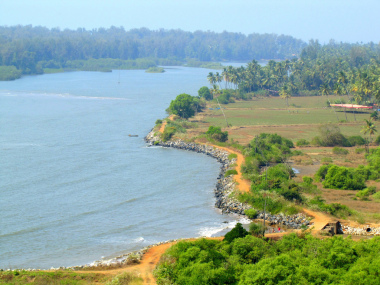 Kali River in Karnataka. Photo by solarisgirl from pune, india.
CC BY-SA 2.0 generic. Wikimedia Commons.
¶ Saudi Arabia’s veteran oil minister has been removed in a broad government overhaul. He has been replaced by former a health minister. Saudi Arabia is the world’s largest crude exporter, but the country has unveiled major economic reforms aimed at ending its dependence on oil. [BBC]
¶ Zambian President Edgar Lungu has commissioned construction works for the $1.2 billion first ever solar power station plants in Lusaka. The two solar plants, which will have…
View original post 410 more words
May 7 Energy News
Opinion:
¶ “The fire in Canada looks a lot like climate change – and that should scare you” • It’s impossible for scientists to say global warming caused this specific fire, of course, but polluting the atmosphere is creating conditions that make such disasters more likely, bigger and costlier. [CNN]
 Traffic at a standstill as evacuees flee Fort McMurray, May 4.
World:
¶ The only land convoy evacuating people trapped by a huge wildfire in the Canadian state of Alberta has been suspended after 200-ft (60-meter) flames flanked the road, officials say. There is also concern about oil facilities, particularly near Nexen’s Long Lake oil extraction site. [BBC]
¶ Installed wind power capacity in China will more than treble from about 149 GW in 2015 to over 495 GW by 2030, a Compound Annual Growth Rate of 9%, according to research and consulting firm GlobalData. China…
View original post 458 more words
The week that was, in climate and nuclear news
 CLIMATE CHANGE disruption – the future is happening now. Destructive Wildfire near Canada’s Oil Sands May Have Been Fueled by Global Warming. Climate change is taking its toll on water supplies, and especially – on children. Month after month, global average temperatures reach record heights. Ocean’s small shelled animals suffering from acidification due to global warming.
Children Suffer Nuclear Impact Worldwide.
Leaked TTIP documents cast doubt on EU-US trade deal.
USA.
- Exelon nuclear corporation demands tax-payer bailout for its uneconomic power plants.
- Continuing nuclear waste leak at Hanford.
- Nuclear Regulatory Commission to re-analyse costs of potential impact of severe accident At Indian Point.
- Documents reveal poor performance of Mixed Oxide Fuel Fabrication Facility (MOX).
- Respiratory diseases, radioactive fumes – concerns in St Louis County, USA.
- Radiation from Santa Susana Field Laboratory in California causing cancers, but this is hushed up.
- Parents near nuclear plant concerned about evacuation plans.
- Sanders and Clinton split on future of Indian Point nuclear station.
- USA’s Energy Dept program ‘Orange Button’ will bring down costs of solar power.
UK. Global danger in transporting nuclear wastes by plane.
CANADA. Cameco cuts back on mining uranium, as market stays slumped.
Former Electricite de France SA Chief Financial Officer says he quit because of financial risks of Hinkley nuclear project. UK nuclear parts made at French plant in fakery probe. ‘400 irregularities’ in nuclear power plant parts – admits France’s nuclear firm AREVA.
OCEANIA. Nuclear shipwreck still highly radioactive over 60 years later.
JAPAN. Fukushima and the Right NOT to Return: Nuclear Displacement in a System for “Hometown Recovery”
NORTH KOREA. North Korea’s nuclear program.
Exelon nuclear corporation demands tax-payer bailout for its uneconomic power plants
 Exelon to Close Two Nuclear Plants if Needs Aren’t Met, WSJ By AUSTEN HUFFORD May 6, 2016 Exelon Corp. said Friday that it would close two nuclear power plants in Illinois if state officials don’t pass legislation that provides funding and support for nuclear and solar power.
The company said it would close its Clinton, Ill., nuclear power plantand its Quad Cities nuclear power plant, which is based nearCordova, Ill., if Illinois doesn’t pass “adequate legislation” by the end of the month.
Electricity producers in several states are asking for hundreds of millions of dollars in financial support to keep costly nuclear power plants in business. If successful, the legislation is likely to increase customers’ power bills……..
Abe Scarr, Director of Illinois PIRG, a public interest advocacy organization that fights against “powerful interests,” said the bill amounted to a nuclear bailout.
“Ratepayers have paid multiple times for these plants over the decades,” Mr. Scarr said. “We should be investing in the energy generation for the future. We should not be doubling down on an energy source of the past that is not competitive.”
According to Exelon, Clinton and Quad Cities have lost more than $800 million over the past six years.
In a release Thursday, Exelon said some nuclear plants are at risk of closing because wholesale energy prices are at a 15-year low……http://www.wsj.com/articles/exelon-to-close-two-nuclear-plants-if-needs-arent-met-1462544157
Sen. Crapo of Idaho Wants More Nuclear Pork Barrel Jobs But Not Rad Waste; Sponsors Nuclear Bills Endangering the Rest of the Country; the Ugly Underbelly of the US Senate System – Idaho’s Shakedown of America
Idaho [Nuclear] National Lab (INL) benefits from fat cat funding and salaries, and promotes new nuclear reactors and thus waste. Idaho Senator Crapo actively tries to undermine US Nuclear safety, while getting more nuclear pork to create more nuclear messes within Idaho and without. But, large, underpopulated, Idaho, doesn’t want that nasty radioactive waste. Nope. Whereas Idaho gets the jobs and has an appropriate geology (granite) and climate (arid and cool) they want the radioactive waste to be dumped upon hot climates (arid New Mexico and Texas, and wet South Carolina) with inappropriate geologies for nuclear waste. And, if Idaho with 1.6 million people doesn’t get their way then they will shake-down the rest of the country, as though INL isn’t a big enough shake-down: “DOE shall ship all transuranic” [that is plutonium, americium, etc.] “waste now located at INEL, currently estimated at 65,000 cubic meters…
View original post 1,356 more words
Destructive Wildfire near Canada’s Oil Sands May Have Been Fueled by Global Warming. #Auspol

The devastating natural disaster in Fort McMurray is “consistent” with climate change.
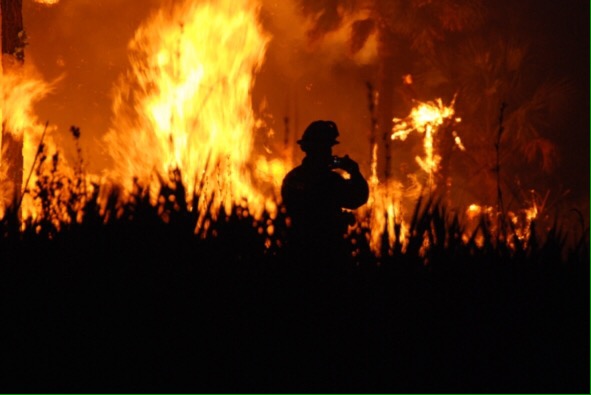
As the planet continues to warm, wildfires will likely only become more common and intense as spring snowpack disappears and temperatures warm. Credit: USFWS/Southeast/Flickr
An unusually intense May wildfire roared into Fort McMurray, Alberta, Canada, on Tuesday, forcing the largest wildfire evacuation in province history. The flames rode the back of hot, windy weather that will continue through Wednesday and could pick up again this weekend.
The wildfire is the latest in a lengthening lineage of early wildfires in the northern reaches of the globe that are indicative of a changing climate. As the planet continues to warm, these types of fires will likely only become more common and intense as spring snowpack disappears and temperatures warm.
“This (fire) is consistent with what we expect from human-caused climate change affecting our fire regime,” Mike Flannigan, a wildfire researcher…
View original post 12 more words
May 6 Energy News
Opinion:
¶ “Who’s Killing Renewable Energy?” • Fifteen years the Cape Wind project began, bureaucratic obstacles, high costs, and wealthy Cape Cod residents hostile to a major renewable energy project near their homes plague the endeavor. But Cape Wind is no longer alone. [TakePart]
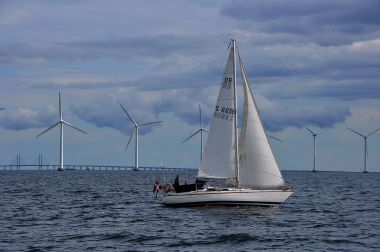 Offshore wind farm at Copenhagen.
Photo by Martin Nikolaj Christensen from Sorø, Denmark.
CC BY-SA 2.0 generic. Wikimedia Commons.
Science and Technology:
¶ Research has found that solar farms have a positive impact on biodiversity for a range of plant and animal species when used with appropriate land management. The report tested and confirmed a growing body of anecdotal evidence that solar farms can benefit local wildlife. [Renewable Energy Focus]
¶ Many researchers believe that El Niño was not the only factor increasing the risk of a major fire in Alberta. A number of research papers have highlighted the fact that…
View original post 660 more words
The ‘uncanny’ in Fukushima’s nuclear aftermath: anxiety-provoking attachment to home
Yohei Koyama, doctoral researcher in the Department of Languages and Cultures of Japan and Korea, SOAS, University of London, UK.
“I’m afraid to say it, but we love Chernobyl. It’s become the meaning of our lives. The meaning of our suffering” (Alexievich 1997, 215), says Natalya Roslova. She is one of the voices in Svetlana Alexievich’s Voices from Chernobyl. Her monologue continues:
On the way back, the sun is setting, I say, “Look at how beautiful this land is!” The sun is illuminating the forest and the fields, bidding us farewell. “Yes,” one of the Germans who speaks Russian answers, “it’s pretty, but it’s contaminated.” He has a dosimeter in his hand. And then I understand that the sunset is only for me. This is my land. I’m the one who lives here. (Alexievich 1997, 216)
The monologue reveals her strange affection to Chernobyl which awakens what Freud called the uncanny. In short, the Freudian uncanny is what evokes not only fear and dread but also affection – it is the ambivalence of fear and affection (Freud 1919, 123). And this ambivalence is something that Chernobyl shares with Fukushima.
In this piece, I will shed light on the strange affection of the uncanny. Particularly, I would like to present a story of Momoko who I met during my fieldwork in Fukushima in 2014. Although she was an ordinary 30-something woman in Fukushima, extraordinary was that she forfeited marriage with her fiancé to stay in Fukushima after the nuclear accident. Her story reveals not only her strong attachment to her hometown and willingness to stay there but also her fear of radiation and anxiety about health risks. It is a manifestation of the same kind of strange affection which belongs to the realms of the Freudian uncanny.
***
Ever since Momoko was born, she has always lived in her hometown located in the western part of Fukushima. There are always people who never leave their hometowns and continue to live with their family, and Momoko is one of them. On the contrary, her ex-fiancé is not from Fukushima – his family moved to Momoko’s town when he was a child due to work circumstances. He spent some years in Fukushima, but he left for good to go to a university in Tokyo. Despite the distance, she was happy in the relationship with him for a few years before the accident. Sometimes a rural life felt inconvenient to her, but she could go to Tokyo on some weekends and even travel abroad at least once a year. She said she was not always happy about her rural life, but she was not unhappy about it either. It was perhaps a simple pastoral life, but it was about to change on 11 March 2011.
The nuclear accident was a life-threating experience for Momoko, not to mention the preceding severe earthquake and continuous aftershocks. “I thought I could die by radiation! I guess I was oversentimental and naïve at that time,” she said with a laugh. She confessed that she was feeling her own death for the first time in her life after she saw the multiple explosions at Fukushima Daiichi Nuclear Power Plant on television and when everyone started talking about radiation. But after this initial oversentimental phase, she quickly learned radiation protection through study meetings on radiation and its health effects organized by the local government and online research. When I met her in 2014, she showed great familiarity with the terminologies such as different names of radioisotopes, units of radioactivity and radiation dosage, and with the particular situation of radiation contamination in her living environment. This very much resembles how people affected by the Chernobyl accident became heavily informed by bio-scientific knowledge – what Adriana Petryna (2002) described a biomedical subject.
In the meantime, the initial oversentimental phase never ended for her ex-fiancé. He was eager for her to evacuate not only from Fukushima but also from East Japan with his family. Although she knew she would leave her hometown to live with him once she gets married (and she was actually looking forward to the day to come), she could not leave her family and friends who were stuck in the middle of the nuclear crisis. She felt she was a part of them, and more importantly, she felt there was a growing affection for her hometown. Despite knowing the risks she was taking, she wanted to stay for one simple reason – because it was her home. So they were destined for a never-solving dispute about whether or not she should evacuate. She confessed that she had been yelled at and called “foolishly stubborn” by him over the phone. Even though she was trying to understand how much he cared about her, their relationship was falling apart. “After all,” she said, “he didn’t have a ‘home’ like I did. He would have never understood how I felt about my hometown.” A few months after the accident, she was single again.
Momoko expressed her strong affection for her hometown and self-determination to live there which eventually set her apart from her ex-fiancé, but it does not mean that she was not concerned about possible risks. Also, even though she formed her opinions of risk perception and decided to stay on her own terms, such decision making could be an art of balancing the fear with the available knowledge. Moreover, there are displays of real-time spatial radiation dose, everyday monitoring of locally-produced food, examination of human bodies and on-going decontamination works throughout the prefecture. They are all constant reminders of the presence of radiation in everyday life. In such situation, it seemed as if she was in a constant struggle with her fear. She mentioned that her willingness to learn radiation protection could be her fear of radiation just reversed. To use her own word, “I know the spatial dose is a lot lower now and radiation contamination is no longer detected in the food we eat, but it still weighs on my mind. And that’s probably why I keep checking the dose and screening results.”
Thus, Momoko’s affection for her hometown becomes extremely ambivalent which comprises her fear of radiation. In this way, it coincides with the Freudian sense of uncanny. Freud defines the particular state of feeling uncanny as “the frightening that goes back to what was once well known and had long been familiar” (Freud 1919, 123). In other words, the uncanny is something familiar that has long been repressed, and the uncanny effect arises when the repressed returns (Freud 1919, 150). To an extent, Freud’s intention here was to transgress conventional reality by this de-familiarization of the familiar. It is notable that what is de-familiarized overlaps with the excess of reality in Bataille’s sense. But for Freud, such excess could be associated with the attraction of death (1919,148). In fact, Freud (1919, 148) did not forget to mention that the uncanny could be represented by anything associated with death.
It should be noted that for many Japanese people, the word radiation is arguably the signifier of death because of its association with their collective memories of Hiroshima and Nagasaki. Although it was five years ago Momoko closely felt her own, radiation is still present in the everyday life in Fukushima today. In this sense, her life in Fukushima remains as something that brings her own death to her consciousness and her affection for her hometown becomes the uncanny.
…for many Japanese people, the word radiation is arguably the signifier of death because of its association with their collective memories of Hiroshima and Nagasaki.
***
I keep in touch with Momoko by email. In this April, she sent me pictures of cherry blossoms – sakura in Japanese – in full bloom. People eat and drink under fully bloomed sakura throughout Japan every spring, and it is called hanami. It looked like she had it for this year. “I think the sakura in my town is the best after all”, she said.
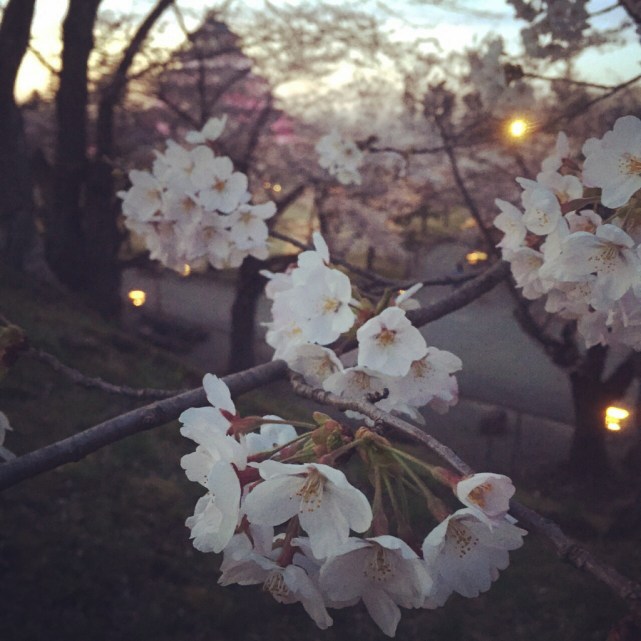
Cherry Blossoms [Sakura] photographed by Mokomo near where she lives in Western Fukushima Prefecture, Japan. ‘I think the sakura in my home town is the best after all’ says Mokomo.
The image of people having hamami in Fukushima could be simply horrific because of radiation contamination. But for her, such image is also a landscape of her home that she loves in spite of the contamination. It is uncanny, but perhaps, it is also a manifestation of her self-determination to live with radiation.
Yohei Koyama is currently undertaking doctoral research in Japan focussing on the aftermath of the Fukushima nuclear accident. His ongoing PhD research, supervised by Dr Griseldis Kirsch, is titled: ‘Life with Radiation: ethnography of the nuclear disaster in Fukushima’.
References:
Alexievich, S. 1997. Voices from Chernobyl. Normal; London: Dalkey Archive Press
Freud, S. 1919. “The uncanny”. In S. Freud. 2003. The uncanny. Translated by D. McLintock. New York: Penguin Books
Petryna. A. 2002. Life exposed: biological citizens after Chernobyl. Princeton, NJ; Oxford, UK: Princeton University Press
Fukushima and the Right NOT to Return: Nuclear Displacement in a System for “Hometown Recovery”
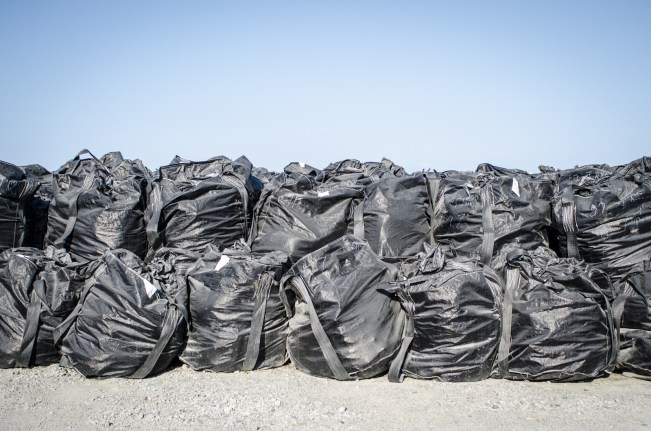
Bags of contaminated material seen near the town of Odaka on the edge of the Fukushima Exclusion Zone.
Dr Liz Maly, Assistant Professor in the International Research institute of Disaster Science (IRIDeS), Tohoku University
On March 11, 2011, the 9.0 magnitude Great East Japan Earthquake (GEJE) unleashed a massive tsunami devastating over 500 square kilometers of Japan’s northeast Tohoku coast. This region has experienced tsunamis every 30-40 years, but the size and impact of the waves of the 3.11 tsunami vastly exceeded any in recent memory or predictions. The tsunami swallowed buildings and places thought to be safe, killing more than 18,000 people and reducing entire communities to rubble. Damage to the Tokyo Electric Power Company (TEPCO) Fukushima Daiichi Nuclear Power Plant on the coastline of Fukushima Prefecture caused the most serious nuclear accident since Chernobyl—a nuclear meltdown which TEPCO and government officials did not publicly admit until almost 5 years later.
Over 1,000,000 house were destroyed or damaged. In the days that followed, 470,000 people evacuated to school gymnasiums or other facilities, as aftershocks and blackouts continued and cleanup efforts began. In the following months, disaster survivors moved into various temporary housing provided by government support. Five years later, 174,000 people are still displaced, living interim housing, including 99,000 from Fukushima.
For those fleeing nuclear radiation, evacuation and displacement is more complicated. In the days after 3.11, the evacuation zone around the NPP was increased to a 20km radius; people within 30km were ordered to stay inside and prepare to evacuate if necessary. However, the radioactive plume was carried further northwest by wind and rain on March 15th. Although information about the direction of the fallout was available from SPEEDI (the System for Prediction of Environment Emergency Dose Information), it was not made public until March 23, too late for people unaware they were in or evacuating directly into the path of the highest amounts of radiation.
People from areas near the NPP struggled with evacuation decisions amidst a lack of information. Some towns ordered evacuation following government directives; others outside designated areas ordered evacuation independently. Still areas were not evacuated until weeks later. Some towns’ residents evacuated collectively; others scattered to various locations inside and outside Fukushima Prefecture. Most moved multiple times. So-called “voluntary evacuees” made their own decisions to evacuate from areas officially deemed “safe.” Elderly people, especially those in nursing/care facilities, suffered severely; more people from Fukushima died as a result of physical and emotional stress related to evacuation and displacement than directly from earthquake or tsunami impact.
More people from Fukushima died as a result of physical and emotional stress related to evacuation and displacement than directly from earthquake or tsunami impact.
Restricted areas were later categorized into three zones based on contamination and possibility of residents’ return. Entry is forbidden to the most severely contaminated, euphemistically named “difficult to return” zone 1. In “residence restricted” zone 2, daytime visits are allowed. In zone 3, optimistically designated “preparing to lift evacuation orders,” daytime entry and business activities are allowed. Contamination levels are based on air samples from point sources; some municipalities include multiple zones, which have been revised several times.
Decontamination, the government’s primary measure for reducing the amount of radioactive material, involves cleaning house roofs, etc., and removing natural materials and a layer of topsoil, which is collected in black plastic bags, continuously piling up in growing storage areas.
While the promise of decontamination is every area can be made safe, there are limits.
For example, there is no way to decontaminate forested mountains; every rainfall carries material to nearby communities, in effect re-contaminating them. Government plans rely on the underlying logic of a one-track plan for the future of contaminated towns: decontamination leads to lifting evacuation orders, then residents will move back. Based on level of contamination and speed of decontamination, the progress on this timeline towards its singular goal is shortened or extended.
Lifted restrictions mean people are allowed to move back, not that they will. In September 2015 restrictions were lifted for Naraha Town; 4 months later, only 6% of former residents moved back. Long term impacts of radiation exposure in Fukushima will not be known for years. But regardless of decontamination efforts and assurances of “safety,” many people will chose not to return, especially parents unwilling to risk children’s health. Conclusions about what areas are actually safe, made on a household or individual basis, also cause rifts within families such as “atomic divorce.” However, some people desperately want to move back, primarily elderly residents less concerned about long term health effects. As Japan is already facing a national demographic crises of an aging, shrinking population, the long-term future of these towns is uncertain at best.
Japanese disaster recovery policies strongly support a one-track ‘hometown recovery’ approach. Local governments have the main responsibility for post-disaster recovery planning (and other disaster management activities). With national funding, Tohoku’s local municipalities have created and are implementing recovery plans. Varying by town, common goals include bringing residents back and helping rebuild homes and lives. Temporary housing, also government-supported, is intended as an interim support until people can go back to new houses in old hometowns; the timeline to move out of temporary housing for those in Fukushima is longer, and their future is unclear. For permanent housing reconstruction, support options include provision of access to lots for private housing reconstruction, and public housing for those unable to rebuild on their own. Fukushima Prefecture is building public housing within the prefecture for residents from contaminated area. However, the main projects supporting residential relocation for rebuilding private houses on individual lots away from coastal areas, happening throughout the tsunami-affected area at a scale never before seen in Japan, limit relocation within single municipalities.
For towns affected by the nuclear accident, the recovery planning process has a vast internal contradiction: recovery plans and policies focus exclusively on rebuilding hometowns, but some towns will not be inhabitable for many years, and in others the majority of residents don’t want to return. Existing recovery policies don’t have a way to deal with relocating partial or entire towns. Several contaminated municipalities have established temporary town halls within other towns. But it is difficult for towns to consider a recovery plan that dissolves the town itself.
How can you put a price on the loss of a house, livelihood, and community?
While displaced, “official” evacuees (those from designated evacuation areas) receive compensation payments from TEPCO (actually the Japanese government, since TEPCO was nationalized). Although these are large sums of money, the real question is not if the amount is enough, but how can you put a price on the loss of a house, livelihood, and community? Compensation payments to nuclear evacuees can’t bring back what was lost.
Japan has well-established disaster recovery policies based on social welfare support for survivors. Yet even with a sizable national disaster recovery budget and governance experience, current policies can not adequately address the actual challenges for recovering the lives of nuclear evacuees and their contaminated hometowns. Beyond the disruptions of lives and communities, the cleanup and full decommissioning of the NPP will take decades, and leave a site that will be contaminated for a very long time.
Even with highly developed disaster preparations, such as the case in Japan, it is impossible to reduce all risk from natural disasters. Yet even if a nuclear accident is caused because of a natural hazard, it is in fact a man-made disaster. Everything possible should be done to prevent another nuclear accident, including decommissioning reactors; in Japan many are located near earthquake faults or coastal areas.
Japan is the only county whose people have been victims of both an atomic bombing and a massive nuclear accident. Beyond horrendous experiences of bomb survivors in Hiroshima and Nagasaki, their children and grandchildren suffered stigma and discrimination (sadly, evacuees from Fukushima have also faced discrimination). The experience of having been attacked by atomic bombs did not stop development and promotion of nuclear power in Japan, strongly supported by government. After the Fukushima Daichi accident, there was a massive swell of popular anti-nuclear opposition, and operation of all 44 active nuclear reactors in Japan was stopped. However, in August 2015, despite residents’ strong opposition, the first nuclear reactor restarted operation at the Sendai Nuclear Power Plant in Japan’s southernmost island, Kyushu.
On April 14, 2016, a large earthquake struck Kumamoto City, in Kyushu, followed by a larger M7.3 quake in the early hours of April 16th; strong aftershocks continuing for a week.
As of April 20, 48 people had been confirmed dead, included several people who died during evacuation, and more than 100,000 people had evacuated from damaged homes or those in danger due to aftershocks. Heavy rains caused landslides, sections of highways were destroyed and operation of bullet trains were suspended, making it difficult to get supplies to evacuees, and any potential evacuation from a nuclear accident impossible. Despite predictions that large quakes will continue, potentially triggering more landslides, and vocal calls from inside and outside Japan, the Japanese Nuclear Authority refuses to stop the reactors, which continue to operate nearby. It seems not enough has changed since 3.11; not only do problems of Fukushima’s nuclear evacuees from remain unsolved, they are in real danger of being recreated.
Dr Liz Maly’s work centers on disaster recovery, housing reconstruction and community-based recovery planning. She has previously researched post-Katrina and post-Sandy housing recovery and land use policy in the USA, as well as the Central Java Earthquake in Indonesia. Dr Maly continues to work on long-term community recovery for groups impacted by the 2011 Great East Japan Earthquake. Her website ‘Recovering Tohoku’ is highly recommended, and you can follow her on twitter here.
Fukushima and the Right NOT to Return: Nuclear Displacement in a System for “Hometown Recovery”
Children Suffer Nuclear Impact Worldwide
Do children suffer worldwide from atomic power? Absolutely. CCTV host Margaret Harrington anchored a panel with Maggie Gundersen, Caroline Phillips, and Chiho Kaneko from Fairewinds Energy Education to discuss the health risks to children around the world from operating nuclear power reactors and their burgeoning waste. In the aftermath of the nuclear meltdowns at Fukushima Daiichi, mothers in Japan especially bear the responsibility to protect their children. As a result, they experience greater hardships in an environment where just expressing one’s legitimate concerns about radiation contamination is seen as a treasonous act. Meanwhile in Ukraine, 30-years following the atomic disaster at Chernobyl, the repercussions of massive radioactive contamination and government zoning continue to severely impact children living within 50 miles of Chernobyl’s epicenter. The United States is not immune to these worries and contentions as Tritium, Strontium-90, and Cesium 137 are radioactive releases that threaten the health of children living nearby leaky atomic power reactors and nuclear waste dumps. Learn more by watching this episode of Nuclear Free Future as the women of Fairewinds lend their voices to protect the children.
1 This Month
Chernobyl: The Lost Tapes – A good documentary on Chernobyl on SBS available On Demand for the next 3 weeks– https://www.sbs.com.au/ondemand/tv-program/chernobyl-the-lost-tapes/2352741955560

of the week–London Campaign for Nuclear Disarmament

Tell the Ukrainian Government to Drop Prosecution of Peace Activist Yurii Sheliazhenko
To see nuclear-related stories in greater depth and intensity – go to https://nuclearinformation.wordpress.com
-
Archives
- April 2026 (152)
- March 2026 (251)
- February 2026 (268)
- January 2026 (308)
- December 2025 (358)
- November 2025 (359)
- October 2025 (376)
- September 2025 (257)
- August 2025 (319)
- July 2025 (230)
- June 2025 (348)
- May 2025 (261)
-
Categories
- 1
- 1 NUCLEAR ISSUES
- business and costs
- climate change
- culture and arts
- ENERGY
- environment
- health
- history
- indigenous issues
- Legal
- marketing of nuclear
- media
- opposition to nuclear
- PERSONAL STORIES
- politics
- politics international
- Religion and ethics
- safety
- secrets,lies and civil liberties
- spinbuster
- technology
- Uranium
- wastes
- weapons and war
- Women
- 2 WORLD
- ACTION
- AFRICA
- Atrocities
- AUSTRALIA
- Christina's notes
- Christina's themes
- culture and arts
- Events
- Fuk 2022
- Fuk 2023
- Fukushima 2017
- Fukushima 2018
- fukushima 2019
- Fukushima 2020
- Fukushima 2021
- general
- global warming
- Humour (God we need it)
- Nuclear
- RARE EARTHS
- Reference
- resources – print
- Resources -audiovicual
- Weekly Newsletter
- World
- World Nuclear
- YouTube
-
RSS
Entries RSS
Comments RSS
 nuclear-news

.jpg)