Fears that South Carolina is to become a nuclear waste import hub
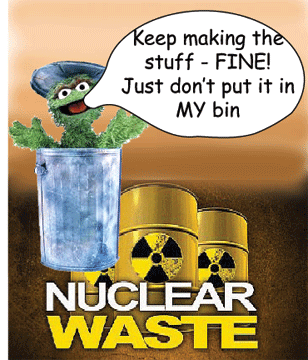 Not only are tons of highly radioactive waste still stored at SRS, the federal government continues to ship nuclear material from foreign nations to the site
Don’t let SRS serve as nuclear dump site, Post & Courier, May 15 2016
The U.S. Department of Energy made some serious promises to South Carolina when it needed a place to bring tons of highly radioactive plutonium back in 2002. And now the DOE wants to renege in nearly every way.
State officials are right to fight it all the way down the line.
Last month, DOE lawyers went to court to insist that the agency isn’t liable for a $100 million penalty owed to South Carolina for the DOE’s failure to remove nuclear waste from Savannah River Site on schedule. The federal agency contends that the agreement with the state was based on goals, not mandates.
The DOE says that its agreement with the state isn’t binding even though it is codified in federal law. In that view, the feds don’t have to pay a penalty for failing to live up to the deal’s requirement to turn weapons grade plutonium into commercial reactor fuel or to send the plutonium elsewhere.
No one who observed the intense stand-off between South Carolina and the federal government over its plans to send 34 tons of weapons grade plutonium to Savannah River Site would characterize those requirements as optional.
At the time, state leaders strongly opposed the plan, having reasonably concluded from past experience that the federal government would be more than willing to shift its nuclear waste problems permanently to South Carolina.
At one point, then-Gov. Jim Hodges threatened to stand in the middle of the highway to stop nuclear material from being trucked into South Carolina. He also ordered the S.C. National Guard to close the highways to waste shipments, if necessary.
Those histrionics were intended to underscore the state’s resolve not to willingly permit Savannah River Site to become the nation’s nuclear waste dump.
The crisis passed after the federal government pledged that the nuclear waste would be neutralized and shipped out of state on a firm timetable.
If that agreement allayed the fears of state officials in then, the situation now only intensifies the skepticism by which the DOE’s promises should be viewed in South Carolina.
Not only are tons of highly radioactive waste still stored at SRS, the federal government continues to ship nuclear material from foreign nations to the site…….http://www.postandcourier.com/20160515/160519614/dont-let-srs-serve-as-nuclear-dump-site-
Belgium getting more anxious about safety of its nuclear reactors?
EVERY BELGIAN GETS ANTI-RADIATION PILLS IN CASE OF NUCLEAR EMERGENCIES, Who.What.Why. MAY 15, 2016 | BEN HUANG Just a week after denying Germany’s request to shut down two of its oldest nuclear reactors, the Belgian government decided to distribute anti-radiation pills to its entire population. Do the authorities know something about the safety of its aging nuclear plants that it isn’t sharing ?
The two reactors in question are 40 years old, and their pressure vessels have shown signs of metal degradation, raising concerns over their safety. Belgium still gets 50 percent of its electricity from nuclear power. Germany, in contrast, has decided to shut down all of its nuclear reactors and to focus on renewable energy.
The decision to distribute the pills, which are also known as iodine pills and protect the thyroid from radioactive poisoning in case of a disaster, shows how worried Belgian officials are — and for good reason. Nuclear safety is an illusion, as two high-profile cases have shown. The Chernobyl reactor explosion 30 years ago and the ensuing radioactive fallout killed thousands and left land the size of Rhode Island unusable…….http://whowhatwhy.org/2016/05/15/every-belgian-gets-anti-radiation-pills-case-nuclear-emergencies/
True costs of nuclear-generated electricity hidden for decades
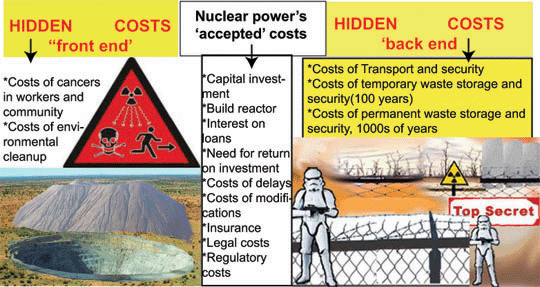
US nuclear industry’s plan thanks to NRC: let taxpayers carry the can for closed power plants, Ecologist Linda Pentz Gunter13th May 2016 “…….Using Vermont Yankee (a relatively small 620 MWe reactor) as an example, the decommissioning cost estimate in 2015 was $1.2 billion and rising. At the same time, Entergy, the plant’s owner, had just $625 million on hand.
In early May, Entergy was reprimanded (but not fined) by the NRC for violating “federal regulations last year when it prematurely took money out of the Vermont Yankee decommissioning trust fund to cover planning expenses associated with the handling of spent nuclear fuel at the closed reactor”, the Times Argus reported.
Another factor in the current struggle to pay for decommissioning is rooted in a decades-long practice by utilities of omitting the costs of decommissioning from electricity bills in order to artificially lower rates and stay competitive in the market.
Rather than preserve decommissioning trust funds for actual decommissioning work, utilities are now asking the NRC to let them raid the funds for activities outside the parameters of the reactor decommissioning process. These activities include the payment of taxes and the protracted management of orphaned nuclear waste left on site.
In addition, while at the same time delaying the start of decommissioning, the utilities have requested and received exemptions from the NRC that allow them to eliminate radiological emergency planning and drastically reduce on-site security around hundreds of tons high-level nuclear waste, all in the name of saving money.
“The Nuclear Regulatory Commission appears to be complicit in this process and is in fact providing a significant hidden subsidy to the nuclear industry when it looks the other way by allowing public trust funds to be raided in violation of the Code of Federal Regulations”, writes Arnie Gundersen of Fairewinds Associates in a document submitted to the NRC.
Gundersen, along with other groups including my own – Beyond Nuclear – have filed comments to the NRC as part of an arcane and convoluted process known as an ‘Advanced Notice of Proposed Rulemaking on Decommissioning.’ The public comment period closed on March 18, 2016.
A years long Rulemaking is underway because reactor owners are asking to streamline what were site-specific exemptions and have them issued generically instead, and across the board, without any opportunity for public review or comment. This essentially eliminates public transparency in the decommissioning process.
It further seeks to save the corporation from spending any of its electricity production profits on the costs of safety and security oversight the companies claim are no longer needed once the reactor stops power production and is defueled………..http://www.theecologist.org/News/news_analysis/2987679/us_nuclear_industrys_plan_thanks_to_nrc_let_taxpayers_carry_the_can_for_closed_power_plants.html
Radium and Lead contaminate rivers From Thousands of Fracking Wastewater Spills
Duke Study: Rivers Contaminated With Radium and Lead From Thousands of Fracking Wastewater Spills. EcoWatch Sharon Kelly, DeSmogBlog | May 9, 2016 Thousands of oil and gas industry wastewater spills in North Dakota have caused “widespread” contamination from radioactive materials, heavy metals and corrosive salts, putting the health of people and wildlife at risk, researchers from Duke University concluded in a newly released peer-reviewed study.
High levels of lead—the same heavy metal that infamously contaminated water in Flint, Michigan—as well as the radioactive element radium, were discovered near spill sites. One substance, selenium, was found in the state’s waters at levels as high as 35 times the federal thresholds set to protect fish, mussels and other wildlife, including those that people eat.
The pollution was found on land as well as in water. The soils in locations where wastewater spilled were laced with significant levels of radium and even higher levels of radium were discovered in the ground downstream from the spills’ origin points, showing that radioactive materials were soaking into the ground and building up as spills flowed over the ground, the researchers said.
The sheer number of spills in the past several years is striking. All told, the Duke University researchers mapped out a total of more than 3,900 accidental spills of oil and gas wastewater in North Dakota alone……. http://ecowatch.com/2016/05/09/radium-lead-fracking/
Degrading panel at Pilgrim Nuclear Power Station’s spent fuel pool
Report: Panel at Pilgrim degrading Problem in spent fuel pool described as ‘slow to develop’ Cape Cod Times, By Christine Legere May 14, 2016
PLYMOUTH — One of the panels designed to absorb neutrons and prevent a nuclear reaction called fission from occurring in the spent fuel rods stored in the Pilgrim Nuclear Power Station’s spent fuel pool has deteriorated, according to a report submitted by Entergy Corp. to federal regulators yesterday.
Fission would cause the rods to heat up the same way they do in a nuclear reactor. The heat would cause the water in the pool to boil and evaporate. If exposed, the rods could start a fire and release radiation.
Neil Sheehan, spokesman for the Nuclear Regulatory Commission said degradation of the panels has been a known problem for decades and one experienced by a number of nuclear plants……..It takes as little as four fuel assemblies to begin a nuclear chain reaction. Currently the racks in Pilgrim’s pool hold 3,300 spent fuel assemblies……..
The storage pools at nuclear plants, particularly older ones like the 43-year-old Pilgrim, were designed to hold spent fuel rods short term. Pilgrim’s pool was designed for about 800 assemblies. Assemblies were on large racks that relied on large spacing, about 20 inches between the spent fuel assemblies to maintain sub-critical conditions.
But as the solution to long-term storage continued to be elusive, the pools had to accommodate many more rods than “Because of the federal government’s problem to provide a disposal site for irradiated fuel, tens of thousands of tons of irradiated fuel remains where it was produced,” said David Lochbaum, director of nuclear safety for the Union of Concerned Scientists. “Spent fuel pools have been re-racked with storage racks holding irradiated fuel very close together, often closer than when it is in the reactor core. In the core, there are control rods to prevent criticality. In the spent fuel pools, other methods must be used to protect against criticality.
Solutions to the problem include the use of borated water or the insertion of sleeves containing boron over defective panels.
At this point, there is no time frame for a solution at Pilgrim. http://capecodtimes.com/article/20160513/NEWS/160519684
Obama should vow to halve the U.S. nuclear stockpile
Rather than apologize, Obama should vow to halve the U.S. nuclear stockpile, Japan Times, BY PATRICK PARR, 15 May 16, If we are to avoid the drudgery of war, if we are to avoid being plunged across the abyss of atomic destruction, we must transcend the narrow confines of nationalism. Nationalism must give way to internationalism.”— Martin Luther King Jr., July 19, 1953
As of 2015, the United States and Russia have control of approximately 93 percent of all nuclear weapons. This staggering statistic is the legacy of the decades-long period of paranoia known as the Cold War.
In the United States, a country far more transparent about its stocks than Russia, nuclear weapons are divided into three categories: 2,080 deployed, 2,680 in storage and 2,340 that are “retired” — an odd way of saying they are simply in line to be dismantled. One missile blows up Manhattan, Tokyo’s Setagaya Ward or Higashiosaka, to put those numbers in perspective………
Cutting that number in half within the year would be a strong way of displaying a level of cooperation and respect toward other countries not in such a favorable position of authority. It would be better than an apology. It would be action. Or, as Rev. Martin Luther King Jr., one of Obama’s heroes, put it: “When will a stupid world rise up to see that a ‘get tough’ policy cannot bring peace; universal military training cannot bring peace; the threat of the atomic bomb cannot bring peace; but only through placing love, mercy and justice first can we have peace.” http://www.japantimes.co.jp/community/2016/05/15/voices/rather-apologize-obama-vow-halve-u-s-nuclear-stockpile/#.Vzjo1TV97Gh
The vicious circle of nations bumping up their nuclear weapons
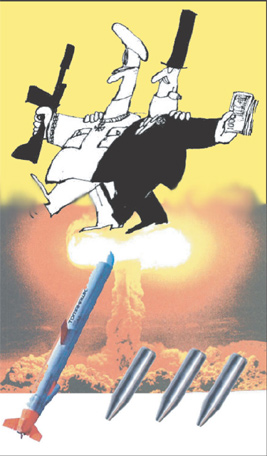 US, Russia, India driving China’s nuclear modernisation: Pentagon By PTI | 14 May, 2016WASHINGTON: The defence capabilities possessed by the US , Russia and India are among the main factors driving China to modernise its nuclear force and bolster its strategic strike capabilities, the Pentagon has said. ….
Internal Exposure Concealed: The True State of the Fukushima Nuclear Power Plant Accident
Yagasaki Katsuma, emeritus professor of Ryukyu University, has been constantly sounding the alarm about the problem of internal exposure related to nuclear weapons testing and nuclear electricity generation. Since the explosion at the Fukushima Daiichi nuclear power plant (NPP), he has drawn on his expertise to conduct field research, and to support those who evacuated to Okinawa. We asked him to reflect on the five years since the accident at Fukushima Daiichi, and to lay out the issues that lie ahead.
Heading to the blast site 12 days post-explosion
On March 17, 2011, a friend who lived in Fukushima City contacted me. “They’re reporting an onslaught of radioactivity, but we have no idea about any of that”, he said. “We need dosimeters, but there’s no way to get our hands on them.”
I ended up making my way to Fukushima along with several dosimeters for measuring radioactivity. I set up the dosimeters. Fukushima was under a petrol provision restriction, and I could not travel freely. I needed to make arrangements for an “emergency vehicle” to use. I had left Okinawa on March 24, traveled via Osaka by plane to Fukushima Airport, and entered Fukushima City by a bus that went through Kōriyama. The Japan Railways (JR) trains had stopped running. It had been 12 days since the first explosion, which had occurred at reactor No. 1 of the Fukushima Daiichi Nuclear Power Plant (NPP). It snowed the next morning, and I saw that a torrent of radioactivity – 12 microsieverts/hour – was relentlessly falling on the living spaces of Fukushima’s citizens.
From March 25 to 31, I went to eight areas to measure radiation doses in the air, farmland and water: Fukushima City, Iwaki City, Aizu-Wakamatsu City, Kitakata City, Minami-Sōma City, Kōriyama City, Iitate Village, and Kita-Shiobara Village. I engaged in discussions with farmers and other locals about what steps they should take.
At the time, the dose readings from farmland went down by half when just the top layer of weeds and straw litter were removed; digging 3 cm deep reduced the readings by 80%. So I suggested that if people did not plant crops this year, and removed 5 cm of topsoil from their land, they could prevent future batches of crops from radioactive contamination. It was a situation in which both national and local governments were at a loss about what to do; they could not even come up with countermeasures, and were practically without policies. In the end, apart from a few enterprising farmers who followed my recommendations, most farm-owners felt compelled to plant crops, and ended up ploughing the soil to spread radiation up to 20 cm deep.
Of the 2 dosimeters I had brought with me to conduct my survey, I lent one to a farmers’ union for one year, thus doing what I could for them in terms of temporary assistance.
No Measures to Protect Residents
One of the things which stunned me was the absoluteness of the safety myth (anzen shinwa). Even though radioactive dust was falling, no one knew anything about how to protect their bodies. The local governments had not a single dosimeter among them. The evacuation manual for NPP accidents used in Fukushima City’s elementary schools was exactly the same as the evacuation manual for earthquakes.
Furthermore, all attempts to talk about demonstrations of the danger of NPPs were categorically suppressed. Herein lies the root of why no countermeasures were taken to protect residents from radioactivity. No stable iodine tablets were distributed; no SPEEDI (System for Prediction of Environmental Emergency Dose Information) data was announced, and so on.
Before the accident, I had published a book called Concealed Radiation Exposure in 2009 with Shin Nihon Shuppansha, which expounded my view that internal exposure was a hidden kind of exposure more dangerous than external exposure.
The Atomic Bomb Casualty Commission (ABCC) and the Radiation Effects Research Foundation (RERF) have suppressed information about those sacrificed in the atomic bombings. The International Commission for Radiation Protection (ICRP) has concealed the issue of internal exposure in the context of their commitment to the cause of the United States’ nuclear strategy.1 The Fukushima Daiichi NPP accident, through multiple explosions, has scattered between one hundred and several thousand more radioactive materials than the Hiroshima bomb into the environment, resulting in health damage caused by internal exposure. This would ineluctably lead the International Atomic Energy Agency (IAEA) and the ICRP to cover up internal exposure and exposure casualties. In other words, I believed that they would do everything they could to cast off health damage to Fukushima residents, and support the Japanese government’s policies to abandon its own citizens. This is what drove me to rush down to Fukushima.
The Accident on Televised Programmes
For two years in 2011 and 2012, I delivered more than 120 lectures each year, and held interviews with the mass media. The mass media did courageously report on the reality and danger of internal exposure, but a distressing incident occurred in the process. This happened during my appearance, on July 2, 2011, as a guest on NHK Television’s Weekly News Insights.
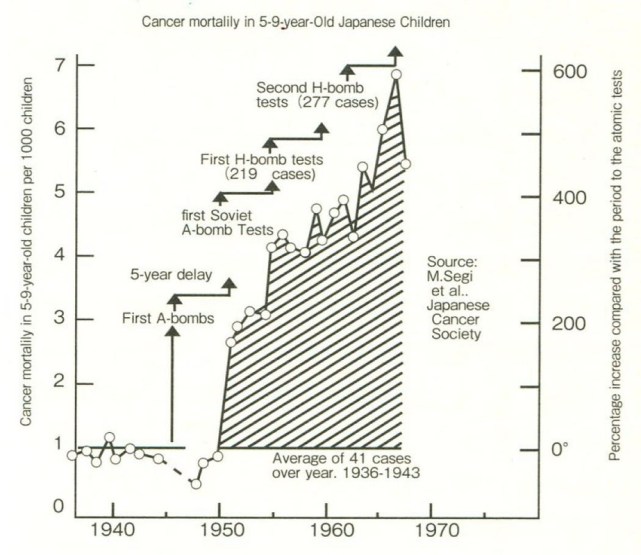
The NHK flipchart that disappeared was based on this graph. 2
I had asked them to make a flipboard for me which showed data on how the rate of child cancer deaths in Japan had jumped five years after the atomic bombings of 1945 to three times their original rate (see graph). It was data which clearly demonstrated that these children were the world’s first casualties of internal exposure. The night before the show, I was handed a script and sat in a meeting discussing the show until past 10 PM. However, the next morning, when I headed to NHK, the director told me that due to time constraints, we could not follow the script we had discussed the previous night. On entering the studio, the flipboard which I had expected to be at my feet was nowhere to be seen. When I asked a nearby staff member to please bring it for me, quickly, the reply was that they could not do that. With 30 seconds to go before showtime, I had no choice but to appear on the show bereft of my data.
The following day, when I requested a written explanation of these events, NHK did not oblige me. Faced against my will with such a situation, I feel strongly that I am responsible for not being able to properly deal with it.
The Society for Connecting Lives
My deceased wife, Okimoto Yaemi, established a society called “Connecting Lives – The Society to Connect Okinawa with Disaster Sites” together with Itō Michiko, an evacuee from Fukushima, and others. They demanded that the Tokyo Electric Power Company explain compensation claims to the victims of the disaster, and even made them come to Okinawa to explain this in person to the evacuees here. It was the first time TEPCO had travelled outside of Fukushima Prefecture to hold an information session. In Okinawa, a group of plaintiffs for a lawsuit to “return our livelihoods, return our region” also came together. 3
In the midst of all her work, Okimoto always came to send me off and to pick me up from Naha Airport. Now that she is gone, I have taken up her role as the representative for the “Connecting Lives” society.
After the accident, the melted-down reactor core was too radioactive to be properly disposed of. It is clear as day from this fact alone that nuclear power generation should not be permitted. In these 5 years, there has been a regime brimming with pollution: it is manifest in things like the lack of intelligence and care on the part of the Japanese government, the utilitarianism that places profits and power above human rights, and the political concealment of the worst environmental radiation disaster in history.
******
It is now 5 years since the Fukushima Daiichi accident, and we are in an abnormal state of affairs in which TEPCO and the national government are forcing people to silently accept their victimization.
Under the Atomic Energy Basic Law, the maximum annual exposure limit for the public is set at 1 millisievert. But people are being forced to accept a revised threshold that is 20 times larger, that of 20 millisieverts per year.
In Fukushima Prefecture, the cessation of compensation payments and the lifting of the evacuation order in highly contaminated regions has forced people to return, at the same time that housing support for the evacuees is also being ended. Of course, there are no measures at all in place to deal with radioactivity outside Fukushima Prefecture.
The Chernobyl NPP accident of 1986 led Ukraine (also Belarus and Russia) to establish laws that protected human rights, which stands in great contrast with the human rights situation surrounding the Fukushima Daiichi NPP accident.4
Claiming Radiation Effects as Psychological
The media reports on the occasion of 3.11’s 5th anniversary contain references to the “fūhyō higai” (damage caused by rumors of radiation) that they claim is hampering the reconstruction process. Why do they not call this as it is, “radioactivity damage”? “Fūhyō higai”is a term that they use in order to replace radiation effects as psychological problems.
Under appointment of the IAEA, Shigematsu Itsuzō (now deceased), the former chairman of RERF(formerly ABCC), carried out a health survey of Chernobyl residents. He remarked in a report he made in 1990 that “there are virtually no diseases that are caused by radiation, but attention must be paid to the psychological stress that is caused by wondering whether or not one has been exposed to radiation”. The theory that “psychological stress causes illness” is a method used to conceal the radiation victimization of the nuclear age.
In Chernobyl, uncontaminated food was distributed to residents of contaminated areas. Respite trips for children are also ensured by the state. And yet, in Fukushima, there is a huge push to “support by consumption” (tabete ouen) and the administration has implemented a policy of “locally-grown and locally-consumed” in providing children’s school lunches. Japan is not attempting to avoid internal exposure as Chernobyl-affected states did; it is doing the exact opposite.
What is at the bottom of this response? Whether it is protecting residents from radiation exposure, or decommissioning of the melted reactor core, or indeed dealing with the contamination of underground water, there are numerous things that need to be addressed even by diverting the budgets of the forthcoming Tokyo Olympics. However, the Japanese government is trying to overcome all these issues with cheaper costs at the expense of people’s suffering. Underlying this is their utilitarianism – an ideology which prioritizes economics over human rights and human lives – as well as their philosophy of abandoning the people.
Following what the government is saying, one is left speechless. “If it’s under 100 becquerels, then sell it [produce]”; “If you don’t sell it you won’t be able to support yourself”; “If you talk about radioactivity you won’t be able to sell [your produce]”; “Don’t talk about radioactivity”. Media reports are controlled by the government, and people can only remain silent.
Providing safe food is the mission of agriculture. Surely there is no more cruel infraction of human rights than to force producers, against their will, to make food that might adversely affect human health by radioactive contamination. There is no solution to this injustice other than to get rid of this system that has been imposed by fiat. Although farmers’ labors have lowered the amount of radioactive contamination in their produce, tragedies will continue as long as they keep the allowable radioactivity in food up to 100 becquerels/kilogram.
Such standard stems from the thinking that economic profits comes before health. Radioactivity even in small amounts can cause harm. International Commission on Radiological Protection has it that carcinogenesis starts with DNA mutation of a single cell. Human susceptibility to radioactivity depends on individuals, and more vulnerable ones, particularly fetuses are affected first. The natural miscarriage rate of the four prefectures including Fukushima since 311 has risen by 13%.5
Consumption of one becquerel of C-137 (with biological half-life of approximately 80 days) every day will result in an internal accumulation of 140 becquerels within about 2 years. If we have to inevitably set any standard for allowable radioactivity in food, we should use the guidelines set forth in the recommendation by German Society for Radiation Protection, which is “no food with a concentration of more than 4 becquerel of the leading radionuclide Cesium-137 per kilogram shall be given to infants, children and adolescents. Grown-ups are recommended to eat no food over 8 becquerel per kilogram of the leading nuclide Cesium-137.”6
Deceitful Dosimetry
The Japanese government’s philosophy of abandoning its people starts with its refusal to trust them, in other words it views them as unintelligent citizens. Fearing that a panic would result, it did not announce SPEEDI data, nor did it distribute solid iodine tablets. It prioritized “emotional stability” over protecting residents from radiation danger. Moreover, it implemented thorough control of information.
It is not simply that residents are seen as ignorant. The government has even actively betrayed their trust. A classic example of such actions by the state is the presentation of data on the radioactive contamination levels in the environment. The government set up monitoring posts (MP) in Fukushima Prefecture and neighboring prefectures and made the readings from them into official data. Along with Yoshida Kunihiro and others from the “Safety and Reassurance Project”, in the autumn of 2011, I checked the dose measurements of the MP. We found clear evidence that the publicly available data of the MP only showed 54% of the actual level of contamination in our readings.
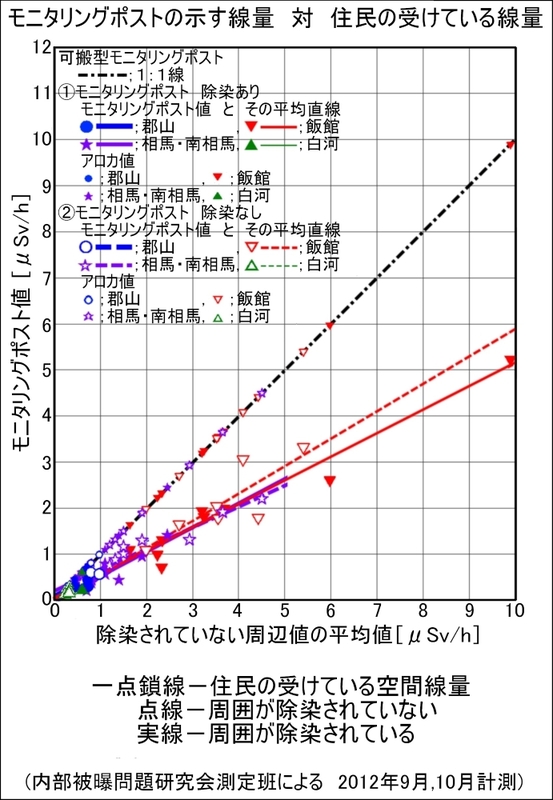
Comparison of Radiation Dose Readings from the Monitoring Posts and Actual Doses
X-axis: amount of radiation (microsieverts/hour
Y-axis: actual doses for residents and measurements at monitoring posts
Black dot-dash line: Actual absorbed dose received by residents
Dotted red line: Measurements at monitoring posts without decontamination
Red line: Measurements at monitoring posts with decontamination
[When laid alongside a graph of the actual recorded radiation doses taken by the authors at the monitoring posts (black line; the absorbed dose to residents), the same displayed readings taken from the same monitoring posts were 58% of that value in the case of non-decontaminated areas and 51% for decontaminated areas.]
[2011 autumn, taken with a certified scintillator counter, model HITACHI-ALOKA YCS172B]
On top of that, there was also a deliberate downplaying in government processing of the numerical data. The level of soil contamination is directly related to the amount of radiation in the air, and an objective measurement of this thus should be obtained from the air dose. However, on the assumption that there is a uniform exposure dose to the whole body, this reading was converted to 60% of its full amount based on the projected dose, an amount called the “effective dose”, a number that divides the exposure dose among the body’s various organs. Furthermore, they made a hypothetical estimate of the time people spent inside and outside their homes, and created a “substantive dose” reading that was another 60% lower. In the background to these machinations lies the will of the international nuclear energy industry.
The health survey being conducted by the Fukushima Prefecture Health Survey Evaluation Committee continues to progress, and the sad news is that it has already located 163 cases of cancer. From a scientific point of view, it is clear that these cases are undeniably caused by radioactivity. I also found, from the ratio of male to female patients, that about 75% of cancers in each sex were induced by radiation. Despite this, the Evaluation Committee continues to assert that there is no proof that these cancers are linked to the NPP accident.
Just as the committee insists that the numerous stark cases of thyroid cancer are not linked to radioactivity, so they will attempt to bury all other adverse health impacts in the sand.
******
Environmental pollution by radiation in Japan is ongoing, and, following the Fukushima Daiichi NPP accident, it is the worst it has ever been. This is true whether we look at the amount of radioactivity being released via the long-term meltdown of the reactor core, which is spewing uncontrollably, while the government and mass media collaborate in the cover-up. From the standpoints of society, economics and preventative medicine, a terrible state of affairs will result if we do not provide public protection to the people affected by the accidents and clarify the nature and extent of environmental damage.
“Cheaper” Countermeasures
The Japanese government has deemed the amount of radioactivity released from the Fukushima accident as one sixth of that which was released from Chernobyl. However, the subsequent revelations suggest that Fukushima’s radioactivity is actually anywhere from 2 to 4 times as high as Chernobyl’s.7 Compared to the explosion of just one reactor at Chernobyl, which had a 1,000,000 kilowatt capacity, the explosion at Fukushima Daiichi involved 4 reactors with a combined output of 2,810,000 kilowatts.
The post-accident maintenance of nuclear reactors between Fukushima and Chernobyl also differs. Seven months after Chernobyl, a steel and cement sarcophagus was built to cover the reactor, thus stopping the further release of radioactive materials. Japan, even after 5 years, continues to let radioactive substances spew out into the air and water, thus worsening the world’s environment.
Without using the necessary basic procedures, they are simply trying to implement “cheaper” countermeasures. The fact that the stricken reactor cannot be managed alone can demonstrate that nuclear power lacks practicality and there is no choice but to abolish it.
As mentioned before, Japan is not honestly disclosing the degree of contamination and is using various measures to underestimate it. They have not published dose readings for radioactive nuclides such as uranium, plutonium, and strontium-90. The monitoring posts, which are supposed to provide public data of radioactivity, give readings that are only around half of the actual doses.
Pediatric thyroid cancer cases in Fukushima have risen to 163. It has been proven scientifically that these are due to radiation. (Tsuda Toshihide et al. have demonstrated this via statistics8; Takamatsu Isamu has examined the relationship between exposure dose and cancer onset rate9; Matsuzaki Michiyuki10 and Yagasaki Katsuma11have studied the relationship of radiation with the sex-differentiated ratio of cancer).
In response to this research, the Fukushima Prefectural Health Evaluation Committee has continued to insist that there is no clear link between cancer and the NPP accident. They are trying to bury all the injuries to health by this denial of a link between radioactivity and the many recorded cases of thyroid cancer. By expunging the record of health damages caused by radiation, they hope to heighten the false impression that NPPs are “safe”. In Japan, excessive utilitarianism goes unmentioned; companies’ profits and the state’s convenience take priority over human life.
The Systemization of Dispersal
The countries surrounding Chernobyl created a “Chernobyl Law” to protect their residents 5 years after the accident. Under this law, the government designated areas that received more than 0.5 millisieverts of radiation each year as “dangerous”, and areas that received between 1 and 5 millisieverts of radiation each year as “areas with relocation rights”, while areas receiving more than 5 millisieverts each year could not be used as residential or agricultural sites. Health checkups and respite trips for children have been covered in a massive budgetary investment by the state in order to protect its residents.
What about Japan? The legal exposure limit for the public is 1 millisievert per year. As previously mentioned, the government has raised the upper threshold to 20 millisieverts per year in their drive to push Fukushima residents to return. The Chernobyl law forbids residence and agriculture in areas where more than 5 millisieverts (per year) of irradiation is expected; in Japan, approximately 1,000,000 people live in such areas.
Under the Basic Law on Atomic Energy, which governs nuclear reactors and related phenomena, the standard for radioactive waste management (the level considered for safe recycling use) is 100 becquerels per kilogram. Notwithstanding this rule, the special law for measures to handle contamination by radioactive substances permits up to 8000 becquerels per kilogram. Contamination dispersal is thus becoming systematized.
A law to support child victims was established, but no maps of radioactive contamination were made, and the areas specified to receive assistance under this law’s “Basic Policy” are limited to Fukushima Prefecture. With this law they have thus made all areas outside Fukushima Prefecture ineligible to receive radioactivity countermeasures.
When looking at the measurements taken by the Nuclear Regulation Authority of the contamination levels in all prefectures, we see that contamination exists everywhere in the country, Okinawa being no exception.
In particular, eastern Japan shows high levels of contamination. 10 prefectures show contamination of more than 1,000 becquerels of Iodine-131 per square meter of land –Tochigi, Ibaraki, Tokyo, Yamagata, Saitama, Chiba, Gunma, Kanagawa, Nagano, and Shizuoka (Readings for Fukushima and Miyagi were not available for a period of time because the measurement equipment were destroyed by the earthquake and tsunami, but other sources confirm high I-131 dispersion in Fukushima). 11 prefectures show more than 1,000 becquerels of Cesium-137, and Cesium-134 – Fukushima, Tochigi, Ibaraki, Tokyo, Yamagata, Saitama, Chiba, Gunma, Kanagawa, Iwate, and Nagano.
These readings are taken from a fixed point, which means that if a radioactive plume does not pass over these points, it will not be measured, and is liable to produce an under-estimation gap by 1 to 2 digits.
Although the Ministry of Education has implemented airborne monitoring, cities with a density of buildings higher than 3 stories present obstacles to this technology, making it unable to record their levels of contamination. Severe contamination is concealed in the Tokyo metropolitan area and other places in the region.
Legal Protection of Citizens
The above facts demonstrate an intentional ignoring of the serious level of radiation pollution. Japanese citizens should recognize radioactivity pollution as a de facto state of affairs.
In order to protect Japanese citizens from radioactivity pollution, the government and administration should take responsibility for protecting victims via a swift application of the regulations exactly as they are laid out under the Basic Law on Atomic Energy. Here we raise some suggestions for administrative policies to enact not only towards evacuees, but all residents. 1. The state should recognize and guarantee citizens’ right to evacuate and relocate. It should also bear responsibility in enacting measures to protect vulnerable victims, especially children.
- Health damages that emerge from NPP accidents should be studied on a nation-wide scale, and a study of the conditions of evacuees should be quickly implemented.
- Those most vulnerable to radiation should be protected by measures based on a sincere commitment to preventive medicine.
- With regard to the numerous early-onset cases of child thyroid cancer that have far exceed such early cases caused by Chernobyl, medical care and compensation should be provided; children and all residents should be protected. Thyroid screening should also be carried out for the entire country.
- Measures to prevent the entrance and exit of radioactive substances in all regions should be enacted.
- TEPCO’s social responsibility as a victimizer corporation in radioactivity pollution should be clarified.
This is a translation of a modified version of Yagasaki’s three-part article series “Kakusareru naibu hibaku – Fukushima genpatsu jiko no shinso” that appeared in Ryukyu Shimpo on March 16, 17, and 18, 2016.
Notes
French State Owned Areva; the UraMin Scandal and Canada; Atomic Annie Before Investigating Judges

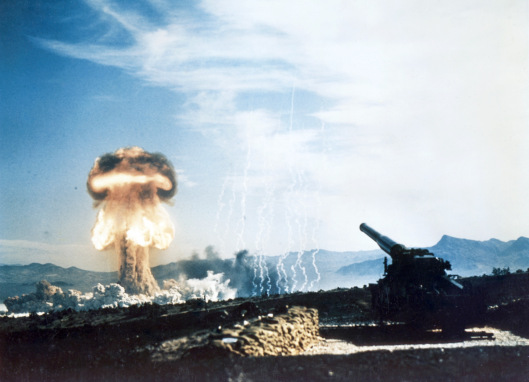
The US M65 atomic cannon, called “Atomic Annie”, was able to fire a nuclear device, as it did for Operation Upshot-Knothole Grable. The name “Atomic Annie” may be from the nickname “Anzio Annie” given to the Nazi German K5 [Krupp] gun, used during WWII. https://en.wikipedia.org/wiki/M65_atomic_cannon
Former head of French State owned nuclear behemoth Areva, Anne Lauvergeon used to be called “Atomic Annie”. She is member of the elite “Corps des mines“, “the foremost of the technical Grand Corps of the French State (grands corps de l’Etat). It is formed of the State Engineers of the Mines. The Corps is attached to the French ministry in charge of economy, industry and employment… People entering the Corps are educated at the École nationale supérieure des mines de Paris, also known as Mines ParisTech, with a special curriculum distinct from that of ordinary students. Most of them are from École…
View original post 5,305 more words
May 15 Energy News

Opinion:
¶ “Crisis looms as our coal-fired power stations start to break down” • Coal-fired power stations are likely to break down more often as the deadline for closure approaches, leaving the UK vulnerable to power shortages. Nine coal-fired power stations remain in the UK. [This is Money]
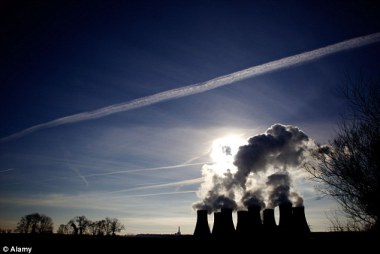 Shutting down: Coal supplied about 17% of the UK’s
electricity at the end of 2015, down from over 30% in 2014.
¶ “Coal vs. renewables: Texas a leader in shift to wind and solar energy” • If there’s a War on Coal, it’s increasingly clear which side is winning. Analysis by the investment firm Lazard determined that wind energy is now the lowest-cost energy source, even without tax incentives. [Longview News-Journal]
World:
¶ Experts at the World Economic Forum on Africa suggested that leveraging investments into renewable, digital and energy-efficient technologies will spur Africa’s ambitions to a fully…
View original post 553 more words
May 14 Energy News
Science and Technology:
¶ French scientist and yachtsman Raphael Dinelli is preparing to make the first carbon-free transatlantic flight a reality by June 2016. He will attempt to cross the Atlantic Ocean in the Eraole, hybrid biplane powered by solar panels and biofuel. The trip will last 60 hours. [CleanTechnica]
 Frenchman Raphael Dinelli hopes to fly the
Eraole across the Atlantic Ocean.
¶ A German startup, Lilium Aviation, is working on a 100% electric jet that may fulfill the promise of the flying car. It says the jet can land or take off from an area the size of a typical garden, can fly about 500 km (310 miles), and recharges overnight from a standard household outlet. [BBC]
World:
¶ China is expected to raise its power storage capacity ten-fold to 14.5 GW by 2020. China is the world largest wind and solar power producer, but…
View original post 676 more words
Mind Control and Peaceful Murder
May 15, 2016 by Mikkai

The sentence: “What will our children think” – is an anachronism. Nothing they will think, because they lack the comparison. The whole organization of public life, of learning in schools and universities, the work of agencies, think tanks and experts has only one aim: The reality is taken as an always “self” updating structure, a constant presence. Thus, disasters become accidents, and accidents become an event. Embedded into “risks” – meaning nothing to worry about. Invisible disasters such as in Japan are perfect to persuade us, as if nothing had happened.
We should not rely on the power of our children, and simultaneously reduce their perception. But that’s what happens every day. Along with the radiation damage, each second.
Why are there protections hoaxes in cyberspace all the time? The sun flowers, the radiation eating bacteria, and the “positive thinking”?
– Fake science, fake ethic.
– To keep claims for compensation small and / or unjustified (long time effects of radiation are not accepted by IAEA and WHO, and so by the Health Ministry
– keep evacuation zones small
– The invention of trivialization of nuclear accidents
– Limitation of the policy of Decontamination
– How to re integrate irradiated areas into economy
– (increasing or flexible) dose limits for all people
– To force the Japanese population to accept on behalf of the economic efficiency unhealthy living conditions and contaminated food and contaminated water
– To relieve TEPCO: The burden of proof is imposed on the victims rather than on the polluter of the contamination
RESULT: The industry can go on.
Who is behind all this? Well, here is your answer:
Rockefeller founded many organisations and think tanks during World War II. The search was on, for Mind Technology during War Times, to be implemented into the masses, the public. The dream of a solider who sacrifices oneself without thinking (like a japanese kamikaze) for the rulers, without even thinking of it. The public sould become like this, the normal man, even the pregnant women.
Among these organisations and agencies founded was the Centre d’Etudes de Problemes Humaines de Travail, which today is the Centre d’études de l’emploi (CREAPT): http://www.cee-recherche.fr/partenariats-et-evenements/partenariats/creapt
Founded at the same time was also the Association pour la Recherche er L’Intervention Psycho-sociologiques in France: http://www.arip-ics.org
10 years before Chernobyl the Centre d’étude sur l’Evaluation de la Protection dans le domaine Nucléaire was founded: http://www.cepn.asso.fr/en/
As they say on their website, this program has four members (financing) their research: “The association currently has four members: the French public electricity generating utility (EDF), the Institute of Radiological Protection and Nuclear Safety (IRSN), the French Alternatives Energies and Atomic Energy Commission (CEA) and AREVA.”
What has CEPN done? Well, it founded Radiation “Protection” Programs in Belarus and Japan: CORE and ETHOS:
In Japan is the Psychological Institute at Kyushu University, which is represented by the Graduate School of Human-Environment Studies: http://www.hues.kyushu-u.ac.jp/english/
In the U.S.A. there is of course the American Medical Association and the American Psychatric Association: http://www.ama-assn.org/ama and https://www.psychiatry.org/
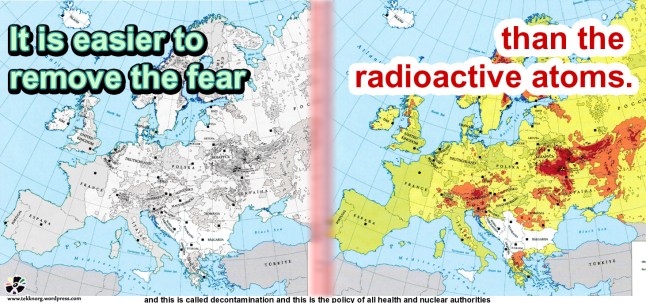
Reactors explode, irradiate the masses and these organisations, brainwash the victims to stay where they are, in irradiated areas. This avoids the cost explosion of evacuation of maybe hundreds of million of people. With psychological back power they transform the public, the media, the politicians, and even the victims’s thinking, that nothing is as bad as it seems, that one could protect againt radiation effects.
The Nuclear Industrial Military Complex explodes reactors, studies the effects via their own programs, and forces the people into the role of guinea pigs. They eat up all remaining NGOs. And then act for the people. Our perception is then brainwashed by their psychological task force. This causes a psychotic holocaust, which then becomes a cellular holocaust, because of the radiation. Normally this kind of reversing something, a good thing which is bad, feels quite “satanic”.
This is the reason, why there is this radiation “Protection” hoax going around, from sun flowers, to bacteria, that eat radiation and event the crazy “think positive” ideology, especially in Japan’s culture and the 2011 aftermath. It is all done by the same people, who caused all these disasters.
Here is a typical, cynical statements which shows it all, it was said b a CORE expert in Belarus:
“If we continue to treat them like victims, they feel like victims” Zoya I. Trafimchik, coordinator of the CORE program: http://www.climateark.org/shared/reader/welcome.aspx?linkid=55022&keybold=nuclear%20AND%20%20accident%20AND%20%20fallout%20AND%20%20land
This is the Crime of CORE. Mind Control of the Radiation Victims, and then Peaceful Murdering them.
The Main Pro Nuclear Program in Japan is ETHOS right now, acting as if they help the victims: http://ethos-fukushima.blogspot.de/
To understand this criminal program in Japan, look at the CORE program in Belarus: The Budget of the CORE program: 5 Million EUROs was the CORE budget. But there are also papers which show a Budget of 4 Million EUROs. The truth is: You need Billions of EUROs to “handle” Chernobyl: More than 6 Million people are still living in irradiated areas in Belarus. How to evacuate them? Build endless houses? Why such a small budget? If you would push more money into it you would admit that Chernobyl was what it was: An unpayable Catastrophe. And one 2nd thing: You would admit that atomic power is unpayable – none of the atomic reactors on this planet are assured. A big crash like the Chernobyl one would cause a damage of 2 – 5,000,000,000,000 EUROs in the U.S. or in the E.U.
Here is an Opinion about CORE Program: http://spring96.org/en/news/1244
Chernobyl program CORE has the aim to “end” Chernobyl. By helping people to die (not to live!) in irradiated areas. The only state supported program.
The Chernobyl aid-program in Belarus was stopped in 1994 / 95: PAGE 62 of this presentation : http://www.life-upgrade.com/DATA/NesterenkoChernobyl-Belarus.pdf and a new “pro nuclear” program replaced it
CORE – or “on how to end Chernobyl (atomic reactor explosion 1986 / radiation) and the resettlement of people in contaminated areas in Belarus”
CORE – from “Cooperation” and “Rehabilitation”. Rehabilitation means: Restoration.
CORE – program launched in Belarus: “Bragin”, “Chetschersk”, “Slavgorod” and “Stolin”.
CORE – the successor program of the failed program “ETHOS” http://www.cepn.asso.fr/en/publications/communications/102-radiation-protection-culture-at-school-lessons-from-the-ethos-and-core-projects-in-belarus.html
(http://www.cepn.asso.fr/spip.php?article56).
The already existing Chernobyl NGO’s do not play a role in the CORE program, beside themself participate on CORE – with their own (already short) budget – raised from international donations. Pro nuclear programs CORE and SAGE are powered by french atomic industry: EDF, Areva and the CEA. http://web.archive.org/web/20080110114120/http://www.truthout.org/cgi-bin/artman/exec/view.cgi/34/10015
“For a quarter of a century a systematic crime against humanity has been perpetrated by people in senior positions at the heart of Europe. The people living in Western Europe, so advanced technologically, remain indifferent and largely disinformed. In order to preserve the consensus around the military and civilian nuclear industry, the nuclear lobby and the official medical establishment have, for the past 26 years, knowingly condemned millions of human guinea pigs to an experiment on their bodies with new diseases in the vast laboratory provided by the territories contaminated by Chernobyl. Children are being treated like laboratory animals, under observation from French and German scientists, and French NGO’s like the CEPN, Mutadis Consultants, ETHOS and CORE, who must take their share of the responsibility. (Translator’s note: CEPN is the Centre d’étude sur l’Evaluation de la Protection dans le domaine Nucléaire ; Mutadis, ETHOS and CORE are all offshoots of the French nuclear industry, financed either through Electricité de France or the Autorité de Sureté Nucléaire.) The same fate awaits the Japanese people and their children living in areas contaminated by the Fukushima disaster because the same strategy is being put in place in Japan with the same players, the same pseudo-scientific justifications and under the aegis of the same authorities.” MORE: http://independentwho.org
“…the IAEA will endeavour to organize conferences, seminars and workshops, in cooperation with the University, with the aim of enhancing public awareness of radiological effects on human health and addressing the issue of “radiation fear” and post-traumatic stress disorders in the Fukushima population…” http://www.mofa.go.jp/policy/energy/fukushima_2012/pdfs/fukushima_iaea_en_06.pdf
“it is recognized by the World Health Organization that the International Atomic Energy Agency has the primary responsibility for encouraging, assisting and coordinating research and development and practical application of atomic energy for peaceful uses throughout the world without prejudice to the right of the World Health Organization to concern itself with promoting, developing, assisting and coordinating international health work, including research, in all its aspects.” http://www.iaea.org/Publications/Documents/Infcircs/Others/inf20.shtml#note_c
It is remarkable how reports always include “stress” / “fear” / “might” / “concern” / “risk” / “Danger” in their headlines and MAINgoals of reporting. The real damage occurring moves into the background. The dead, the injured, not worth looking at, only the concern counts. This is important, especially during nuclear catastrophes (which never end), to create the illusion of an “end”, to overcome the “current situation”. This is not about hope or strength, but to cover up, so that the Holocaust industry can live on.
Nourished by the death of children, sponsored by the IAEA and the World Health Organization. I present you two instruments which are used: 1) The invention of an unethical, non-medical term: “Radiophobia” and 2) the exclusion of NGOs as alarmists. Compare everything you have read and seen with this information. Be ready to see everything in a totally new light. Even the term “stress” is today overused, for everything, as if stress is something new in human history and could be responsible for all the diseases. It’s not. Internal Emitters from Reactors are. Risk is a virtual term, which conceals existing, current, happening damage.
Japanese people hear it from Fukshima day One: “Panic and fear of radiation is much worse than radiation itself” At the Chernobyl IAEA forum the term “Radiophobia” was invented and used: “What’s worse, the IAEA is going public these days with statements ridiculing the so called “radiophobia” of the population and calling for an end of aid programs, which, according to the IAEA report of 2005, only serve to instil a victim mentality in a totally healthy population – a claim not only cynical, but potentially dangerous for the health of the affected population.” Source: http://www.ippnw-students.org/chernobyl/coverup.html
Source: https://tekknorg.wordpress.com/2016/05/15/mind-control-and-peaceful-murder/
Japanese cities say ‘no’ to nuke restart
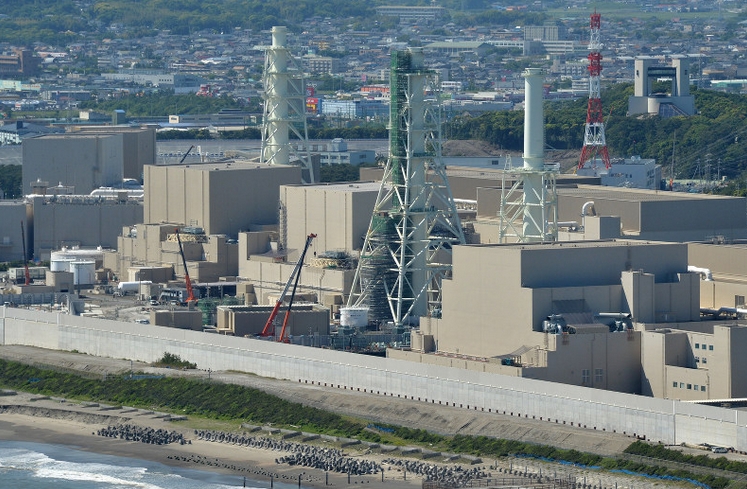
The Hamaoka Nuclear Power Plant, idled for five years and now guarded by a 22-meter-tall tsunami wall, is seen on May 12, 2016. Omaezaki, Shizuoka Prefecture, is seen in the background.
No municipalities near Hamaoka nuclear plant want restart: survey
None of the 11 municipalities within the 30-kilometer-radius urgent protective action planning zone (UPZ) around the Hamaoka nuclear plant in Omaezaki, Shizuoka Prefecture, want the power station’s idled reactors restarted, a Mainichi Shimbun survey has found.
The reactors at the Hamaoka plant, operated by Chubu Electric Power Co., were shut down on May 14, 2011 at the request of the central government, following the meltdowns at the Fukushima No. 1 nuclear plant in March that year. The survey, sent to the mayors of each municipality as well as Shizuoka Gov. Heita Kawakatsu in April, was timed to coincide with the fifth anniversary of that shutdown.
Chubu Electric is aiming to restart the Hamaoka plant’s No. 3 and 4 reactors, and has filed a request for a safety review by the Nuclear Regulation Authority (NRA). The Mainichi survey was undertaken to assess the pros and cons of restarting the plant, and has revealed persistent local concerns over plant safety.
Five response options were included in the questionnaire on whether or not the reactors should be restarted. Among these, three of the municipal leaders said that they were “against” the restart, five said that they were “unable to make a decision at the present time,” and four answered “other.”
None of the respondents said they “agree” with the restart, or even that they “agree subject to the meeting of specific requirements.”
The three mayors who said they opposed a restart were Shigeki Nishihara from the Shizuoka prefectural city of Makinohara, Kinuyo Soneya from the city of Shimada, and Norihiko Tamura from the town of Yoshida.
Nishihara, whose city lies directly above the predicted focus of a Nankai Trough earthquake, noted that “a (nuclear) accident would endanger the very existence of the nation.”
Meanwhile, Tamura commented that “(citizens’) safety cannot be guaranteed,” and Soneya noted, “There is no guaranteed evacuation plan accompanying (the proposed restart).”
Among those who said they were “unable to make a decision at the present time” or “other,” four mayors stipulated specific stringent conditions for approving the restart. These were Kakegawa Mayor Saburo Matsui, Kikugawa Mayor Junichi Ota, Fukuroi Mayor Hideyuki Harada and Fujieda Mayor Shohei Kitamura.
Mayors Matsui and Ota listed the requirement of understanding from citizens, while Harada and Kitamura indicated conditions related to the accident at the Fukushima No. 1 nuclear plant.
“The investigation of the Fukushima accident’s causes has been insufficient,” commented Mayor Harada. “As long as safety cannot be completely guaranteed, I cannot approve the (reactor) restarts.”
Mayor Kitamura noted, “The discussion regarding the plant restart should not begin until there has been a complete resolution to the problems associated with the Fukushima accident, and citizens are thoroughly at ease.”
Meanwhile, Omaezaki Mayor Shigeo Yanagisawa noted that “safety checks are ongoing,” and accordingly answered that he was “unable to make a decision” on the reactor restarts.
Gov. Kawakatsu similarly responded that he was “unable to make a decision,” and added, “Unless safety can be guaranteed, there is no way (that the restart would be approved).”
Chubu Electric officials commented that they will “do everything possible to ensure safety.”
http://mainichi.jp/english/articles/20160514/p2a/00m/0na/019000c
Japan lifts evacuation order for city near nuclear plant
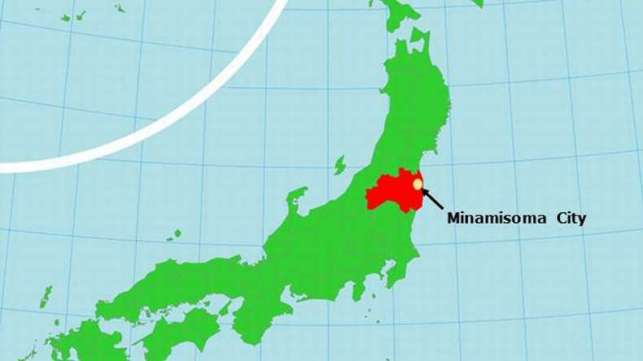
Minamisoma is one of the most contaminated places in Fukushima. Decontamination is never permanent. Some places already have been decontaminated up to 5 times already, but the contamination always coming back gradually to the pre-decontamination levels thanks to the ruisseling rain and the wind bringing it from the forested hills where it has accumulated. Fukushima prefecture is 80% forested hills/mountains, all heavily contaminated.
The Japanese Government insists on perpetuating the decontamination lie, pushing the people to return to live in the previously evacuated areas, hammering in the media that low-radiation exposure is not harmful to health. Economic priorities prevailing above people lives.
Quoting Bo Jacobs: “This is entirely about removing legally obligated compensation. When you are forced to evacuate, the government is liable for the costs. When the government says that the radiation in your community is acceptable, then there is no more legal obligation to compensate you for living someplace that is safe. “
Tokyo: The Japanese government on Friday lifted an evacuation order for the entire city of Minamisoma, located near the disabled nuclear plant in Fukushima.
The decision, which is awaiting approval from the local council, will allow the return of 12,000 people to the municipalities included in the restricted area around the plant due to the nuclear disaster in 2011.
Minamisoma, with a population of 46,000, is located north of Fukushima Daiichi nuclear plant, and the southern and western part of the city is still under the evacuation order, affecting around 11,700 people.
The government has decided to lift the restriction after completing the decontamination work in the residential and surrounding areas, a government spokesperson told state broadcaster NHK.
From next month onwards, Japan intends to allow evacuees to return to the Katsurao and Kawauchi villages too, which means that around 1,480 and 1,040 people will be able to return to their homes respectively.
The last municipality where the evacuation order was completely lifted was Naraha in September 2015, although the inhabitants have returned in small batches due to fear of persisting radiation, a shattered local economy and scarce availability of services.
Around 74,200 citizens throughout the Fukushima prefecture remain evacuated as a result of the earthquake and tsunami of March 11, 2011, out of which only around 4,500 have returned to the areas where the evacuation order has been lifted, according to the local government in February.
http://www.newsx.com/world/28364-japan-lifts-evacuation-order-for-city-near-nuclear-plant
School to close in Fukushima as too few children able to attend
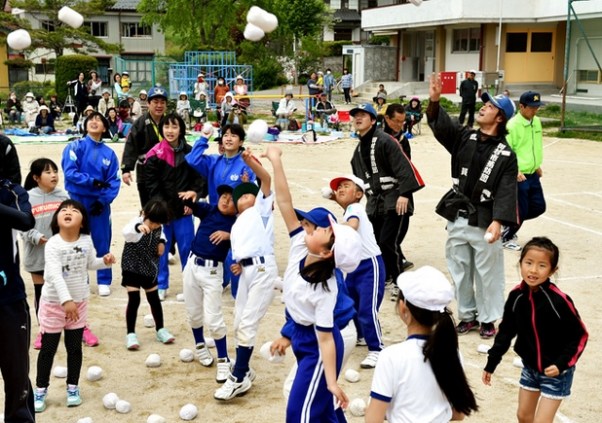
Graduates and local residents attend the last athletic meet at Iwaisawa Elementary School in Tamura, Fukushima Prefecture, on May 14.
TAMURA, Fukushima Prefecture–Despite a proud 140-year history, the Iwaisawa Elementary School here has to close–as not enough children come to classes any more due to the 2011 nuclear disaster.
The school held its last annual athletic meet on May 14. It will merge with another school after this academic year ends next March.
The school currently has 19 pupils, down from 52 before the disaster at the Fukushima No. 1 nuclear power plant.
In the lead-up to the athletic meet, the school, located in the Miyakoji district of Tamura, Fukushima Prefecture, sent out about 500 invitation letters to its graduates and local residents. About 150 people turned up.
After the nuclear accident, residents in the district were forced to evacuate to other areas. Although the evacuation order was lifted in April 2014, many of them opted to stay where they were while keeping their resident registries in the district.
As of the end of April this year, 2,564 people were officially registered as residents in the district. But of that number, only 1,600 or so actually lived there.
After the nuclear accident, pupils at Iwaisawa Elementary School temporarily took classes using classrooms of a different school in central Tamura, which had been already closed. In April 2014, they returned to their original school.
But only 29 came back, compared with the pre-accident figure of 52. The number has since further declined to 19. Because of that, it was decided the school will be merged with another school next spring.
1 This Month

of the week – Shut Down Drone Warfare!


Tell the Ukrainian Government to Drop Prosecution of Peace Activist Yurii Sheliazhenko

Petition to revoke the licensing of the Near Surface Nuclear Disposal Facility (NSDF) at Chalk River. https://www.ourcommons.ca/petitions/en/Petition/Details?Petition=e-7247
To see nuclear-related stories in greater depth and intensity – go to https://nuclearinformation.wordpress.com
-
Archives
- April 2026 (114)
- March 2026 (251)
- February 2026 (268)
- January 2026 (308)
- December 2025 (358)
- November 2025 (359)
- October 2025 (376)
- September 2025 (257)
- August 2025 (319)
- July 2025 (230)
- June 2025 (348)
- May 2025 (261)
-
Categories
- 1
- 1 NUCLEAR ISSUES
- business and costs
- climate change
- culture and arts
- ENERGY
- environment
- health
- history
- indigenous issues
- Legal
- marketing of nuclear
- media
- opposition to nuclear
- PERSONAL STORIES
- politics
- politics international
- Religion and ethics
- safety
- secrets,lies and civil liberties
- spinbuster
- technology
- Uranium
- wastes
- weapons and war
- Women
- 2 WORLD
- ACTION
- AFRICA
- Atrocities
- AUSTRALIA
- Christina's notes
- Christina's themes
- culture and arts
- Events
- Fuk 2022
- Fuk 2023
- Fukushima 2017
- Fukushima 2018
- fukushima 2019
- Fukushima 2020
- Fukushima 2021
- general
- global warming
- Humour (God we need it)
- Nuclear
- RARE EARTHS
- Reference
- resources – print
- Resources -audiovicual
- Weekly Newsletter
- World
- World Nuclear
- YouTube
-
RSS
Entries RSS
Comments RSS
 nuclear-news