Convention on Supplementary Compensation (CSC) does not override India’s nuclear liability law
Nuclear still unclear: Does ratification of CSC fix problems of nuclear law? Now that India has ratified the Convention on Supplementary Compensation (CSC) for Nuclear Damage, the question is whether this paves the way for firms like GE, Westinghouse and Areva setting up nuclear plants in India or whether the Indian Civil Liability for Nuclear Damage (CNLD) Act still effectively acts as a deterrent. The Financial Express, By: Sunil Jain | New Delhi | February 5, 2016 Now that India has ratified the Convention on Supplementary Compensation (CSC) for Nuclear Damage, the question is whether this paves the way for firms like GE, Westinghouse and Areva setting up nuclear plants in India or whether the Indian Civil Liability for Nuclear Damage (CNLD) Act still effectively acts as a deterrent. Considering that, on his visit to India less than six months ago, GE CEO Jeff Immelt was quite dismissive of the changes proposed by India, it would appear it isn’t quite the done deal that was made out by the government which, after the ratification in Vienna, said “this marks a conclusive step in the addressing of issues related to civil nuclear liability in India”.
While in India, Immelt had said “the world has an established liability regime … it has been accepted and adopted … I can’t put my company on risk … India can’t reinvent the language on liability”. All that the ratification means, for all practical purposes, is that India considers its nuclear liability law to be in conformity with the CSC; it doesn’t mean that the CSC will now override the Indian law. Indeed, as the FAQs released by the ministry of external affairs (MEA) last year in February make clear, India has believed its law to be in conformity with CSC for a long time. “Based on the presentations by the Indian side …”, the MEA’s FAQs read, “there is a general understanding that India’s CLND law is compatible with the CSC”; at another place, the FAQs states “the provisions of the CLND Act are broadly in conformity with the CSC”.
1 Comment »
1 This Month
26 April – Chernobyl: Inside the Meltdown airs on National Geographic on Sunday 26th April from 4pm
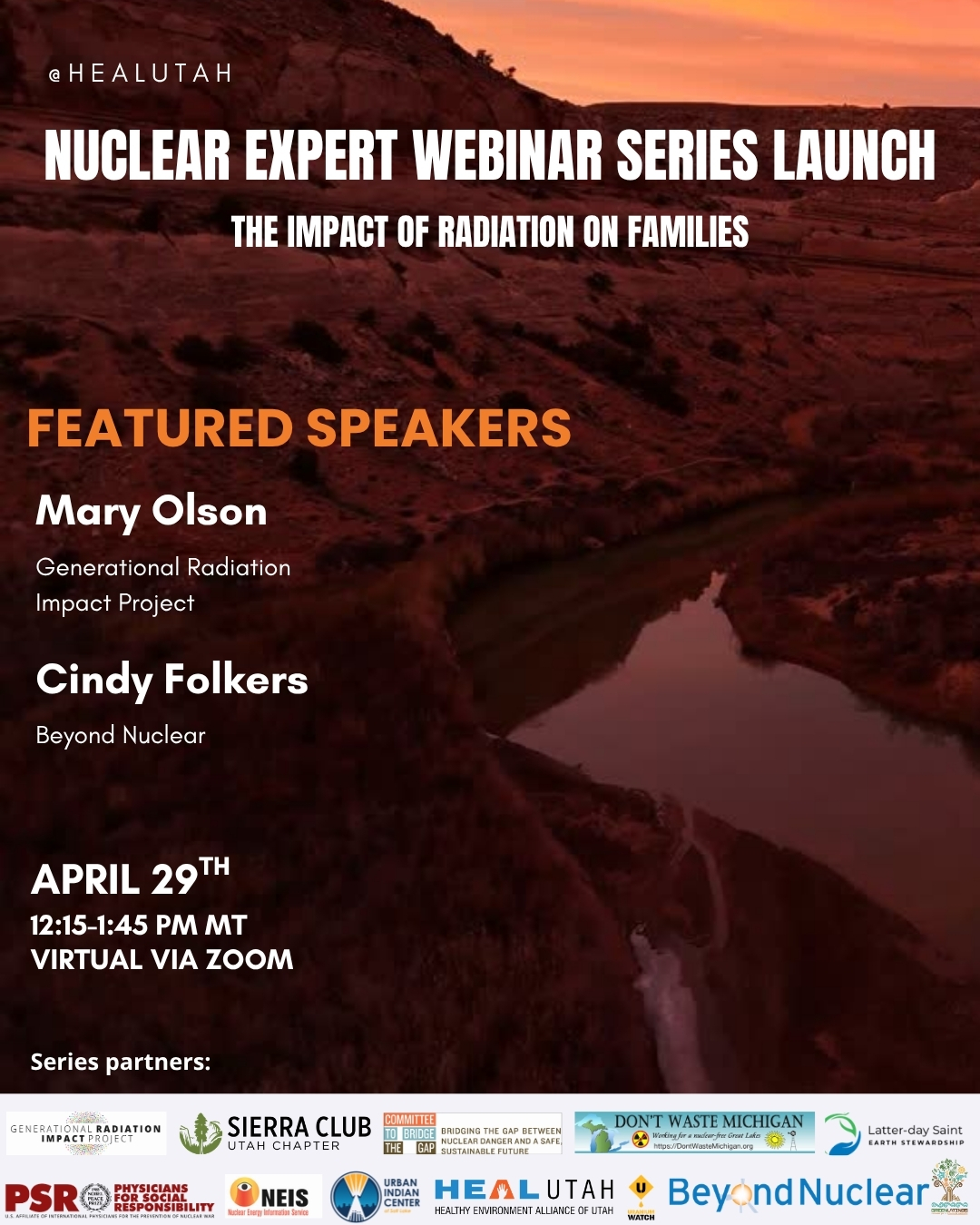
29 April – Nuclear Expert Webinar #1 – Radiation Impacts on Families with Mary Olson and Cindy Folkers
- 12:15 PM MT – 1:45 PM MT
- Location: Virtual – REGISTER TODAY

4 May -West Suburban Peace Coalition to discuss Iran war at May Educational Forum
Monday, May 4, 7:00 – 8:00 PM Central Standard Time
Title: : How Trump’s Narrative Tries to Shape the Reality of the War on Iran.
Contact Walt Zlotow, zlotow@hotmail.com 630 442 3045 for further information
14 May – online event From Bombs to Data Centres: the Face of Nuclear Colonialism

Pine Ridge Uranium is the real threat, not Tehran- Tell Burgum: Stop the Extraction.
Chernobyl: The Lost Tapes – A good documentary on Chernobyl on SBS available On Demand for the next 3 weeks– https://www.sbs.com.au/ondemand/tv-program/chernobyl-the-lost-tapes/2352741955560
To see nuclear-related stories in greater depth and intensity – go to https://nuclearinformation.wordpress.com
-
Archives
- April 2026 (346)
- March 2026 (251)
- February 2026 (268)
- January 2026 (308)
- December 2025 (358)
- November 2025 (359)
- October 2025 (376)
- September 2025 (257)
- August 2025 (319)
- July 2025 (230)
- June 2025 (348)
- May 2025 (261)
-
Categories
- 1
- 1 NUCLEAR ISSUES
- business and costs
- climate change
- culture and arts
- ENERGY
- environment
- health
- history
- indigenous issues
- Legal
- marketing of nuclear
- media
- opposition to nuclear
- PERSONAL STORIES
- politics
- politics international
- Religion and ethics
- safety
- secrets,lies and civil liberties
- spinbuster
- technology
- Uranium
- wastes
- weapons and war
- Women
- 2 WORLD
- ACTION
- AFRICA
- Atrocities
- AUSTRALIA
- Christina's notes
- Christina's themes
- culture and arts
- Events
- Fuk 2022
- Fuk 2023
- Fukushima 2017
- Fukushima 2018
- fukushima 2019
- Fukushima 2020
- Fukushima 2021
- general
- global warming
- Humour (God we need it)
- Nuclear
- RARE EARTHS
- Reference
- resources – print
- Resources -audiovicual
- Weekly Newsletter
- World
- World Nuclear
- YouTube
-
RSS
Entries RSS
Comments RSS
 nuclear-news
[…] The interpretation of this Convention appears to still be unclear on both the India end and US end. It is undergoing revision at the US DOE: “Nuclear still unclear: Does ratification of CSC fix problems of nuclear law?” The Financial Express, By: Sunil Jain | New Delhi | February 5, 2016. https://nuclear-news.net/2016/02/08/convention-on-supplementary-compensation-csc-does-not-override-i… […]
Pingback by Gov Nikki Haley $55,000 from Holtec Nuclear’s Kris Singh; Sec of State Interprets Treaties; Possible Conflict of Interest in Application of Nuclear Liability Agreement | Mining Awareness + | November 21, 2016 |