Why climate change is an ethical problem.

Stephen M. Gardiner is professor of philosophy, and Ben Rabinowitz is endowed professor of the human dimensions of the environment at the University of Washington, Seattle.
Climate change presents a severe ethical challenge, forcing us to confront difficult questions as individual moral agents, and even more so as members of larger political systems. It is genuinely global and seriously intergenerational, and crosses species boundaries. It also takes place in a setting where existing institutions and theories are weak, proving little ethical guidance.
The critical question as we seek to address climate change will be which moral framework is in play when we make decisions. In many settings, we do not even notice when this question arises, because we assume that the relevant values are so widely shared and similarly interpreted that the answer should be obvious to everyone. Nevertheless, the values question is not trivial, since our answer will shape…
View original post 663 more words
January 10 Energy News

Opinion:
¶ Vermont power line approval big step for Canadian power • The $1.2 billion, privately funded TDI project faced no significant opposition, something unusual for the state. One difference is the entire TDI project, which would power for about 1 million homes, would be invisible. [Rutland Herald]
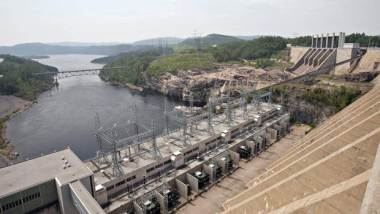 The Jean-Lesage hydro-electric dam generates power along the Manicouagan River, north of Baie-Comeau, Quebec. AP file photo
Science and Technology:
¶ One researcher from Portsmouth University in England claims that properly implemented artificial “power islands” could solve the world’s energy crisis. An artificial archipelago of power islands could provide a place for energy to be secured from wind, tides, and the sun. [The Inquisitr]
World:
¶ Scientists and conservationists fear China’s ever-increasing pressure to expand the nuclear power sector means not enough attention is being paid to safety. Within a couple of decades, Hong Kong could be in…
View original post 453 more words
Food Contamination: When Political Interests Take Precedence Over People Interests
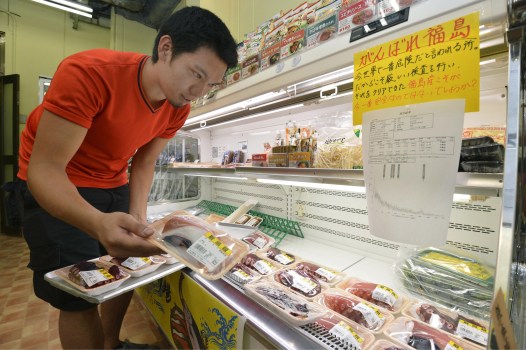
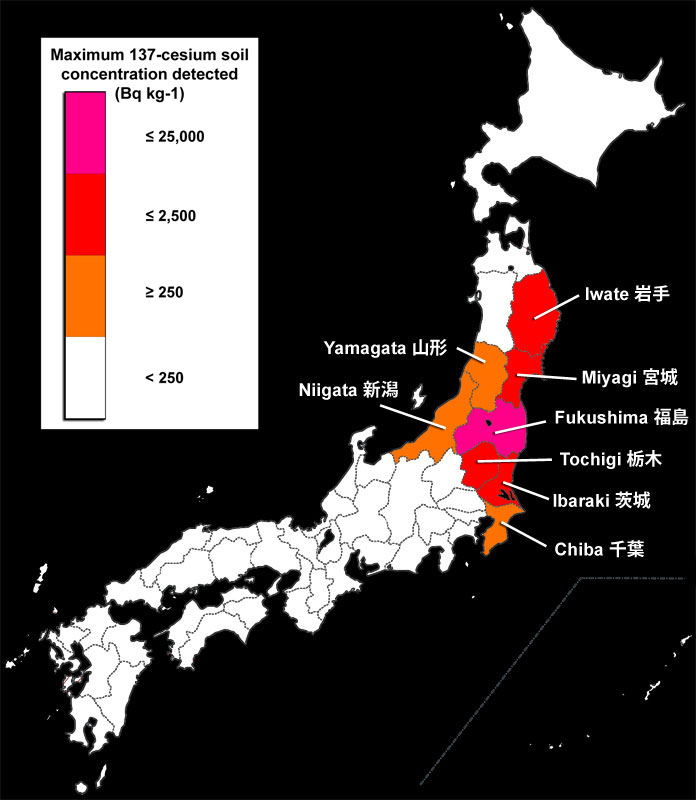
In recent years the Japanese Government has been heavily lobbying other nations to lift the radiation controls and security measures which those nations have been taken on the Fukushima and nearby prefectures food products imports since the March 2011 Fukushima disaster. Disaster which is still ongoing up to the present day, with its contamination omnipresent all over Eastern Japan.
There are two reasons behind such intense forceful lobbying. The first one of course is economic, to maintain the income generated by those exports. The second one is plainly political, to indirectly soothe the fears of the Japanese people themselves about the radiation contaminated food.
It seems that this lobbying is now making headways, as the European Commission finally decided to relax restrictions on some food imports from Fukushima. Such decision prioritizes political and economic considerations over the health of the European people, and dismisses as if they were non-existing all the available gathered scientific data about the devastating health effects of the Chernobyl radiation contaminated food on the Ukrainian and Belarussian populations during the past 30 years.
From the Japan Times:
EU due to start easing restrictions on food imports from Fukushima
The European Union will start easing restrictions Saturday imposed on Japanese food imports over the Fukushima nuclear disaster, including vegetables and beef produced in the prefecture, the farm ministry said.
Tsuyoshi Takagi, Cabinet minister in charge of rebuilding from the March 2011 quake, tsunami and nuclear crisis, on Friday welcomed the bloc’s decision. At present, all food items from Fukushima except alcoholic beverages must be shipped with radiation inspection certificates.
That requirement will be removed for vegetables, fruit excluding persimmons, livestock products, tea and soba, because the radiation levels of these items never exceeded permissible levels in 2013 and 2014, according to the farm ministry.
Other food from the prefecture such as rice, mushrooms, soybeans and some fishery products — excluding scallops, seaweed and live fish — will remain subject to the requirement.
The allowable limits are set at 100 becquerels per kilogram for vegetables and fruit, 50 Bq/kg for milk beverages and infant food, and 10 Bq/kg for drinking water, in accordance to Japanese standards.
The EU move follows the Agriculture, Forestry and Fisheries Ministry’s announcement in November that the bloc would ease the restrictions after gaining approval from the European Commission.
The decision also comes as the European Union and Japan are in the midst of negotiations for a free trade agreement. In the talks, Tokyo is seeking the elimination of duties on Japanese vehicles, while Brussels is looking to expand exports through the reduction of tariffs on pork, cheese, wine and other agricultural products.
“We will make persistent efforts so (restrictions) on all items (from Fukushima) will be eliminated,” Takagi said at a press conference Friday.
The minister added that he will continue to work with other countries to lift similar restrictions imposed after the triple meltdown at the Fukushima No. 1 nuclear power plant raised concerns over the safety of food produced in Japan.
The European Union will also remove restrictions on all food imports from Aomori and Saitama prefectures.
Aside from Fukushima, restrictions will remain in place for some items produced in 12 prefectures in northeastern, eastern and central Japan.
At least 14 countries, including Australia and Thailand, have abolished restrictions on Japanese food imports, while dozens of countries like South Korea maintain special rules.
This European decision can now be used by the Japanese Government as a leverage to immediately try to force its Asian neighbors to also lift their restrictive measures.
From the Free Malaysia Today:
Japan presses Singapore to ease restrictions on Fukushima imports
TOKYO: Japan pressed Singapore to ease its ban on Fukushima food imports, following the European Union’s move to relax restrictions on imports from the area, according to media reports on Sunday.
Japanese agriculture minister Hiroshi Moriyama said the Asian financial hub would take “proactive” steps to meet Tokyo’s request, after holding talks with Singapore’s minister for national development, reported Jiji Press.
On Saturday the EU began easing restrictions on Japanese food imports imposed after the 2011 Fukushima nuclear disaster.
Under the previous rule, the EU required all food products, excluding alcohol, from Fukushima prefecture to come with radiation inspection certification.
The EU continues to restrict the importation of items such as rice, mushrooms and some fishery products, however.
Singapore has banned imports of certain Fukushima products since 2011.
“I explained the EU’s step to ease” its restriction, Moriyama told Japanese journalists in Singapore.
“I asked for easing of the restriction based on scientific evidence,” Moriyama said, according to Jiji.
During the talks, Wong said Singapore “would take proactive steps by studying cases such as the EU’s latest step,” Moriyama told reporters.
Fukushima was a key agricultural area before the 2011 disaster, when a huge tsunami swamped reactors and sparked meltdowns, sending out plumes of radioactive material.
Thousands of people were evacuated and huge tracts of land were rendered unfarmable. The accident has left the Fukushima brand contaminated both domestically and internationally.
Tokyo has been encouraging countries across the globe to ease trade restriction on Japanese food products established after the Fukushima crisis.
At least 14 countries such as Australia and Thailand have abolished their restrictions on Japanese food imports, while dozens of nations continue to maintain select regulations, according to Kyodo News.
Woe Be Unto Entergy Lawyers: More on the Late, Over-priced, Unneeded; Now Old and Dangerous Grand Gulf Nuclear Reactor


Grand Gulf Nuclear Monstrosity on the Mississippi: America’s Largest Single Nuclear Reactor, in poor rural Mississippi
“Those who cannot remember the past are condemned to repeat it.” (Santanaya, 1905)
The more recent nuclear reactor construction projects, which are late, much more costly than planned, and with documented shoddy construction, are mostly a repeat of a past, which the nuclear industry doesn’t want anyone to recall.
“Is there a thing where of it may be said, See, this is new? It hath been long ago, in the ages which were before us./ There is no remembrance of the former generations…” Ecclesiastes 1, ASV Bible
“And [Jesus] said, Woe unto you lawyers also! for ye load men with burdens grievous to be borne, and ye yourselves touch not the burdens with one of your fingers.” Luke 11:46 ASV Bible
The Wise-Carter, Child and Caraway (of…
View original post 1,292 more words
January 9 Energy News
Opinion:
¶ Gas Leaks, the Clean Power Plan & Fracking • California Governor Jerry Brown declared a stage of emergency in the affluent Porter Ranch neighborhood in Los Angeles due to a gas leak spewing about 12 tons of methane per day. The leak began in October. The LA gas leak provides another cautionary tale on fracking. [Huffington Post]
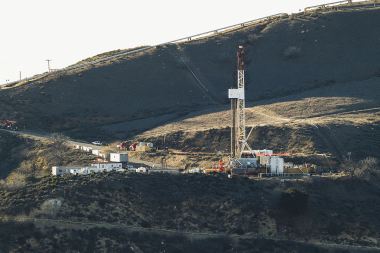 Equipment on a ridge in Southern California Gas Company’s vast Aliso Canyon facility, site of the gas leak. Photo by Scott L from Los Angeles, USA. CC BY-SA 2.0. Wikimedia Commons.
World:
¶ Tesla global communications director said Tesla Powerwalls are already being made and shipped. Two models, 7-kWh and 10-kWh are for residential homeowners, to store extra solar electricity or for backup. The cost for Tesla’s 7-kWh Powerwall is $3,000, while the 10-kWh model is priced at $3500. [CleanTechnica]
¶ Indonesian state-utility firm Perusahaan Listrik…
View original post 555 more words
Today’s Fukushima Nuclear Evacuees Real Situation

For your information, as Abe’s government has tightened its grip on most of Japanese the media, the Fukushima nuclear evacuees situation is presented quite differently in the various Japanese media.
Abe’s regime has more or less gagged Asahi, has put more control on Japan Times, while Yomiuri is the Japanese equivalent of the Soviet era Pravda. The only major media who has managed somehow to keep some degree of independance and impartiality is the Mainichi.
As you may see the Japan Times article while having an added positive spin, leaves out many things untold:
Fukushima nuclear evacuees fall below 100,000. As the fifth anniversary of the March 2011 Fukushima nuclear crisis approaches, the number of residents of the northeastern prefecture who are still living as evacuees has fallen below 100,000, a survey by the prefectural government revealed Friday.
According to the survey, 56,463 evacuees were staying within Fukushima Prefecture as of the end of December, while 43,497 were outside the prefecture as of Dec. 10. The whereabouts of 31 were unknown.
The total came to 99,991 in the December survey, down from 121,585 last January.
The total peaked at 164,865 in May 2011, two months after Japan’s worst nuclear accident occurred at Tokyo Electric Power Co.’s tsunami-crippled Fukushima No. 1 nuclear power station.
The survey covered those staying in temporary housing facilities or taking shelter at relatives’ houses and other places. It excluded those who have bought houses in the areas they fled to or settled in public housing for disaster victims.
“Many people have started new lives where they were evacuated to, while others have returned to their homes,” a prefectural official said.
Source: Japan Times http://www.japantimes.co.jp/news/2016/01/09/national/fukushima-nuclear-evacuees-fall-100000/#.VpDnE1LzN_l
Whereas the Mainichi’s article has a much better in depth look at the evolving problems for evacuees.
Fukushima evacuees are Denied housing, and pushed back to the Contaminated zone
Nuclear evacuees surveyed about living in public housing later became non-eligible
Fukushima Prefecture included more people in surveys for 2013 estimates on demand for new public housing after the Fukushima No. 1 nuclear plant meltdowns than it ended up allowing into the housing, and the estimates based on those surveys were never publically released, it has been learned.
The estimates were reported in a document obtained by the Mainichi Shimbun. This document was created in May 2013 by a Tokyo consulting company paid around 30 million yen by the Fukushima Prefectural Government for the work. The estimates were based on fiscal 2012 surveys by the Reconstruction Agency and the Fukushima Prefectural Government of evacuees from 11 municipalities near the crippled plant.
The estimates were made based on three types of evacuees seeking a place in the housing: people wanting to live there until evacuation orders for their home municipalities were lifted; people wanting to live there after evacuation orders for their home municipalities were lifted but until a livable environment had been established; and people wanting to live in the housing permanently.
The estimated numbers of residences required for the three types of evacuees were between 3,136 and 5,663 for the first group; between 2,743 and 4,172 for the second group; and between 3,366 and 4,837 for the third group. Only the first category, however, matches up with the standards for “long-term evacuees” — the only type of evacuee allowed to apply for the residences. Additionally, two of the 11 municipalities covered by the estimates, the city of Tamura and the town of Naraha, had their evacuation orders lifted in April 2014 and September 2015, respectively, making their residents ineligible for the housing.
The units were first proposed during the Democratic Party of Japan administration, and in September 2012 the Fukushima Prefectural Government announced preparations to build the first 500 residences. At this point, the project was being funded from reconstruction funds, and which evacuees would be eligible for a place had not yet been decided. At the end of that year, however, the Liberal Democratic Party and Komeito took over the government, and at a January 2013 meeting on disaster recovery, Prime Minister Shinzo Abe ordered the creation of a plan to allow evacuees to return home quickly, and to secure homes for long-term evacuees. The Act on Special Measures for the Reconstruction and Revitalization of Fukushima was revised in April 2013 to allow special government funding for the new housing, and to restrict eligibility to long-term evacuees.
The unreleased documents obtained by the Mainichi state explicitly that “under the current system to restrict entry into publically-managed housing to long-term evacuees,” others hoping to keep living in the units after their evacuation orders have been lifted “may not be included.”
A representative for the Fukushima Prefectural Government said, “It’s not good to say that the national government ‘toyed with us’ by its policy shift, but the survey on evacuees’ wishes and the establishment of the new fund (with its eligibility restrictions) happened in parallel.” The official added that prefectural staff had to start applying the restrictions “in a hurry” to keep in line with national government policy.
The Fukushima Prefectural Government has announced 4,890 planned public housing units for nuclear disaster evacuees, but even when combined with around 2,800 such residences for tsunami survivors, the number of residences covers only 17 percent of the around 43,700 Fukushima households that remained without a permanent home as of the end of last year.
Source: Mainichi http://mainichi.jp/english/articles/20151205/p2a/00m/0na/013000c
While the Yomiuri Shimbun is currently promoting the government plan to use the evacuation zone as a nuclear waste cite as part of “reconstruction”. There is pressure on evacuated communities to accept waste storage and also for communities outside Fukushima to allow radioactive waste to be stored in their communities.
While the government has claimed it would treat all evacuees fairly, the actions behind the scenes show they never intended to do so.
The government collected surveys from evacuees to estimate how many people needed public housing in order to build enough units. Mainichi’s investigation and leaked documents show the government only allowed those from “difficult to return” areas to apply for the public housing. They built the number of units based on this decision. Now anyone from an area that has been reopened or that was a voluntary evacuees has been shut out of the housing availability.
This was the doing of the LDP and Shinzo Abe. When they took power in 2013 they rewrote the current laws dealing with the disaster to bar anyone but long term evacuees from accessing this housing.
“The unreleased documents obtained by the Mainichi state explicitly that “under the current system to restrict entry into publically-managed housing to long-term evacuees,” others hoping to keep living in the units after their evacuation orders have been lifted “may not be included.”
The prefectural government feels duped and there is now a drastic housing shortage five years after the disaster. 2016 also includes looming deadlines for people’s evacuee aid to run out.
Living restrictions for nearly 55,000 mandated evacuees will be lifted by March, 2017. This will affect nearly 75% of those currently subject to the Tokyo evacuation order of 2011. The plan also calls for continuing the ~$1,000 per month (per person) mental anguish stipend until March 2017, regardless of whether or not restrictions are lifted and/or residents return home before that date. In addition, the goverment”s free rent stipend for voluntary evacuees living outside Fukushima Prefecture will end in March 2017. Tokyo and Fukushima Prefecture say there will be some support for the voluntary evacuees living in a state of poverty, to be determined on a case-by-case basis.
The philosophy of science denial within the nuclear lobby
the cancers near the nuclear sites are caused by internal exposures, to Plutonium, Uranium, Tritium, 
Strontium-90, Caesium-137, Iodine-131, Carbon-14, particles and huge amounts of radioactive noble gases Krypton-85 and Argon-41. There are more nasty isotopes but that will do.And internal exposures can deliver doses to the cell and to the DNA which are far above the small doses that the hormesis people are citing. They are talking about low external doses around external natural background, up to 10 mSv.
 Nuclear radiation, Kierkegaard, and the philosophy of denial, The Ecologist, Chris Busby 8th January 2016 As the evidence of the extreme harm to health inflicted by nuclear radiation mounts, the denialists are resorting to ever greater extremes, writes Chris Busby. On the one hand, advancing the absurd claim that ionising radition is not merely harmless, but health-enhancing. On the other, closing down the experiment that would have provided the strongest evidence yet………
Kierkegaard said of belief that it becomes stronger the more impossible and threatened it is. And this seems to be rapidly coming true in the case of nuclear energy. The torture imposed on logic, reason and observational data by the advocates of nuclear power has now reached the level of clinical psychosis.
A psychosis is a thought disorder in which reality testing is grossly impaired. There is so much evidence that nuclear power kills, causes cancer, mutates populations, reduces fertility and kills babies that only a mad person would continue with the belief that it is a good thing and should be pursued no matter what the cost in money and death.
And as they move to even greater levels of psychotic delusion they present two new survival strategies which make it brilliantly clear that the proponents of nuclear are off their heads.
First the recent move to petition the US nuclear regulators to accept the idea that small amounts of radiation are actually good for you (Yes!); we should all be forced to be irradiated like food, maybe at birth in the equivalent of a mass vaccination. In you go, Jimmy: BZZZZZ, there you are, that didn’t hurt did it?
And the second, as I wrote about recently, is to cancel the US nation-wide study of cancer near nuclear plants.
Are these two moves related? You bet! If the National Academy of Sciences Cancer Study found that people are dying because of the ‘low doses’ received from the emissions, then obviously low doses of radiation can’t be good for you. We are back to the Dark Ages. Continue reading
Hope for nuclear disarmament – the Marshall Islands legal case
 Say hello to the Marshall Islands, the tiny, heroic island nation in Micronesia, with a population just over 70,000. This former U.S. territory, which still bears the terrible scars of 67 above-ground nuclear blasts between 1946 and 1958, when this country used it as an expendable nuclear test site, has engaged the United States — and, indeed, all nine nations that possess nuclear weapons — in lawsuits demanding that they comply with the 1968 Nuclear Non-Proliferation Treaty and begin the process of negotiating global nuclear disarmament.
Taking on the Nuclear Goliath http://www.counterpunch.org/2016/01/08/taking-on-the-nuclear-goliath/ by ROBERT KOEHLER
“Just as we stood for freedom in the 20th century, we must stand together for the right of people everywhere to live free from fear in the 21st century. And . . . as the only nuclear power to have used a nuclear weapon, the United States has a moral responsibility to act. We cannot succeed in this endeavor alone, but we can lead it, we can start it.
“So today, I state clearly and with conviction America’s commitment to seek the peace and security of a world without nuclear weapons.”
Uh…
These words, the core of President Obama’s first major foreign policy speech, delivered in Prague in April 2009, now resonate with nothing so much as toxic irony — these pretty words, these words of false hope, which disappeared into Washington’s military-industrial consensus and failed to materialize into action or policy.
James Carroll, writing at Mother Jones in 2013, describes what happened in the wake of this extraordinary policy declaration:
“In order to get the votes of Senate Republicans to ratify the START treaty, Obama made what turned out to be a devil’s bargain. He agreed to lay the groundwork for a vast ‘modernization’ of the US nuclear arsenal, which, in the name of updating an aged system, is already morphing into a full-blown reinvention of the arms cache at an estimated future cost of more than a trillion dollars. In the process, the Navy wants, and may get 12 new strategic submarines; the Air Force wants, and may get a new long-range strike bomber force. Bombers and submarines would, of course, both be outfitted with next-generation missiles, and we’d be off to the races. The arms races.”
And the cause of global nuclear disarmament, once a dream with geopolitical cred, may wind up entombed in eternal apathy. Continue reading
Nuclear weapons now more likely to be used, with Pentagon’s new B61-12 bomb
 it also poses the contrary reality of an increased probability that nuclear weapons will actually be launched.
This concept of greater usability entirely forgoes the core assumption of deterrence theory, which asserts that credible nuclear deterrents are always present but never utilized.
The Pentagon’s New Nuclear Gravity Bomb, Global Risk Insights by Ian Armstrong , January 8, 2016 Despite its advertisement as a low-yield, lower-risk alternative to existing missile models, the recently tested B61-12 nuclear gravity bomb presents several risks that may in fact elevate the threat of nuclear use and encourage proliferation.
Late last year, the United States successfully completed testing of the newest addition to its nuclear arsenal — the B61-12 nuclear gravity bomb. Part of a $355 billion effort to modernize its increasingly outdated nuclear capability, the U.S. has developed the B61-12 to the tune of over $10.4 billion as the most adaptable, precise nuclear gravity missile on the planet.
Successful testing of the missile has now created a clear pathway for production engineering to begin in 2016, and with that, the United States is now poised to acquire 480 bombs total by the 2020-2024 period.
Washington argues that the development of an enhanced B61 gravity bomb is an important facet of the broader nuclear modernization efforts required to protect itself and its Western allies from threats like Russia and Iran. Other countries, especially non-nuclear states, underscore the hypocrisy of a nuclear modernization effort given President Obama’s stated commitment towards disarmament and nonproliferation…….
Lower Nuclear Yield, Higher Nuclear Probability
Yet, in contradictory fashion, the same unique technical qualities that make the B61-12 a more accurate, secure, and effective U.S. nuclear deterrent also conjure implied risks with the potential to negate any positive impacts.
By significantly increasing accuracy and eroding the barriers to use previously presented by unintended casualties, the B61-12 does indeed increase the deterrent capability of the United States — but it also poses the contrary reality of an increased probability that nuclear weapons will actually be launched.
This concept of greater usability entirely forgoes the core assumption of deterrence theory, which asserts that credible nuclear deterrents are always present but never utilized. In short, B61-12s will broaden the range of circumstances that U.S. military strategists might reasonably consider employing nuclear weapons, a move which in turn would naturally create an immediate possibility of escalation towards full-fledged nuclear war.
In addition, the sheer expense and symbolism of creating a highly modernized, highly precise nuclear weapon like the B61-12 challenges the notions of nonproliferation and disarmament.
Washington’s pursuit of the B61-12 simultaneously legitimizes Russian vertical proliferation while potentially intimidating Beijing into accelerated arsenal growth. It also assures unofficial nuclear powers like Pakistan, India, and Israel that acquisition of low-yield nuclear weapons is an acceptable alternative to procuring high-yield strategic missiles……….http://globalriskinsights.com/2016/01/the-pentagons-new-nuclear-gravity-bomb/
Japan’s nuclear safety watchdog not happy with safety of dry spent fuel casks at Fukushima
 NRA announced the dry cask for spent fuel of Fukushima plant might be overly vulnerable http://fukushima-diary.com/2015/12/nra-announced-the-dry-cask-for-spent-fuel-of-fukushima-plant-might-be-overly-vulnerable/ by Mochizuki , December 8, 2015 On 12/4/2015, NRA (Nuclear Regulation Authority) announced that the dry cask to store the spent fuel assemblies can be excessively vulnerable.
In order to stock the fuel assemblies of SFP 4 (Spent Fuel Pool of Reactor 4) in the common pool, Tepco transferred the fuel assemblies from the common pool to the dry cask.
By the end of October 2014, Tepco had stocked 28 dry casks to contain 1,412 fuel assemblies. They were planning to transfer additional 1,600 fuel assemblies to more 23 dry casks. NRA reports that only 11 casks of this issued type are in actual use in Fukushima plant.
According to NRA, there is a possibility that an internal part of dry cask doesn’t have enough strength. It was designed based on the standard of the Japan Society of Mechanical Engineers, however the standard was abolished this October, just before this scandal became public, because it did not have enough basis and overrated the strength.
https://www.nsr.go.jp/data/000131890.pdf
https://www.nsr.go.jp/disclosure/committee/roanshin_kakunen/00000003.html
Nuclear Power History – theme for January 2016
Lies and violence were the origin of nuclear power. First of all, in 1942, the work of Dr Charles Pecher, who sought to relieve cancer pain, using radiation -was taken over by the Manhattan Project. The plan now was to devise a radiological weapon that would kill people, but leave property intact. This plan was then changed, in favour of the more dramatic atomic explosions – which were hastily used in Hiroshima and Nagasaki just in time, as the war was ending, with Japan ready to surrender.

The nuclear scientists, for various motives, (in some cases, guilt) now decided to produce the “peaceful atom”. USA helped 127 Nazi rocket scientists, led by Wernher Von Braun, to move to America, to develop nuclear energy, which would be “too cheap to meter”.
Nuclear energy wasn’t really cheap at all, and required huge government subsidy, and a law to make sure that the tax-payer would pay up for any serious accident, (the Price Anderson Act). USA firms helped other governments to get this “peaceful energy” – and soon all of these countries had nuclear weapons. That was the main reason they wanted it.
The lies, the cover-ups, the expense, the escalating weaponry, continue to this day. Now the nuclear lobby is engaged in a lying campaign that depicts renewable energy as “not feasible”, and depicts ionising radiation as “good for you’ at low doses. It dismisses the radioactive waste problem – ” a solution will be found” (USA’s Waste Confidence Rule). In UK the latest lie is that super nuclear reactors are ready – to “eat up” the radioactive waste.
Indian officials unwilling to answer questions about nuclear emergency guidelines

 Officials pass the buck on RTI queries on NDMA guidelines http://m.thehindu.com/news/cities/chennai/officials-pass-the-buck-on-rti-queries-on-ndma-guidelines/article8079555.ece
G. Sundarrajan of Poovulagin Nanbargal, an environmental forum had sought to know whether the NDMA Guidelines on Nuclear and Radiological Emergencies released in 2009 had been implemented in the district.
He also sought information on the infrastructure such as hospitals identified to treat radiological emergencies as per the guidelines.
The Public Information Officer (PIO) in Tirunelveli Collectorate, in his reply to the applicant, stated that the request was being forwarded to his counterpart in Kudankulam Nuclear Power Plant, as the latter was the officer concerned for the details sought for.
The Public Information Officer at Kudankulam Nuclear Power Plant of NPCIL on December 29 replied contending it was the District Management Authority, which was the authority concerned and returned the queries to the PIO of Tirunelveli Collectorate.
Mr. Sundarrajan said, “The Supreme Court was, in 2013, informed that all precautionary measures were taken and now they are denying information on the details of the implementation. This is anti-constitutional, anti-people and illegal. They cannot deny or point at each other when asked for information.”
Tirunelveli District Collector M. Karunakaran told The Hindu , “The applicant has not sent the queries to the right person, i.e., the DRDA, which deals with the information and the PIO in Collectorate would not have the information. If information is sought from the right person, it would have been provided.” When contacted by The Hindu , an NPCIL official said, on condition of anonymity, “There has been some misunderstanding among officials in some departments of the district administration on this issue. We complied with the implementation of the guidelines on our part.”
Info sought under RTI Act whether suggestions
on nuclear emergencies were implemented
EDF struggling to raise money to fund UK’s new Hinkley Point reactors.
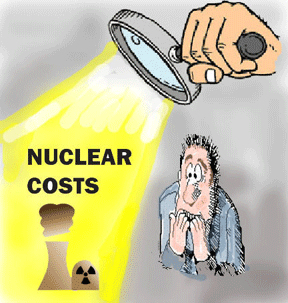

 EDF considers selling €3bn stake in UK nuclear business to help fund reactors
French energy firm may reduce stake in eight existing nuclear reactors it owns to raise money for Hinkley Point C project, Guardian, Terry Macalister, 8 Jan 16, EDF is considering the sale of a €3bn (£2.2bn) stake in its British nuclear business in a bid to raise cash for new Hinkley Point reactors.
Possible buyers would be state-owned Chinese companies, who are already committed partners on the £18bn Somerset project.
EDF could unveil details of a sell-off plan on 16 February, when it is scheduled to release annual financial figures and is expected to give a final investment decision on building Britain’s first new reactors for 20 years.
The French daily, Les Echos, reported on Thursday that EDF may reduce its stake in the eight existing nuclear reactors it owns from 80% to 51% by bringing in a new investor as part of a wider €6bn disposal programme. Industry sources told the Guardian that the possible sell off was only one of a number of different options that were under consideration as the group looked at financing Hinkley Point C and other projects.
They said it was still likely EDF would give the go ahead to Hinkley next month even though it did not have all the financing in place. The project is estimated to cost £18bn, according to EDF, though the European Union has warned it could go as high as £24bn.
Centrica, the owner of British Gas, already has a 20% holding but has made clear in the past that itdoes not want a larger commitment to nuclear, and declined to participate in the Hinkley newbuild scheme………
EDF struggled to interest anyone else in the Hinkley scheme, which many in the City have deemed over-expensive, so the Chinese would seem first in line to buy into the rest of the EDF nuclear business if it comes up for grabs……..
Environmentalists opposed to EDF’s new building plans in Britain believe the company may yet be forced to abandon Hinkley Point C because of a European legal challenge against the state aid promised by the UK. http://www.theguardian.com/business/2016/jan/07/edf-selling-3bn-stake-uk-nuclear-business-reactors-hinkley-point-c
The Anthropocene – have we started a new geological age – with carbon emissions and nuclear radiation?
With fossil fuels and nuclear tests, humans may have started a new geological age http://qz.com/589665/with-fossil-fuels-and-nuclear-tests-humans-may-have-started-a-new-geological-age/ Aamna Mohdin@aamnamohdin A geological epoch is a time period that leaves a distinctive mark in sediments and rocks that can be seen millions of years later. And now, it seems humans have left their mark on the Earth.

There’s also the ubiquitous spread of a number of new materials such as plastic and concrete to consider. But the “most widespread and globally synchronous anthropogenic signal is the fallout from nuclear weapons testing,” researchers noted in the paper. “Thermonuclear weapons tests generated a clear global signal from 1952 to 1980, the so-called ‘bomb spike’.”
The study is by no means the final say on the matter. The International Commission on Stratigraphy (ICS) has debated the issue for many years, and it’s ultimately up to them to accept the start of the Anthropocene as a geological epoch.
Nuclear war danger now becoming greater than during the Cold War
In a new study, the arms control advocacy group Global Zero analysed 146 such incidents over the past 21 months, classing two of them as high risk. It deemed 33 provocative in that they “stray from the norm of routine incidents, resulting in more aggressive or confrontational interaction that can quickly escalate to higher-risk incidents or even conflict”.
Perry said: “In the cold war, we and Russia were in the process of dismantling nuclear weapons … Today, in contrast, both the Russia and the US are beginning a complete rebuilding of the cold war nuclear arsenals.”
Nuclear weapons risk greater than in cold war, says ex-Pentagon chief
William Perry lists a series of factors that he says mean the chance of a ‘calamity’ is higher today than in the 1970s and 80s, Guardian, Julian Borger, 8 Jan 16, The risks of a nuclear catastrophe – in a regional war, terrorist attack, by accident or miscalculation – is greater than it was during the cold war and rising, a former US defence secretary has said.
William Perry, who served at the Pentagon from 1994 to 1997, made his comments a few hours before North Korea’s nuclear test on Wednesday, and listed Pyongyang’s aggressive atomic weapons programme as one of the global risk factors.
He also said progress made after the fall of the Soviet Union to reduce the chance of a nuclear exchange between the US and Russia was now unravelling.
“The probability of a nuclear calamity is higher today, I believe, that it was during the cold war,” Perry said. “A new danger has been rising in the past three years and that is the possibility there might be a nuclear exchange between the United States and Russia … brought about by a substantial miscalculation, a false alarm.”…… Continue reading
1 This Month
Chernobyl: The Lost Tapes – A good documentary on Chernobyl on SBS available On Demand for the next 3 weeks– https://www.sbs.com.au/ondemand/tv-program/chernobyl-the-lost-tapes/2352741955560

of the week–London Campaign for Nuclear Disarmament

Tell the Ukrainian Government to Drop Prosecution of Peace Activist Yurii Sheliazhenko
To see nuclear-related stories in greater depth and intensity – go to https://nuclearinformation.wordpress.com
-
Archives
- April 2026 (152)
- March 2026 (251)
- February 2026 (268)
- January 2026 (308)
- December 2025 (358)
- November 2025 (359)
- October 2025 (376)
- September 2025 (257)
- August 2025 (319)
- July 2025 (230)
- June 2025 (348)
- May 2025 (261)
-
Categories
- 1
- 1 NUCLEAR ISSUES
- business and costs
- climate change
- culture and arts
- ENERGY
- environment
- health
- history
- indigenous issues
- Legal
- marketing of nuclear
- media
- opposition to nuclear
- PERSONAL STORIES
- politics
- politics international
- Religion and ethics
- safety
- secrets,lies and civil liberties
- spinbuster
- technology
- Uranium
- wastes
- weapons and war
- Women
- 2 WORLD
- ACTION
- AFRICA
- Atrocities
- AUSTRALIA
- Christina's notes
- Christina's themes
- culture and arts
- Events
- Fuk 2022
- Fuk 2023
- Fukushima 2017
- Fukushima 2018
- fukushima 2019
- Fukushima 2020
- Fukushima 2021
- general
- global warming
- Humour (God we need it)
- Nuclear
- RARE EARTHS
- Reference
- resources – print
- Resources -audiovicual
- Weekly Newsletter
- World
- World Nuclear
- YouTube
-
RSS
Entries RSS
Comments RSS
 nuclear-news
.jpg)
