Fukushima nuclear disaster – still not understood, still not under control
Time to Stop Nursing the Nuclear Power Industry, nippon.com Yoshioka Hitoshi “….Fukushima’s Ongoing Disaster The risks attached to nuclear power are of a completely different magnitude from those associated with other civilian technologies. A nuclear accident can cause catastrophic damage extending over a vast area and persisting for many years. As of September 2015, the number of people displaced by the Fukushima accident stood at 107,700. Damages from the accident have already reached ¥11 trillion, and the final tally will doubtless soar to several times that amount. Moreover, the safety problems at the Fukushima Daiichi Nuclear Power Plant have yet to be resolved.
The three basic conditions for controlling a nuclear accident are stopping the chain reaction, cooling the fuel, and containing the radioactive material. By these criteria, the Fukushima accident has yet to be brought under control after more than four years. The water-injection system used to cool the molten fuel has been plagued by reliability issues. As for containment, the radioactive materials spewed over a vast area during the accident can never be recovered, nor can the radioactive wastewater that has been discharged into the ocean. Furthermore, workers have been unable to pinpoint the location of the highly radioactive fuel that leaked out of the reactors during the meltdown.
In many respects, the progress and causes of the accident remain unclear to this day. Without knowing these things, how can we institute effective safety measures to ensure that such accidents will not occur in the future?http://www.nippon.com/en/currents/d00200/
1 Comment »
Leave a reply to Michael Thorsby Cancel reply
1 This Month
26 April – Chernobyl: Inside the Meltdown airs on National Geographic on Sunday 26th April from 4pm
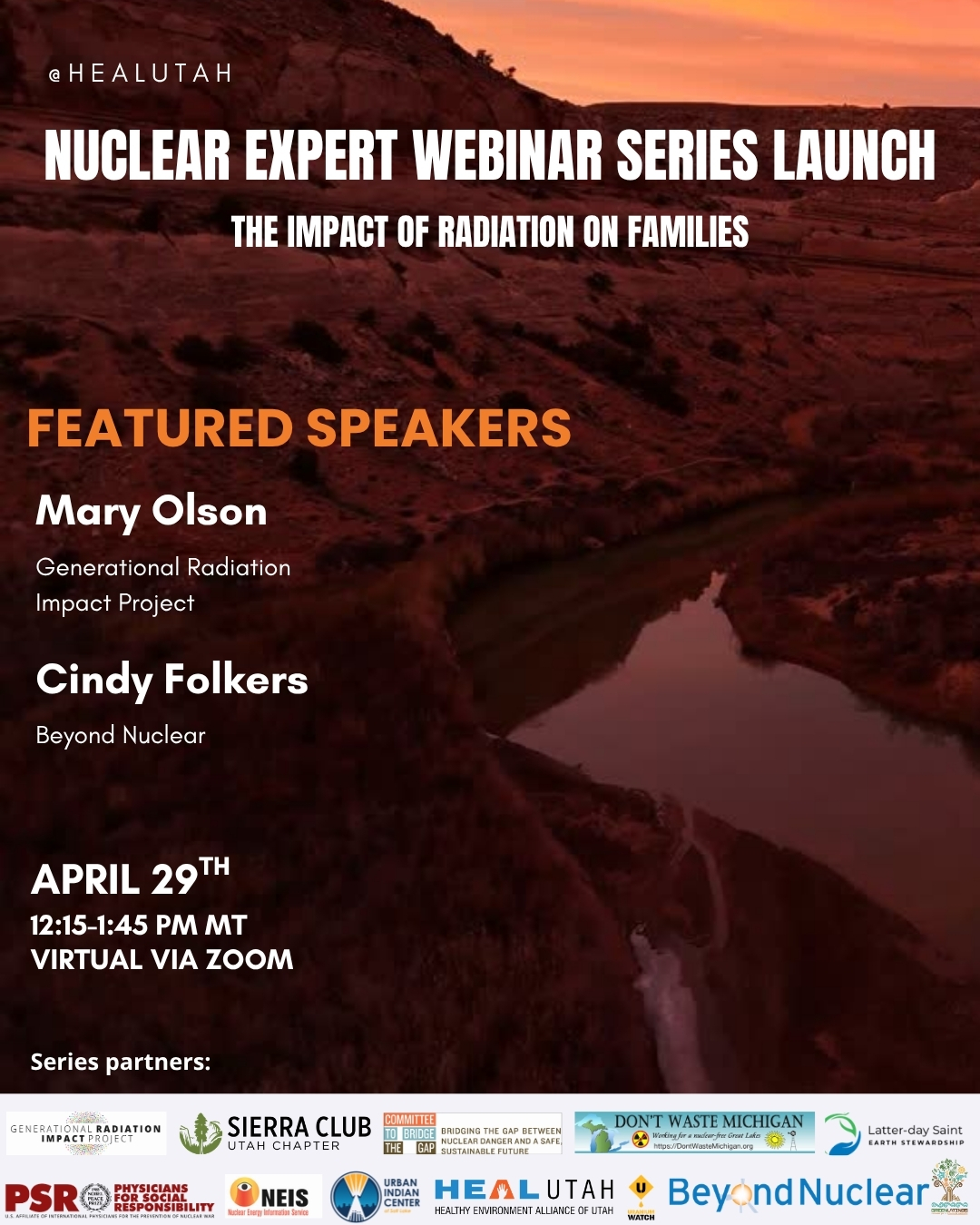
29 April – Nuclear Expert Webinar #1 – Radiation Impacts on Families with Mary Olson and Cindy Folkers
- 12:15 PM MT – 1:45 PM MT
- Location: Virtual – REGISTER TODAY

4 May -West Suburban Peace Coalition to discuss Iran war at May Educational Forum
Monday, May 4, 7:00 – 8:00 PM Central Standard Time
Title: : How Trump’s Narrative Tries to Shape the Reality of the War on Iran.
Contact Walt Zlotow, zlotow@hotmail.com 630 442 3045 for further information
14 May – online event From Bombs to Data Centres: the Face of Nuclear Colonialism

Pine Ridge Uranium is the real threat, not Tehran- Tell Burgum: Stop the Extraction.
Chernobyl: The Lost Tapes – A good documentary on Chernobyl on SBS available On Demand for the next 3 weeks– https://www.sbs.com.au/ondemand/tv-program/chernobyl-the-lost-tapes/2352741955560
To see nuclear-related stories in greater depth and intensity – go to https://nuclearinformation.wordpress.com
-
Archives
- April 2026 (346)
- March 2026 (251)
- February 2026 (268)
- January 2026 (308)
- December 2025 (358)
- November 2025 (359)
- October 2025 (376)
- September 2025 (257)
- August 2025 (319)
- July 2025 (230)
- June 2025 (348)
- May 2025 (261)
-
Categories
- 1
- 1 NUCLEAR ISSUES
- business and costs
- climate change
- culture and arts
- ENERGY
- environment
- health
- history
- indigenous issues
- Legal
- marketing of nuclear
- media
- opposition to nuclear
- PERSONAL STORIES
- politics
- politics international
- Religion and ethics
- safety
- secrets,lies and civil liberties
- spinbuster
- technology
- Uranium
- wastes
- weapons and war
- Women
- 2 WORLD
- ACTION
- AFRICA
- Atrocities
- AUSTRALIA
- Christina's notes
- Christina's themes
- culture and arts
- Events
- Fuk 2022
- Fuk 2023
- Fukushima 2017
- Fukushima 2018
- fukushima 2019
- Fukushima 2020
- Fukushima 2021
- general
- global warming
- Humour (God we need it)
- Nuclear
- RARE EARTHS
- Reference
- resources – print
- Resources -audiovicual
- Weekly Newsletter
- World
- World Nuclear
- YouTube
-
RSS
Entries RSS
Comments RSS
 nuclear-news
“Furthermore, workers have been unable to pinpoint the location of the highly radioactive fuel that leaked out of the reactors during the meltdown.”
I agree that Fukushima is a disaster and that the subsequent handling of is could barely be worse. But the statement below, that fissile material would’ve escaped the containment vessels is highly questionable and improbable according to the character of the damages the 3 reactors suffered. There’s tons and tons of indirectly fissile material leaking out as water is leaking out of the reactors from the damages caused to them. But that fissile material should’ve melted through and escaped the containment vessel I have not seen any signs of. The situation is bad as it is but at least it’s not this bad, it’s not like Chernobyl where we saw fuel rods lying on the roof of the reactor building. That the accumulative effect is worse than Chernobyl I would agree on, but please clarify this statement.