Is everyone forgetting the greenhouse gas emissions from military sources?
These issues will be explored at a series of launch events for the book Secure and Dispossessed – Challenging the militarization of climate change (Pluto Press/TNI) published this month. The London launch will be held at 6.30pm on 25 November at Free Word Centre, London, the Amsterdam launch at 7.30pm Tuesday 1 December at Pakhuis de Zwijger and the Paris launch during the climate forum meetings on the 5 and 6 December. An earlier version of this article was published by Global Justice Now.
 The elephant in Paris – the military and greenhouse gas emissions http://newint.org/blog/2015/11/19/the-military-and-greenhouse-gas-emissions/
There is no shortage of words in the latest negotiating document for the UN climate negotiations taking place in Paris at the end of November – 32,731 words to be precise, and counting. Yet strangely there is one word you won’t find: military. It is a strange omission, given that the US military alone is the single largest user of petroleum in the world and has been the main enforcer of the global oil economy for decades.
The history of how the military disappeared from any carbon accounting ledgers goes back to the UN climate talks in 1997 in Kyoto. Under pressure from military generals and foreign policy hawks opposed to any potential restrictions on US military power, the US negotiating team succeeded in securing exemptions for the military from any required reductions in greenhouse gas emissions. Even though the US then proceeded not to ratify the Kyoto Protocol, the exemptions for the military stuck for every other signatory nation. Even today, the reporting each country is required to make to the UN on their emissions excludes any fuels purchased and used overseas by the military.
As a result it is still difficult to calculate the exact responsibility of the world’s military forces for greenhouse gas emissions. A US Congressional report in 2012 said that the Department of Defense consumed about 117 million barrels of oil in 2011, only a little less than all the petrol and diesel use of all cars in Britain the same year. Deploying that oil across the globe to the fuel-greedy hummers, jets and drones has become a growing preoccupation of NATO military strategists.
But the responsibility of the military for the climate crisis goes much further than their own use of fossil fuels. As we witnessed in Iraq, the military, the arms corporations and their many powerful political supporters have consistently relied on (and aggressively pushed for) armed intervention to secure oil and energy supplies. The military is not just a prolific user of oil, it is one of the central pillars of the global fossil-fuel economy. Today whether it is in the Middle East, the Gulf, or the Pacific, modern-day military deployment is about controlling oil-rich regions and defending the key shipping supply routes that carry half the world’s oil and sustain our consumer economy.
The resulting expansion of conflict across the globe has consumed ever-increasing levels of military expenditure: in 2014, global military expenditure reached $1.8 trillion dollars. This money is a huge diversion of public resources that could be invested instead in renewable energy as well as providing support for those most affected by climate change. When the British government in 2014 allocates £25 billion to the Ministry of Defence but only £1.5 billion to the Department of Energy & Climate Change, it is clear where its priorities lie.
Ironically despite their role in the climate crisis, one of the loudest voices calling for action on climate change is coming from the military. British Rear Admiral Morisetti is typical of a growing chorus of military generals identifying climate change as the major security challenge of this century. He argues for action on climate change because it will be a ‘threat multiplier’ with the potential to exacerbate the ‘development-terrorism’ nexus. The argument has been readily picked up by politicians who increasingly talk about the security implications of climate change.
This could seem a welcome development. After all who would not want one of the most powerful forces on your side in tackling humanity’s greatest ever challenge? But there is a good reason also to be cautious of who we jump into bed with. A close look at military climate change strategies reveals that their focus is on securing borders, protecting trade supply-routes for corporations, controlling conflicts around resources and instability caused by extreme weather, and repressing social unrest. They turn the victims of climate change into ‘threats’ to be controlled or combated. There is no critical examination of the military’s own role in enforcing a corporate-dominated fossil-fuel economy that has caused the climate crisis.
In fact, there is evidence that many players in this corporate-military-security industrial nexus are already seeing climate change not just as a threat but an opportunity. Arms and security industries thrive on conflict and insecurity and climate change promises another financial boon to add to the ongoing War on Terror. British arms giant BAE Systems was surprisingly open about this in one of their annual reports explaining ‘New threats and conflict arenas are placing unprecedented demands on military forces and presenting BAE Systems with new challenges and opportunities.’ An Energy Environmental Defence and Security (E2DS) conference in 2011 jubilantly proclaimed that ‘the aerospace, defence and security sector is gearing up to address what looks set to become its most significant adjacent market since the strong emergence of the civil/homeland security business almost a decade ago.’
In the aftermath of the terrible killings in Paris, military responses are again taking central stage. It seems that the lack of evidence of any success from 14 years of bombings, drone killings, armed invasions is no obstacle to the military-security juggernaut. Do we really want the same forces to now dominate our response to climate change which will affect millions of people over the coming decades? A growing number of social movements are saying that climate change demands breaking the cycle of violence in order to build a collective caring response to a crisis that will affect us all. The Paris climate talks are an opportunity to draw attention to the military elephant in the room and demand that adaptation to climate change is led by principles of human rights and solidarity, rather than militarism and corporate profits.
Increasing risk of sabotage by extremists working in the nuclear industry
 Working in Nuclear while Muslim , Nuclear Free by 2045?, 24 Nov 15 Since the inception of nuclear energy, anti-nuclear critics have been warning about the vulnerability of nuclear power plants to deliberate sabotage. Recent events indicate that we are moving closer to a period of global instability in which state governments cannot protect against non-state actors who will deliberately or unintentionally create a nuclear disaster.
Why pilots and air hostesses are classified as radiation workers
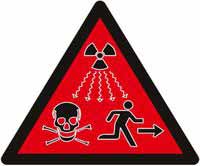 Here’s why airline crewmembers are classified as radiation workers http://www.techinsider.io/airplane-flight-cosmic-radiation-exposure-altitude-2015-11 Julia Calderone Nov. 19, 2015
Airline crewmembers have tough jobs. They have to maintain an aircraft’s safety while dealing with grumpy and inattentive passengers — all while keeping smiles on their faces.
But flight attendants and pilots also face an unseen menace on the job: Cosmic radiation.
You can’t see it or feel them, but at any given moment, tens of thousands of highly charged particles are soaring through space and slamming into Earth from all directions.
These particles, sometimes called cosmic rays or cosmic ionizing radiation, originate from the farthest reaches of the Milky Way. They’re bits and pieces of atomic cores shot to nearly light-speed by black holes and exploding stars, and they smash into (and through) anything and everything in their way.
With that incredible speed and energy, it’s no surprise cosmic rays can easily penetrate human flesh and, in the process, pose risks to our health. Their damage to tissues and DNA have been linked to cancer and reproductive problems, for example.
The good news is that these rays don’t pose much of a risk to humans on Earth. That’s because our planet’s atmosphere and magnetic field form a mighty shield against these rays. But the shield isn’t impenetrable, and some particles leak through.
Those who spend a lot of time high up in the atmosphere — flight crews, for instance — face much higher exposure to cosmic radiation. The closer to the ground you are, the less exposure you’ll get. For this reason, the Centers for Disease Control and Prevention (CDC) classifies airline crewmembers as radiation workers.
In fact, the National Council on Radiation Protection and Measurements reported in 2009 that aircrews have, on average, the highest yearly dose of radiation out of all radiation-exposed workers in the US.
The annual hit to aircrews is an estimated 3 millisieverts (mSv) — a complicated-sounding measure of the amount of background radiation a person receives in one year in the US — which beats out the annual doses received by other high-radiation jobs, such as X-ray technicians and nuclear power workers. (Only astronauts are more exposed; 10 days in spaces delivers about 4.3 mSv to the skin alone, which is about 4.3 years’ worth of cosmic radiation on the surface of Earth.)
Flying through the sky increases your exposure of two different types of cosmic radiation: galactic cosmic radiation, which is always soaring through an aircraft, and solar particle events, which only occur during solar flares. The latter, very intense bursts of energy from the sun can occur anywhere from one to 20 times per day.
We know that ionizing radiation — which not only comes from space, but from X-rays, nuclear power generation, and atomic bombs — causes cancer and reproductive issues in humans, including miscarriage and birth defects. But we don’t know the health effects of cosmic radiation alone.
Most studies have looked at people bombarded with high amounts of various kinds of radiation, such as atomic bomb survivors and those who received radiation therapy. For this reason we don’t know what level of cosmic radiation is safe for humans,according to the CDC. Which is why there are no official limits on the amount of radiation a crew member can receive in a given year.
There are some worldwide guidelines, however. The International Commission on Radiological Protection recommends that a crew member not be exposed to more than 20 mSv per year. The ICRP says that the general public, on the other hand, should receive less than 1 mSv per year. That same 1 mSv recommendation goes for those who are pregnant, both in the sky or on the ground.
But for crewmembers, these limits are difficult to abide, according to the CDC, and such exposures may put them at greater risk for health effects.
To minimize exposures, crew members should try to limit working on flights that are very long, at high altitudes, or that fly over the poles, which are all associated with heightened exposures. Pregnant crewmembers are also particularly at risk and should try not to fly during their first trimester, or at all when the sun is having a solar particle event, which can deliver a higher dose of radiation in one flight than is recommended for the entirety of the pregnancy, according to the CDC.
To calculate your exposure on a typical flight, check out this handy Federal Aviation Administration online tool.
Call on President Obama to protect precious groundwater from uranium mining in Grand Canyon
Huffington Post, 24 Nov 15, [Good maps] “…….The mining industry’s statement counts on readers to be ignorant
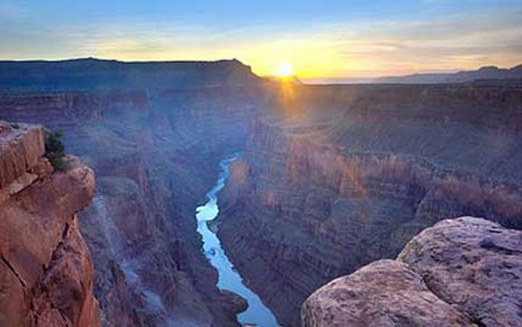 of the fact that federal and state agencies do not require wells to measure water pollution more than a thousand feet underground, where uranium mining threatens aquifers that feed springs deep within the Grand Canyon. No monitoring means contamination is undetected: out of sight, out of mind.
 But that’s changing as the U.S. Geological Survey pieces together samples taken from existing wells and places where groundwater flows downward into the Grand Canyon. These show that mining has already polluted 15 springs and five wells within the Grand Canyon’s watershed with toxic levels of uranium.
As I’ve said with regards to oil and gas development, one well contaminated or one person made sick is one too many. The same is true for uranium mining, making the situation around the Grand Canyon a disaster where we can least afford one.
In 2012, this sorry history led my friend and fellow Coloradan, Interior Secretary Ken Salazar, to impose a 20-year ban on new uranium mining in the watersheds that drain directly into the Grand Canyon. His action came in response to thousands of new mining claims filed in the preceding decade. Science and prudence also guided his decision, coupled with the knowledge that nearly $1 billion in annual economic activity is generated by this greatest of earth’s geological treasures.
Need for Permanent Ban on Grand Canyon Uranium Mining
The bill aims to protect 1.7 million acres of historical tribal homeland, including water sources and sacred sites.
Unfortunately, there’s almost no chance that the legislation will gain approval in today’s gridlocked Congress. But the 1906 Antiquities Act gives the president unilateral authority to set aside federal lands as protected national monuments to stop the looting of archaeological sites and for reasons of “historic or scientific interest.”
I’ve long believed we will be judged by the nation we leave to future generations. After all, we don’t inherit the earth from our parents — we borrow it from our children. The president should act now to protect the Grand Canyon from irresponsible development around this national treasure.
The National Mining Association may not be willing to stop digging — literally or figuratively — but the president owes it to us all to help them.
Hackers could shut down UK’s £31 billion nuclear weapon system – warns defence expert

 A former Defence Secretary has warned that the UK’s £31 billion nuclear weapon system could be shut down by hackers, Business Insider SAM SHEAD , 24 Nov 15, Former Defence Secretary Lord Browne has told the BBC that the UK’s nuclear weapon system, Trident, could be rendered obsolete by hackers.
The ex-Labour minister, who was Defence Secretary between 2006 and 2008, said “weak spots” in Trident need to be addressed — otherwise Prime Minister David Cameron won’t be able to rely on the nuclear deterrent “when he needs to reach for it.”
Trident, the UK’s nuclear programme, consists of four Vanguard-class submarines armed withTrident II D-5 ballistic missiles. It is the most powerful capability of the British military forces but at £31 billion it’s also the most expensive.
Lord Browne told BBC political editor Laura Kuenssberg that the Tory government has an “obligation” to assure MPs that all aspects of Trident have been assessed against the risk of a cyber attack and that the appropriate security measures were in place.
“If they are unable to do that then there is no guarantee that we will have a reliable deterrent or the prime minister will be able to use this system when he needs to reach for it,” he added……http://www.businessinsider.com.au/trident-at-risk-from-hack-lord-browne-nuclear-weapons-hacking-2015-11
European Commission in-depth investigation into Hungarian investment support for Paks II nuclear power
 State Aid: Commission opens in-depth investigation into Hungarian investment support for Paks II nuclear power plant http://europa.eu/rapid/press-release_IP-15-6140_en.htm Brussels, 23 November 2015
The European Commission has opened an in-depth state aid investigation into Hungary’s plans to provide financing for the construction of two new nuclear reactors in Paks.
The Commission will in particular assess whether a private investor would have financed the project on similar terms or whether Hungary’s investment constitutes state aid. If the project is found to involve state aid, the Commission will investigate whether as planned it would lead to distortions of competition in particular on the Hungarian energy market. Continue reading
California Governor appeased utilities while SanOnofre nuclear station was under scrutiny?
Email Suggests Governor Appeased Utilities During Calls For San Onofre Investigation, KPBS, AMITA SHARMA, Investigative Reporter | Contact, November 24, 2015
San Onofre’s new steam generators were supposed to last 40 years.
But less than one year after they were installed, hundreds of tubes had shown wear, causing a radioactive leak in January 2012. The leak forced the plant’s closure and stuck San Diego and other Southern California ratepayers with a multibillion dollar bill.
By May 2013, U.S. Sen. Barbara Boxer had in her possession two key documents. They showed that Edison officials knew there was potential for premature tube wear before those steam generators were installed but didn’t allow for fixes. One reason, according to internal documents was that the company wanted to avoid a rigorous government review.
Boxer was incensed.
The California Democrat called on the U.S. Justice Department to open a criminal investigation into whether Edison had lied to federal regulators about what it knew before the faulty equipment was turned on.
“At that point, it was clear that things had gone very seriously awry,” said John Geesman, an attorney for the Alliance for Nuclear Responsibility……….
Meanwhile, a series of bills intended to reform the PUC passed the Legislature this year. One would have compelled the commission to release the sought-after communications between regulators and Brown’s office on San Onofre.
The governor vetoed the reforms, calling them important but technical and conflicting. http://www.kpbs.org/news/2015/nov/24/email-suggests-governor-sided-utilities-over-san-o/
Shaky consensus in Britain’s parliament, about Trident nuclear weapons system
Nuclear consensus comes under pressure in Commons vote, Ft.com John McDermott, Political Correspondent, 24 Nov 15 The fragility of Britain’s cross-party consensus on nuclear weapons was revealed on Tuesday in a sour debate on the renewal of the Trident deterrent, which Michael Fallon said would cost at least £6bn more than planned.
The defence secretary confirmed that the price tag for four new submarines to replace the Vanguard Class had risen to £31bn from £26bn, not including a £10bn contingency fund. David Cameron, prime minister, acknowledged on Monday that their delivery could take five years longer than planned.
The debate was meant to showcase divisions in Jeremy Corbyn’s Labour party, meaning that concerns about the cost and timing of the government’s new plans were often replaced by squabbles and polemics.
Outside the Commons, however, senior defence figures raised questions about the Strategic Defence and Security Review, which Mr Cameron announced in parliament on Monday………http://www.ft.com/cms/s/0/62c6e428-92cd-11e5-bd82-c1fb87bef7af.html#axzz3sTiS5XiU
Nuclear deal for Egypt ridiculous in such an insecure regime
When Russian authorities confirmed that the plane crash in Sharm el Sheikh that killed over 220 passengers was caused by a bomb, the Egyptian authorities responded with a long silence and no comment. Perhaps the silence was no surprise. Embarrassingly, Egyptian authorities have been kept out of the loop of intelligence details being shared between Washington, London and Moscow.
On the same night Russia announced the confirmation, it sent security experts to examine ways of securing its embassy, as obviously Egypt ha lost trust on the security front. Security procedures in Sharm el Sheikh airport came under a great deal of scrutiny from security officials of foreign countries and the international media. The findings were appalling. Security personnel in the airport were reported to be playing “Candy Crush”, sleeping on duty and taking money in return for having passengers avoid security queues.
Domestic failure reflected abroad
In Egypt, matters are not going well. Apparently and for quite some time, President Abdel Fattah al-Sisi has been repeating the notion “we do not eat but build Egypt”, which means that as long as Egypt is progressing, Egyptians can starve for the cause. It seems Egypt is indeed starving as Sisi acknowledges, unfortunately however, Egypt is not being built. With a public debt surpassing 90 percent of GDP, Egypt has never been in a worse state. Any economic hopes are usually related to external economic assistance from Sisi’s allies in the Gulf……..
The security crisis in Sharm el Sheikh may have come as a shock to international media. In Egypt it was a different story. In fact the much anticipated signing of a nuclear deal between Egypt and Russia to build a nuclear power plant in the north of the country was met by ridicule and sarcasm. Responses in social media highlighted the inability of the country to conduct basic tasks and keep safety regulations, and yet, operate a nuclear plant. Many on social media in Egypt shared the news adding a sarcastic comment like; “The End.” – See more at: http://www.middleeasteye.net/columns/sisis-egypt-falling-apart-2011176082#sthash.hc6gf3Op.dpuf
For Egypt and others, the alternatives to nuclear power hold more promise
in general, nuclear energy is a bad deal for the Middle East. Most reactors would replace gas-fired plants, which are common in the region. But the nuclear sites hardly match up in terms of cost and productivity
Over the long term, as fossil fuels are depleted, nuclear power makes more sense. But only if you ignore the most bountiful—and safest—source of power in the region. It has been estimated that solar radiation could provide a country like Iran with 13 times its total energy needs—and decrease its dependence on Russia
A few of these countries want to set up nuclear-power plants regardless of expense,” says Mr Ramana. In most cases it is a matter of national pride—and a poor use of resources.
Why more Middle Eastern states are building nuclear power stations http://www.economist.com/news/middle-east-and-africa/21679090-egypt-and-others-alternatives-nuclear-power-hold-more-promise-why-more Nov 24th 201 EGYPT’S “long dream” is finally coming true, says Abdel-Fattah al-Sisi, the president. Not the dream of a capable government or reliable services—but the one in which Egypt’s nuclear-energy programme, started back in 1954, finally produces a watt of usable power. The government signed a deal with Russia on November 19th to build its first nuclear plant in Dabaa, on the Mediterranean coast.
Nuclear power has gone out of fashion in much of the world. The share of electricity generated by nuclear reactors has fallen to 10.8%, from a peak of 17.6% in 1996. More reactors have closed than opened of late. But the industry is not in crisis. China, Russia and India are all expanding their nuclear programmes. And several countries in the Middle East are pursuing nuclear power, creating what some have unfortunately called a “boom” in the region.
Short of oil and gas of their own, Egypt and Jordan in particular want nuclear power to shore up the security of their energy supplies, which have been disrupted by violence in the region. (Both have looked to Israel for gas, causing controversy at home.) They face big obstacles. The site chosen by Jordan for two planned reactors, also to be built by Russia, lacks water (necessary for cooling) and is opposed by local tribesmen. Egypt has assuaged its own locals, but previous plans have come to nought due to political upheaval and safety concerns. Financing is also a challenge for these cash-strapped countries, though Egypt claims that it will pay off its deal—over a period of 35 years from now—simply by producing electricity, which it will be able to buy at a low marginal cost.
The nuclear plans of Saudi Arabia and the United Arab Emirates (UAE) are more plausible. Both countries hope to free up oil and natural gas, which they now usefor electricity generation, for export. To that end, Saudi Arabia has reached agreements with five countries, including Russia, to build 16 reactors by 2032. The UAE is already working with its partner South Korea on four planned reactors, which should begin supplying power in 2017. When the project is completed three years later, a quarter of the country’s electricity needs are expected to be met by nuclear energy.
The projects in Saudi Arabia, which burns oil it could more efficiently sell abroad to produce power, and the UAE, which got a bargain on its reactors, make some economic sense. But in general, nuclear energy is a bad deal for the Middle East. Most reactors would replace gas-fired plants, which are common in the region. But the nuclear sites hardly match up in terms of cost and productivity, say Ali Ahmad and M.V. Ramana of Princeton University. According to their calculations, a country like Saudi Arabia would benefit from nuclear power only if it could charge potential customers abroad several times the going price for its gas (otherwise, it is cheaper to burn it at home and forgo building reactors). Importers, on the other hand, should stick with gas-fired plants so long as the gas price does not rise dramatically.
Less glamorous options also exist for countries looking to improve their power supplies. Fixing decrepit transmission lines in Iran would save more electricity than is produced by the country’s lone nuclear-energy plant in Bushehr. Egypt’s old power grid is in need of repair. But there is more prestige attached to nuclear power, which is often seen as a hallmark of technological progress, and which, of course, also allows for the development of skills that could one day be turned to bomb-making. “A few of these countries want to set up nuclear-power plants regardless of expense,” says Mr Ramana. In most cases it is a matter of national pride—and a poor use of resources.
November 24 Energy News

Opinion:
¶ How Renewable Energy Could Make Climate Treaties Moot • Creating an international agreement is an admirable goal, but notably, countries are not racing to zero emissions on their own. It is amazing that no country has performed a study on the benefits and costs of going to 100% clean, renewable energy. [Scientific American]
 ©iStock.com
¶ How Virtual Power Plants Can Help Replace Dirty Peaker Plants • A recent Wall Street Journal article highlighted a common problem: How to pay for aging, mostly coal-fired power plants whose only function is as backup for peak demand? One way is to combine distributed power and loads sources in a “virtual” power plant. [CleanTechnica]
Science and Technology:
¶ Sooner than it takes to build a nuclear power station, lithium-air batteries could be helping wind and solar to make coal, oil and nuclear obsolete, according to researchers from the…
View original post 739 more words
Danger in transporting nuclear wastes: Dr Edwin Lyman at South Australia’s Royal Commission


Dr Lyman’s evidence can be pretty heavy going for the non technical reader. First, he explained safety problems in standards for transportation casks for land or sea shipment of spent fuel, high-level radioactive waste and specially with materials like plutonium or plutonium oxide. These standards have not been updated over many decades, and the USA Nuclear Regulatory Commission (NRC) has not yet carried out tests intended to address this problem.
If a transport package of radioactive material is lost in the ocean, it could lead to significant long term contamination, if the package is not retrieved.
With increased transport, and speed of transport, of radioactive wastes, the risk of such accidents is increased, and the NRC would have confidence in the current standard for transporting wastes.
Apart from accidents, the other big danger is terrorism.
SA NUCLEAR FUEL CYCLE ROYAL COMMISSION DR EDWIN LYMAN, Union of Concerned Scientists TRANSCRIPT OF PROCEEDINGS ADELAIDE 7.30 AM, TUESDAY, 17 NOVEMBER…
View original post 133 more words
Direct nuclear waste disposal better, and safer, than pyroreprocessing: Dr Edwin Lyman

In the second part of his evidence to South Australia’s Nuclear Royal
Commission, Dr Lyman explains that direct disposal is the safest and the most prudent approach for nuclear power. In recycling, as in pyroreprocessing, the risks outweigh the benefits.
Dr Lyman has studied pyroreprocessing in great detail. The fact that its products are highly radioactive does not act to deter thieves, especially those aiming to use these products for weapons proliferation.
Also, “the IEA is still struggling to provide even technical approaches for how you would get weapons grade accountancy in pyroprocessing, and that’s a great concern”……”Many minor actinides that would be in the pyroprocessing product are also weapons useable “… “It’s also easy, if that combination were to be stolen, to separate out plutonium from the minor actinides”.
Lyman describes the pyroreprocessing process as an “unmanageable enterprise”. The United States decided not to pursue re-processing and fast reactors in the…
View original post 167 more words
Nuking clean energy: how nuclear power makes wind and solar harder

 Average hourly load over a one-week period in January, April and July 2009. Credit B. Posner.
This post first appeared on Power for the People, a blog focused on energy issues in Virginia, the home base of Dominion Resources–a company that is an industry laggard when it comes to renewable energy issues, and is still pursuing the possibility of building a third nuclear reactor at its North Anna site despite its costs projection of around $19 Billion, which would make it the most expensive nuclear project ever undertaken in the U.S. Those projections are not far off the costs anticipated for the UK’s highly controversial Hinkley Point reactor and, given the near-certainty of cost overruns and schedule delays, could go far higher if construction is attempted.
In this piece, Ivy Main explains–I think much more clearly than I have to date–exactly how deployment of expensive nuclear power (and baseload…
View original post 1,717 more words
I wish the Australian media would stop the lies about “medical” need for nuclear waste dump
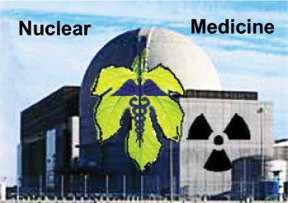
Australia’s mainstream media keep on repeating the same old lie about the “national nuclear waste dump being all about medical wastes.
It’s not. It’s about the highly radioactive wastes now being returned from France to the Lucas Heights nuclear site in Sydney. By contracts made long ago, Australia is obligated to take back spent nuclear spent fuel rods that were sent to France, UK and Argentina for processing. And this will continue to happen, as long as the Lucas Heights nuclear reactor is kept going.
Production of medical radioisotopes is not the major function of the reactor. And these medical isotopes are now being made much more safely in non nuclear cyclotrons – without all those problems of safety, of being a terrorism target, and of radioactive trash, and its dangerous transport.
Hospital medical wastes are overwhelmingly of short-lived radioactivity, and therefore well suited to disposal near the site of use. No…
View original post 30 more words
1 This Month
Chernobyl: The Lost Tapes – A good documentary on Chernobyl on SBS available On Demand for the next 3 weeks– https://www.sbs.com.au/ondemand/tv-program/chernobyl-the-lost-tapes/2352741955560

of the week–London Campaign for Nuclear Disarmament

Tell the Ukrainian Government to Drop Prosecution of Peace Activist Yurii Sheliazhenko
To see nuclear-related stories in greater depth and intensity – go to https://nuclearinformation.wordpress.com
-
Archives
- April 2026 (127)
- March 2026 (251)
- February 2026 (268)
- January 2026 (308)
- December 2025 (358)
- November 2025 (359)
- October 2025 (376)
- September 2025 (257)
- August 2025 (319)
- July 2025 (230)
- June 2025 (348)
- May 2025 (261)
-
Categories
- 1
- 1 NUCLEAR ISSUES
- business and costs
- climate change
- culture and arts
- ENERGY
- environment
- health
- history
- indigenous issues
- Legal
- marketing of nuclear
- media
- opposition to nuclear
- PERSONAL STORIES
- politics
- politics international
- Religion and ethics
- safety
- secrets,lies and civil liberties
- spinbuster
- technology
- Uranium
- wastes
- weapons and war
- Women
- 2 WORLD
- ACTION
- AFRICA
- Atrocities
- AUSTRALIA
- Christina's notes
- Christina's themes
- culture and arts
- Events
- Fuk 2022
- Fuk 2023
- Fukushima 2017
- Fukushima 2018
- fukushima 2019
- Fukushima 2020
- Fukushima 2021
- general
- global warming
- Humour (God we need it)
- Nuclear
- RARE EARTHS
- Reference
- resources – print
- Resources -audiovicual
- Weekly Newsletter
- World
- World Nuclear
- YouTube
-
RSS
Entries RSS
Comments RSS
 nuclear-news