Support for Iran nuclear deal from professors in Washington panel

 Professors speak in strong support of Iran nuclear deal, Brown Daily Herald, Four of 5 panelists approve of agreement, cite strict supervision of Iranian nuclear power By JACLYN TORRES STAFF WRITER September 14, 2015 “Iran could have had a bomb in a few weeks or a few months without this agreement,” said Leon Cooper, professor of physics, at a Watson Institute for International and Public Affairs teach-in Monday afternoon. The event focused on the controversial foreign policy agreement and featured five panelists: Cooper; Sue Eckert, senior fellow in international and public affairs at the Watson Institute; Derek Stein, associate professor of physics and engineering; Thomas Nichols, professor of national security affairs at the U.S. Naval War College; and Nicholas Miller, assistant professor of nuclear security and policy, political science and international and public affairs.
Iran’s domestic record with terrorism and human rights warrants caution about the deal, Eckert said. With this agreement, U.N. sanctions previously imposed on Iran will go away, but the U.S. sanctions on terrorism and domestic affairs will continue, she said.
Cooper and Stein, who both have backgrounds in nuclear weapon science and technology, argued the real possibility of a nuclear Iran and the security threat that would entail. Iran has two centrifuge facilities with nuclear capability in the cities Natanz and Fordow, Stein said. The restrictions imposed on Iran by the Obama administration’s deal would decrease the amount of enriched uranium and complicate the process of building nuclear weaponry.
“We should adopt this agreement and force its provisions aggressively,” Stein said.
Cooper, along with 28 other physicists, recently signed a letter congratulating President Obama on his “technically sound, remarkably stringent, innovative deal.”
Miller also expressed support for the deal. “Iran with nuclear weapons is way worse than Iran with $50 billion,” he said. Despite the compromise made with Iran, the deal still stands as one of the most stringent in history, he added……..
If Congress approves the measure, the deal will proceed Sept. 17 and will be officially adopted Oct. 19. Then “implementation day” — the date when the terms of the deal will take effect — will arrive six to nine months from now, Eckert said. Iranians say the implementation will come sooner than forecasted, but regardless of the date, the new regulations will prove complicated for U.S. businesses, she added.
When the deal takes effect, foreign firms will head to Iran for business opportunities. But the U.S. will not become involved in business relations as a result of other sanctions levied under the Obama administration. The deal is still being discussed in Congress, and 42 members of the Senate filibustered the agreement — a number low enough that Democrats blocked Republican opposition. Senate Majority Leader Mitch McConnell then called for another vote…….
Jo-Anne Hart, adjunct professor of international and public affairs at the Watson Institute, attended the lecture and said thedeal is the right step forward for Iran. Iranian President Hassan Rouhani has staked his presidency on the deal to get Iran more involved in the international community, Eckert said. http://www.browndailyherald.com/2015/09/14/professors-speak-in-strong-support-of-iran-nuclear-deal/
Experts guessing about meaning of North Korea’s renewed nuclear threat
 North Korea’s renewed nuclear threat keeps experts guessing, Guardian, Julian Borger, 15 Sept 15
Pyongyang’s nuclear weapons complex relaunch seen as sabre rattling – or the prerequisite for another nuclear test. North Korea’s announcement that it had revamped and relaunched its nuclear weapons complex a day after threatening new launches is meant to signal a renewed determination to build long-range nuclear missiles.
The statement on state media on Tuesday warned that US hostility would be met with “nuclear weapons at any time”. However, while many anticipate that the regime will try to launch a satellite with long-range missile technology on 10 October to mark the 70th anniversary of the founding of the Workers party, few are less certain on how significant the announcement really is.
One western expert described it as being of little practical importance since it could be seen as no more than a morale-boosting exercise for the regime, while another said it could presage a fourth nuclear test by the Pyongyang regime. The North Korean nuclear complex at Yongbyon contains a 5 megawatt reactor, capable of producing plutonium as a byproduct, and a newly extended plant for enriching uranium. Both have the capacity for producing weapons-grade fissile material for a bomb, and the announcement, attributed to the director of the nation’s atomic energy institute, said that both had been “rearranged, changed or readjusted and they started normal operation”.
David Albright, president of the Washington-based Institute for Science and International Security, said that trying to estimate what is really going on in Yongbyon from satellite imagery can be a guessing game.
“There is heat coming from the enrichment plant, but that’s not direct evidence that it is functioning. They could just have the heat on,” he said.
He added: “We will have to wait to see if there are signs of normal operation. We could see water being discharged and steam coming off the turbine.”
Albright said that although there were signs that the North Koreans had not been able to get the reactor to work at full capacity, it was still capable of producing three to four kilograms of plutonium a year, once the spent fuel had been reprocessed – enough for a single warhead. He added that it is likely the regime had mastered the science of making warheads small enough to put on missiles…….. http://www.theguardian.com/world/2015/sep/15/north-koreas-renewed-nuclear-threat-keeps-experts-guessing
How world health will benefit from Iran nuclear deal
 Iran nuclear deal will bolster global health Boston Globe, By Dr. Ali Lotfizadeh and Dr. Mohsen Malekinejad SEPTEMBER 15, 2015 National security and regional stability have dominated the political debate over the Iran nuclear accord in recent weeks. Less discussed, however, are the far-reaching, positive implications for public health that will come when sanctions are lifted, as the deal calls for, and Iran’s medical system can begin to cooperate with the West again.
Sanctions for several years have severely restricted access to life-saving medicines for patients in Iran, leading to serious health consequences. Although the US government introduced loopholes to bypass these sanctions for medical purposes, the loopholes have not worked properly and lives have consequently been lost. With the nuclear agreement in place, thousands of Iranians will once again receive treatments for diseases like cancer and hemophilia.
Yet the calming of political tensions will have broader impact than just inside Iran. Since the revolution of 1979, Iran has been at the forefront of advancing primary medical care for rural populations through a system of robust health networks, which comprises more than 17,000 rural health facilities and a health center for every 7,000 rural residents. This network’s success even drew the interest of public health experts in Mississippi, who collaborated a few years ago with colleagues at Shiraz University of Medical Sciences in Iran to reduce health care disparities between rural and urban parts of the state.
Iran has also launched advanced intervention programs for drug users and is home to two out of three HIV surveillance and treatment knowledge hubs for the Eastern Mediterranean region office of the World Health Organization. These hubs are in charge of knowledge transfer to other countries in the region.
Iran’s vast potential to enhance global health is significantly underutilized right now. For example, since 2013, we have trained local ophthalmologists in Tajikistan to treat the main causes of avoidable blindness through a US-based nongovernmental organization. When we sought ophthalmologists who could provide training in Tajikistan, it was only natural to consider enlisting the expertise of Iranian colleagues. Iran, a neighbor of Tajikistan, is home to several reputable training sites sponsored by the International Congress of Ophthalmology. Iranian physicians speak the language and know the culture of Tajikistan and other countries in the region. They are also less expensive to hire than their American counterparts. But current restrictions make even these small-scale collaborations virtually impossible, despite their clear humanitarian purpose……..
proposed health partnerships transcend political ideologies and improve lives from villages in Tajikistan to small towns in Mississippi. But their success depends on the durability of this nuclear agreement. Iran and America do not see eye-to-eye on many political issues, and the current accord will not change that. But support for this agreement can pave the way toward a shared global responsibility to make the world a healthier place.
Dr. Ali Lotfizadeh is a visiting scholar at UCSF School of Medicine’s Institute for Health Policy Studies. Dr. Mohsen Malekinejad is an assistant professor in the same program. https://www.bostonglobe.com/opinion/2015/09/15/iran-nuclear-deal-will-bolster-global-health/YF7Hobo2RJPsu547uC4lGM/story.html, Boston Globe
Even when it’s cold, UV radiation is a risk
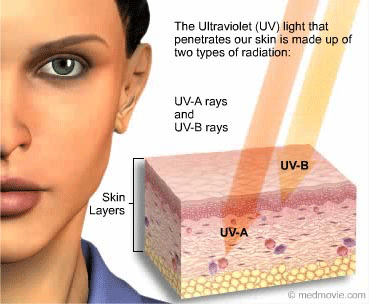 The damages of UV radiation are a daily risk even when you can’t feel the heat of the sun, News Local, Sydney September 12, 2015 IT seems logical to assume that the red hot sunburn we get comes from standing under the hot sun we feel, but it is not quite correct.. Sun damage is a reality that Australians face every day of the year, regardless of how hot the temperature is or how cloudy the sky…….
associate Professor Pablo Fernández-Peñas, who sees the detrimental effects of too much sun exposure.
“We can’t feel UV light and the heat sensation is not related to the amount of UV light,” he said.
“In winter, as days are cooler, people tend to stay longer outdoors.” A 2014 Australian study, “The influence of age and gender in knowledge, behaviours and attitudes towards sun protection”, found the use of sunscreen dropped to between 24 and 49 per cent outside summer.
“When you are just walking from your house to the car or dropping the kids to school, that sun exposure accumulates in the future,” Prof Fernández-Peñas said.
“Australia has the highest mortality of skin cancer in the world.”……..HEALTH EFFECTS OF UV RADIATION
■ Sunburn: can cause permanent and irreversible skin damage that can lay the groundwork for skin cancer
■ Eye damage: photoconjunctivitis, also known as snow blindness or welders flash, and skin cancer of the conjunctiva and skin surrounding the eye
■ Premature ageing: such as skin wrinkling, sagging, blotchiness and roughness …….http://www.dailytelegraph.com.au/newslocal/city-east/why-sunscreen-should-be-a-daily-habit/story-fngr8h22-1227522871234
500 MW Renewable Energy Plan for Alabama
 Alabama Power Getting 500 MW Renewable Energy Plan, Clean Technica September 15th, 2015 by Steve Hanley Originally published on Solar Love.
Alabama has 2 megawatts of installed renewable power at present, which ranks it among the bottom 10 states in that category. But that is going to change quickly, after the Alabama Public Service Commission gave its blessing recently to a plan that will allow Alabama Power to add 500 megawatts of new renewable power within 6 years……..
Southern-tier states enjoy much more sunlight than northern states and could generate most if not all the electricity they need from renewable sources. Alabama has failed to capitalize on its renewable assets until now, but will soon become a model for its neighboring states to emulate. http://cleantechnica.com/2015/09/15/alabama-power-getting-500-mw-renewable-energy-plan/
Sustainable infrastructure needed – there’s no Planet B
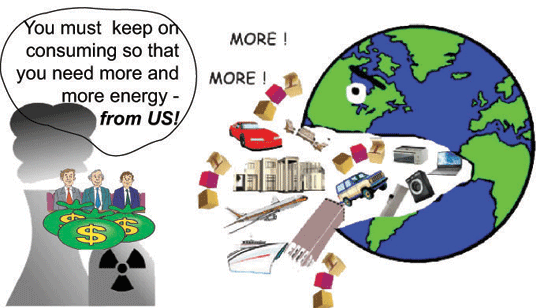 We Have Just One Planet (Not Four), Huffington Post , Denise Nelson Vice President for Public Education at the Institute for Sustainable Infrastructure 15 Sept 15 The United Nations estimates the world population to reach 9.6 billion by 2050 and 10.9 billion by 2100. These billions of new people will need infrastructure to provide clean water, sanitary-waste removal, energy, transportation systems, data systems, and more. This infrastructure is the foundation necessary to achieve other global goals: promoting good health, clean water, and sanitation; providing access to quality education and jobs in a thriving economy; and supporting sustainable cities and economies.
Immense resources are required to expand infrastructure systems, and our business-as-usual approach cannot continue indefinitely. The Global Footprint Networkreports that, world-wide, we are operating on our one planet as if we have 1.4 planets worth of resources at our disposal. The United States operates as if we have four planets to work with, and Europe operates as if they have two to three planets. If allowed to continue, this overuse of natural resources and reduction of ecosystem services will have devastating consequences worldwide. It’s critical that the worst offenders develop new practices and that the current practices from these countries are not adopted by developing nations.
A new paradigm is necessary to support this growth and development in a sustainable manner. Sustainable-infrastructure development is about building stronger, more resilient communities, as well as providing safe and reliable services in a way that preserves what people value: the quality of their community, their environment, and their future. Sustainable infrastructure means many things: regional and trans-border inclusivity and collaboration, affordable infrastructure with equitable access for all, infrastructure that supports economic growth and development, resource efficiency, use of clean and environmentally sound technologies, and promotion of research and innovation.
Community planners, architects, engineers, and other infrastructure professionals have the opportunity to implement sustainable practices with each individual infrastructure project in order to build sustainable communities. However, the task of evaluating every type of sustainable technology, product, or process, and comparing those options, can be quite overwhelming. There are guidance and project-assessment systems available for specific types of infrastructure, such as buildings, roads, and landscaping (Leadership in Energy and Environmental Design, GreenRoads, andSITES, respectively) among others. There are also systems available for specific geographies (CEEQUAL in the United Kingdom and IS in Australia). While these are great resources, the not-for-profit Institute for Sustainable Infrastructure (ISI) in collaboration with the Harvard Zofnass Program for Sustainable Infrastructureidentified the need for clear, concise guidance on sustainable practices for all types of infrastructure projects worldwide.
Together, they developed Envision, a guidance manual and project-assessment tool to promote sustainable-infrastructure best practices………http://www.huffingtonpost.com/denise-nelson/we-have-just-one-planet-not-four_b_8124624.html?utm_hp_ref=politics&ir=Politics
Colorado city Aspen achieves 100% renewable energy
 Aspen Stands Tall As Third US City Achieves 100% Renewable Energy http://cleantechnica.com/2015/09/15/aspen-stands-tall-third-us-city-achieves-100-renewable-energy/ September 15th, 2015 by Glenn Meyers
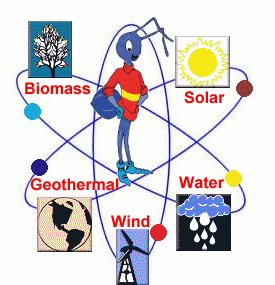
Aspen, the Colorado skiing-Mecca, now stands tall as a renewable energy visionary, having become one of three US cities to run on 100% renewable energy. This news was recently reported by The Aspen Times, citing staff members at Aspen’s environmental and project departments. The City of Aspen, a famed tourist location in the Rocky Mountains, Colorado, serves a population of just over 6,600 people, and its renewable power supply comes from a combination of wind, hydro, geothermal heat, and solar.
The plan for shifting to renewable energy and meeting the challenges of climate changedates back to 2005. According to Chris Menges and Will Dolan, from Aspen’s Sustainability and Utility departments:
“In 2005, the City created the Canary Initiative, which identifies Aspen and other mountain communities as “canaries in the coal mine” with respect to their sensitivity to the effects of climate change. Aspen relies on a stable climate and thriving natural environment for its economic viability and quality of life. In 2007, Aspen City Council adopted the Canary Action Plan, committing to the GHG reduction goals.”
The first two US cities to reach the goal were Burlington, Vermont, followed by Greensburg, Kansas.
Aspen’s transition to 100% renewable occurred September 10, after the city signed a contract with wholesale electric energy provider Municipal Energy Agency of Nebraska in order “to achieve this final leg of our goal,” city Utilities and Environmental Initiatives director David Hornbacher said.
Aspen receives wind energy from four wind farms in Nebraska and South Dakota, and the city also uses energy from Ruedi Reservoir, Maroon Creek, and Ridgway Reservoir, a hydropower facility near Montrose. Two utilities, Aspen Electric Utility and Holy Cross Energy, serve the community.
Mother Nature Network reports other cities aiming for 100% renewable energy include Copenhagen, Denmark; Bonaire, a Caribbean island; Munich and Frankfurt, Germany; San Diego, San Jose, and San Francisco, California; Sydney, Australia; and Isle of Wight, England.
Cesium and Potassium
From Paul Langley
Nukers are Bananas!!
So eat them up!!
A proof that cesium in any form is a toxin not a nutrient:
Nukers promoting contaminated food – the falsehoods of the Potassium excuse
I have blogged about this before. Attempts at selling contaminated food in the market of people’s lives by nuclear advocates has to stop in Japan and everywhere.
It will take me the weekend to finish this post as I gather the historic and current sources which show the Potassium equivalent dose (which the industry calls the banana equivalent dose) is a false, incorrect, wrong and deceptive fallacy.
In the interim, this wiki article explains the fallacy in brief: http://en.wikipedia.org/wiki/Banana_equivalent_dose
In brief: radio potassium (K40) is much a very small proportion of all potassium. It is far less radioactive per unit weight (amount, physical dose) than any biologically active fission product.
Potassium in any form is dangerous to the heart in excess, but potassium is a needed nutrient.
The body maintains a potassium balance therefore. This danger to the heart is a bio-chemical effect. The radiological nature of radio cesium (a potassium analogue) poses an additional threat to the heart and other soft tissue. The body maintains the appropriate its potassium balance by excreting potassium. Eating potassium rich food results in excretion of potassium, maintaining the body’s appropriate potassium balance. Eating a banana in fact results in cytokine release, and other biological responses. This is due to the chemical composition of the banana which contain precursors which, according to some people, are radio-protective.
On the other hand, cesium and strontium are not needed by the body in any form. In fact, strontium mimics calcium even though its bio chemistry is not exactly the same (analogue = similar to but not the same as the original). There are about half a dozen different isotopes of radio-strontium. The body is able to discriminate between strontium and calcium at the gut wall and prefers calcium. If the dietary calcium is adequate, the body is able to preferentially absorb calcium over strontium in a ratio of about 4 : 1.
Once absorbed, strontium moves to bone and other places which have a biological demand for calcium. In bone, strontium, which has a large crystal structure than calcium, binds more loosely to bone than calcium. It tends to deposit on the outside of bone structure. (Pecher, 1942)
During pregnancy strontium moves from bone to fetus with the bulk of movement occurring later in pregnancy.
During breast feeding, strontium moves from bone to breast tissue and is excreted into the milk.(Erf and Pecher, 1940).
When uncontaminated orphaned baby mice were given to strontium contaminated mother mice to suckle, the previously uncontaminated mice “became more radioactive than the (surrogate) mothers” Pecher, 1941.
The potassium cycle in humans is no excuse for nuclear authorities anywhere on the planet to claim any benefit or natural precedent for the marketing of nuclear industry emissions contaminated food.
The fission products are not nutrients. Do not eat them. Nuclear industry promises to keep its radioactive sources sealed. When nuclear industry invariably fails in this undertaking, it turns around and claims the residue of its pollution is like a banana.
Crap. The residue is like the residue of a rad weapon. Fact. Its the same stuff. Terrorists do not attempt to arm themselves with bananas. They are not dangerous.
Radio Strontium, Radio Iodine, Radio cesium have NO PLACE in food. Nuke is not clean, it is not green and it relies on lies it has concocted over decades. Despite the fact that nuclear industry has been a beneficiary of fundamental research into these matters, conducted at taxpayers expense, over many decades. It is as if nuclear industry is blind to the actual findings of Projects Gabriel, Sunshine and the Manhattan Project’s Health Division Findings even though these things were participated in by private nuclear corporations at the time.)
“Equilibrium Dose” – in a constantly radiologically contaminated environment, the equilibrium dose of a given fission product is the maximum amount of the substance which remains in the body as a result of the uptake/excretion cycle. Risk increases as a function of time as well as uptake. If the shit is quickly cleaned up, if the source of emissions is stopped then risk is reduced. The reactors at Fukushima continue to vent, previous deposition is washed down from the mountains of Fukusihma Prefecture. (see previous post).
The equilibrium dose of the fission products are all dangerous.
Bio-accumulation is a fact which confounds official attempts at “diluting” radio-contamination by spreading them around.
The more nuclear industry claims eating plutonium, strontium, cesium, iodine and other fuel and fission products is ok because bananas exist and because the potassium is a needed nutrient, the more I consider them to be blatant liars.
The experience and reports of Livermore National Labs in its attempts to remove radio cesium from food grown in the Bikini Atoll further reveal the nuclear lie. The main means of reducing radio cesium from food there involves the use of potassium fertilizer to displace cesium in the crops. It is of some, but limited success. As less than 1% of potassium is the radioactive isotopes of potassium and as the radioactive isotopes of potassium are much less radioactive per unit weight than radio cesium, there is an obvious radiological importance in using potassium to displace cesium from food.
see https://marshallislands.llnl.gov/bikini.php If there is no benefit in using potassium in an attempt to displace radio cesium from food in the Bikini Atoll, why has the American taxpayer spent untold billions attempting to do just that?
If nuclear industry tempts you with the idea that radio cesium is nutrient, dont believe them. They are asking you to take on an internal radio cesium dose in addition to your natural radio potassium dose, to take on an addition radio strontium dose where one does not exist in nature (no form of radio strontium exists in nature, there are about 6 radio strontium fission isotopes), strontium is not a nutrient and baby mice fed stable strontium instead of calcium die (Pecher `1941), There is no natural radio iodine dose. Eating radio Iodine damages the thyroid and consequently the rest of the endocrine system. The endocrine system is needed by the body for many reasons, including it’s important role in fighting the effects of radiation exposure.
There is no natural equilibrium doses of radio strontium, radio cesium, or radio iodine. (and so on, I aint writing a book here). The nuclear industry talks in absolutes to main its propaganda points. Let’s test that.
If radio cesium is ok because, as they say, radio potassium (which makes up 1% of the needed daily uptake of potassium), is in food, well what would happen if all the potassium in the world’s diet was turned to cesium? All mammalian life on the planet would die firstly because CESIUM IS NOT A NUTRIENT and secondly all mammalian life would die due to the radiation dose.
See Comar et al. http://www.annualreviews.org/doi/abs/10.1146/annurev.ns.15.120165.001135?journalCode=nucl.1
The whole of the history of nuclear has been dominated by the fact that the biologically active fission products contaminate the food supply after they enter the biosphere.
This fact has been known for a very long time. Realizing that nuclear devices – in the first instance, bombs and reactors – emitted both photon radiation – gamma and x rays, and particulate radiation – alpha, beta and neutrons – the first job of the Health Division of the Manhattan Project was to study the nature of the threats posed. Workers located close into a reactor core were exposed to gamma, x and neutron rays. These are very penetrating. They were also exposed to the physical rods – or slugs as they were called then. The hazards of extracting plutonium from fission uranium slugs included the possibility of breathing in or ingesting etc plutonium and fission product dust.
Hamilton was contracted to study the metabolism of the fission products. He was contracted to find the “radiations” which were “effective against the enemy”. He was contracted to find protective methods for US troops and the US population should the enemy attack the US with nuclear weapons. (The contract resulted from the aims defined by the report “Metallurgical Project, A.H. Compton, Project Leader, Health, Radiation
and Protection, R.S. Stone, M.D., Division Director, Health Division Program, May 10, 1943”, document number 717325, Report CH-63255-A, Originally Secret, pp. 2, gives the following additional very significant Scope:
“4. Evaluation of Effectiveness of Radioactive Materials as a Military Weapon. A) Defense -Tolerance of and protection of troops and civilians’. B) Offense – Radiations needed to be effective.”)
In 1943, Hamilton reported to Stone, Groves and Oppenheimer and reported that radio strontium obtained from reactor pile fuel rods (slugs as they were then called) could be used as a weapon. The proposal called for a bomb loaded with radio strontium, which was “violently radioactive”, and packed with explosive. Such bombs, Hamilton wrote, could be used to contaminate enemy food and water supplies. (Source: Advisory
Committee on Human Radiation Experiments, ACHRE, Final Report, Chapter 11.
United States Department of Energy, 1995. Date of memos: 1943.)
Under the terms of his first contract, Hamilton regularly published reports entitled ““Metabolism of the Fission Products, Progress Report for Period Ending…” In the report for the Period Ending April 15 1944, Hamilton reported the following: “The most effective means of reducing the absorption of Sr* (any radio active isotope of strontium) from the intestinal tract is the maintenance of an adequate or high calcium intake. This may be accomplished by increased use of milk and dairy products, by taking medicinal calcium regularly or by use of bread fortified with calcium. The important factor is apparently the general
level of calcium intake rather than the amount present in the intestinal tract at the
moment.”
This finding was actually implied from data first published in the Sr/Ca ratio studies data and conclusions by Charles Pecher, 1940. (Source: Pecher, C. “Biological Investigations with Radioactive Calcium and Strontium,
Preliminary Report on the Use of Radioactive Strontium in the Treatment of
Metastatic Bone Cancer”, Contributed from the Radiation Laboratory of the
University of California, Berkeley University of California Publications in
Pharmacology. Editor: C. D. Leake, G.A. Alles, T.C. Daniels, M.H. Soley. Volume 2
No 11, pp. 117-150, plates 6-9, 3 figures in text. Submitted by Editors July 21, 1942,
Issued October 23, 1942, University of California Press, Berkeley, Cambridge
University Press, London, England. Prefatory note by C.D. Leake, editor.) pp 133.)
If Doctor Hamilton had been snatched from 1944 and had been transported to NHK TV studios in March 2011
and forced to watch the Fukushima explode and as a result of containment breach deposit portions of their
core contents over Japan and the hemisphere, he would have surely said, “Yea, that’s pretty much what I mean. What are you doing to protect the “friendlies”?”
Japanese authorities have not learnt the lessons of history. Nuclear industry knows the full facts, and yet prefers to justify its nuclear pollution on the grounds that bananas contain a lot of potassium (in dietary terms) and have a proportion of radioactive potassium. How much radioactive potassium is present naturally in all potassium and which therefore is taken up by plants and animals and consumed by humans? 0.0117%. The equilibrium dose in humans is constant, that is, eating some dietary potassium does not result in a greater amount in the body, for the body maintains an equilibrium of potassium and the excess amount is excreted. However, in the long decades following a reactor accident which results in proportions of core contents being spewed out into the country side, the biologically active fission products, including the isotopes of cesium (a potassium analogue) enter the foodchain.
This is results in an additional burden to the radio potassium normally present in food and the body. The presence of potassium in the body is not a valid excuse for nuclear industry and its shareholders to use in order to justify or minimise the consequences of their actions – actions which resulted in the contamination of the biosphere and foodchain.
Cesium is not a nutrient. Why eat it? TEPCO says so? What is TEPCO and its apologists motivation?
The hazards of non radioactive, stable, normal, ordinary, natural, non fission related cesium:
http://www.livestrong.com/article/496095-the-safety-of-cesium-chloride-food-supplements/
“In September 2009, after three such cases, the Canadian government warned Canadian consumers against taking cesium chloride because of the risk of potentially life-threatening heart arrhythmias. Patients who experience irregular heartbeat or a decrease in consciousness after taking cesium chloride should seek emergency medical treatment. There may also be a risk of heart attack associated with cesium chloride supplements.
Side Effects
Some other potential side effects of cesium chloride are seizures, loss of consciousness and electrolyte imbalances, which is a potentially dangerous condition in which the body’s chemistry is disrupted. Consuming large amounts of cesium chloride may also cause decreased appetite, nausea and diarrhea. Some researchers have reported that their laboratory mice died after taking large doses of cesium chloride, according to a 2004 report on cesium toxicity by the Agency for Toxic Substances and Disease Registry.” end quote, the cesium chloride is the soluble form.
The hazards of radioactive cesium:
http://large.stanford.edu/courses/2012/ph241/wessells1/
“Among the many fission product nuclides, cesium 137 deserves attention because it possesses a unique combination of physical properties and historical notoriety. It is readily produced in large quantities during fission, has an intermediate half-life, decays by high-energy pathways, and is chemically reactive and highly soluble. These physical properties have made cesium 137 a dangerous legacy of major nuclear accidents such as Chernobyl, but it has also caused relatively small incidents as well….Fission of various isotopes of thorium, uranium, and plutonium all yield about 6% cesium-137. [1] This high fission yield results in an abundance of cesium-137 in spent nuclear fuel, as well as in regions contaminated by fission byproducts after nuclear accidents. [2] The large quantities of cesium-137 produced during fission events pose a persistent hazard. Its half-life of about 30 years is long enough that objects and regions contaminated by cesium-137 remain dangerous to humans for a generation or more, but it is short enough to ensure that even relatively small quantities of cesium-137 release dangerous doses of radiation (its specific radioactivity is 3.2 × 10^12 Bq/g (10 to the 12th power)). [2-4]
What is the rate of radioactivity of potassium 40, the isotope which makes up 0.012% of all potassium, both environmentally and in food? How much less that cesium 137?
Argonne National Laboratory, rate of radioactivity of Potassium isotopes:
http://www.ead.anl.gov/pub/doc/potassium.pdf
Potassium 40 (K40) Half life : 1.3 billion years. Natural abundance: 0.012% of all potassium is K40.
Radioactivity in Curies: 0.0000071 curies (per gram). Type of radiation emitted: Beta (energy 0.52 MEV), gamma energy 0.16 MeV).
Argonne National Laboratory: Rate of radioactivity of the radioactive cesium isotopes:
http://www.evs.anl.gov/pub/doc/cesium.pdf
Quote “There are 11 major radioactive isotopes of cesium. (Isotopes are different forms of an element that have the same number of protons in the nucleus but a different number of neutrons.) Only three have half-lives long
enough to warrant concern: cesium-134, cesium-135 and cesium-137. Each of these decays by emitting a
beta particle, and their half-lives range from about 2 to 2 million years. The half-lives of the other cesium isotopes are less than two weeks. Of these three, the isotope of most concern for Department of Energy (DOE)
environmental management sites and other areas is cesium-137 which has a half- life of 30 years. Its decay product, barium-137m (the “m” means metastable) stabilizes itself by emitting an energetic gamma ray with
a half-life of about 2.6 minutes. It is this decay product that makes cesium an external hazard (that is, a hazard without being taken into the body).isotope of most concern for Department of Energy (DOE) environmental management sites and other areas is cesium-137 which has a half- life of 30 years. Its decay
product, barium-137m (the “m” means metastable) stabilizes itself by emitting an energetic gamma ray with
a half-life of about 2.6 minutes. It is this decay product that makes cesium an external hazard (that is, a
hazard without being taken into the body). Cesium-135 and cesium-134 are typically of less concern because of their radiological decay characteristics. The very long half-life of cesium-135 means it has a very low specific activity, and the slow decay rate combined with its low decay energy contribute to its low hazard. Cesium-134 has a half-life of 2.1 years and decays by emitting a beta particle. The relatively small amount of cesium-134 produced more than 20 years ago would essentially all be gone today due to radioactive decay.
Where Does It Come From? Cesium is naturally present as the isotope 133 (stable) in various ores and to a lesser extent in soil. The three radioactive cesium isotopes identified above are produced by nuclear fission. When an atom of uranium-235 (or other fissile nuclide) fissions, it generally splits asymmetrically into two large fragments – fission products with mass numbers in the range of about 90 and 140 – and two or three
neutrons. (The mass number is the sum of the number of protons and neutrons in the nucleus of the atom.)
Cesium radionuclides are such fission products, with cesium-135 and cesium-137 being produced with
relatively high yields of about 7% and 6%, respectively. That is, about 7 atoms of cesium-135 and 6 atoms
of cesium-137 are produced per 100 fissions. Cesium-137 is a major radionuclide in spent nuclear fuel, high-
level radioactive wastes resulting from the processing of spent nuclear fuel, and radioactive wastes associated
with the operation of nuclear reactors and fuel reprocessing plants.
Isotope: Cs-134 half life: 2.1 yr radioactivity in curies 1,300 (per gram) Beta (energy 0.16MeV), gamma (energy 1.6 MeV).
Isotope: Cs-135 half life: 2.3 million yr radioactivity in Curies 0.0012 (per gram) Beta (energy 0.067 MeV)
Isotope: Cs-137 half life: 30 years radioactivity in Curies: 88 (per gram) Beta (energy 0.19MeV)
Ba-137m (95%) Half life: 2.6 min radioactivity in Curies: 540 million (per gram) IT Beta (energy 0.065) gamma (energy 0.60 MeV)
IT = isomeric transition, Ci = curie, g = gram, and MeV = million electron
volts; a dash indicates that the entry is not applicable. (See the companion fact
sheet on Radioactive Properties, Internal Distribution, and Risk Coefficients for
an explanation of terms and interpretation of radiation energies.) Certain
properties of barium-137m are included here because this radionuclide
accompanies the cesium decays. Values are given to two significant figures
Direct comparison of the K40 and Cs137 data:
Potassium 40 (K40) Half life : 1.3 billion years. Natural abundance: 0.012% of all potassium is K40.
Radioactivity in Curies: 0.0000071 curies (per gram). Type of radiation emitted: Beta (energy 0.52 MEV), gamma energy 0.16 MeV).
Isotope: Cs-137 half life: 30 years, natural abundance: zero. (fission product) radioactivity in Curies: 88 (per gram) Beta (energy 0.19MeV)
As potassium and cesium end up in the same tissues, the radiation energy absorbed by those tissues from both Cs** and K40 must be ADDED TOGETHER.
Is Cesium in any form needed for life? No
Is potassium needed for life? Yes
Can cesium substitute for potassium in the body ? No. It is merely an analogue (this means it is similar but not exactly the same as potassium. (If it was exactly the same, it would be called potassium, but it isnt. Cesium is not potassium. It cannot do the same job as potassium, although it “tricks” the body into reacting to it as if it were potassium, hence it goes to the same tissues as potassium does. Thus those tissues now have the two burdens: that of the radioactivity burden of potassium k40 plus the burden of Cs137, 134 etc.
What’s a curie a measure of ?
“The Curie (symbol Ci) is a non-SI unit of radioactivity, named after Marie and Pierre Curie. It is defined as
1 Curie = 3.7 × 10^10 (10 to the 10th power) decays per second.
The SI derived unit of radioactivity is the becquerel (Bq), which equates to one decay per second. Therefore:
1 Ci = 3.7 × 10^10 Bq = 37 GBq
and
1 Bq ≅ 2.703 × 10^−11 Ci
Another commonly used measure of radioactivity is the microcurie:
1 μCi = 3.7 × 10^4 disintegrations per second = 2.22 × 10^6 disintegrations per minute”
http://en.wikipedia.org/wiki/Curie
It is the mode of decay which determines whether for each decay a track of gamma, beta or alpha is produced. In the case of cesium and potassium, decay is by beta and gamma.
State again, Potassium 40 (K40) has a radioactivity of 0.0000071 curies (per gram)
Cesium 137 has a radioactivity of 88 curies per gram.
Yet nuclear industry justifies the safety of its pollution and alleges the presence of its pollution in food on the basis of the fact that naturally occurring isotope of potassium (K40) is present in bananas, when compared to Cesium 137, this K40, which makes up 0.012% of the potassium in food (and everything other source of potassium) is barely radioactive at all!!!!
100 percent of the radio cesium in food is radioactive. It is not a substitute for potassium. It is not a nutrient, and governments warn against the consumption of stable, naturally occurring cesium on the basis of its toxic effects. The radioactive fission cesiums have the same chemical toxicity as well as being many many many more time radioactive than potassium 40. The nutrient nuclear industry allege justifies the presence of its pollutant, radio cesium, in food.
On top of this, nuclear industry claims that radiation exposure from its pollution conveys a benefit. How many of the radiation tracks produced by cesium 137 in this example are beneficial? What makes the allegedly “good” radiation tracks any different from the “bad” ones? Ionisation of tissue by any given track of radiation can produce thousands of different outcomes. The case for benefit from multiple explosions and core breaches is, to say the least, unproven, and in my opinion, patently in error.
People have recently said to me that I should have discussed this matter earlier, I have.
This blog actually focussed on Radio Strontium in fair detail and over a large amount of time.
In my view, the biochemistry of strontium 89 is most interesting due to its fission creation abundance, its nature as a calsium analogue, and its very great rate of radioactivity. 1 gram of strontium has a radioactivity of 27,800 curies. That is a huge number of high energy (specific to Sr89) beta.
The rate of radioactivity of deadly radium is 1 (one) curie per gram.
The assurances of safety which rest upon the fallacy of the banana dose are like those assurances issued by Groves to the plutonium workers. It took until 1990s for the US government to admit those assurances were false.
How much radio cesium of any isotope or radio strontium of any isotope would you choose to eat?
There is no choice about potassium. It is needed for life.
How far down the road toward a command economy and a controlled market does nuclear industry want the Western nations to travel when it dictates to us that we must eat the foods it contaminates with the fission substance it claims to be “like vitamins” (Sykes)?
Taking the huge curie rate of a gram of strontium 89 as an example, what fraction of a gram is a safe amount to have in my tissue? Can anyone tell me? Give me an answer and I won’t believe you.
Ditto for the rest. So, even though radio cesium may be the main hazard, it is not the only one. For a mere slither, a fraction of gram, of it is still dangerous to my tissue.
And in terms of imposition, it is risk, not benefit, which is imparted by contaminated food. No matter how much bananas mathematics has been performed in the government regulatory offices which adjoined the corridors of TEPCO’s HQ.
“33 out of 40 rats injected with Sr89Cl developed bone cancer within a nine month window” Source: General Electric, datasheet for Metastron, Strontium 89 Chloride, the injectable form. (from:
[PDF]
Metastron Prescribing Information
File Format: PDF/Adobe Acrobat – Quick View
news.cancerconnect.com/druginserts/Strontium_89.pdf
The relevant quote is :
“Carcinogenesis, Mutagenesis, Impairment of Fertility
Data from a repetitive dose animal study suggests that
Strontium-89 Chloride is a potential carcinogen. Thirty-three of
40 rats injected with Strontium-89 Chloride in ten consecutive
monthly doses of either 250 or 350 μCi/kg developed
malignant bone tumors after a latency period of approximately
9 months. No neoplasia was observed in the control animals.
Treatment with Strontium-89 Chloride should be restricted to
patients with well documented metastatic bone disease.
Adequate studies with Strontium-89 Chloride have not been
performed to evaluate mutagenic potential or effects on fertility.
Pregnancy: Teratogenic effects.
Pregnancy Category D. See Warnings section.”) . They say “no much Sr89 has been emitted from the TEPCO reactors.” It does not take much. A slither of a speck to create a major hazard. It is chance as to who takes it in. Random chance. A hazard to an unknown individual might be a hazard to everyone. It is only significant to the individual who actually ingests it. It does not have to be a “significant amount”.)
I point out the potent carcinogenic and mutagenic nature of Sr89 was established by Pecher in the 1940s. And this knowledged was suppressed.
The curie figure is directly related to the number of radiation tracks which pass through tissue in an internalised radioactive substance. 1 curie produces 3.7 × 10^10 such radiation tracks per second.
As Linus Pauling would say, that’s some little machine gun. In my opinion only an idiot would choose to eat nuclear emissions incorporated with their food and drink. Cesium is not a banana, it is nuclear pollution.
This fact has been since 1942. Hamilton saw it as a weapon of value if the atomic bomb didn’t work. E.O. Lawrence proposed it as such to the S1 committee as a result. Nuclear industry is not in the food additive business and cannot claim any benefit at all to its effluent. The converse is true. Noone should be forced or induced to eat its tainted food and water.
LINUS PAULING ON THE CURIE
“The curie is the unit of radioactivity. It is defined as the quantity of radioactive material in which 37,000,000,000 atomic nuclei disintegrate each second. One gram of radium has the activity of one curie….in the discussion of fallout we shall make use of the “strontium unit” and the “cesium unit” The “Strontium Unit” is a measure of the amount of radioactive strontium in human bone or milk or other material containing calcium. One strontium unit is one micro-microcurie of strontium 90 per gram of calcium. One cesium unit is one micro-microcurie of cesium 137 per gram of potassium.” (Source: “No More War”, Linus Pauling, Dodd, Mead & Company, 1958, ISBN 0-396-08157-6, pp 45-46.
Clearly, nuclear authorities know and have long known that radio cesium in food does not replace the dose from K40, but adds to it. And that a small amount of radio cesium is much more radioactive than a larger amount of K40. The “Cesium Unit” and “Strontium Unit” enabled nuclear authorities to compare one piece of secretly obtained human bone tissue to another to see which was the more contaminated. The secret survey was conducted world wide. The prized bones were those of still born babies. This legacy will no doubt be repeated in years to come and fudged data will be presented to show the amounts of Fukushima core material resident in human tissue. The results will be presented with the claim that such amounts are “harmless”. Nuclear veterans and civilians have long disagreed with such past assurances and will surely disagree with future ones too. For example:

Source: AWTSC (Atomic Weapons Test Safety Committe) Report Number 5, Strontium 90 and Caesium 137
in the Australian Environment during 1969 with some results for 1970”.
The above results were obtained by the government theft of human tissue from the bodies of deceased Australians from public hospitals. No kin permission was ever sought. Pathologists around Australia received secret payments from the Federal government. The bone samples were taken firstly to Columbia University, USA for analysis, then the UK, and finally analysis was conducted in Australia. (Source: Australian Radiation Protection and Nuclear Safety Agency Report “AUSTRALIAN STRONTIUM 90 TESTINGPROGRAM 1957-1978”, 2001.) The program was commenced at the behest of the United States and its Atomic Energy Commission. Dr Libby had pondered the legality of such tissue theft, and found willing partners in the Australian authorities. In 2001 the press again revealed the situation (it had been revealed by nuclear veterans years earlier). As a result in 2001 Minister for Health and Aged Care, Dr Michael Wooldridge, admitted that nuclear pollution from weapons testing had “harmed people”. (Source: Media Release, Dr Michael Wooldridge, Minister for Health and Aged Care, MW82/01, 5 September 2001). Today, in the wake of the Fukushima, the Japanese government has stated that the nuclear emissions from nuclear weapons testing was safe. It was not and is not. It adds to the emissions from the broken reactors.
No doubt the Japanese government will be interested in studying the human tissue methods by Columbia University, UK’s HASL and the Australian Government in the era of global human tissue radiological contamination survey known as Project Sunshine. I would hope that Japan, rather than conducting its Fukushima contamination of human tissue survey over the next 50 years in secret using slush funds for pathologists, consider earnestly doing it in the open. Not the Sr90 contamination for still born babies (age 0). How did the Sr90 get into the babies’ bones? Via the mothers’ soft tissue and across the placenta, into the fetus. Radio Strontium only goes only to bones in males. How did it get in the bones of babies who had only breast fed? Via the mothers’ milk. The mothers’ soft tissue is subject to mobilized radio isotopes during pregnancy and nursing.
This has been long known:


See also : The transfer of calcium and strontium across biological membranes. 1963 pp. xvii+443 pp.
WASHERMAN, R. H.Editor WASHERMAN, R. H. Papers given at a conference on Ca and Sr at Cornell in May 1962 are presented in sections on the fundamentals of ion transfer across membranes, physiological aspects of intestinal absorption, nutritional considerations of intestinal absorption, vitamin D and the intestinal absorption of Ca and Sr, other factors influencing the absorption of Ca and Sr, considerations of Sr metabolism, and transfer of Ca and Sr across kidney, mammary gland, nerve and muscle. The papers include “Phosphopeptldes: chemical properties and their possible role in the intestinal absorption of metals”, by O. MELLANDER (pp. 265-76); “Lactose and the absorption of Ca and Sr”, by Y. DUPUIS & P. FOURNIER (pp. 277-93); “Studies on the movement of Ca and Sr across the bovine mammary gland”, by A. R. TWARDOCK (pp. 327-39); and “Ca-vitamin Z)-parathyroid interrelationships in lactating rats”, by S. U. TOVERUD (pp. 341-58). J.M.D.
They knew and continue to know. This salient conference, held immediately prior to the cessation of atmospheric nuclear weapons testing, clearly identifies the sound reasons for the imposition of the limited test ban treaty. It also explains why any radiological release should be banned.
Let us be very clear. The reason for the presence of fission products in human tissue in the examples given above is because the fission products had contaminated the food supply. As much as Japanese authorities might seek to dilute these by burning, the facts of the biology of life are that all creatures concentrate the fission products in their tissue. Bio Accumulation will occur despite attempts at dilution. As a result of attempts of dilution, more and more people will be forced to become bio-accumulators of TEPCO’s and the Japanese Government’s emitted fission products. There is no safe disposal method for nuclear pollution.
Consequences in Japan? I have no idea of how many people will be adversely affected by their internal doses. But I sure as hell do not believe any authority of government such as the one who front in March 2011 in Japan to claim that plutonium was safe for children to eat and that only unhappy or mentally weak people get sick from radiation contamination. What an insult to every Australian nuclear veteran and every nuclear around the world and in Japan!!!
http://www.ncbi.nlm.nih.gov/pmc/articles/PMC1921007/
Can Med Assoc J. 1963 January 19; 88(3): 136–139.
PMCID: PMC1921007
Strontium-89 and Strontium-90 Levels in Breast Milk and in Mineral-Supplement Preparations
Anita A. Jarvis, John R. Brown, and Bella Tiefenbach
Copyright and License information ►
Abstract
Strontium-90, strontium-89 and S.U. values were determined in human milk before and after the resumption of atmospheric nuclear testings in 1961, and the levels were compared to cows’ milk values reported during the same time. S.U.90 levels in human milk were approximately one-fifth of those found in cows’ milk. Assuming an average dietary intake of 11-13 S.U.90 during the period tested, the mean strontium/calcium ratio of 1.78 found in human milk represents an Observed Ratio milk-diet of approximately 0.14-0.16. Although strontium-89 was present in cows’ milk already in September 1961, it did not appear in human milk until November 1961. It seems, therefore, that there was a two-month lag period between the appearance of fresh fallout in cows’ milk and human milk. Calcium-supplement mineral preparations used by pregnant and lactating women were tested to find their strontium-89, strontium-90 and S.U. levels, because strontium isotopes, if present in these products, will be transferred to the fetus and to breast-fed infants. The compounds tested had S.U.90 levels of 0.13-2.62; in none of the preparations was Sr89 present. end quote.
FDA rules state that the administration of Strontium 89 to healthy people is illegal at any dose. Full Stop. And actually, as cesium in any form is a toxin, a toxin warned of by governments prior to 3/11, one has to ask, why the change in tack since the nuclear reactors “went normal” in Japan?
A testiment to the power of the Nuclear Slum.
Source: Nukers are Bananas!!
https://nuclearhistory.wordpress.com/2013/03/08/nukers-are-bananas/
395 bags of tainted material washed away in floods
Japan’s Environment Ministry says nearly 400 bags of weeds and other waste contaminated with radioactive materials were washed into a river during a torrential rain in Fukushima.
The plastic bags contained weeds, branches and soil from cleanup work in Iitate Village in the prefecture. The area was contaminated by fallout from the 2011 Fukushima Daiichi nuclear accident.
The bags were being stored on farmland near a river temporarily.
The ministry says that of the 395 bags that were washed away, 314 were recovered. But about half of them were torn, and their contents were empty.
Environment Minister Yoshio Mochizuki noted on Tuesday that the grass and branches in the bags had been collected recently and had relatively low radiation levels. He suggested that the possibility they will affect the environment is low.
He added that his ministry will work to recover the remaining bags and implement measures to prevent a recurrence.
Source: NHK
http://www3.nhk.or.jp/nhkworld/english/news/20150915_24.html
Tepco started discharging contaminated groundwater beside crippled reactor buildings
Tepco started discharging the contaminated groundwater to the Pacific on 9/14/2015, Tepco reported.
It was discharged for nearly 6 hours in daytime. The reported volume of contaminated water was 838 tons.
The discharged water was pumped up from 20 of 41 wells called “sub-drain” situated beside crippled reactor buildings 1 ~ 4.
10,800,000 Bq/m3 of Cs-134/137 and 16,000,000 Bq/m3 of Tritium were measured from the water pumped this August. Tepco announced they purified water before discharging, however unremovable nuclide Tritium still remains in water. 390,000 ~ 600,000 Bq/m3 of Tritium was detected from “filtered” water from third party organization’s analysis.
http://www.tepco.co.jp/tepconews/library/archive-j.html?video_uuid=q2f3u22p&catid=69619
http://www.tepco.co.jp/decommision/planaction/sub-drain/index-j.html
http://www.tepco.co.jp/cc/press/2015/1259086_6818.html
http://www.tepco.co.jp/cc/press/2015/1259171_6818.html
http://www.tepco.co.jp/nu/fukushima-np/handouts/2015/images/handouts_150902_07-j.pdf
http://www.tepco.co.jp/cc/press/2015/1259687_6818.html
http://www.tepco.co.jp/cc/press/2015/1259973_6818.html
http://www.tepco.co.jp/cc/press/2015/1259923_6818.html
Source: Fukushima Diary
[Video] Tepco started discharging contaminated groundwater beside crippled reactor buildings
850 tons of ‘decontaminated’ Fukushima water dumped into ocean

Tokyo Electric Power Co. (TEPCO) that operates the crippled nuclear plant released its first 850 tons of filtered radioactive groundwater by sundown on September 14. This is a part of TEPCO’s “subdrain plan” that was approved in late July after a year-long battle with local fishermen who opposed the release fearing that it would pollute the ocean and contaminate marine life.
A third party panel has given the green light to the release after confirming that the radioactive content was below measurable limits, according to The Japan Times. TEPCO allows one becquerel of radioactive cesium per liter of decontaminated groundwater, three becquerels for elements that emit beta rays and up to 1,500 becquerels for tritium, which cannot be removed with existing technology.
Monday’s batch measured 330 to 600 becquerels per liter, TEPCO said, citing analyses conducted by the company and an outside organization.
TEPCO has yet to deal with remaining 680,000 tons of water that was used to cool the reactors during the 2011 meltdown.
“The risk that you run is that you have all these tanks full of water,” Dale Klein, the chairman of a committee created to prevent possible meltdowns, told AFP. “The longer you store the water, the more likely you are going to have (an) uncontrolled release,” he said. Klein added that he hopes the supplies will be released from storage in the next three years.
TEPCO, much criticized for handling the tsunami-triggered meltdown at Fukushima No.1 reactors, is running behind schedule on a project to build a huge underground ice barrier – the “ice wall” – around Fukushima plant as it tries to stop groundwater from reaching the reactor building basements.
In addition, flooding from Typhoon Etau caused new leaks of contaminated water to flow from the Fukushima nuclear power station into the ocean last week. The incident came after a rush of water overwhelmed the site’s drainage pumps.
Source: RT
https://www.rt.com/news/315350-fukushima-decontaminated-water-ocean/
Tepco dumps treated groundwater in Pacific to ease toxic water buildup at Fukushima No. 1
This article was removed from the Japan Times website certainly due to censorship. Maybe someone did not like something said in it or its style. Luckily i had already copied it early when it came out and before they deleted it.
FUKUSHIMA – Tepco on Monday discharged into the ocean filtered groundwater taken from wells around the damaged reactor buildings at the Fukushima No. 1 nuclear plant in an effort to curb the buildup of toxic water.
The project has been touted as one of Tokyo Electric Power Co.’s key measures in tackling the contaminated water problem.
Some 300 tons of untainted groundwater seeps into the buildings each day, where it mixes with water made radioactive by keeping the damaged reactors cool.
By pumping up groundwater through 41 wells and discharging it into the sea after treatment, the government and Tokyo Electric Power Co. hope to halve the amount flowing into the reactor buildings.
On Monday, Tepco released some 850 tons of filtered groundwater — part of some 4,000 tons pumped up last year on a trial basis and stored in tanks — after confirming that radiation levels were below measurable limits.
Tritium, which cannot be removed with existing technology, measured 330 to 600 becquerels per liter, well below the legally allowable limit of 1,500 becquerels, the utility said, citing analyses conducted by the company and an outside organization.
Fishermen in Fukushima Prefecture had long opposed releasing the water over concerns it would pollute the ocean and contaminate marine life, but signed off on the plan in August.
In exchange, the fishermen demanded among other things that Tepco and the government continue paying compensation for as long as the nuclear plant damages their business.
Tepco is running behind schedule on a project to build a huge underground ice wall at the site, another key measure to prevent groundwater from reaching the reactor building basements.
Source: Japan Times
IndependentWHO: The Vigil for August 2015 – Geneva and Paris

«The World Health Organisation (WHO) is failing in its duty to protect those populations who are victims of radioactive contamination.»
The Vigil is held in front of the World Health Organisation (WHO) headquarters. It has been maintained every working day since the 26th April 2007 to remind this United Nations body of its duties as defined in its constitution.
The International Atomic Energy Agency, whose mandate is the promotion of everything nuclear, has – for the last 55 years – prevented the WHO from carrying out its public health mandate in a world ever more exposed to the lethal effects of ionizing radiation.
For 55 years, as of May 29, 2014, the World Health Organization (WHO) has been under the heel of the International Atomic Energy Agency (IAEA) in matters regarding ionizing radiation and health. The IAEA, whose mandate is the promotion of everything nuclear, has thus prevented the WHO from carrying out its public health mandate in a world more and more exposed to the lethal effects of ionizing radiation.
The Vigil for August 2015 – Geneva and Paris
Since April 26, 2007, the Hippocratic Vigil has been held outside the WHO headquarters in Geneva, which now makes a total of 436 weeks without interruption. The vigil consists of a silent presence that aims to remind the World Health Organization of its obligations as set out in its constitution. We have added the name of Hippocrates to our description because of the ethical rules he instituted for health practitioners. As far as the protection of the health of people affected by the consequences of the nuclear industry is concerned, the World Health Organization ignores these rules. The Vigil takes place outside the WHO headquarters in Geneva every working day from 8:00 am to 6:00 pm
Week 432 – Geneva – 03 to 07 August 2015
François Fresneau (Pruigné l’Eguillé – 72 – France) – Michel Monod (Geneva – Switzerland)
Martine Cuennet (Avully – Switzerland) – David Shipley (Geneva – Switzerland)
François Rittmeyer (Vevey – Switzerland)

Michel Monod (Geneva – Switzerland)
(not photographed)
François Fresneau (Pruigné l’Eguillé – 72 – France) – Robert Parsons (Geneva – Switzerland)
Martine Cuennet (Avully – Switzerland) – François Rittmeyer (Vevey – Switzerland)

Marcelin et Jocelyne Grousselas (St Cyr la Rosière – 61 -France)
Martine Cuennet (Avully – Switzerland) – Mireille Jubert (Grenoble – 38 – France)
(not photographed)
Guy Chatelan (Gex – 01 – France) – David Shipley (Geneva – Switzerland)
Alison Katz (Geneva – Switzerland) – Hannelore Schmid (Onex – Switzerland)
Michel Monod (Geneva – Switzerland) – Caroline Mercier (Geneva – Switzerland)
Véronique Marcot (Rochejean – 25 – France) – Roland Essayan (Fontaine les Dijon – 21 – France)
♦
Week 435 – Geneva – 24 to 28 August 2015
Monique Guittenit (Lusignan Petit – 47 – France) – Martine Cuennet (Avully – Switzerland)
Françoise Bloch (Geneva – Switzerland) – Annick Steiner (Geneva – Switzerland)
Alison Katz (Geneva – Switzerland)
♦
Week 436 – Geneva – 31 August 2015
Lamamo (Aix les Bains – 73 – France) – Isabelle Perrey (Aix les Bains – 73 – France)
~
We believe it is important to address ourselves to those who are partly responsible for deciding WHO policy. It is for this reason that, on 9th November 2012, we began a Vigil outside the Ministry of Health in Paris. The Ministers of Health are the representatives of the member countries of WHO, and they are involved in deciding the policies and actions that this institution pursues in the area of radioprotection. We will maintain this silent and peaceful vigil every Friday from 9am to 5pm outside the Ministry of Health in Paris, until France takes the necessary steps to ensure that WHO fulfils its mission to protect the population from radioactive pollution, and that a programme of independent research is put in place on a national and / or European level, on the theme of “Health and nuclear power”.

Taking part in the Vigil outside the Ministry of Health during July 2015 :
Midori Amo – Philippe Clavière – Hervé Courtois – Marie Magdeleine Fratoni – Etsuko Furukata – Martine Laroche – Dominique Maddaléna – Keiko Negtshi – Christian Roy – Nadine Ruelland – Ryota Sono – Yuki Takahata – Jean Pierre Triger
Source : IndependentWHO
http://independentwho.org/en/2015/08/31/vigil-august-2015/
IndependentWHO: Our demands to WHO

The IndependentWHO collective believes that, in the area of radioprotection, WHO should, as a matter of urgency, put in place the following 6 points :
1.To reinstate the Health and Radiation Department and recruit independent and internationally recognised experts to lead and coordinate responses to public health disasters such as Chernobyl and Fukushima and also to investigate the health consequences of nuclear-related activities in general .
2. To take immediate action, in collaboration with appropriately qualified partners including the Office for the Coordination of Humanitarian Affairs (OCHA), to ensure that medical care, treatment and adequate radioprotection are provided to populations in the affected areas.
3. As a priority, to coordinate with appropriately qualified partners, the importation of uncontaminated food to meet all the nutritional needs of the populations living in the affected areas and the implementation of medical interventions (such as the daily administration of apple pectin) which are known to facilitate the elimination of radionuclides and significantly reduce the radioactive dose delivered to sensitive cells and organs.
4. To establish a Commission on Radiation and Health made up of independent experts to undertake a scientific study of the health consequences of the accident at Chernobyl, including all studies undertaken by independent researchers, having no connections, financial or otherwise, to the nuclear industry or associated bodies, and to report their findings to the World Health Assembly organised by WHO.
5.Within the Commission, to establish working groups to examine and report on the available evidence, the gaps in research in relation to different aspects of radioprotection, and as a priority, establish a working group on the health consequences of chronic, low dose, internal radiation and a working group on damage to the human genome from both external and internal sources of radiation.
6. To publish and make available in full, the proceedings of the Geneva 1995 and Kiev 2001 conferences on the health consequences of Chernobyl.
Source : IndependentWHO
http://independentwho.org/en/our-demands-to-who/
IndependentWHO: The Hippocratic Vigil

The Hippocratic Vigil
The aim of the silent vigil is to remind the World Health Organisation of its duties. It was Hippocrates who formulated the ethical rules for health practitioners. The World Health Organisation ignores these rules, when it comes to protecting the health of the victims of the consequences of the nuclear industry.
Since the 26th April 2007, the Hippocratic Vigil has been held in front of the WHO headquarters in Geneva. It has been maintained, each working day between 8am and 6pm, to remind this United Nations body of its duties as they are defined in its Constitution.
Placards display the messages that the Vigil seeks to convey to WHO


Up to now, 300 people have participated in the Vigil in front of the WHO headquarters. They come from several European countries, as well as some from America. About 40 of them are either Swiss or French living within a radius of about 50km from Geneva. These are the people who relieve others for lunch breaks or for “anti-freeze” breaks in the middle of winter. We are able to call upon a group of “stalwarts” in unforeseen circumstances, such as health problems, last-minutes cancellations.
The vigil is maintained by individuals on their own or in groups up to a maximum of three. People sign up for half a day, a full day, a few days or the whole week. Those who come to do the Vigil are offered accommodation by a network of “hosts” (numbering 20). The people taking part in the vigil have to pay for their travel to Geneva and for their food themselves.
For additional information, or to sign up for the vigil, write to Paul Roullaud
paul.roullaud@independentwho.org
or telephone him on +33 (0)240 87 60 47
Source : Independent WHO
http://independentwho.org/en/hippocratic-vigil/
1 This Month
Chernobyl: The Lost Tapes – A good documentary on Chernobyl on SBS available On Demand for the next 3 weeks– https://www.sbs.com.au/ondemand/tv-program/chernobyl-the-lost-tapes/2352741955560

of the week–London Campaign for Nuclear Disarmament

Tell the Ukrainian Government to Drop Prosecution of Peace Activist Yurii Sheliazhenko
To see nuclear-related stories in greater depth and intensity – go to https://nuclearinformation.wordpress.com
-
Archives
- April 2026 (126)
- March 2026 (251)
- February 2026 (268)
- January 2026 (308)
- December 2025 (358)
- November 2025 (359)
- October 2025 (376)
- September 2025 (257)
- August 2025 (319)
- July 2025 (230)
- June 2025 (348)
- May 2025 (261)
-
Categories
- 1
- 1 NUCLEAR ISSUES
- business and costs
- climate change
- culture and arts
- ENERGY
- environment
- health
- history
- indigenous issues
- Legal
- marketing of nuclear
- media
- opposition to nuclear
- PERSONAL STORIES
- politics
- politics international
- Religion and ethics
- safety
- secrets,lies and civil liberties
- spinbuster
- technology
- Uranium
- wastes
- weapons and war
- Women
- 2 WORLD
- ACTION
- AFRICA
- Atrocities
- AUSTRALIA
- Christina's notes
- Christina's themes
- culture and arts
- Events
- Fuk 2022
- Fuk 2023
- Fukushima 2017
- Fukushima 2018
- fukushima 2019
- Fukushima 2020
- Fukushima 2021
- general
- global warming
- Humour (God we need it)
- Nuclear
- RARE EARTHS
- Reference
- resources – print
- Resources -audiovicual
- Weekly Newsletter
- World
- World Nuclear
- YouTube
-
RSS
Entries RSS
Comments RSS
 nuclear-news