
nuclear-news

The News That Matters about the Nuclear Industry Fukushima Chernobyl Mayak Three Mile Island Atomic Testing Radiation Isotope

G20 swelters in heatwave, as host country Australia denies importance of climate change

heat_waveAbbott’s nightmare: World leaders to swelter through G20 heatwave, Climate Spectator JOHN CONROY  14 NOV, As it seeks a growth-focus at the G20, the Abbott Government has been struck by another development which will only compound the attention on climate change generated by the US-China vows in Beijing this week. The Bureau of Meteorology is expecting a heatwave across Queensland, with temperatures to be more than 10 degrees above average in parts of the state – including Brisbane. In the state capital, the bureau is forecasting 35 and 39 degrees across the weekend, considerably higher than the city’s November average of 27.8.

Nearby Ipswich – 40km southwest of Brisbane – will touch 41 on Saturday, according to the bureau, it’s hottest November day since 1968 and well above its 30.8 November average, while further inland towns are expecting to reach the mid-40s in the first half of next week.

There will be little overnight relief at the G20, too, with temperatures to remain around the mid-20s in the evenings and only bottom out at 20 degrees early Sunday.

“We’re going to have hot days and hot nights as well,” Bureau of Meteorology forecaster Dean Narramore said, according to Fairfax Media……….

The heatwave comes as the world tracks for its hottest calendar year on record, having already experienced the hottest consecutive 12 months from October 2013 through to September this year.

Ahead of the G20, a group of health organisations – including the Australian Nursing and Midwifery Federation and the National Toxics Network – have called on climate change to be on the summit’s agenda, with the chief executive of the Public Health Association of Australia pointing out the increased risk of heatwaves. ……..http://www.businessspectator.com.au/article/2014/11/14/science-environment/abbotts-nightmare-world-leaders-swelter-through-g20-heatwave?utm_source=exact

November 15, 2014 Posted by | general | Leave a comment

Russia’s nuclear czar, Sergei Kirienko plans wind down of nuclear security co-operation

After Two Decades Of Cooperation, Russia May Pull The Plug On Nuclear Security Contracts With The US, Business Insider 15 Nov 14 PIERRE BIENAIMÉ In the years following the dissolution of the Soviet Union in 1991, Russia’s former American rival has spent billions helping Moscow secure a sprawling network of nuclear infrastructure, in the interest of lowering the odds that weaponised uranium might fall in the hands of extremists or rogue states.

Kiriyenko--tsar


Now Russia may be planning to wind down those joint efforts, the New York Times reported. Sergey V. Kirienko, the head of Russia’s state nuclear company, told US Energy Secretary that no new contracts aimed at nuclear security for 2015 were envisioned “under current circumstances” — a concise reference to the ratcheting tensions between Russia and the West since its annexation of Crimea in March………http://www.businessinsider.com.au/russia-may-stop-cooperating-with-the-us-2014-11/

November 15, 2014 Posted by | politics international, Russia, safety | Leave a comment

At G20 Australians hold beach protest, mocking their climate denialist Prime Minister Abbott

Abbott-fiddling-global-warmAustralians Stick Their Heads In The Sand To Mock Prime Minister Abbott’s Climate Stance http://www.huffingtonpost.com/2014/11/13/australians-stick-heads-sand_n_6150606.html Reuters  | By Sue-Lin Wong SYDNEY, Nov 13 (- More than 400 protesters stuck their heads in the sand on Australia’s Bondi Beach on Thursday, mocking the government’s reluctance to put climate change on the agenda of a G20 summit this weekend.

heads-in-sand

Prime Minister Tony Abbott’s perceived failure to address climate change is all the more galling in the wake of an agreement between the United States and China on Wednesday to limit their carbon emissions, they said.
“Obama’s on board, Xi Jinping’s on board, everyone’s on board except one man,” activist Pat Norman, 28, bellowed into a megaphone on the Sydney beach.
“Tony Abbott!” the protesters shouted back.
Folks with babies, school children and working people in business suits dug holes on the beach and stuck their heads in them. The ostrich is said to stick its head in the sand in futile bid to avoid danger.Ornithologists say the African bird does no such thing but that didn’t spoil the cheeky protest.
“Wiggle ya bums if you feel like it,” Norman shouted over the megaphone.
A few athletic types did handstands with their heads in the sand.

Abbott called climate change science “crap” in 2009 and said coal was “good for humanity.” Australia repealed a tax on greenhouse gas emissions in July, the only country to reverse action on climate change. Justin Field, 36, a former army intelligence officer who is running for a seat in state parliament for the Green Party, said Australia had to act.

“To be so far behind the rest of the developed world embarrasses progressive Australia,” he said.

November 15, 2014 Posted by | general | Leave a comment

In climate denialist Australia, President Obama throws down gauntlet to act on climate change

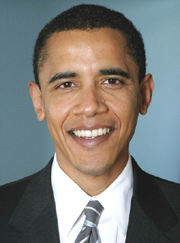
Obama,BarackObama’s University of Queensland speech: President throws down gauntlet to act on climate change news.com.au, 15 Nov 14 PRESIDENT Obama has used his speech at the University of Queensland to throw down the gauntlet on climate change, urging Australia’s young people to act before it’s too late.

“If China and the US can agree on this, the world can agree on this. We need to get this done,” the President told a crowd of around 2000 students and politicians at the University of Queensland on a sweltering day in the city.

“I have not had time to go to the Great Barrier Reef and I want to come back and I want my daughters to come back and I want their daughters and sons to come back and have that be there in 50 years,” he said.

The reference will no doubt put pressure on Prime Minister Tony Abbot, who has been heavily criticised this week by media for refusing to put climate change on the G20’s official agenda.

In his opening address this morning United Nations Secretary General Ban Ki-moon said climate change was the “defining issue of our times” and it’s “only natural” G20 leaders should make it a priority.

President Obama also used the speech to announce a $3 billion contribution to the Green Climate Fund which aims to help developing nations deal with climate change………http://www.news.com.au/finance/economy/obamas-university-of-queensland-speech-president-throws-down-gauntlet-to-act-on-climate-change/story-e6frflo9-1227124098927

November 15, 2014 Posted by | general | Leave a comment

Nuclear evacuees seek rise in TEPCO compensation

Nov 14 2014

More than 2,800 evacuees from a village near the damaged Fukushima Daiichi nuclear power plant are seeking state arbitration for a rise in compensation from Tokyo Electric Power Company, the plant’s operator.

Iitate Village is still an evacuation zone three years and eight months after the nuclear accident at the power plant. But decontamination work is proceeding across the village, which is located about 40 kilometers from the plant.

About half the village’s population, or 2,837 evacuees, filed for arbitration with the Center for Settlement of Fukushima Nuclear Damage Claims on Friday.

They say their prolonged evacuation is splitting local communities and families and threatening generations of the village’s history.

The evacuees are seeking increased compensation and an apology from TEPCO. They want the current monthly evacuation compensation per capita more than tripled to 350,000 yen, or roughly 3,000 dollars per month. They also call for around 172,000 dollars per evacuee in compensation for ruining their village lives.

The representative of the evacuees, Kenichi Hasegawa, explained why they filed for the class-action arbitration. He said the evacuees decided they must express their anger as their lives have not improved since the nuclear accident. He added that the evacuees want their village lives back.

TEPCO said in a statement it has yet to learn the details of the documents. But the company pledges a sincere response to the arbitration in line with settlement procedures

Source: NHK

http://www3.nhk.or.jp/nhkworld/english/news/20141114_34.html

November 14, 2014 Posted by | Japan | | 1 Comment

Download Radioactive water may still be entering tunnels

Nov 13 2014

The operator of the crippled Fukushima Daiichi nuclear power plant faces another challenge in its effort to address radioactive water at the complex.

It says highly contaminated water may still be flowing from reactor buildings into adjacent underground tunnels even after a work to stem the flow ended.

The water in the tunnels is believed to be leaking into the sea. Tokyo Electric Power Company plans to pump the tainted water out of the tunnels and fill them with cement.

To prepare for the process, the firm began work in April to stem the flow of radioactive water between the reactor buildings and the tunnels. It involved freezing some of the water as well as plugging the gaps with filler materials.

TEPCO finished the work on November 6th. But workers found that water levels in the reactor buildings and the tunnels are still linked. They note this suggests that the flow of radioactive water between them may not have been stopped.

TEPCO officials say that if the situation doesn’t improve, they may start filling the tunnels with cement even before they finish removing contaminated water.

Source: NHK

http://www3.nhk.or.jp/nhkworld/english/news/20141114_05.html

November 14, 2014 Posted by | Japan | | Leave a comment

Study: Fukushima health risks underestimated

20141111115920229580_20A Greenpeace radiation monitoring team checks contamination in Fukushima City

13 Nov 2014 

Tokyo, Japan – “Hot spots” of nuclear radiation still contaminate parts of Fukushima Prefecture, according to findings from the latest Greenpeace radiation monitoring mission near the Daiichi nuclear power plant that experienced a melt down after an earthquake and tsunami in March 2011.

Experts from the environmental organisation also claim that authorities have consistently underestimated the amount of contamination and the health risks involved.

Greenpeace will use these results to try to persuade local governments with nuclear power plants in their districts to resist lobbying from the central government to have them reactivated. All 50 of Japan’s remaining nuclear plants were shut down following the 2011 disaster. 

Greenpeace began independently monitoring radiation in Fukushima within a few days of the nuclear accident, and it has conducted field trips each year since then. The latest such trip took place from October 24-27.

Heinz Smitai, a nuclear physicist, Greenpeace campaigner and participant in the radiation monitoring mission, told foreign journalists at an October 30 press conference in Tokyo that radiation hot spots exist as far as 60 kilometres from the site of the disaster.

For instance, one street in front of a hospital in Fukushima City “is quite contaminated”, Smitai said, measuring 1.1 microsieverts of radiation per hour. Although this was one of the highest readings, Greenpeace found 70 other places in the city where the amount of radiation recorded exceeded the Ministry of Environment’s long-term target of 0.23 microsieverts per hour.

A sievert is the standard unit for measuring the risk of radiation absorbed by the body. A millisievert is equal to one-thousandth of a sievert, while a microsievert is one-millionth of a sievert. A typical CT scan can deliver from 2 to 10 millisieverts of radiation, depending on the area being scanned.

Source: Al Jazeera

http://www.aljazeera.com/indepth/features/2014/11/will-japan-reopen-nuclear-plants-fukushima-20141111112653560643.html

November 13, 2014 Posted by | Japan | | 1 Comment

Nuclear cleanup at Fukushima plant stymied by water woes

Japan Nuclear Water WoesTanks storing contaminated water are seen at the Fukushima No. 1 nuclear power plant

in Fukushima Prefecture on Nov. 12.

November 13, 2014

OKUMA, Fukushima Prefecture–More than three years into the massive cleanup of Japan’s tsunami-damaged nuclear power plant, only a tiny fraction of the workers are focused on key tasks such as preparing for the dismantling of the broken reactors and removing radioactive fuel rods.

Instead, nearly all the workers at the Fukushima No. 1 nuclear power plant are devoted to an enormously distracting problem: a still-growing amount of contaminated water used to keep the damaged reactors from overheating. The amount has been swelled further by groundwater entering the reactor buildings.

Hundreds of huge blue and gray tanks to store the radioactive water, and buildings holding water treatment equipment are rapidly taking over the plant, where the cores of three reactors melted following a 2011 earthquake and tsunami. Workers were building more tanks during a visit to the complex on Nov. 12 by foreign media, including The Associated Press.

“The contaminated water is a most pressing issue that we must tackle. There is no doubt about that,” said Akira Ono, head of the plant. “Our effort to mitigate the problem is at its peak now. Though I cannot say exactly when, I hope things start getting better when the measures start taking effect.”

The numbers tell the story.

6,000 WORKERS

Every day, about 6,000 workers pass through the guarded gate of the Fukushima No. 1 plant on the Pacific coast–two to three times more than when it was actually producing electricity.

On a recent work day, about 100 workers were dismantling a makeshift roof over one of the reactor buildings, and about a dozen others were removing fuel rods from a cooling pool. Most of the rest were dealing with the contaminated water, said Tatsuhiro Yamagishi, a spokesman for Tokyo Electric Power Co., the utility that owns the plant.

The work threatens to exhaust the supply of workers for other tasks, since employees must stop working when they reach annual radiation exposure limits. Experts say it is crucial to reduce the amount and radioactivity of the contaminated water to decrease the risk of exposure to workers and the environmental impact before the decommissioning work gets closer to the highly contaminated core areas.

40 YEARS

The plant has six reactors, three of which were offline when disaster struck on March 11, 2011. A magnitude-9.0 earthquake triggered a huge tsunami which swept into the plant and knocked out its backup power and cooling systems, leading to meltdowns at the three active reactors.

Decommissioning and dismantling all six reactors is a delicate, time-consuming process that includes removing the melted fuel from a highly radioactive environment, as well as all the extra fuel rods, which sit in cooling pools at the top of the reactor buildings. Workers must determine the exact condition of the melted fuel debris and develop remote-controlled and radiation-resistant robotics to deal with it.

Troubles and delays in preparatory stages, including the water problem and additional measures needed to address environmental and health concerns in removing highly radioactive debris from atop reactor buildings that exploded during meltdowns, have pushed back schedules on the decommissioning roadmap. Recently, officials said the government and TEPCO plan to delay the planned start of fuel removal from Units 1 and 2 by about 5 years.

The process of decommissioning the four reactors is expected to take at least 40 years.

500,000 TONS

The flow of underground water is doubling the amount of contaminated water and spreading it to vast areas of the compound.

Exposure to the radioactive fuel contaminates the water used to cool the melted fuel from inside, and much of it leaks and pours into the basements of the reactors and turbines, and into maintenance trenches that extend to the Pacific Ocean. Plans to freeze some of the most toxic water inside the trench near the reactors have been delayed for at least 8 months due to technical challenges.

The plant reuses some of the contaminated water for cooling after partially treating it, but the additional groundwater creates a huge excess that must be pumped out.

Currently, more than 500,000 tons of radioactive water is being stored in nearly 1,000 large tanks which now cover large areas of the sprawling plant. After a series of leaks last year, the tanks are being replaced with costlier welded ones.

That amount dwarfs the 9,000 tons of contaminated water produced during the 1979 partial meltdown of the Three Mile Island nuclear plant in the United States. At Three Mile Island, it took 14 years for the water to evaporate, said Lake Barrett, a retired U.S. nuclear regulatory official who was part of the early mitigation team there and has visited the Fukushima plant.

“This is a much more complex, much more difficult water management problem,” Barrett said.

10 TRILLION YEN

An estimated 2 trillion yen ($18 billion) will be needed just for decontamination and other mitigation of the water problem. Altogether, the entire decommissioning process, including compensation for area residents, reportedly will cost about 10 trillion yen, or about $90 billion.

All this for a plant that will never produce a kilowatt of energy again.

About 500 workers are digging deep holes in preparation for a taxpayer-funded 32 billion yen ($290 million) underground “frozen wall” around four reactors and their turbine buildings to try to keep the contaminated water from seeping out.

TEPCO is developing systems to try to remove most radioactive elements from the water. One, known as ALPS, has been trouble-plagued, but utility officials hope to achieve its daily capacity of 2,000 tons when they enter full operation next month following a final inspection by regulators.

Officials hope to treat all contaminated water by the end of March, but that is far from certain.

Source: Asahi Shimbun

http://ajw.asahi.com/article/0311disaster/fukushima/AJ201411130092

November 13, 2014 Posted by | Japan | | Leave a comment

Japanese doctors threatened for revealing data on how bad Fukushima-related illnesses have become

November 12th, 2014

Japanese doctors threatened for revealing data on how bad Fukushima-related illnesses have become — Gundersen: We had pregnant sisters in Tokyo deliver two dead babies and one with deformities that’s alive; Gov’t refuses to disclose miscarriages or stillbirths around Fukushima

Excerpts from Nuclear Hotseat w/ Libbe HaLevy, Nov. 12, 2014 (at 33:15 in):

  • Nuclear expert Arnie Gundersen, Fairewinds Energy Education: We have firsthand knowledge from at least a half dozen Japanese doctors… who have said they have been threatened… if they speak frankly to their patients about the health effects that they’re experiencing; or if they frankly speak in public about their fears — and, in fact, measurements — of how bad radioactive illnesses really are. So we know of at least a half a dozen doctors who are being ‘sat on’, and if 6 are, you can be certain that many more are as well. It’s a pressure that’s being applied up and down the spectrum… [You would now expect] exactly what we’re seeing — earlier cancers and thyroid nodules. Then over the next 15 to 20 years, increased organ cancers as well as muscular cancers… The fact of the matter is, we’re going to see cancers in that 4 to 30 year time span. And I still stand by what I’ve been saying now for 3 years. I think there will be a million extra cancers as a result of Fukushima Daiichi.
  • Gundersen: For Asahi Shimbun, a major newspaper, to basically call on people to [move] back home based on the [claim there’s no increase in birth defects]… is absolutely absurd. The number they’re not giving us is how many stillbirths and how many miscarriages there’s been in relation to the rest of Japan — and those are radiation-induced. You’ll get a stillbirth or you’ll get a miscarriage when a fetus is deformed or it is already developing cancer… The Japanese are not reporting stillbirths and miscarriages in Fukushima… That’s a much better indicationThere are 35 million people in the Tokyo Metropolitan Area [and] their homes are contaminated… We had two women, sisters, both pregnant at the same time — one with twins, and one with a single baby. Two of the kids were stillbirths. The other was born with a deformity. They had the metallic taste in their mouth as the babies were in [the womb]. They lived in Tokyo, 130 miles from the accident. They’re people, they’re not statistics… and they’ve got no place to run…. no place to go.

Download the full interview here:

Nuclear Hotseat #177: Fukushima Update – Arnie Gundersen

http://www.nuclearhotseat.com/2200/

Source: Enenews

http://enenews.com/japanese-medical-experts-threatened-bad-radioactive-illnesses-really

November 13, 2014 Posted by | Japan | | Leave a comment

This week – G20, Climate, Nuclear News

Christina Macpherson's websites & blogs

Christina Macpherson’s websites & blogs

Legal matters.  Judge rules nuclear reactors causing thyroid cancers    Judge adds General Electric, EBASCO, Toshiba and Hitachi as defendants in nuclear radiation case

Fukushima: Japan has chosen to incinerate tons of radioactive waste.  TEPCO removes second canopy panel covering nuclear reactor.  Fukushima radioactivity detected of West Coast of USA.  New book Fukushima: Dispossession or Denuclearization?

Germany Anti-nuclear activists held up a train carrying uranium for conversion to nuclear fuel, and organise an international  meeting to oppose  uranium transport hosted by SOFA Münster.

Syria. Five nuclear engineers murdered – by Israel?

France. Mysterious drone flights still going on above nuclear power plants.

Iran nuclear talks struggle on – may continue beyond the deadline of November 24 . Meanwhile Russia ramps up its nuclear marketing pitch to Iran.

South Africa.  China joins the throng trying to flog off nuclear reactors to South Africa. South Africa’s nuclear dealskept secret from Cabinet and Treasury!

Bolivia. 56 prominent individuals across the globe write to oppose nuclear energy for Bolivia

USA. weakens environmental radiation safety standards.  Tax-payer money invested in dodgy new nuclear gimmick ,Power Reactor Innovative Small Module (PRISM)   Note how these days they leave out that nasty word “nuclear”.Renewable energy threatened as  Republicans take over in the Senate   Thorium – no prospects as an energy source, but China might use it for weapons

UK. Raised incidence of cancers and birth defects in families of British veterans of nuclear bomb tests


November 12, 2014 Posted by | Christina's notes | Leave a comment

Activists hold up uranium train in Hamburg 

protestflag_germanyAnti-nuclear activists stopped a trainload of  ”yellow cake” uranium in Hamburg harbour, Germany, for more than seven hours. The train is taking 15 containers of the ore from Kazakhstan to Malvési in southern France for processing, a frequent run.

While two activists suspended themselves over the railway track, eight were temporarily arrested on the ground. Whatever route the trains take – and the Railways always try to keep that secret – all of them run through densely settled parts of Germany.

Activists usually find out the train runs and are again being alerted to mount protest actions in their areas.

After the processing in southern France, the uranium comes back to Germany as uranium hexafluoride for enrichment in Gronau and later processing into nuclear fuel in Lingen.

“That has nothing to do with getting out of nuclear power,“ activists note, alluding to 2023 when all German nukes are slated to be closed down.

If you understand German, go to Robin Wood for updates.

The activists have demanded that Mayor Olaf Scholz, a Social Democrat, close Hamburg harbour to nuclear shipments, as the city of Bremen has done.

From 28-30. November an international meeting to oppose uranium transportation will be held in Münster, hosted by SOFA Münster.

November 12, 2014 Posted by | Germany, opposition to nuclear | 2 Comments

Any credibility to the G20?

G20-danse-macabreG20 faces crucial test of its credibility as Brisbane summit looms  theguardian.com, Monday 10 November 2014 Is the Group of 20 a genuine agent for change, or just another tired horse on the merry-go-round of international confabs? “…..The G20 was widely praised for stabilising the world economy during the global financial crisis of 2008, but the body has struggled for impact – critics say relevance – since those panicked days. The once-shiny crown of the “world’s premier economic body” has lost a little of its lustre.

In less critical times, its members have struggled to find consensus, descending instead into self-interested bickering, and reforms the G20 has promised have dwarfed those it has actually delivered.

This week’s Brisbane meeting of the Group of 20 will be a crucial test: can it be a genuine agent for change, or just another tired horse on the merry-go-round of international confabs?

The G20 is unquestionably powerful. Collectively, G20 economies account for two-thirds of the world’s people, 85% of its gross product, and three-quarters of global trade.

Unlike the too-exclusive G7, it includes the emerging giants of China, India and Indonesia, along with broader South American, African, and Asian representation. But with only 20 members, it’s nimble enough to make decisions, as it demonstrated during the global crisis……….

In the midst of the [2008 financial] crisis, the G20 co-ordinated the massive fiscal stimuli being pumped into the world’s economies to pull them back from the brink. It redesigned international regulatory rules (through the Basel III agreement), and reformed existing international public institutions such as the International Monetary Fund………

“….if leaders start to lose interest in it, it just becomes yet another meeting in an incredibly-crowded international program, it becomes international space junk, rolling around, sucking up resources and time,” he says. [says Mike Callaghan, program director of the Lowy Institute’s G20 Studies Centre,]………..http://www.theguardian.com/world/2014/nov/10/g20-faces-crucial-test-credibility-brisbane-summit-looms

November 12, 2014 Posted by | general | Leave a comment

Tell US Nuclear Regulatory Commission (USNRC) to come clean on radiation safety standards!

child-anitinuke-posterProtect children from radiation. DEMAND NRC extend time for comments, show us the documents!

The US Nuclear Regulatory Commission (USNRC) is  rewriting its radiation regulations using documents that are not open to the public. Industry, however, has access to these documents.

These potential regulations will affect workers and the public, including vulnerable children.

This goes against open and democratic principles of governance. NRC has taken a number of years to write its potential rule even with full access to these documents. NRC should, therefore, not expect us to be able to obtain, read and assess the basis for this rule in a few short months.

NRC must turn over the documents and extend the comment deadline, giving us the resources and time needed to comment properly. TELL THEM SO.

sign-this SIGN this letter

November 12, 2014 Posted by | ACTION | 4 Comments

USA nuclear weapons system – unaffordable, and in decay

Foundation of US nuclear system showing cracks By ROBERT BURNS, AP National Security Writer Wane.com  November 8, 2014, WASHINGTON (AP) — The foundation of America’s nuclear arsenal is fractured, and the government has no clear plan to repair it.

The cracks appear not just in the military forces equipped with nuclear weapons but also in the civilian bureaucracy that controls them, justifies their cost, plans their future and is responsible for explaining a defense policy that says nuclear weapons are at once essential and excessive.

It’s not clear that the government recognizes the full scope of the problem, which has wormed its way to the core of the nuclear weapons business without disturbing bureaucracies fixated on defending their own turf. Nor has it aroused the public, which may think nuclear weapons are relics of the past, if it thinks about them at all.

This is not mainly about the safety of today’s weapons, although the Air Force’s nuclear missile corps has suffered failures in discipline, training, morale and leadership over the past two years. Just last week the Air Force fired nuclear commanders at two of its three missile bases for misconduct and disciplined a third commander.

Rather, this is about a broader problem: The erosion of the government’s ability to manage and sustain its nuclear “enterprise,” the intricate network of machines, brains and organizations that enables America to call itself a nuclear superpower.

What have been slipping are certain key building blocks — technical expertise, modern facilities and executive oversight on the civilian side, and discipline, morale and accountability on the military side.

The shortfalls are compounded by tight budgets and what experts call a decline in political support for the nuclear system. In the absence of a headline-grabbing nuclear accident in recent decades and receding fears of nuclear war, these problems generally are paid little heed.

The scientific and military capability is arguably the best in the world, but its underpinnings have weakened gradually.

The White House and Congress have paid little attention, allowing the responsible government agencies to “muddle through,” according to a congressional advisory panel. This is the case despite the fact that the U.S. still has thousands of nuclear weapons — more than it says it needs — and is approaching decision points on investing enormous sums to keep the arsenal viable for future generations………

“Unaffordable,” is the blunt conclusion by a panel of defense experts who reviewed the Pentagon latest defense plan…….http://wane.com/2014/11/08/foundation-of-us-nuclear-system-showing-cracks/

November 12, 2014 Posted by | USA, weapons and war | 1 Comment

Dark Hotel – sophisticated internet hackers who steal nuclear secrets

computer-spy-nukeWatch That Wi-Fi: Hackers Use Hotel Internet To Steal Nuclear Secrets, Gizmodo 

Security researchers recently identified an elite team of possibly state-sponsored hackers that infiltrate hotel Wi-Fi networks to gain access to the computers of high-level executives and leaders, probably to steal nuclear secrets. They’re calling this band of cyber-spies DarkHotel.

Wired‘s Kim Zetter recently published a report about Kaspersky Labs and its efforts to track down the hacker group and one of the most unnerving things about DarkHotel is how insanely talented the hackers are. While the security researchers have managed to identify the group’s tactics and trace some of its members back to South Korea, they’re still not entirely sure who these hackers are and why they’re doing what they’re doing.

“[The primary targets are] all nuclear nations in Asia,” Kaspersky’s Costin Raiu told Wired. “Their targeting is nuclear themed, but they also target the defence industry base in the U.S. and important executives from around the world in all sectors having to do with economic development and investments.”

What’s maybe most alarming out of all of this, is actually how DarkHotel operates. The attacks have been going on for at least seven years and are highly targeted. It appears that the hackers know exactly when specific executives and leaders will be staying in specific hotels and then install the malware — anything from simple Trojans to sophisticated kernal-mode key loggers — right before they arrive. Sometimes they install backdoors on the targets’ computer, so that they can break back in at a later date. After the attack is complete and the guest checks out, DarkHotel covers its tracks — very well……….http://www.gizmodo.com.au/2014/11/watch-that-wi-fi-hackers-use-hotel-internet-to-steal-nuclear-secrets/

November 12, 2014 Posted by | 2 WORLD, secrets,lies and civil liberties | Leave a comment