Snippets of nuclear news this week

Christina Macpherson’s websites & blogs
Radiation – new report on danger to young people in risk of brain tumours and leukemia. Aggressive Thyroid Cancers also linked to Radiation Exposure
Japan. Completion of Rokkasho nuclear fuel reprocessing plant postponed for the 21st time due to safety considerations. radioactive cesium detected in pregnant woman in Matsudo city. Japanese doctors intimidated about connecting cancers, illnesses to Fukushima radiation.
Fukushima clean-up. Removal of melted fuel from No 1 reactor postponed. Groundwater level rising around the crippled nuclear reactors.
Taiwan wants ‘radiation-free’ certificates for tea and other foodstuffs from Japan.
China: Financial risks of China’s nuclear power programme are examined.
USA. Decommissioning of San Onofre nuclear power plant – a sobering example of the huge cost and time taken . Nuclear power gets privileged status in US universities. In the interests of the nuclear industry, both USA and Russia try to block European nuclear safety standards.
UK: fears on the safety of Sellafield’s decaying nuclear fuel storage pools. Nuclear thorium lobby buys its way into UK university.
France: numerous mystery flyovers of drone aircraft over nuclear power plants
Young people at risk of brain tumours from ionising radiation
Radiation a risk factor for brain tumors in young people, study finds Medical Xpress 3 Nov 14 In people under age 30, radiation is a risk factor for a type of brain tumor called a meningioma, a Loyola University Medical Center study has found. Researchers analyzed records of 35 patientswho were diagnosed with meningiomas before age 30. Five had been exposed to ionizingradiation earlier in their lives. They include two patients who received radiation for leukemia at ages 5 and 6; one who received radiation at age 3 for a brain tumor known as a medulloblastoma; and one who received radiation for an earlier skull base tumor that appeared to be a meningioma. The fifth patient had been exposed at age 9 to radiation from the Chernobyl nuclear power plant disaster in Ukraine. Twenty years later, he was diagnosed with a meningioma.

In the five patients, the average latency period for the tumors was 23.5 years.
The study was published in the online journal Neuroscience Discovery.
“The results of this preliminary study have prompted us to look closely at radiation’s effects on the brain,” said Loyola neurosurgeon Vikram Prabhu, MD, first author of the study. Dr. Prabhu specializes in treating brain tumors……….
Researchers so far have identified 14 meningioma patients who were exposed to radiation earlier in their lives. They include three patients who were exposed to Chernobyl radiation and 11 patients who received therapeutic radiation for such conditions as leukemia, medulloblastoma tumors and fungal infections of the scalp……….
The study is titled “Intracranial meningiomas in individuals under the age of 30; Analysis of risk factors, histopathology and the recurrence rate.”
 Explore further: Chest radiation to treat childhood cancer increases patients’ risk of breast cancer
More information: “Intracranial meningiomas in individuals under the age of 30; Analysis of risk factors, histopathology, and recurrence rate.” Neuroscience DiscoveryISSN 2052-6946. www.hoajonline.com/neuroscienc… stract/2052-6946/2/1

In deference to its climate denialist P.M, Australia censors G20 protest about climate change
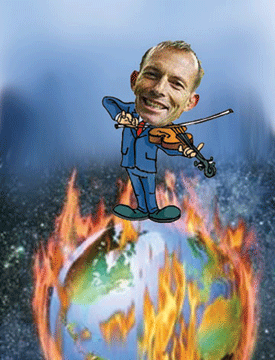 Brisbane G20: Airport vetoes #onmyagenda climate change billboard, Brisbane Times November 3, 2014 Tony Moore brisbanetimes.com.au senior reporter Brisbane Airport Corporation has vetoed a “political” billboard asking for climate change to be added to this month’s G20 conference.
The billboard – backed by nine national and international conservation groups – was planned for Brisbane International Airport.
A second billboard is being unveiled in Peel Street at South Brisbane on Monday.
The groups wanted world leaders and their delegates to see the billboard as they arrived in Brisbane. The #onmyagenda campaign encourages people to tweet G20 leaders asking them to include climate change as a stand-alone item on the G20 agenda.
Climate change issues have been on the agendas at eight previous eight G20 summits.
It is not on the agenda in Brisbane.
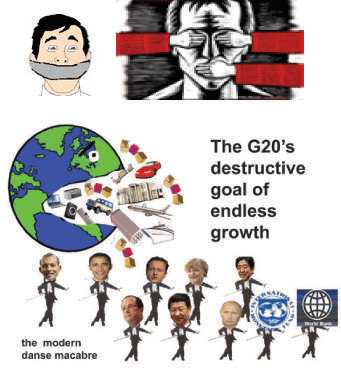
The decision comes as the United Nations Intergovernmental Panel on Climate Change on Sunday released its most recent report on the impact of climate change.
The report found that the world must stop almost all greenhouse gas emissions through a phased elimination of fossil fuels by 2100 if we are to avoid the worst impacts of climate change.
UN Secretary-General Ban Ki-moon has urged companies to disinvest from fossil fuel-based industries.
In broad terms, the UN IPCC report finds there are “multiple pathways” available to keep global warming below two degrees.
All of these pathways require “substantial” cuts to greenhouse gas emissions over the next few decades, and “near zero” emissions by the end of the century, the report’s authors concluded.
BAC told Fairfax Media the billboards were rejected last Wednesday because they were deemed to be “political”.http://www.brisbanetimes.com.au/queensland/brisbane-g20/brisbane-g20-airport-vetoes-onmyagenda-climate-change-billboard-20141103-11fzdm.html#ixzz3I9Xt6bP9
Enormous financial savings if USA cut its multi $billion nuclear weapons expansion
 Nuclear arms cuts could produce huge savings, says report, physics today, US has no need for so many nuclear-armed submarines, bombers, and missiles to ensure its post-cold war security, says Arms Control Association. David Kramer November 2014
The US could save $70 billion over the next 10 years by taking “common sense” measures to trim its nuclear forces, yet still deploy the maximum number of warheads permitted under the New START Treaty, according to a new report by the Arms Control Association. Those steps include cutting the number of proposed new ballistic missile submarines to eight from 12, delaying plans to build new nuclear-capable bombers, scaling back the upgrade of a nuclear bomb, and forgoing development of a new intercontinental ballistic missile system.
“In my view, this is really a nuclear ATM that we can cash in on and take money out of and spend it on other things,” said Tom Collina, the report author. Further savings could be achieved if the one-third reduction in the nuclear stockpile proposed by President Obama in 2013 were to be enacted, the report said.
The current plan to rebuild US nuclear forces will cost at least $355 billion over the next decade, the Congressional Budget Office estimated in a December 2013 report. The CBO put the cost of the US Navy’s plan to design and procure 12 new ballistic missile submarines to replace the existing Ohio-class boats at $100 billion. But Collina said that the US could get by with eight new subs simply by having them patrol closer to US shores, instead of deploying them near the coasts of Russia and China.
The Long Range Strike Bomber that the US Air Force wants to build could cost $80 billion, according to the report……….http://scitation.aip.org/content/aip/magazine/physicstoday/news/10.1063/PT.5.1032
Again, mystery drone aircraft fly over France’s nuclear power plants
France records at least 15 mystery drone flyovers of nuclear power plants, ABC News 3 Nov 2014, A drone has flown over a nuclear plant in central France for the second time in two days, a source close to the case says. The unmanned flying machine went over the plant in Dampierre-en-Burly on Sunday evening, said the source, who wished to remain anonymous.
The power station had already been flown over on Friday evening.
Authorities are scratching their heads over the number of unidentified drones spotted over nuclear plants across France over the past month, and a probe has been launched to try and find out exactly who is piloting the remote-controlled machines.
They have counted at least 15 flyovers, sparking questions over the security of nuclear plants in France, which relies heavily on atomic energy for electricity……..http://www.abc.net.au/news/2014-11-04/french-nuclear-plant-hit-by-another-mystery-drone-flyover/5864836
A nuclear power station produces as much carbon dioxide as a gas-fired power station
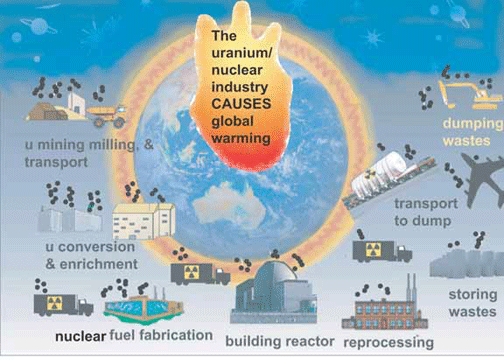 Nuclear power is dirty.http://gsihn.blogspot.com.au/ 3 Nov 14, Mining process of nuclear power creates serious environmental problems. Nuclear power is not free from carbon emission. Rowell claims that fossil fuels are required for mining uranium, building a nuclear power station, and disposing of radioactive waste; therefore “a nuclear power station produces as much carbon dioxide as a gas-fired power station” (3). Uranium is limited resource and will require deeper mining in the future, which will require increased amount of fossil fuels, producing increased amount of carbon dioxide. Soon, it will require more energy to extract uranium than producing energy from the resource. Uranium mining of 1,000 tons of uranium creates approximately 100,000 tons of radioactive tailings that have contaminated rivers and nearly one million gallons of liquid waste containing heavy metals and arsenic in addition to radioactivity; furthermore, “a new method of uranium mining, known as in-situ leaching, does not produce tailings but it does threaten contamination of groundwater water supplies” (“Dirty, Dangerous and Expensive: The Truth about Nuclear Power” 1). The mining process also affects miners who “experience higher rates of lung cancer, tuberculosis and other respiratory diseases (“Dirty, Dangerous and Expensive: The Truth about Nuclear Power” 1). The level of deterioration is extremely high, and it is doubtful that the nature can recover.
Waste disposal also creates a serious environmental problem. Amount of radioactive waste increases while lands to dispose of the waste are limited. The United States alone already accumulated 63,000 metric tons of highly radioactive spent fuel at reactor sites, and “another 42,000 metric tons will be produced by operating reactors” (“Dirty, Dangerous and Expensive: The Truth about Nuclear Power” 1). The wastes can be handled properly if there are enough repository sites. Totty states, however, that the U.S. does not have single permanent repository site after cancellation at Yucca Mountain in Nevada due to public safety (5). After failure to dispose of the existing inventory of spent fuel, “US taxpayers have already paid out $565 million in contract damages to nuclear utilities…[and] an additional billion dollars of damage payments are expected every year for the next decade” (“Dirty, Dangerous and Expensive: The Truth about Nuclear Power” 1). Nuclear power is not green, and environmental problems are accumulating without proper resolutions.
Work Cited
“Dirty, Dangerous and Expensive: The Truth about Nuclear Power.” Physicians for Social Responsibility: United States Affiliate of International Physicians for the Prevention of Nuclear War. Web.
Rowell, Alexis. “Ten Reasons Why New Nuclear Was a Mistake – Even Before Fukushima.”Transition Culture. Web. 15 March. 2011.
Totty, Michael. “The Case For and Against Nuclear Power.” The Wall Street Journal. Web. 30 June. 2008.
Climate change stopping nuclear power? Rough waves cause reactor shutdown
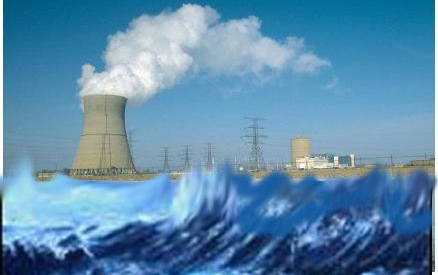 Nuclear reactors taken offline amid rough waters LAKE TOWNSHIP, Mich. (AP) — Both reactors at the Donald C. Cook Nuclear Plant in southwestern Michigan were taken offline amid rough waters on Lake Michigan. ……..http://www.wzzm13.com/story/news/local/lakeshore/2014/11/03/nuclear-reactors-taken-offline-amid-rough-waters/18409823/
Russia fails to show up at nuclear security meeting
Russia boycotts nuclear meeting By GEORGE JAHN and DEB RIECHMANN 3 Nov 14
VIENNA (AP) — Russia has failed to show up at meeting planning the 2016 Nuclear Security Summit, U.S and European officials said Monday, in a potentially serious blow to efforts by President Barack Obama to cement his legacy as leaving the world safer from nuclear terrorism than when he took office.
The officials said it was not immediately clear whether Russia’s absence meant that Moscow meant to boycott the summit itself or if it was a temporary show of displeasure over Washington’s harsh condemnation of Moscow’s role in Ukraine unrest and its lead in orchestrating Western sanctions and other punitive measures in response.
But even if short-term,, Russia’s no-show is significant. Only three or four planning meetings are scheduled before the spring of 2016, when the summit is tentatively set to open. With Russia a key global player — and one of the world’s five formally recognized nuclear powers — its input is crucial to setting an agenda.
The U.S. president initiated a string of summits in 2010 aimed at preventing terrorists from getting their hands on weapons-grade nuclear material. Since then, the number of countries that have enough material to build a nuclear weapon has fallen from 39 to 25. http://abcnews.go.com/International/wireStory/apnewsbreak-russia-boycotts-nuclear-meeting-26666344
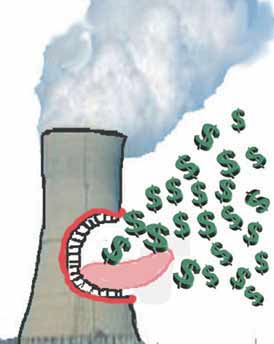
Nuclear power – the crippling cost factor
 Nuclear power is expensive.http://gsihn.blogspot.com.au/
The energy source of nuclear power is limited just like fossil fuel. Uranium is an element used in nuclear reactor, and only few countries around the world have access to this resource. World Nuclear Association states that “about half of world production comes from just ten mines in six countries: Australia, Canada, Kazakhstan, Namibia, Niger and Russia” (“How Uranium Ore Is Made Into Nuclear Fuel” 1). Although the United States has quite large uranium resources, most of them are low to medium-grade. According to Physicians for Social Responsibilities, the United States signed the Continuing Resolution into law in September 2008 for Russian highly enriched uranium through 2020, and “the U.S. will continue to rely on Russia for a significant amount of uranium for commercial nuclear reactors” (“Dirty, Dangerous and Expensive: The Truth about Nuclear Power” 3). Since enriched uranium is critical and limited for global supply, price of uranium is expected to increase just like fossil fuel.
The estimates for construction and maintenance of a new nuclear plant are rising. Totty points out an expensive construction of a nuclear reactor, especially after several nuclear disasters around the world, addressing “FPL Group, of Juno Beach, Fla., estimates that two new reactors planned for southeast Florida would cost between $6 billion and $9 billion each” (4). Physicians for Social Responsibilities states that loan guarantees are “most important subsidy for the nuclear industry, and the nuclear industry is seeking over $100 billion in guarantees;” however, only $18.5 billion is authorized because “failure rate for nuclear projects is very high – well above 50 percent” (“Dirty, Dangerous and Expensive: The Truth about Nuclear Power” 3). If nuclear power receives public subsidies and leads to failure, taxpayers will be held responsible for the payouts, which is unbearable in free market (Rowell 2). Rowell further informs about the Finnish reactor subsidized by the French nuclear industry, which is under investigation by the Finnish nuclear safety regulator STUK due to cost overruns and delays (2). The prices of constructing and maintaining a nuclear power plant are increasing at exponential rates every year, and the nuclear energy is already inefficient both economically and politically.
Work Cited
“Dirty, Dangerous and Expensive: The Truth about Nuclear Power.” Physicians for Social Responsibility: United States Affiliate of International Physicians for the Prevention of Nuclear War. Web.
“How Uranium Ore Is Made Into Nuclear Fuel.” World Nuclear Association. Web.
Rowell, Alexis. “Ten Reasons Why New Nuclear Was a Mistake – Even Before Fukushima.”Transition Culture. Web. 15 March. 2011.
Totty, Michael. “The Case For and Against Nuclear Power.” The Wall Street Journal. Web. 30 June. 2008.
Nuclear power – a safety time bomb
Nuclear power is dangerous.Gamer’s Blog 3 Nov 14 Safety issues are ongoing in nuclear power plants. Accidents on these sites can bring devastating consequences, leading to casualties and the radioactive fallout. Several nuclear accidents around the world have proven that a nuclear power plant is nothing more than a time bomb……..http://gsihn.blogspot.com.au/
Australia sets up military style preparedness for G20 Summit
Commandos and Black Hawk helicopters stage operations in Brisbane CBD as G20 security ramps up http://www.abc.net.au/news/2014-11-03/g20-security-ramps-up/5861514 By Francis Tapim G20 security preparations are ramping up in Brisbane, as commandos and Black Hawk helicopters flooded the Eagle Street Pier area in a counter-terrorism training operation last night.
Around 50 personnel dressed like commandos, armed with semi automatic rifles and wearing body armour staged the training exercise on Sunday.
Courier Mail photographer Marc Robertson stumbled on the operation, and said there were four helicopters “only a few feet from the buildings”.

“I counted about 50 blokes wearing paramilitary uniforms, combat pants, and wearing body armour carrying full automatic weapons,” he said.
“They are not wearing any insignia at all… there was a lot of action in amongst the buildings.
There was no official information about the operation, but Queensland police confirmed they had been assisting with traffic control for a G20 training exercise in the CBD.
Meanwhile, the RAAF said the public would notice increased activity in the skies over south-east Queensland in the lead-up to the summit.
It said fighter jets, Black Hawk helicopters and surveillance planes would increase patrols, and conduct training exercises. Commander of ADF support to the G20 Major General Stuart Smith said the training period would allow the military to sharpen their response skills.
Failed laser uranium enrichment project adds to Cameco’s losses
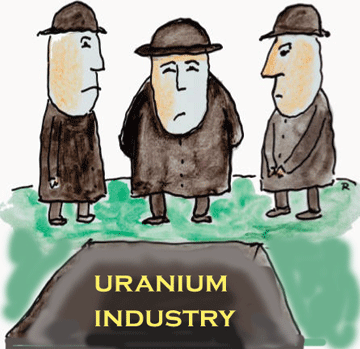 Uranium producer Cameco reports a third-quarter loss By Jim Brumm StarNewsOnline.com, November 3, 2014 “……..The Canadian uranium producer reported a third-quarter loss last week after writing off its $184 million investment in Global Laser, citing General Electric’s unexpected July cut in funding to “pace our investment in line with market.”
At the time Silex, the Australian owner of the laser technology, said GE responded “to worsening trading conditions in the global nuclear fuel markets, initially triggered by the events in Fukushima, Japan, in March 2011.”
“The market has declined more than 50 percent since” the Global Laser project started in 2007, GE spokesman Christopher White said in July without describing the measurement cited………
Cameco’s charge indicates a total Global Laser worth of $767 million and values GE’s 51 percent at $391 million. Hitachi, which owns the remaining 25 percent, hasn’t discussed a charge.
GE has declined to discuss the dollar value of the Global Laser charge it took against second-quarter earnings, but Nuclear Intelligence Weekly put the amount at $194 million. That would be 49.6 percent of the total value of GE’s Global Laser holdings as indicated by Cameco. http://www.starnewsonline.com/article/20141103/ARTICLES/141109942/-1/topic24?Title=Uranium-producer-Cameco-reports-a-third-quarter-loss-
Psychopaths useful as leaders after a nuclear war?
Christina Macpherson’s websites & blogs
A scientific advisor to the Home Office raised the idea as part of plans for how Britain might rebuild after a nuclear attack – in a test exercise where the Home Office envisaged half of Britain facing ‘unimaginable’ destruction from bombs.
Home Office scientific advisor Jane Hogg suggested that psychopaths could be used to maintain order in lawless areas, saying that pscyhopaths tend to be, ‘very good in crises’.
Hogg pointed out that, ‘They have no feelings for others, nor moral code, and tend to be very intelligent and logical.
‘It is… generally accepted that around 1% of the population are psychopath. These are the people who could be expected to show no psychological effects in the communities which have suffered the severest losses.’
Hogg suggested psychopaths might be necessary to shore up numbers, as police would be tied up helping victims in areas which had suffered the most devastation from the blasts.
1 This Month


Tell the Ukrainian Government to Drop Prosecution of Peace Activist Yurii Sheliazhenko

Petition to revoke the licensing of the Near Surface Nuclear Disposal Facility (NSDF) at Chalk River. https://www.ourcommons.ca/petitions/en/Petition/Details?Petition=e-7247


of the week – STOP SMALL MODULAR REACTORS IN CANADA
To see nuclear-related stories in greater depth and intensity – go to https://nuclearinformation.wordpress.com
-
Archives
- March 2026 (204)
- February 2026 (268)
- January 2026 (308)
- December 2025 (358)
- November 2025 (359)
- October 2025 (376)
- September 2025 (258)
- August 2025 (319)
- July 2025 (230)
- June 2025 (348)
- May 2025 (261)
- April 2025 (305)
-
Categories
- 1
- 1 NUCLEAR ISSUES
- business and costs
- climate change
- culture and arts
- ENERGY
- environment
- health
- history
- indigenous issues
- Legal
- marketing of nuclear
- media
- opposition to nuclear
- PERSONAL STORIES
- politics
- politics international
- Religion and ethics
- safety
- secrets,lies and civil liberties
- spinbuster
- technology
- Uranium
- wastes
- weapons and war
- Women
- 2 WORLD
- ACTION
- AFRICA
- Atrocities
- AUSTRALIA
- Christina's notes
- Christina's themes
- culture and arts
- Events
- Fuk 2022
- Fuk 2023
- Fukushima 2017
- Fukushima 2018
- fukushima 2019
- Fukushima 2020
- Fukushima 2021
- general
- global warming
- Humour (God we need it)
- Nuclear
- RARE EARTHS
- Reference
- resources – print
- Resources -audiovicual
- Weekly Newsletter
- World
- World Nuclear
- YouTube
-
RSS
Entries RSS
Comments RSS
 nuclear-news