Australian rare earths miner Lynas must make a plan for radioactive waste disposal, says IAEA

 IAEA reports no long-term plan for Lynas waste, Malaysian Insider 17 October 2014 The International Atomic Energy Agency (IAEA) on Friday gave a passing safety grade to a controversial Malaysia rare earths plant, but raised concerns that there was no long-term plan for properly disposing of the plant’s potentially radioactive waste.
The rare earths processing plant in the state of Pahang has generated opposition from green groups who fear radioactive contamination and have accused authorities and Lynas of overriding public concern.
In a report, the IAEA said it saw little risk of contamination due to the low-level radiation involved, and that its investigators were “not able to identify any instances of non-compliance” with international standards. “Lynas needs to demonstrate that the disposal of solid waste can be carried out in a safe manner over the long-term,” the report said.
It recommended that Malaysian authorities require Lynas to come up with a plan.
“There is a lack of a plan for managing the waste from the decommissioning and dismantling of the plant at the end of its life,” it said……
However, it also appeared to underscore environmentalists’ concerns that Australian miner Lynas Corp has no long-term plan for the disposal of waste from the plant.- http://www.themalaysianinsider.com/malaysia/article/iaea-teams-says-lynas-plant-generates-low-level-radioactive-waste-bernama#sthash.JEFk1poD.dpuf
1 Comment »
Leave a reply to Dr HW Looi Cancel reply
1 This Month
To see nuclear-related stories in greater depth and intensity – go to https://nuclearinformation.wordpress.com/
12 February – Webinar The Big Push: New Nuclear Projects in Canada
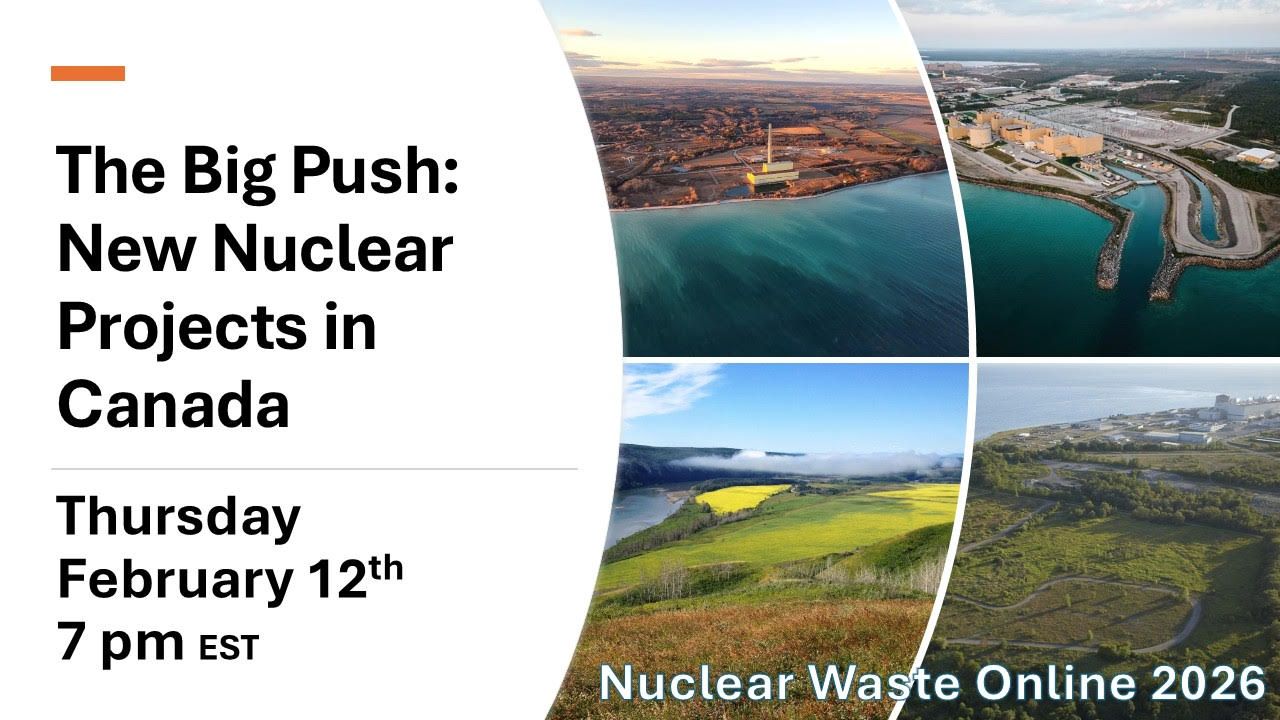
Thursday, February 12, 7 pm Eastern | 2nd of 4 sessions in the 2026 Nuclear Waste Online webinar series
Join a webinar on the push for new nuclear generation in Canada. Go to Northwatch.org to register or use the registration link https://us02web.zoom.us/webinar/register/WN_ZfWOf1GITqSRIZX8CB-A9w
-
Archives
- February 2026 (115)
- January 2026 (308)
- December 2025 (358)
- November 2025 (359)
- October 2025 (376)
- September 2025 (258)
- August 2025 (319)
- July 2025 (230)
- June 2025 (348)
- May 2025 (261)
- April 2025 (305)
- March 2025 (319)
-
Categories
- 1
- 1 NUCLEAR ISSUES
- business and costs
- climate change
- culture and arts
- ENERGY
- environment
- health
- history
- indigenous issues
- Legal
- marketing of nuclear
- media
- opposition to nuclear
- PERSONAL STORIES
- politics
- politics international
- Religion and ethics
- safety
- secrets,lies and civil liberties
- spinbuster
- technology
- Uranium
- wastes
- weapons and war
- Women
- 2 WORLD
- ACTION
- AFRICA
- Atrocities
- AUSTRALIA
- Christina's notes
- Christina's themes
- culture and arts
- Events
- Fuk 2022
- Fuk 2023
- Fukushima 2017
- Fukushima 2018
- fukushima 2019
- Fukushima 2020
- Fukushima 2021
- general
- global warming
- Humour (God we need it)
- Nuclear
- RARE EARTHS
- Reference
- resources – print
- Resources -audiovicual
- Weekly Newsletter
- World
- World Nuclear
- YouTube
-
RSS
Entries RSS
Comments RSS
 nuclear-news
♥. LYNAS DOES HAVE A LONG TERM PLAN FOR ITS RESIDUES
There is actually no waste products in Lynas and the so-called waste is not wasted but is recycled and made into useful products.
The operation of the plant will result in the generation of three major residue streams, namely the
1. WLP .. Water Leach Purification Residue (WLP) from the cracking and separation process,
2. FGD .. the Flue Gas Desulphurisation Residue (FGD) from the waste gas treatment system (scrubber) and the
3. NUF .. Neutralisation Underflow Solids from the wastewater treatment process (NUF).
ORE FOR LYNAS PLANT ~ 1,600 ppm Thorium
2 MOST VOLUMINOUS LYNAS “WASTE” = 12 ppm Thorium
3rd RESIDUE STREAM = 1,500 ppm of Thorium
AVERAGE MALAYSIAN SOIL = 20 ppm OF THORIUM
The first two are classified as non-radioactive as its radioactivity is only half that of Malaysian soil and is much much less radioactive than the SAND in our beaches.
Lynas will recycle them as synthetic gypsum for plaster board, magnesium rich synthetic gypsum as a fertilizer and synthetic aggregate for road and other construction projects.
The global market for synthetic gypsum is approximately 150 million tonnes per annum.
At current rates of production, supplies of synthetic gypsum co-products are beginning to outstrip natural gypsum, thus providing valuable new alternative materials and preserving the planet’s natural resources.
The WLP can be diluted according to international standards and made into valuable clinker for road construction and other construction projects.
THE FINISHED PROCESSED RARE EARTH CLINKER PRODUCT EMITS ONLY 0.156 mSv/yr – a tiny fraction of what people in everyday life naturally experience.
THE PRESENT TARMAC ASPHALT ROAD EMITS 2.4 TO 2.6 mSv/yr even when using conventional Malaysian materials !
Note: In the Lynas plant, the blending of tailings follows the basic safety principle of World Health Organisation, International Labour Organisation and seven more UN and other reputable international organisation including the following.
♥- European Atomic Energy Community,
♥- Food and Agriculture Organisation of the United Nations,
♥- International Atomic Energy Agency,
♥- International Labour Organisation,
♥- International Maritime Organisation,
♥- OECD Nuclear Energy Agency,
♥- Pan American Health Organisation,
♥- United Nations Environment Programme, and.
♥- World Health Organisation.
All the advanced countries like the USA, UK, Canada, France, Japan and Australia ALLOWS and FOLLOWS this
basic safety principle of World Health Organisation, International Labour Organisation and seven more UN and other reputable international organisation.
Dr Looi,