Ukraine’s nuclear reactors now a perilous risk, with the threat of civil war

 The Chilling Threat Of Nuclear Civil War In Ukraine http://www.marketoracle.co.uk/Article46340.html Jul 07, 2014 By: Andrew_McKillop Playing With Fire The WNA-World Nuclear Association which tirelessly promotes nuclear power presents Ukraine as a poster child of civil nuclear power. It says that after construction of Ukraine’s first-ever civil nuclear power complex – at Chernobyl in 1970 – Ukraine’s present 15 NPPs (nuclear reactors) grouped into 4 major complexes operated by State monopoly NNEGC Energoatom had a combined capacity of about 13 900 MW and were all VVER-type reactors (mostly VVER-320s) of Soviet design. Using 2009 data, they produced about 48% of Ukraine’s total electricity output of 177 billion kWh of which 4 billion kWh was exported.
Nearly all major Ukrainian NPP complexes are in western Ukraine – with the exception of Zaporijia or Zaporhyzhya, located about 125 kms north of Crimea. Flight time from Crimea in a Mikoyan-Gourevitch 29 (Mig-29 or Su-29) carrying up to 5000 kilograms weight of bombs and missiles can be estimated at about 3 minutes and 24 seconds. Russia’s Crimean forces also have the later navalised enhanced Mig-29K codenamed Fulcrum-D by Nato, with a combat radius of about 1800 kilometres.
The net total capacity of the six-reactor Zaporija complex is given by the WNA as the highest in Europe, at 5718 MW, with the Graveslines complex near Dunkerque in France, operated by France’s EDF as second-largest in Europe at 5400 MW. The radiological inventory of either of these complexes is hundreds of times the radiological output of the single Hiroshima atom bomb of 1945.
Apart from Zaporija-6, all other VVER-320 reactors at the complex were built before 1989 with a 30-year design lifetime. Rather than decommissioning these reactors, and as in other European countries, Ukraine has sought to extend their operating lifetimes. As of March 2013, the European Bank for Reconstruction & Development (EBRD) announced a 300 million euro loan for reactor safety upgrading to the end of 2017, matching another 300 million euro loan from Euratom.
In total, EU atomic agencies have provided or intend to provide 1.4 billion euros to extend Ukrainian reactor lifetimes by investing in “up to 87 safety measures addressing design and safety issues”, including national emergency preparedness for NPP accident management.
To be sure, none of this includes deliberate attack by military aircraft on particularly soft NPP targets!
Unsafe (Even In) Peacetime
Soviet design VVERs have a deserved reputation for danger. Accession to the European Union of Bulgaria, Slovakia and Lithuania was delayed solely by the question of shutting down their 8 Soviet-design PWRs (pressurized water reactors).
This was a non-negotiable condition for their entry to the EU.
However and overall in eastern Europe, 11 of the earlier RBMK series of PWRs, and 4 VVER 230s, which preceded the slightly safer 320s still operate. The RBMK series, exactly like early Westinghouse (American) PWRs was directly scaled up from graphite-moderated, water-cooled submarine power reactors. It could be called a “naked reactor” due to its critically low amounts of shielding and cladding. Apart from submarine propulsion, its other main design goal was maximized plutonium production – for bomb material – during operation. Operator safety was a minor concern!
After the Chernobyl accident in April 1986, EU governments were quick to point the finger at RBMK and first-generation VVER 230 reactors in Eastern Europe, mainly to tout the claimed high levels of safety built into Western designs. In the emotive discussions after Chernobyl, Western safety standards were taken as unquestioned yardsticks. The politically-motivated communication on this subject enabled Western governments to avoid shutting down any Western PWRs and no Western construction project was aborted by political decision, due to constant and heavy manipulation of public opinion.
In the run-up to Germany’s reunification, the government in 1989 examined the feasibility of upgrading the six VVER reactors then under construction in East Germany, one of which had just started up. For purely financial reasons the four operating V-230s at Greifswald and an earlier VVER at Rheinsberg were closed in 1990. Although the units under construction could be brought up to Western safety standards, no investor could be found to take on the re-licensing risk. Especially in Germany, the post-Chernobyl reactor safety scare led Siemens to develop the claimed “uber safe PWR’ now called the EPR. Since Siemens complete abandonment of nuclear engineering in 2011, after Fukushima, only France’s Areva continues with this uber-expensive reactor design. Following 9/11, firstly Siemens and then Areva claim that EPRs are able to resist the crash of 1 wide-bodied civil airplane.
No mention is made of potential military attack by fully-armed Mig-29s. Either singly or in groups!
Ukraine’s Nuclear Civil War
Energoatom provides a map of major reactor complexes in Ukraine, mostly located in western Ukraine
http://www.energoatom.kiev.ua/en/map_aes/.
We can note that towns focused for military repression of pro-Russian separatists by the Kiev government – Mariupol, Slovyansk, Luhansk and Donetsk – are like Crimea also about 120 to 150 kilometres from the Zaporija reactor complex. Well before the Flash Mob uprising in Kiev, former Ukrainian minister of Energy and Coal, Eduard Stawicki on January 27 stated that UN IAEA experts were going to arrive in the country with an unscheduled inspection “conditioned with the fact of threats of seizure and blocking Ukrainian thermal, nuclear and hydro power stations. We have permanent inspection regime, but now the situation is very difficult with such tension in the society”.
Since late January there have been several under-reported and nuclear-related actions in Ukraine as tension deepens, such as the brief occupation of the Zaporija complex by 40 Neo-nazi Right Sector actvists from Kiev in May in an action “designed to deter pro-Russian federalists and separatists”. From April 2014, the Kiev government has on several occasions made calls for “Western governments” to provide international monitors and “non-aligned peacekeeping forces” to protect the country’s NPPs, repeatedly stating that major attacks on NPP complexes could release more radiation than Chernobyl and Fukushima combined.
To be sure no action has resulted and all is in place for Ukraine’s civil war to “go nuclear”. The nuclear threat is with no possible doubt yet another reason why Western powers are making sur not to engage Russia in a hot war for the control of Ukraine – but the internal and domestic dynamic of civil war and Kiev’s attempt to suppress pro-Russian activists open the door to a nuclear endgame at any time.
By Andrew McKillop Contact: xtran9@gmail.com
Former chief policy analyst, Division A Policy, DG XVII Energy, European Commission. Andrew McKillop Biographic Highlights
Co-author ‘The Doomsday Machine’, Palgrave Macmillan USA, 2012
Mystery, danger and continuing radiation release from Waste Isolation Pilot Project (WIPP)
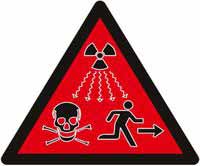
Environmental radiation releases spiked again in mid-June around the surface site of the only U.S. underground nuclear weapons waste storage facility near Carlsbad, New Mexico. The facility, the Waste Isolation Pilot Project (WIPP), has been shut down since February 14, when its isolation technology failed, releasing unsafe levels of Plutonium, Americium, and other radio-nuclides into the environment around the site.
Radiation levels in the underground storage area, 2,150 feet below the surface vary from near-normal to potentially lethal. At the time of the February accident, more than 20 WIPP workers suffered low level radioactive contamination, even though none of them were underground. WIPP assumes, but cannot confirm, that underground conditions have not changed since May 31, when the last entry team went into the mine, as reported by WIPP field manager Jose Franco on June 5:…….
What happened underground remains a mystery and a danger
More than five months after the February accident, officials still have no certain understanding of what went wrong. It is generally thought that one 55 gallon drum of waste (perhaps more than one) overheated and burst, spilling radioactive waste in a part of the storage area known as Panel 7, Room 7. This room, designated a “High Contamination Area,” measures 33 by 80 feet and presently has 24 rows of waste containers. The room holds 258 containers, tightly stacked and packed wall-to-wall, with no aisles to allow easy access. There is some clearance between the top of the stacks and the room’s ceiling.
The high contamination in Room 7 is a threat to human inspectors, limiting inspection of the room to date to mechanical means, primarily cameras on extension arms. As a result of these limitations, WIPP teams have inspected only ten of the 24 rows of waste containers in Room 7. Rows #1-14 have been out of reach of the available equipment.
WIPP has begun building a full scale replica of Room 7 above ground, to provide a realistic staging area in which to test methods of remote observationthat might reach the 14 uninspected rows………http://dissidentvoice.org/2014/07/radiation-releases-continue-from-nuclear-waste-isolation-project
Unreported very high risk of nuclear drums exploding at New Mexico waste facility

 Internal Memo: 10 times more WIPP nuclear drums risk exploding than media reported — Expert: Data shows increasing amount of radioactivity going into environment — Official: Something “caused drum to later catch fire”; Gov’t should investigate if truck fire & electrical surge led to the radiation release http://enenews.com/10-times-as-many-potentially-explosive-nuclear-waste-drums-inside-wipp-dump-than-reported-expert-data-shows-increased-amounts-of-radioactivity-going-into-environment-official-drum-ca
 AP, July 4, 2014 (emphasis added): Teams of scientists and engineers are still trying to determine exactly what caused a barrel [at New Mexico’s Waste Isolation Pilot Plant (WIPP)] from Los Alamos to burst […] Despite hundreds of experiments to date, investigators have been unable to create any reaction that would have caused the container to leak like it did […] The accident has […] indefinitely shuttered the mine […] According to the memo obtained by The Associated Press, [Los Alamos National Laboratory’s Principal Associate Lab Director Terry Wallace] told employees at a meeting Monday that the probe is focused on 16 barrels of highly acidic, nitrate-salt-bearing waste, including the drum that leaked at [WIPP]. Ten of the other barrels [11 total, including the one that ruptured] are also underground at the [WIPP] mine[…] Wallace is quoted in the memo as saying that a technical review “identified certain conditions that might potentially cause an exothermic reaction inside a drum. Among them are neutralized liquids, a low pH and the presence of metals.”
According to the AP’s article above, the investigation is now focusing on 11 barrels in the WIPP underground, yet only a few weeks ago the AP reported: “Officials say 6… potentially explosive containers of waste [were shipped] from Los Alamos National Laboratory… [Five] are being stored at a site in West Texas [and] one at the Waste Isolation Pilot Plant [believed to be the source of the radiation leak].
Albuquerque Journal interview with Miles Smith, EnergySolutions’ vice president of Southwest operations, July 3, 2014: “We don’t believe the combination we put into the drums, we don’t think it has the ability to start burning on its own. It needs an outside source of ignition […] It doesn’t look like the kitty litter was the cause […] I don’t believe [absorbent materials] caused the explosion or the fire. [One of the two suspect products, an acid neutralizer, is not a problem]. Its safety sheet says it is not incompatible [The other product, a base neutralizer, is incompatible with the nitrates in WIPP waste but this neutralizer wasn’t used in the WIPP-bound barrels.] We think there are other things that caused the drum to later catch fire [there] are a lot of things out there [to investigate, including a truck fire and an electrical surge in the days before the leak.]
Albuquerque Journal, July 3, 2014: Don Hancock of the Southwest Research and Information Center, a WIPP watchdog, said Smith’s comments are consistent with those of state Environment Department […] but noted that no one from [Los Alamos National Lab] has weighed in. “I would say I’ve always been skeptical of the kitty litter issue,” he said. “Anybody with a cat knows that kitty litter itself is not combustible. It’s got to be kitty litter and something else.”
Don Hancock, Southwest Research and Information Center, June 25, 2014: […] the current data show that there are increased amounts of radioactivity going into the environment as contaminated filters are being changed. […] DOE presumes that the ventilation system and the exhaust shaft are too contaminated to use in a re-opened facility. On June 18, the House Appropriations Committee approved $20 million dollars […] as a down payment for new ventilation and a new exhaust shaft. […] it is very difficult or impossible to determine exactly what happened and how much contamination was released.
Japanese nuclear power plant to restart without a crucial off-site emergency center

 Sendai nuclear plant set to restart without off-site emergency center July 07, 2014 THE ASAHI SHIMBUN by Toshio Kawada and Chikako Kawahara. The Sendai nuclear power plant in Kagoshima Prefecture could restart two reactors in autumn without a crucial emergency facility in place to deal with a possible nuclear accident and evacuations of host communities.
The Sendai plant, operated by Kyushu Electric Power Co., is expected to be the first to resume operations among all plants that have applied for safety screenings by the Nuclear Regulation Authority.
The Cabinet Office in September 2012 instructed all prefectures hosting nuclear power plants to ensure that off-site emergency centers be equipped with ventilation and other systems to prevent radiation contamination and be located between 5 and 30 kilometers from the nuclear plant.
It also mandated host prefectures to designate multiple backup facilities in case the functions of the off-site centers are crippled by a disaster, which is what occurred during the Fukushima nuclear disaster that started in March 2011.
The deadline for completion of the emergency off-site centers is September 2015.
Kagoshima prefectural government officials said construction of the off-site emergency center for the Sendai plant has lagged behind schedule due to delays in discussions with the central government…….
the Nuclear Regulation Authority is set to compile a draft of the safety screening results for the Sendai plant in Satsuma-Sendai as early as July 9. If the plant clears the NRA’s safety screening process, its two reactors will be restarted in autumn at the earliest.
Off-site emergency centers are supposed to function as the bases of operations for officials from the central government, local governments and utilities to combat a nuclear crisis and coordinate evacuations of residents…….
The government’s Investigation Committee on the Accident at the Fukushima Nuclear Power Stations has called for the prompt construction of off-site emergency centers.
But renovations and relocations of the emergency facilities are also behind schedule around Japan.
In addition to the Fukushima plant, off-site centers need to be relocated from the 5-km radius of four other nuclear power plants, including Shikoku Electric Power Co.’s Ikata nuclear plant in Ehime Prefecture.
An official of Ehime Prefecture said if an accident at the Ikata plant cripples the existing off-site center before September 2015, the front-line headquarters will be “relocated to a safe location like in the Fukushima crisis” in a stop-gap measure. http://ajw.asahi.com/article/0311disaster/fukushima/AJ201407070029
Unanswered questions about OSMRs (Offshore Small Modular Reactors)
 Andrew Topf writes in Oil Price 06 July 2014“there are some unanswered questions. One is what would happen to the surrounding marine life should an uncontained nuclear meltdown occur at sea. Who can forget the Google Earth map depicting a yellow-green plume of radiation stretching half-way across the Pacific? While the authenticity of the map was later questioned, scientists have discovered trace amounts of radiation on the North American West Coast, a full three years after the event.
Another is the threat of terrorism. The MIT researchers claim that offshore nukes would be harder to attack, but on the other hand, they would also be tough to defend. Todd Woody, writing for The Atlantic, observed that defending these “nuclear islands” from terrorist assault, by ships and submarines, “would require some James Bond-like machinations,” including early detection systems, barriers to vital access points, and the use of automatic weaponry”
UK Religious Society speaks out against Trident Nuclear Missile plan
 British Quakers reject report advising UK to retain ‘Cold War relic’ nuclear deterrent, Ecumenical News, Peter Kenny Monday, July 07 2014 Quakers in Britain strongly disagree with the conclusion of a report published July 1 that says the UK should retain its nuclear deterrent.
A group of former ministers, diplomats and generals in the parliamentary-approved Trident Commission say holding on to nuclear weapons could help deter threats to the UK’s security in future…….
“Quakers say that Trident is a relic of the Cold War and that the Trident Commission has failed to consider the legal obligations of the UK under the Nuclear Non-Proliferation Treaty to negotiate in good faith for the elimination of nuclear weapons,” said a Quakers’ statement after the report was released July 1.
“Quakers in Britain strongly disagree with the conclusion that Trident is necessary and urge the Commission to rethink its recommendations.”
While welcoming deeper debate around the missile issue, Helen Drewery, general secretary of Quaker Peace & Social Witness said: “The Trident Commission has failed to properly consider alternatives to Trident.
“These are weapons of mass destruction which can never be used and have proved to be a poor deterrent against acts of terror or against recent political events. Trident is a relic of the Cold War.”
The Quakers said they were disappointed the report did not address the legal and moral obligations of the UK under the Nuclear Non-Proliferation Treaty to negotiate in good faith for the elimination of nuclear weapons.
A final decision on whether to renew Trident nuclear missile system will be taken in 2016……
Quakers are known formally as the Religious Society of Friends. The group is known for its commitment to equality, justice, peace, simplicity and truth. http://www.ecumenicalnews.com/article/british-quakers-reject-report-advising-uk-to-retain-cold-war-relic-nuclear-deterrent-25462
Spent nuclear fuel crisis at closed Kewaunee nuclear plant
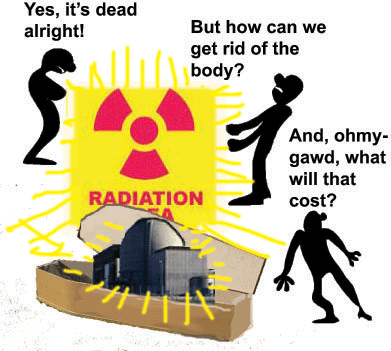 Outcry prompts expedited plan to move fuel at Kewaunee nuclear plant Milwaukee Wisconsin Journal Sentinel by Thomas Content 6 July 14 The Kewaunee nuclear power plant stopped producing electricity more than a year ago, but it left behind highly hazardous waste that has no place to go.
Radioactive rods of used nuclear fuel are cooling in a large storage pool inside the reactor, located east of Green Bay on the shore of Lake Michigan. Plant owner Dominion Resources Inc. wants to speed up plans to empty the pool and put the rods in more secure long-term storage.
Under Dominion’s plan, all of the spent fuel will be moved from the pool by the end of 2016. The rods will be encased in 24 concrete casks, each standing 18 feet tall, that will be moved from the reactor building to a concrete pad outside, said Dominion spokesman Mark Kanz.
Once they’re relocated, it’s unclear how long the radioactive remnants of the nuclear industry will stay in the casks. That’s because the federal government has no long-term plan for disposing of the waste now stored at scores of reactors around the country. According to the Nuclear Energy Institute, Wisconsin has 1,430 tons, or about 2%, of the nation’s spent fuel.
Dominion hired NAC International of Atlanta to build and fill the casks, and move them from the Kewaunee reactor building. Terms of Dominion’s deal with NAC haven’t been disclosed, but the company told federal regulators that it will spend $103 million through 2016 to manage the spent fuel.
The company accelerated plans to remove and encase the spent fuel to address concerns raised by members of the local community, Kanz said.
Last year, residents and officials in the Kewaunee County Town of Carlton criticized Dominion after the company said it would take the full 60 years allowed by the federal government to decommission the power plant.
Taking that long to shutter the plant would cripple efforts to attract economic development to the area, they said………
A nuclear safety watchdog group, the Union of Concerned Scientists, says the risk to the public is decreased when the spent fuel is placed in concrete casks rather than keeping it in spent fuel pools………
The project is being paid for by the customers of three Wisconsin utilities — the former co-owners of the power plant. Those customers paid surcharges over the years into a decommissioning fund.
The value of that fund is less than Dominion says it needs to spend, at $649.3 million at the end of 2013. Dominion says the money is being invested so that it will grow over time and that there should be sufficient money available to pay for the decommissioning.
Dominion has also committed $60 million from its Virginia-based parent company toward the project, in the event funds in the decommissioning fund run short.
Wisconsin’s electric utility customers wouldn’t end up having to pay more, because Dominion bought the plant from Wisconsin utilities and took responsibility for decommissioning at that time.
When Wisconsin regulators approved the sale of the Kewaunee Power Station in 2005, they ordered Dominion to return any unspent decommissioning funds to state ratepayers……
As the stalemate in Washington over waste storage continues, the stockpiles of stored spent nuclear fuel enclosed in concrete casks are multiplying. How long the concrete casks will stay at the Kewaunee, Point Beach and La Crosse reactors in Wisconsin is very much up in the air.
Dominion’s plan calls for concrete casks to start being shipped to the control of the federal government within seven years — but that timeline may be merely wishful thinking, said David Lochbaum of the Union of Concerned Scientists’ nuclear safety project.
“I likely have a better chance of winning the lottery than spent fuel leaving Kewaunee site in 2021 — and I don’t buy lottery tickets,” he said. http://www.jsonline.com/business/outcry-prompts-expedited-plan-to-move-fuel-at-kewaunee-nuclear-plant-b99302369z1-265974071.html
Nuclear Nightmares – a book for our times
 Nuclear Nightmares: Securing the World Before It’s Too Late Without disarmament our nuclear nightmares may become realities — but there is still time to avoid disaster. Epoch Times, By Noah Habeeb | July 6, 2014 “….Joseph Cirincione, the president of Ploughshares Fund and a member of the State Department’s International Security Advisory Board. His depth of knowledge is showcased in Nuclear Nightmares: Securing the World Before It Is Too Late, a succinct yet comprehensive survey of the dangers of nuclear weapons…..
Ultimately, Nuclear Nightmares is far more optimistic than its title would have you believe. Cirincione accomplishes the challenging feat of addressing nearly every nuclear hotspot in no more than 200 pages. His recommendations are compelling, logical, and achievable.
For the United States and Russia he suggests increased transparency, accelerated reductions, and a shift away from heightened alert status. For Pakistan and India he encourages diplomacy, executive hotlines, and greater cooperation through trade.
And the “idiosyncratic regimes” of Iran and North Korea? Cirincione rules out military responses to both North Korea’s fledgling arsenal and Iran’s uranium enrichment program. He does, however, believe that economic sanctions coupled with diplomacy can achieve a nuclear deal in Iran, despite the poor track record sanctions have had……”http://www.theepochtimes.com/n3/790202-nuclear-nightmares-securing-the-world-before-it-is-too-late/
Fukushima has 9 days to prevent ‘unsafe’ overheating
http://rt.com/news/170800-fukushima-water-leak-temperatures/
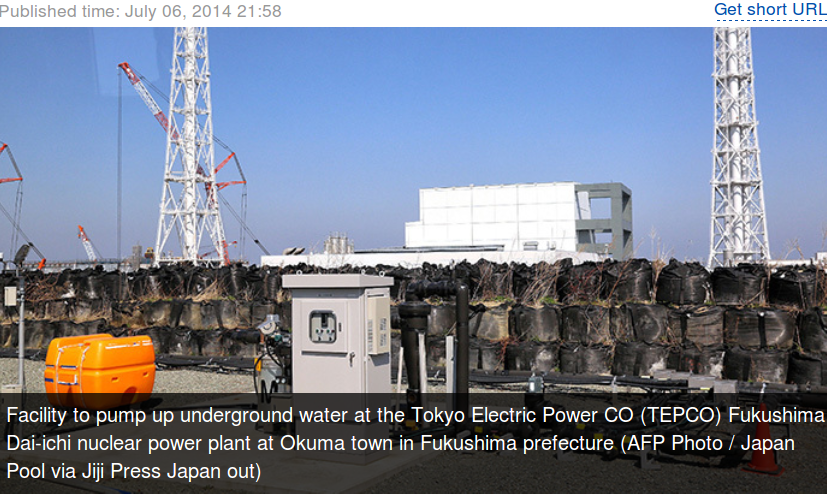
Fukushima operator TEPCO has been forced to switch off the cooling system at mothballed Reactor Unit 5, after it was discovered that it had been leaking water. In nine days, if the system is not repaired, temperatures will exceed dangerous levels.
Engineers have discovered that 1,300 liters of water leaked from a cooling system intended to stabilize the temperature of the spent fuel at the Reactor Unit 5, which was offline but loaded with fuel rods when the plant was damaged by the earthquake and tsunami in March 2011.
The source of the leak was a 3 mm-diameter hole near a flow valve, a statement published by the Japanese energy giant on Sunday asserts. However it is unclear from company data if the location of the opening has been discovered, or whether it was calculated with flow measurements.
At the time when the cooling system was switched off at around 12pm on Sunday, the temperature in the pool in which the rods are submerged was 23C but started increasing by 0.193 degrees per hour, TEPCO says.
If no new cold water is pumped in at such rate it will reach the dangerous threshold of 65C by the midpoint of the month in roughly 9 days.
Such temperatures, which have not been routinely seen at the plant since the failing of the cooling system in the immediate aftermath, would increase the possibility of dangerous reactions and further radiation leaks in the plant.
TEPCO however says that currently, there have been no abnormal readings anywhere in the plant.
Since TEPCO is using seawater for many of its cooling needs at the power plant, it has previously encountered heightened levels of corrosion, in sensitive equipment. The cooling system at various reactors has also been beset by calamities – from rats short circuiting the control panel and forcing a blackout, to an employee “accidentally” switching it off, though all were resolved before rod pools overheated.
At the same time, TEPCO is struggling to deal with ever-increasing volumes of contaminated water which is being stored in hundreds of tanks at the facility and frequently leaking and contaminating the soil beneath it. And the much publicized plan to stop contaminated water from leaking into the sea by building an ‘ice-wall’ and freezing soil and water around the facility is not working as well as Japanese officials had hoped.
The lies and distortions of James Conca and his Science Media Centre advisors concerning the health of the children of Fukushima
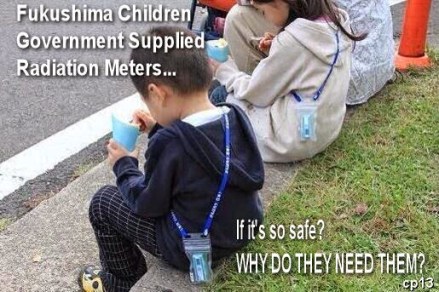
There is an unacknowledged tragedy occurring for the children in Japan.
I think that you and your ilk are some of the most despicable human beings on the planet, willing to prostitute your intellectual abilities to mislead the public in support of an industry of death. Yet even I with such strident rhetoric don’t actually think the intention behind your rhetoric is to see thousands of children struggling with the agony of trying to survive thyroid cancer.
“Although some sporadic tumors unrelated to radiation may be included among our patients, the shortest latency period for both benign and malignant tumors was 1 year as occurred in 3 patients, whereas the longest time was 69 and 58 years, respectively (Fig. 1).” (Latency Period of Thyroid Neoplasia After Radiation Exposure
Shoichi Kikuchi, MD, PhD, et al. Department of Surgery, UCSF Affiliated Hospitals, San Francisco, CA. Journal List nAnn Surg v.239(4); Apr 2004 PMC1356259, full text at Link
{{{ Study Protocol for the Fukushima Health Management Survey – Thyroid Ultrasound Examination (TUE) Program
by Shunichi Yamashita, released online August 25, 2012
Note: Testing of the FY 2011 Cohort was actually performed in late 2011 through 2013. So claims that it is impossible for the FY 2011 Cohort results to be related to Fukushima is a misrepresentation of the actual data.
What were the results of those biopsies?
All of the figures I’ve given were drawn from the Thyroid Ultrasound Examination, FHMS http://www.fmu.ac.jp/radiationhealth/results/media/15-2_Thyroid_Ultrasound_Examination.pdf
Let’s return for a moment to Mr. Conca’s article.
Bald
Faced
Liar
Fukushima’s molten nuclear fuel cores – no technology exists to fix them
Top U.S. Official: “The reality is, no technology exists anywhere to solve problem” of Fukushima’s  melted fuel — TV: Molten mass “will scorch into the earth” if not cooled, a ‘China Syndrome’; Geysers of radioactive steam shooting up for miles around (VIDEOS) http://enenews.com/top-official-reality-technology-exists-anywhere-solve-problem-fukushimas-melted-fuel-tv-molten-mass-will-scorch-earth-cooled-china-syndrome-geysers-radioactive-steam-shooting-miles-around-videos?utm_source=feedburner&utm_medium=email&utm_campaign=Feed%3A+ENENews+%28Energy+News%29
NHK Nuclear Watch: US View on Fukushima Daiichi, July 2, 2014 (at 2:00 in):- NHK: Experts say that one of the most difficult challenges of decommissioning the plant is removing fuel debris… And Magwood says that there is no magic wand to wipeout this problem.
- William Magwood, US Nuclear Regulatory Commission: I think people have to be realistic how difficult this is, how long it’s going to take. During my visit to Japan this week, people have asked me from time to time, “Are there technologies in the US that can help solve this problem?” The reality is there is no technology that exists anywhere to solve this problem.
- Watch the NHK broadcast here
‘Modern Marvels‘, History Channel (at 11:30 in):
- Narrator: With the [water] pumps off, the core is being uncovered and its temperature is over 2,000 degrees and rising. When the core reaches 5,000 degrees it will melt, becoming a molten mass — metallic lava that will burn through the 8 inch steel containment vessel. Once out of the plant it will scorch into the earth itself. What happens next could become an unrivaled technological disaster.
- Wilborn Hampton, New York Times reporter: They reach the water table, it will immediately turn to steam, boiling steam. There will be geysers of radioactivity steam shooting up in parking lots and driveways and streets and houses for miles around.
- Narrator: The nightmare scenario is known as the ‘China Syndrome’. Land surrounding the plant will become uninhabitable. A study some years earlier has suggested upwards of 40,000 people could die if the ‘China Syndrome’ becomes reality.
- Watch the History Channel broadcast here
UK National Archives release chilling list of the nation’s nuclear targets
Chilling documents reveal Newquay was “probable nuclear target” during Cold War http://www.cornishguardian.co.uk/Documents-reveal-Newquay-probable-nuclear-target/story-21329076-detail/story.html By CGAlex July 04, 2014 RAF St Mawgan was one of 106 cities and military targets the UK government thought would be hit in a nuclear war with the USSR in the 1970s, according to documents released by the National Archives.

Read more: http://www.cornishguardian.co.uk/Documents-reveal-Newquay-probable-nuclear-
Petition to Obama: TAKE NUCLEAR SUBSIDIES OUT OF EPA CARBON RULES
 TAKE NUCLEAR SUBSIDIES OUT OF EPA CARBON RULES https://www.credomobilize.com/petitions/take-nuclear-power-out-of-epa-carbon-rules
TO: PRESIDENT OBAMA
11,302
of 15,000 signatures
________________________________
Campaign created by Michael Mariotte FACEBOO
While I support your efforts to address global warming, costly consumer subsidies for old, uneconomic nuclear reactors and new nuclear power must be removed from your climate plan. These reactors can and should be replaced with clean renewable energy and energy efficiency.
Why is this important?
Nuclear power is not only ineffective at addressing global warming, by misdirecting money better spent on clean renewable and energy efficiency resources, it is actually counterproductive.
But that’s not nuclear’s only drawback in addressing our climate crisis. As NIRS’ new fact sheet on nuclear power and climate indicates, new nuclear power would be too slow, cost too much, create too much radioactive waste, pose too much threat of nuclear disaster, and produce both too much plutonium and even carbon to be useful as a climate strategy. Meanwhile, the costs of clean renewable energy are plummeting and capacity is skyrocketing, making renewables the clear choice to replace both polluting nuclear and fossil fuel plants.
Yet the EPA’s carbon reduction proposal released June 2 would encourage ratepayer subsidies to keep uneconomic, aging and dangerous nuclear reactors that otherwise would close operating indefinitely. The proposal also would encourage more construction of extraordinarily expensive new reactors. Both of these steps would have the effect of deterring deployment of 21st century energy technologies, including solar, wind, geothermal, advanced energy efficiency, distributed generation, smart grids and other clean energy programs.
Tell President Obama that the nuclear provisions in the Administration’s carbon reduction plan must be removed and clean energy must be supported if we are to effectively address global warming.
Plutonium flows to the Pacific from Fukushima’s ruptured nuclear reactor containments
 Gov’t Expert: Plutonium is certainly being discharged into Pacific Ocean from Fukushima plant; Flowing out of ruptured containments — TV: Reactor water turns into ‘yellowish, fizzing liquid’ from damaged fuel rods… “It actually vibrates” (PHOTO & VIDEO) http://enenews.com/study-plutonium-being-discharged-fukushima-pacific-ocean-flowing-ruptured-containment-vessels-tv-reactor-water-becomes-yellowish-fizzing-liquid-damaged-fuel-rods-actually-vibrates-video?utm_source=feedburner&utm_medium=email&utm_campaign=Feed%3A+ENENews+%28Energy+News%29
P. Bossew, German Federal Office for Radiation Protection, PLUTONIUM EMISSION FROM THE FUKUSHIMA ACCIDENT (pdf), 2013 (emphasis added): While much has since been published on environmental contamination and exposure to radio-iodine and radio-caesium, little is known about releases of plutonium […] The inability to cool the fuel led to melting of parts of the reactor cores (which parts exactly, is not yet well known) […] [Causes of the containment] ruptures and leaks […] are not entirely clarified […] explosion seems to have produced further structural damage in the containments, at the one hand, and on the other hand released large amounts of radionuclides into the environment. […] the fraction of Pu released into the environment can be expected to be higher [than] atmospheric releases only. Certainly some Pu has been released with liquid effluents and discharged into the ocean. […] The liquid discharges certainly also contained Pu. […]
‘Modern Marvels‘ History Channel (at 19:45 in): It is now 28 hours since the accident at Three Mile Island began. The men in the control room have no way of looking into the reactor…. it now seems clear some of the 36,000 slendertubes holding the uranium fuel have cracked, this is allowing radioactivity to escape into the reactor coolant water. It is imperative operators know how much radioactivity is now in the coolant. Too much, and the nuclear chain reaction could restart… Foreman Ed Hauser agrees to risk his life to take the readings. This is allowing radioactivity to enter the coolant water. He is in for an even greater scare when he draws the coolant water sample. The water from the reactor should be clear; instead he stares at a yellowish, fizzing liquid… It actually vibrates in his hand.
Ever escalating costs of failed Florida nuclear plant
 Trigaux: Failed Florida nuclear plant’s costs keep rising Tampa Bay Times Robert Trigaux 3 July 14, The costs of prematurely closing Crystal River 3 — Duke Energy’s sole nuclear power plant in Florida — keep on rising. Duke Energy recently agreed to a settlement that sent at least $55 million to eight minority owners of “CR3.” That’s the nuke plant Duke closed last year due to a bungled do-it-yourself repair job that the power company finally acknowledged last year would prove too expensive to fix. The bigger settlement sums are going to minority investors like Ocala and the Orlando Utilities Commission. But even smaller towns like Bushnell and Alachua, with small stakes in CR3, will be compensated.
Another $8.4 million will go to nine wholesale customers with contracts to receive electricity from CR3. Those customers range from Homestead, south of Miami, to Bartow in Hillsborough County.
Total payout to minority owners and wholesale customers: $63.4 million.
The 860-megawatt Crystal River plant was expected to operate until 2036. Instead, CR3’s concrete containment wall cracked in 2009. Never restarted, the plant is scheduled to be decommissioned over the next 60 years at a cost topping $1 billion……..
CR3’s demise coincided with a severe state recession that has decreased demand for electricity since 2008.
“We do not need to add more capacity at this time,” McCain said. “But it was important for these cities and utilities to end their ownership and liabilities in Crystal River 3. This settlement transfers ownership back to Duke.”
One more CR3 conflict resolved with big checks. They likely won’t be the last.
$63.4 million: Cashing out of Duke Energy’s closed nuclear plant………..
Contact Robert Trigaux at rtrigaux@tampabay.com or (727) 893-8405. Follow him@venturetampabay. http://www.tampabay.com/news/business/energy/amid-pricey-ripples-from-failed-florida-nuclear-plant-minority-investors/2186912
-
Archives
- February 2026 (233)
- January 2026 (308)
- December 2025 (358)
- November 2025 (359)
- October 2025 (376)
- September 2025 (258)
- August 2025 (319)
- July 2025 (230)
- June 2025 (348)
- May 2025 (261)
- April 2025 (305)
- March 2025 (319)
-
Categories
- 1
- 1 NUCLEAR ISSUES
- business and costs
- climate change
- culture and arts
- ENERGY
- environment
- health
- history
- indigenous issues
- Legal
- marketing of nuclear
- media
- opposition to nuclear
- PERSONAL STORIES
- politics
- politics international
- Religion and ethics
- safety
- secrets,lies and civil liberties
- spinbuster
- technology
- Uranium
- wastes
- weapons and war
- Women
- 2 WORLD
- ACTION
- AFRICA
- Atrocities
- AUSTRALIA
- Christina's notes
- Christina's themes
- culture and arts
- Events
- Fuk 2022
- Fuk 2023
- Fukushima 2017
- Fukushima 2018
- fukushima 2019
- Fukushima 2020
- Fukushima 2021
- general
- global warming
- Humour (God we need it)
- Nuclear
- RARE EARTHS
- Reference
- resources – print
- Resources -audiovicual
- Weekly Newsletter
- World
- World Nuclear
- YouTube
-
RSS
Entries RSS
Comments RSS
 nuclear-news