nuclear-news

The News That Matters about the Nuclear Industry Fukushima Chernobyl Mayak Three Mile Island Atomic Testing Radiation Isotope

Hot spots found in Koriyama park in Fukushima

5 June 2014

Source translation and links

http://www.save-children-from-radiation.org/2014/06/19/video-%EF%BC%94%E5%B9%B4%E7%9B%AE%E3%81%AE%E3%83%9B%E3%83%83%E3%83%88%E3%82%B9%E3%83%9D%E3%83%83%E3%83%88-hotspot-aplenty-in-decontaminated-park-by-fukushiman-masa/

福島県にある開成山公園は郡山市で最も人の集まる公園。

除染が行われ、モニタリンポストの数値は0.3マイクロシーベルト以下。


しかし測定を行うと、その「数倍」の数値が測定された。

除染を終えた場所でも、泥がたまり局所的に線量が高くなる、「マイクロホットスポット化現象」の問題に直面する、開成山公園の今を測定してみた。


Kaiseiazan-park in Koriyama is the most popular park in the city.

Masa in Koriyama visited the park with a radiation counter and made a short film about the visit. 


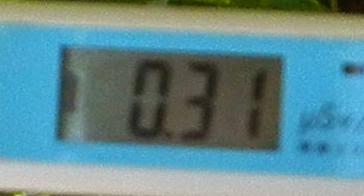
Three and a half years have passed since the nuclear disaster and the park has been decontaminated and a monitor at the park now shows less than 0.3 μSv. 

However, Masa’s own counter showed higher values in various spots in the park, and seriously high values were found in the sludge accumulated on the ground. These “micro hotspots” are everywhere in the park. 


Please also see the website of Masa フクシマンマサのブログ

http://ameblo.jp/masa219koro/entry-11872073882.html
フランス語で読む Read in French here

July 20, 2014 Posted by | Uncategorized | Leave a comment

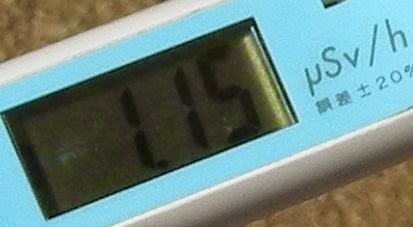
Tokyo has radioactive hot spots, evidence! – 1.15μSv/h in a Vegetable Field near Tokyo

“…I do not like the idea of taking a walk in a place where I can measure more than 1μSv/h. This is a dose rate where I literally should be running away from.
So on May 11th I was irradiated. These days, every time I go out to the countryside I get irradiated. I am starting to have the feeling that I cannot live near Tokyo any more….”

Original Text from Zukunashi no Hiyamizu’s Blog:http://inventsolitude.sblo.jp/article/100066627.html

http://dissensus-japan.blogspot.ie/2014/07/fieldwork-7-or-115svh-in-vegetable.html
On May 11th in the afternoon, I went for a walk for some exercise. This time I just took my Air Counter with me and left my heavy survey meter at home. 
 
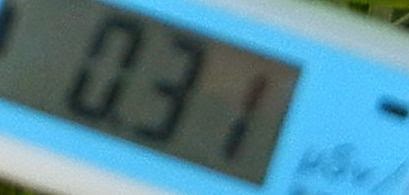
At around 2.30 pm, my reading went up to 1.15μSv/h in the middle of a vegetable field. It is more or less the same as the 1.1μSv/h measured at the Okumamachi Fureai Park (only 4 km away from The Fukushima Daiichi plant) on the same day! Now this was a shock.
 
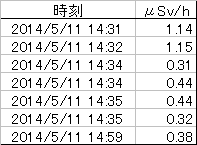
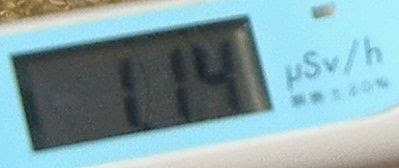
The following is the record on the dosimeter. I had started to measure the air dose rate from about 1 pm and at 2 pm had measured around 0.3μSv/h. 


(時刻 time)
1.15μSv/h is the highest reading that I had had during the 1 1/2 years of use of this dosimeter.
As you can see it was just for a short while that I measured such a high dose rate. As I moved about I still had high readings. I presume that there was an air current that carried radioactive substances near the ground. 1.15μSv/h is the equivalent of 300.000 Bq/m2 of cesium in the soil.
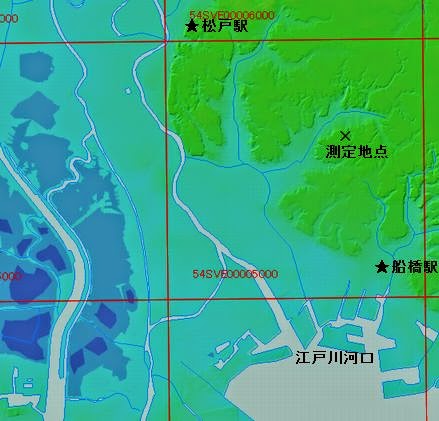
According to the following map the spot was at altitude 25.5m, in an area with mostly vegetable patches where urbanization is restricted.


松戸駅 Matsudo station
測定地点 location of measurement
船橋駅 Funabashi station
江戸川河口 mouth of Edogawa river

They were burning something in a home-use incineration unit nearby but the wind wasn’t coming from there. The wind was coming from the south and wasn’t strong.


The following spot was quite far away from the previous one. The altitude is about 14m lower. The readings are not much different.
Where do the radioactive substances come from? It could be radon but would it rise so much on a plateau? There are incineration plants and waste recycling centres of Funabashi city in Sanbanse near the mouth of the Edogawa River. They are 8 km south of where I measured. If the chimneys of these plants are high then I guess the emission could travel quite far. It wouldn’t be unnatural to think that the emissions would have an impact on the surrounding environment in a radius of 8-10 km. I shudder to think that there are plants that release radioactive gas of 1μSv/h everywhere though.
I do not like the idea of taking a walk in a place where I can measure more than 1μSv/h. This is a dose rate where I literally should be running away from.
So on May 11th I was irradiated. These days, every time I go out to the countryside I get irradiated. I am starting to have the feeling that I cannot live near Tokyo any more.

July 20, 2014 Posted by | Uncategorized | 5 Comments

New radiation measurement method spreads confusion whilst Daichi spread nuclear contamination

Under the new policy, however, the government will determine decontamination needs by using radiation exposure data collected from individual dosimeters, which tend to be lower than the estimated dose, thus reducing the areas subject to government-mandated decontamination.

[…]

“Many residents of Fukushima have deliberately stayed indoors since the nuclear disaster. If they start to go out like they used to before the quake, the individual radiation doses might go up and will not necessarily fall below the 1 millisievert threshold,” Ishii said. “As such, we should aim for continued use of aerial figures for decontamination.”

Fukushima Minpo

Confusion is spreading among towns and cities tasked with radiation cleanup in the face of a new decontamination policy to be released by the Environment Ministry as early as this month.

The government has been decontaminating areas whose aerial radiation reading is 0.23 microsievert per hour or more, based on its policy of keeping annual radiation exposure for individuals at 1 millisievert or less. It arrived at the estimated dose of 0.23 microsievert per hour by assuming that an individual spends eight hours outdoors and 16 hours indoors.

Under the new policy, however, the government will determine decontamination needs by using radiation exposure data collected from individual dosimeters, which tend to be lower than the estimated dose, thus reducing the areas subject to government-mandated decontamination.

While some municipalities welcome the move, saying it will allow them to scale down decontamination efforts in areas where radiation levels are unlikely to go down significantly, others are worried that residents will be confused.

The Environment Ministry unveiled its plan to use the individual dosimeter data last month at its meetings with officials from the cities of Fukushima, Koriyama, Soma and Date. According to Date officials, the city measured the radiation exposure of its 52,000 citizens wearing dosimeters from July 2012 through June 2013. The results showed that per-year exposure levels for nearly 70 percent of residents, even in areas where aerial radiation levels exceeded 0.23 microsievert per hour, was less than 1 millisievert in total.

“We should break the spell of aerial radiation soon,” said a Date official, pinning hopes on the ministry plan.

An official of the city of Tamura, on the other hand, expressed shock, saying the city has been cleaning up contaminated areas based on aerial readings, and if the cleanup projects are scaled back as a result of a policy change, it would cause anxiety among residents. Tamura, therefore, will not change its decontamination plan, the official said.

Experts are similarly divided. Junichiro Tada, a member of the board of directors at nonprofit organization Radiation Safety Forum, said he agrees with the ministry. “We should change the way radiation doses are managed from an aerial radiation basis to an individual exposure basis,” he said. “That way, we will do away with ineffective decontamination work.”

But Keizo Ishii, director of the Research Center for Remediation Engineering of Living Environments Contaminated with Radioisotopes at Tohoku University, remains cautious.

“Many residents of Fukushima have deliberately stayed indoors since the nuclear disaster. If they start to go out like they used to before the quake, the individual radiation doses might go up and will not necessarily fall below the 1 millisievert threshold,” Ishii said. “As such, we should aim for continued use of aerial figures for decontamination.”

Sanae Sato, a 54-year-old homemaker from the city of Fukushima, said she wants standards that are easy to understand. “I hope the national, prefectural, municipal governments, as well as experts, will come to a consensus and create the same standards,” she said.

This section, appearing every third Monday, focuses on topics and issues covered by the Fukushima Minpo, the largest newspaper in Fukushima Prefecture. The original article was published on June 22.


July 20, 2014 Posted by | Uncategorized | Leave a comment

Nuclear Hotseat #160: WIPP Radiation Accident Update w/Don Hancock, Voices from Japan w/Filmmaker Yumiko Hayakawa- Temp Mirror site

The Nuclear Hotseat webpage is having difficulties – Podcast is available here for this week

safe_image

DOWNLOAD HERE:

http://lhalevy.audioacrobat.com/download/audioacrobat-10760-u-1713568-s-1.audio.mp3

INTERVIEWS:

  • WIPP ACCIDENT – Don Hancock, Director of Southwest Research and Information Center in Albuquerque, NM, brings us up to date again about the February 14 underground explosion and radiation leak at the Waste Isolation Pilot Plant (WIPP) site in Carlsbad, NM.LINK TO WIPP TOWN HALL MEETING LIVESTREAM:  http://new.livestream.com/rrv/Thursday, July 24 from 5:30 to 6:30 Mountain Time
    First and third Thursdays of the month.
    WIPP TOWN HALL MEETING ARCHIVES:
    http://www.wipp.energy.gov/wipprecovery/photo_video.html 


  • VOICES FROM JAPAN – Filmmaker Yumiko Hayakawa on TEPCO’s subtle censorship of her film about Fukushima refugee and anti-nuclear activist Setsuko Kida, “A Woman from Fukushima.”  The film was recently a selection at the Uranium Film Festival in Rio De Janiero.
  • SOARCA – State of the Art Reactor Consequence Analyses – the NRC’s flawed computer program for calculating the risks of nuclear accidents, explained by Scott Portzline of Three Mile Island Alert.
    LINK:  http://www.efmr.org/files/2012/SOARCA-2-22-2012.pdf 

NUMNUTZ OF THE WEEK:

Party, anyone?  The pro-nuclear International Atomic Energy Agency (IAEA) plighted the troth of the Food and Agriculture Organization of the United Nations 50 years ago and they want everyone to know!  They work together on issues of food safety, animal production and insect pest control.  If you can’t see what’s wrong with this picture, check out Fukushima’s radioactive rice, the Pacific’s marine animals in species collapse, and, oh well, what’s wrong with nuking mosquitos?  And we wonder why the world’s in such a mess…

LINKS:

July 20, 2014 Posted by | Uncategorized | 1 Comment

