Harvard professor warns on the hazards of cumulative low level radiation from Fukuhsima
 California Newspaper: Health effects in U.S. from Fukushima radiation? Stanford Professor: “Am I concerned? Yes I am, that’s because I know radiation … there’s increased risk … avoid radiation as much as you can” — UC Berkeley Nuclear Prof: “Everyone is really scared of it … that’s what the big problem is” http://enenews.com/california-paper-fukushima-plume-health-effects-stanford-expert-concerned-because-radiation-pretty-increased-risk-uc-berkeley-nuclear-prof-everyone-really-scared
La Jolla Light (Calif. Newspaper), July 9, 2014: Scientists weigh-in on status of radioactive waters from Fukushima reaching California coast […] the potential health effects cut to the heart of the contemporary scientific debate on the biological consequences of low-level radiation. […] Experts project the radioactivity will be […] two-to-20 times greater than the residual radiation already in the Pacific from the nuclear weapons tests […] Bottom line? So what is the risk of swimming, surfing and splashing about in the low-level radioactive waters?
Dr. Herbert Abrams, Harvard and Stanford University professor of radiology & principal researcher for the National Research Council’s study ‘Biological Effects of Ionizing Radiation’ who testified before Congress about its conclusions: “The underlying premise that has to be considered as you talk about radioactivity, the water and people being exposed to it, is that the effects of radiation are cumulative […] what is the turning point? […] common sense is to avoid radiation as much as you can.” […] With the radiation from Fukushima predicted to [linger here for years] Abrams said the potential dose should not be dismissed as negligible. “Am I concerned? Yes I am. And that’s because I know radiation pretty well […] It shakes up the cell and it goes after the genetic material … The bottom line is that (radiation) is a carcinogenic agent […] there is increased risk. But how do you translate that into an understandable discussion of what’s going to happen to guys on their surfboards? I don’t know.” […] Abrams issues his own warning about those scientists declaring the low-level radiation to be absolutely “safe” […] “Physicists, or at least some of them, are the people in the nuclear industry itself. They play down (the risks) at such low doses, but they never talk about it as being cumulative.”
Prof. Kai Vetter, UC Berkeley Nuclear Engineering Dept.: “People don’t understand nuclear radiation and the impact […] Everyone is really scared of it […] It should not pose any health risk on swimmers, divers, people on the beach. […] The psychological stress and psychological impact which might actually cause health effects, we should never underestimate that […] that’s really what the big problem is, because there’s a lot of fear. There are a lot claims out there to increase the fear. From my perspective, it is completely unjustified and irresponsible to claim all the effects because that will just cause more and more fear in the public, which is probably the biggest impact. […] In a way, we feel as a journalist. We see ourselves really as [doing a] service to the community.”
Dr. Ken Buesseler, Woods Hole Oceanographic Institution: “A lot of people are dismissive of it because it’s so low, and that’s not a good thing to do because radiation can kill […] t doesn’t necessarily mean it’s at harmful levels […] We know it’s out there and we know it’s moving slowly across […] Any additional radioactivity can cause an increase in risk. […] when no one makes measurements, then people will get more worried […] We’re looking for agencies to step up […] we’re not getting any success with places like NOAA or the Department of Energy and that’s too bad. I think they have some responsibility.”
1 Comment »
Leave a reply to qaweb Cancel reply
1 This Month
To see nuclear-related stories in greater depth and intensity – go to https://nuclearinformation.wordpress.com/
12 February – Webinar The Big Push: New Nuclear Projects in Canada
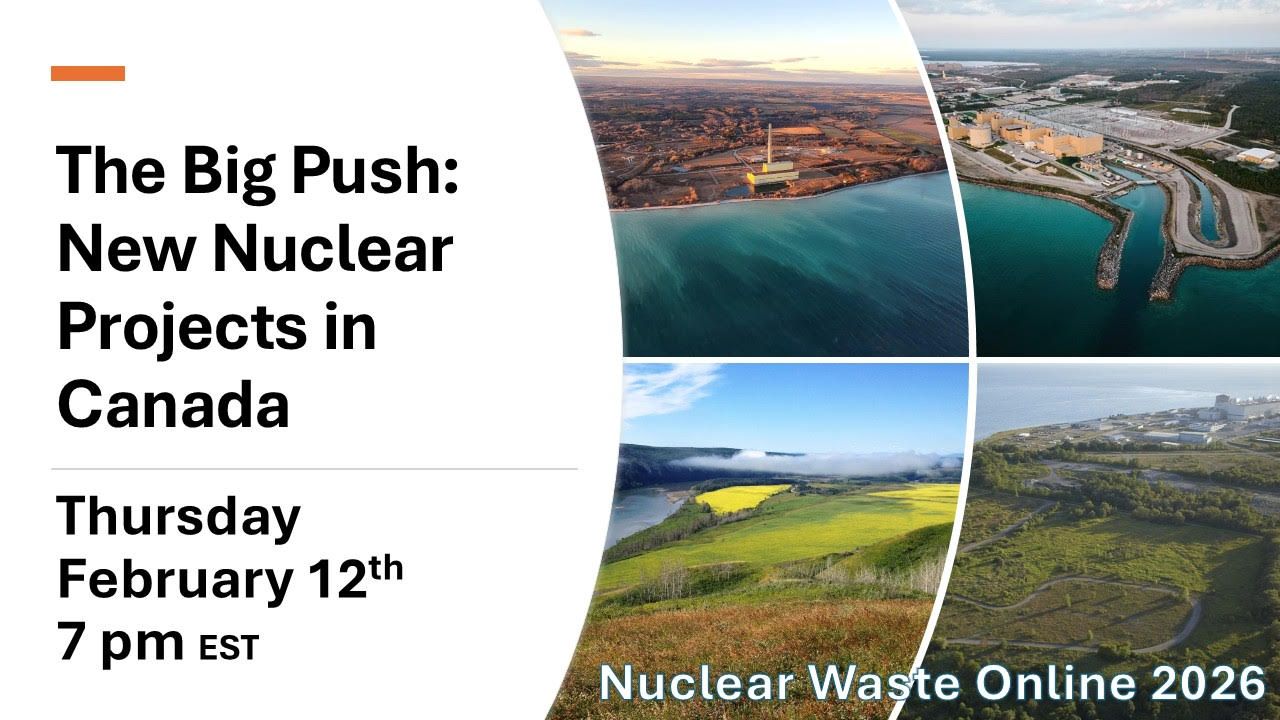
Thursday, February 12, 7 pm Eastern | 2nd of 4 sessions in the 2026 Nuclear Waste Online webinar series
Join a webinar on the push for new nuclear generation in Canada. Go to Northwatch.org to register or use the registration link https://us02web.zoom.us/webinar/register/WN_ZfWOf1GITqSRIZX8CB-A9w
-
Archives
- February 2026 (127)
- January 2026 (308)
- December 2025 (358)
- November 2025 (359)
- October 2025 (376)
- September 2025 (258)
- August 2025 (319)
- July 2025 (230)
- June 2025 (348)
- May 2025 (261)
- April 2025 (305)
- March 2025 (319)
-
Categories
- 1
- 1 NUCLEAR ISSUES
- business and costs
- climate change
- culture and arts
- ENERGY
- environment
- health
- history
- indigenous issues
- Legal
- marketing of nuclear
- media
- opposition to nuclear
- PERSONAL STORIES
- politics
- politics international
- Religion and ethics
- safety
- secrets,lies and civil liberties
- spinbuster
- technology
- Uranium
- wastes
- weapons and war
- Women
- 2 WORLD
- ACTION
- AFRICA
- Atrocities
- AUSTRALIA
- Christina's notes
- Christina's themes
- culture and arts
- Events
- Fuk 2022
- Fuk 2023
- Fukushima 2017
- Fukushima 2018
- fukushima 2019
- Fukushima 2020
- Fukushima 2021
- general
- global warming
- Humour (God we need it)
- Nuclear
- RARE EARTHS
- Reference
- resources – print
- Resources -audiovicual
- Weekly Newsletter
- World
- World Nuclear
- YouTube
-
RSS
Entries RSS
Comments RSS
 nuclear-news
Reblogged this on QA Web and commented:
Science follows AFTER and learns late FROM experience, even catastrophes. The validity of its observations can be filtered, slowed, diverted or blocked by one or two deep pocket sponsors. There is a science of quality: pioneered in Japan. “Quality” is expected: Aircraft test pilots, auto crash tests and road tests – all exist to protect the buying customer. I worked in nuclear power plants and experienced their QA and safety training. QA / QC does exist – so why is it bypassed when needed most? What kind of soulless corporate slug would try to obstruct safety, remediation and healing – and where is the public outcry needed to awake their conscience?