America’s plans for pre-emptive nuclear attack on Russia or China
US Plans ‘First Strike’ Nuclear Attack on Russia or China By Richard Cottrell, Rick Rozoff, and Bruce Gagnon Global Research, June 01, 2014RT the TruthSeaker Star Wars tested for Eastern Europe; US space weapons “unofficial declaration of war”; “soft assassinations” planned for last weekend’s EU election winners.
Seek truth from facts with Gladio, NATO’s Dagger at the Heart of Europe author and former European MP Richard Cottrell; Stop NATO newslist’s Rick Rozoff; and Bruce Gagnon of the Global Network Against Weapons and Nuclear Power in Space.
This is a rush transcript.
RT: US revives plans for a nuclear first strike on Russia. Coming up.
Announcer: “Soft assassinations” of anti-NATO leaders.
Star Wars tested for Eastern Europe.
And US space weapons quote an “unofficial declaration of war.”
RT: Secret clauses of NATO membership state, the US can and will depose Europe’s governments on the orders of the White House.
Giuseppe De Lutiis, NATO author: Even if the electorate were to show a different inclination, secret protocols guarantee alignment by any means.
RT: “By any means” means exactly that. Early NATO whistleblower Hans Otto exposed ‘”kill lists” of leading European politicians that defied investigators’ belief, but were subsequently confirmed by police.
Officers found 15 pages of members of the German Communist Party to be assassinated, and 80 pages on Germany’s Social Democrats, one of the two major parties in the country.
The documents state these assassinations would take place “in case of X”. X may refer, writes NATO scholar Dr. Daniele Ganser, to mass protests against a US-backed government, or an election victory of a genuinely left-wing party.
Instructions for such operations were kept at NATO military headquarters south of Brussels.
Der Spiegel reveals a quote “a strictly secured wing of the building. A grey, steel bank vault door prohibits trespassing to the unauthorized.” Papers on NATO operations in Europe are marked “American eyes only.”
When the EU Parliament officially demanded NATO stop these operations, which have become known by the codename Gladio, the US simply ignored it……http://www.globalresearch.ca/us-plans-first-strike-attack-on-russia-or-china/5384799
Canada’s nuclear industry plans propaganda campaign, especially in schools
 Canada’s uncertain nuclear future article is based on Canada’s Nuclear Energy Sector: Where to from here? published by Canada’s Public Policy Forum. 2 June 2014“……One approach to address the concerns of the anti-nuclear movement is to work with environmental NGO leaders, to foster trust and a less-polarised dialogue. Such dialogues will be difficult and will take time: workshop participants said this approach was successful in the forestry sector, but it required much time and effort over two decades. To gain social license and broader acceptance, groups outside the sector will need to initiate the discussions. The start of this dialogue can be seen in the US, with recent efforts by some prominent environmental NGO leaders, who had once been opposed to nuclear.
The often passionate public reaction against nuclear power is a significant challenge. Extensive media coverage of the Fukushima Daiichi disaster in Japan, bad memories of Chernobyl and Three Mile Island, and common misunderstandings around radiation mean the public is often reluctant to embrace nuclear power plant construction or to view nuclear as a viable energy source. A key to success in both the UK and France has been including information about nuclear energy in school curriculums.
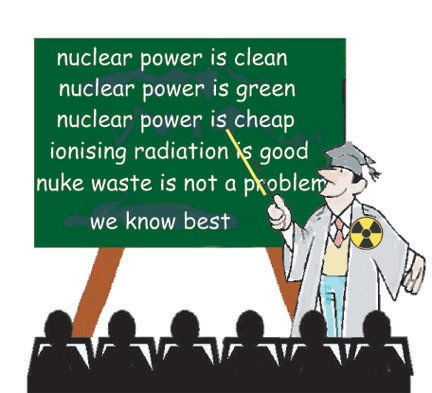
By educating students about nuclear energy, both countries have been successful in helping to dispel myths around safety and security that persist elsewhere. These countries have shown that education could be a useful first step to engaging citizens in a more enlightened discussion on nuclear energy. Given the diverse energy sources in Canada, school boards would be wise to develop science programmes that explore all types of energy and allow students to be exposed to and learn about the positive and negative aspects of all of them.
Amid serious doubts, the Fukushima ice wall construction starts
 Japan builds underground ice wall at Fukushima nuclear plant http://www.abc.net.au/news/2014-06-02/japan-builds-fukushima-underground-ice-wall/5495358 Japan has started work on an underground ice wall at the crippled Fukushima nuclear plant, freezing the soil under broken reactors to slow the build-up of radioactive water. The wall is intended to block groundwater from nearby hillsides that has been flowing under the plant and mixing with polluted water already there.
The Nuclear Regulation Authority, the national watchdog, last week authorised construction of the ice wall at Fukushima Daiichi, owned and operated by Tokyo Electric Power (TEPCO).
“We started construction of the frozen earth wall this afternoon,” a TEPCO official told a news conference in Tokyo on Monday.
The government-funded scheme will see 1,550 pipes laid deep in the soil through which refrigerant will be piped to create the 1.5-kilometre frozen wall that will stem the inflow of groundwater.
“We plan to end all the construction work in March 2015 before starting trial operations,” the company official said, adding that the ice wall could be fully operational several months after construction was completed.
The ice wall is the latest in a series of clean-up operations being carried out after the worst nuclear disaster in a generation, in which three reactors went into meltdown.
The idea of freezing a section of soil, which was proposed for Fukushima last year, has previously been used to build tunnels near watercourses.
However, scientists point out that it has not been done on this scale before nor for the proposed length of time.
Coping with the huge – and growing – amount of water at the tsunami-damaged plant is proving to be one of the biggest challenges for TEPCO.
As well as all the water used to keep broken reactors cool, the utility must also deal with water that makes its way along subterranean watercourses from mountainsides to the sea. Last month TEPCO began a bypass system that diverts groundwater into the sea to try to reduce the volume of contaminated water.
Full decommissioning of the plant at Fukushima is expected to take several decades.
An area around the site remains out of bounds, and experts warn that some settlements may have to be abandoned because of high levels of radiation following the March 2011 accident.
Nuclear company Exelon spends $millions buying support in Washington
 Nuclear Giant Exelon Launches Front Group to Cover Its Assets Elliott Negin HUFFINGTON POST 2 June 14,
“……..Exelon Already Holds Sway in Washington
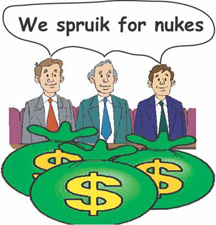
Nuclear Matters is just the latest gambit of a very powerful political player. Over the last five years, Exelon has spent millions on political candidates and tens of millions on lobbying, and has taken advantage of its close ties with the Obama administration to weaken or stymie stronger nuclear plant safeguards.
According to the nonpartisan Center for Responsive Politics, Exelon has spent nearly $8 million on political campaigns since 2008, more than any other private electric utility. Over that same time period, Exelon also spent $34.6 million on lobbying, putting it in the top 10 among electric utilities. In addition, Exelon is one of the biggest corporate donors to trade associations, pro-business alliances and other politically active nonprofits, according to a January report by the Center for Public Integrity. In 2012, Exelon gave $13.6 million to approximately two dozen nonprofits, the second-largest amount voluntarily disclosed among the Fortune 300 companies CPI reviewed.
Exelon’s lobbyists also have enjoyed unparalleled access to the Obama administration, according to an August 2012 New York Times exposé. The Times provided several examples of how the company exerted its influence, including delaying and weakening a proposed EPA rule to prevent power plant water intake systems from killing fish and other aquatic life.
The Times also reported that Exelon joined with NEI and other plant owners to challenge the NRC’s post-Fukushima safety recommendations. Specifically, they opposed a proposed requirement that they install filters on hardened vents at 31 boiling water reactors to help prevent radiation discharges into the environment in the event of an accident. Those reactors are similar in design to the six at the Fukushima facility.
Filtered vents are now required in Japan and much of Europe, and the Nuclear Regulatory Commission technical staff recommended they be installed here. But Exelon and the rest of the U.S. nuclear industry, loathe to spend hundreds of millions of dollars on filters, insist there are other ways to achieve the same result and lobbied hard to avoid the upgrade.
In early 2013, more than 50 of the industry’s friends in Congress sent letters to the NRC requesting that the commissioners reject the filtered vent recommendation and slow down the implementation of other post-Fukushima safety reforms. A number of the signatories have reactors in or near their districts, and most have received sizeable campaign contributions from the nuclear industry. Two sign-on letters, for example, came from House members, one from 21 Republicans and the other from 26 Democrats. Since 2008, the nuclear industry gave more than $3.32 million to the 41 of the letters’ 47 signatories. Roughly 30 percent of that funding came from Exelon.
The industry prevailed — for the time being. Despite the fact that the NRC technical staff provided ample evidence that filtered vents are a sensible, cost-effective measure that would protect nearby communities, NRC commissioners issued an order requiring owners of the 31 reactors to upgrade their hardened vents that stopped short of requiring filters. Instead, the commissioners gave their staff two years to review all the options for reducing radiation releases. The NRC will then open the proposed rule to public comment and finalize it by the end of 2017…… http://www.huffingtonpost.com/elliott-negin/nuclear-giant-exelon-laun_b_5428994.html
In Australian Federal Court, Aborigines continue the fight against radioactive waste dumping on their land
 Nuclear waste dump on Aboriginal land invalid, court told The West Australian, 3 June 14. Sydney (AFP) – The earmarking of a remote Australian outback area as a nuclear waste dump was invalid because officials failed to contact all traditional Aboriginal landowners affected, a court heard Monday.Muckaty Station in the Northern Territory was nominated in early 2007 as a site to store low and intermediate radioactive waste under a deal negotiated with the Aboriginal Ngapa clan.
While Australia does not use nuclear power, it needs a site to store waste, including processed fuel rods from the country’s only nuclear reactor at Lucas Heights, on the outskirts of Sydney,…..Opponents have fought against the dump for years, with a trial starting in the Federal Court in Melbourne Monday alleging Muckaty’s nomination was invalid due to a failure of the government and the land council to obtain the consent of all Aboriginal owners.
“What we’re here to say is ‘no more’ and that this process was so legally flawed that it is invalid,” Ron Merkel, who is representing traditional owners, told the court.
“The opposition is in no small part based on a spiritual affiliation to the land and that radioactive waste will poison the land,” he said in comments cited by Australian Associated Press.
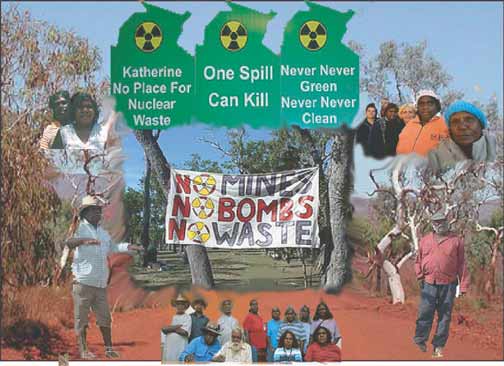
The court was told the consent of all groups with a claim to the land was required for the facility to go ahead, but some Aboriginals whose country was affected have never had a chance to voice their concerns until now……..Speaking to reporters, Kylie Sambo, of the Warlmanpa people, said the idea of a waste facility on the land, which is in the centre of the country, was “poison”.
“We don’t want it to spoil our country because we love our land and we’ve been there for centuries,” she said. “My uncle once told me, ‘You may think you own the land, but in fact the land owns us’.”
The Australian Conservation Foundation said the case raised questions about the country’s management of long-lived radioactive waste.
“Australia has never has an independent assessment of how best to manage radioactive waste; now we urgently need one,” campaigner Dave Sweeney said.
The case is set to run for five weeks. https://au.news.yahoo.com/thewest/world/a/24084083/nuclear-waste-dump-on-aboriginal-land-invalid-court-told/
Doom and gloom now permanent for the uranium industry
We are heading for a uranium crisis , Investor Intel, June 2, 2014 by Robin Bromby“……Welcome to the “perma-gloom” with spot uranium now at $28.25/lb. But it really does portend a very troubling situation. We could be on the brink of a real uranium crisis, one that could have serious ramifications down the road. This is because, on top of all the doubts about nuclear post-Fukushima and the slowness of Japan to get reactors back on line, uranium is caught up in the general malaise affecting the mining industry ……….the uranium price has fallen by 30% over the past year. If it keeps falling, and it well might, more and more companies will either go into hibernation mode or quit the sector all together ……..

A surer sign that all is not well can be evidenced from an ominous trend — exploration companies quitting the sector. Others are making cuts: Cameco closed its Cheyenne office, while BHP Billiton has deferred its expansion at the world’s biggest uranium deposit, Olympic Dam in South Australia. Australia’s Paladin Energy (ASX:PDN) has put one of its mines, Kayelekera in Malawi, on care and maintenance.
Back in 2007-8, after spot uranium hit $137/lb, this was the place to be. Suddenly every mining explorer was keen to be in the uranium hunt. At one stage, more than 260 companies listed on the Australian Securities claimed to have uranium projects (many of them in what the Canadian miners call “moose pasture”).
Now, it seems, those small number remaining can’t wait to get out. FYI Resources (ASX:FYI), which got into uranium after quitting the eye care business (it’s previous name was Freedom Eye) in 2009, is now concentrating on potash in Thailand. Uranex (ASX:UNX) is staying in Tanzania, but has put its uranium on the back-burner in order to pursue graphite.
But possibly the most startling change was reported today. Junior United Uranium (ASX:UUL) which has six projects in Western Australia [and A$3.41 million in the bank as at March 31] is getting out of uranium and into — wait for it — property development.You can’t exactly blame the directors. The shares are trading at a discount to the company assets (the market capitalisation being just A$2 million), all its projects are early-stage ones that will require considerable sums to explore and may not turn out to be viable, no one is investing in the sector, the uranium price is depressed as is the resource sector generally.
Just two weeks ago another uranium explorer working in Western Australia, Prime Minerals (ASX:PIM), signalled it was changing direction. It is merging with Cocoon Data Holdings which has data security software. The news lifted Prime’s stock from A0.9c to A2.2c.
Back in 2007, announcing you were getting into uranium could see your stock price double. Now announcing you’re switching focus away from uranium does the trick. This is not a good trend. http://investor
USA’s plans for nuclear weapons in Space

 US Plans ‘First Strike’ Nuclear Attack on Russia or China By Richard Cottrell, Rick Rozoff, and Bruce Gagnon Global Research, June 01, 2014 RT the TruthSeaker Star Wars tested for Eastern Europe; US space weapons “unofficial declaration of war”; “soft assassinations” planned for last weekend’s EU election winners. “……/Bruce Gagnon, Global Network Against Weapons in Space: This is in the planning process today. The US Space Command practicing engaging in a first strike attack and this is the key element here. These are first strike attack planning, these so-called missile defense systems are key elements in US first strike attack planning. The idea is to hit China or Russia first with a first strike, and then when they try to fire their nuclear retaliatory capability, it is then that the so-called missile “defense” systems would be used to pick off any retaliatory strike, so after a first strike sword is thrust into the heart of China or Russia, then the missile defense shield would be used to pick off any retaliation giving the US the a “successful” first strike attack.
It has nothing at all to do with defense, it has nothing to do with freedom or democracy, or any of those words that are used all the time to disguise the true intentions; it’s all about full spectrum dominance.
RT: Several decades ago the first Star Wars initiative faced intense public and industry debate.
Today the US is controlled by just six mainstream media, all totally suborned to the White House. The result is an Orwellian silence on perhaps the most dangerous issue today.
Europeans may decide they want their leaders chosen by NATO, or even that they support nuclear strikes on China and Russia.
Since the US-controlled mainstream’s never even informed the public these apocalyptic plans are on the agenda, the first people may hear of it, would be this. Seek truth from facts. This is The Truthseeker.http://www.globalresearch.ca/us-plans-first-strike-attack-on-russia-or-china/5384799
Renewables marking the end of the line for nuclear power?
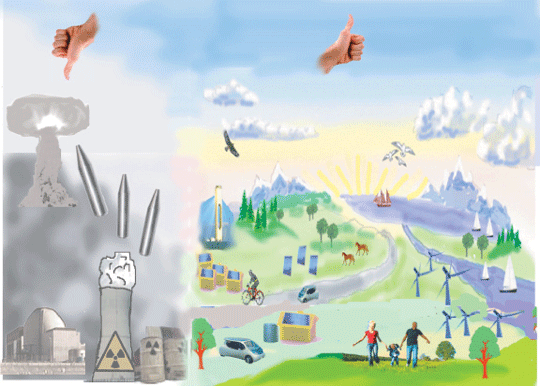 Renewables: The end for nuclear power? http://www.cnbc.com/id/101710759 Anmar Frangoul | Special to CNBC.com Friday, 30 May 2014 It took the Fukushima disaster to put the future of nuclear power in doubt – but could renewable energy mean the end for nuclear power?
In March 2011, disaster struck Japan. An immensely powerful earthquake and tsunami resulted in a catastrophic meltdown at the Fukushima Daiichi nuclear power plant. In the aftermath of the disaster, using atomic power to generate electricity came under intense scrutiny – resulting in both Japan and Germany deciding to phase out nuclear power.
With anti-nuclear sentiment strong in both countries, utility companies are coming under intense pressure, with profits being squeezed and their centralized business model facing an increasing challenge from renewables
It’s a complete destruction of the business model,” Dieter Heuskel, a Dusseldorf based senior partner at the Boston Consulting Group, told CNBC’s Energy Future. “They no longer run with the utilisation that they were planned to run, so there’s a huge destruction of not only revenue but also of profit pools, and they have to reinvent themselves completely,” he added.
Experts warn that the move to a focus on renewables could soon leave nuclear power redundant. “If you accelerate this revolution to a kind of power economy that is very different from what they [nuclear power utility companies] represent, well, you pull the rug even more out from under their feet,” Andrew DeWit, from Rikkyo University, told Energy Future. n April of this year, however, the Japanese government announced a reversal of its decision to phase out nuclear power, despite fierce public opposition.
This places Japan in stark contrast to Germany, where the government is pushing ahead with plans to have 35 percent of its electricity sourced from renewables by 2020, and 50 percent of its electricity from renewables by 2030.
This ambition has fostered an environment where innovation in clean energy is encouraged, giving German businesses specializing in renewables a competitive advantage.
The German government’s energy policies have also forced big utility companies to change the way they operate.
“We are focusing our business towards the more de-central and more renewable aspects,” Peter Terium, CEO of RWE AG, told Energy Future. “We can develop things like smart homes, smart grids – that’s needed in any kind of transition of society,” he added. s Japan, then, in danger of missing the boat when it comes to innovation in renewables? “Hitachi, Toshiba, Panasonic etcetera, they’re very deeply involved in smart city projects around the world,” DeWit said. “You’ve got all kinds of good things happening, and, if you do that very well, to a globally competitive extent, well then you’ve got an export industry.”
Support, however, for this sector is still needed, DeWit added. “Without a very visible effort co-ordinated by the central government, and particularly through the cabinet, investors face too much investor risk.”
Exelon and Nuclear Energy Institute set up A Tool to Squelch Renewables
Nuclear Giant Exelon Launches Front Group to Cover Its Assets Elliott Negin HUFFINGTON POST 2 June 14, “……Exelon and NEI clearly know their way around Washington. But some arguments sound a lot less self-serving when they appear to come from a disinterested third-party. A case in point is Nuclear Matters’ contention that the United States has to maintain its entire fleet of nuclear power plants to stave off the worst consequences of global warming.
To be sure, nuclear power is the largest source of low-carbon electricity in the country, a major selling point. But Nuclear Matters’ website ominously warns that “the closings of just a handful of nuclear energy plants would have a devastating environmental impact on our country and make it nearly impossible for us to meet our clean energy or carbon reduction goals.”
Is that right? Not quite. As it turns out, ramping up renewables — especially wind and solar — and energy efficiency could replace a significant amount of nuclear generation, and do it in a hurry.
Let’s look at the numbers. What would happen if Exelon closed the five reactors in Illinois that energy analysts have identified as ripe for retirement? The five reactors — one at Clinton and two each at Byron and Quad Cities — have a rated capacity of 5,203 megawatts (MW).
In 2012 alone, the U.S. wind industry installed the functional equivalent. It added 13,131 MW of new capacity, which, at a 35 percent capacity factor — that is, the percentage of time the generator is actually producing power — would produce about the same amount of electricity as Exelon’s five reactors operating at a 90 percent capacity factor. According to the American Wind Energy Association, there is currently 17,200 MW of new wind capacity under construction or with signed power purchase agreements that will be built over the next two to three years. Those wind farms will produce the equivalent output of more than six typical 1,100 MW nuclear reactors.
Now add solar power to the mix. According the Solar Energy Industries Association, the solar industry installed 8,120 MW of new capacity in 2012 and 2013, and is projected to install another 25,000 MW by 2016, which altogether will produce the equivalent output of about seven nuclear reactors. And let’s not forget energy efficiency. The American Council for an Energy Efficient Economy projects that by 2020, existing energy efficiency resources standards in 26 states will save the equivalent output of more than 27 reactors.
In other words, renewables and efficiency could go a long way to replace nuclear plants — and retiring coal plants–to dramatically reduce U.S. carbon emissions. While more transmission capacity would be needed for wind and utility-scale solar projects, there is progress on this front. In addition to four new transmission projects constructed last year, which could support 10,000 MW of new wind capacity, there are 15 projects in advanced stages of development that could support an additional 60,000 MW of wind in Plains, Midwestern and Western states by 2018. These transmission projects also could open up new markets for nuclear plants.
But you’re not going to hear about the potential of renewables and energy efficiency from Nuclear Matters. Exelon started the front group for the same reason NEI created the CASEnergy Coalition: to prop up the nuclear industry. And not only does Exelon want state and federal authorities to rescue its financially ailing reactors, it also has another goal in mind. A key component of Exelon’s game plan is to hamstring its low-carbon competition, namely the wind and solar industries. More on that in my next blog later this week. http://www.huffingtonpost.com/elliott-negin/nuclear-giant-exelon-laun_b_5428994.html
______________
Elliott Negin is the director of news and commentary at the Union of Concerned Scientists. Steve Clemmer, UCS director of energy research and analysis, and Mike Jacobs, a UCS senior energy analyst, contributed to this blog.
Belarus radiation warning for Mid May 2014 and beyond? – Location near Chernobyl ! During International hockey match! EURDEP emergency services data deleted!
“….it is interesting that if there has been an incident in the Chernobyl work site or other that no one has been told about it. A complete lack of transparency exists and the public is denied the right to know. Some food for thought for those countries deciding on nuclear energy as a way to get” cheap” and “safe” electricity. If a bird hits a wind turbine we are told about it, if a nuclear accident or incident occurs we are not!…”
UPDATE h/t Karen from rainbow warriors on face book..
“From May 9-25, 2014, Minsk will host the World Ice Hockey Championship.” says it all !! just as the radiological incident occurred .. what is it with the nuclear corporations and their state sponsored psychopaths wanting to irradiate athletes and sportsmen??
“Background levels of radiation were previously monitored by the U.S. Embassy and other organizations and, to date, have not exceeded levels found on the Eastern seaboard of the United States.” (BS detected!!)
“Belarus has no operating commercial nuclear reactors but is constructing one 30 kilometers from the Lithuanian border with financing and technical support from Moscow.”
https://www.osac.gov/Pages/ContentReportDetails.aspx…
Op Ed by arclight 2011part2
Date 3 may 2014
posted to nuclear-news.net
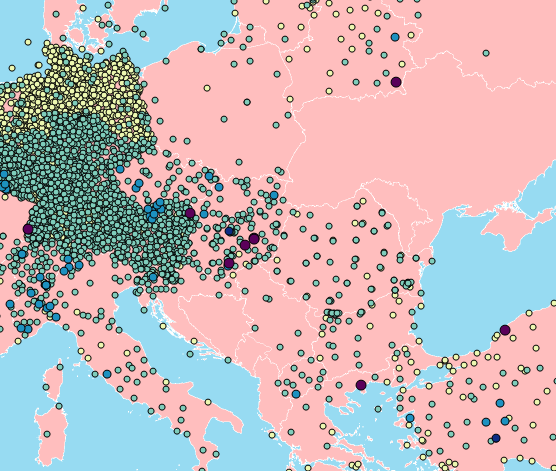
Today I looked at EURDEP radiation mapping and got an interesting surprise. Belarus came up as having a high reading but when i tried to access the data there was nothing there. Usually Belarus does not have its radiation mapping available on EURDEP but this last month of May it did. The reason for this might be that an incident occoured at the Chernobyl site and that the emergency mapping was switched on so that various radiological organisations and emergency services would be able to use it.
It is likely that the incident is now past but it might be worth noting that a well publicised international hockey match was being played in May. In fact anti nuclear and democratic activists were rounded up and imprisoned as early as April. Of course this would mean that an international consensus of nuclear organisations let this hockey match go on even though a radiological incident was underway.
If there was an incident it might explain the delay in construction of the sarcophagus as a clean up would have to be done before construction resumed.
Of course you might want to wonder what evidence there is for this.
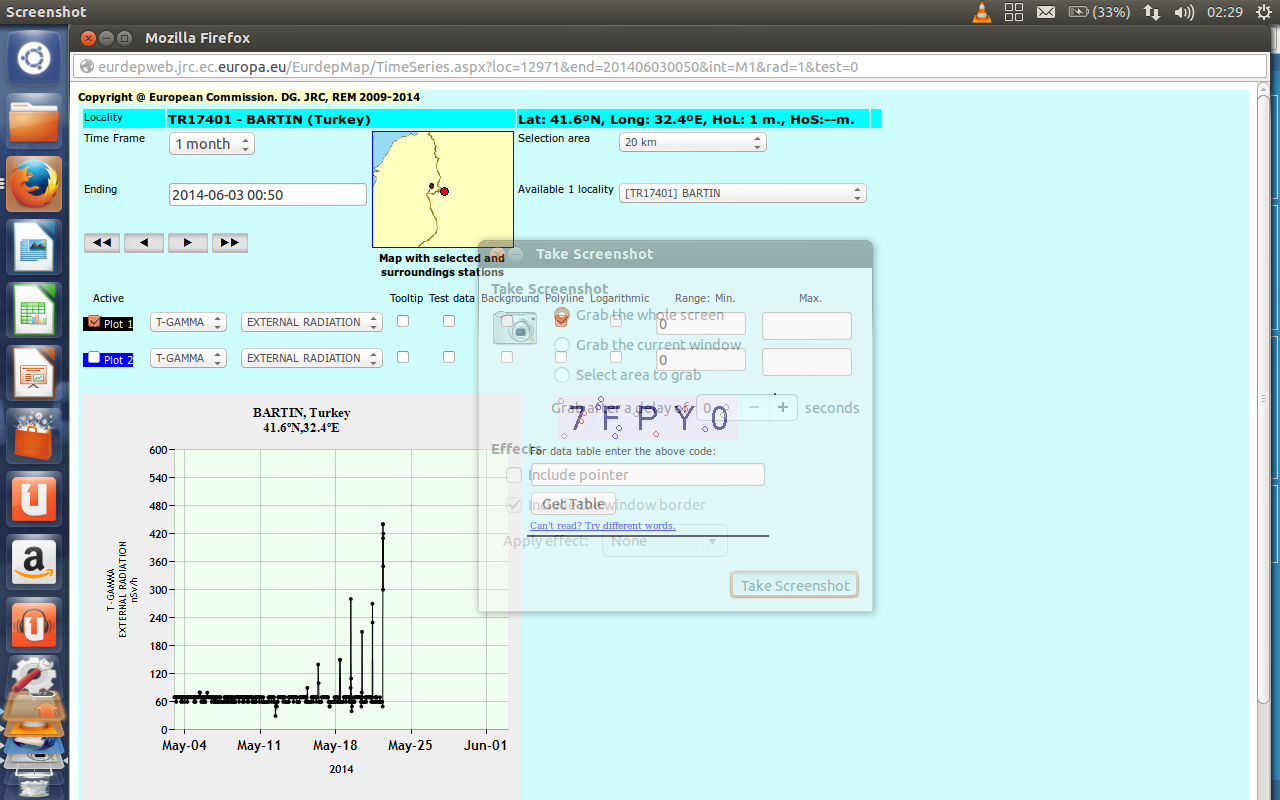
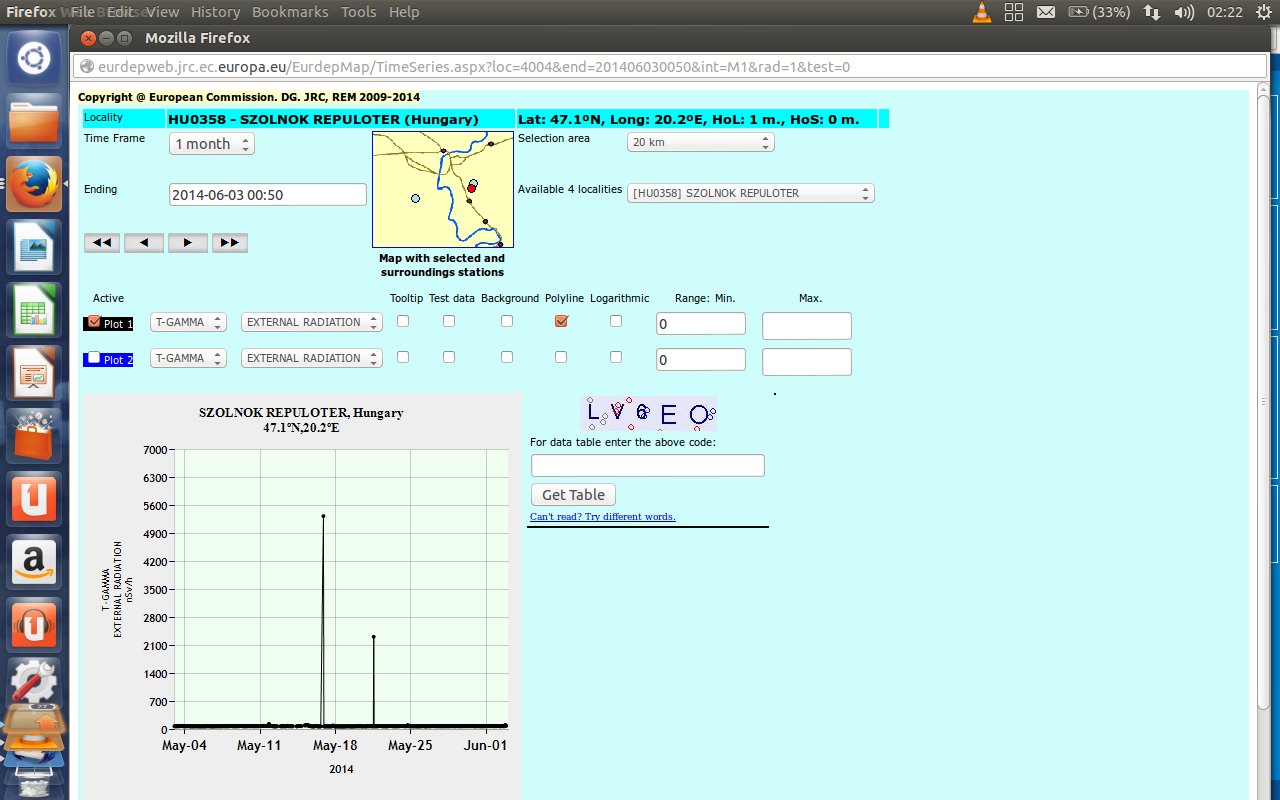
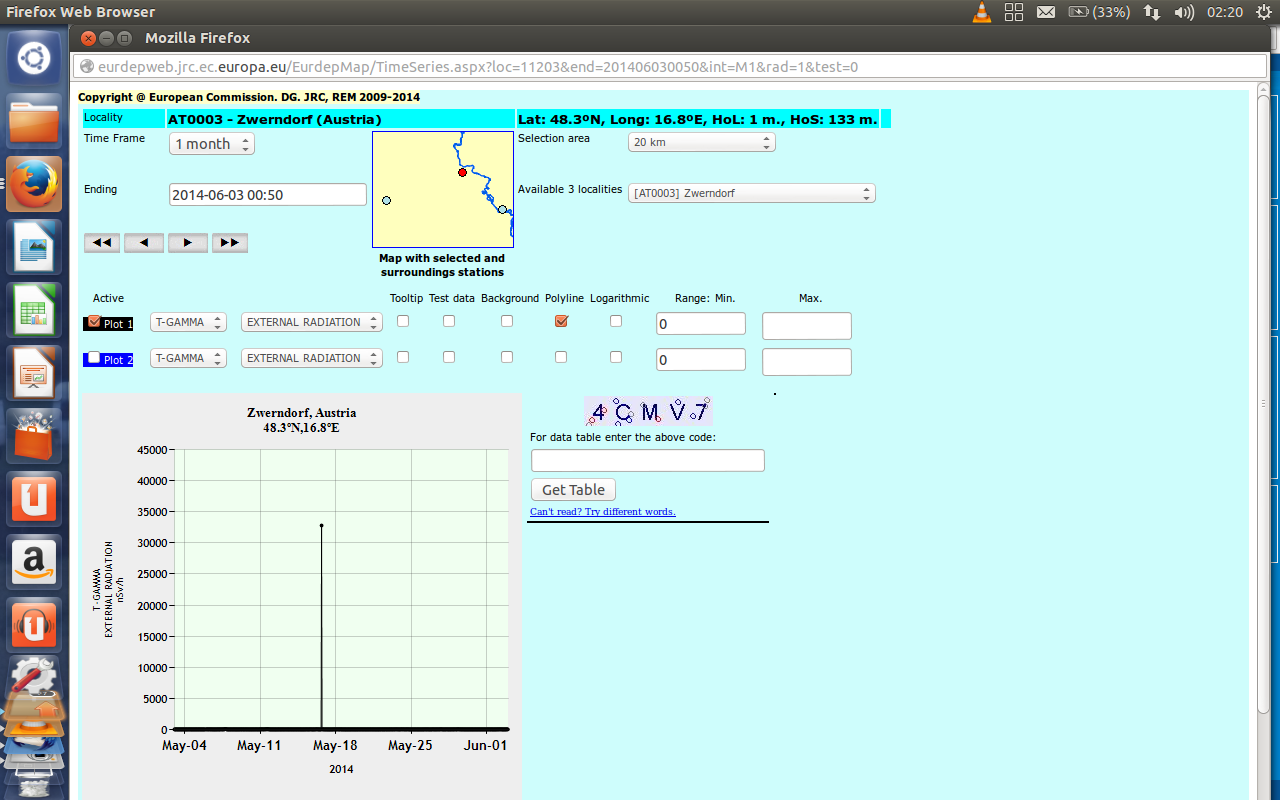
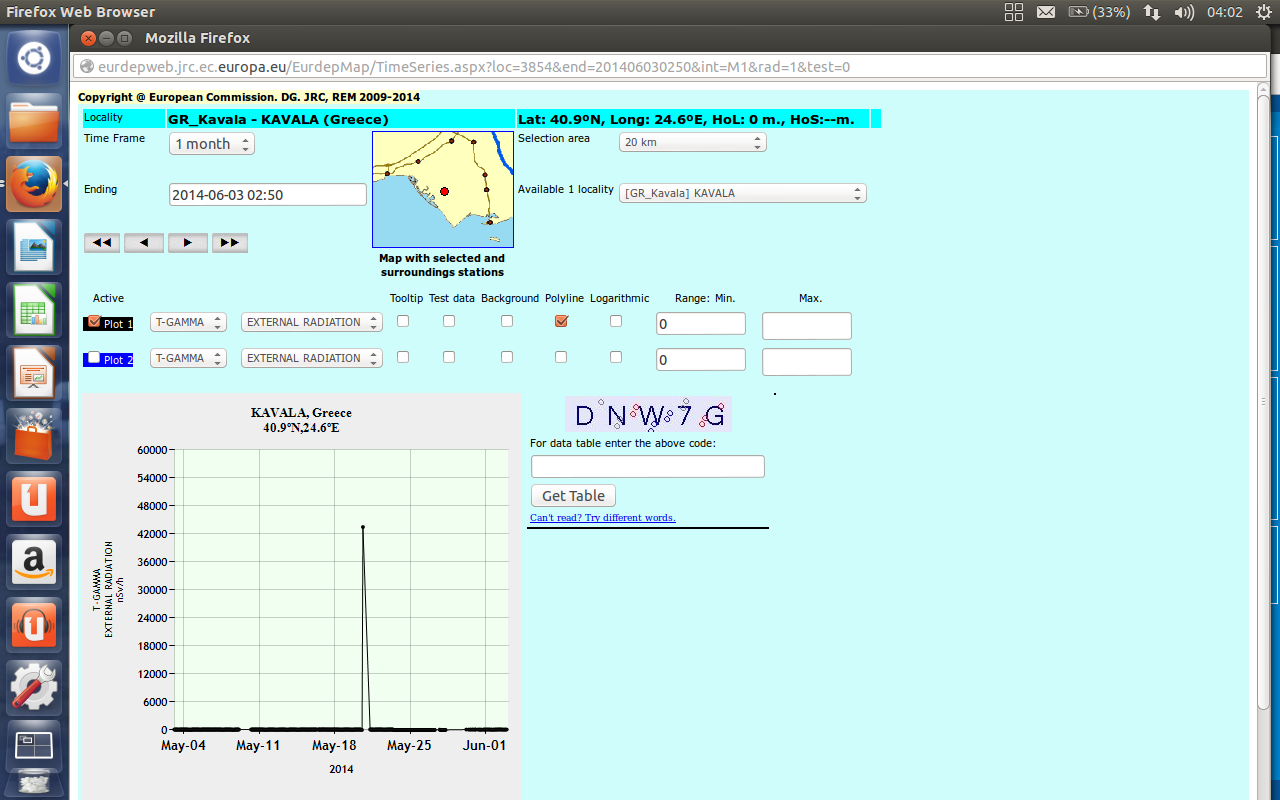
Firstly, other odd monitoring sites around eastern Europe such as in Austria, Greece and Hungary showed high peaks in mid May and about a week later. On the northern border of the Black Sea another monitoring site in Turkey showed very high peaks. Also in eastern France.
Secondly, all the monitoring sites in Belarus that were switched on had the data stripped. This is because there is a parallel monitoring server with more detail run by the IAEA and associates and the EURDEP public monitoring map is only for the emergency services.
I might point out that the IAEA usually asks monitoring station operators to delete these spikes in radiation as NORM or normal radiation. Some monitors such as the UK comply and some such as Ireland leave a gap and a few others leave the spikes. (In fact the east coast of ireland had on such incident a few days ago but it does no show up on the UK monitors across the channel where the radiation was likely to have come from)
Setting the map from 1 month to 1 week and looking at the Belarus section of EURDEP I could see that the “purple spot” disappeared which allowed me to ascertain that no high peaks were seen by the system, so the spot could relate to the other peaks around the eastern end of Europe.
Questions remain of course and as their is a severe lack of transparency in the nuclear industry as it tries to resalvage its losses since the triple nuclear meltdowns in Fukushima in Japan where bad news comes out weekly if not daily even though the government has threatened up to ten year prison sentences and other punitive actions to those that release this information to the outside world. There are many similarities to Japan and Belarus as both are using dictatorial laws to repress dissent with the blessings of the international community of corporations.
As an aside there are no radiations available from Ukraine and that is a country that might get severely hit by a major release from Belarus. I also wonder if the Russian troop pullback from the Ukrainian border might have been to protect the Russian troops from fallout contamination (if the incident is on going).
There is much conjecture in my above posit I admit but I was struck with the way everything connected and thought i would share my thoughts with you all. Below is some screenshots that i compiled and i will leave a link so you can play with the EURDEP mapping system your selves to see what posits you might come up with.
Finally, it is interesting that if there has been an incident in the Chernobyl work site or other that no one has been told about it. A complete lack of transparency exists and the public is denied the right to know. Some food for thought for those countries deciding on nuclear energy as a way to get” cheap” and “safe” electricity. If a bird hits a wind turbine we are told about it, if a nuclear accident or incident occurs we are not!
Link to the EURDEP public and emergency services mapping system:
http://eurdepweb.jrc.ec.europa.eu/EurdepMap/Disclaimer.aspx
(Click on “I agree” set the dropdowns to |”maximum” and 1 month to see the purple dots appear. Right click the mouse until you see the hand, then narrow in on any areas of interest by scrolling the mouse and then click on the monitoring post that you are interested in. There are drop downs on the page that comes up with the chart. I would recommend ” ticking “polyline” to clearly see the peaks).
Measurements in nano sieverts per hour (nSv/h).. move decimal point over to left by 3 decimal places to convert to microsieverts per hour (mcSv/h).
More on links;
https://nuclear-news.net/?s=chernobyl (Most recent links are first)
USA’s EPA proposes New Power Generation Emissions Rules
 EPA Proposes New Power Generation Emissions Rules http://www.energymatters.com.au/index.php?main_page=news_article&article_id=4329 The USA’s Environmental Protection Agency has proposed regulations with a goal of slashing carbon dioxide emissions from existing coal fired power plants by as much as 30 percent by 2030.
The USA’s power generation sector is the nation’s biggest source of carbon emissions; representing around 38 percent of the total load.
According to the EPA, the average age of the nation’s coal plants is 42 years. Under the EPA’s proposal, which was directed by President Barack Obama; emission targets for power plants could be met in a few different ways – through power plant upgrades, changing from using coal as a fuel to natural gas, enhancing energy efficiency or increasing uptake of renewable energy.
Rhone Resch, president and CEO of the Solar Energy Industries Association (SEIA), said the announcement marked a defining moment in American history.
“As a nation, we’re poised to finally turn the page from sooty smokestacks to sunnier skies,” he said.
Mr. Resch says the nation’s solar industry is ready to help states meet the challenge.
“Simply put, solar can be a real game-changer for regulators looking to meet the changing needs of their state. Why? Because solar energy is reliable, cost competitive, environmentally friendly and easily scalable, fitting the needs of any state’s Section 111 (d) compliance plan.”
As we reported earlier, cumulative operating solar PV capacity reached 13,395 MW at the end of Q1 2014 in the USA and 74% of new electricity generation capacity in the USA added during the period was solar.
“Solar is now the fastest-growing source of renewable energy in the United States, employing 143,000 Americans and accounting for nearly 30 percent of all new electric generation capacity installed in 2013 – second only to natural gas. All totalled, solar is generating enough clean, reliable and affordable electricity to power 3 million homes,” said Mr. Resch.
The EPA says the proposed regulations will result in the avoidance of up to 6,600 premature deaths, up to 150,000 asthma attacks in children, and up to 490,000 missed work or school days – and this will provide up to $93 billion in climate and public health benefits. It also states the efforts will reduce electricity bills roughly 8 percent by increasing energy efficiency and reducing demand in the electricity system.
With the renewable energy revolution gaining pace and spurred on by initiatives such as the EPA proposes, it seems investing in coal is becoming an increasingly risky affair.
Settlement reached between Vancouver Province and uranium company
 Vancouver’s Boss Power closes on $30-million settlement with province over uranium ban By Tyler Orton http://www.biv.com/article/20140602/BIV0108/140609993/vancouvers-boss-power-closes-on-30-million-settlement-with-province Mon Jun 2, 2014 A Vancouver-based resource company has closed on a $30-million settlement with the B.C. government, officially putting to bed a nearly six-year-old lawsuit.
The province imposed a halt on all uranium exploration and development in April 2008. Boss Power Corp. (TSX.V: BPU) filed suit later in the year claiming the B.C. government expropriated the company’s interest in its Blizzard uranium property near Kelowna when it imposed a “no registration reserve” under the Mineral Tenure Act.
The reserve allowed the government to ensure no future claims included the rights to uranium, however, Boss Power argued the property was registered before this ban went into effect.
Boss Power and Victoria settled for $30 million in 2011 before the case went to court.
The final amended settlement will divide the settlement up between other parties with interests in the property.
About 80% of the settlement will be held in a trust until Boss Power is reorganized into two different corporations, an arrangement expected to be approved in August.
Dodgy future for Canada’s nuclear industry
 Canada’s uncertain nuclear future article is based on Canada’s Nuclear Energy Sector: Where to from here? published by Canada’s Public Policy Forum. 2 June 2014 “……. over the past two decades declining R&D funding has combined with an absence of new domestic nuclear power plant construction to push the sector into stagnation. Political and public support, once a source of strength and pride for the nuclear industry, has waned to such an extent that it is one of the greatest contributors to nuclear energy’s decline. Recent decisions by political leaders, including moratoria on uranium mining in Quebec, Nova Scotia and British Columbia, Ontario’s hesitancy to build proposed new reactors, and the federal government’s privatisation of the reactor business of Atomic Energy Canada Limited (AECL), are seen by many as evidence that government is now looking to redefine its role in the sector……..
Challenges
The following serious challenges have significantly impaired the industry’s ability to compete in domestic and international markets:
High capital costs. In today’s uncertain economic environment, it is difficult to make the political case that public funds should be committed to large, expensive energy projects that may not come online for nearly a decade. Typically, investment costs of nuclear power plants account for around 60% of total project lifecycle costs.
Unclear foreign investment rules. Organisations that constitute a “strategic asset” to Canada may be barred from foreign purchase or takeover. In fact, the phrase “strategic asset” is not discussed in the Canada Investment Act, but its frequent mention by federal and provincial politicians has created confusion in Canada and abroad. As a result, there is uncertainty around whether foreign entities will be able to purchase Canadian nuclear energy companies and assets, or even compete in the Canadian market. In the absence of a transparent investment framework, it is difficult for international organisations to expand or develop operations in Canada that could generate greater economic growth.
A historical CANDU monopoly places the sector in a niche market.The Canada Deuterium Uranium (CANDU) reactor has been the flagship of Canada’s nuclear energy sector for almost 50 years. But since the nuclear energy market shifted to light water reactors (LWRs) — approximately 30 years ago, when France started procuring LWR technology from the US — heavy water reactors have become a minority technology in the global market.
Acquiring and maintaining social license. Among the greatest challenges facing stakeholders in the nuclear sector is the lack of social license for new nuclear power plants. This concern does not necessarily exist in communities near power plants or uranium mines, but it is a broader perspective within the general population. Concerns around safety, spent fuel storage, and high capital costs have decreased public and political support for large nuclear construction programmes. Fears over nuclear proliferation and plant meltdowns and accidents, like those at Chernobyl, Three Mile Island and Fukushima, are common…..
Few political champions. An important element in any country with a successful nuclear energy programme is leaders who champion the merits of nuclear energy, often at great political risk. Overcoming the concerns of the public is much more difficult without this political support……
The University of Washington Medical Center tracking patients’ radiation exposure
 Hospital turns to big data to track, reduce radiation exposure June 2, 2014 To reduce patient exposure to radiation, the University of Washington School of Medicine is taking advantage of big data.Dose tracking technology adopted by the medical center can pull information from multiple imaging devices, then sort it into a database where it can be sliced and diced, according to InformationWeek. UW Medical Director William Shuman said that the data helps to “validate” its imaging efforts, in addition to pinpointing areas in need of improvement.
: Hospital turns to big data to track, reduce radiation exposure – FierceMedicalImaging http://www.fiercemedicalimaging.com/story/hospital-turns-big-data-track-reduce-radiation-exposure/2014-05-30#ixzz33clZoajc
Medical Center Uses Analytics To Reduce Radiation http://www.informationweek.com/healthcare/analytics/medical-center-uses-analytics-to-reduce-radiation/d/d-id/1269179
Uranium mining’s grave risk of polluting aquifer in Southern Black Hills, South Dakota
Risks too great to allow Hills uranium mining Jerry Wilson Argus leader 1 June 14, Chinese and Canadian-funded Powertech wants to mine uranium in the Southern Black Hills by the in situ method — dissolving uranium in the aquifer, pumping it to the surface for extraction, then dumping polluted water deep into the Earth.
Twice before, foreign corporations mined uranium in the Hills and left a radioactive mess. The South Dakota Department of Environment and Natural Resources lists 263 abandoned uranium sites in the state. Radioactive material and toxic heavy metals have polluted tributaries of several South Dakota rivers.
We needn’t repeat the mistakes of neighboring states. The Crow Butte mine near Crawford, Neb., has a long history of spills and “excursions” of radioactive water into the aquifer. And the Wyoming Department of Environmental Quality cited the Smith Ranch/Highland mine near Glenrock, Wyo., for “an inordinate number of spills, leaks and other releases … pond leaks, well casing failures and excursions.” The cleanup was projected to cost $150 million, four times the company’s bond.
Below the Inyan Kara aquifer that Powertech wants to mine lies the Minnelusa aquifer, then the Madison, all vital to future life in the region. A study of risks to the Madison aquifer by three South Dakota School of Mines and Technology researchers concluded that “Water supplies for Rapid City … and the surrounding suburban and rural areas are extremely vulnerable to contamination.” The DENR’s mission statement is clear — “protecting South Dakota’s environment and natural resources for today and tomorrow.” Unfortunately, our Legislature passed a law –– written by Powertech lobbyists –– that tied the hands of the DENR to do its job.
If in situ uranium mining pollutes the water vital to life, tourism and ranching in the Southern Hills, we might know in a year or two, or perhaps only after Powertech is gone. That is a chance we cannot afford to take. The Powertech mine must be stopped.
-
Archives
- February 2026 (233)
- January 2026 (308)
- December 2025 (358)
- November 2025 (359)
- October 2025 (376)
- September 2025 (258)
- August 2025 (319)
- July 2025 (230)
- June 2025 (348)
- May 2025 (261)
- April 2025 (305)
- March 2025 (319)
-
Categories
- 1
- 1 NUCLEAR ISSUES
- business and costs
- climate change
- culture and arts
- ENERGY
- environment
- health
- history
- indigenous issues
- Legal
- marketing of nuclear
- media
- opposition to nuclear
- PERSONAL STORIES
- politics
- politics international
- Religion and ethics
- safety
- secrets,lies and civil liberties
- spinbuster
- technology
- Uranium
- wastes
- weapons and war
- Women
- 2 WORLD
- ACTION
- AFRICA
- Atrocities
- AUSTRALIA
- Christina's notes
- Christina's themes
- culture and arts
- Events
- Fuk 2022
- Fuk 2023
- Fukushima 2017
- Fukushima 2018
- fukushima 2019
- Fukushima 2020
- Fukushima 2021
- general
- global warming
- Humour (God we need it)
- Nuclear
- RARE EARTHS
- Reference
- resources – print
- Resources -audiovicual
- Weekly Newsletter
- World
- World Nuclear
- YouTube
-
RSS
Entries RSS
Comments RSS
 nuclear-news