Martin Sheen & John Dear – Oslo civil society forum 2013
Published on 9 Jun 2014
Award winning actor Martin Sheen and activist John Dear discuss the reasons why we should ban nuclear weapons at the ICAN Civil Society Forum 2013 in Oslo.
ICAN would like to thank the Oslo Student -TV for the images http://ostv.no
Map showing dispertion of childrens thyroid cancers in Fukushima
A map of the children with Thyroid cancers in Fukushima … and growing! When you hear 89 cases or suspected cancers, don’t bother. As it is revealed that 98% of the “suspected” cases turned out to be CONFIRMED. The experiment on the children is going unabated. Let’s make sure we reserve uncomfortable jail cells for both Yamashita and Suzuki.


See also ;
After 3.11: Imposing Nuclear Energy on a Skeptical Japanese Public
The Asia-Pacific Journal, Vol.11, Issue 23, No. 4, June 9, 2014.
http://japanfocus.org/-Jeff-Kingston/4129
Jeff Kingston

Yoshida Masao, the Fukushima Daiichi plant manager who died of cancer in July 2013, gave alarming testimony to government investigators about the crisis that was kept secret until revealed by the Asahi in May 2014
In April 2014 Prime Minister Abe unveiled Japan’s new national energy strategy, reinstating nuclear energy as a key source of energy even as the shambolic cleanup and decommissioning at the Fukushima Daiichi lurches from one blunder to the next malfunction, and radiation contaminated groundwater flows into the ocean. This is a major milestone in the comeback of nuclear energy despite a seemingly endless cascade of damning revelations about lax safety practices and perfunctory oversight since the three reactor meltdowns in March 2011. As a result, 2014 may be Japan’s last nuclear free summer for the next few decades as pressure is mounting to restart some of Japan’s 48 idled reactors.
Why has Fukushima not been a game changing event? The institutions of Japan’s nuclear village (principally the utilities, big business, the bureaucracy and the Diet) enjoy considerable advantages in terms of energy policymaking. (Kingston 2012c, Kingston 2012d, Kingston 2013a, Kingston 2013b) They have enormous investments at stake and matching financial resources. Richard Samuels argues that the nuclear village is too big to fail while Jacques Hymans draws attention to the institutional advantages that favor energy policy inertia. (Samuels 2013, Hymans 2011) Abe’s nuclear renaissance is possible because the nuclear village has engaged in relatively successful damage control while also working the corridors of power and backrooms where energy policy is decided. In this arena the nuclear village with its vast financial and lobbying resources enjoys tremendous advantages that explain why it has prevailed over public opinion concerning national energy policy.
National Energy Plan Faces Hurdles
In April 2014 the Abe cabinet approved Japan’s first new national energy plan since the Fukushima accident. (DeWit 2014) Unlike earlier national energy plans, the government did not explicitly adopt numerical targets for the energy mix, probably to avoid presenting a target for antinuclear activists. But it left open the door to new reactor construction and suggested that nuclear energy should remain a key base-load source of continuous energy supply. It also said it would proceed with restarts once the Nuclear Regulation Authority (NRA) verifies that reactors have met new safety criteria.
With Abe at the helm and the LDP facing no effective political opposition in the Diet, it looks like smooth sailing ahead for the nuclear village. But even as Abe’s plans for a nuclear renaissance gain momentum, obstacles remain.These include the necessity to: (1) secure NRA approval of reactor restarts; (2) gain host community agreement to restarts; (3) overcome prefectural government opposition to restarts; (4) decide on the fate of reactors that do not meet new safety criteria; (5) decide what to do with radioactive waste; (6) overcome technical problems at Rokkasho, the spent-fuel reprocessing facility, and the massive costs of pursuing the nuclear fuel cycle; (7) justify nuclear energy in light of diminished power demand and nuclear’s high costs; (8) overcome public opposition and media criticism; and (9) the unnerving spectacle, three years after Fukushima, of 130,000 nuclear refugees coping with long-term displacement and facing the end of government subsidies.
Post-Fukushima it seemed unlikely that Japan would restart nuclear reactors let alone export them, but both initiatives are central to PM Abe’s agenda. The stakes are exceptionally high given the vast amount of money invested in the 48 viable reactors and the opportunity cost of foregoing this source of energy and decommissioning the plants. The vested interests in industry, government, and finance that have the most to lose from phasing out nuclear energy remain resolute and influential. Since the furor has subsided somewhat, nuclear energy has settled back into existing policy ruts; inertia trumped transformation because it is easier to sustain what exists than to mount an energy revolution that takes on established vested interests and challenges policy rigidities. Nonetheless, Japanese doubts remain high, especially because the stricken Fukushima plant continues to spew radiation into the ocean and the media has drawn attention to lingering safety issues and the unlearned lessons of Fukushima.
Abe’s restart agenda has become more complicated following the revelation in May 2014 that the government and Tepco had been hiding the fact that almost all workers, including managers at the Fukushima Daicihi (#1) plant, fled the scene and abandoned their posts on the morning of March 15, 2011 as the crisis seemed to be spiralling out of control. Contrary to the nuclear village’s narrative, the workers ignored orders from their superiors and were unavailable for emergency countermeasures. (Kimura 2014a) Instead of remaining on the plant site as ordered, most workers fled for their lives to the Fukushima Daini (#2) plant 10 km to the south. While such actions are understandable, they shatter the myth of workers heroically remaining at their posts throughout the crisis that Tepco and the government has cultivated and raises new questions about the lessons of Fukushima. It has also been revealed that right at the beginning of the crisis all of the government safety inspectors from the Nuclear and Industrial Safety Agency (NISA) working at the Fukushima Daiichi fled the scene, meaning they were not on site to advise on what steps should be taken to manage the accident. (Sekine 2014 b) They initially moved to a remote command center 5 km away and then on March 15th relocated to Fukushima City, 50 km away. As a result the government did not have its own experts on site to provide information and advice and was totally dependent on Tepco for information. Communications between Tepco headquarters and the prime minister’s office, however, were not smooth, generating misinformation, distrust and chaos. Under current rules radiation exposure of public servants must not exceed 100 millisieverts, although this was temporarily increased to 250 millisieverts during the nuclear crisis. No new limit has been decided so regulations require withdrawal of workers if they exceed the stipulated limit and as such they are within their rights to evacuate. However, the government manual on how to deal with a nuclear accident has been modified to require safety inspectors to stay at a stricken nuclear plant’s onsite command center to gather information. The government has not changed its policy that the nuclear plant operator is the main actor responsible for dealing with a nuclear accident. The NRA chairman Tanaka explains, “We are not assuming that an accident the operator cannot control will take place.” (Sekine 2014b)
Given the exodus of plant workers, is that a justified assumption? Is it possible to operate nuclear reactors safely if those responsible for conducting emergency operations cannot be relied on to carry out their duties? Moreover, Yoshida Masao, the veteran plant manager responsible for emergency countermeasures, admitted he had no idea how to operate the emergency cooling system and thus made a crucial error in managing the crisis. (Asahi 5/23/2014)
These reports about fleeing workers and inspectors, and the plant manager’s lapses, were all news to the chairman of the new nuclear safety watchdog agency – the Nuclear Regulatory Authority (NRA) – charged with preventing a recurrence of a nuclear disaster and reinforcing doubts about whether ongoing safety checks focusing on hardware upgrades are sufficient to ensure reactor safety given that human error and inadequate training were key factors in the nuclear accident.
Cell Phone and Wireless Device Radiation Linked to Poor Fetal Brain Development
by John LaForge
http://duluthreader.com/articles/2014/06/05/3505_cell_phone_and_wireless_device_radiation_linked_to

An international group of doctors and scientists joined June 3d with non-profit organizations in urging pregnant women to limit or avoid exposures to electromagnetic radiation from cellphones and other wireless devices by taking simple steps to protect themselves and their babies. A national public education campaign called the “BabySafe Project” is being launched by Grassroots Environmental Education and the Environmental Health Trust. The precautionary warning is based on independent research that links exposure to wireless radiation from cellphones during pregnancy to neurological and behavioral problems in offspring, problems that resemble Attention Deficit/Hyperactivity Disorder (ADHD) in children.
The BabySafe Project recommends 10 simple things pregnant women, and anyone else, can do to limit their exposures:
• Avoid carrying cellphones on
your body (e.g. in a pocket or bra).
• Avoid holding wireless devices
against your body when in use.
• Use cellphones on speaker setting
or with an “air tube” headset.
• Avoid using wireless devices
in cars, trains or elevators.
• Avoid cordless phones, especially
where you sleep.
• Connect to the internet with
wired cables.
• If using Wi-Fi, connect only for
downloading, then disconnect and
disable Wi-Fi.
• Avoid prolonged or direct
exposure to nearby Wi-Fi routers
(e.g. while sleeping).
• Unplug your home Wi-Fi router
when not in use (e.g. at bedtime).
• Sleep as far away as possible from
wireless utility meters (i.e. “smart”
meters).
“There’s essentially no downside to being cautious and protecting your baby,” says Hugh Taylor, Chair of the Department of Obstetrics, Gynecology and Reproductive Sciences at the Yale Univ. School of Medicine, who recently authored a study showing significant behavioral changes in the offspring of mice exposed to cellphone radiation during pregnancy. “We have demonstrated clear cause-and-effect relationships in mice, and we already have studies showing that women who use cellphones have children with more behavioral problems. I think together that’s very powerful evidence.”
The Lethality of Nuclear Weapons –
http://www.paulcraigroberts.org/2014/05/30/lethality-nuclear-weapons/

Author’s note: Paul Craig Roberts held top security clearances. He has repeatedly warned that a US-Russian nuclear war would wipe out the human race, along with all other complex forms of life. As a scientist with expert knowledge, I wish to echo and explain his warning.
The Lethality of Nuclear Weapons
Posted by Steven Starr
Nuclear war has no winner. Beginning in 2006, several of the world’s leading climatologists (at Rutgers, UCLA, John Hopkins University, and the University of Colorado-Boulder) published a series of studies that evaluated the long-term environmental consequences of a nuclear war, including baseline scenarios fought with merely 1% of the explosive power in the US and/or Russian launch-ready nuclear arsenals. They concluded that the consequences of even a “small” nuclear war would include catastrophic disruptions of global climate[i] and massive destruction of Earth’s protective ozone layer[ii]. These and more recent studies predict that global agriculture would be so negatively affected by such a war, a global famine would result, which would cause up to 2 billion people to starve to death. [iii]
These peer-reviewed studies – which were analyzed by the best scientists in the world and found to be without error – also predict that a war fought with less than half of US or Russian strategic nuclear weapons would destroy the human race.[iv] In other words, a US-Russian nuclear war would create such extreme long-term damage to the global environment that it would leave the Earth uninhabitable for humans and most animal forms of life.
A recent article in the Bulletin of the Atomic Scientists, “Self-assured destruction: The climate impacts of nuclear war”,[v] begins by stating:
“A nuclear war between Russia and the United States, even after the arsenal reductions planned under New START, could produce a nuclear winter. Hence, an attack by either side could be suicidal, resulting in self-assured destruction.”
In 2009, I wrote an article[vi] for the International Commission on Nuclear Non-proliferation and Disarmament that summarizes the findings of these studies. It explains that nuclear firestorms would produce millions of tons of smoke, which would rise above cloud level and form a global stratospheric smoke layer that would rapidly encircle the Earth. The smoke layer would remain for at least a decade, and it would act to destroy the protective ozone layer (vastly increasing the UV-B reaching Earth[vii]) as well as block warming sunlight, thus creating Ice Age weather conditions that would last 10 years or longer.
Nuclear Radiation Injures People and Other Living Things
http://sowellslawblog.blogspot.ie/
The topic of radiation sickness and death from nuclear power plants is controversial, and causes heated argument from both sides of the nuclear power issue. Over the decades, the nuclear proponents’ position has changed from “no one has ever been injured”, to “no
member of the public has ever been injured”, to “no member of the public has died”, to “nuclear power is safer than coal or natural gas.” That is an interesting progression, as it implies that people HAVE been injured, and have died from nuclear plant radiation. This article, number 19 in The Truth About Nuclear Power series, explores the injuries and deaths from nuclear plants radiation releases.
Previous articles on The Truth About Nuclear Power emphasized the economic and safety aspects by showing that (one) modern nuclear power plants are uneconomic to operate compared to natural gas and wind energy, (two) they produce preposterous pricing if they are the sole power source for a grid, (three) they cost far too much to construct, (four) use far more water for cooling, 4 times as much, than better alternatives, (five) nuclear fuel makes them difficult to shut down and requires very costly safeguards, (six) they are built to huge scale of 1,000 to 1,600 MWe or greater to attempt to reduce costs via economy of scale, (seven) an all-nuclear grid will lose customers to self-generation, (eight) smaller and modular nuclear plants have no benefits due to reverse economy of scale, (nine) large-scale plants have very long construction schedules even without lawsuits that delay construction, (ten) nuclear plants do not reach 50 or 60 years life because they require costly upgrades after 20 to 30 years that do not always perform as designed, (eleven) France has 85 percent of its electricity produced via nuclear power but it is subsidized, is still almost twice as expensive as prices in the US, and is only viable due to exporting power at night rather than throttling back the plants during low demand, (twelve) nuclear plants cannot provide cheap power on small islands, (thirteen) US nuclear plants are heavily subsidized but still cannot compete, (fourteen), projects are cancelled due to unfavorable economics, reactor vendors are desperate for sales, nuclear advocates tout low operating costs and ignore capital costs, nuclear utilities never ask for a rate decrease when building a new nuclear plant, and high nuclear costs are buried in a large customer base, (fifteen) safety regulations are routinely relaxed to allow the plants to continue operating without spending the funds to bring them into compliance, (sixteen) many, many near-misses occur each year in nuclear power, approximately one every 3 weeks, (seventeen) safety issues with short term, and long-term, storage of spent fuel, (eighteen) safety hazards of spent fuel reprocessing, (nineteen) health effects on people and other living things, (twenty) nuclear disaster at Chernobyl, (twenty-one) nuclear meltdown at Three Mile Island, (twenty-two) nuclear meltdowns at Fukushima, (twenty-three) near-disaster at San Onofre, (twenty-four) the looming disaster at St. Lucie, (twenty-five) the inherently unsafe characteristics of nuclear power plants required government shielding from liability, or subsidy, for the costs of a nuclear accident via the Price-Anderson Act, and (twenty-six) the serious public impacts of large-scale population evacuation and relocation after a major incident, or “extraordinary nuclear occurrence” in the language used by the Price-Anderson Act. Additional articles will include (twenty-seven) the future of nuclear fusion, (twenty-eight) future of thorium reactors, (twenty-nine) future of high-temperature gas nuclear reactors, and (thirty), a concluding chapter with a world-wide economic analysis of nuclear reactors and why countries build them. Links to each article in TANP series are included at the end of this article.
Introduction
This article explores two types of illness or death due to nuclear radiation. First, acute radiation sickness, and second, long-term effects such as cancer from radiation exposure.
With acute radiation sickness the question is, how much radiation can a human tolerate, until illness or death occurs? From the Mayo Clinic definition of radiation sickness: see link
“Radiation sickness is damage to your body caused by a large dose of radiation often received over a short period of time (acute). The amount of radiation absorbed by the body — the absorbed dose — determines how sick you’ll be.
Radiation sickness is also called acute radiation sickness, acute radiation syndrome or radiation poisoning. Common exposures to low-dose radiation, such as X-ray or CT examinations, don’t cause radiation sickness.
Although radiation sickness is serious and often fatal, it’s rare. Since the atomic bombings of Hiroshima and Nagasaki, Japan, during World War II, most cases of radiation sickness have occurred after nuclear industrial accidents such as the 1986 fire that damaged the nuclear power plant at Chernobyl or the 2011 earthquake that damaged the [Fukushima] nuclear power plant on the east coast of Japan.”
Symptoms of radiation sickness include: nausea and vomiting, headache, diarrhea, fever, dizziness and disorientation, weakness and fatigue, hair loss, bloody vomit and stools, infections, poor wound healing, and low blood pressure.
Radiation dosage is measured in G-ray, which is one joule of energy deposited in one kilogram of mass. The abbreviation is Gy. An older measurement unit is the “rad” or abbreviation for “radiation absorbed dose.” One Gy is equal to 100 rad.
Nuclear medicine, dentistry x-rays, and medical x-rays are not included here. Only radiation releases from nuclear power plants, nuclear fuel processing, and fuel research labs, but not from military power plant such as on submarines or surface ships are discussed in this article.
Disasters and Deaths
From an article by Wada, K, et. al., in Occupational Environmental Medicine, Aug. 2012 69(8): 599-602, “In the Chernobyl disaster, 134 plant staff and emergency workers received high doses of radiation ranging from 0.8 to 16 Gy resulting in acute radiation syndrome, and 28 of them died within the first 4 months. In contrast, no workers have exhibited illness due to acute radiation syndrome in the Fukushima Dai-ichi NPP accident. Almost 99% of the workers at Fukushima were exposed to a radiation dose of [less than] 100 mSv and the possibility of future adverse health effects is uncertain.” (reference is United Nations Scientific Committee on the Effects of Atomic Radiation Sources and Effects of Ionizing Radiation. 2008 see link note: this article by Wada has excellent references for further reading) (emphasis added)
A famous case in the US is that of Karen Silkwood, who died before her trial but was exposed to plutonium at her workplace, allegedly due to inadequate and illegal work practices. Karen sued her employer, Kerr-McGee but died in a car accident.
Long-term Chronic Effects – Cancers
One of the greatest fears, or concerns, of people is contracting cancer or having children with birth defects due to nuclear power plant radiation exposure. A recent case on point is a lawsuit brought by nearly 80 US sailors against the Japanese government (dismissed for inability to sue a foreign government), and later amended to sue only the Japanese utility company, TEPCO, that owns the Fukushima nuclear plants that melted down in 2011. The sailors worked on USS Ronald Reagan, an aircraft carrier involved in humanitarian efforts after the earthquake and tsunami. The sailors allege that they now suffer from cancer, and at least one had a baby with birth defects. See link
The Nights of Fire and Explosions at WIPP
Breaking Bad: A Nuclear Waste Disaster By Joseph Trento, DC Bureau, June 5th, 2014 “…..There were warnings that not all was sanguine at WIPP. On Wednesday February 5, a truck used to haul salt taken out of the mine to make room for more and more radioactive casks caught fire because of a fuel spill. A fire in a mine is always serious. But a fire in a high-level nuclear storage facility is very serious. The first concern was a storage cask or canister had caused the fire but no radiation monitors went off, only a fire alarm. Eighty-six workers were slowly evacuated from the mine.
Fortunately, the workers made it to the surface and the fire was isolated to the ruined truck and involved no radioactive waste. That day there was no plutonium flash, no compromised canisters; just six workers were transported and treated at Carlsbad Medical Center. Another seven workers were treated at WIPP for smoke inhalation and the facility closed until everyone was certain the fire was out. A crew had to be sent in to do the inspection because, inexplicably, the WIPP facility is remarkably short of sophisticated remote sensing equipment. DOE immediately began an investigation.
The DOE Office of Environmental Management (EM) put together an Accident Investigation Board (AIB) to review what had gone right and wrong. The main contractor, Nuclear Waste Partnership, as well as the entire Carlsbad DOE field office was under scrutiny. DOE issued a press release saying, “The fire was a serious event that posed a threat to workers deep underground. In this case, the fire resulted in minor smoke inhalation to six workers, but it did not impact the public or the environment. There is no indication the fire was related to the February 14 radiological release.”
What investigators found was shocking. Carlsbad DOE officials did not conduct basic oversight of the private contractors running WIPP. The contractors failed to implement basic fire safety procedures, such as managing flammable truck fuel in an underground nuclear storage facility. In addition, WIPP officials repeatedly ignored the recommendations of the Defense Facilities Board – the gold standard for maintaining basic safety standards at all defense facilities. But the most damning part of the report said the safety culture required in such a dangerous environment no longer existed. Ironically, as the fire investigation was still underway, investigators had time to prevent the explosion that was to come. But their observations were ignored. The DOE EM report should have resulted in the immediate shutdown and full safety review of the facility. Instead, DOE Washington pressed to keep the waste flowing into WIPP. “The reality is DOE is overwhelmed with nuclear waste and has no safe place to put it,” Greg Mello says.
Nine days later, 2150 feet under the New Mexico desert, just before midnight on February 14, a canister of Los Alamos plutonium-tainted nuclear waste exploded. In a nuclear repository holding thousands and thousands of similar canisters and casks in what was supposed to be the most secure nuclear storage facility in the world, the very thing that was never supposed to happen did. No security cameras had been installed that could view the explosion. The radiation unleashed by the cracked canister quickly contaminated the sprawling underground salt mine. The seven football-field sized rooms in the Panels contain canisters that could have then caught fire and exploded. The continuous air monitor (CAM) finally detected the radiation and an alarm sounded alerting the night shift that high-level radiation had been detected. At that point, the contractors and DOE had no idea of the extent of the damage.
A DOE press release put the best face on a disaster: “Only 11 employees were at the WIPP site on the surface, no employees were in the underground. Two other WIPP employees reported to the site a couple hours later. The continuous air monitor measured airborne radioactivity close to the operating location where waste was being emplaced. Ventilation air is pulled from the underground repository by huge fans on the surface. This exhaust consists of unfiltered clean air… When the CAM alarmed, two dampers were automatically closed in the exhaust duct that redirected the exhaust through high efficiency particulate air (HEPA) filters that removes radioactive particles.
DOE said, “The next day an above ground exhaust air monitor on the WIPP site detected very low levels of airborne radioactive contamination. The 140 employees at the site were kept indoors as a precaution while air samples were taken. The 13 employees present during the radioactive release event on February 14 were tested for internal radioactive contamination after the event. The 140 employees have also been offered testing.
“It is believed that a small amount of radioactivity leaked by the exhaust-duct dampers, through the unfiltered exhaust ducts and escaped above ground. The exhaust duct dampers are large ‘butterfly’ valves that are designed to close and cut off the airflow through the exhausters. However, the valves do not fully seal the exhaust ducts and still allowed a small amount of unfiltered air to escape.”
In fact, DOE employees used spray foam to seal the dampers to keep more radiation contaminated air from escaping from a half mile underground.
That night America’s only official high-level nuclear waste site was rendered useless for at least the next three years. Everything that was supposed to happen did not. Air vents to the surface did not automatically close. DOE failed to keep computer records updated of what deadly waste was in what container and where it was located. That small explosion not only contaminated 21 workers and caused an unknown amount of radiation released into New Mexico’s air, but it also revealed a Department of Energy that is the midst of a nuclear security crisis not in some far off country like Pakistan or one of the former Soviet Republics but here at home.
This time the Environmental Management team asked to investigate by DOE did not have to face the pressure of telling headquarters that WIPP should be shuttered. Radiation contamination did that for them.
The loss of WIPP means the most deadly substances science has managed to create will have to be stored in place across our country in places totally unsuited for such storage. At WIPP, the deadly conditions created by the explosion will make monitoring the remaining radioactive materials very difficult. The official report of the WIPP accident was scathing. But scathing reports on DOE operations are common…. “.http://www.dcbureau.org/201406059835/natural-resources-news-service/breaking-bad-nuclear-waste-disaster.html
Direct nuclear talks in Geneva between USA and Iran
 Iran, US hold direct talks in Geneva for nuclear deal 7 News,
June 9, 2014,Geneva (AFP) – Representatives from Iran and the United States meet in Geneva Monday for their first full-scale official talks in decades aimed at bridging the gaps in negotiations for a deal on Tehran’s disputed nuclear programme.
Neither the location nor the programme of the two-day meeting have been announced.
The main issue however is expected to be finding a route toward an eventual lifting of sanctions.
Abbas Araqchi, a vice foreign minister who will lead the Iranian delegation, said Sunday that the tete-a-tete with US officials was essential as the negotiations are delicately poised.
The P5+1 group of permanent members of the Security Council — Britain, China, France, Russia and the United States — plus Germany have long sought to reach a settlement over Iran’s nuclear programme.
But with the last round of talks in Vienna in May yielding next to no progress, there has been concern that the P5+1 process was stalling.
The announcement on Saturday of the US-Iran meetings in Geneva came as a surprise, but appeared to confirm the need for secondary steps to close big gaps between Tehran and Washington’s positions……….An interim deal struck last November led the US and its partners to release $7 billion from frozen funds in return for a slowdown in Iran’s controversial uranium enrichment.
But a long-term accord, ahead of a July 20 deadline, remains a long way off, experts say.
Cyrus Nasseri, a member of Iran’s nuclear negotiating team when it was led by Rouhani between 2003 and 2005, told AFP the US role as “the main interlocutor” explained the need for direct talks, and said Washington had to drop its “stubbornly recalcitrant” outlook.
“It’s all a matter of whether the US will be prepared to take the next step to accept a reasonable solution which will be win-win for both,” with Iran allowed to maintain a uranium enrichment programme, he said.
“The US has to bite the bullet after 10 years of wrongful accusations. It has to accept Iran will at the end of day, no matter how the settlement is made, have peaceful nuclear fuel production.” https://au.news.yahoo.com/world/a/24195668/iran-us-hold-direct-talks-in-geneva-for-nuclear-deal/
Birth and death of the Global Nuclear Energy Partnership
Failed Nuclear Weapons Recycling Program Could Put Us All in Danger io9, Mark Strauss, 7 June 14 “……..Thinking outside the MOX
When George W. Bush arrived in the White House, his administration had an ambitious plan to revive the nuclear power industry in the U.S. while limiting the proliferation of nuclear weapons abroad.
It was called the Global Nuclear Energy Partnership (GNEP). The plan envisioned an international nuclear cartel in which the United States and other fuel supplier nations—such as Russia, Britain, France, and Japan—would operate a fuel-leasing program. These supplier nations would provide fresh fuel to conventional nuclear plants in return for user nations agreeing to forego building their own fuel production facilities—which could also be used to make weapons-grade material.
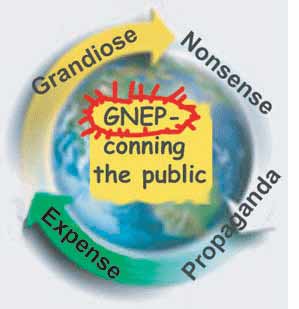
A central component of the GNEP proposal would be the construction of breeder reactors in the United States. Like the Russians, the Bush administration now wanted to use MOX as feedstock. The White House promised, however, that America’s breeder reactors would not produce plutonium that could be used for nukes. These reactors would use a new, super-awesome process to produce plutonium that could only be used as fuel. The process had been successfully tested on a laboratory scale, and the White House had confidence that it could be made to work in the real world. It just needed further development, at the cost of $1.06 billion.
Meanwhile, Russia—which the Bush administration envisioned as part of the GNEP cartel—was having second thoughts about its 2000 agreement with the United States. An investigative report published by the Center for Public Integrity describes what happened next:
………..Moscow wanted the Russian MOX plant, financed by Washington, to make fuel not for standard reactors, but for a full-scale breeder program…The Bush administration agreed— with little public notice— to let Russia renege on its original promise and burn its plutonium in two breeders—breeders that could produce more plutonium.
In November 2007, the U.S. and Russia signed a revised pact, which the Department of Energyextolled as “measurable progress towards disposing of a significant amount of weapon-grade plutonium in Russia.”
At around the same time, construction of the MOX facility began at the Savannah River Site.
And GNEP? An increasingly skeptical Congress cut its funding, especially after nuclear energy experts warned that the final price tag could climb as high as $100 billion. The program was declared dead in 2009…….. http://io9.com/failed-nuclear-weapons-recycling-program-could-put-us-a-1586851270
Big contributions to George W Bush and Rick Perry got WIPP nuke waste facility happening
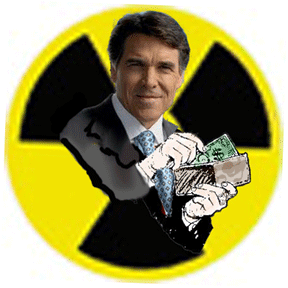 Breaking Bad: A Nuclear Waste Disaster By Joseph Trento, DC Bureau, June 5th, 2014″…….. Former President George W. Bush and Texas Governor Rick Perry’s single largest political contributor, the late Texas billionaire Harold C. Simmons, founded Waste Control Specialists and used his political influence to get the West Texas nuclear disposal site approved by state and federal licensing officials. The political efforts used to secure the licensing caused years of controversy in Texas. Environmentalists opposed the site because it is on an important aquifer in Texas. Another reason is that one of Simmons’s companies had operated a lead incinerator in Dallas that became an EPA Superfund Site.
Despite this environmental pedigree, LANL and DOE officials chose Waste Control Specialists to administrator their alternative nuclear waste storage site. While technically the company has licenses only for low-level nuclear waste, under its Texas permit, Waste Control can accept certified waste from federal agencies.
DOE officials said the Waste Control site is just a temporary alternative to the disabled WIPP. That is not true. Los Alamos and other national laboratories with high-level nuclear waste have been planning to use the Texas site for years, well before is licenses had been approved. The political promises that were made that it would be only for low-level waste were a ruse. As long as four years ago, during a Savannah River Site Citizens Advisory Board meeting in Aiken, South Carolina, DOE officials and SRS contractors talked openly about using the Texas site to offload uranium waste from SRS.
In late May, DOE investigators became so concerned about the Los Alamos containers being stores in what amounts to an open pit, they halted the shipments to Waste Control. The 112 canisters already at Waste Control were ordered to be isolated and surrounded by large concrete containers as well monitored by television camera. As of May 28, seventy-three Los Alamos containers have been segregated and covered with the cement and gravel-filled barriers.
Harold Simmons’s team lobbied hard to get only the second license in U.S. history from DOE for a private nuclear dump. They got the licensing in the last days of the Bush administration. Prior to the LANL decision to ship containers of transuranic waste to the site, there were warnings to Waste Control that it had already been accepting waste it was not permitted to receive.
Pressure has been building for years for DOE to stabilize and isolate its growing high-level nuclear waste stream. After the WIPP explosion, the DOE suddenly concluded that the thousands of feet below earth in salt beds were no longer needed to store the most deadly radioactive material on earth. Open trenches in the West Texas desert would be good enough. On April 2, tractor trailers hauled the first of the Los Alamos casks of radioactive high-level waste to the Andrews County dump before the WIPP investigation team succeeded in halting the shipments……”.http://www.dcbureau.org/201406059835/natural-resources-news-service/breaking-bad-nuclear-waste-disaster.html
Sarajevo Peace Event: the growing global movement away from militarism
 Peace movement’s common vision – The abolition of militarism by The Stringer June 8th, 2014 Keynote address by Mairead Maguire, Nobel Peace Laureate, at Sarajevo Peace Event Sarajevo. (6th June, 2014) “………People are tired of armaments and war. They have seen that they release uncontrollable forces of tribalism and nationalism. These are dangerous and murderous forms of identity above which we need to take steps to transcend, lest we unleash further dreadful violence upon the world……….
Unfortunately instead of putting more energy into providing help for EU citizens, we are witnessing the growing Militarization of Europe, its role as a driving force for armaments, and its dangerous path, under the leadership of the USA/NATO, towards a new ‘cold’ war and military aggression. The European Union and many of its countries, which used to take initiatives in the UN for peaceful settlements of conflicts, particularly allegedly peaceful countries, like Norway and Sweden, are now one of the US/NATO most important war assets. The EU is a threat to the survival of neutrality. Many nations have been drawn into being complicit in breaking international law through US/UK/NATO wars in Afghanistan, Iraq, Libya, etc.,
I believe NATO should be abolished. The United Nations should be reformed and strengthened and we should get rid of the veto in the Security Council so that it is a fair vote and we don’t have one power ruling over us. The UN should actively take up its mandate to save the world from the scourge of war.
But there is hope. People are mobilizing and resisting non-violently. They are saying no to militarism and war and insisting on disarmament………
We cannot here in Sarajevo make a common peace program, but we can commit to a common goal. If out common dream is a world without weapons and militarism, why don’t we say so? Why be silent about it? It would make a world of difference if we refused to be ambivalent about the violence of militarism. We should no longer be scattered attempts to modify the military, each one of us would do our thing as part of a global effort. Across all divisions of national borders, religions, races. We must be an alternative, insisting on an end to militarism and violence. This would give us an entirely different chance to be listened to and taken seriously. We must be an alternative insisting on an end to militarism and violence.
Let the Sarajevo where peace ended, be the starting point for the bold beginning of a universal call for peace through the wholesale abolition of militarism.http://thestringer.com.au/peace-movements-common-vision-the-abolition-of-militarism/#.U5Zsh3JdWim
Thank you,
Mairead Maguire, Nobel Peace Laureate, www.peacepeople.com
1 This Month


Tell the Ukrainian Government to Drop Prosecution of Peace Activist Yurii Sheliazhenko

Petition to revoke the licensing of the Near Surface Nuclear Disposal Facility (NSDF) at Chalk River. https://www.ourcommons.ca/petitions/en/Petition/Details?Petition=e-7247


of the week – STOP SMALL MODULAR REACTORS IN CANADA
To see nuclear-related stories in greater depth and intensity – go to https://nuclearinformation.wordpress.com
-
Archives
- March 2026 (212)
- February 2026 (268)
- January 2026 (308)
- December 2025 (358)
- November 2025 (359)
- October 2025 (376)
- September 2025 (258)
- August 2025 (319)
- July 2025 (230)
- June 2025 (348)
- May 2025 (261)
- April 2025 (305)
-
Categories
- 1
- 1 NUCLEAR ISSUES
- business and costs
- climate change
- culture and arts
- ENERGY
- environment
- health
- history
- indigenous issues
- Legal
- marketing of nuclear
- media
- opposition to nuclear
- PERSONAL STORIES
- politics
- politics international
- Religion and ethics
- safety
- secrets,lies and civil liberties
- spinbuster
- technology
- Uranium
- wastes
- weapons and war
- Women
- 2 WORLD
- ACTION
- AFRICA
- Atrocities
- AUSTRALIA
- Christina's notes
- Christina's themes
- culture and arts
- Events
- Fuk 2022
- Fuk 2023
- Fukushima 2017
- Fukushima 2018
- fukushima 2019
- Fukushima 2020
- Fukushima 2021
- general
- global warming
- Humour (God we need it)
- Nuclear
- RARE EARTHS
- Reference
- resources – print
- Resources -audiovicual
- Weekly Newsletter
- World
- World Nuclear
- YouTube
-
RSS
Entries RSS
Comments RSS
 nuclear-news