I am Mordechai – Buried Alive (Lyric Video) with links
Published on 29 May 2014
I am Mordechai – ‘Buried Alive’ (Lyric Video).
From the EP ‘Revelations: Part 1’.
Footage from the film; ‘Barefoot Gen’ via youtube.
‘Buried Alive’ written and produced by Denning Isles, based on the poem ‘Buried Alive’ by Mordechai Vanunu.
https://nuclear-news.net/2014/05/29/protecting-whistleblowers-free-mordechi-vanunu-and-others/
Barefoot Gen full film
Published on 13 Mar 2012
Barefoot Gen (はだしのゲン Hadashi no Gen?) is a Japanese manga series by Keiji Nakazawa. Loosely based on Nakazawa’s own experiences as a Hiroshima survivor, the series begins in 1945 in and around Hiroshima, Japan, where the six-year-old boy Gen lives with his family. After Hiroshima is destroyed by atomic bombing, Gen and other survivors are left to deal with the aftermath.
Barefoot Gen is a war drama anime based on the Japanese manga series by Keiji Nakazawa. Directed by Mori Masaki and released in 1983, it depicts World War II in Japan from a child’s point of view revolving around the events surrounding the bombing of Hiroshima and the main character’s first hand experience of the bomb.
Liberal and PC parties in Ontario have expensive expansive nuclear power plans

 Anti-nuclear advocates, Federal Court trouble Ontario Liberal and PC energy plans rabble.ca BY STEVE CORNWELLMAY 30, 2014 “……..the court’s decision does seem to enhance the credibility of the Ontario New Democrats’ (ONDP) energy platform, while troubling those of the Liberals and Conservatives.
Dating back to Howard Hampton’s leadership, the ONDP has remained opposed to building new reactors in Ontario. The ONDP’s election platform highlights a pledge for a solar panel and energy efficiency fund to help homeowners produce clean electricity and consume less power.
In response to a recent Ontario Clean Air Alliance questionnaire, the ONDP was very critical of the Liberals’ plan to rebuild nuclear units in the province. The ONDP indicated that they would support cost-effective conservation and efficiency measures before spending tax and rate-payer dollars on rebuilding reactors.
They added, “hundreds of millions of dollars have been wasted through the cancellation of gas and nuclear plants…Signing contracts for nuclear refurbishment without knowing the final price tag or seeing the business case will only push costs even higher for consumers. That’s just not acceptable.”
Both the Liberals and PCs have placed nuclear expansion and or revitalization as large tenants of their projected energy plans.
The Liberal spokesperson interviewed for this piece condemned the PCs plan, saying “Tim Hudak wants to build $15 billion worth of new nuclear we don’t need and cancel existing clean energy contracts, putting ratepayers on the hook for up to $20 billion.”
While Liberals did not include new nuclear in their Long Term Energy Plan, Energy Minister Bob Chiarelli also suggested that “sometime in the future, we might be looking at it.”
Lefty voters being wooed by the latest Liberal attempt to position themselves as the more progressive and reasonable choice to slay the Conservatives should note that the Grits and PCs are mostly identical on nuclear power.
In addition to both the PCs and Liberals openness to spending billions and testing the risks of new nuclear in the province, each party’s energy stance includes a commitment to rebuilding existing reactors at Darlington and Bruce Stations.
Following the ruling striping approval of new reactors at Darlington, a decision Greenpeace’s Stensil called “a firewall from a really bad political decision,” he wants the debate during the rest of the election to focus on plans to rebuild existing nuclear units. “I’d hope that it allows us to focus on the current plan to spend billions of dollars rebuilding Ontario’s ten remaining reactors.”
Plans to rebuild reactors at Darlington have already passed through an expedited assessment.
Cost analyses on rebuilding the reactors vary wildly, but if the difficulties of refurbishing units in Pickering and other Canadian jurisdictions are any indication, Ontarians might be in for some pocketbook punishment if the Liberal or PCs implement their plans.
“The Liberal government has given the ok to rebuild reactors at the Darlington and Bruce nuclear stations without a cost estimate or a public review. The gas plant scandal has gotten lots of attention since the last election, but it’ll end up being small change compared to the nuclear fiascos coming our way.”
Steve Cornwell is an MA candidate at York University. He is interested in the interactions of social movements, science and technology. Steve has worked on energy issues with Greenpeace Canada, Environmental Defense, and Safe and Green Energy Peterborough. Follow Steve Cornwell on Twitter @steve_cornwell http://rabble.ca/news/2014/05/anti-nuclear-advocates-federal-court-trouble-ontario-liberal-and-pc-energy-plans
Urge Obama to support his NRC chair, appoint strong safety advocates to NRC.
 The Nuclear Regulatory Commission has again sided with the nuclear power industry (where have you heard that one before?) and rejected efforts by environmental/clean energy groups and five U.S. Senators to move high-level
 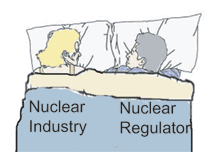 radioactive waste out of overcrowded, dangerous and poorly-protected fuel pools as soon as it is cool enough to be placed in dry casks.
Not only did the NRC Commissioners take this unconscionable vote, they said this was their last word on the subject and they would refuse to ever again consider the issue.
But the vote wasn’t unanimous: NRC Chair Allison Macfarlane, who has spent her career studying radioactive waste issues, issued a strong dissent to the decision, essentially arguing that the NRC staff hasn’t done its homework.
Japan about to extract the teeth from its Nuclear safety Watchdog?
 The government should not be allowed to make the nuclear watchdog toothless by nominating experts who are convenient to it and the industry.
EDITORIAL: Nuclear watchdog must not be made toothless –The Asahi Shimbun, May 29 Prime Minister Shinzo Abe has a habit of trying to promote policy changes through political appointments. His administration seems to have employed this political ploy to achieve its goals in the area of nuclear safety inspections.
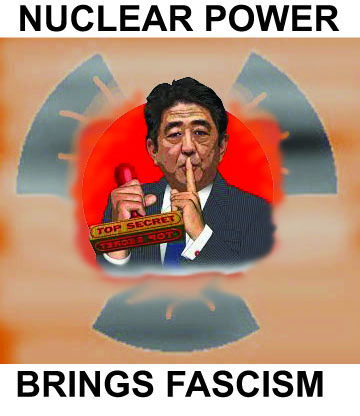
This is the only possible way to put proposed replacements for two outgoing commissioners of the Nuclear Regulation Authority (NRA) into perspective. Continue reading
What are those nasty smells from Hanford’s nuclear waste tanks?
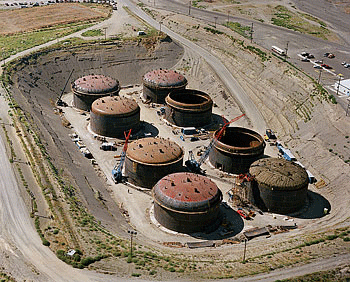 6 Hanford Nuclear Reservation workers report smelling chemical vapors in tank farms http://www.foxnews.com/us/2014/05/29/6-hanford-nuclear-reservation-workers-report-smelling-chemical-vapors-in-tank/ RICHLAND, Wash. – Six workers at the Hanford Nuclear Reservation are receiving medical evaluations after they reported smelling chemical vapors at two underground storage tank farms.
Washington River Protection Solutions, which operates the underground tanks at Hanford, says five of the workers reported symptoms typically related to chemical vapor exposure.
The employees were working in or near Hanford’s AP and SY Tank Farms when the vapors were reported. All workers immediately exited the area and moved upwind.
Hanford officials are taking samples and checking for possible sources of the vapors.
There have been numerous incidents in recent months when Hanford workers have reported smelling chemical vapors while working in the tank farms.
The tanks contain radioactive wastes left over from the production of plutonium for nuclear weapons.
Japan’s Abe govt determined to bring back nuclear, but the impediments are strong
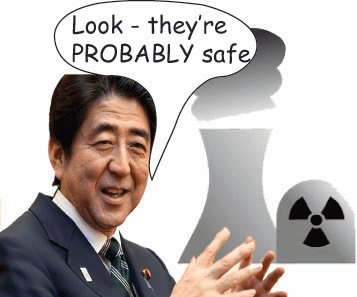 Abe and Kepco Push Nuclear Restart The government and nuclear companies maneuver to restart Japan’s reactors, as nearby cities dig in. The Diplomat, By Clint Richards May 29, 2014 As The Diplomat noted last week, Japan’s nuclear energy providers are struggling to remain profitable with all the country’s nuclear reactors currently offline. The government is highly aware of its struggling nuclear power sector, and the threat of another summer where Japan’s energy grid is stretched to the limit, and energy imports soar. With both of these problems in mind, three news items highlight the direction both the government and nuclear companies may take to avoid another summer energy crunch.
The Fukui District Court ruling would allow people living within 250 km of the plant the right to sue to have the plant closed. According to a separate Japan Times article, “The entire Kansai region, most of Chubu, including Nagoya, much of Chugoku, including Hiroshima, and roughly a third of Shikoku lies within 250 km of the Oi plant.”
Despite strong local opposition, Abe’s government is determined to bring back online as many nuclear reactors as logistically possible. On Wednesday, an NRA official told AFP that Abe’s government wants to replace two of five commissioners serving on the NRA when their terms expire. One of the commissioners Abe reportedly most wants to replace is Kunihiko Shimizu, who has been criticized for saying that at least two reactors sit on active fault lines………
Local governments and their constituencies are determined to keep the tragedy of Fukushima as far from their own doorstep as possible. The inability of Tepco to adequately address the continued problems at the Daiichi power plant only further reinforces the fear of people who live near existing reactors. Despite Abe’s insistence, local populations are likely to keep the number of reactors that come back online much lower than the government wants, at least in the near future, as long as the central government and energy providers give them veto power. http://thediplomat.com/2014/05/abe-and-kepco-push-nuclear-restart/
With new Indian government a slowdown in nuclear power expansion looks likely
 Narendra Modi government may go slow on nuclear energy expansion: PwC, The Economic Times, May 27, 2014, MUMBAI: The new government may put on the back-burner a plan to install 20 gigawatts of nuclear power capacity in the country by 2020 and instead focus on wind and solar to achieve energy security, says PwC……….
Rather than nuclear, the Modi government may focus on increasing wind and solar power capacity, especially when these models worked successfully in Gujarat, Mohapatra said.
The power, coal, and new and renewable energy portfolios in the Modi Cabinet are held by Piyush Goyal, who is from Maharashtra, where BJP ally Shiv Sena was opposing the 9,900 MW Jaitapur nuclear project……..An industry expert from KPMG, who did not want to be identified, said that before the new government takes any decision on nuclear power, it will first have to tackle issues of supply chain, safety and acceptance from locals. http://articles.economictimes.indiatimes.com/2014-05-27/news/50122504_1_energy-security-power-capacity-nuclear-power
The road to A Treaty to Ban Nuclear Weapons. Next step in December
 New Campaign for a Treaty to Ban Nuclear Weapons Gains Momentum Truth Out, , 29 May 2014 By Alice Slater, The 1970 Non-Proliferation Treaty (NPT), extended indefinitely in 1995 when it was due to expire, provided that five nuclear weapons states which also happened to hold the veto power on the Security Council (P-5)– the US, Russia, UK, France, and China– would “pursue negotiations in good faith”[i] for nuclear disarmament. In order to buy the support of the rest of the world for the deal, the nuclear weapons states “sweetened the pot” with a Faustian bargain promising the non-nuclear weapons state an “inalienable right”[ii] to so-called “peaceful” nuclear power, thus giving them the keys to the bomb factory. [iii] Every country in the world signed the new treaty except for India, Pakistan, and Israel, which went on to develop nuclear arsenals. North Korea, an NPT member, took advantage of the technological know-how it acquired through its “inalienable right” to nuclear power and quit the treaty to make its own nuclear bombs. Today there are nine nuclear weapons states with 17,000 bombs on the planet, 16,000 of which are in the US and Russia!
At the 1995 NPT Review and Extension Conference, a new network of NGOs, Abolition 2000, called for immediate negotiations of a treaty to eliminate nuclear weapons and a phase out of nuclear power. [iv]A Working Group of lawyers, scientists and policy makers drafted a Model Nuclear Weapons Convention[v] laying out all the necessary steps to be considered for the total elimination of nuclear weapons. It became an official UN document and was cited in Secretary General Ban-ki Moon’s 2008 proposal for a Five Point Plan for Nuclear Disarmament. [vi]The NPT’s indefinite extension required Review Conferences every five years, with Preparatory Committee meetings in between.
In 1996, the NGO World Court Project sought an Advisory Opinion from the International Court of Justice on the legality of the bomb. The Court ruled unanimously that an international obligation exists to “conclude negotiations on nuclear disarmament in all its aspects”, but disappointingly said only that the weapons are “generally illegal” and held that it was unable to decide whether it would be legal or not to use nuclear weapons “when the very survival of a state was at stake”. [vii]Despite the NGOs best efforts at lobbying for continued promises given by the P-5 at subsequent NPT reviews, progress on nuclear disarmament was frozen. ……..
In 2012, the International Committee of the Red Cross made an unprecedented breakthrough effort to educate the world that there was no existing legal ban on the use and possession of nuclear weapons despite the catastrophic humanitarian consequences that would result from nuclear war, thus renewing public awareness about the terrible dangers of nuclear holocaust. [viii] A new initiative, International Campaign
 to Abolish Nuclear Weapons (ICAN)[ix]had been launched to make known the disastrous effects to all life on earth should nuclear war break out, either by accident or design, as well as the inability of governments at any level to adequately respond. They are calling for a legal ban on nuclear weapons, just as the world had banned chemical and biological weapons, as well as landmines and cluster munitions. …….
Norway also took up the call of the International Red Cross in 2013, hosting a special Conference on the Humanitarian Effects of Nuclear Weapons. ……..
The P-5 boycotted the Oslo conference, issuing a joint statement claiming it would be a “distraction” from the NPT! Two nuclear weapons states did show up—India and Pakistan, to join the 127 nations that came to Oslo and those two nuclear weapons states again attended this year’s follow-up conference hosted by Mexico, with 146 nations.
There is transformation in the air and a shift in the zeitgeist in how nations and civil society are addressing nuclear disarmament. They are meeting in partnership in greater numbers and with growing resolve to negotiate a nuclear ban treaty which would prohibit the possession, testing, use, production and acquisition of nuclear weapons as illegal,………
The world has begun an Ottawa process for nuclear weapons that can be completed in the very near future if we are united and focused! One obstacle that is becoming apparent to the success of achieving a broadly endorsed ban treaty is the position of “nuclear umbrella” states such as Japan, Australia, South Korea and NATO members. They ostensibly support nuclear disarmament but still rely on lethal “nuclear deterrence”, a policy which demonstrates their willingness to have the US incinerate cities and destroy our planet on their behalf…….
With a follow up meeting coming in Austria, December 8th and 9th of this year, we should be strategic in pushing the impetus forward for a legal ban. We need to get even more governments to show up in Vienna, and make plans for a massive turnout of NGOs to encourage states to come out from under their shameful nuclear umbrella and to cheer on the burgeoning group of peace-seeking nations in our efforts to end the nuclear scourge!
Check out the ICAN campaign to find out how you can participate in Vienna. www.icanw.org http://www.truth-out.org/news/item/24018-new-campaign-for-a-treaty-to-ban-nuclear-weapons-gains-momentum
The flight of investment – away from uranium
 A uranium price collapse has made mining companies radioactive to investors,Quartz By Jason Karaian May 28, 2014 Here’s the latest sign that uranium-mining doesn’t pay: Paladin Energy, an Australian uranium mining group, announced today that it was ceasing production(pdf) at a key mine in Malawi. The move will take 3.3 million pounds of uranium per year off the market.
Paladin is far from alone. As uranium prices have tumbled, others have been feeling the pinch. Indeed, for some 60% of global uranium production, the cost of extraction is higher than the market price for the commodity, the firm says.
Uranium prices have been hit by a series of setbacks in recent years, from a global financial crisis that put a big dent in nuclear power demand, to a glut ofdecommissioned weapons-grade uranium, to the Fukushima nuclear disaster in Japan, which led to the shutdown of all that nation’s nuclear power plants and inspired nuclear phase-outs in places such as Germany and Switzerland.Investors in uranium mines have seen their assets plunge in value:……http://qz.com/213889/a-uranium-price-collapse-has-made-mining-companies-radioactive-to-investors/
Unpalatable price facts hit Wyoming’s uranium industry
 Wyoming mines affected by low uranium prices Houston Chronicle, May 29, 2014 CASPER, Wyo. (AP) — Some uranium producers in Wyoming say they’re being affected by weak demand that has caused prices for the nuclear fuel to slip to their lowest level in eight years.
Spot prices for yellowcake are down to $28 per pound. That’s as low as they’ve been since 2006 and down from $75 per pound in 2011………
the current situation is that we have oversupply due to excess inventories,” said Rob Chang, an industry analyst at the New York-based investment firm Cantor Fitzgerald.
Wyoming is among the top uranium-producing states. Wyoming’s uranium mines employ a process of dissolving uranium out of underground deposits and then pumping the ore-containing solution to the surface through wells.
Uranium One has stopped drilling new uranium wells and laid off eight employees since last year, said Donna Wichers, Uranium One vice president for the Americas.
“At $28 a pound you can imagine what that is doing to us,” Wichers said……..http://www.houstonchronicle.com/business/energy/article/Wyoming-mines-affected-by-low-uranium-prices-5514120.php
Finally USA nuclear weapons planners starting to realise it all costs too much
 Even Nuclear Planners Can’t Have It All | Commentary Roll Call, By Jon Wolfsthal May 29, 2014, Congress is conducting its annual debate over the defense budget and programs in the National Defense Authorization Act. Sadly missing is a debate over the nuclear weapons budget. The United States plans to spend more than $1 trillion over the next thirty years to maintain and modernize its nuclear arsenal. Some of this spending is truly needed and can help ensure that Washington maintains a safe, secure, and effective arsenal to defend itself and its allies. But many of the projects are too expensive or redundant, and out of step with today’s strategic and budgetary environment. Put simply, the United States does not need a penetrating stealth bomber, a new air dropped bomb AND a long-range standoff cruise missile armed with nuclear weapons on top of a new submarine and new ICBM. Priorities have to be set and choice have to be made.
The rationale behind each of these systems by themselves may make sense, but taken together are redundant and will require the Pentagon to spend money better spent on programs that actually contribute to national security……….
This costly, unnecessary redundancy continues when you look at the other legs of the nuclear triad. In addition to the new nuclear-capable bombers, the US is planning to buy 12 new ballistic missile submarines and a new generation of Intercontinental-Range Ballistic Missiles — costing hundreds of billions of dollars. With so many options for nuclear delivery systems, it remains unclear what unfilled mission the long-range standoff missile intends to satisfy.
During the cold war when we planned for and equipped ourselves for all and any contingencies, such a duplication of effort and expense might have made sense. But such extravagance and redundancy today does not, especially in the face of severe budget constraints that are preventing the Government from pursuing critical programs in many other areas even inside the Pentagon.
The Congress appears unable to rationalize these choices so far in its annual budget process, and the White House has yet to try to knit these long-range programs together in a way that is sustainable after the end of the five-year pentagon planning process. Finally, however, it appears that planners inside the military itself are starting to realize that the pie will not be large enough to feed every nuclear project and that some tradeoffs will have to be made. Eliminating — not just delaying — the plan for long-range standoff missiles is a small but important step toward freeing up resources for so many other more supportable, logical priorities.
Jon Wolfsthal is Deputy Director of the James Martin Center for Nonproliferation Studies and a former nuclear security Advisor to Vice President Joseph R. Biden Jr. http://www.rollcall.com/news/even_nuclear_planners_cant_have_it_all_commentary-233388-1.html?pg=2&dczone=policy
Award for Tokelau as it pioneers large solar power arrays
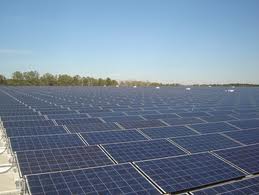 Tokelau Wins EECA Renewable Energy Award http://www.energymatters.com.au/index.php?main_page=news_article&article_id=4326 29 May 14, The Pacific territory of Tokelau has been named the 2014 EECA Renewable Energy Award winner for its solar efforts.
The Energy Efficiency and Conservation Authority (EECA) is a New Zealand government agency that supports energy efficiency, energy conservation and the use of renewable energy in New Zealand and its Territories.
Like many island nations, Tokelau has in the past relied heavily on expensive and polluting diesel generators for electricity supply.
Thanks to the Tokelau Renewable Energy Project, three large solar panel arrays arrays are now operating on Tokelau’s three atolls, some powered by SMA inverters. The project was completed last year.
These solar farms are now providing 90% of Tokelau’s electricity needs and place it among the world’s top nations for renewably-sourced electricity. Harvesting the sun’s energy is expected to save Tokelau roughly NZD $900,000 (~ AUD $824,500) per year in diesel costs.
The Tokelau Renewable Energy Project (TREP) was a joint undertaking between the Government of Tokelau and the New Zealand Ministry of Foreign Affairs and Trade.
“Island communities such as Tokelau, with few energy alternatives, are ideal sites for solar-generated electricity,” EECA Chief Executive Mike Underhill.
“This project showed immense vision and drive from the leaders and communities of Tokelau. They are showing other Pacific nations the way – as well as highlighting to the world the need for more renewable energy and less carbon-intensive fossil fuels.”
Solar power represents so much more to Tokelau than just a stable, clean electricity supply. It’s a flagship for the battle against climate change and a signal to the world.
At their highest point, the islands rise around 2 metres above sea level. Tokelau is a nation in the front-line of the effects of climate change – and it is already experiencing the effects of rising seas. It is believed Tokelau could be the first nation to disappear under the waves unless dramatic action is taken to rein in carbon emissions.
Iran to convert low-enriched uranium gas to safer form
Iran plans June launch of plant for curbing low-grade uranium stash – diplomats Firstpost World May 30, 2014 VIENNA (Reuters) – Iran is planning to start up a plant in June that will convert low-enriched uranium gas into an oxide form less suitable for making nuclear bombs, as required by a landmark deal with world powers, diplomats said. Under last year’s interim accord with six major powers to help ease tension over Iran’s nuclear programme, it needs to take action by late July to limit its stockpile of uranium gas refined to a fissile concentration of up to 5 percent.
It was one of the terms of the six-month accord between Iran and the United States, France, Germany, Britain, Russia and China to curb Tehran’s atomic activities in exchange for some easing of sanctions that took effect on Jan. 20. Iran is meeting all the other requirements of the deal that was designed to buy time for talks on a final settlement of the decade-old dispute over Tehran’s nuclear programme, a U.N. watchdog report showed last week. ….
: http://www.firstpost.com/world/iran-plans-june-launch-of-plant-for-curbing-low-grade-uranium-stash-diplomats-1549441.html?utm_source=ref_article
Uranium, coal, gas …. our lust for energy driving us to extinction
Uranium, natural gas, coal and hydroelectric are driving us to extinction Our lust for energy is killing us, one story at a time. Scholars and Rogues, by Bruce Lindwall, 28 May
Our stories aren’t the same but they rhyme.
They came to the desert to get the uranium. Tore up the ground, sucked up the water, blasted the mesa. Swept all the toxic tailings into a pile. Now the wind spreads deadly dust onto homes and streets and playgrounds. Onto vegetables and meat drying in the sun. Onto the lives and homes and bodies of the people. They took the uranium and left without a goodbye. They left the broken dam that once held the pond, now long since washed downstream past the homes of the people. Never told the people about the radium in the pond. That went downstream too. Sunk into the sand, hid amongst the rocks. Don’t listen to the clicking meter as you walk that streambed now, telling what’s left behind. You’ll only scare yourself. You’ll scare yourself enough to run. But you can’t run — you’re already home.
They came to town to get the gas. ……..
They came to the mountain to get the coal. ……http://scholarsandrogues.com/2014/05/28/uranium-natural-gas-coal-and-hydroelectric-are-driving-us-to-extinction/Scholars and Rgues
Pro nuclear expert replaces safety conscious seismic expert on Japan’s Nuclear Safety Agency
Pro-nuclear expert replacing NRA commissioner who raised flag on quake risk THE ASAHI SHIMBUN 29 May 14, http://ajw.asahi.com/article/behind_news/politics/AJ201405280023 Replacements for two outgoing commissioners of the Nuclear Regulation Authority suggest the Abe administration will find it easier to gain approval for restarts of the nation’s nuclear reactors.Few people in government circles and the nuclear industry will be sorry to see Kunihiko Shimazaki go. His successor is expected to more quickly give the green light to reactivate nuclear power plants.
Shimazaki, who is 68 and a professor of seismology, proved to be a thorn in the side of electric power companies with his calls for a reassessment of the force with which seismic waves and tsunami could pummel nuclear plants being considered for restarts. Kenzo Oshima, 71, a former undersecretary-general at the United Nations, is also stepping down. Both men are leaving because their terms expire in September.
-
Archives
- February 2026 (228)
- January 2026 (308)
- December 2025 (358)
- November 2025 (359)
- October 2025 (376)
- September 2025 (258)
- August 2025 (319)
- July 2025 (230)
- June 2025 (348)
- May 2025 (261)
- April 2025 (305)
- March 2025 (319)
-
Categories
- 1
- 1 NUCLEAR ISSUES
- business and costs
- climate change
- culture and arts
- ENERGY
- environment
- health
- history
- indigenous issues
- Legal
- marketing of nuclear
- media
- opposition to nuclear
- PERSONAL STORIES
- politics
- politics international
- Religion and ethics
- safety
- secrets,lies and civil liberties
- spinbuster
- technology
- Uranium
- wastes
- weapons and war
- Women
- 2 WORLD
- ACTION
- AFRICA
- Atrocities
- AUSTRALIA
- Christina's notes
- Christina's themes
- culture and arts
- Events
- Fuk 2022
- Fuk 2023
- Fukushima 2017
- Fukushima 2018
- fukushima 2019
- Fukushima 2020
- Fukushima 2021
- general
- global warming
- Humour (God we need it)
- Nuclear
- RARE EARTHS
- Reference
- resources – print
- Resources -audiovicual
- Weekly Newsletter
- World
- World Nuclear
- YouTube
-
RSS
Entries RSS
Comments RSS
 nuclear-news