Glenn Greenwald -“The Future of Journalism”
“I dont think I was doing anything selfless because if i chose not to pursue this, if I had chose to walk away from this injustice that I had found, the pain that would have caused me for the rest of my life would be so much worse than what ever those corrupt officials could do to me…” Unknown Brazilian journalist via Glen Greenwald.
Published on 27 Apr 2014
MUST WATCH! Liberty Award Keynote Speech [FULL] (April 10, 2014)
Nuclear Hotseat #149: WIPP Radiation Leak SPECIAL
Spotlight on the New Mexico radiation leak that started on Valentine’s Day and closed the WIPP (Waste Isolation Pilot Plant) site… maybe forever?
Please support Libbe Halevey and future Nuclear Hotseat Podcasts here by donating;
http://www.nuclearhotseat.com/
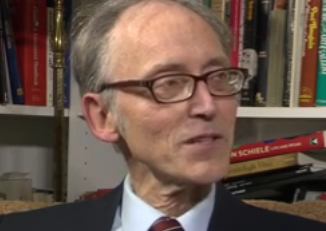


A trio of interviewees: Don Hancock, Director of Southwest Research and Information Center; Karen Hadden, Executive Director of the Sustainable Energy and Economic Development Coalition, a Texas ecological watchdog group, and Diane D’Arrigo, Radioactive Waste Project Director at Nuclear Information and Resource Service.
Download Here: http://lhalevy.audioacrobat.com/download/e031a54c-3edc-f424-4b5b-2c38ef0a0070.mp3<2c38ef0a0070
lhalevy.audioacrobat.com
The Corbett report – Aileen Mioko Smith on the Japanese Reactor Restarts
Interview 867 –The Corbett report
Aileen request people to help translate Japanese and English!

http://www.corbettreport.com/interview-867-aileen-mioko-smith-on-the-japanese-reactor-restarts/
Podcast: Play in new window | Download
 The Japanese Nuclear Regulatory Agency is currently considering applications from 8 different utilities companies to restart 17 of the nation’s 54 nuclear reactors, which have been taken offline in the wake of the Fukushima crisis. Today we talk to Aileen Mioko Smith of Green Action Japan about the anti-nuclear movement in Japan and their efforts to stop the reactor restarts from happening.
Dead nuclear reactors mean increasingly costly funerals
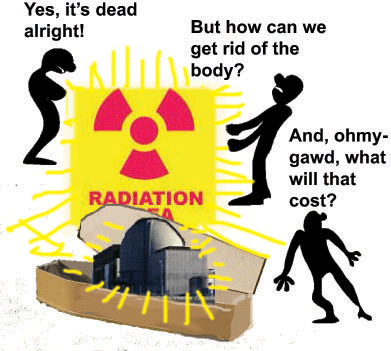 The rising cost of decommissioning a nuclear power plant Bulletin of the Atomic Scientists, Dan Drollette Jr 30 April 14“……. The Yankee Nuclear Power Station in Rowe, Massachusetts, took 15 years to decommission—or five times longer than was needed to build it. And decommissioning the plant—constructed early in the 1960s for $39 million—cost $608 million. The plant’s spent fuel rods are still stored in a facility on-site, because there is no permanent disposal repository to put them in. To monitor them and make sure the material does not fall into the hands of terrorists or spill into the nearby river costs $8 million per year. That cost will continue for an unknown number of years. David Lochbaum of the Union of Concerned Scientists estimates that even without the ongoing costs of monitoring and security, the average reactor now costs about $500 million to deactivate……..
Costs of dead San Onofre nuclear reactor – who pays?
Nuclear settlement costs investors $96M By Morgan Lee .APRIL 29, 2014 A San Onofre settlement proposal held back first-quarter earnings at Southern California Edison by $96 million, the Rosemead-based utility said Tuesday in federal financial filings.
The agreement, negotiated between the nuclear plant’s owners and two consumer groups, would hold customers responsible for about $3.3 billion in facility-related expenses and the cost of securing replacement power. The California Public Utilities Commission is considering the proposal amid objections from consumer groups that say the agreement favors investors over utility customers.

Including previous charges last year, Edison estimated the settlement would have a $461 million after-tax impact on its bottom line. Before-tax charges totaled $806 million.
Edison’s first-quarter earnings declined by 35 percent — to $176 million — compared with the same period last year.
Edison is the main owner and the operator of San Onofre. San Diego Gas & Electric owns a 20 percent stake in the plant; it took a $187 million impairment charge last year and said recently that it expects no further write-downs.
Crippled by the rapid degradation of newly installed steam generators, San Onofre stopped producing power on Jan. 31, 2012. Edison chose to retire San Onofre for good in June of last year, leaving state regulators to decide who should pay for an assortment of leftover costs — utility customers or corporate stockholders……..http://www.utsandiego.com/news/2014/apr/29/nuke-settlement-impact-reported/
Uranium – the invisible killer
 Uranium Contamination Across America: Holding the Silent Killers Of Environmental Destruction Accountable By Kevin Zeese and Margaret Flowers Global Research, April 29, 2014 PopularResistance.org The findings of the most recent IPCC report are sobering. We have 15 years to mitigate climate disaster. It is up to us to make a major transition to a carbon-free, nuclear-free energy economy within that time-frame. Big Energy and our plutocratic government are not going to do it without effective pressure from a people-powered movement.
More people are getting this concept. This year, there are several major campaigns around Earth Day, for example the Global Climate Convergence and the Cowboy Indian Alliance camp in Washington, DC. We celebrated Earth Day by launching a new national campaign to clean up the thousands of abandoned uranium mines (AUMs) scattered throughout the Great Plains and West Coast.
Uranium: The Invisible Killer
In the days leading up to the launch of Clean Up the Mines campaign, our team of eleven organizers toured Southwest South Dakota to learn more about the AUMs. Our tour was led by Charmaine White Face, a scientist and coordinator of Defenders of the Black Hills, who took us to various sites and brought her Geiger counters. There are 272 AUMs in South Dakota that continue to emit radiation, radon and toxic elements into the air, water and land. The mines were abandoned by corporations like Kerr McGee and Atlantic Richfield who walked away from them when the Uranium Rush that started in the early 1950s was over. We described this in more detail in our previous article about how uranium mines are poisoning the breadbasket of America.
The Northern Great Plains Region of Colorado, Montana, Wyoming, North and South Dakota contain more than 3,000 AUMs. There are more than 1,000 AUMs in Arizona and New Mexico. In total, in the 15 western states there are estimated to be more than 10,000 AUMs. One in 7 people in the western US live within 50 miles of an AUM, according to the EPA. This is a national environmental crisis – a silent Fukushima – for which responsibility needs to be taken………..
Accountability for Silent Killers
Exploring the legacy of uranium mining – for Earth destroying weapons of mass destruction and risky nuclear energy – reminded us how far humans have come in environmental destruction. It also showed, once again, how all is related. The Gaia theory of the Earth as a living being where all is connected is evident in the uranium toxicity that spreads through water, air and food
There is a growing movement that links native peoples with the descendants of those who colonized them. Now, many non-natives follow the lead of native peoples against fossil fuel and mineral extraction throughout the continent. It is this kind of solidarity and unity that will not only clean up the mines but will also make even greater changes in our economy, environment and government.
The toxicity of AUMs also reminds us of the cost of living under the rule of an illegitimate governmentwhere money, not the people, rule; of big finance capitalism that puts profit ahead of people and planet – and is enabled by the corrupt corporate government. The experience of the uranium mines shows us that even if it means people will die younger than they should, profit is king when we live under the ‘rule of money.’ It shows us we have an even larger task – ending a plutocratic oligarchy and creating a real democracy where the people rule……http://www.globalresearch.ca/uranium-contamination-across-america-holding-the-silent-killers-of-environmental-destruction-accountable/5379605
Near misses – the chance of a nuclear weapons accident is rising
 Risk of nuclear accidents is rising, says report on near-misses
Chatham House report lists 13 instances since 1962 when nuclear weapons were nearly launched Julian Borger, diplomatic editor theguardian.com, Wednesday 30 April 2014 A report recounting a litany of near-misses in which nuclear weaponscame close to being launched by mistake concludes that the risk of potentially catastrophic accidents is higher than previously thought and appears to be rising.
Too Close for Comfort: Cases of Near Nuclear Use and Options for Policy, published by Chatham House, says that “individual decision-making, often in disobedience of protocol and political guidance, has on several occasions saved the day”, preventing the launch of nuclear warheads.
The report lists 13 instances since 1962 when nuclear weapons were nearly used. In several cases the large-scale launch of nuclear weapons was nearly triggered by technical malfunctions or breakdowns in communication causing false alarms, in both the US and Russia. Disaster was averted only by cool-headed individuals gambling that the alert was caused by a glitch and not an actual attack.
The Chatham House authors say the risks appear to be rising. Nuclear weapons are spreading – most recently to North Korea – and disarmament is stalling. Russia and the US still have an estimated 1,800 warheads on high alert, ready to launch between five and 15 minutes after receiving the launch order – a fact that becomes all the more significant with rising tensions over Ukraine.
“The question today is: are these risks worth it?” said Patricia Lewis, Chatham House research director for international security and one of the report’s authors. “You can imagine a situation in which tensions rise and signals come in and people misinterpret what is going on. Will people always have sound enough minds to take the time to make a reasoned decision?”
The mental state of some of the leaders who had their fingers on the nuclear button has sometimes been a source of worry. Richard Nixon and Boris Yeltsin both raised concerns among their top advisers with their heavy drinking. In May 1981 the newly elected French president, François Mitterand, left the French nuclear launch codes at home in the pocket of his suit……..ww.theguardian.com/world/2014/apr/29/nuclear-accident-near-misses-report
Uranium at lowest prices since 2007
 Fall in uranium prices points to slow nuclear restart in Japan Forex, April 29th, 2014 by Adam Button | Uranium prices fell to long-term lows today with the front-month futures contract at the lowest since at least 2007. The FX market underestimates the importance of the planned restart of nuclear energy stations in Japan for the yen. …..The fall in uranium prices today comes after producer Cameco said they don’t expect price improvement in the near to medium term……http://www.forexlive.com/blog/2014/04/29/fall-in-uranium-prices-points-to-slow-nuclear-restart-in-japan/
1 This Month


10 March A LIVE WEBINAR THE REAL EFFECTS OF NUCLEAR POWER
What the Industry Isn’t Telling Us
1:00 PM Mountain, 2 pm Central, 3 pm Eastern. Live on the Keepers of the Water Facebook page


18 March Webinar @ 1 PM EST: An Assessment of SMR Projects: The Case of Canada
register for the zoom:
https://us02web.zoom.us/webinar/register/WN_o8BIIOUvQ2ONJR1nta65DQ#/registration


of the week – STOP SMALL MODULAR REACTORS IN CANADA
To see nuclear-related stories in greater depth and intensity – go to https://nuclearinformation.wordpress.com
-
Archives
- March 2026 (76)
- February 2026 (268)
- January 2026 (308)
- December 2025 (358)
- November 2025 (359)
- October 2025 (376)
- September 2025 (258)
- August 2025 (319)
- July 2025 (230)
- June 2025 (348)
- May 2025 (261)
- April 2025 (305)
-
Categories
- 1
- 1 NUCLEAR ISSUES
- business and costs
- climate change
- culture and arts
- ENERGY
- environment
- health
- history
- indigenous issues
- Legal
- marketing of nuclear
- media
- opposition to nuclear
- PERSONAL STORIES
- politics
- politics international
- Religion and ethics
- safety
- secrets,lies and civil liberties
- spinbuster
- technology
- Uranium
- wastes
- weapons and war
- Women
- 2 WORLD
- ACTION
- AFRICA
- Atrocities
- AUSTRALIA
- Christina's notes
- Christina's themes
- culture and arts
- Events
- Fuk 2022
- Fuk 2023
- Fukushima 2017
- Fukushima 2018
- fukushima 2019
- Fukushima 2020
- Fukushima 2021
- general
- global warming
- Humour (God we need it)
- Nuclear
- RARE EARTHS
- Reference
- resources – print
- Resources -audiovicual
- Weekly Newsletter
- World
- World Nuclear
- YouTube
-
RSS
Entries RSS
Comments RSS
 nuclear-news