‘A2-B-C’ (予告編 Japan Theatrical Trailer 2014)
“Like a naked tree
In the deserted fields
My hope stands.”
Haiku by Taro Aziu
Published on 8 Apr 2014
5月10日(土)ロードショー
ポレポレ東中野
Opening May 10, 2014
PorePore Higashi Nakano, Tokyo
日本語ウェブサイト: http://www.a2-b-c.com
ENGLISH Website: http://www.a2documentary.com
シノプシス: 福島の子供達の多くは、メルトダウン後も避難させてもらえなかった。嚢胞としこりを持つ福島の子供達の数が増加してきている。このことが彼らの未来に対して意味するものは?
SYNOPSIS: Many children in Fukushima were never evacuated after the nuclear meltdown on March 11, 2011. Now the number of Fukushima children found to have thyroid cysts and nodules is increasing. What will this mean for their future?
Cancer rates nearly four times higher than world average near Fukushima
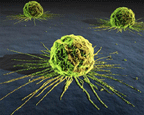 Japanese physicians link spike in cancer to Fukushima radiation http://www.naturalnews.com/044619_Fukushima_radiation_cancer_Japanese_physician.html, April 06, 2014 by: Ethan A. Huff, staff writer Cancer rates in many areas of Japan are on the rise following the global catastrophe at the Fukushima Daiichi nuclear power facility back in March 2011.
  And some Japanese doctors now caring for all those radiation refugees who were shipped out from areas surrounding the nuclear plant after it exploded say fallout from the disaster is likely to blame for this massive uptick in disease.
The German media group Deutsche Welle (DW) reports that many radiation refugees are having to watch as their family members and pets suffer gruesome fates at the hands of what appears to be radiation poisoning. One elderly woman told reporters that her dog lost all the hair around his neck, his skin turned black, and he eventually died, all signs that suggest a link to radiation.
Many people are also suffering, as evidenced by tests revealing an increase in thyroid damage among folks who lived in close proximity to the plant. One local doctor from Namie, a town located about 5.6 miles (9 km) from the Fukushima plant, has been examining patients ever since the disaster and is convinced that Fukushima radiation is causing a major public health crisis.
“Children and young people are particularly vulnerable to the uptake in radioactive iodine in their thyroid,” says Dr. Shunji Sekine, a retired physician with a medical practice in the city of Nihonmatsu, which is currently housing some 230 relocated families who evacuated other areas following the Fukushima disaster, as quoted by DW.
“Although comprehensive studies are missing, I see a connection between nuclear accidents and the occurrence of cancer,” adds the specialist in both thyroid and breast cancer, noting that he has observed a significant increase in both conditions following the nuclear catastrophe.
Cancer rates nearly four times higher than world average near Fukushima Cancer rates have been rising all across the region, in fact, with the latest data showing that 13 out of every 100,000 inhabitants, including many young children, are coming down with some form of cancer. Based on world averages for cancer, this represents a cancer rate that is nearly four times higher than the norm.
“According to official figures, 33 cancer cases have been identified in about a quarter of a million children and teenagers since the beginning of February,” reads the DW report. “This translates into 13 cases for every 100,000 inhabitants, a figure almost four times higher than the world average for all age groups.”
Forced evacuations exposed people to more radiation; Japanese government knew all along
The Japanese government has, perhaps not surprisingly, continued to downplay the severity of the situation, advising “further investigations” in order to avoid pinning the rise in disease on Fukushima. But the phenomenon almost exactly matches what occurred following the Chernobyl disaster, as well as the uptick in cancer rates following the dropping of atomic bombs on Hiroshima and Nagasaki by the U.S. during World War II.
Many of the people being diagnosed with radiation-associated diseases were also forced to trek through areas during their evacuation that had become poisoned by radioactive particles that drifted from the stricken plant. According to Dr. Sekine, who out of the kindness of his own heart is now allowing victims in his area to use a full-body screening machine to test for radiation poisoning annually, the forced relocation of these folks by the Japanese government actually exposed them to more radiation.
“Only four days after the explosion of the nuclear reactor, orders were given to evacuate the town of Tsushima in the northwest,” adds DW. “This led to the refugees being transported through the invisible radioactive cloud, resulting in even more exposure to contamination than if they had stayed at home.”
“Officials in Tokyo knew this from their computer models. But they remained silent, as they feared a widespread panic.”
Japan’s nuclear energy policy dangerously adrift
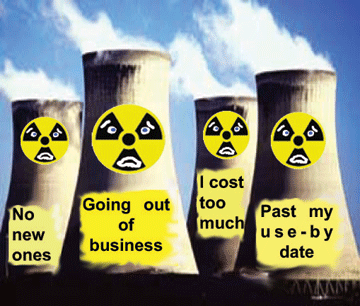 In the Wake of Fukushima: Japan’s Nuclear Energy Policy Impasse 60% of Japan’s 48 viable nuclear reactors,are not as yet being considered for application to the Nuclear Regulation Agency (NRA) for restart By Andrew Dewit Global Research, April 07, 2014
Asia-Pacific Journal Japan’s energy policy regime appears dangerously adrift in the context of accelerating climate change. The core problem is agency. On the one hand, 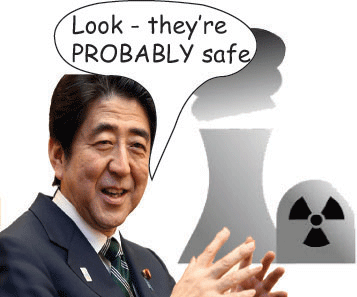 Japanese PM Abe Shinzo and the nuclear village appear obsessed with nuclear power restarts and 20th century paradigms of the power economy. On the other hand, Japan’s anti-nuclear civil society lacks the political vehicle to force a combined nuclear pullout plus drastic reduction of greenhouse gas emissions. Some anti-nuclear forces do not yet understand the urgent need to reduce emissions, and are content to burn coal, despite of the patent threat of climate change. This is precisely what Japan has done in the wake of 3.11. The Abe cabinet is focused on getting restarts and a nuclear-based energy plan. Yet the scope for restarts is surprisingly limited and – incredible in this era of multiple crises and revolutions – the draft new energy plan lacks concrete numbers.1 The country needs better leadership on smart growth, in the context of what McKinsey specialists refer to as a “resource revolution”2 and MIT economists depict as “the second machine age.”3
Nuclear Is Probably No Longer Baseload
All of Japan’s 48 viable nuclear reactors are at present offline, and have been since September of 2013. The Abe cabinet is keen to restart as many of these as possible. But regulatory rules, public opinion and other factors constitute significant barriers to achieving even a third of Japan’s pre-Fukushima 30% reliance on nuclear power. That will mean nuclear will no longer be a “baseload” source of electricity, capable of supplying a reliable load to the grid at all times.
Indeed, an Asahi Shimbun survey of the utilities themselves indicates that fully 60% of Japan’s 48 viable nuclear reactors, meaning 30 reactors, are not as yet being considered for application to the Nuclear Regulation Agency (NRA) for restart. And of these 30 reactors, it appears that at least 13 are write-offs due to age, proximity to a seismic fault, and other factors that render them incapable of satisfying the new safety standards of the NRA.4 For that reason, at present there are only 17 reactors for which restart applications have been filed.
Of these, it appears – even to Japanese supporters of nuclear power – that perhaps only 8 will finally get approval and be restarted. Highly regarded energy specialist Tom O’Sullivan, of Mathyos Japan, concludes this on the basis of a survey of “various established Japanese policy institutes that are close to Japan’s industrial interests.” O’Sullivan notes that “[t]his level of restarts would only amount to 56 TWh of power output or 6% of Japan’s total power requirements and thus may not constitute a baseload power supply.”5
Reuters conducted its own analysis, using a broader set of questionnaires and interviews of over a dozen experts, along with input from the 10 firms that operate nuclear capacity. One suspects these operators painted as optimistic a picture of their restart prospects as possible. Even so, the result of this survey led Reuters’ expert journalists, Mari Saito, Aaron Sheldrick and Kentaro Hamada, to conclude that at best there will be 14 nuclear restarts at some point in time. They add that there is great uncertainty about the remaining 34 nuclear reactors. Their conclusion is that nuclear energy “will eventually make up less than 10 percent of Japan’s power supply.”6
Part of the reason nuclear appears not likely to recover its status as base-load power are the NRA’s new safety rules, in tandem with maintenance schedules and other factors that make a very shrunken fleet unreliable. But another large reason for this likely outcome is the stubbornness of the opposition to nuclear power………. http://www.globalresearch.ca/in-the-wake-of-fukushima-japans-energy-policy-impasse/5376899?utm_source=rss&utm_medium=rss&utm_campaign=in-the-wake-of-fukushima-japans-energy-policy-impasse
New lawsuit against TEPCO by US sailors exposed to radiation
 US sailors sue Japanese utility over radiation http://www.star-telegram.com/2014/04/07/5718177/us-sailors-sue-japanese-utility.html, Apr. 07, 2014 SAN DIEGO — Nearly 80 U.S. sailors are seeking $1 billion from the Tokyo utility that operates the Fukushima Dai-ichi nuclear power plant, alleging the company lied about the high level of radiation in the area where they were carrying out a humanitarian mission after a tsunami that touched off a nuclear crisis three years ago.
 A lawsuit filed in federal court in San Diego contends that Tokyo Electric Power Co. repeatedly said there was no danger to the crew when they were actually being blanketed with radiation that has since led to dozens of cancer cases and a child being born with birth defects, the Orange County Register reported Monday (http://bit.ly/PGRNQm ). The Japanese company says its “wholly implausible” military commanders would rely on safety information from the utility.
This is the second time the sailors have targeted the utility, the newspaper reported. Their 2012 suit was dismissed because it named the Japanese government, which owns the utility, and a judge said that put it beyond the reach of a U.S. court. An amended suit names only the utility, which runs the plant where three reactors went into meltdown and exploded in March 2011, sending radiation into the air.
The 79 sailors served on the San Diego-based aircraft carrier USS Ronald Reagan, which was ferrying food and water to the city of Sendai in the wake of a massive earthquake that triggered the tsunami.
In a motion to dismiss the new lawsuit, the Tokyo utility said that there was no way the commanders of the aircraft carrier would have relied on the utility to determine the safety of its sailors. It’s wholly implausible,” the company says in its response, “that military commanders in charge of thousands of personnel and armed with some of the world’s most sophisticated equipment, relied instead only on the press releases and public statements of a foreign electric utility company.”
Information from: The Orange County Register, http://www.ocregister.com
UK’s nuclear subsidy is bad value for Britain, and may kill renewable energy
 ‘Bad value’ UK nuclear subsidy deal ‘will kill renewables’ http://www.independentaustralia.net/environment/environment-display/bad-value-uk-nuclear-subsidy-deal-will-kill-renewables,6361 Climate News Network 8 April 2014, The UK’s anti-competitive plan to subsidise nuclear power may be the final straw that breaks the renewable industry’s back, say critics. Paul Brown from the Climate News Network reports.
 THE UNITED KINGDOM’S PLANS to build heavily subsidised nuclear power stations have come under withering attack from a coalition of politicians, academics, energy industry experts and environmental groups.
Evidence has poured into the European Commission, which is investigating whether the deal with the giant French nuclear company EDF breaks EU competition rules. The evidence from many objectors, whose submissions had to be made by yesterday (Monday, 7 April), claims that if the contract goes through it will wreck Europe’s chance of building up renewable energies to avert the worst impacts of climate change.
They say renewables will have to compete in an unfair market where one generator ‒ nuclear ‒ is guaranteed to be able to sell all its electricity at a stable price and with a built-in profit until 2058.
The UK Government has agreed a minimum price of £92.50 (AUD $137) a megawatt hour from a new nuclear power station at Hinkley Point in the west of England from 2023 — roughly double the existing price of electricity in Britain. The price will rise with inflation and runs for 35 years — a deal unprecedented in the energy sector, and not available to renewable energies like wind and solar. The guarantee will continue for all future nuclear stations too. Continue reading
US gov’t shredded documents for 4 days while drawing up plans to evacuate Japan
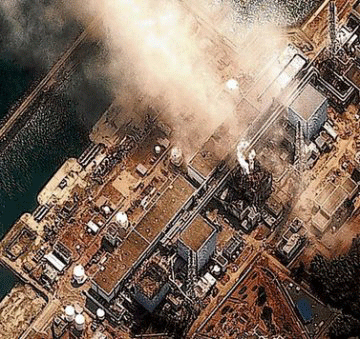 Fukushima Disaster: Professor, “Level of radiation was far worse than Navy officers anticipated”, Conservatve Read, US gov’t shredded documents for 4 days while drawing up plans to evacuate Japan — “Somebody was obviously very worried”
Jeff Kingston of Temple Univ., Apr. 4, 2014: Kyle Cleveland, my colleague […] recently published a report […] a critical, but nuanced picture of a crisis that was closer to careening out of control than is generally acknowledged. […] Naval officers […] discovered the level of radiation was far worse than they anticipated. Radiation gauges on the [USS Reagan] measured levels of radiation at 100 nautical miles off the coast that were 30 times greater than normal. [Sailors report] significant health problems due to exposure to radiation […] Cleveland finds that there was considerable disagreement between various U.S. agencies about the severity of the risk […]
Given that the U.S. government expanded the exclusionary zone in Fukushima to 80 km and developed contingency plans for a massive evacuation while shredding of documents continued for four days at the U.S. Embassy and military bases in Japan, somebody was obviously very worried. […] Some of his insider sources tell him that the crisis was actually far worse than anyone acknowledged at the time and that information was withheld to prevent a panic.
Cleveland concludes that Japan’s nuclear reactors should not be restarted……… http://conservativeread.com/fukushima-disaster-professor-level-of-radiation-was-far-worse-than-navy-officers-anticipated/
Taro Aizu Poetry and pictures from Namie, Fukushima Prefecture Japan
“Like a naked tree
In the deserted fields
My hope stands.”
Haiku by Taro Aziu
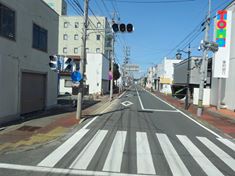
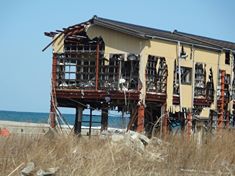
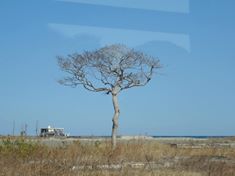
Pictures taken recently in Namie by Taro Aziu
Subsidies for nuclear power, none for renewables – that’s Exelon’s goal
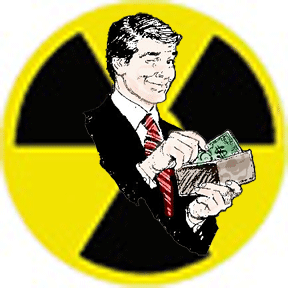 Utility Exelon Wants to Kill Wind and Solar Subsidies While Keeping Nukes Exelon is fighting renewables because they beat nuclear at new market needs. Xcel and NextEra back renewables. greentech grid, Herman K. Trabish April 1, 2014
Exelon, the biggest owner of U.S. nuclear power, has renewed its fight to kill wind’s production tax credit — and if Exelon gets its way, solar’s investment tax credit may be next.
Sources say renewal of wind’s $0.023 per kilowatt-hour production tax credit (PTC), which expired at the end of 2013, will fight its way into the revision of the upcoming Senate Finance Committee’s tax extenders package…….
“This year, it’s the wind industry. Next year, it will be the solar industry,” said Joseph Dominguez, Exelon’s Sr. VP of Policy and Regulatory Affairs. “We’re just handling these subsidies piecemeal instead of looking at the problem more holistically.”……
Exelon says the reason for its opposition to wind’s PTC, for which its membership in the American Wind Energy Association (AWEA) was revoked, is because wind is driving out nuclear in the Midwest and other wind-rich markets……..http://www.greentechmedia.com/articles/read/Utility-Exelon-Trying-to-Kill-Wind-and-Solar-Subsidies-While-Keeping-Nukes
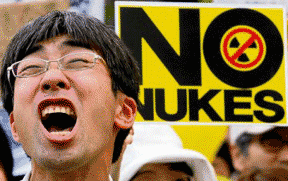
Sustained Public Opposition to nuclear power restart in Japan
 In the Wake of Fukushima: Japan’s Nuclear Energy Policy Impasse 60% of Japan’s 48 viable nuclear reactors,are not as yet being considered for application to the Nuclear Regulation Agency (NRA) for restart By Andrew Dewit Global Research, April 07, 2014
Asia-Pacific Journal “………..The most recent Japanese opinion poll on nuclear restarts is the March 18 survey by the Asahi Shimbun. It indicates that 59% of the Japanese public oppose restarts of any nuclear capacity, whereas only 28% support restarts. The poll’s results not only confirm that the opposition to nuclear is holding; it also shows a great sensitivity to risk. According to the poll, a mere 12% of the Japanese public have either no or only minimal concern regarding the risk of further nuclear accidents at facilities other than the infamous Fukushima Daiichi. By contrast, 50% have a fair degree of concern, and 36% have a very high degree of concern. In addition, the poll shows that only 4% of respondents regard the lack of nuclear waste disposal facilities as of no or only minimal concern. By contrast, 19% believe it is to some extent a problem. And a massive 76% regard it as a serious problem.7
Nationwide, there are 135 local communities that lie within 30 kilometers of a reactor, and 21 prefectures that are host to one or more reactors. The news service Kyodo Tsushin surveyed these 156 local governments in mid- to late-February of 2014, and found that only 13 were ready to agree to restarts without conditions. A further 24 would agree to restarts, but with conditions. Of the remainder, 32 declared their opposition to restarts, 66 replied that they could not decide, and 21 offered no reply at all.8 The NRA decided on March 13 to prioritize Kyushu Electric’s Sendai rectors 1 and 2 (in Kagoshima Prefecture) for restart.9 But that decision itself came under criticism, due to perceptions of undue haste amid suggestions that seismically active zones are nearby………. http://www.globalresearch.ca/in-the-wake-of-fukushima-japans-energy-policy-impasse/5376899?utm_source=rss&utm_medium=rss&utm_campaign=in-the-wake-of-fukushima-japans-energy-policy-impasse
India may abandon its ‘no first use’ policy on nuclear weapons

 India’s BJP puts ‘no first use’ nuclear policy in doubt Yahoo 7 News, April 8, 2014, By Sanjeev Miglani and John Chalmers NEW DELHI (Reuters) –India’s opposition Bharatiya Janata Party (BJP), widely tipped to form the next government, pledged on Monday to revise the country’s nuclear doctrine, whose central principle is that New Delhi would not be first to use atomic weapons in a conflict.
Unveiling its election manifesto, the party gave no details,
but sources involved in drafting the document said the “no-first-use” policy introduced after India conducted a series of nuclear tests in 1998 would be reconsidered……..http://au.news.yahoo.com/world/a/22459963/indias-bjp-puts-no-first-use-nuclear-policy-in-doubt/
Global growth in new renewable energy projects
 Almost half of new electricity is now clean and green http://www.newscientist.com/article/dn25368-almost-half-of-new-electricity-is-now-clean-and-green.html 07 April 2014 by Fred Pearce That’s a lot of clean power. Almost half of new electricity generation is now renewable, and the costs of wind and solar power are falling sharply. It “should give governments confidence to forge a robust climate agreement” next year, says Achim Steiner, director of the United Nations Environment Programme (UNEP).
This comes a week before the Intergovernmental Panel on Climate Change’s assessment of how to prevent dangerous climate change. The IPCC will stress the importance of quickly converting to renewables.
The latest annual Global Trends in Renewable Energy Investment, published today by UNEP, reveals that 44 per cent of all generating capacity installed last year around the world was renewable. That is despite a 14 per cent decline in renewables investment, and in new electricity generally.
But the politics of green energy are changing fast. China is now the world’s leader, having overtaken Europe. Last year, China invested $56 billion in green power.
Going clean
The green bubble seems to have burst in cash-strapped Europe, which was the vanguard of renewable energy for more than a decade. The continent cut investment by 44 per cent.
The only big exception was the UK, which increased investment by 12 per cent despite rumblings of discontent in the governing Conservative party. For the first time, the UK outspent Germany, with projects like the giant Westermost Rough wind farm leading the way.
Japanese investment also soared, increasing by 80 per cent. This was thanks to a rush to install solar panels, after nuclear power stations were closed following the 2011 Fukushima disaster.
Renewables kept 1.2 billion tonnes of carbon dioxide from being emitted in 2013, says report author Ulf Moslener of the Frankfurt School of Finance & Management in Germany. Aside from hydroelectric dams, photovoltaic solar panels and onshore wind turbines are the biggest contributors.
The cost of generating solar power has fallen by 25 per cent since 2009, and the cost of wind power has fallen 53 per cent over the same period. As a result, the report says a growing number of such projects are being built without any subsidy. What’s more, share prices in clean-energy companies, which have been in free fall since the start of the global recession, rose 54 per cent last year.
Encouraging trends in use of renewable energy
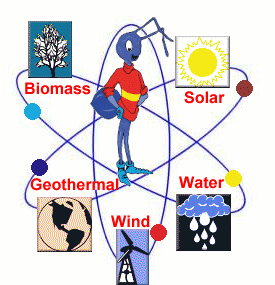 Greenpeace sees growth in renewable energy use http://www.upi.com/Business_News/Energy-Resources/2014/04/07/Greenpeace-sees-growth-in-renewable-energy-use/3041396879861/Greenpeace sees positive growth in green energy. By Daniel J. Graeber | April 7, 2014 LONDON, April 7 (UPI) –Environmental campaign group Greenpeace said Monday major world economies were showing an increase in renewable energy in their grids.
“Renewable energy has expanded, fallen in price and is ready to challenge traditional, polluting forms of energy,” Kaisa Kosonen, a senior political adviser for Greenpeace International, said in a statement.
A report from the Intergovernmental Panel on Climate Change found the burning of fossil fuels was a contributing factor to abnormal weather phenomena. Greenpeace said, with IPCC members set to convene Saturday in Berlin, the focus should be on renewable energy resources.
IPCC’s report showed the level of greenhouse gas emissions have increased since its 2007 report, though global solar power capacity has increased by a factor of 10 and wind capacity has increase threefold since then.
Demand dynamics, meanwhile, have shifted to Asian economies. Chinese coal consumption is changing in response to major pollution in cities, and host country Germany aims to use renewable energy for 80 percent of its energy demand by 2050.
Kosonen said there’s still time to “prevent catastrophic levels of global warming,” provided the renewable energy trends continue.
Arguments for nuclear power losing credibility,as Japan’s utilities jostle for funding
In the Wake of Fukushima: Japan’s Nuclear Energy Policy Impasse 60% of Japan’s 48 viable nuclear reactors,are not as yet being considered for application to the Nuclear Regulation Agency (NRA) for restart By Andrew Dewit Global Research, April 07, 2014
Asia-Pacific Journal
“…….Hard-Pressed Utilities
 As for the utilities themselves, Tepco is not viable in its current form, having lost a stunning 81.2% of its market capitalization between March 10 of 2011 and April 2 of 2014. It was nationalized in June 2012 via a YEN 1 trillion injection of public capital, “the biggest state intervention into a private non-bank asset since America’s 2009 bail-out of General Motors (Economist, 2012). Resolving pressing matters such as the Fukushima and area clean-up and compensation, the decomissioning of ruined assets and the like are well beyond Tepco’s means. Some specialists question whether the other nuclear-dependent utilities are viable as well (Kaneko, 2013), and in early April of 2014 Kyushu Electric and Hokkaido Electric were revealed to be in discussion with the public sector Development Bank of Japan for bailouts (Financial Times, April 2, 2014). Kyushu Electric’s reliance on nuclear power is 42% of generating assets and Hokkaido Electric’s reliance is 30%. Their respective losses of market capitalization are 38.9% and 58.2%.11
The Japanese public sector has thus long been in a powerful position vis-à-vis the utilities, enabling it to press for reform. But this authority was used sparingly by the central government, even under the previous Democratic Party administration. The Tepco bailout was notable for protracted negotiations between Tepco and its politico-bureaucratic allies and state officials. They were not bargaining about weighty matters such as ownership of the power grid, but rather salaries and the size of increases on rate-payers. Outsiders regarded it as “bewildering” to see such minor items on the table. The Financial Times’ Jonathan Soble, also a close follower of Japan’s post-Fukushima power crisis and politics, argued that it “underscored the depth and resilience of Tepco’s resilience, and that of the ‘nuclear village’ of utility executives, bureaucrats and lawmakers that built Japan’s atomic power industry.“12
But now Tepco’s siblings are lining up for bailout, and this seems unlikely to end. Like big utilities in Europe and North America, Japanese utilities face the existential challenge of the ICT, renewable and efficiency-driven “electricity revolution” summarized nicely by Brookings energy security specialists Charles Ebinger and John Banks.13 A recent very detailed article in Scientific American shows how America’s 3000-plus utilities are fighting a losing battle against solar power and smart grids.14 Centralized power and monopolized conventional-grid ownership are confronting a far larger tsunami than the mobile phone shock to land-line telephony. But Japan’s monopolized and nuclear-reliant utilities have the added conundrum of nuclear power’s delegitimation in a very seismically sensitive country.
After Fukushima, the Japanese public debate received a very accelerated course of instruction on how various political economies were responding to the risks of resource price increases as well as climate change and the opportunities of developing new industries in renewable energy and related fields. The public debate also became apprised of just how far behind Japan was in its deployment of energy alternatives such as solar and wind. Moreover, the old arguments that these forms of power generation were not suited to Japan, because of “unique” winds and lack of space, lost their credibility.
The Push for Local Resilience
In addition, local governments exhibit increasing efforts to seize opportunity in the emergence of alternatives to highly centralized and concentrated nuclear power. Centralized power, such as Tepco’s nuclear reactors, led to concentrated economic benefits for a few communities whereas the risks of accident were distributed among a much broader range of communities. Fukushima Prefecture’s post-3-11 commitment to 100% renewable energy by 2040 encouraged other prefectures and cities, including Tokyo, Kyoto, and Osaka, to adopt ambitious targets.15
Moreover, at the end of 2013, Japan’s 16 trillion yen power market featured 192 independent power producers, including such new entrants as Toyota. That number was 79 at the end of 2012, and there has thus been a 240% increase in the number of firms.16 Japan’s “feed in tariff” policy support for diffusing renewables, effective from July of 2012, saw over four gigawatts (roughly four large nuclear reactors worth) of new renewable capacity deployed in the initial year. Japanese domestic shipments of solar cells and modules during July-September of 2013 leapt to 2.075 gigawatts, over triple the 627 megawatt level of a year earlier.17 The Pew Research April 3, 2014 publication of “Who’s Winning the Clean Energy Race? 2013” argues that China remains the leader, at USD 54.2 billion, but that “Japan experienced the fastest investment growth in the world, increasing 80 percent, to almost $29 billion.”18
Since Japan’s public debate on energy is so polarized between Team Abe and the majority, it seems useful to examine which of the two idealized options – nuclear or green – offers the better return. Table 1 is an aid to this objective by its highlighting of the profoundly skewed energy R&D priorities of all the IEA countries. Over two-thirds of the 1980 peak in energy R&D expenditures by all IEA members was devoted to nuclear fission and fossil fuels. By contrast, only 12.3% was invested in renewables and only 6.4% in efficiency. Yet according to the IEA Energy Efficiency Market Report of 2013, global energy efficiency investment in 2011 was worth roughly USD 300 billion, “a similar scale to renewable energy and fossil fuel power investments.”19 Directly comparative data on nuclear power investments appear not to be available. But Mycle Schneider, and Antony Froggatt’s authoritative “The World Nuclear Industry Status Report 2013” reveals that the 2013 global total of 427 reactors with an installed capacity of 364 GWe was considerably lower than the 2010 peak of 444 reactors with an installed capacity of 375 GWe.20………… http://www.globalresearch.ca/in-the-wake-of-fukushima-japans-energy-policy-impasse/5376899?utm_source=rss&utm_medium=rss&utm_campaign=in-the-wake-of-fukushima-japans-energy-policy-impasse
1 This Month

of the week – Shut Down Drone Warfare!


Tell the Ukrainian Government to Drop Prosecution of Peace Activist Yurii Sheliazhenko

Petition to revoke the licensing of the Near Surface Nuclear Disposal Facility (NSDF) at Chalk River. https://www.ourcommons.ca/petitions/en/Petition/Details?Petition=e-7247
To see nuclear-related stories in greater depth and intensity – go to https://nuclearinformation.wordpress.com
-
Archives
- March 2026 (230)
- February 2026 (268)
- January 2026 (308)
- December 2025 (358)
- November 2025 (359)
- October 2025 (376)
- September 2025 (257)
- August 2025 (319)
- July 2025 (230)
- June 2025 (348)
- May 2025 (261)
- April 2025 (305)
-
Categories
- 1
- 1 NUCLEAR ISSUES
- business and costs
- climate change
- culture and arts
- ENERGY
- environment
- health
- history
- indigenous issues
- Legal
- marketing of nuclear
- media
- opposition to nuclear
- PERSONAL STORIES
- politics
- politics international
- Religion and ethics
- safety
- secrets,lies and civil liberties
- spinbuster
- technology
- Uranium
- wastes
- weapons and war
- Women
- 2 WORLD
- ACTION
- AFRICA
- Atrocities
- AUSTRALIA
- Christina's notes
- Christina's themes
- culture and arts
- Events
- Fuk 2022
- Fuk 2023
- Fukushima 2017
- Fukushima 2018
- fukushima 2019
- Fukushima 2020
- Fukushima 2021
- general
- global warming
- Humour (God we need it)
- Nuclear
- RARE EARTHS
- Reference
- resources – print
- Resources -audiovicual
- Weekly Newsletter
- World
- World Nuclear
- YouTube
-
RSS
Entries RSS
Comments RSS
 nuclear-news