Summary of Speakers comments at the Houses of Parliament Fukushima debate on the 10 March 2014
“there is a need for Japan to allow psychological therapeutic treatments available more widely and I hope that the UN and International community might help with this” said Geoff
“The next industrial revolution will be renewable”
“we cant evacuate children and we cant certify the safety for their return so we will not move children” Prefectoral official
Chantelle said that “Swiss energy policy hopes to see smaller decentralised methods of electricity production that would be safer and more efficient.”
Reported by Arclight2011
12 March 2014
posted to nuclear-news.net
The Meeting was at the houses of Parliament in London on the 10 March 2014 and there were 6 speakers covering a range of topics as outlined below. An Audio file of the event has been uploaded by Fatima and can be accessed here; https://www.dropbox.com/sh/xgvnka0nj50hzof/QczME2MYJI A video should be available soon.
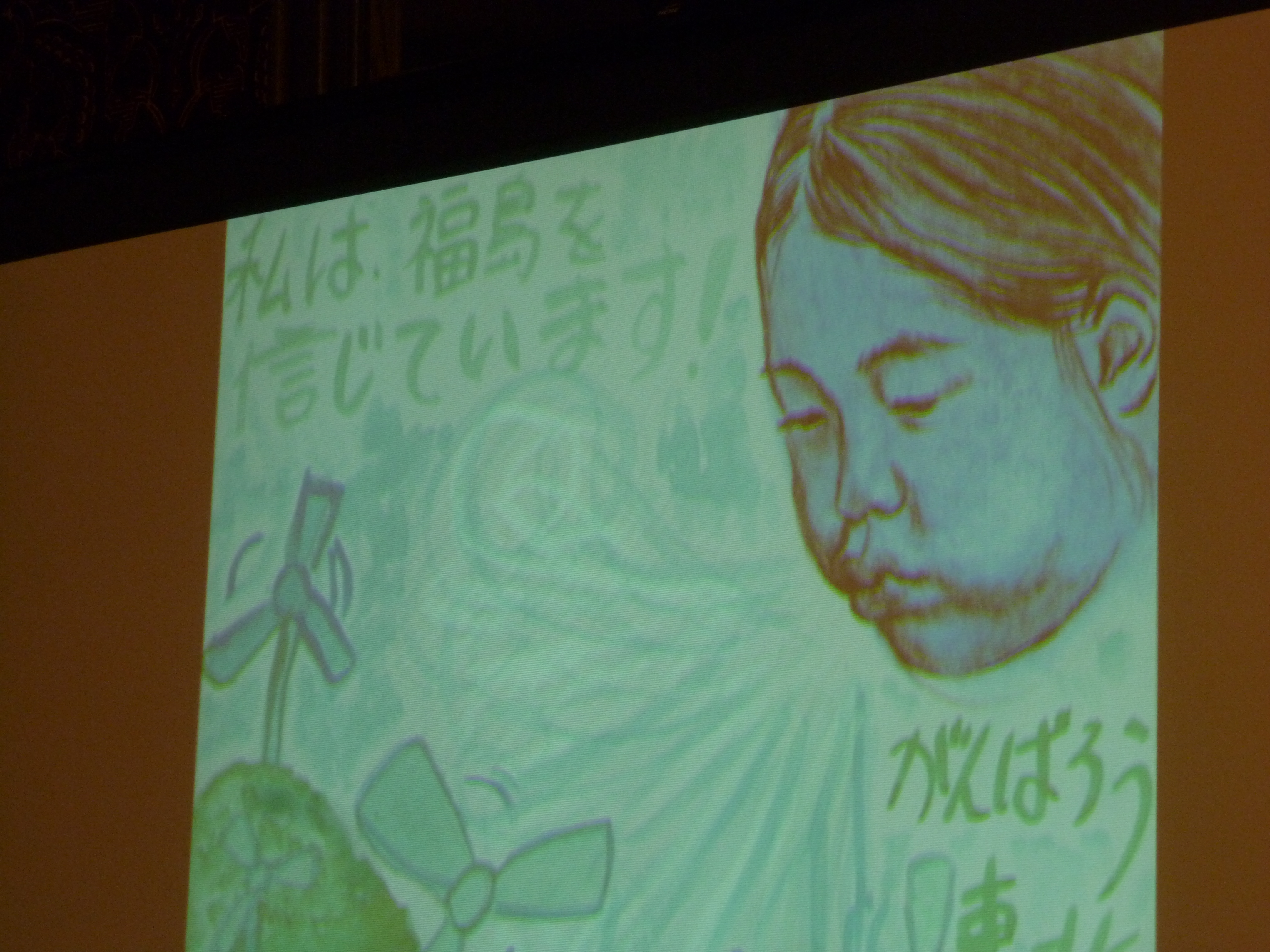
Image courtesy of the Childrens Psychotherapeutic Art Project Japan
The first part of the session was presented by Rik from Kick Nuclear
 He began by highlighting the difference in explosions at reactor 3 and the other explosions at the Daichi Nuclear power plant site.
Rik then discussed the levles of contamination and showed that a much larger area should be evacuated especially as the term “cold shutdown” that TEPCO and the Japanese Government were claiming and which was even verified by the International Atomic and Energy Association (IAEA) in 2011. This points to collusion between the IAEA and the Japanese nuclear lobby.
Rik also mentioned at this point that the Earthquake was the cause and showed photographic evidence and early measurements of Xenon near the Daichi site perimeter fence before the Tsunami hit.
Rik then went on to discuss the issue of reactor design pointing to the pipes at the bottom of the reactor containment vessel being a serious defect in safety design. He then went on to explain the possible flow of the corium (melted fuel rod bundles) from this chamber making its way through the suppression chamber located to the side of the reactor containment vessel.
Also, the topic of actual measurements on the site were mentioned, specifically, that up to 70 Sieverts per hour had been measured at the meltdown sites and this would make clean up and decommissioning very difficult. Only 6 Sieverts an hour can kill quickly.
“This shows that TEPCO are prevaricating” Rik said.
Touching on groundwater issues being of concern it was mentioned that the reactor site is above a water course and on land that is prone to subsidence and that this causes worries concerning the Spent fuel pools that are atop the reactor vessels and a possible future threat to anyone downwind of this nuclear disaster site.
Next to speak was Dr Paul Dorfmann
First Dr Dorfmann talked of the difficulties in moving the nuclear fuel from the site.
He said “A huge amount of radiation has been found”. 
He then mentioned that health effects can not be assessed owing to the lack of data and information coming from official sources in Japan. However, he points out that the official allowable radiation limit of 20 mSv/y, is not taking into account children and pregnant women and is actually designed for Adult male nuclear workers.
Dr Dorfman also points out that although Thyroid cancer is treatable other effects post operation should not be dismissed as readily as some in the health profession dismisses them.
“The treatable effects on life should not be ignored” said Dr Dorfmann
Dr Dorfmann then went on to discuss nuclear costs as a major downside of the nuclear industry citing that the cost of the Fukushima cleanup has been estimated to cost more than1.5 billion in future years whilst the insurance cover is a mere 169 million Euro. He said that if nuclear was fully insured to cover these accidents that the costs of nuclear energy from this single issue, would increase the cost of nuclear by some 60 percent. He also stated that this would increase domestic bills by some 25 percent.
“nuclear is simply not insurable” Dr Dorfmann stated
Discussing risk assessment he went on to say that “beyond design basis” variables (Possible accident scenarios) are not taken seriously enough citing Fukushima not allowing for the scenario that occurred on 11 march 2011.
In fact Dr Dorfmann went on to say that EDF and EPR have both stated “Dont worry” because even in a worst case event (like Fukushima) that there would be no problems.
Dr Dorfmann also pointed out that UK Civil Nuclear structures are a Tier 1 threat to the UK.
He went on to say that recent record breaking flooding during the storms of December and January show that flooding is a more pressing issue for the UK
(the UK assesses “No major change in weather for 50 to 70 years” on UK nuclear beyond basis design assessments for nuclear power sites – added note Arclight).
Dr Dorfmann then quoted the Institute of mechanical Engineers as saying on changing climate issues
“nuclear sites might have to be abandoned”
As a final point Dr Dorfmann finished with this quote
“The next industrial revolution will be renewable”
citizens and co-operatives will own a larger and larger slice of the energy market and this is driving change in the USA where “Nuclear is on the way out”
Geoff a refugee from the Fukushima crisis who is an artist and uses his talents in a psychotherapeutic way for young children that using art to help children deal with the unusual crisis that they find themselves in.
“These childrens health issues will be argued about for decades to come” but his personal testimony is that children and adults were reporting nose bleeds and other symptoms early on in the disaster.
The Childrens Art Project was designed for the kids so they could express themselves in a country that looks down on psychotherapeutic support.
The children in the project were given the opportunity to express their experiences and worries.
“there is a need for Japan to allow psychological therapeutic treatments available more widely and I hope that the UN and International community might help with this” said Mr Read
Geoff also commented on police harassment of bloggers and social media networks in Japan with their comments being used as evidence to threaten prison sentences by the Japanese authorities.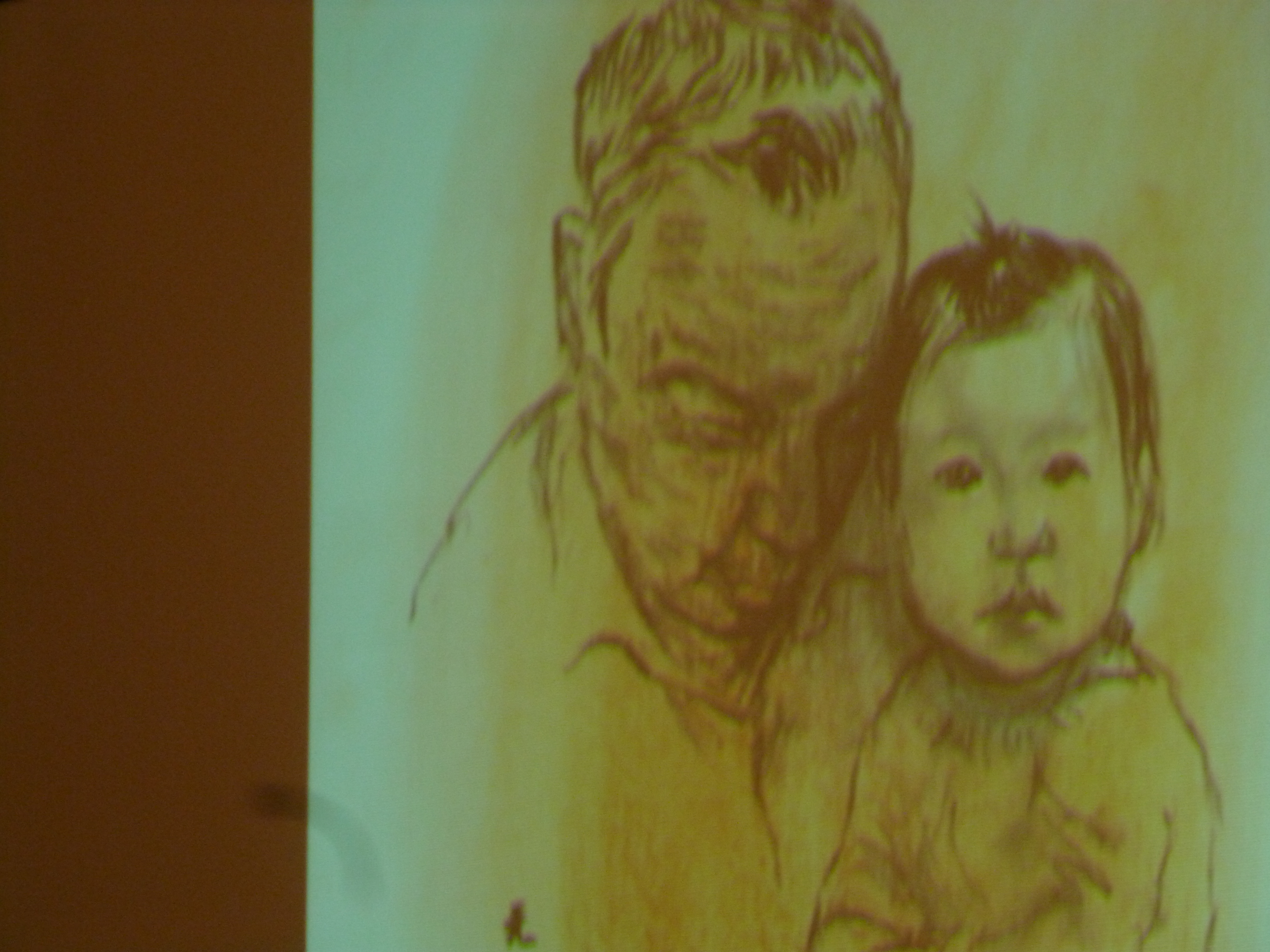
Geoff was concerned that information would be blocked in the future and Fukushima prefecture would end up with no voice at all to the outside world.
Gavin, who is also a refugee from the Fukushima accident, lost 2 of his family to the Tsunami and Earthquake. He also lost 15 out of 30 of his co-workers at his father in laws company.
Gavin describes that many bodies were left out and not reclaimed after the accident because of the chaos.
Although his house survived the Earthquake and was protected from the Tsunami the developing nuclear crisis gave him cause for concern. The prevailing winds putting him directly downwind of some of the initial highly radioactive plume.
He went on to describe the on the ground conditions for the residents of Fukusima and Miyagi prefectures with their being no petrol for evacuation and little safe food for 3 weeks.
Geoff took his family across the mountains as he was concerned at the lack of information and general state of chaos that was prevailing. At this point he had no news about the whereabouts or safety of his larger family. He secured a flight for him and his family to the UK but he returned to Japan to help with the reconstruction efforts.
Whilst back in Japan he noticed that the social fabric that bound people together, pre disaster, was beginning to unravel. Some of his family were living in a school as refugees as well. Specific to Miyagi Prefecture (next to Fukushima Prefecture) was the issue of contamination remediation plans, or the lack of them in Miyagi, as the prefecture government did not want to be associated with the radiation contamination even though Some of Miyagi is very close to the Daichi Nuclear Plant. Any voices in Miyagi that rasied this issue of contamination and contaminated their own areas anyway were met by scorn from officials.
Gavin then went on to say that the issue of hot particles was not discussed and that some of the dead bodies that were not recovered had been deemed nuclear waste and were deemed to toxic to cremate or bury.
When listening to a prefectural official explaining the reason to not move children was
“we cant evacuate children and we cant certify the safety for their return so we will not move children”
Information was used and abused with little information to begin with and then a huge dump of technical and other data occurred where people were overwhelmed with the amount of issues being covered and the complicated nature of the science. Leaving residents confused. The Universities then sent professors to control the villages and inform the discussion. Later some of these same professionals were pulled up on ethics issues.
And finally Gavin felt that Japan is largely becoming a state controlled country as opposed to a democracy.
Dr David Lowry began his talk on nuclear insecurity claiming that
“nuclear is not energy secure”
He went on to say that a UK home office minister was discussing the issues of terrorist attacks, missing nuclear materials etc and “that the minister sounded more like an anti nuclear activist. “
“
Claiming that there must be quite a lot of cognitive dissidence in government departments Dr Lowry pointed out the conflict of both the Trade and Energy Depts. that are both involved with selling nuclear services.
Even worse, A stakeholder at a meeting with a government department questioned the head of policy about his nuclear related knowledge and was surprised to find the head of policy of the group was seriously uninformed on the issues of nuclear information.
Dr Lowry then discussed the UK`s past role in nuclear insecurity citing Iran and North Korea as old customers. Indeed the basis of their nuclear programs was built by the UK. And Pakistans fuel enrichment program plans are they same as the plans to the Calder Hall nuclear site near Sellafield. Dr Lowry stated that
“The UK government ignores this fact”
Talking on the topic of Germany, Dr Lowry said that they The German government is going to extend the evacuation area for its remaining reactors. Whist in the UK the government which has an evacuation area of only 2 miles an Sellafield is going to extend its evacuation zone to a mere 4 miles.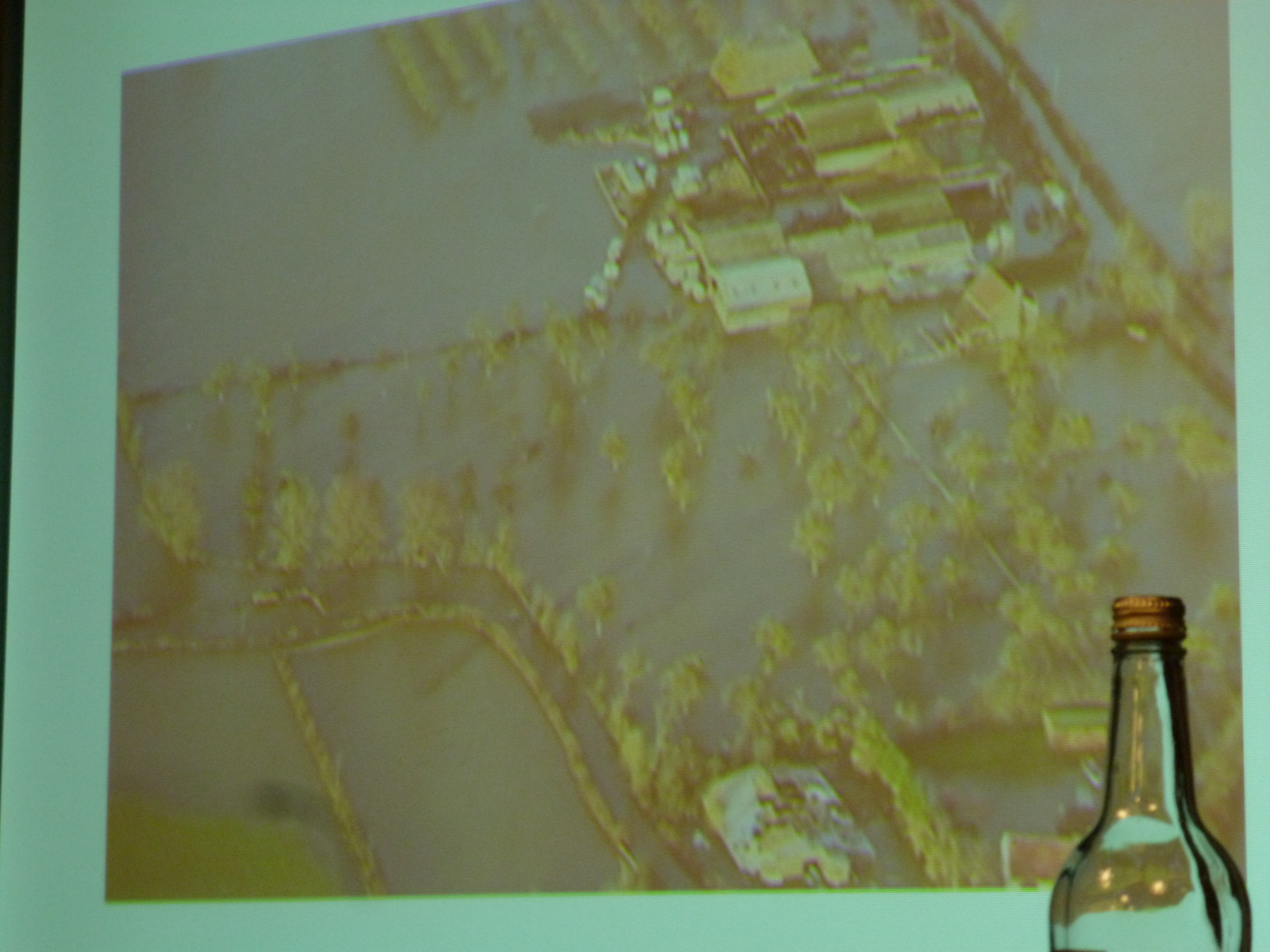
Talking of the planned nuclear reactor at Hinckley, Dr Lowry showed a picture of the recently severely flooded lands around Hinckley and asked what would happen if there was a nuclear disaster during a flood there?
Chantelle Galinger from the Swiss Energy Foundation discussed the switch to reneawables in Switzerland and discussed how this was being organised. She began her statement by apologising that nobody from the swiss parliament could make the event and that they sent a message of support.
There has been a major rethink since Fukushima after the Lucern nuclear accident that was comparable with 3 mile Island and that in the most technical counties incidents can still happen. Terrorism, flooding, earthquakes and being hit by a plane are problems that operators of nuclear reactors can factor for and so they are unable to show viable preventative concepts.
“The fact is that the risk is high and there is no waste storage available at the end of the processes.”
In Switzerland there is a law saying no new nuclear plants but the remaining 5 reactors have no firm exit plans and it will likely be the peoples voice that shuts these down, most likely by a public referendum.
Chantelle said that Swiss energy policy hopes to see smaller decentralised methods of electricity production that would be safer and more efficient.
More here on Switzerland energy revolution.
German language only but with contact details in English for enquiries
No comments yet.
1 This Month

of the week – Shut Down Drone Warfare!


Tell the Ukrainian Government to Drop Prosecution of Peace Activist Yurii Sheliazhenko

Petition to revoke the licensing of the Near Surface Nuclear Disposal Facility (NSDF) at Chalk River. https://www.ourcommons.ca/petitions/en/Petition/Details?Petition=e-7247
To see nuclear-related stories in greater depth and intensity – go to https://nuclearinformation.wordpress.com
-
Archives
- April 2026 (79)
- March 2026 (251)
- February 2026 (268)
- January 2026 (308)
- December 2025 (358)
- November 2025 (359)
- October 2025 (376)
- September 2025 (257)
- August 2025 (319)
- July 2025 (230)
- June 2025 (348)
- May 2025 (261)
-
Categories
- 1
- 1 NUCLEAR ISSUES
- business and costs
- climate change
- culture and arts
- ENERGY
- environment
- health
- history
- indigenous issues
- Legal
- marketing of nuclear
- media
- opposition to nuclear
- PERSONAL STORIES
- politics
- politics international
- Religion and ethics
- safety
- secrets,lies and civil liberties
- spinbuster
- technology
- Uranium
- wastes
- weapons and war
- Women
- 2 WORLD
- ACTION
- AFRICA
- Atrocities
- AUSTRALIA
- Christina's notes
- Christina's themes
- culture and arts
- Events
- Fuk 2022
- Fuk 2023
- Fukushima 2017
- Fukushima 2018
- fukushima 2019
- Fukushima 2020
- Fukushima 2021
- general
- global warming
- Humour (God we need it)
- Nuclear
- RARE EARTHS
- Reference
- resources – print
- Resources -audiovicual
- Weekly Newsletter
- World
- World Nuclear
- YouTube
-
RSS
Entries RSS
Comments RSS
 nuclear-news
Leave a comment