Okuma, Fukushima’s radioactive ghost town
When Okuma’s former residents get past the guards at the roadblock on the road into their hometown, they enter a beautiful post-apocalyptic landscape………. They can’t see the poison all around them, but the numbers on their dosimeters tell the tale
You Can’t Go Home Again Is the Japanese government finally giving up on resettling Fukushima’s radioactive ghost town? Foreign Policy, BY ELIZA STRICKLAND MARCH 11, 2014 ore former residents can enter the radioactive ghost town of Okuma, just a few miles from the ruins of the Fukushima Daiichi Nuclear Power Station, they must first get a permit from Japanese bureaucrats, who then advise them on protective measures. They’ll need to suit up before they go in: Disposable paper coveralls, booties, gloves, caps, and facemasks will keep them safe enough for an hour’s visit. The officials suggest they bring a dosimeter so they’ll know exactly what radiation dose they’re receiving as they walk through the desolate streets to their empty houses, and can avoid lingering in the most dangerous places.
Yet until recently, the Japanese government has maintained the politically expedient fiction that this town would soon be fit for habitation once more. The residents of Okuma are among the roughly 100,000 nuclear refugees who are still barred from their homes
…….Fallout settled on rooftops and lawns and driveways, on rice paddies and orchards, on roads and forests. The evacuated towns are still laced with the radioactive isotope Cesium-137, which has a half-life of 30 years.
In the years since the accident, the Japanese government first set out to map the region’s radioactive hotspots, and then began a massivedecontamination effort. A total of 100 municipalities were marked for cleanup, with 11 of those designated areas of special concern. Gradually, towns that weren’t too contaminated — those on the periphery of the evacuation zone — are being reopened for inhabitants. Right now, residents of the town of Tamura are anxiously awaiting the April 1 lifting of the evacuation order for their area, although many say they’re still worried about health consequences of moving back.
The government had stated that this strategy of cleanup and resettlement would continue apace, and would eventually reach Okuma and the other highly contaminated towns. Perhaps in a few years, officials had suggested, Okuma’s displaced residents would be able to safely resume their lives.
But the facts are clear: Some evacuated towns will be poisoned for decades to come, and their residents can’t go home again. It’s a tragedy, of that there’s no question. But perhaps the greater injustice is that these refugees were kept living in limbo for three years, denied the truth by a government that didn’t have the political bravery to speak it.
1 Comment »
Leave a reply to Anonymous Cancel reply
1 This Month
26 April – Chernobyl: Inside the Meltdown airs on National Geographic on Sunday 26th April from 4pm
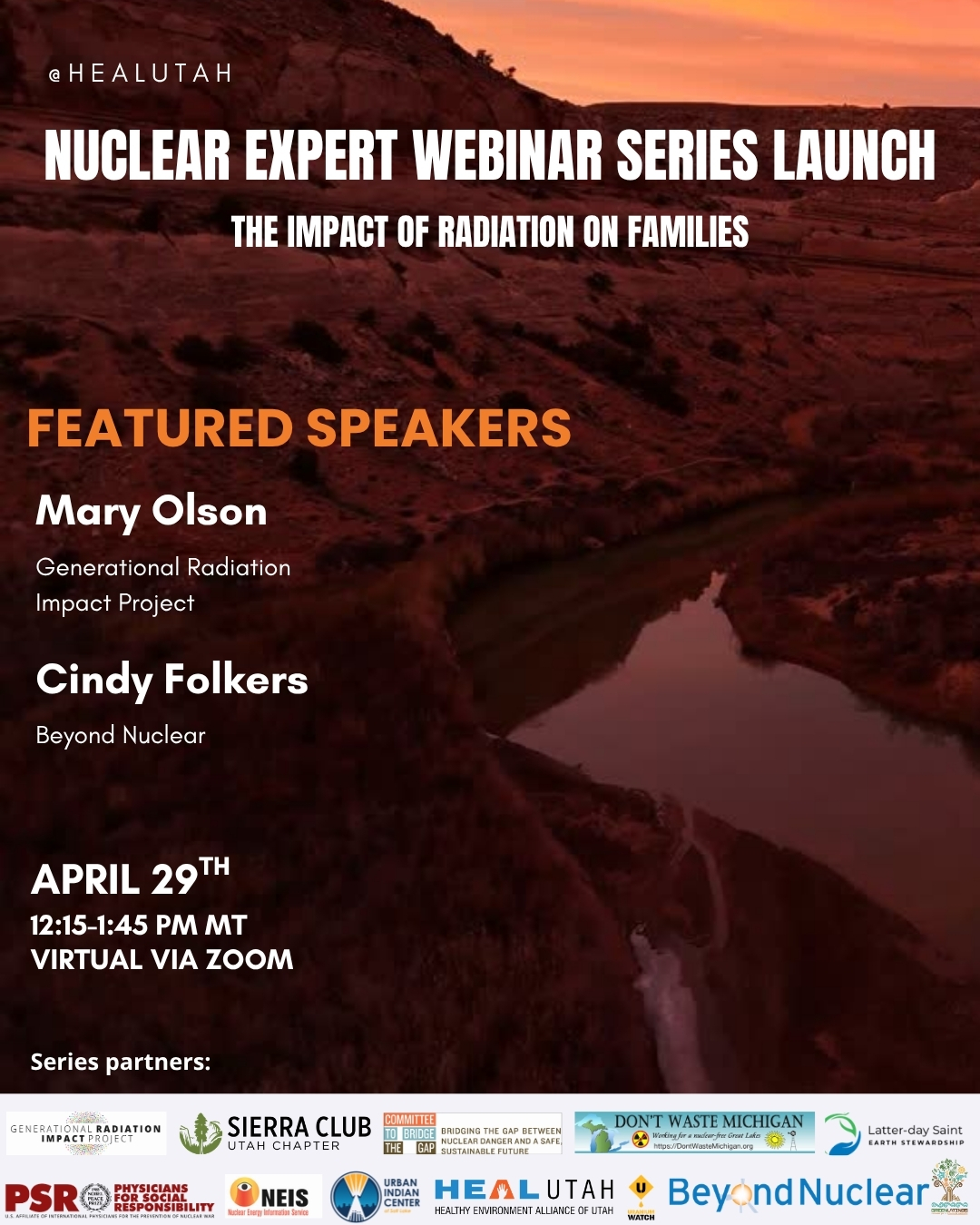
29 April – Nuclear Expert Webinar #1 – Radiation Impacts on Families with Mary Olson and Cindy Folkers
- 12:15 PM MT – 1:45 PM MT
- Location: Virtual – REGISTER TODAY

4 May -West Suburban Peace Coalition to discuss Iran war at May Educational Forum
Monday, May 4, 7:00 – 8:00 PM Central Standard Time
Title: : How Trump’s Narrative Tries to Shape the Reality of the War on Iran.
Contact Walt Zlotow, zlotow@hotmail.com 630 442 3045 for further information
14 May – online event From Bombs to Data Centres: the Face of Nuclear Colonialism

Pine Ridge Uranium is the real threat, not Tehran- Tell Burgum: Stop the Extraction.
Chernobyl: The Lost Tapes – A good documentary on Chernobyl on SBS available On Demand for the next 3 weeks– https://www.sbs.com.au/ondemand/tv-program/chernobyl-the-lost-tapes/2352741955560
To see nuclear-related stories in greater depth and intensity – go to https://nuclearinformation.wordpress.com
-
Archives
- April 2026 (317)
- March 2026 (251)
- February 2026 (268)
- January 2026 (308)
- December 2025 (358)
- November 2025 (359)
- October 2025 (376)
- September 2025 (257)
- August 2025 (319)
- July 2025 (230)
- June 2025 (348)
- May 2025 (261)
-
Categories
- 1
- 1 NUCLEAR ISSUES
- business and costs
- climate change
- culture and arts
- ENERGY
- environment
- health
- history
- indigenous issues
- Legal
- marketing of nuclear
- media
- opposition to nuclear
- PERSONAL STORIES
- politics
- politics international
- Religion and ethics
- safety
- secrets,lies and civil liberties
- spinbuster
- technology
- Uranium
- wastes
- weapons and war
- Women
- 2 WORLD
- ACTION
- AFRICA
- Atrocities
- AUSTRALIA
- Christina's notes
- Christina's themes
- culture and arts
- Events
- Fuk 2022
- Fuk 2023
- Fukushima 2017
- Fukushima 2018
- fukushima 2019
- Fukushima 2020
- Fukushima 2021
- general
- global warming
- Humour (God we need it)
- Nuclear
- RARE EARTHS
- Reference
- resources – print
- Resources -audiovicual
- Weekly Newsletter
- World
- World Nuclear
- YouTube
-
RSS
Entries RSS
Comments RSS
 nuclear-news
[…] […]
Pingback by Anonymous | March 12, 2014 |