Chomsky: From Hiroshima to Fukushima, Vietnam to Fallujah, State Power Ignores Its Massive Harm
http://www.democracynow.org/2014/3/11/chomsky_from_hiroshima_to_fukushima_vietnam
Tuesday 11th March
World-renowned political dissident, linguist, author and MIT Professor Noam Chomsky traveled to Japan last week ahead of the three-year anniversary of the Fukushima crisis. Chomsky, now 85 years old, met with Fukushima survivors, including families who evacuated the area after the meltdown. “[It’s] particularly horrifying that this is happening in Japan with its unique, horrendous experiences with the impact of nuclear explosions, which we don’t have to discuss,” Chomsky says. “And it’s particularly horrifying when happening to children — but unfortunately, this is what happens all the time.”………..
Please check back later for full transcript. Here;
http://www.democracynow.org/2014/3/11/chomsky_from_hiroshima_to_fukushima_vietnam
Radiation Farmer from Tomioka – NAOTO MATSUMURA’S CONFERENCE IN PARIS March 6th 2014
They now are telling us it will take 30 to 40 years to fix it: Liars!
They lied to us before, they lied to us after and they still lie to us now!“I am now a cesium man. I know since I did a whole body counter spectrometry in October 2011.
I am a hibakusha, an irradiated. I piss and shit cesium. I sleep and eat in radioactivity”A parallel between TEPCO and EDF/AREVA
And the farmer, who now lives alone with his animals, to warn the French:
“I think that EDF/AREVA also think the French nuclear power plants are safe and that the French technology is good and superior to others.
Tepco, it was the same. They told us that there was no danger, it was safe … “.
The man from Fukushima predicts another disaster to come in Japan or in France !

This Japanese farmer now lives alone with his animals near the city of Tomioka, located in the « no man’s zone », a quarantine forbidden zone with a radius of 20 km around the Fukushima Daiichi Nuclear Power Plant..
Continue reading
3 YEARS LATER: Meet The Fukushima Children Who Play Outside For 15 Minutes A Day

Mar. 11, 2014, 6:14 AM
Business Insider

Three years ago today, Japan saw a trifecta of catastrophes beginning with the Tohoku earthquake, then a devastating tsunami, and finally the second-worst nuclear accident in history.
What followed is one of the largest and most ambitious cleanup efforts ever.
Families still fearful of radiation exposure have kept their children indoors for much of their short lives. One mother at an indoor Koriyama playground was overheard telling her child, “try to avoid touching the outside air,” Reuters reports.

Global Candle Chain – 3/11 Third Anniversary Remembrance by Beautiful Energy

日本語は英語に続きます。
event photo by Teppei Sato (c)
Light a candle this coming March 11 and join the Beautiful Energy – Global Candles Chain in memory of the triple disaster of March 11, 2011 and in solidarity with the global stand for a nuclear-free world.
March 11 it will be 3 years since the Northeastern Earthquake and Tsunami hit Japan, killing over 15,000 people, destroying numerous villages along the Tohoku coast and disrupting the lives of millions.
On that same day the Fukushima Nuclear Plant disaster also put an end to the peaceful lives of many people living in the vicinity of the plant.
Helps us create a global chain of light to honor those who lost their lives or loved ones.
Last year over 900 people in 47 countries joined our global candle chain. See here for many beautiful photos https://www.facebook.com/events/420275958062841/
You can join from anywhere in the world. Anytime on March 11 between 2.46pm Japan time (the time the earthquake first struck ) and midnight in your country light a candle and stand one minute (or more) in silence.
Send us a photo of your candle, if you will. Upload to this page or send by email to globalcandlechain@gmail.com.
Or post on twitter or instagram with hashtag #candlesforpeace
And spread the word! Share this event page with your friends. The more people and countries join, the more powerful our chain will be!
Here are the global starting times of the chain:
イベント開始時刻 / Start time
グローバル・キャンドルチェーンの開始は、3月11日、東北地方太平洋沖地震発生時刻の14:46から同日深夜まで行う予定です。
各国の現地時間は下記リストからご確認ください。
6.46pm New Zealand (Auckland)
4.46pm Australia (Sydney)
2.46pm Japan, South Korea
1.46pm China & Hong Kong, Mongolia, Singapore, Malaysia, Philippines
12.46pm Thailand, Indonesia, Vietnam
11.16am India, Sri Lanka
9.16am Iran
9.46am Russia (Moscow)
7.46am Finland, Estonia, Israel, Greece, Rwanda, South-Africa
6.46am Europe: Netherlands, France, Germany, Sweden, Italy, Spain, Austria, Switzerland
5.46am Europe (UK & Scotland)
2.46am Brazil, Argentina, Trinidad, Chile
1.46am USA (Washington, New York, EST)
1.46am Canada (Toronto)
00.46am Peru
10.46pm Canada (Vancouver) (March 10)
> 10.46pm USA: (Los Angeles) (March 10)
> 7.46pm Hawaii (March 10)
来る3.11に、東日本大震災により、地震・津波・原発事故と、三重の被害を受けた方々への追悼と核のない世界を願い、世界中でキャンドルを灯すことで私たちのBeautiful Energyに参加しませんか?
Global Candle Chainは、世界中どこからでも、キャンドルに火を灯すことで参加できるワールドワイドなイベントです。
キャンドルであかりを灯す様子を写真に取って、イベントページへシェアして下さい!
15000人以上もの人々が犠牲となり、広大な地域を破壊した東日本大震災。現在もなお、多くの人々が避難生活を強いられています。
また3月11日に発生した大地震が誘発した福島第一原子力発電所の事故により、日本、そして世界中が原発の恐ろしさに気づかされました。
震災発生から3年目を迎える3月11日、震災犠牲者への追悼、
そして被災者のみなさまが一刻も早く穏やかな生活を取り戻せることへの祈り、また、核のない世界への願いを込めて、世界中をキャンドルの光で繋ぐグローバルな”Chain”を作ることに是非協力してください!
去年の3.11には、900人以上、47カ国の世界中の人々がこのGlobal Candle Chainへ参加されました。
前回のたくさんの美しい写真を見るにはこちら:https://www.facebook.com/events/420275958062841/
3月11日当日は震災の起きた14:46(日本時間)~0:00(あなたの住んでいる国)の間、いつでも、どこででも参加することができます。
キャンドルを灯し、心の光と共に黙祷を捧げましょう。
<参加方法>
あなたのキャンドルナイトの様子を、写真で撮って私たちに送ってください。
1.Instagram、Twitterを利用する( #candlesforpeace のタグを使ってください)
2.Emailに添付(アドレス:globalcandlechain@gmail.com)する
3.このFBイベントページにアップロードする
※世界中からの参加者数をカウントしますので、ご事情でキャンセルしなければいけない場合は必ず「参加」を取り消してください。
311 Global Candles for Peaceは、オープンなイベントです。日本はもちろん、各国にお住まいの友人・家族にぜひこの活動を共有してくださいね。
B.E.メンバー一同より
About us:
https://www.facebook.com/BeautifulEnergyTokyo
https://www.facebook.com/groups/BeautifulEnergy/
Japan’s dangerous plans for plutonium fuelled nuclear reactors
 So far, Japan’s pursuit of its ambitious plutonium program — using nuclear fuel and technology provided partly by the United States — has mostly been greeted by public silence among government officials in allied capitals.
After spending tens of billions of dollars and decades on breeder-related programs, Tom Cochran said, countries find it hard to pull the plug. “You have an entrenched bureaucracy and an entrenched research and development community and commercial interests invested in breeder technology, and these guys don’t go away,” Cochran said. “They’re believers … and they’re not going to give up. The really true believers don’t give up.
 A world awash in a nuclear explosive? Japan is leading a global move towards dangerous reactors fueled by plutonium, Thomas Cochran and other experts say By Douglas BirchemailR. Jeffrey Smith, Center for Public Integrity WASHINGTON 10 Mar 14, — A generation after Three Mile Island and Chernobyl, the world is rediscovering the attractions of nuclear power to curb the warming pollution of carbon fuels. And so a new industry focused on plutonium-based nuclear fuel has begun to take shape in the far reaches of Asia, with ambitions to spread elsewhere — and some frightening implications, if Thomas Cochran is correct A Washington-based physicist and nuclear contrarian, Cochran helped kill a vast plutonium-based nuclear industrial complex back in the 1970s, and now he’s at it again — lecturing at symposia, standing up at official meetings, and confronting nuclear industry representatives with warnings about how commercializing plutonium will put the public at enormous risk.
Where the story ends isn’t clear. But the stakes are large. The impetus for Cochran’s urgent new campaign — supported by a growing cadre of arms control and proliferation experts — is a seemingly puzzling decision by Japan to ready a new $22 billion plutonium production plant for operation as early as October.
The plant will provide fuel for scores of special reactors resembling those canceled in America a generation ago. . Critics of the Japanese project worry that its completion in just a few months will create a crucial beachhead for longtime nuclear advocates who claim that plutonium, a sparkplug of nuclear weapons, can provide a promising civilian path to carbon-free energy.
According to its builders, the Rokkasho Nuclear Fuel Reprocessing Facility, which has been undergoing testing since 2006, will be capable of churning out 96 tons of plutonium metal in the next dozen years, an amount greater than all the stocks that remain in the United States as a legacy of the Cold War’s nuclear arms race. Continue reading
The nuclear industry’s long goodbye-dying in USA, and then globally?
 The real reason to fight nuclear power has nothing to do with health risks, Quartz 9 Mar 4
By Chris Nelder “…..Nuclear’s long goodbye The simple fact is that, at least in the US, the nuclear industry is dying a slow death. The announced closure of four major facilities in 2013 alone amount to 4,246 megawatts of nuclear capacity—enough to power 2.7 million homes for a year—that are being retired.
Even while the nuclear industry is able to externalize its costs for insurance (which are federally limited), loan guarantees (which are federally backstopped), decommissioning (which is pushed onto ratepayers) and waste handling (which is pushed onto taxpayers), it still lost. If it had to stand on its own and pay its full insurance costs like every other energy source, we could never build another nuclear plant in America, because no private investors would be willing to take that kind of risk. It’s hard to imagine how the economics could be more tilted in nuclear’s favor (although I’m sure its proponents have ideas on that).
The reason nuclear is dying is economics, not tribalism, as Shellenberger and Nordhaus claim. The UCS study found that if the EIA’s National Energy Modeling System were updated using 2009 utility cost estimates for building new nuclear plants, instead of EIA’s old over-optimistic projections, nuclear plants would not be the most economical way to add new capacity. The economics have shifted even farther away from nuclear since then.
Meanwhile, outside the fantasy world inhabited by the BTI, the real energy market has moved on. The US installed 13,200 megawatts of wind capacity in 2012, according to Bloomberg New Energy Finance.
In 2010, the combined generation of the four nuclear plants now headed for retirement, would have been just over 30 million MWh if all four were operating normally (one plant, the Crystal River plant in Florida, was not). Using a weighted average of the EIA’s onshore and offshore capacity factors for wind (36%), the wind capacity installed in the US last year will generate 41.6 million MWh per year.
In other words, the US installed enough wind last year to replace 138% of the nuclear generation shuttered this year.
The US nuclear fleet is shrinking, while wind and solar are posting double-digit, exponential growth rates. What part of this do Shellenberger and Nordhaus not understand?………
It is simply wrong to claim that solar PV is four times as expensive as nuclear power, in Germany, Finland, or anywhere else. BTI’s entire argument—including its repeated insistence that we should emphasize innovation over deployment of renewables—is bizarre, and detached from reality.
These are the facts: Renewables have taken the lead in new power generation in America, comprising nearly half of all new generating capacity installed in the United States in 2012. In the first quarter of this year, nearly half the new capacity installed was solar. With its poor economics, enormous complexity, overly-large capital requirements, too-long lead times, and overall risk, US nuclear power is headed for contraction, not resurgence. Ultimately, I think the same will be true globally……http://qz.com/94817/the-real-reason-to-fight-nuclear-power-has-nothing-to-do-with-health-risks/
I share BTI’s passion for creating a low-carbon future to address the threat of climate change. But false accounting isn’t the way to go about it. We should lean hard on solutions that work today, like renewables, demand response, microgrids, and advanced grid management technologies.
There may come a day when next-generation nuclear reactors can prove their economic viability in the real world and not just on paper. But until they do so—and especially while the old generation of nuclear power is dying—it makes no sense to promote nuclear power.http://qz.com/94817/the-real-reason-to-fight-nuclear-power-has-nothing-to-do-with-health-risks/
In Japan, costs of nuclear power escalate
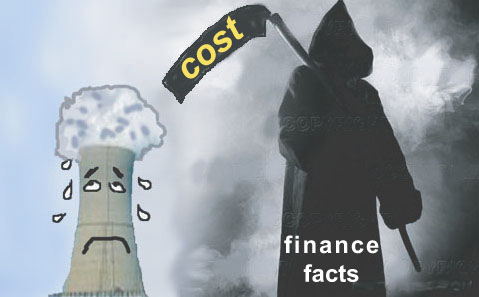 Nuclear energy costs still rising, three years on from Fukushima, SMH, 11 Mar 14 The cost to restart Japan’s nuclear power plants: $US12.3 billion ($13.6 billion) and counting.That’s the amount power companies have committed so far on thousands of tons of reinforced concrete and steel, armies of workers, tsunami walls and seismic tests.
All to meet tougher safety standards for the remaining 48 reactors on coastlines throughout earthquake-prone Japan. And to convince regulators the defenses will withstand a quake and tsunami on a scale of what struck the Fukushima area three years ago Tuesday, causing one of history’s worst civil nuclear disasters and shutting down the nation’s atomic fleet……….
The economic pressures to restart reactors mask bigger issues Japan has yet to tackle, the nation’s Atomic Energy Commission vice-chairman Tatsujiro Suzuki said. These include: How much of Japan’s energy, if any, should nuclear provide in the future? What liabilities do utilities carry in case of accidents and what part should be paid for by the government? Will the nation build more atomic stations and how will they fit with a new law to split generation from transmission?………
ncoming Tokyo Electric Power Co. chairman Fumio Sudo, who was formerly president of steelmaker JFE Holdings Inc., said in January that the power company’s whole management and business model needs a shake-up to make them competitive.
“At the moment, no one wants to link all these things together,” Atomic Energy Commission’s Suzuki said.
As the companies pour concrete, public confidence in restarting reactors remains low following flurries of secondary accidents at Tokyo Electric Power Co.’s Fukushima plant, including leaks of hundreds of tons of radioactive water……..
The most visible change at Hamaoka is the construction of a 1.6-kilometer-long concrete tsunami wall, reinforced with 40,000 metric tons of steel. It stretches across beach in front of the plant.
Tsunami wall
When completed this year the wall will be 22 meters high. The height is based on latest estimates that indicate an earthquake in the area would generate a 19-meter tsunami. The wall’s part of a $US3 billion plan to shore up Hamaoka defenses as Chubu seeks permissions to restart the reactors.
Aside from the wall, Chubu is adding a 20-megawatt back-up gas plant on higher ground at the site to power cooling systems in emergencies.http://www.smh.com.au/environment/nuclear-energy-costs-still-rising-three-years-on-from-fukushima-20140311-34ii6.ht
Safeguards unclear for uranium-233 from thorium nuclear reactors
Japan’s govt taking a risk in planning to restart nuclear reactors
Fukushima disaster: Plan to send residents home three years after nuclear accident labelled ‘irresponsible’ ABC News By North Asia correspondent Matthew Carney 11 Mar 14″…….Turning reactors back on ‘a risk not worth taking’The Abe government has said it is in the best interest of the economy to once again make nuclear power the core source of Japan’s energy.
It is worried that the reliance on imported coal and gas is threatening the country’s fragile economic recovery.
But a former prime minister, Morihiro Hosokawa, says it is a risk not worth taking.”The causes of the accident haven’t been investigated properly. Contaminated water is still leaking, and compensation for victims hasn’t been sorted out,” he said. “I think in these circumstances it is very irresponsible to turn the reactors back on.”
He is backed by another former prime minister, Naoto Kan, who was in power at the time of the nuclear disaster in 2011.
Mr Kan says the current government does not understand the risk.
“They are trying to restart the nuclear reactors without learning the lessons of the March 11 accident,” he said. “If the accident had spread just a little further, then 50 million people around Tokyo would have been evacuated for a long time and that would have put Japan in chaos for 20 to 30 years.”
Mr Kan says no national evacuation plan has been developed, and in the rush to turn the reactors back on the government is ignoring the safety of the general public.”I submitted written questions to Prime Minister Abe and his response from the Nuclear Regulation Authority says it only decides on limited technical issues and won’t judge local disaster prevention plans; that is, whether residents can escape safely or whether the residents can ever return.
“It’s becoming clear they are trying to restart the reactors with no regard for people’s safety.” http://www.abc.net.au/news/2014-03-10/plan-to-send-residents-back-to-fukushima-meets-opposition/5311046
Our food chain may already have radioactive contamination from Fukushima
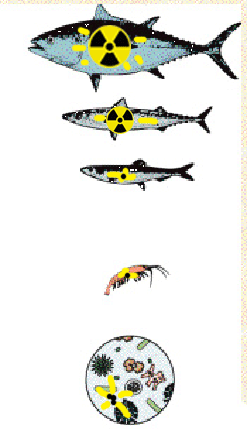 NBC Nightly News: ‘Has Radiation Entered Our Food Supply Chain?’ — USA Today: News getting worse at Fukushima, widespread suspicion leaks into ocean ‘underreported’ — Expert: “I’m not trying to be alarmist… but how will we know it’s safe” for West Coast? (VIDEO) http://enenews.com/nbc-nightly-news-has-radiation-entered-our-food-supply-chain-usa-today-news-getting-worse-at-fukushima-widespread-suspicion-leaks-are-being-underreported-expert-im-not?utm_source=feedburner&utm_medium=email&utm_campaign=Feed%3A+ENENews
USA Today,, Mar. 9, 2014: Ken Buesseler, a chemical oceanographer at the Woods Hole Oceanographic Institution […] and other scientists are calling for more monitoring. No federal agency currently samples Pacific Coast seawater for radiation, he said. “I’m not trying to be alarmist,” Buesseler said. “We can make predictions, we can do models. But unless you have results, how will we know it’s safe?” […] Last July [Tepco] acknowledged for the first time that the reactor was leaking contaminated underground water into the ocean. Since then, the news has gotten worse, and there is widespread suspicion that the problem is underreported. […] three competing models of the Fukushima radiation plume […] all predict that the plume will reach the West Coast this summer […]
NBC Nightly News, Mar. 7, 2014:
Title: Has Radiation Entered Our Food Supply Chain?
Brian Williams, anchor: Scientists from Long Beach State University have started to look for […] signs of radiation in the kelp that is found off the California coast.
Miguel Almaguer, NBC reporter: Could this kelp be contaminated with radiation from Fukushima?
Dr. Steven Manley, CSULB professor: This is used to detect the radioactive materials coming over from Fukushima.
Almaguer: Will it pose a public health threat? […] Its impact on the environment and marine life remains an unknown.
Kei Iwamoto, Ph.D. UCLA adjunct associate professor of experimental radiation oncology: We have not seen anything that should raise any kind of red flags or alarm to the general public.
Almaguer: For now, no alarm, but these researchers know their work is just beginning. Watch the NBC News broadcast here
Dirty bomb could be made from uranium-233 recovered from thorium reactor
Fukushima children must play inside, and food must be checked
Morning Express: SMH Tuesday, March 11 Esther Han“…..ome of the youngest children who live a short drive from the crippled Fukushima nuclear plant barely know what it’s like to play outside. Their fear of radiation has kept them indoors for much of their lives so far.
Japan is preparing to mark the anniversary of the deadly earthquake and tsunami that swept the northern Pacific coastline three years ago.
“There are children who are very fearful. They ask before they eat anything, ‘Does this have radiation in it?’ and we have to tell them it’s OK to eat,” said a director of a Koriyama kindergarten. “But some really, really want to play outside. They say they want to play in the sandbox and make mud pies. We have to tell them, ‘No, I’m sorry. Play in the sandbox inside instead.’…http://www.smh.com.au/nsw/morning-express/morning-express-tuesday-march-11-20140311-34ic5.html#ixzz2vg3qcGCN
Economics, not health or safety. is killing nuclear power
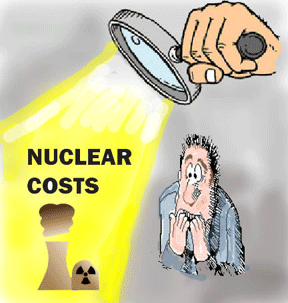 Missing from the entire debate about nuclear is the most important fact of all: Nuclear is dying due to poor economics, and the debate is already over as far as the market is concerned.
The Breakthrough Institute elects to ignore all of this real-world complexity and offer its own extremely distorted way of comparing power generation costs……
…….In short: Cost estimates for new nuclear plants are not credible. I have yet to find a single one that stood up to close scrutiny. And as far as I am aware, no nuclear plant has ever been built for close to its original cost estimate.
 The real reason to fight nuclear power has nothing to do with health risks, Quartz 9 Mar 4 By Chris Nelder June 17, 2013 Chris Nelder is an energy analyst, consultant and speaker who has written about energy and investing for more than a decade. Nuclear proponents are launching a full-court press for fresh investment in the technology. The release of the new film Pandora’s Promise, another editorialfrom ardent nuclear champions Michael Shellenberger and Ted Nordhaus of the Breakthrough Institute, and Paul Blustein’s recent piece in Quartz, “Everything you thought you knew about the risks of nuclear energy is wrong,” are part of an effort to put a new shine on a technology that once offered, but failed to deliver, electricity “too cheap to meter.”
England’s queen has substantial investments in depleted uranium weapons
The Queen of England Deals Extensively in $17 Trillion Depleted Uranium Trade Nation of Change, : Friday 28 February The truth of the matter is that the Queen is sitting on enough money to end world hunger, fuel the world’s energy needs with non-nuclear, clean sources and definitely stop the poverty in her own country.
Uranium can be mined for some medical purposes and to make electricity, but its main purpose was and is to fuel nuclear warfare against the world. Just six mines provide 85 percent of the world’s uranium and guess who owns the mineral rights to that land?
It may be surprising to realize it is none other than the Queen of England. Continue reading
1 This Month

of the week – Shut Down Drone Warfare!


Tell the Ukrainian Government to Drop Prosecution of Peace Activist Yurii Sheliazhenko

Petition to revoke the licensing of the Near Surface Nuclear Disposal Facility (NSDF) at Chalk River. https://www.ourcommons.ca/petitions/en/Petition/Details?Petition=e-7247
To see nuclear-related stories in greater depth and intensity – go to https://nuclearinformation.wordpress.com
-
Archives
- April 2026 (57)
- March 2026 (251)
- February 2026 (268)
- January 2026 (308)
- December 2025 (358)
- November 2025 (359)
- October 2025 (376)
- September 2025 (257)
- August 2025 (319)
- July 2025 (230)
- June 2025 (348)
- May 2025 (261)
-
Categories
- 1
- 1 NUCLEAR ISSUES
- business and costs
- climate change
- culture and arts
- ENERGY
- environment
- health
- history
- indigenous issues
- Legal
- marketing of nuclear
- media
- opposition to nuclear
- PERSONAL STORIES
- politics
- politics international
- Religion and ethics
- safety
- secrets,lies and civil liberties
- spinbuster
- technology
- Uranium
- wastes
- weapons and war
- Women
- 2 WORLD
- ACTION
- AFRICA
- Atrocities
- AUSTRALIA
- Christina's notes
- Christina's themes
- culture and arts
- Events
- Fuk 2022
- Fuk 2023
- Fukushima 2017
- Fukushima 2018
- fukushima 2019
- Fukushima 2020
- Fukushima 2021
- general
- global warming
- Humour (God we need it)
- Nuclear
- RARE EARTHS
- Reference
- resources – print
- Resources -audiovicual
- Weekly Newsletter
- World
- World Nuclear
- YouTube
-
RSS
Entries RSS
Comments RSS
 nuclear-news