Fukushima future cancer risk, real but hard to identify
New Fukushima Radiation Study Looks Ahead To Future Cancer Riskshttp://www.ibtimes.com/new-fukushima-radiation-study-looks-ahead-future-cancer-risks-1557613 By Roxanne Palmer on February 24 2014 A new study of Japanese communities near the Fukushima Daiichi Nuclear Power Plant shows a lingering risk of radiation exposure remained more than a year after the March 2011 meltdown.
For the study, a group of Japanese scientists led by a team from Kyoto University recruited 483 people living within 20 to 50 kilometers (12 to 31 miles) of the Fukushima Daiichi plant. For two months in 2012, participants wore personal devices called dosimeters that measured their radiation exposure from the ground, air, and food. (While the Fukushima accident ended up releasing large amounts of radioactive water into the ocean, this would not have been a significant exposure risk for people living near the plant, since fishing operations in the area have been suspended — and may remain so after additional leaks.)
The scientists calculated that in 2012, the study participants received an average radiation dose of anywhere between .89 and 2.51 millisieverts per year (mSv/y) as a consequence of the radioactive cesium released by the Fukushima accident. That’s fairly close to the estimated 2 mSv/y level of background radiation that the average Japanese person is exposed to from natural sources, but above the usually permissible dose of 1 mSv/y. For comparison, a head CT scan exposes a patient to about 2 mSv of radiation; the maximum yearly dose permitted for U.S. radiation workers is 50 mSv.
So, what does the future hold? The researchers project that by 2022, radioactive cesium will break down enough that the average annual dose rate in their three study areas will stay below 1 mSv/y. “The extra lifetime integrated dose after 2012 is estimated to elevate lifetime risk of cancer incidence by a factor of 1.03 to 1.05 at most, which is unlikely to be epidemiologically detectable,” the authors wrote in a paper published on Monday in the Proceedings of the National Academy of Sciences.
For instance, in the Tamano area, located in the city of Soma, researchers expected that the incidences of all solid cancers will increase by 1.06 percent in the lifetimes of participants as a result of post-2012 radiation doses. Leukemia and breast cancer incidences are expected to jump by .03 percent and .28 percent, respectively, thanks to post-2012 radiation doses. Females and infants are expected to be more at risk for cancers thanks to the accident than males and young adults.
The study does have some limitations.
“This assessment was derived from short-term observation with uncertainties,” the researchers noted.
The study also did not measure exposure to radioactive iodine, or factor in the effect of radiation doses within the first year of the accident. Though radioactive iodine is a serious health hazard, it has a half-life of just eight days, making it much harder to detect a year after the accident (radiocesium, by contrast, has a half-life of about 30 years).
The study population is also relatively small, as Greenpeace nuclear expert Rianne Teule noted.
“Large cities like Fukushima City and Koriyama City have also been exposed, and hence a large population is being exposed to low dose radiation,” Teule wrote in an email. “Whether any health effects will be detectable on the long term, will only become clear after many years.”
Though the average radiation dose for a Fukushima-area resident was relatively low, the radioactive material is expected to linger in the ground for some time. If residents venture into the most contaminated areas near the plant, or eat plants or animals from those areas, their risk for radiation exposure may spike. “Food supply and associated regulations are considered effective in the study areas in Fukushima thus far,” the authors wrote. “However these [radiation dose] levels can be easily elevated when residents preferentially take contaminated mushrooms and wild boar meats from the field, as in the case of the Chernobyl accident.”
SOURCE: Harada et al. “Radiation dose rates now and in the future for residents neighboring restricted areas of the Fukushima Daiichi Nuclear Power Plant.” Proceedings of the National Academy of Sciences published 24 February 2014.
Wind energy growing apace in America
Will wind energy become a more dominant alternative energy source? http://www.pottsmerc.com/lifestyle/20140224/will-wind-energy-become-a-more-dominant-alternative-energy-source By E, The Environmental Magazine 02/24/14, Dear EarthTalk: What is the latest prognosis for wind energy to command a larger piece of the renewable energy pie? — Peter M., Akron, OH Hydroelectric sources of power dwarf other forms of renewable energy, but wind power has been a dominant second for years, and continues to show “hockey stick” growth moving forward. According to the Global Wind Energy Council, global cumulative installed wind capacity — the total amount of wind power available — has grown 50-fold in less than two decades, from just 6,100 megawatts (MW) in 1996 to 318,137 MW in 2013. Continue reading
Nuclear terrorism the continuing danger
Preventing nuclear terrorism, Daily Times, Rizwan Asghar February 25, 2014 Unlike the Cold War period, when both the US and the Soviet Union knew that a nuclear attack from either side would be met with a massive retaliatory strike, conventional deterrence does not work against the terrorist groups Continue reading
Pentagon pushes to keep nuclear weapons spending
 Nuclear Triad to Survive Hagel Cuts in Pentagon Spending , GLOBAL SECURITY NEWSWIRE By Elaine M. Grossman February 24, 2014 U.S. Defense Secretary Chuck Hagel on Monday said the nation would keep its air-land-sea approach to the nuclear arsenal, despite new Pentagon spending cuts.”We … preserve all three legs of the nuclear triad,” he said in a lengthy statement at a Defense Department press conference, mostly devoted to conventional-warfare preparedness. “We’ll make important investments to preserve a safe, secure, reliable and effective nuclear force.”
Speaking alongside Chairman of the Joint Chiefs of Staff Gen. Martin Dempsey, the defense secretary laid out a series of reductions he said were necessary for maintaining military readiness and rebalancing the force structure to address future threats.
The Air Force’s A-10 close air support aircraft and the U-2 surveillance plane were notable casualties of the spending overhaul, though each of the planned weapons retirements could face pushback from Congress. The defense secretary also is looking to cut Army personnel numbers and cap a new class of Navy warships…….”The forces we prioritize can project power over great distances and carry out a variety of missions more relevant to the president’s defense strategy, such as homeland defense, strategic deterrence, building partnership capacity, and defeating asymmetric threats,” Hagel told reporters. “They’re also well suited to the strategy’s rebalance to the Asia-Pacific region, to sustaining security commitments in the Middle East and in Europe, and our engagement in other regions.”…..
Whether Congress would accept the proposed spending changes was unclear, Hagel said, but he asserted that the Pentagon must put forth what it determines to be the budget priorities most appropriate for U.S. national security objectives.
The Pentagon is expected to submit its fiscal 2015 budget request to Congress next week.http://www.nationaljournal.com/global-security-newswire/nuclear-triad-to-survive-hagel-cuts-in-pentagon-spending-20140224
Some evacuated Tamura city residents to return home, will forfeit monthly payment
Japan to lift part of Fukushima evacuation order, allowing Tamura city residents to return home ABC Radio Australia, 25 February 2014, North Asia correspondent Matthew Carney and staff Hundreds of Japanese people will soon be allowed to return to their homes, two years after the Fukushima nuclear disaster forced them to leave. Hundreds of Japanese people will soon be allowed to return to their homes, two years after the Fukushima nuclear disaster forced them to leave.
A 20 kilometre exclusion zone was declared around the nuclear plant after an earthquake and tsunami triggered a reactor meltdown in March 2011.
From April 1, 350 people from Tamura city will be allowed to head back to their homes permanently, according to Japan’s Reconstruction Agency.
Over the next two years, up to 30,000 people will be allowed to return to their homes in the original exclusion zone, thrown up in a bid to protect people from the harmful effects of leaking radiation. Officials say once the evacuation order is lifted, people will be free to choose whether or not to return home.
Those who return home will continue to receive compensation for property and job loss, but will no longer receive the $US980 a month payment for emotional stress…….http://www.radioaustralia.net.au/international/2014-02-25/japan-to-lift-part-of-fukushima-evacuation-order-allowing-tamura-city-residents-to-return-home/1270298ABC Radio Australia
Opposition to nuclear power in Vietnam, but Obama approves nuclear deal
Obama approves Vietnam nuclear deal Sky News Tuesday February 25, 2014 President Barack Obama has approved a civilian nuclear pact with Vietnam which could lead to the sale of US reactors to Washington’s energy-hungry former war foe.
The move by the president formally opened a 90-day review process in Congress. If no legislation is passed contr avening the accord, it will then come into force.
Under the accord, US officials said, Vietnam committed not to produce radioactive ingredients for nuclear weapons and signed up to US nonproliferation standards, which the White House bills as the strongest in the world.
‘I have determined that the performance of the agreement will promote, and will not constitute an unreasonable risk to, the common defence and security,’ Obama said in a memorandum to the Energy Department.
Vietnam agreed not to enrich or reprocess uranium, key steps in the manufacture of nuclear weapons, in the deal signed on the sidelines of an East Asia summit in Brunei in October.
It also pledged to seek components for its fuel cycle on the open, international market………
Despite Hanoi’s determination to pursue nuclear power, there has been domestic opposition with many voicing fears that the locations selected for the plants make them vulnerable to earthquakes or tsunamis. http://www.skynews.com.au/world/article.aspx?id=953094Sky News
3 Years On: Hirono Eyeing Coexistence of Residents, N-Plant Workers
http://jen.jiji.com/jc/i?g=eco&k=2014022400311
Fukushima, Feb. 25 (Jiji Press)–
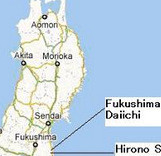 The town of Hirono, located about 30 kilometers south of Tokyo Electric Power Co.’s <9501> Fukushima No. 1 nuclear plant, is exploring a possibility of becoming a community for both residents and workers at the plant knocked out by the March 2011 earthquake and tsunami.
Many residents who left the town after the nuclear accident have yet to come back although the designation of an evacuation preparation area there was lifted six months after the accident.
Of some 5,000 people registered as residents of Hirono, only 1,352 actually lived in the town as of Monday. Many supermarkets went out of business while restaurants remain closed.
Meanwhile, men in work clothes can be seen often. According to a survey by the town government, the number of workers at the plant who live in dormitories or other accommodations in the town in Fukushima Prefecture, northeastern Japan, came to some 2,500 in October 2013, up sharply from around 1,000 in June 2012.
A convenience store owner said that the number of shoppers per day is up 500 from the predisaster level and that daily sales have risen 1.5-fold.
(2014/02/25-10:30)
Gordon Edwards on Fukushima and nuclear basics to a Kids radio show – recommended podcast

Posted on February 23, 2014 by nataliemarie
Gordon Edwards was born in Canada in 1940, and graduated from the University of Toronto in 1961 with a gold medal in Mathematics and Physics and a Woodrow Wilson Fellowship. In 1972, he obtained a Ph.D. in Mathematics from Queen’s University.
http://www.crystalkidsradio.com/mp3/Gordon%20Edwards.mp3 right click and “save as…”
From 1970 to 1974, he was the editor of Survival magazine and in 1975 he co-founded the Canadian Coalition for Nuclear Responsibility, and has been its president since 1978. Edwards has worked widely as a consultant on nuclear issues and has been qualified as a nuclear expert by courts in Canada and elsewhere.
Dr. Edwards has written articles and reports on radiation standards, radioactive wastes, uranium mining, nuclear proliferation, the economics of nuclear power, non-nuclear energy strategies. He has been featured on radio and television programs including David Suzuki’s The Nature of Things, Pierre Berton’s The Great Debate, and many others.
He has worked as consultant for governmental bodies such as the Auditor General of Canada, the Select Committee on Ontario Hydro Affairs, and the Ontario Royal Commission on Electric Power Planning. In 2006, Edwards received the Nuclear-Free Future Award. He is a teacher of mathematics at Vanier College in Montreal. http://www.ccnr.org/
Read more at: http://www.crystalkidsradio.com/radio-archives/natalie-marie-hart-interviews-dr-gordon-edwards-about-fukushima/ |
Over 260 Copies Of Ann Frank Diary Destroyed Clearly by Fasicst Right Wing in Tokyo Libraries
Published on 24 Feb 2014
The fascist in Japan was becoming more and more brazen as Japan falls deeper into fascism.
References:
265 copies of Anne Frank’s diary vandalized in Tokyo libraries
http://www.japantoday.com/category/cr…
Makoto Saurai blog(Japanese langauge only)
http://ameblo.jp/doronpa01/
Hiroyuki Seto blog(Japanese language only)
http://blog.livedoor.jp/the_radical_r…
List of events and actions of Zaitokukai(English Translated)
http://translate.google.com/translate…
Living Near Fukushima Daiichi In The US (Arnie Gundersen)
Published on 23 Feb 2014
http://fairewinds.org/media/fairewind…
Maggie and Arnie speak at The Green Mountain Global Forum about the risks of living near one of the twenty-three US nuclear reactors that are identical to the four that exploded at Fukushima Daiichi (Mark 1 Boiling Water Reactors). The “Lake Wobegone” effect (where each community thinks their nuclear plant is better than average) convinces the 23 local communities in which there is a Mark 1 BWR that a nuclear accident couldn’t possibly happen at their nuclear reactor. The experiences at Fukushima Daiichi, Chernobyl and Three Mile Island, prove that faith in nuclear safety is unfounded.
Arnie Gundersen/Fairewinds Energy Education:
http://www.fairewinds.com/
http://fairewinds.org/
http://www.youtube.com/user/fairewind…
in Japanese: http://www.fairewinds.com/ja
Maggie Gundersen http://tinyurl.com/ms8ufgp
http://www.fairewinds.org/donations
Japanese post secresy law version of “Radiation dose rates now and in the future for residents neighboring restricted areas of the Fukushima Daiichi Nuclear Power Plant ”
DO NOT SHOOT THE MESSENGER! – ARCLIGHT2011 
….This assessment was derived from short-term observation with uncertainties and
did not evaluate the first-year dose and radioiodine exposure.[?????WTF? ARCLIGHT2011]
Nevertheless, this estimate PRovides PeRspective [PR for short] on the long-term radiation exposure levels in the three regions……
Footnotes
- 1To whom correspondence should be addressed. E-mail: koizumi.akio.5v@kyoto-u.ac.jp.
-
Author contributions: K.H.H. and A.K. designed research; K.H.H., T. Niisoe, M.I., K.A., Y.F., M. Kanameishi, K.O., Y.N., T. Nishikawa, Y.S., H. Sakamoto, K.U., K.H., E.O., T.I., K.Y., Y. Matsuoka, H.O., K.T., A. Okada, H. Sato, T.K., H.T., R.S., M. Kashikura, M.N., Y. Miyachi, F.A., M. Kuwamori, S.H., A. Ohmori, and A.K. performed research; K.H.H., T. Niisoe, Y.F., M. Kanameishi, and A.K. analyzed data; and K.H.H., T. Niisoe, M.I., T.T., K.A., H.I., and A.K. wrote the paper.
-
The authors declare no conflict of interest [AND ARE TRYING TO AVOID A 5 YEAR PRISON SENTENCE! – ARCLIGHT2011]
-
This article is a PNAS Direct Submission.
-
This article contains supporting information online at www.pnas.org/lookup/suppl/doi:10.1073/pnas.1315684111/-/DCSupplemental.
Freely available online through the PNAS open access option.
- Kouji H. Haradaa,
- Tamon Niisoeb,
- Mie Imanakac,
- Tomoyuki Takahashid,
- Katsumi Amakoe,
- Yukiko Fujiia,
- Masatoshi Kanameishia,
- Kenji Ohsef,
- Yasumichi Nakaif,
- Tamami Nishikawaf,
- Yuuichi Saitof,
- Hiroko Sakamotog,
- Keiko Ueyamah,
- Kumiko Hisakii,
- Eiji Oharai,
- Tokiko Inouej,
- Kanako Yamamotok,
- Yukiyo Matsuokal,
- Hitomi Ohatae,
- Kazue Toshimam,
- Ayumi Okadan,
- Hitomi Satoo,
- Toyomi Kuwamorip,
- Hiroko Tanip,
- Reiko Suzukiq,
- Mai Kashikuraq,
- Michiko Nezur,
- Yoko Miyachis,
- Fusako Arait,
- Masanori Kuwamoriu,
- Sumiko Haradav,
- Akira Ohmoriv,
- Hirohiko Ishikawab, and
- Akio Koizumia,1
Noam Chomsky: Talking About Iran Sanctions Is ’Surreal’ – Video
publish date : 24 Monday February 2014
Iran and six world leaders agreed to a plan Thursday for negotiating an agreement to freeze Iran’s nuclear program in exchange for eased economic sanctions. But author and activist Noam Chomsky isn’t convinced the United States has the right to impose sanctions at all.
“My feeling is that the entire discussion is kind of surreal,” Chomsky said last month during an interview with HuffPost Live. “There are more fundamental questions to ask. What justification does the United States have to impose sanctions in the first place?”
<div style=’text-align:center’>
<script type=’text/javascript’ src=’http://pshared.5min.com/Scripts/PlayerSeed.js?sid=281&width=560&height=450&playList=518088050′></script>
<br/>
</div>
WATCH Chomsky’s comments in the video above.
or here… http://www.huffingtonpost.com/2014/02/23/noam-chomsky-iran_n_4833461.html?utm_hp_ref=politics
The United States, Britain and the United Nations Security Council have already levied significant economic sanctions against Iran in an attempt to persuade the nation to abandon what the U.S. believes could be a potential nuclear weapons program. President Hassan Rouhani, who replaced hard-liner Mahmoud Ahmadinejad last year, forged an agreement in November with the U.S. and several other countries to help boost the struggling Iranian economy.
Chomsky argued that reports from U.S. intelligence agencies have not confirmed Iran is developing nuclear weapons.
“As far as U.S. intelligence knows, Iran is developing nuclear capacities, but they don’t know if they are trying to develop nuclear weapons or not,” Chomsky told HuffPost Live. “Chances are they’re developing what’s called ‘nuclear capability,’ which many states have. That is the ability to have nuclear weapons if they decide to do it. That’s not a crime.”
The Inconceivable Atomic Legacy of New Mexico – Vice
…..As Jennifer Richter told me, “That eternal legacy is thought-provoking, in a way that we are not trained to provoke our thoughts.”
I suppose it’s only fitting that New Mexico, where the atomic age began, is also the primary resting place of its excess. And at the WIPP site, New Mexico’s atomic legacy will outlive us all……
http://www.vice.com/en_ca/read/the-atomic-legacy-of-new-mexico
By Sam Gilbert
24 February 2014
In 1945, the world’s first nuclear weapon was detonated at the Trinity site in the Chihuahuan Desert in New Mexico. The massive blast pulled the white desert sand up into an atomic fireball, the heat transforming the granules into green glass that fell back to the desert floor.
Days before and a few hundreds miles north, the world’s first ever nuclear weapons scientists mused over whether or not the atmosphere above the test site would be incinerated by the atomic reaction, ushering in a new age of apocalyptic fear that would define the next couple of generations.

A replica of the Fat Man bomb dropped over Nagasaki at the Trinity site (photo via)
Growing up in New Mexico, this history surrounds you. We had family trips to the Trinity site and school visits to the Bradbury Museum In Los Alamos, where we were thrust in front of full-sized replicas of the bombs that leveled Hiroshima and Nagasaki, before being subjected to goofy museum movies about the wonders of atomic energy.
My childhood home was situated almost directly between the two primary nuclear research and development sites in the country, Sandia and Los Alamos national labs. My university sat just a few miles from the single largest nuclear weapons cache in the world.
“In New Mexico, we live in a radioactive web,” said Jennifer Richter, former University of New Mexico professor.
Preparing for nuclear power plant licensing beyond 60 years
It was agreed that EDF NDL would stay flexible and adapt to any unforseen situations and any future planning or research in this area could be avoided (likely as to keep the costs down). Though they did admit this;
“for example it has been identified that the extreme maximum ambient air temperature is likely to be beyond the current design basis within the lifetime of some stations. Suitable safety case amendments are being prepared.”
[…]
“….. there is little quantified information currently available. ONR acknowledges that generation of this information was not practicable within the timescales of producing the stress tests reports. Significant work is required, particularly to evaluate margins to equipment failure against extreme wind and temperature” http://www.oecd-nea.org/nsd/fukushima/documents/UK_ST_Final_National_Report.pdf
Preparing for licensing beyond 60 years
http://www.world-nuclear-news.org/RS-Preparing-for-licensing-beyond-60-years-2402144.html
24 February 2014
….Licence extensions to 60 years mean that major mid-life refurbishing, such as replacement of steam generators and upgrades of instrument and control systems, can be justified….
US nuclear utilities could start applying to the regulator from 2017 for operating licence extensions beyond 60 years. Staff at the Nuclear Regulatory Commission (NRC) say they are preparing for this.
Under the Atomic Energy Act of 1954, as amended, the NRC is allowed to issue licences for nuclear power reactors to operate for up to 40 years. The original 40-year period was more to do with amortisation of capital than implying that reactors were designed for only that lifespan. Regulations allow the NRC to extend licences for additional 20-year periods provided the reactor is deemed safe to continue operating. There is no restrictions on how many times a licence can be extended.
First licence renewal extending operation beyond the original 40 years was issued to the two-unit Calvert Cliffs nuclear power plant in March 2000. Of the USA’s 100 operating nuclear power reactors, the NRC has so far renewed 72 of their operating licences and is currently reviewing a further 18. As of the end of last year, 20 reactors had entered the period of extended operation between 40 and 60 years.
In a paper to the commission, NRC staff said, “Based on discussions with the nuclear industry, the staff believes the first application for subsequent licence renewal may be submitted as early as 2017.”
Vessel checks for more Swedish reactors but WENRA wants all European reactors reviewed!
In 2013 the Western European Nuclear Regulators Association (WENRA) recommended that standardized reviews should be carried out at all European reactor pressure vessels, regardless of manufacturer, to verify materials quality and structural integrity.
24 February 2014
http://www.world-nuclear-news.org/RS-Vessel-checks-for-more-Swedish-reactors-2402147.html
Sweden’s nuclear regulator has instructed the operators of two more of the country’s reactors to review the conditions of the units’ pressure vessels to check for defects that may have been introduced in the manufacturing process.
The Swedish Radiation Safety Authority (Strålsäkerhetsmyndigheten, or SSM) wants the operators of Oskarshamn 3 and Forsmark 3 to review and analyse documentation from the manufacture of the units’ pressure vessels to see whether similar flaws to those discovered in two Belgian units are likely to be present. The operators must then decide whether the vessels need to undergo further tests. The review – and any decision on the need for further tests – must be completed by 30 June 2015.
1 This Month


Pine Ridge Uranium is the real threat, not Tehran- Tell Burgum: Stop the Extraction.
Chernobyl: The Lost Tapes – A good documentary on Chernobyl on SBS available On Demand for the next 3 weeks– https://www.sbs.com.au/ondemand/tv-program/chernobyl-the-lost-tapes/2352741955560
To see nuclear-related stories in greater depth and intensity – go to https://nuclearinformation.wordpress.com
-
Archives
- April 2026 (288)
- March 2026 (251)
- February 2026 (268)
- January 2026 (308)
- December 2025 (358)
- November 2025 (359)
- October 2025 (376)
- September 2025 (257)
- August 2025 (319)
- July 2025 (230)
- June 2025 (348)
- May 2025 (261)
-
Categories
- 1
- 1 NUCLEAR ISSUES
- business and costs
- climate change
- culture and arts
- ENERGY
- environment
- health
- history
- indigenous issues
- Legal
- marketing of nuclear
- media
- opposition to nuclear
- PERSONAL STORIES
- politics
- politics international
- Religion and ethics
- safety
- secrets,lies and civil liberties
- spinbuster
- technology
- Uranium
- wastes
- weapons and war
- Women
- 2 WORLD
- ACTION
- AFRICA
- Atrocities
- AUSTRALIA
- Christina's notes
- Christina's themes
- culture and arts
- Events
- Fuk 2022
- Fuk 2023
- Fukushima 2017
- Fukushima 2018
- fukushima 2019
- Fukushima 2020
- Fukushima 2021
- general
- global warming
- Humour (God we need it)
- Nuclear
- RARE EARTHS
- Reference
- resources – print
- Resources -audiovicual
- Weekly Newsletter
- World
- World Nuclear
- YouTube
-
RSS
Entries RSS
Comments RSS
 nuclear-news