Support Mari Takenouchi and Radiation Protection – The first “casualty” of Japans new war on freedom?
Office of the Prosecutor, Iwaki Branch, Fukushima Japan:
Support Mari Takenouchi and Radiation Protection
“Perhaps because everyone believes people telling them on television that everything is fine, they don’t seem so worried,” 281 Antinuke told Reuters.“I hope by leaving my art I can remind people that we’re not safe at all … and that they will do something to protect themselves.”
“We don’t know what will happen in the future, whether children will get cancer or leukemia,” he said. “So I want to keep making noise and making a fuss.”
“The nuclear accident allowed us to realize that Japan had hidden a lot of things,” he said. “I want to make images that express doubts about what’s going on in politics – like a label that says ‘This is happening, pay attention’!” http://www.dailykos.com/story/2013/11/30/1259294/-Masked-Artist-Forces-Japanese-to-Think-About-Fukushima

Why this is important!!

Mari is facing charges stemming from speaking out on radiation in Japan and advocacy for families relocating children out of the areas contaminated by radioactivity from the damaged Fukushima Daiichi reactor site, operated by TEPCO. Radioactivity continues to leave that site. It is well established that while lower levels of exposure to radioactivity lowers risk, the greatest hazard from radiation comes when children are exposed, raising the risk of cancer manifold over their entire lives.
The group ETHOS in Japan supports the decision by some to stay and live in contaminated areas. Sadly, some of these families feel they have no choice due to economics and other factors. Certainly young children have no choice. ETHOS advocates monitoring radioactivity, but well established science supports Mari’s views that there is no safe dose of radiation and that children need to be protected. We support open discussion, access to information and free choice. We ask the Prosecutor to agree that writing and speaking about these issues are not a crime.
Please Stand With Mari as she stands for precaution, protection and the rights of children to a healthy future. THANK YOU.
Nuclear lobby keeps promoting, but the Fukushima catastrophe continues
nuke promoters are oblivious to the dangers, so the rest of us need to keep in mind, Fukushima is an ongoing disaster still looking for a solution almost three years later, and the land in that area will never be the same.
Fukushima: The Nuclear Disaster That Keeps On Giving http://www.tucsonweekly.com/TheRange/archives/2014/02/23/fukushima-the-nuclear-disaster-that-keeps-on-giving The tsunami and meltdown at Japan’s Fukushima Nuclear Power Plant happened way back in March, 2011, going on three years now. Old news, right? Meltdowns happen. BY DAVID SAFIER ON SUN, FEB 23, 2014
Actually, not such old news. Another 100 tons of radioactive water leaked last Wednesday, just one of an ongoing series of mini-disasters occurring regularly at the damaged nuclear plant which is currently being held together by duct tape, baling wire and chewing gum — or techniques similarly temporary and unreliable.
It’s not the first spill, there have been many, but this water is more contaminated than usual.
[T]he water was about 3.8 million times as contaminated with strontium 90 as the maximum allowed under Japan’s safety standards for drinking water. It also showed levels much more radioactive than a worrisome groundwater reading that Tepco announced earlier this month. That reading — five million becquerels of strontium 90 per liter — which was detected at a location closer to the ocean than the latest spill, prompted criticism of Tepco because the company waited five months to report it publicly.
The reason for the spills is that groundwater keeps seeping into the reactor buildings, and the only choices available to Tokyo Electric Power Co. (TEPCO) are to let it run into the Pacific or store it in huge above-ground water tanks.
So far, Tepco said, about 340,000 tons of water have accumulated in the tanks, enough to fill more than 135 Olympic-size swimming pools. A ton of water is equivalent to about 240 gallons.
Fox News reported that “plant workers attached a garbage bag to contain the leakage.” The “Fox News reported” attribution makes me a tad skeptical, but hey, it’s not The Onion, and it’s not the worst Fukushima fix I’ve read about.
I posted regularly about Fukushima when I was at Blog for Arizona. In 2013 alone, I wrote about cooling systems being knocked out because a rat got into the switchboard (the wire nets installed to keep the rats away caused another power outage), TEPCO finally admitting that radioactive water was leaking into the sea on a regular basis (they’re planning to create an underground ice wall to contain the water — seriously), 300 tons of water leaking from a storage tank (if you stand a foot away from the leaking water for an hour, you’ll receive 5 times the maximum yearly radiation dose for nuclear workers), and one of the last leaks of 2013dousing six workers with radioactive water (because the workers took out the wrong pipe — Oops!)
The local connection to all this is, gubernatorial hopeful “Atomic Al” Melvin (more often known as Cap’n Al) wants to put nuclear plants all over bone-dry Arizona, even though those things need lots of water — more than lots when there’s an accident. Al and other nuke promoters are oblivious to the dangers, so the rest of us need to keep in mind, Fukushima is an ongoing disaster still looking for a solution almost three years later, and the land in that area will never be the same.
French nuclear company AREVA has ripped Niger off bigtime
 French Uranium Miner Owes More to Niger, Activists Sayhttp://www.voanews.com/content/activists-say-uranium-miner-owes-more-to-niger/1857929.html Jennifer Lazuta February 24, 2014 DAKAR, SENEGAL — Niger and the French uranium firm Areva remain locked in negotiations over how to divide revenues. Activists and non-governmental organizations have gotten involved and say Niger deserves a greater share of the profits.
Activists say that for decades Areva has been operating in Niger without paying its fair share of taxes or revenue profits.
“Uranium is a big industry in Niger,” said Ibrahima Aidara, the economic governance program manager for the Open Society Initiative of West Africa. “Some people say it is the fourth largest producer of uranium. But unfortunately, Niger is not benefiting much because they are not getting good revenue, and the damage on [society] and the environment is also very huge.”
Niger is one of the poorest countries in the world. According to the World Bank, nearly 60 percent of Nigeriens currently live below the national poverty line.
This is despite a study by the Extraction Industry Transparency Initiative that showed that Areva mined more than $4.8 billion worth of uranium from Niger in 2010. Continue reading
While nuclear waste problem gets worse, US govt funds new nuclear reactors!
 it’s crazy to be starting new nukes when the unsolved nuclear waste problem just gets bigger and worse
Two New Nuclear Reactors in the Works, While Alarms Sound over High Radiation Levels at Waste Site http://www.allgov.com/news/controversies/two-new-nuclear-reactors-in-the-works-while-alarms-sound-over-high-radiation-levels-at-waste-site-140224?news=852515, –Steve Straehley Energy Secretary Ernest Moniz traveled to Georgia on February 20 to issue loan guarantees to construct the first two nuclear reactors to be built in the United States in nearly 30 years. But just days before, in New Mexico, there was an incident that threw into question the ability to deal with the nuclear waste being generated by existing reactors. Continue reading
Japan and France get together to market nukes to Africa

In the talks, Moscovici said France hopes to strengthen cooperative relations with Japan in nuclear power given that a joint venture between Japan’s Mitsubishi Heavy Industries Ltd. and France’s Areva SA is pursuing the project to build a nuclear power plant in Turkey.
Also on expanding business into Africa, Moscovici said France hopes to work with Japan, noting that his country has some experience in the continent, according to the officials.
Aso showed his willingness, saying that they are both “good proposals,” the officials said.
Moscovici later met with Prime Minister Shinzo Abe. The Japanese leader expressed hope that Japan and France will strengthen relations in various areas, the officials said.
The French minister expressed confidence about the 18-nation eurozone meeting the goal of boosting collective gross domestic product by more than 2 percentage points over the next five years, which was set forth in a communique released after Group of 20 finance chiefs met in Sydney over the weekend.
Mexico meeting of 146 nations working to eliminate nuclear weapons
This worldwide movement is concerned with the recent information on the effects of any nuclear detonations that would be distributed around the world. The fireball from a typical U.S. weapon is so hot that it will ignite an area of from 30 to 40 square miles around the planned target. The heat from this giant firestorm will lift a huge amount of soot into the high atmosphere where it will drift around the world. Such a huge black cloud will blot out the sun and cause a nuclear winter by blocking the sunlight from reaching food crops.
Additional effects will include a wide dispersal of ionizing radiation that interferes with normal development in women and children, weakens the protection of the ozone layer, and destroys the phytoplankton of the sea, which supports most ocean life
The world is now realizing that the uncontrollable and long-lasting effects of nuclear weapons on civilians and all life, including domesticated animals amd plant ecosystems, make any use of these weapons an intolerable crime against humanity.
“The Mexico conference is the latest stop in a process that has changed the way nuclear weapons are discussed at the international level…..http://www.smirkingchimp.com/thread/peter-g-cohen/54358/the-world-turns-against-nuclear-weapons
AUDIO World Bank and UN funding across the Pacific
 AUDIO: Renewable energy funding across the Pacific http://www.radioaustralia.net.au/international/radio/program/pacific-beat/renewable-energy-funding-across-the-pacific/1270348 25 February 2014, One million dollars of extra funding has been allocated to boost renewable energy projects across the Pacific.
The Pacific Renewable Energy Project is being promoted by the Secretariat of the Pacific Regional Environment Programme (SPREP) and, with additional support from the UNDP and World Bank, is providing practical assistance to Pacific Island nations to meet their renewable energy targets.
Presenter: Richard Ewart
Speaker: Sill’a Ualesi Kilepoa, Project Manager, Pacific Renewable Energy Project, SPREP
Fukushima future cancer risk, real but hard to identify
New Fukushima Radiation Study Looks Ahead To Future Cancer Riskshttp://www.ibtimes.com/new-fukushima-radiation-study-looks-ahead-future-cancer-risks-1557613 By Roxanne Palmer on February 24 2014 A new study of Japanese communities near the Fukushima Daiichi Nuclear Power Plant shows a lingering risk of radiation exposure remained more than a year after the March 2011 meltdown.
For the study, a group of Japanese scientists led by a team from Kyoto University recruited 483 people living within 20 to 50 kilometers (12 to 31 miles) of the Fukushima Daiichi plant. For two months in 2012, participants wore personal devices called dosimeters that measured their radiation exposure from the ground, air, and food. (While the Fukushima accident ended up releasing large amounts of radioactive water into the ocean, this would not have been a significant exposure risk for people living near the plant, since fishing operations in the area have been suspended — and may remain so after additional leaks.)
The scientists calculated that in 2012, the study participants received an average radiation dose of anywhere between .89 and 2.51 millisieverts per year (mSv/y) as a consequence of the radioactive cesium released by the Fukushima accident. That’s fairly close to the estimated 2 mSv/y level of background radiation that the average Japanese person is exposed to from natural sources, but above the usually permissible dose of 1 mSv/y. For comparison, a head CT scan exposes a patient to about 2 mSv of radiation; the maximum yearly dose permitted for U.S. radiation workers is 50 mSv.
So, what does the future hold? The researchers project that by 2022, radioactive cesium will break down enough that the average annual dose rate in their three study areas will stay below 1 mSv/y. “The extra lifetime integrated dose after 2012 is estimated to elevate lifetime risk of cancer incidence by a factor of 1.03 to 1.05 at most, which is unlikely to be epidemiologically detectable,” the authors wrote in a paper published on Monday in the Proceedings of the National Academy of Sciences.
For instance, in the Tamano area, located in the city of Soma, researchers expected that the incidences of all solid cancers will increase by 1.06 percent in the lifetimes of participants as a result of post-2012 radiation doses. Leukemia and breast cancer incidences are expected to jump by .03 percent and .28 percent, respectively, thanks to post-2012 radiation doses. Females and infants are expected to be more at risk for cancers thanks to the accident than males and young adults.
The study does have some limitations.
“This assessment was derived from short-term observation with uncertainties,” the researchers noted.
The study also did not measure exposure to radioactive iodine, or factor in the effect of radiation doses within the first year of the accident. Though radioactive iodine is a serious health hazard, it has a half-life of just eight days, making it much harder to detect a year after the accident (radiocesium, by contrast, has a half-life of about 30 years).
The study population is also relatively small, as Greenpeace nuclear expert Rianne Teule noted.
“Large cities like Fukushima City and Koriyama City have also been exposed, and hence a large population is being exposed to low dose radiation,” Teule wrote in an email. “Whether any health effects will be detectable on the long term, will only become clear after many years.”
Though the average radiation dose for a Fukushima-area resident was relatively low, the radioactive material is expected to linger in the ground for some time. If residents venture into the most contaminated areas near the plant, or eat plants or animals from those areas, their risk for radiation exposure may spike. “Food supply and associated regulations are considered effective in the study areas in Fukushima thus far,” the authors wrote. “However these [radiation dose] levels can be easily elevated when residents preferentially take contaminated mushrooms and wild boar meats from the field, as in the case of the Chernobyl accident.”
SOURCE: Harada et al. “Radiation dose rates now and in the future for residents neighboring restricted areas of the Fukushima Daiichi Nuclear Power Plant.” Proceedings of the National Academy of Sciences published 24 February 2014.
Wind energy growing apace in America
Will wind energy become a more dominant alternative energy source? http://www.pottsmerc.com/lifestyle/20140224/will-wind-energy-become-a-more-dominant-alternative-energy-source By E, The Environmental Magazine 02/24/14, Dear EarthTalk: What is the latest prognosis for wind energy to command a larger piece of the renewable energy pie? — Peter M., Akron, OH Hydroelectric sources of power dwarf other forms of renewable energy, but wind power has been a dominant second for years, and continues to show “hockey stick” growth moving forward. According to the Global Wind Energy Council, global cumulative installed wind capacity — the total amount of wind power available — has grown 50-fold in less than two decades, from just 6,100 megawatts (MW) in 1996 to 318,137 MW in 2013. Continue reading
Nuclear terrorism the continuing danger
Preventing nuclear terrorism, Daily Times, Rizwan Asghar February 25, 2014 Unlike the Cold War period, when both the US and the Soviet Union knew that a nuclear attack from either side would be met with a massive retaliatory strike, conventional deterrence does not work against the terrorist groups Continue reading
Pentagon pushes to keep nuclear weapons spending
 Nuclear Triad to Survive Hagel Cuts in Pentagon Spending , GLOBAL SECURITY NEWSWIRE By Elaine M. Grossman February 24, 2014 U.S. Defense Secretary Chuck Hagel on Monday said the nation would keep its air-land-sea approach to the nuclear arsenal, despite new Pentagon spending cuts.”We … preserve all three legs of the nuclear triad,” he said in a lengthy statement at a Defense Department press conference, mostly devoted to conventional-warfare preparedness. “We’ll make important investments to preserve a safe, secure, reliable and effective nuclear force.”
Speaking alongside Chairman of the Joint Chiefs of Staff Gen. Martin Dempsey, the defense secretary laid out a series of reductions he said were necessary for maintaining military readiness and rebalancing the force structure to address future threats.
The Air Force’s A-10 close air support aircraft and the U-2 surveillance plane were notable casualties of the spending overhaul, though each of the planned weapons retirements could face pushback from Congress. The defense secretary also is looking to cut Army personnel numbers and cap a new class of Navy warships…….”The forces we prioritize can project power over great distances and carry out a variety of missions more relevant to the president’s defense strategy, such as homeland defense, strategic deterrence, building partnership capacity, and defeating asymmetric threats,” Hagel told reporters. “They’re also well suited to the strategy’s rebalance to the Asia-Pacific region, to sustaining security commitments in the Middle East and in Europe, and our engagement in other regions.”…..
Whether Congress would accept the proposed spending changes was unclear, Hagel said, but he asserted that the Pentagon must put forth what it determines to be the budget priorities most appropriate for U.S. national security objectives.
The Pentagon is expected to submit its fiscal 2015 budget request to Congress next week.http://www.nationaljournal.com/global-security-newswire/nuclear-triad-to-survive-hagel-cuts-in-pentagon-spending-20140224
Some evacuated Tamura city residents to return home, will forfeit monthly payment
Japan to lift part of Fukushima evacuation order, allowing Tamura city residents to return home ABC Radio Australia, 25 February 2014, North Asia correspondent Matthew Carney and staff Hundreds of Japanese people will soon be allowed to return to their homes, two years after the Fukushima nuclear disaster forced them to leave. Hundreds of Japanese people will soon be allowed to return to their homes, two years after the Fukushima nuclear disaster forced them to leave.
A 20 kilometre exclusion zone was declared around the nuclear plant after an earthquake and tsunami triggered a reactor meltdown in March 2011.
From April 1, 350 people from Tamura city will be allowed to head back to their homes permanently, according to Japan’s Reconstruction Agency.
Over the next two years, up to 30,000 people will be allowed to return to their homes in the original exclusion zone, thrown up in a bid to protect people from the harmful effects of leaking radiation. Officials say once the evacuation order is lifted, people will be free to choose whether or not to return home.
Those who return home will continue to receive compensation for property and job loss, but will no longer receive the $US980 a month payment for emotional stress…….http://www.radioaustralia.net.au/international/2014-02-25/japan-to-lift-part-of-fukushima-evacuation-order-allowing-tamura-city-residents-to-return-home/1270298ABC Radio Australia
Opposition to nuclear power in Vietnam, but Obama approves nuclear deal
Obama approves Vietnam nuclear deal Sky News Tuesday February 25, 2014 President Barack Obama has approved a civilian nuclear pact with Vietnam which could lead to the sale of US reactors to Washington’s energy-hungry former war foe.
The move by the president formally opened a 90-day review process in Congress. If no legislation is passed contr avening the accord, it will then come into force.
Under the accord, US officials said, Vietnam committed not to produce radioactive ingredients for nuclear weapons and signed up to US nonproliferation standards, which the White House bills as the strongest in the world.
‘I have determined that the performance of the agreement will promote, and will not constitute an unreasonable risk to, the common defence and security,’ Obama said in a memorandum to the Energy Department.
Vietnam agreed not to enrich or reprocess uranium, key steps in the manufacture of nuclear weapons, in the deal signed on the sidelines of an East Asia summit in Brunei in October.
It also pledged to seek components for its fuel cycle on the open, international market………
Despite Hanoi’s determination to pursue nuclear power, there has been domestic opposition with many voicing fears that the locations selected for the plants make them vulnerable to earthquakes or tsunamis. http://www.skynews.com.au/world/article.aspx?id=953094Sky News
3 Years On: Hirono Eyeing Coexistence of Residents, N-Plant Workers
http://jen.jiji.com/jc/i?g=eco&k=2014022400311
Fukushima, Feb. 25 (Jiji Press)–
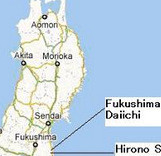 The town of Hirono, located about 30 kilometers south of Tokyo Electric Power Co.’s <9501> Fukushima No. 1 nuclear plant, is exploring a possibility of becoming a community for both residents and workers at the plant knocked out by the March 2011 earthquake and tsunami.
Many residents who left the town after the nuclear accident have yet to come back although the designation of an evacuation preparation area there was lifted six months after the accident.
Of some 5,000 people registered as residents of Hirono, only 1,352 actually lived in the town as of Monday. Many supermarkets went out of business while restaurants remain closed.
Meanwhile, men in work clothes can be seen often. According to a survey by the town government, the number of workers at the plant who live in dormitories or other accommodations in the town in Fukushima Prefecture, northeastern Japan, came to some 2,500 in October 2013, up sharply from around 1,000 in June 2012.
A convenience store owner said that the number of shoppers per day is up 500 from the predisaster level and that daily sales have risen 1.5-fold.
(2014/02/25-10:30)
Gordon Edwards on Fukushima and nuclear basics to a Kids radio show – recommended podcast

Posted on February 23, 2014 by nataliemarie
Gordon Edwards was born in Canada in 1940, and graduated from the University of Toronto in 1961 with a gold medal in Mathematics and Physics and a Woodrow Wilson Fellowship. In 1972, he obtained a Ph.D. in Mathematics from Queen’s University.
http://www.crystalkidsradio.com/mp3/Gordon%20Edwards.mp3 right click and “save as…”
From 1970 to 1974, he was the editor of Survival magazine and in 1975 he co-founded the Canadian Coalition for Nuclear Responsibility, and has been its president since 1978. Edwards has worked widely as a consultant on nuclear issues and has been qualified as a nuclear expert by courts in Canada and elsewhere.
Dr. Edwards has written articles and reports on radiation standards, radioactive wastes, uranium mining, nuclear proliferation, the economics of nuclear power, non-nuclear energy strategies. He has been featured on radio and television programs including David Suzuki’s The Nature of Things, Pierre Berton’s The Great Debate, and many others.
He has worked as consultant for governmental bodies such as the Auditor General of Canada, the Select Committee on Ontario Hydro Affairs, and the Ontario Royal Commission on Electric Power Planning. In 2006, Edwards received the Nuclear-Free Future Award. He is a teacher of mathematics at Vanier College in Montreal. http://www.ccnr.org/
Read more at: http://www.crystalkidsradio.com/radio-archives/natalie-marie-hart-interviews-dr-gordon-edwards-about-fukushima/ |
1 This Month



Tell the Ukrainian Government to Drop Prosecution of Peace Activist Yurii Sheliazhenko

Petition to revoke the licensing of the Near Surface Nuclear Disposal Facility (NSDF) at Chalk River. https://www.ourcommons.ca/petitions/en/Petition/Details?Petition=e-7247


of the week – STOP SMALL MODULAR REACTORS IN CANADA
To see nuclear-related stories in greater depth and intensity – go to https://nuclearinformation.wordpress.com
-
Archives
- March 2026 (222)
- February 2026 (268)
- January 2026 (308)
- December 2025 (358)
- November 2025 (359)
- October 2025 (376)
- September 2025 (258)
- August 2025 (319)
- July 2025 (230)
- June 2025 (348)
- May 2025 (261)
- April 2025 (305)
-
Categories
- 1
- 1 NUCLEAR ISSUES
- business and costs
- climate change
- culture and arts
- ENERGY
- environment
- health
- history
- indigenous issues
- Legal
- marketing of nuclear
- media
- opposition to nuclear
- PERSONAL STORIES
- politics
- politics international
- Religion and ethics
- safety
- secrets,lies and civil liberties
- spinbuster
- technology
- Uranium
- wastes
- weapons and war
- Women
- 2 WORLD
- ACTION
- AFRICA
- Atrocities
- AUSTRALIA
- Christina's notes
- Christina's themes
- culture and arts
- Events
- Fuk 2022
- Fuk 2023
- Fukushima 2017
- Fukushima 2018
- fukushima 2019
- Fukushima 2020
- Fukushima 2021
- general
- global warming
- Humour (God we need it)
- Nuclear
- RARE EARTHS
- Reference
- resources – print
- Resources -audiovicual
- Weekly Newsletter
- World
- World Nuclear
- YouTube
-
RSS
Entries RSS
Comments RSS
 nuclear-news