The Nuclear graveyard: To ‘light up’ our homes, some lives are falling into ‘darkness’
The main problem, Shukla believes, is the careless
transportation and disposal of the radioactive waste.

Pictures by Photojournalist Chinky Shukla
Poulomi Banerjee , Hindustan Times Jadugoda, February 22, 2014
By 2032, India hopes to generate 63 gigawatts of nuclear power that will reduce its dependence on energy and make it self-reliant. Jadugoda, a small township in Jharkhand, where the Uranium Corporation of India Ltd (UCIL) is mining uranium, may be paying the price for that ambition.
Photojournalist Chinky Shukla, 27, found her interest piqued by newspaper articles on the effects of uranium mining on the Jadugoda population.
“I read reports by scientists and environmentalists who had been tracking the Jadugoda issue.
I also read about the increasing number of deaths among nuclear scientists in India.
The authorities were dismissing them as suicides,” Shukla recalls.
She decided to follow the Jadugoda story and went there in 2012.
The project that took three weeks, yielded the photofeature, ‘Jadugoda: The Nuclear Graveyard’ that won the Picture of the Year award in the National Press Photo contest of the Media Foundation of India, 2013.
It also won first prize in the All India Environmental Journalism Contest that year.

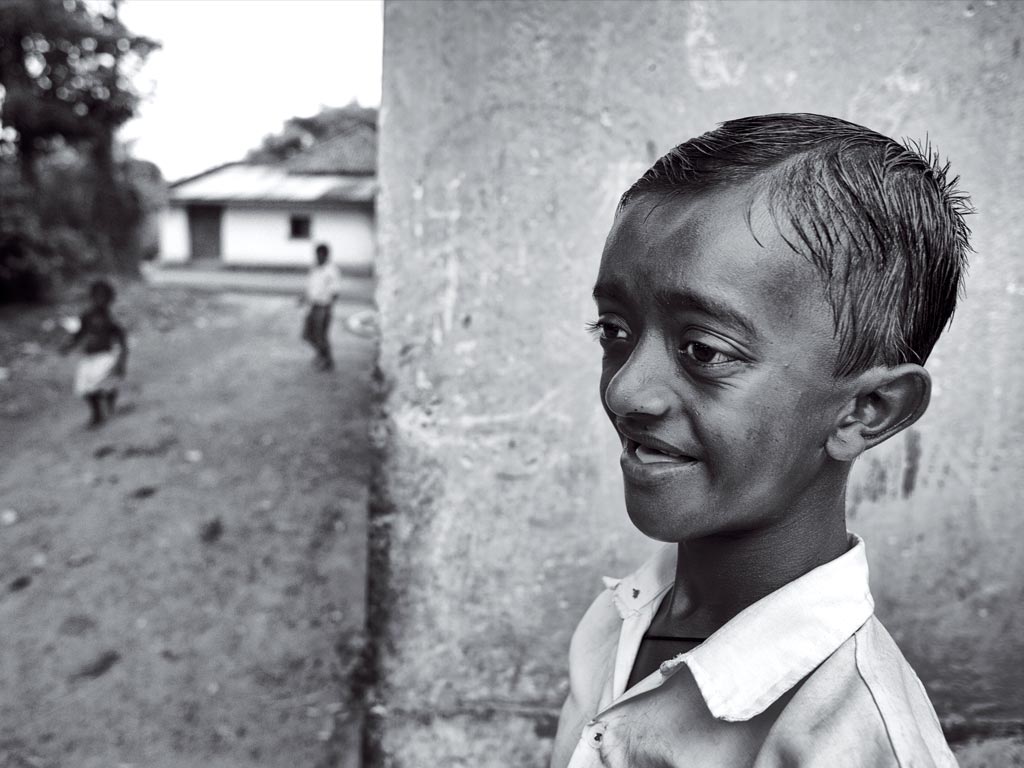
Right : Lung cancer
Mohan, 19, has six toe-fingers. His father, a miner in the uranium mines at Jadugoda, died of lung cancer
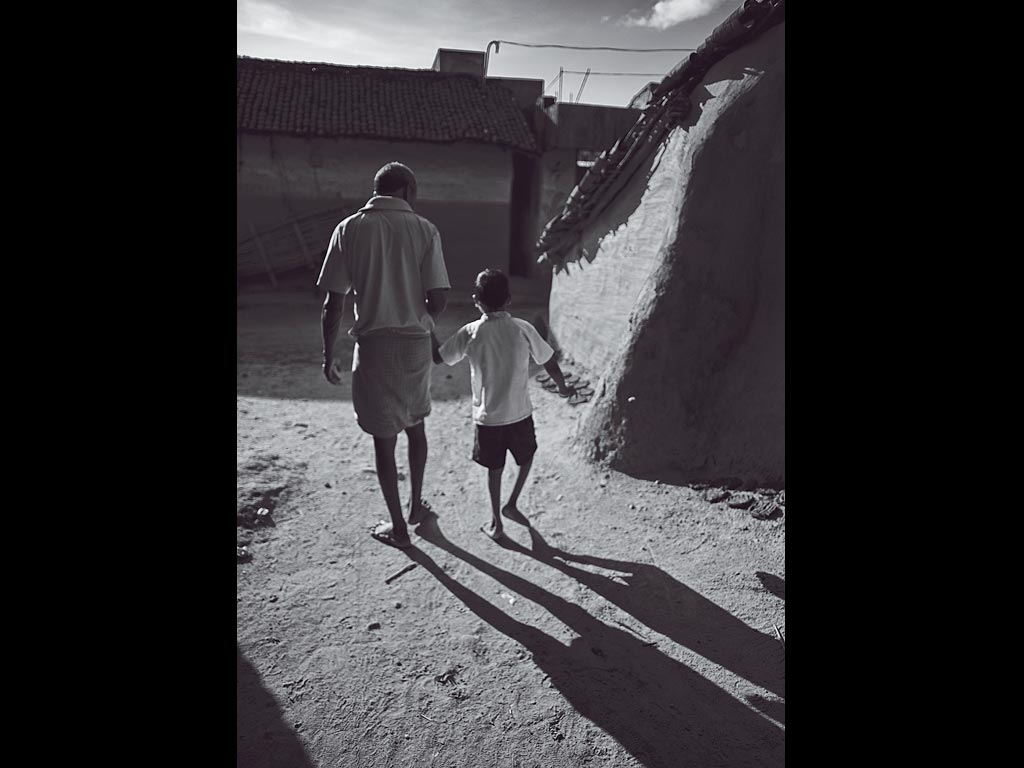
Left : Radioactive waste
The pipe that the little girls are sitting on carries radioactive waste from the mines to the tailing pond. UCIL has erected signboards to warn people
Awards, however, didn’t allow Shukla to forget the horror. She remembers taking pictures of a toddler’s burial in Jadugoda.
“The mother kept saying that unlike other children, he had no physical or mental deformity. But sudden death is also caused by continued exposure to radioactive substances,” says Shukla.
“The government is in denial. It is citing poverty and malnutrition as reasons for the tribals’ health issues,” she says.
Shukla also got in touch with an NGO, JOAR, that has been working to build awareness about the plight of the people in Jadugoda.
“The UCIL has been smart. It has built roads, the mine-workers are paid well. They know what the uranium mine is doing to themselves and their children.
But without alternative sources of income, they choose to remain quiet,” says the photojournalist.
The houses are equipped with dosimeters to measure the level of radioactivity in the area.
But the readings are never shared with the residents.
The main problem, Shukla believes, is the careless
transportation and disposal of the radioactive waste.
“The government must wake up to the threat,” she says.
No comments yet.
1 This Month

of the week – Shut Down Drone Warfare!


Tell the Ukrainian Government to Drop Prosecution of Peace Activist Yurii Sheliazhenko

Petition to revoke the licensing of the Near Surface Nuclear Disposal Facility (NSDF) at Chalk River. https://www.ourcommons.ca/petitions/en/Petition/Details?Petition=e-7247
To see nuclear-related stories in greater depth and intensity – go to https://nuclearinformation.wordpress.com
-
Archives
- April 2026 (57)
- March 2026 (251)
- February 2026 (268)
- January 2026 (308)
- December 2025 (358)
- November 2025 (359)
- October 2025 (376)
- September 2025 (257)
- August 2025 (319)
- July 2025 (230)
- June 2025 (348)
- May 2025 (261)
-
Categories
- 1
- 1 NUCLEAR ISSUES
- business and costs
- climate change
- culture and arts
- ENERGY
- environment
- health
- history
- indigenous issues
- Legal
- marketing of nuclear
- media
- opposition to nuclear
- PERSONAL STORIES
- politics
- politics international
- Religion and ethics
- safety
- secrets,lies and civil liberties
- spinbuster
- technology
- Uranium
- wastes
- weapons and war
- Women
- 2 WORLD
- ACTION
- AFRICA
- Atrocities
- AUSTRALIA
- Christina's notes
- Christina's themes
- culture and arts
- Events
- Fuk 2022
- Fuk 2023
- Fukushima 2017
- Fukushima 2018
- fukushima 2019
- Fukushima 2020
- Fukushima 2021
- general
- global warming
- Humour (God we need it)
- Nuclear
- RARE EARTHS
- Reference
- resources – print
- Resources -audiovicual
- Weekly Newsletter
- World
- World Nuclear
- YouTube
-
RSS
Entries RSS
Comments RSS
 nuclear-news
Leave a comment