Aircraft threaten nuclear power plants and other industrial plants – Global dimming effects over the Atlantic due to contrails increasing severe rainfall
NATS is the UK’s leading provider of air traffic control services. Each year we handle 2.2 million flights and 220 million passengers in UK airspace.
http://www.nats.aero/about-us/what-we-do/our-control-centres/
OpEd
Arclight2011
20 February 2014
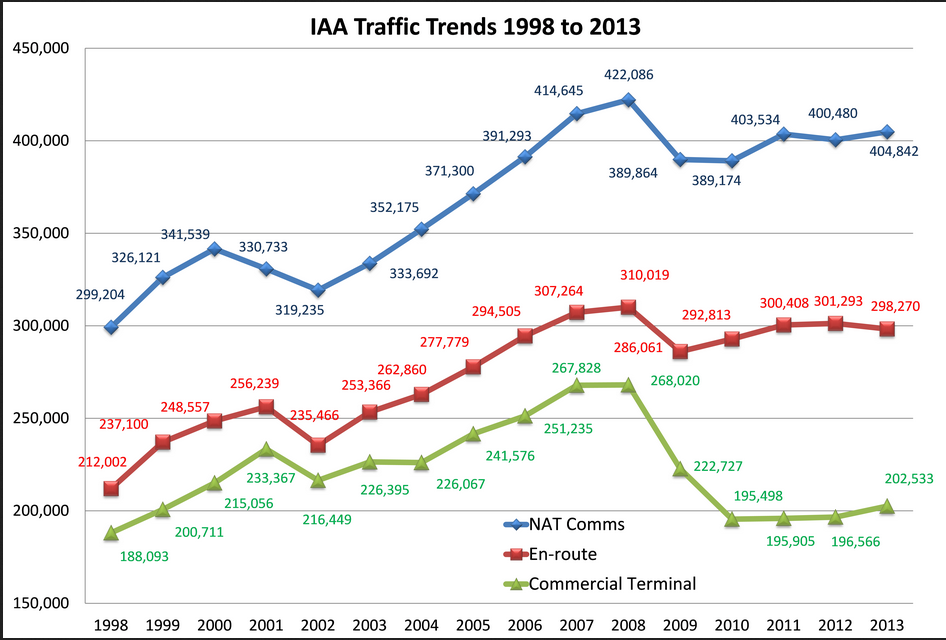
This post attempts to answer the question of what mechanism is causing the large amounts of record breaking levels of rainfall in Norway and the UK over recent years. Whilst global warming is an obvious answer as clouds hold more water if the atmosphere is warmer but the facts remain that increased flights across the Atlantic and increased particulates from various sources are responsible for this.
This dimming effect has repercussion concerning reports that use data that expects no quick changes to the earths climate (ref MET Office UK). In planning large projects such as nuclear power plants, waste/fuel processing work and storage sites, I have noticed that they refer to the incorrect information on the MET Office site and do not include the obvious recent data showing record breaking severe weather.
Of course this localised dimming effect causes the clouds to empty quicker in Europe and has reported to be causing droughts in Iran for instance.
Severe rainfall also can flood deep nuclear waste repositories as well as undermine buildings.
David Cameron on Sky TV yesterday did not say that climate change was definite and a done deal in answer to why is the flooding so severe. David Cameron decided to concentrate on the here and now and not worry about the future (even with more storms heading towards the UK).
So as part of my research i will place the links and info that is helping to inform me.. I think many flights are not reported (rendition and military but bear in mind that most flights to the wars from the USA to the middle east fly either to Ireland or across the top of Scotland).
Below are some links concerning localised global dimming in the context of global warming.
Extreme Weather in parts of the world (Updated 14 February 2014)
Parts of the world have witnessed a series of extreme weather conditions in the first six weeks of 2014, continuing a pattern that was set in December 2013.
Much of the United States of America has experienced cold waves and major winter storms, whilst California remains gripped by drought.The United Kingdom has seen its wettest December-January period on record, with severe, widespread and prolonged flooding. A combination of strong winds, storms and high tides caused damage and flooding in other coastal areas of Europe. There has been unusually heavy snowfall in the southern Alps.
Monthly mean temperatures were extremely high from eastern Mongolia to eastern China. In the Southern hemisphere, Australia, Argentina and Brazil experienced extended heatwaves.
Throughout this period, national meteorological and hydrological services provided forecasts and regularly-updated warnings.
http://www.wmo.int/pages/mediacentre/news/index_en.html
Tuesday, 8 January 2013: 9:15 AM
Relating the climate impact of trans-Atlantic flights to typical north Atlantic weather patterns
Room 17A (Austin Convention Center)
Emma A. Irvine, Univ. of Reading, Reading, Berkshire, United Kingdom; and K. P. Shine and B. J. Hoskins
Video of talk here that discusses the connection between contrails and the jet stream and high pressure ridges as well as the connection between dimming (cloud cover) and rain.
https://ams.confex.com/ams/93Annual/flvgateway.cgi/id/23305?recordingid=23305
Martin Wild
ETH Zurich, Institute for Atmospheric and Climate Science, Zurich, Switzerland
Coherent periods and regions with prevailing declines (“dimming”) and inclines (“brightening”) in surface solar radiation have been detected in the worldwide observational networks, often in accord with anthropogenic air pollution patterns
http://journals.ametsoc.org/doi/abs/10.1175/BAMS-D-11-00074.1
By Kharunya Paramaguru
Oct. 30, 2013
A new report on extreme-weather events by the Norwegian Meteorological Institute and the European national science academies suggests that “some of the extreme weather phenomena associated with climate change are increasing in frequency and intensity within Europe.” They also say that
“human activity has been the cause of more profound and rapid change”
for the earth’s climate.
Using computer modeling, the authors have found a “consensus” on “the likely future pattern of extreme weather events in Europe.” This includes more frequent and intense heat waves, as well as a reduction of rainfall and average temperatures for southern Europe.
For northern Europe, the authors say that “high intensity and extreme precipitation are expected to become more frequent……
Read more: Europe Hit by Powerful Storm: More Extreme Weather Is Likely in Future | TIME.com http://science.time.com/2013/10/30/bad-news-for-storm-battered-europe-theres-more-extreme-weather-on-the-horizon/#ixzz2tsKnjFg2
2011: world’s 10th warmest year, warmest year with La Niña on record, second-lowest Arctic sea ice extent
“Norway also had its wettest summer on record, and record summer rainfalls also occurred in many parts of Denmark and northeast Germany. “
http://www.wmo.int/pages/mediacentre/press_releases/gcs_2011_en.html
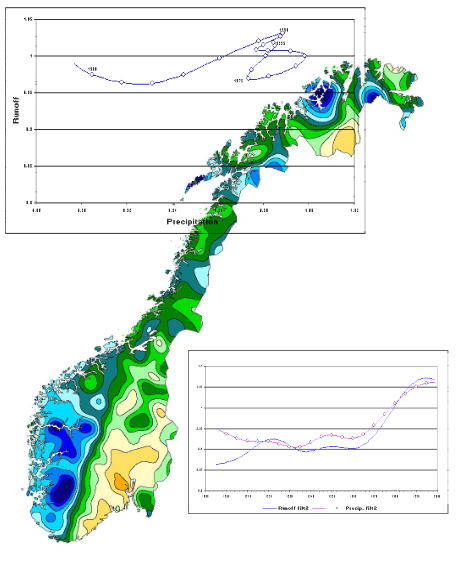
Past and future variations in climate and runoff in Norway
8 Nov 2000 – “….but in most regions there is a substantial increase in precipitation….”
A survey is given of long-term variations during the 20th century of temperature, precipitation and runoff in all parts of the Norwegian mainland. It is concluded that Norway has experienced a distinct increase in temperature and precipitation. …………demonstrated that the winter precipitation in Western Norway is more than 25% higher during 1980-1999 than for the normal period 1961-1990.
http://www.nve.no/Global/Vann%20og%20vassdrag/Effekter%20av%20klimaendringer/pilolar4.pdf
Extreme Weather Wreaking Havoc on Food as Farmers Suffer
Date of publication 2014
….. The warmer the air the more water it can hold, he said.
“What we’re finding worldwide is that heavy precipitation is increasing,” Peterson said.
Flood waters in Passau, Germany, in May and June reached the highest level since 1501, Munich Re said
http://www.bloomberg.com/news/2014-01-17/extreme-weather-wreaking-havoc-on-food-as-farmers-suffer.html
Source: Copyright 2007, Bloomberg
Date: July 30, 2007
Byline: Jim Efstathiou Jr.
Original URL: Status ONLINE Bloomberg
Global warming is causing more frequent hurricanes in the North Atlantic and Gulf of Mexico, according to a study from the National Center for Atmospheric Research.
The increased frequency of tropical cyclones “is largely a response” to a 1 degree Celsius rise in sea water temperatures since 1905 that was caused by greenhouse gases, the study found. Since 1995, the North Atlantic has experienced an average of 15 tropical storms a year, of which eight became strong enough to be called hurricanes. That compares with 10 tropical storms and five hurricanes per year from 1930 to 1994, the report says.
“The bad news is that we’ve gone up in numbers overall, and in the proportion of major hurricanes as well.”
http://www.climateark.org/shared/reader/welcome.aspx?linkid=81144
For 15 years Travis had been researching an apparently obscure topic, whether the vapour trails left by aircraft were having a significant effect on the climate. In the aftermath of 9/11 the entire US fleet was grounded, and Travis finally had a chance to find out.
[…]
One degree in just three days no one had ever seen such a big climatic change happen so fast. This was a new kind of climate change. Scientists call it Global Dimming. Two years ago most of them had never even heard of it, yet now they believe it may mean all their predictions about the future of our climate could be wrong
http://www.bbc.co.uk/sn/tvradio/programmes/horizon/dimming_trans.shtml
International Journal of ClimatologyVolume 24, Issue 9, Article first published online: 29 JUN 2004
how decreases in many parts of the Northern Hemisphere over the last 50 years. When combined with rainfall measuremen ts, these data show that much of the Northern Hemisphere’s terrestrial surface has become less arid over the last 50 years.
[…]
Accordingly, most of the previous studies have been based on averages across many pans and there are some sites where pan evaporation has increased and others where it has decreased. Nevertheless, the first published report showed that, on average, pan evaporation had decreas
ed over the USA, Former Soviet Union and Eurasia for the period 1950 until the early 1990s (Peterson et al ., 1995). Subsequent reports have confirmed this to be a general trend throughout the Northern Hemisphere. For example, over the same period, decreases in pan
evaporation have been reported in India (Chattopadhyay and Hulme, 1997), China (Thomas, 2000) and Italy(Moonen et al ., 2002), although some mixed trends have also be en reported, e.g. East Asia (Xu, 2001), and a slight increase at a single pan in Israel (Cohen et al ., 2002).
[…]
http://onlinelibrary.wiley.com/doi/10.1002/joc.1061/pdf
Scientists found that turbulence will increase in the North Atlantic flight corridor due to climate change
Edited by Aram Gesar / October 24, 2013 07:26
Scientists found that turbulence will increase in the North Atlantic flight corridor due to climate change. A report published in the journal Nature Climate Change predicts that one effect of a warming planet is that international flights will get more turbulent by the middle of this century.
A recent incident on the busy North Atlantic corridor reminds us the importance of this type of safety issue. Several passengers on a trans-Atlantic United Airlines flight were injured after the Dublin-bound Boeing 757-200 encountered “severe turbulence” last week.
The chances of encountering significant turbulence would increase by between 40 and 170% on the North Atlantic flight corridor, where 600 jets travel between Europe and North America each day, by the middle of the century.
http://airguideonline.com/2013/10/24/scientists-found-that-turbulence-will-increase-in-the-north-atlantic-flight-corridor-due-to-climate-change-2/
Thursday, 10 January 2013: 11:45 AM
Use of a Weather-Aware National Airspace Simulator to Evaluate Air Traffic Management Benefits Attributed to Enhanced Aviation Weather Decision Support
Room 17A (Austin Convention Center)
The Dynamic Airspace Rerouting Tool (DART) is a weather-aware superfast-time NAS simulator that can intelligently model the impact of varied weather and forecast (convective and non-convective) and the system’s response in the form of reroutes, delays, cancellations, or diversions for 50,000+ flights across a day of U.S. CONUS operations.
https://ams.confex.com/ams/93Annual/webprogram/Paper215548.html
Clouds form when the invisible water vapour in the air condenses into visible water droplets or ice crystals. There is water around us all the time in the form of tiny gas particles, also known as water vapour. There are also tiny particles floating around in the air – such as salt and dust – these are called aerosols.
http://www.metoffice.gov.uk/learning/clouds/what-are-clouds
Aircraft contribute to climate change through emissions of carbon dioxide, oxides of nitrogen, water vapour and formation of persistent contrails. Both the aircraft routing and subsequent climate impact are dependent on the large-scale weather pattern. It may therefore be possible to reduce aircraft climate impact by defining climate-optimal aircraft routes; this is being investigated by the European REACT4C project for trans-Atlantic flights. To better understand the links between the weather, aircraft routes and climate impact, we first identify five typically occurring north Atlantic weather patterns for the winter season, using 21 years of ERA-Interim re-analysis data. These weather patterns are characterised by the strength and location of the upper-level jet stream, leading to time-optimal aircraft routes different from the great circle. We demonstrate that the expected climate impact also varies according to the weather pattern, with a particular focus on cold ice-supersaturated areas where persistent contrails would form. The distribution of cold ice-supersaturated regions varies both by weather pattern and altitude. Along time-optimal routes through these weather patterns the probability of persistent contrail formation is 1-10%. This can increase or decrease with height, depending on the weather pattern, indicating it is not possible to mitigate contrail climate impact simply by flying higher.
https://ams.confex.com/ams/93Annual/webprogram/Paper215939.html
There are likey more land regions where the number of heavy precipitation events has increased than where it has decreased. Regional trends vary, but confidence is highest for North America with trends towards heavier precipitation events.
The concentration of CO2 in the atmosphere has increased by more than 20% since 1958 when systematicatmospheric measurements began (see Figure SPM.3), and by about 40% since 1750. The increase is a result of human activity, virtually all due to burning of fossil fuels and deforestation, and a small contribution from cement production. Present-day concentrations of CO2, methane (CH4), and nitrous oxide (N2O) substantiallyexceed the range of concentrations recorded in ice cores during the past 800,000 years. The mean rates ofCO2, CH4 and N2O rise in atmospheric concentrations over the past century are, with ,unprecedented in the last 22,000 years.
2 Comments »
Leave a comment
1 This Month
Chernobyl: The Lost Tapes – A good documentary on Chernobyl on SBS available On Demand for the next 3 weeks– https://www.sbs.com.au/ondemand/tv-program/chernobyl-the-lost-tapes/2352741955560

of the week–London Campaign for Nuclear Disarmament

Tell the Ukrainian Government to Drop Prosecution of Peace Activist Yurii Sheliazhenko
To see nuclear-related stories in greater depth and intensity – go to https://nuclearinformation.wordpress.com
-
Archives
- April 2026 (126)
- March 2026 (251)
- February 2026 (268)
- January 2026 (308)
- December 2025 (358)
- November 2025 (359)
- October 2025 (376)
- September 2025 (257)
- August 2025 (319)
- July 2025 (230)
- June 2025 (348)
- May 2025 (261)
-
Categories
- 1
- 1 NUCLEAR ISSUES
- business and costs
- climate change
- culture and arts
- ENERGY
- environment
- health
- history
- indigenous issues
- Legal
- marketing of nuclear
- media
- opposition to nuclear
- PERSONAL STORIES
- politics
- politics international
- Religion and ethics
- safety
- secrets,lies and civil liberties
- spinbuster
- technology
- Uranium
- wastes
- weapons and war
- Women
- 2 WORLD
- ACTION
- AFRICA
- Atrocities
- AUSTRALIA
- Christina's notes
- Christina's themes
- culture and arts
- Events
- Fuk 2022
- Fuk 2023
- Fukushima 2017
- Fukushima 2018
- fukushima 2019
- Fukushima 2020
- Fukushima 2021
- general
- global warming
- Humour (God we need it)
- Nuclear
- RARE EARTHS
- Reference
- resources – print
- Resources -audiovicual
- Weekly Newsletter
- World
- World Nuclear
- YouTube
-
RSS
Entries RSS
Comments RSS
 nuclear-news
Reblogged this on nuclear-news.
Reblogged this on the-real-institute.com and commented:
Interesting links to climate change, contrails increasing rainfall, global dimming, UK Met office not using accurate data… very interesting article linking aircraft to climate.