UK – Nuclear firearms police officer wins sex discrimination case
By Jenny Barwise
15 February 2014
A firearms officer has won a sex discrimination case against nuclear police chiefs – because her gun was too big for her small hands.
Victoria Wheatley, part of the armed unit which protects the Sellafield atomic complex, could not reach her weapon’s trigger. She struggled with the grip of the pistol she was using – a Glock 17 – and her trainers failed to adjust it while carrying out a test shoot on which her job depends.
A tribunal found the Civil Nuclear Constabulary (CNC) guilty of discrimination against Ms Wheatley – and another officer Racheal Giles, who is based at Chapelcross, near Annan – in the provision of suitable firearms and safety equipment.
Both officers, who are described as being “petite in stature” and with “small hands”, asked on several occasions for a smaller and suitable grip on the weapon when they could not reach the trigger, but this did not happen.
Their solicitor, Binder Bansel, of Pattinson & Brewer, said that every officer joining at the rank of constable or sergeant is required to train to recognised standards as an authorised firearms officer and maintain the standard.
A cycle of annual training shoots tests their ability.
“Continued failure at these shoot days results in an unsatisfactory assessment, which could lead to the officer being dismissed,” added the solicitor.
2014 “Fukushima 3 Years On and Implications for UK Nuclear Power Plans” – The March to Parliament!

http://www.januk.org/event.html
Monday March 10th 2014
19.00 – 21.00
Meeting in Committee Room 10 in The House of Commons
Speeches and discussion about the situation in Japan three years on since Fukushima and the lessons we can learn for a nuclear-free world.
Enter Parliament by public entrance by central St. Stephen’s Tower.
Arrive half an hour early to get through security.
The vigil
11th March 2014
outside Japanese Embassy
101 Piccadilly, W1J 7JT
18.00 – 20.00pm
Candle-Lit vigil in support of families and people of all ages continuing to suffer the affects of Fukushima.
Please bring torch & wrap up warm.
15th March 2014
The March to Parliament
Hyde Park Corner – London
Assemble 12.30pm, Start 13.00
Assemble at Hyde Park Corner at 12.30 to start the march at 13.00
Route: Hyde Park Corner, Japanese Embassy, TEPCO London Office, Piccadilly Circus, Japan Centre, Trafalgar Square, Parliament
Themes:. Colour yellow & sunflower Sound-making instrument, placards, fancy dress, etc welcome
Rally: starts when the march arrives approx at 15.00 in Old Palace Yard opposite the House of Lords
India – AAP invites anti-nuclear activists to become members
http://twocircles.net/2014feb17/aap_invites_antinuclear_activists_become_members.html
By IANS,
Chennai: Inviting the people of Iddinthakarai in Tamil Nadu to become members, the Aam Aadmi Party (AAP) is mulling to contest from 12 to 15 constituencies in the ensuing general elections, said a party official.
“We will be contesting in 12 to 15 seats. We are on the look out for good candidates to fight the elections as our party candidates. The people of Iddinthakarai can become members of the party without any hassle,” AAP’s state convenor Christina Samy told IANS.
She said AAP’s Tamil Nadu chapter enters the Lok Sabha election fray with an objective to defeat the corrupt politicians who should not be allowed to enter parliament.
“AAP will contest in all the constituencies where the corrupt politicians are contesting,” she said in a statement issued here earlier Sunday.
According to the statement, AAP is inviting applications for candidature representation from Tamil fishermen groups and farmers to represent their concerns in the upcoming Parliament election.
AAP was approached by people of Iddinthakarai – the epicentre of the protest against the Kudankulam Nuclear Power Project (KNPP) spearheaded by the People’s Movement Against Nuclear Energy (PMANE) – who expressed their wish to join the party. Iddinthakarai is in Tirunelvelli district around 650 km from here.
The PMANE had earlier said that it plans to take the anti-nuclear power plant movement political by joining hands with AAP.
Snowstorm hits Japan anew, killing 12 & stranding thousands
http://japandailypress.com/snowstorm-hits-japan-anew-killing-12-stranding-thousands-1744311/
Feb 17, 2014

A severe snowstorm continued to wreak havoc around Japan over the weekend, with local media reporting that 12 have died while around 1,650 were injured in several incidents due to the record-breaking weather. Around 2,150 were also evacuated from their homes as the snowfall reached as much as 26 centimeters, threatening to collapse houses, just a week after the heaviest snowfall in decades also hit Japan.
The 12 casualties were from seven prefectures that are experiencing the strongest snowstorms in quite some time. According to the Japan Meteorological Agency, the storm is moving northwards and will become even stronger by Monday, with heavy snowfall, blizzards and avalanches. Eastern and northern Japan may also face high waves due to the weather. Transportation in the areas were also severely affected, with more than a hundred flights grounded on Friday and Saturday. Rail services also had to suspend some of their operations as well.
Around 800 cars became stuck on a hillside trunk road during the storm, while the National Route 18, which runs through the Gunma and Nagano Prefectures, was partially closed due to the hundreds of cars stuck on the roads. An official from the nearby ski resort of Karuizawa said they opened up three community halls to accommodate the stranded passengers, offering shelter and hot meals. The transport ministry also said they have been delivering emergency aid for those whose cars have been stuck in the congested traffic on National Route 4 that runs through Fukushima and Miyagi.
More pictures and video on link
CBS Video – Cousteau warns Californians about Fukushima plume: It could be dangerous, keeping eye on reports; I’m not touching bluefin tuna, I’m done due to pollution — Leaders “worried about radiation… personally reluctant to eat fish”; Calling for systematic tests in Pacific
Published: February 16th, 2014 at 8:27 pm ET
By ENENews
Georgia Straight, Feb. 15, 2014: First Nations want radiation testing of fish – Caption: Reuben George is one of several First Nations leaders worried about radiation levels in salmon. […] North Shore News has reported that several First Nations leaders—including Union of B.C. Indian Chiefs president Grand Chief Stewart Phillip and Tahlton Central Council president Annita McPhee—want the federal government to conduct systematic tests of radiation levels in fish from the Pacific Ocean. Reuben George, a well-known member of the Tsleil-Waututh Nation, told the paper that he’s personally reluctant to eat fish.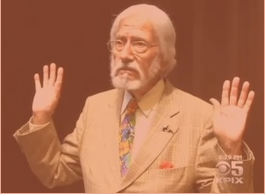
CBS San Francisco, Feb. 12, 2014:
- KPIX: Now at 6:30, the teachings from a famous ocean explorer about radiation risks […] one of the foremost experts on the world’s oceans no longer eats certain kinds of fish.
- Jean-Michel Cousteau: We’re using the ocean as a garbage can — a universal sewer.
- KPIX: And the ocean’s affecting us. Cousteau’s keeping an eye on reports of radiation from the Fukushima disaster reaching California shoreline, but he chooses his words carefully.
- Cousteau: The concentration of radioactivity, it is overblown. Does that mean it’s not potentially dangerous? It is.
- KPIX: It’s overall pollution which has him swearing off some ocean fish like bluefin tuna.
- Cousteau: I’m not touching it anymore, I’m done.
IAEA backs controlled discharge of tainted water into sea from Fukushima plant
Feb. 17, 2014
TOKYO —
The U.N. nuclear watchdog has urged Japan to consider “controlled discharges” into the sea of contaminated water used to cool the crippled reactors at Fukushima.
The proposal was among recommendations outlined in a report by the International Atomic Energy Agency after its latest inspection of the worst nuclear accident in a generation.
“The IAEA team believes it is necessary to find a sustainable solution to the problem of managing contaminated water,” the 72-page report said.
Kazakhstan delegation presents the country’s anti-nuclear initiatives at an international conference in Mexico
During the event, participants discussed such issues as challenges of a nuclear weapon detonation to national, regional and global economic growth and sustainable development; the impact of such a detonation on global health; and the risk of nuclear blasts and other effects of the detonation of nuclear weapons.
http://www.inform.kz/eng/article/2631518
ASTANA. KAZINFORM A Kazakhstan delegation presented the country’s position on the need for further coordinated efforts of the international community to reduce nuclear weapons during the 2nd International Conference on the Humanitarian Impact of Nuclear Weapons, held in Nayarit, Mexico on February 13-14.
Diplomats from the Ministry of Foreign Affairs also informed conference participants about the actions of the republic to rehabilitate areas affected by nuclear tests, and the specific steps in the international arena aimed at facilitating the process of global nuclear disarmament, including an international initiative of the President Nursultan Nazarbayev, the ATOM Project, Kazinform cites the MFA’s press service.
During the conference, ambassador-at-large of the Ministry of Foreign Affairs of Kazakhstan Roman Vasilenko noted that
“the need to address the problems left behind by the Semipalatinsk test site is recognized by the international community. Since 1997, the UN General Assembly, recognizing the seriousness of the situation, has adopted six resolutions calling for international cooperation and coordination for the humanitarian and ecological rehabilitation and economic development of the Semipalatinsk region of Kazakhstan. Today we can say that, in view of the measures taken in the framework of the state-level, regional and sectoral programs, as well as in view of the international assistance, the need for more coordinated approach and a more active participation of the international community in this process has not lost its urgency.”
Speaking about the efforts under the ATOM Project, the Kazakhstan diplomat stressed that the peaceful call of the President of Kazakhstan has been met with broad international support, and today the ATOM Project’s online petition, urging governments of the world to achieve the entry into force of the Comprehensive Nuclear Test Ban Treaty (CTBT), has been signed by about 80,000 people from more than 100 countries .
As noted, since the early days of independence of Kazakhstan the promotion of global nuclear disarmament has been one of the most important foreign policy priorities personally of President Nazarbayev and of Kazakhstan’s diplomacy which is reflected in the recently adopted Concept of Foreign Policy of the country for 2014-2020.
“We believe the more nations adhere to such principles of human relations, as dialog, mutual trust and mutually beneficial cooperation, and follow the examples countries that have already renounced nuclear weapons, the greater chance we will all have of breaking the vicious cycles of war, conflict and mistrust, and reaching the ultimate goal of building a safer world, a world without the threat of nuclear annihilation,” the representative of Kazakhstan said.
Conference participants were shown a brief documentary film prepared by the International Campaign for the Abolition of Nuclear Weapons (ICAN) with the contribution from the ATOM Project and dedicated to the tragic consequences of use and testing of nuclear weapons and the need for a total ban on nuclear weapons in the world.
This conference was the second such international forum. The first conference, attended by delegations from more than 130 countries, including Kazakhstan, took place in Oslo in March 2013. While the first forum provided an opportunity for government representatives to exchange views and identify further steps to promote the ideas of nuclear disarmament, this forum was focused more on the efforts and the exchange of experience at the expert level.
As noted by the Ministry of Foreign Affairs of Mexico, “It is important to deepen our understanding of the effects of nuclear weapons, by approaching the global and long-term consequences of a nuclear detonation, accidental or deliberate, from the perspective and variables of the 21st Century society. Governments, international organizations and civil society are invited to participate with multi-sectorial delegations, at expert-level, with specialists in areas such as public health, humanitarian assistance, environmental issues, and civilian protection, among others, as well as diplomats and military experts.”
Along with representatives from 146 countries, the conference was attended by experts from the UN and UN system organizations such as the World Health Organization (WHO), the International Organization for Migration (IOM), UN Institute for Disarmament Research (UNIDIR), Office for the Coordination of Humanitarian Assistance (OCHA); leadership and experts of the International Committee of the Red Cross (ICRC), the International Physicians for the Prevention of Nuclear War (IPPNW), the Mayors for Peace, research and non-governmental organizations from the UK, Norway, Switzerland and other countries. Mexican Foreign Minister José Antonio Meade Kuribreña opened the conference, while ICRC Vice-President Christine Beerlie gave a keynote address.
During the event, participants discussed such issues as challenges of a nuclear weapon detonation to national, regional and global economic growth and sustainable development; the impact of such a detonation on global health; and the risk of nuclear blasts and other effects of the detonation of nuclear weapons.
The conference resulted in the summary presented by its chairman, the representative of Mexico, who outlined specific approaches to further advancing the process of nuclear disarmament in the world.
The next such conference will be held in the autumn of this year in Austria, as announced by its Minister of Foreign Affairs Sebastian Kurz on February 13.
Firstpost India ‘Delay in nuclear deal with Japan may hit progress on atomic plants`
17 February 2014
New Delhi: Progress on atomic plants being built here by France and the US can be hampered by the delay in India’s nuclear deal with Japan where key components of these plants are manufactured and India now wants these countries to push Japan to conclude the agreement at the earliest
National Security Advisor Shivshankar Menon impressed upon French officials during his visit to Paris last month that France should take up the issue with Japanese Prime Minister Shinzo Abe when he travels there in May, sources said here. Menon told the French officials that Abe should be persuaded to fast-track the nuclear deal with India, the sources said. France is building a nuclear plant at Jaitapur in Maharashtra and a number of its components are manufactured by companies based in Japan. Until India and Japan have a nuclear deal in place, these companies cannot provide the components for the plant. Similarly, the US is also proposing to construct a nuclear plant in Mithi Virdi in Gujarat and will require components from Japan-based companies. For US and France, their companies – WestingHouse Electric Co, GE Electric and Areva – are building reactor for Indian nuclear power plants. The technology used by these companies requires equipment that could be sourced from Japan. For India, nuclear cooperation deal with France will open a range of avenues in the field of nuclear energy and cooperation. As the nuclear deal with Japan and India could not be signed during Japanese Prime Minister Shinzo Abe’s recent visit to Delhi last month, sources point out that this could have an impact on the progress of two upcoming nuclear power plant projects in India.
Australia seeks to draw India into tighter embrace with nuclear deal
…A senior government official here, who did not wish to be identified , quoted Robert Zoellick, who was a top US state department official before becoming World Bank president, as saying, “It is in everyone’s interest to have China as a responsible stakeholder”….
February 17, 2014
http://www.asianews.co/australia-seeks-to-draw-india-into-tighter-embrace-with-nuclear-deal/
CANBERRA: Australia, which in the past has expressed serious reservations about New Delhi’s nuclear programme, appears extremely keen to close a deal to supply uranium to India. “We see it as a priority and want to move as quickly as possible. The political will certainly exists within this government,” Australia’s foreign minister Julie Bishop told reporters here even as the two countries were in the middle of their fourth round of talks for a civil nuclear cooperation agreement.
It’s a sentiment that finds resonance across the five-month-old Liberal-National coalition government of Tony Abbott. “We have a very strong commitment to making this deal happen. We want to be seen as a trusted partner of India,” trade and investment minister Andrew Robb said.
Both Bishop and Robb were critical of the Kevin Rudd-led Labour government for overturning Liberal predecessor John Howard’s decision to supply uranium to India. “The Howard government, in which I was a minister, had signed off on it. Unfortunately, the next government had a different policy,” Robb said. “I think it will provide a great opportunity for peaceful power generation. We have 40% of the world’s uranium deposits and have a great willingness to ensure that it is made available to India.”
Peter Varghese, secretary for foreign affairs and trade, made the same point, albeit with the nuanced cautiousness of a career diplomat, when he said, “I think we’ll get an agreement on uranium supplies. The Abbott government is very supportive of it. We are very optimistic.”
Rudd, who was considered an ‘Asianist’ (and was perhaps best known in the world of foreign policy for his knowledge of Mandarin), said no to uranium supplies to India primarily on the grounds that it is not a signatory to the Non-Proliferation Treaty (NPT). There are indications that the Abbott government might be willing to dilute some of Australia’s monitoring safeguards – for instance, end-user verification – which are actually more stringent than what the International Atomic Energy Agency ( IAEA) mandates and which India has little interest in agreeing to. According to Bishop, “The points of difference are narrowing, we have a couple of things to work through.”
While she would not elaborate, the South Pacific Nuclear Free Zone Treaty, of which Australia is a member, is said to be one of them. (There’s also a narrower self-interest in finding a new market for Australia’s uranium producers.)
Mobilizing Nuclear Bias: The Fukushima Nuclear Crisis and the Politics of Uncertainty
…..Now that the initial crisis phase has passed, the focus has turned to reconstruction and reform, but on the ground in the Tohoku region people face chronic uncertainty about the safety of food and the long-term effects of low-level radiation exposure. The government’s initial response was discouraging, and the nuclear village, when all is said and done, may remain substantially intact. But social activism is on the rise, bringing previously disengaged citizens into political movements that were previously the domain of activists, who are now being vindicated by recent events…..
The Asia-Pacific Journal, Vol. 12, Issue 7, No. 4, February 17, 2014.
Kyle Cleveland
http://japanfocus.org/-Kyle-Cleveland/4075
Abstract
The nuclear disaster in Fukushima which followed in the wake of the 3/11 Tohoku earthquake and tsunami has given rise to one of the most significant public health crises in modern world history, with profound implications for how nuclear energy is perceived. This paper analyzes the most dire phase of the Fukushima nuclear crisis, showing how the level of risk was assessed by nuclear experts and state-level actors who worked largely out of view of public scrutiny. In addition to examining how the accident progression in the reactors was addressed and conveyed to the general public, the paper addresses how the exclusionary zones were determined by Japanese and foreign governments in Japan. As the crisis unfolded and efforts to bring the reactors under control were initially proving ineffective, concerns increased that radiation dispersion was unmitigated, and with radiation monitoring by the U.S. military indicating levels significantly beyond TEPCO’s conservative assessments, the United States broke with Japan, recommending an 80km exclusionary zone, and initiating military assisted departures for embassy staff and Department of Defense dependents from Japan. These actions deviated significantly from Japan’s assessments (which had established a 30km evacuation zone), creating a dynamic where the U.S. provided technical consultation for the nuclear response while striving to maintain a delicate diplomatic balance as they attempted to impose a qualitatively different crisis management response. Because this crisis had significant implications for Japan’s international relations, diplomatic considerations have helped to suppress the complex, often fractious relations between Japan and foreign governments – especially the United States – whose collective efforts eventually turned the tide from managing the nuclear meltdowns to ameliorating their long-term consequences. Based on interviews with political officials in both the Japanese government and foreign embassies in Japan, and nuclear experts and military officers who worked the crisis, the paper analyzes how technical assessments drove decision making and were translated into political policy.
Keywords: Fukushima nuclear accident, US Japan Alliance, SPEEDI, Radiation Assessment, Meltdown
Introduction
This paper analyzes institutional response to the Fukushima nuclear disaster, looking at how experts and key decision-making elites in the United States assessed the crisis and set policies as representatives of their organizations. In particular, it examines two related issues: the reactor meltdowns and the dispersion of radioactive fallout, and analyzes the political consequences of the divergent interpretations which developed in the first few days of the crisis around these issues. The framing of these central issues helped construct the general perception of risk that prevailed in this phase of the crisis, and provides a reference point against which to measure subsequent views as the crisis evolved over the longer term. The paper touches on the differences in perception between various foreign governments and examines the political implications of the crisis for international alliances in Japan.
In addition to examining how the accident progression in the reactors was addressed and conveyed to the general public, the paper will discuss how the exclusionary zones and evacuations from areas in close proximity to the Daiichi Nuclear Power Plant (NPP) were determined by Japanese and foreign governments in Japan. As the crisis unfolded and efforts to bring the reactors under control were initially proving ineffective, concerns increased that radiation dispersion was significantly beyond what TEPCO was indicating, and as a result, the United States recommended a 80km exclusionary zone and initiated military-assisted departures for embassy staff and Department of Defense dependents from Japan. These actions deviated significantly from Japan’s assessments (which had established a 30km evacuation zone), creating a dynamic in which the U.S.provided technical consultation for the nuclear response while striving to maintain a delicate diplomatic balance as it attempted to impose a qualitatively different crisis management response.
This analysis is based primarily on in-depth interviews with diplomats in foreign embassies, military officials, journalists, nuclear scientists, and scholars, and examines how their collective narratives evolved in interaction with public sentiment as the crisis unfolded. The scope of the analysis is focused on the reflective perceptions of actors as they attempted to make sense of the crisis retrospectively after the 3.11 disasters. Because of diplomatic sensitivities and because some of the experts whose perspectives are represented in this analysis are constrained by organizational obligations that preclude them from revealing their identity, some of the sources remain confidential. In each case in which the identity of a source has been withheld, the information has been verified by independent sources.
“Meltdown” at Fukushima Daiichi
In the fitful hours after Japan experienced its largest ever recorded earthquake on March 11, 2011, the coastline of Tohoku lay in ruins from a tsunami that swept entire towns out to sea, resulting in the death of almost 20,000 people. As the world stood transfixed by the scale of devastation wrought by the tsunami, Japan ramped up its disaster management assets to address this crisis, coordinating its efforts with foreign governments and humanitarian relief organizations. While the international community initially mobilized to offer support for tsunami relief efforts in Tohoku, attention soon turned to the Daiichi nuclear power plant in Fukushima.
In retrospect, the condition of the Daiichi plant in the most dire phase of the crisis seems readily transparent, as an unending litany of bad news has cast the situation in such continuing negative connotations that, like Chernobyl, Fukushima has taken on talismanic connotations to serve as a symbol of nuclear dread. But in the first few days of the crisis, with little meaningful information being provided amidst the disorienting impact of the earthquake and tsunami, and TEPCO offering assurances that were uncritically passed on by the government and a docile press, hope remained that the situation could be brought under control. This wishful thinking was soon made irrational by the explosion of the outer containment structure of reactor #1, which was so powerful (the explosion broke windows 3km from the plant) that both plant workers inside the Daiichi complex and nuclear experts watching from afar initially believed that the reactor core itself had exploded.
With the explosion of the reactor #1 building there was no doubting the significance of this crisis, but calibrating the actual risk and danger that this presented to the general public was a moving target, with competing risk narratives that developed almost immediately after the initial news reports were released that the Daiichi and Daini nuclear power plants in Tohoku were in trouble. In the first few days of the nuclear crisis the information made available to the public was confusing, contradictory and frustrating. Despite a massive explosion that destroyed the outer, secondary containment structure of the Daiichi reactor #1 building, soon to be followed on the next day by a similar explosion of the reactor #3 building, TEPCO insisted that the primary reactor core containment was intact and that there were no releases of radiation that posed a threat to public health. Initially, conjecture held sway, with the foreign media challenging the Japanese press corps, who did little more than pass along TEPCO’s announcements, essentially serving as a PR agency for the utility.
By this time, the Japanese and foreign media reportage characterized the situation as dire, even as the TEPCO officials and government were staging press conferences that offered platitudes of assurance while conveying facts that contradicted these statements. For the reporters who covered the crisis, the information provided by the utility was incoherent, contradictory and alarming. At the Wall Street Journal (WSJ) offices in Tokyo, senior editors debated how to characterize the crisis. When the government spokesman Edano Yukio conceded on March 13th that one of the reactors might be in “meltdown,” the WSJ editors noted that the nomenclature of “meltdown” as a label to describe the situation was culturally distinct, with different nuances of meaning between the Japanese term “炉戸溶融 (ろしんようゆう)” and the Western notion of a “meltdown,” which carried more ominous connotations than the straightforward transliteration of the word “meltdown” into Japanese.1
The Merriam-Webster dictionary defines the term “meltdown” as including “[1] the accidental melting of the core of a nuclear reactor; [2] a rapid or disastrous decline or collapse; [3] a breakdown of self control, (Merriam-Webster Dictionary, 2012), and the Oxford English Dictionary explains that “a meltdown was originally a catastrophic accident in a nuclear reactor, but this literal meaning has been swamped by the figurative sense of ‘a disastrous collapse or breakdown’. The term is now used metaphorically to refer to a chaotic loss of control, which is derived from the accidents at Chernobyl and Three Mile Island, where the reactors “ran away” from operator control, releasing significant amounts of radiation as a result of their errors. These accidents are now widely regarded as being the result of institutional failure, and TEPCO’s parsing of the term may have been a way to skirt the issue of responsibility by placing the emphasis only on the melting of nuclear fuel, rather than their own loss of control of the plant.
Crack Found in NE Ohio Nuclear Plant
Sunday, 16 February 2014
A spokeswoman for the Nuclear Regulatory Commission said that it’s too early to determine whether the gap found Thursday posed a problem.
Ed Davey fights back amid row over clean-up of Sellafield nuclear site
A damning report by KPMG last year showed that nine out of the 11 biggest projects to make Sellafield safe, including the construction of a storage facility to store radioactive sludge, were a combined £2bn over budget.
The situation on site was so dire that there was widespread speculation that responsibility for decontaminating Sellafield, which houses more than 1,000 nuclear facilities on a site of only six square kilometres, would be taken back in-house by the NDA
The Energy Secretary, Ed Davey, has hit back at critics over the Government’s apparent lack of oversight in the handling of Sellafield, one of the world’s most hazardous nuclear sites.
The Liberal Democrat peer Lord Avebury has written to Mr Davey demanding to know why ministers left the decision of whether to hand a contract extension to the private sector consortium running the clean-up of the site in Cumbria to the Nuclear Decommissioning Authority (NDA), which owns Sellafield.
The decontamination is now set to cost more than £70bn, and the consortium, Nuclear Management Partners (NMP), has been heavily criticised for a vast number of delays and budget overruns.
In a recent parliamentary statement, the Government said the energy department was not in charge of awarding the extension last October as it was an “operational matter for the NDA”.
UK climate threat to nuclear sites a real and present danger?
….The Japanese government is taking away citizen freedoms and implementing jail sentencing for speaking about the nuclear disaster effects (5 to 10 years in Jail for the general population with 2 years in jail for doctors and nurses and gagging orders on the victims). This seems to be the reality behind large industrial incidents in the 21st century and was the reality in Belarus after the Chernobyl accident in the 20th century…
17 February 2014
OpEd by Arclight2011
Posted to nuclear-news.net
…..But the report makes a number of recommendations, requiring reviews of emergency procedures, of techniques for estimating radioactive source terms, and of the adequacy of the system of planning controls for commercial and residential developments off the nuclear licensed site, which will add to delays and costs for any developers.
It also charges the nuclear industry and the ONR to have “more open, transparent and trusted communications, and relationships, with the public”.
Obfuscation was a widespread criticism of the industry in Japan and worldwide, both before and after the tsunami. – http://www.eaem.co.uk/news/weightman-warns-nuclear-industry-do-more-research
“….. there is little quantified information currently available. ONR acknowledges that generation of this information was not practicable within the timescales of producing the stress tests reports. Significant work is required, particularly to evaluate margins to equipment failure against extreme wind and temperature” http://www.oecd-nea.org/nsd/fukushima/documents/UK_ST_Final_National_Report.pdf
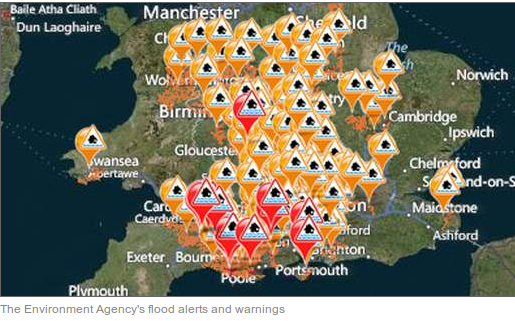
The recent final national report concerning the UK`s nuclear power plants rediness to deal with Flood events looked at tidal surges and rising water levels but did not take into account extremely heavy rainfall causing flooding as a clear and present danger, in my opinion, and here is why.
The nuclear industry should in invest and take seriously these safety concerns and mitigate them if they want to continue their buisness. The ONR and DECC (UK government departments resonsible for nuclear issues), in recent meetings with green stakeholder groups actually made decisions behind the backs of the stakeholders, thereby wasting more tax payer time and money whilst the stakeholder groups were left shocked at this abuse of the democratic process and impact on the efficiency of health and safety procedure and practice.

Image source ; http://www.express.co.uk/news/nature/458233/Shock-weather-warning-WORST-Atlantic-storm-of-the-winter-is-now-ROARING-towards-Britain
The big nuclear companies threatened DECC from withdrawing all co-operation concerning nuclear matters if they insisted on asking for information that was needed for the stakeholders to argue their points. So, DECC was actually blackmailed. Thats why the ONR said things like this;
“ONR’s view is that due to the relatively gradual effects of climate change, and uncertainty regarding its effect on design basis conditions, the effects of climate change can continue to be managed through the existing PSR process.”
As I write this article Britain is currently having flooding across a wide range of areas with the Thames in London flowing at a record breaking pace. These are caused by the multiple Storms coming in of the Atlantic that has been caused by the movement of the Jet Stream to move south over the UK. The storms hit Norway in recent years causing large rock slides that caused massive disruption to the road system and rail networks and infrastructure.
But the storms have not stopped being formed and currently there are 3 more huge storms heading towards the UK and France.
In the report from the review of nuclear power plants after the Fukushima nuclear meltdowns;
Finding number STF 7;
“Licensees should undertake a more structured and systematic study of the potential for floodwater entry to buildings containing safety ‐ significant structures, systems and components (SSC) from extreme rainfall and / or overtopping of sea defenses.” ONR
Extreme rainfall, snow, tidal surges, rising sea levels, surface flooding caused by extreme rainfall and mismanagement of local environments are a clear and present danger yet the report seemed to highlight the extreme effects of temperature and rising sea levels, in connection with climate change, yet little mention was found concerning possible record breaking rainfall and severe winds even though there are reports of just such flooding causing problems in the relatively near past.
but not all sites even knew of the meteorological conditions as;
“Consideration should be given to all stations receiving site ‐ specific weather forecasts “
And while the whole nations limited emergency transport and manpower is stretched past the limit even considering the army having to step in, what help or support the nuclear workers might expect to get if there was an event such as a loss of heatsink in a reactor or the spreading of nuclear materials from decommission and waste sites in a prolonged flooding situation with sub zero conditions fast approaching.
“Consideration should be given to the provision of additional station ‐ based robust means of personnel transport for extreme weather conditions”
In fact.. EDF NGL thought that there was no immediate issues that needed to be addressed from flooding issues (largely). It was agreed that EDF NDL would stay flexible and adapt to any unforseen situations and any future planning or research in this area could be avoided (likely as to keep the costs down). Though they did admit this;
“for example it has been identified that the extreme maximum ambient air temperature is likely to be beyond the current design basis within he lifetime of some stations. Suitable safety case amendments are being prepared.”
So EDF do not expect the temperature to change quickly either!
There is a lot of unusual rain damage effects happening in the UK such as the undermining of buildings likely caused by deep voids that the water is flowing into or underground streams. Also, charges are being raised against the government for not investing tax payers money in the right infrastructure projects that might help mitigate or avoid flood and severe weather damage caused by extreme wind speeds and gusts. The coast line is seeing very high waves that actually damage the buildings near the coastline. High winds are causing a lot of structual damage.
EDF to the ONR
“Due to the negligible risk posed by extreme weather conditions at Magnox defuelling sites, the licensees do not consider it necessary to further enhance structures on site against weather ‐ induced hazards” EDF – NGL
1 This Month


18 March Webinar @ 1 PM EST: An Assessment of SMR Projects: The Case of Canada
register for the zoom:
https://us02web.zoom.us/webinar/register/WN_o8BIIOUvQ2ONJR1nta65DQ#/registration


of the week – STOP SMALL MODULAR REACTORS IN CANADA
To see nuclear-related stories in greater depth and intensity – go to https://nuclearinformation.wordpress.com
-
Archives
- March 2026 (140)
- February 2026 (268)
- January 2026 (308)
- December 2025 (358)
- November 2025 (359)
- October 2025 (376)
- September 2025 (258)
- August 2025 (319)
- July 2025 (230)
- June 2025 (348)
- May 2025 (261)
- April 2025 (305)
-
Categories
- 1
- 1 NUCLEAR ISSUES
- business and costs
- climate change
- culture and arts
- ENERGY
- environment
- health
- history
- indigenous issues
- Legal
- marketing of nuclear
- media
- opposition to nuclear
- PERSONAL STORIES
- politics
- politics international
- Religion and ethics
- safety
- secrets,lies and civil liberties
- spinbuster
- technology
- Uranium
- wastes
- weapons and war
- Women
- 2 WORLD
- ACTION
- AFRICA
- Atrocities
- AUSTRALIA
- Christina's notes
- Christina's themes
- culture and arts
- Events
- Fuk 2022
- Fuk 2023
- Fukushima 2017
- Fukushima 2018
- fukushima 2019
- Fukushima 2020
- Fukushima 2021
- general
- global warming
- Humour (God we need it)
- Nuclear
- RARE EARTHS
- Reference
- resources – print
- Resources -audiovicual
- Weekly Newsletter
- World
- World Nuclear
- YouTube
-
RSS
Entries RSS
Comments RSS
 nuclear-news