North Pacific Marine Science Organization reports on Fukushima radiation
The amount of atmospheric cesium being transported across the ocean via winds remains the unknown yet potentially greater factor. It partially explains the drastic difference in projections, as there are no monitoring stations for airborne radiation in the Pacific and no reliable methods of predicting the scale of its effects. Further, it has only recently been publicly admitted that 300-400 tons of contaminated water have been pouring into the Pacific per day since the meltdown began in March 2011.
International marine science organization releases report on radiation in Pacific Ocean Thomas Henry Natural News January 20, 2014 If you’ve heard about Fukushima radiation spreading to the Pacific Coast of North America but were “corrected” by sources both official and expert that this was based more on rumor than reality, then consider the information presented at the October 2013 North Pacific Marine Science Organization (PICES) annual meeting.
Researchers from Fisheries and Oceans Canada confirmed that the radioactive plume from Fukushima is indeed reaching the shores of Canada and the United States – and was detected at least six months ago – carried both in the ocean surface water and the atmosphere on similar but slightly different courses.
In a presentation titled “Communicating the forecasts, uncertainty and consequences of ecosystem change,” (read here: http://www.pices.int) the Canadian researchers gave evidence that the bulk of radioactivity from Fukushima is shifting almost entirely from the western portion of the North Pacific (Japan) to the eastern portion (North America) over the course of the next five years. As of 2012, it had already reached the central region of the Pacific Ocean, and a previously unpublished map shows that, as of 2013, it had reached the shores of Alaska and British Columbia, with the most intense area of the plume yet to arrive.
The Fall 2013 discussion centered around competing calculations of the severity of effects from cesium-137, based around two differing models of the radiation’s trajectory. The first, published by German researcher Erik Behrens and his colleagues at the Helmholtz Centre for Ocean Research in 2012, drastically understates the potential dangers, predicting only modest levels of 2 becquerels per cubic meter (Bq/m^3) by 2015 for the 49th parallel near British Columbia and Washington state – scarcely above the background levels from the continued fallout of Chernobyl.
Meanwhile, the second, published by Vincent Rossi and other colleagues from the Climate Change Research Centre in 2013, presents a much more consequential picture. It predicts alarming maximum levels reaching 25 Bq/m^3 at their monitoring station in British Columbia by 2015 and peaks above 30 Bq/m^3. Cesium levels at the 30th parallel – reaching Baja California in Mexico – wouldn’t peak until about 2019, though projected maximum levels would reach only about 15-20 Bq/m^3.
The amount of atmospheric cesium being transported across the ocean via winds remains the unknown yet potentially greater factor. It partially explains the drastic difference in projections, as there are no monitoring stations for airborne radiation in the Pacific and no reliable methods of predicting the scale of its effects. Further, it has only recently been publicly admitted that 300-400 tons of contaminated water have been pouring into the Pacific per day since the meltdown began in March 2011.
The fact is that the initial findings of radioactivity from Fukushima on the shores of Alaska, British Columbia, California and Mexico – confirmed privately within the scientific community months ago – are just the beginning. They are consistent with previous predictions of cesium-137 hitting the West Coast of the continental United States in late 2013 and early 2014. Scientists have acknowledged that it will continue to spread into the Arctic Ocean, reaching eastern Russia and eventually pouring into the Atlantic Ocean…..http://www.prisonplanet.com/international-marine-science-organization-releases-report-on-radiation-in-pacific-ocean.html
1 Comment »
Leave a reply to Anonymous Cancel reply
1 This Month
26 April – Chernobyl: Inside the Meltdown airs on National Geographic on Sunday 26th April from 4pm

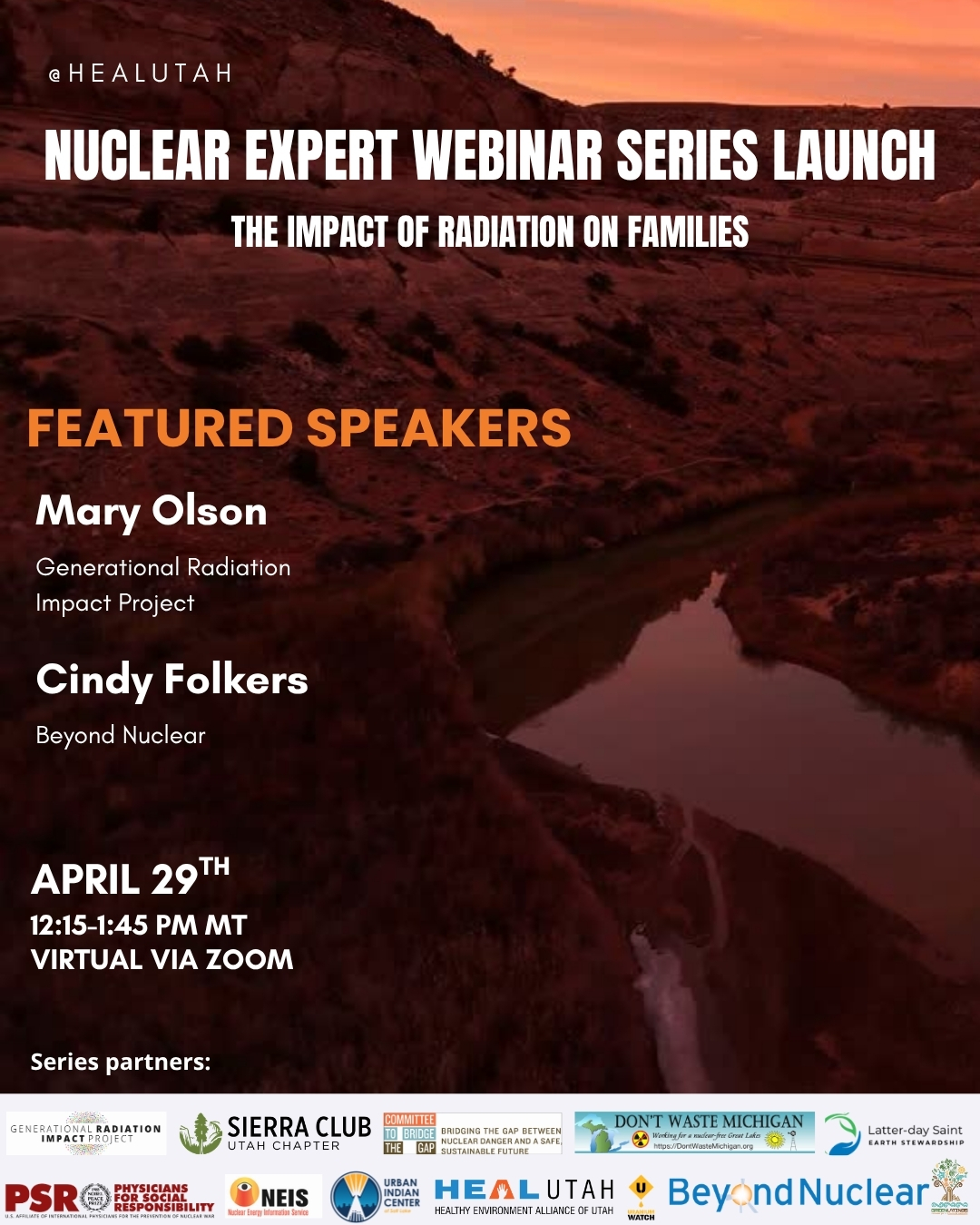
29 April – Nuclear Expert Webinar #1 – Radiation Impacts on Families with Mary Olson and Cindy Folkers
- 12:15 PM MT – 1:45 PM MT
- Location: Virtual – REGISTER TODAY

4 May -West Suburban Peace Coalition to discuss Iran war at May Educational Forum
Monday, May 4, 7:00 – 8:00 PM Central Standard Time
Title: : How Trump’s Narrative Tries to Shape the Reality of the War on Iran.
Contact Walt Zlotow, zlotow@hotmail.com 630 442 3045 for further information
14 May – online event From Bombs to Data Centres: the Face of Nuclear Colonialism

Pine Ridge Uranium is the real threat, not Tehran- Tell Burgum: Stop the Extraction.
Chernobyl: The Lost Tapes – A good documentary on Chernobyl on SBS available On Demand for the next 3 weeks– https://www.sbs.com.au/ondemand/tv-program/chernobyl-the-lost-tapes/2352741955560
To see nuclear-related stories in greater depth and intensity – go to https://nuclearinformation.wordpress.com
-
Archives
- May 2026 (12)
- April 2026 (356)
- March 2026 (251)
- February 2026 (268)
- January 2026 (308)
- December 2025 (358)
- November 2025 (359)
- October 2025 (376)
- September 2025 (257)
- August 2025 (319)
- July 2025 (230)
- June 2025 (348)
-
Categories
- 1
- 1 NUCLEAR ISSUES
- business and costs
- climate change
- culture and arts
- ENERGY
- environment
- health
- history
- indigenous issues
- Legal
- marketing of nuclear
- media
- opposition to nuclear
- PERSONAL STORIES
- politics
- politics international
- Religion and ethics
- safety
- secrets,lies and civil liberties
- spinbuster
- technology
- Uranium
- wastes
- weapons and war
- Women
- 2 WORLD
- ACTION
- AFRICA
- Atrocities
- AUSTRALIA
- Christina's notes
- Christina's themes
- culture and arts
- Events
- Fuk 2022
- Fuk 2023
- Fukushima 2017
- Fukushima 2018
- fukushima 2019
- Fukushima 2020
- Fukushima 2021
- general
- global warming
- Humour (God we need it)
- Nuclear
- RARE EARTHS
- Reference
- resources – print
- Resources -audiovicual
- Weekly Newsletter
- World
- World Nuclear
- YouTube
-
RSS
Entries RSS
Comments RSS
 nuclear-news
[…] […]
Pingback by Anonymous | January 21, 2014 |