British Ministry of Defence responsible to clean up radioactive trash on Dalgety Beach
They include excavation, containment or simply putting up a fence or warning signs.
The proposals are due to be published next week.
Thousands of radioactive particles have been found on the shore.
It is believed they came from instruments from WW2 aircraft that were destroyed and dumped there.
The MoD has been formally named as the polluter by the environment agency Sepa. An MoD agency has now drawn up management options to deal with the problem……Scottish Environment Secretary Richard Lochhead said: “Local residents of Dalgety Bay have been waiting decades for this mess to be cleaned up.
“A Sepa investigation last year concluded the MoD were responsible for the contamination. Any remediation options must address the clean-up adequately as soon as possible to the satisfaction of the local residents.”http://www.bbc.co.uk/news/uk-scotland-edinburgh-east-fife-25769900
Why isn’t General Electric being held accountable for Fukushima radiation?
Why Obama Won’t Admit Fukushima Radiation is Poisoning Americans…Connecting the Dots –The Daily Sheepie Jan 14“…….Why isn’t GE being held accountable? Why wouldn’t GE be held accountable? Here’s one possibility: Jeffery Immelt is the head of GE. He is also the head of the United States Economic Advisory Board. He was invited to join the board personally by President Obama in 2009 and took over as head in 2011 when Paul Volcker stepped down in February 2011, just a month before the earthquake and tsunami that devastated Fukushima.
Paul Volcker was often seen as being at odds with the administration and many of his ideas were not embraced by the government. The appointment of Immelt, a self described Republican, was seen as a move to give Obama a leg up when dealing with the Republican majority in the House.
There have been calls from many organizations for GE to be held accountable for the design faults in the reactors that powered the Fukushima plant. The fact that they had been known for so long does seem to indicate that the company ignored and over-ruled advice from nuclear experts.
GE ran Fukushima alongside TEPCO, but it isn’t liable for the clean-up costs.
A year after the disaster, Tepco was taken over by the Japanese government because it couldn’t afford the costs to get the damaged reactors under control. By June of 2012, Tepco had received nearly 50 billion dollars from the government.
The six reactors were designed by the U.S. company General Electric (GE). GE supplied the actual reactors for units one, two and six, while two Japanese companies Toshiba provided units three and five, and Hitachi unit four. These companies as well as other suppliers are exempted from liability or costs under Japanese law.
Many of them, including GE, Toshiba and Hitachi, are actually making money on the disaster by being involved in the decontamination and decommissioning, according to a report by Greenpeace International.
“The nuclear industry and governments have designed a nuclear liability system that protects the industry, and forces people to pick up the bill for its mistakes and disasters,” says the report, “Fukushima Fallout“.
“If nuclear power is as safe as the industry always claims, then why do they insist on liability limits and exemptions?” asked Shawn-Patrick Stensil, a nuclear analyst with Greenpeace Canada.
Nuclear plant owner/operators in many countries have liability caps on how much they would be forced to pay in case of an accident. In Canada, this liability cap is only 75 million dollars. In the United Kingdom, it is 220 million dollars. In the U.S., each reactor owner puts around 100 million dollars into a no-fault insurance pool. This pool is worth about 10 billion dollars.
“Suppliers are indemnified even if they are negligent,” Stensil told IPS. (source)
GE will not have put anything into this ‘pot’ to cover Fukushima ,as it is not in the United States. They have walked away, even though they knew their reactors have design faults……http://www.thedailysheeple.com/why-obama-wont-admit-fukushima-radiation-is-poisoning-americansconnecting-the-dots_012014
Big rise in miliatary’s use of renewable energy cuts expenses for USA armed forces
Armed forces see rise in renewable energy By Shan Li January 16, 2014, 12:23 p.m.http://www.latimes.com/business/moneymil/la-fi-mo-clean-tech-military-20140116,0,2774448.story#axzz2qhRNKuzj The use of clean energy technology has seen a sharp rise in military sites in the U.S., as the armed forces push into green sources of power around the country, a report said.
The Army, Navy, Air Force and Marine Corps. have looked for ways to reduce its energy bills in recent years even as the Pentagon‘s budget is squeezed. Combined, the U.S. military goes through $4 billion worth of power on its bases, according to a report from Pew Charitable Trusts.
The armed forces have moved to quickly adopt green energy solutions, the report said.
Renewable-energy projects at military installations run by the Defense Department jumped 54% to 700 from 2010 to 2012, the report said. Energy-saving and efficiency projects more than doubled to 1,339 from 630 during that time.
Phyllis Cuttino, who directs Pew’s project on national security, energy and climate, said the U.S. military was using the private sector to get projects off the ground.
“The military’s clean energy installation initiatives are gathering momentum, enhancing base energy security,” Cuttino said in a statement.
The military has taken advantage of novel financing methods created by the solar industry. Those include power-purchasing agreements, in which the solar developer pays to install panels onto rooftops and then sells the electricity generated to customers.
IAEA hosts meeting on radiation protection (or is it for nuclear industry protection?)
INTERNATIONAL EXPERTS MEETING IN VIENNA TO DISCUSS RADIATION PROTECTION by Michael Madsen / via IAEA / January 15, 2014 / “………As a result of the disaster, and in line with the IAEA Action Plan on Nuclear Safety, the IAEA is hosting an International Experts’ Meeting (IEM) on Radiation Protection after the Fukushima Daiichi Accident: Promoting Confidence and Understanding. The IEM will be held in Vienna from 17 to 21 February 2014 and will bring some of the world’s foremost experts and speakers on radiation protection to discuss a wide range of issues……A formal report is expected to be published after eeting; the presentations and discussions at the IEM will also be made available on the IAEA website. http://fukushimaupdate.com/international-experts-meeting-in-vienna-to-discuss-radiation-protection/ Fukushima Update
Scratched off the nuclear waste dump list – 2 Bruce County communities
No nuclear waste for two Bruce County communities Two Bruce County communities have been ruled unsuitable as sites to store used nuclear fuel The Star, 16 Jan 14 Two Bruce County communities have been scratched from the list of possible sites for a high-level nuclear waste storage site.
Neither Saugeen Shores nor neighbouring Arran-Elderslie have the physical characteristics to make them suitable to store high-level nuclear waste, theNuclear Waste Management Organization (NWMO) has concluded.
Eliminating the two communities still leaves three others in the area One town in Saskatchewan also remains a candidate for the waste site, as do a string of locations in Northern Ontario.
The proposed waste site has split opinion in the Saugeen Shores area, which is not far from the Bruce nuclear station, the region’s biggest employer in the running: Brockton, South Bruce, and Huron-Kinloss…….
Cheryl Grace of Save Our Saugeen Shores said Thursday that her group is “enormously pleased and relieved” that the “highly inappropriate” proposal to put the waste site in the town has been scrapped……
In Saugeen Shores, which covers a smaller area but is more built-up, the NWMO couldn’t find a suitable location largely because of surface development. http://www.thestar.com/business/economy/2014/01/16/bruce.html
USA’s nuclear missile force has more serious problems than those exam cheating men
Cheating officers aren’t the most worrisome scandal to hit the nuclear missile The Week, By Peter Weber 16 Jan 14, “……….The previous scandals range from 17 officers at the Minot ICBM base being temporarily stripped of launch duties last April for flubbing a missile launch test to the demotion of Vice Adm. Tim Giardina — the No. 2 officer at the U.S. Strategic Command, in charge of America’s nuclear arsenal — for gambling with counterfeit chips at an Iowa casino. CNN and the AP have lists of the various snafus.
But two gross errors in judgment strike me as more worrisome that the rest — certainly more dangerous than a little cheating on a monthly test or smoking a little synthetic marijuana (presumably) on your off time. The first is the 2007 incident in which a B-52 flew from across the middle of the country, from Minot to Barksdale Air Force Base in Louisiana, with six nuclear-armed Advanced Cruise Missiles attached to the bomber’s wings; the warheads were supposed to have been removed from the to-be-decommissioned missiles. Heads rolled for that.
More recently, the USAF general who oversaw the three ICBM bases, Maj. Gen. Michael Carey, wasrelieved of duty in October for “conduct unbecoming a gentleman” during a trip to Russia in July. That’s almost a polite way of describing what the USAF’s investigation found.
The problems started during a layover in Switzerland, en route to an official visit to Russia, when Carey started talking loudly about his responsibilities as commander of a large nuclear arsenal,boasting that he “saves the world from war every day.” In Moscow, he went on a bender with an unidentified male, staying out late partying with two “foreign national women” — or as he bragged the next day, when he was 45 minutes late for an official briefing, he’d “met two hot women the night before.”
During a subsequent visit to a monastery, he reportedly slurred his words while repeatedly interrupting the tour guide. Then, at a Mexican restaurant, the drunk general pestered The Beatles cover band to let him on stage to sing with them. He also left his colleagues to go sit with the women from the night before. “There was no indication Carey’s behavior compromised sensitive nuclear information or went beyond drinking, dancing, and fraternizing with the women,” sayCNN‘s Holly Yan and Faith Karimi. That doesn’t seem like the sort of gamble we should have to put up with.
Those breaches were far more serious than the new cheating scandal, in my opinion. But that doesn’t let the 34 officers off the hook, or the 11 accused of dropping Ecstasy and smoking Spice. “There’s no making this better,” former Pentagon official Kathleen Hicks tells The New York Times. Any potentially dangerous lapse in judgment among the people tending to America’s nuclear arsenal is “worrisome. Period. Full Stop.” And so it is.http://theweek.com/article/index/255211/cheating-officers-arent-the-most-worrisome-scandal-to-hit-the-nuclear-missile-corps
TEPCO gets approval from Japanese govt for business plan for Kashiwazaki Kariwa nuclear plant
Japanese Government Approves Revival Plan For Owner Of Fukushima Nuclear Power Plant, Climate Progress, BY ARI PHILLIPS ON JANUARY 16, 2014 On Wednesday Japan’s trade ministry approved a 10-year business plan for Tokyo Electric Power Company (Tepco), owner of the Fukushima Daiichi nuclear plant in northeast Japan that went into meltdown after being devastated by an earthquake and tsunami off Japan’s eastern coast nearly three years ago.
The plan is Tepco’s second attempt at proposing a new path forward. The first plan was discarded after it was made clear that the Kashiwazaki Kariwa nuclear plant could not be restarted, which would help relieve the cost of using fossil fuels to generate power. The new plan involves switching back on some of the reactors at the Kashiwazaki plant, which is the largest in the world.
Tepco, Japan’s largest utility, is under huge financial pressure and is fighting to survive. The company is majority owned by the Japanese government after receiving a previous bailout. If the company goes under it could have ripple effects across Japan’s fragile economy.
The new plan also makes deeper cuts to operation costs and staff than the previous version…….
Before restarting the Kashiwazaki reactor, Tepco must get permission from local politicians, including the local governor in Niigata, Hirohiko Izumida. According to Agence France-Presse “Governor Hirohiko Izumida remains critical of TEPCO, and has demanded the utility first explain to him exactly what happened at the Fukushima plant before seeking his permission to restart reactors in his region.”
The Japanese government recently admitted that it was hopelessly behind in the Fukushima cleanup schedule, which will take decades to dismantle and require the use of new technologies……..
The removal of nuclear energy from Japan’s energy mix has also helped lead to a revival of solar power, with the country experiencing a projected 350 percent solar market growth from 2012 to 2013. Need for land, lack of grid access, and lack of qualified engineers and construction companies is what’s holding back further growth. Japan was already expected to be the world’s largest solar market in terms of revenue last year.http://thinkprogress.org/climate/2014/01/16/3171861/japan-tepco-nuclear-revival/
Secondary cancer risk in radiation therapy for proatate cancer
Radiation for prostate cancer may lead to more complications than surgery: study Sheryl Ubelacker, The Canadian Press Jan 16, 2014 Men with prostate cancer, deciding whether to opt for radiation or surgical removal of the gland can be a daunting prospect, as both carry the risk of unpleasant side-effects such as urinary incontinence and erectile dysfunction.
But a large study suggests that radiation treatment may lead to a higher incidence of other adverse effects in the years following treatment for localized prostate cancer, depending on a man’s age and other medical conditions.
The study, published Thursday in the journal Lancet Oncology, found men treated with radiotherapy had fewer minimally invasive urological procedures, compared to those who chose surgery. But over time, the radiation group had a higher proportion of hospital admissions, rectal or anal procedures, related surgeries and secondary cancers…….http://www.680news.com/2014/01/16/radiation-for-prostate-cancer-may-lead-to-more-complications-than-surgery-study/

Quantify the flux of radiocesium in the Abukuma Basin (5,172km2)
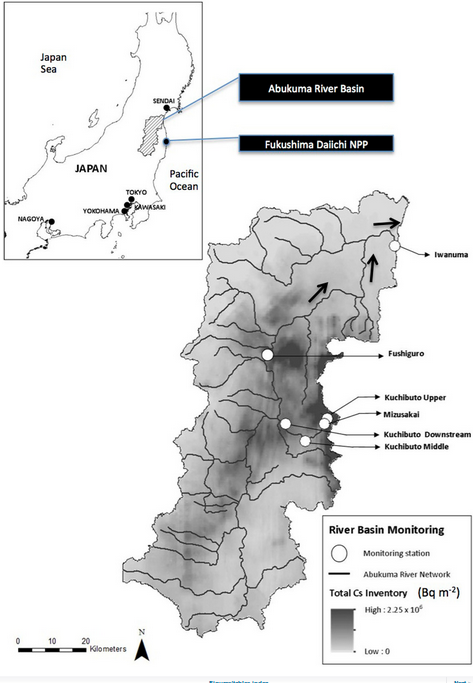
Personal thanks to KitagawaTakashi
【速報】水脈による放射能汚染状況:
”This study aimed to quantify the flux of radiocesium in the AbukumaBasin (5,172km2), the largest river system affected by fallout fromthe Fukushima Daiichi Nuclear Power Plant (FDNPP) event.
Inthe period from 10 August 2011 to 11 May 2012 an estimated 84 to 92%of the total radiocesium transported in the basin’s fluvial systemwas carried in particulate form.”
極めて重要な情報が公開された。
振り落ちた放射能物質は、多くはそこに留まる。
風に乗りプルームによって運ばれたものも、
雨などによって降下し、多くはその場所に留まる。
その後、土壌に浸潤し、一部は、植物、動物などを通じ、
食物連鎖に入る。多くの移動は、環境循環による。
その最大のものが、水脈によるものである。(一部は海に流れる)
この懸念は、当初からあったが、その詳細が初めて公開された。
(Published16 January2014)
図は、阿武隈川流域の水脈と、現実にどの程度放射能物質が、
どの範囲に広がっているかの詳細図である。
色の濃さが、汚染度を表すが、濃い部分は、200万ベクレル/m^2にまで達している。
この図は、放射能汚染被害の範囲、ホットスポットの場所、
その汚染の程度を、地域ごとに詳細に示すものとして極めて有用であり、今後の基礎資料となるものであろう。
”
Duringthis monitoring period Typhoon Roke (September 2011) was observed toinduce a significant and temporally punctuated redistribution ofradiocesium. The storm-mobilised radiocesium was an estimated 6.18Terabecquerels corresponding to 61.4% of the total load delivered tothe coastal zone during the observation period.
The totalflux of radiocesium into the Pacific Ocean estimated at the outletstation (basin area 5,172km2) was 5.34TBq for 137Cs, and 4.74TBq for134Cs, corresponding to 1.13% of the total estimated radiocesiumfallout over the basin catchment (890TBq).
This wasequivalent to the estimated amount of direct leakage from FDNPP tothe ocean during June 2011 to September 2012 of 17TBq and the Level 3Scale Leakage on 21August 2013 (24TBq).”
Source: Published16 January 2014
“Initial flux of sediment-associatedradiocesium to the ocean from the largest river impacted by FukushimaDaiichi Nuclear Power Plant” By Yosuke Yamashiki, Yuichi Onda,Hugh G. Smith, William H. Blake,et.al.”
http://www.nature.com/srep/2014/140116/srep03714/full/srep03714.html
The activity concentrations of 137Cs, 134Cs, 90Sr, 238Pu, 239,240Pu, 241Pu and 241Am in soil and in animals causing transgenerationally-transmitted damage
Personal thanks to Jan Hemmer
Japan, listen: “The activity concentrations of 137Cs, 134Cs, 90Sr, 238Pu, 239,240Pu, 241Pu and 241Am in soil and in animals were measured at five monitoring sites with different ground deposition of radionuclides at different distances from the destroyed reactor.
The observed temporal pattern of the radionuclide activity concentration in the studied animal populations reflects the changes in biological availability of these isotopes for biota, mostly due to fuel particle destruction and appearance of dissolved and exchangeable forms of radionuclides.
Maximal values of the whole-body absorbed dose rates occurred during the year of deposition, followed by a decrease in the subsequent period. Generally, this decrease was monotonic, mainly determined by the decrease of the external c-ray dose rate, but there were exceptions due to the delayed maximum of internal exposure.
The inter-individual distributions of radionuclide concentrations and lifetime whole-body absorbed doses were asymmetric and close to log-normal, including concentrations and doses considerably higher than the population mean values.”
http://www.enfants-tchernobyl-belarus.org/extra/pdf-divers/telecharge.php?pdf=etb-037.pdf
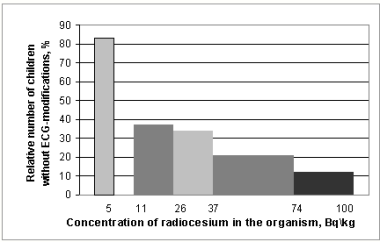 Image source ; http://belrad-institute.org/UK/doku.php?id=publications:articles:mesures_of_radiation
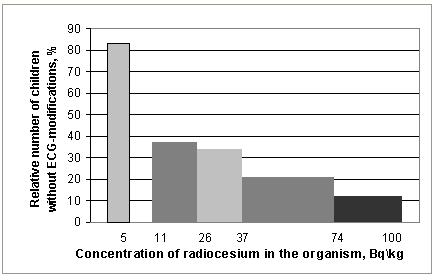
“Transgenerational accumulation of radiation damage in small mammals chronically exposed to Chernobyl fallout” PDF:http://www.enfants-tchernobyl-belarus.org/extra/pdf-divers/telecharge.php?pdf=etb-068.pdf“With regard to the continuous buildup of transgenerationally-transmitted damage in the course of chronicradiation exposure of the parental generations, we will shortly speak of the transgenerational accumulation of transmitted biological damage” ignored by World’s Science.
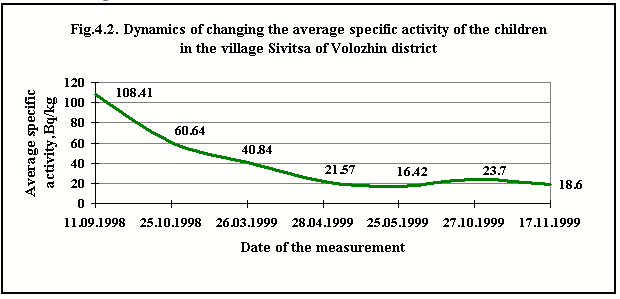
Maps of Belarus:Whole Body Counter Check ups of Children (Cesium 137).
I got these “maps” from BELRAD (http://belrad-institute.org/).Yablokov / Nesterenko showed a few in their famous study “Chernobyl: Consequences of the Catastrophe for People and the Environment”. Here you can see all of them. I did this article about my trip and the information you can see on them:http://tekknorg.wordpress.com/2012/04/14/children-radiation-maps-2/
Detected to Plutonium and Uranium at Takahagi City, Ibaraki Prefecture. 茨城県高萩市
Detected to Plutonium and Uranium 茨城県高萩市

On April 5 2013
We had detected the plutonium and uranium in Takahagi City, Ibaraki Prefecture.
Many children has been living also in this city.

[[ Special Thanks ]]
Yuko Sugimoto
Fukushima report: Plutonium should be in the leakage! 汚染水問題に関する小出先生のコメント、報道するラジオより。 追加報告:プルトニウムも汚染水に混じっているはず! (repost)
Op Ed by Mia (JANUK)
http://fukushimaappeal.blogspot.co.uk/
…..The last one was plutonium241, which had radiation dose about 50 times as much as the total of the other three(PU238, PU239 & PU240)…..
….The underground tanks were meant to store low level of radioactive water after being filtered through ALPS. But they have been using them to store high level of radioactive water (including β (beta) emitting nuclide, Strontium and α (alpha)emitting nuclide, Plutonium)…..

Thursday, 18 April 2013
A MBS radio interview with Prof. Koide: the repeated leaking problems at Fukushima Crippled Plant. Additional report: Plutonium should be in the leakage! 汚染水問題に関する小出先生のコメント、報道するラジオより。 追加報告:プルトニウムも汚染水に混じっているはず!
The most recent report on the leakage problem said that about 22 liters of radioactive water had leaked from gaps between the pipes used to transfer it from underground water storage tank into an another tank, and that the level of radioactivity in the water was 290,000Bq/m3.

Tepco has been trying to get ALPS to work for some time but it’s still in its trial stage. ALPS is supposed to filter 62 radioactive nuclides. However Tepco seems not wanting to mention the α (alpha) emitting nuclide isotopes.

The last one was plutonium241, which had radiation dose about 50 times as much as the total of the other three(PU238, PU239 & PU240).A Plutonium contamination map by MEXT published on 12/8/12.
[…Prefecture – city/town/village – 緯度 latitude – 経度 longitude – PU241(lower limit of detection)-…]
by MEXT on 30/9/11Half life: PU238(88y) decays into PU234(245,000y), PU239(24,100y), PU240(6,600y), PU241(13.2y) decays into Am241(=silver, 433y)Multi-nuclide Removal Equipment (ALPS)
(Reference) http://blog.goo.ne.jp/tarutaru22/e/a8f8b3e66c246ef3c3df8699b3a2ec45http://home.hiroshima-u.ac.jp/er/ReneN_P_P1.html
“….There’s a lot of Pu-241 produced in reactor fuel – more activity
of Pu-241 than any other actinide (with the exception of
short-lived Np-239). The Pu-241 decays to Am-241 and thence
to Np-237 and decay series nuclides, adding to the
radio-toxicity.Given the copious amounts of Pu-241 produced
(on the order of 10^5 curies per ton of fuel)
it shouldn’t surprise anyone that it’s showing up.
It should also be no surprise that potential dose from Pu-241
is higher than from other nuclides since there’s so much
of it produced……”
Leaked TEPCO report: 120 billion Becquerels of plutonium, 7.6 trillion Becquerels of neptunium released in first 100 hours — Media concealed risk to public
Published: October 15th, 2011 at 8:21 pm ET
By ENENews
1 This Month
Chernobyl: The Lost Tapes – A good documentary on Chernobyl on SBS available On Demand for the next 3 weeks– https://www.sbs.com.au/ondemand/tv-program/chernobyl-the-lost-tapes/2352741955560

of the week–London Campaign for Nuclear Disarmament

Tell the Ukrainian Government to Drop Prosecution of Peace Activist Yurii Sheliazhenko
To see nuclear-related stories in greater depth and intensity – go to https://nuclearinformation.wordpress.com
-
Archives
- April 2026 (126)
- March 2026 (251)
- February 2026 (268)
- January 2026 (308)
- December 2025 (358)
- November 2025 (359)
- October 2025 (376)
- September 2025 (257)
- August 2025 (319)
- July 2025 (230)
- June 2025 (348)
- May 2025 (261)
-
Categories
- 1
- 1 NUCLEAR ISSUES
- business and costs
- climate change
- culture and arts
- ENERGY
- environment
- health
- history
- indigenous issues
- Legal
- marketing of nuclear
- media
- opposition to nuclear
- PERSONAL STORIES
- politics
- politics international
- Religion and ethics
- safety
- secrets,lies and civil liberties
- spinbuster
- technology
- Uranium
- wastes
- weapons and war
- Women
- 2 WORLD
- ACTION
- AFRICA
- Atrocities
- AUSTRALIA
- Christina's notes
- Christina's themes
- culture and arts
- Events
- Fuk 2022
- Fuk 2023
- Fukushima 2017
- Fukushima 2018
- fukushima 2019
- Fukushima 2020
- Fukushima 2021
- general
- global warming
- Humour (God we need it)
- Nuclear
- RARE EARTHS
- Reference
- resources – print
- Resources -audiovicual
- Weekly Newsletter
- World
- World Nuclear
- YouTube
-
RSS
Entries RSS
Comments RSS
 nuclear-news