India’s nuclear regulator – nor independent, not effective
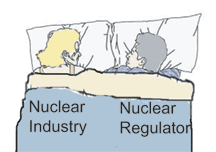
 Radiation regulatory regime needs independent powers Deccan Herald, Devender Singh, Jan 3, 2014:“……….In India, the Atomic Energy Regulatory Board (AERB) was set up in 1983 to carry out the regulatory and safety functions as envisaged in the Atomic Energy Act, 1962. Surprisingly, the AERB remains a subordinate authority under the Department of Atomic Energy (DAE) though India has ratified the Convention on Nuclear Safety. A regulatory body must be equipped to exercise its key regulatory functions — namely, standard-setting, authorisation, inspection and enforcement without any constraint — and must possess the core values of competence, independence, stringency and transparency.
……….Regulatory mechanism
The PAC noted that the regulatory mechanism concerning X-ray units was virtually non-existent. Out of a total of 57,443 medical X-ray facilities operating in the country, only 5270 units had been registered and were under the regulatory control of AERB, leaving the balance 91 per cent of the total units without registrations. The AERB admitted that with its very limited workforce of engineers and scientists, it was impossible to regulate all the X-ray machines. The marked accelerated growth of ionising radiation, such as medical X-rays used as an essential diagnostic tool pose grave risks to health of workers and the public in the vicinity of these facilities. There was an alarming shortfall of over 97 per cent regulatory inspections in case of diagnostic radiological facilities every year. ………http://www.deccanherald.com/content/378174/radiation-regulatory-regime-needs-independent.html
1 Comment »
Leave a reply to india nuclear regulator | jkmhoffman Cancel reply
1 This Month
26 April – Chernobyl: Inside the Meltdown airs on National Geographic on Sunday 26th April from 4pm

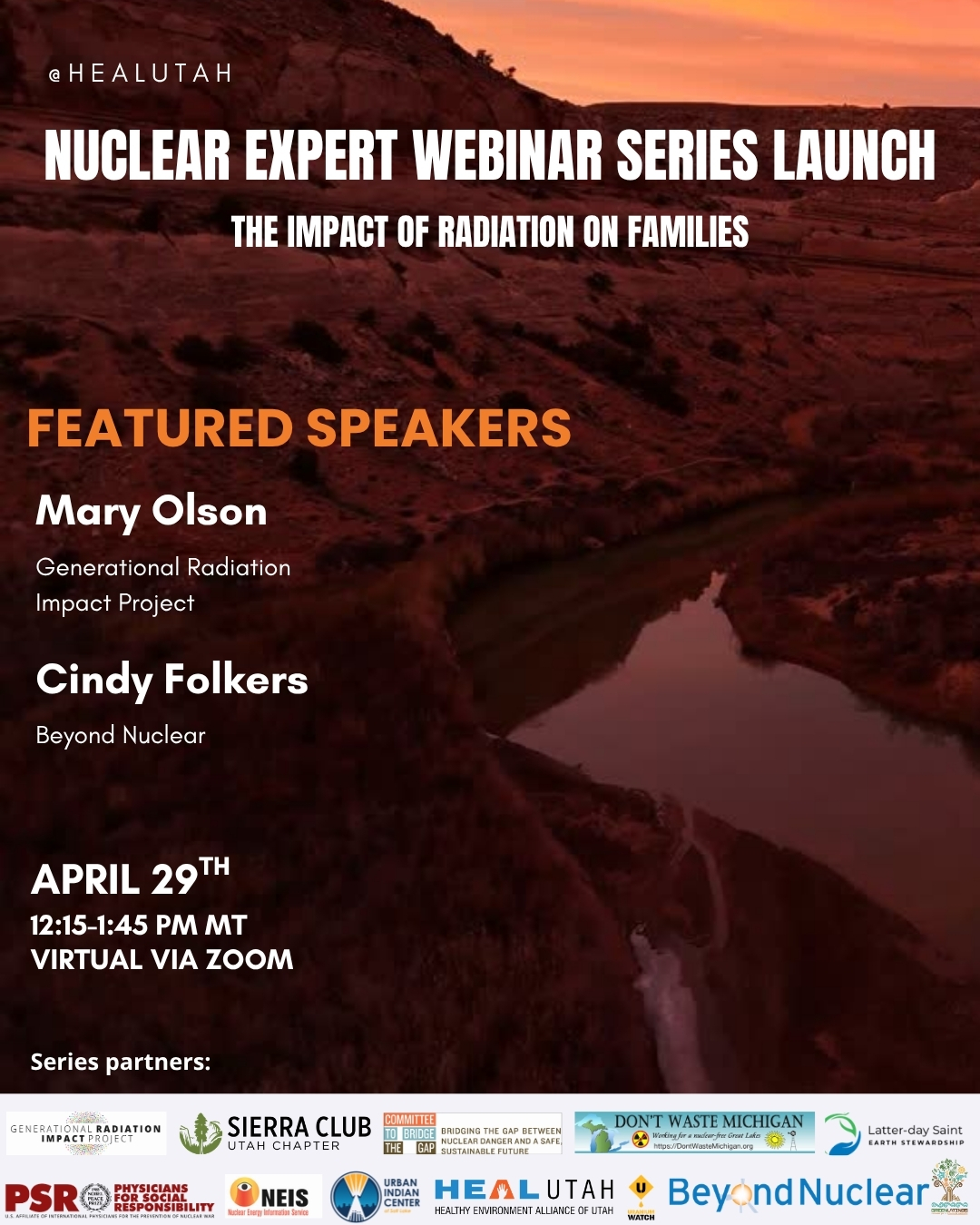
29 April – Nuclear Expert Webinar #1 – Radiation Impacts on Families with Mary Olson and Cindy Folkers
- 12:15 PM MT – 1:45 PM MT
- Location: Virtual – REGISTER TODAY

4 May -West Suburban Peace Coalition to discuss Iran war at May Educational Forum
Monday, May 4, 7:00 – 8:00 PM Central Standard Time
Title: : How Trump’s Narrative Tries to Shape the Reality of the War on Iran.
Contact Walt Zlotow, zlotow@hotmail.com 630 442 3045 for further information
14 May – online event From Bombs to Data Centres: the Face of Nuclear Colonialism

Pine Ridge Uranium is the real threat, not Tehran- Tell Burgum: Stop the Extraction.
Chernobyl: The Lost Tapes – A good documentary on Chernobyl on SBS available On Demand for the next 3 weeks– https://www.sbs.com.au/ondemand/tv-program/chernobyl-the-lost-tapes/2352741955560
To see nuclear-related stories in greater depth and intensity – go to https://nuclearinformation.wordpress.com
-
Archives
- May 2026 (12)
- April 2026 (356)
- March 2026 (251)
- February 2026 (268)
- January 2026 (308)
- December 2025 (358)
- November 2025 (359)
- October 2025 (376)
- September 2025 (257)
- August 2025 (319)
- July 2025 (230)
- June 2025 (348)
-
Categories
- 1
- 1 NUCLEAR ISSUES
- business and costs
- climate change
- culture and arts
- ENERGY
- environment
- health
- history
- indigenous issues
- Legal
- marketing of nuclear
- media
- opposition to nuclear
- PERSONAL STORIES
- politics
- politics international
- Religion and ethics
- safety
- secrets,lies and civil liberties
- spinbuster
- technology
- Uranium
- wastes
- weapons and war
- Women
- 2 WORLD
- ACTION
- AFRICA
- Atrocities
- AUSTRALIA
- Christina's notes
- Christina's themes
- culture and arts
- Events
- Fuk 2022
- Fuk 2023
- Fukushima 2017
- Fukushima 2018
- fukushima 2019
- Fukushima 2020
- Fukushima 2021
- general
- global warming
- Humour (God we need it)
- Nuclear
- RARE EARTHS
- Reference
- resources – print
- Resources -audiovicual
- Weekly Newsletter
- World
- World Nuclear
- YouTube
-
RSS
Entries RSS
Comments RSS
 nuclear-news
[…] https://nuclear-news.net/2014/01/03/indias-nuclear-regulator-nor-independent-not-effective/ […]