India’s nuclear power program could be called off, may be unaffordable
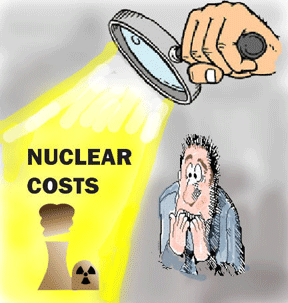 Cost of nuclear power proving high, DAE in a fix http://timesofindia.indiatimes.com/india/Cost-of-nuclear-power-proving-high-DAE-in-a-fix/articleshow/27920490.cms PTI | Dec 25, 2013, NEW DELHI: As the cost of electricity generation by nuclear power plants, to be set up with the help of French and American companies, is turning out to be on the higher side, the department of atomic energy is in a fix over how to bring down the cost.
 On one hand, it is involved in hard negotiations with the companies and on the other hand, sources said, if the cost per unit turns out to be too expensive, then it may not even pursue the project with collaborators
Currently, the DAE is in negotiations with French company Areva to build six EPR reactors of 1650 MW each at Jaitapur. Sources pointed out that initial estimates state the cost of the project to be around Rs 27-30 crore per megawatt and the cost per unit to be around Rs 9 per unit in 2021. Speaking to reporters in Mumbai last month, RK Sinha, DAE secretary, had said a competitive per unit tariff of Rs 6.50 has been estimated in the year of completion of Jaitapur project in 2020-21.
In the case of Mithi Virdhi project where American company Westinghouse Electric is providing AP-1000 reactors, the cost per megawatt is coming to around Rs 40 crores while the cost per unit is around Rs 12.
Although this project is yet to reach the advanced negotiations stage, the DAE has already signed an early works agreement with Westinghouse Electric. The DAE is skeptical about the proposal due to its high cost. It states that the cost per unit from the Kudankulam Nuclear Power Plant (KKNPP) unit 1 and 2 is around Rs 3.50 to Rs 4 per unit.
“If we take inflation into consideration, even then the cost is very high. We are also answerable to people. Plus, there is a lot of opposition to nuclear projects where we have foreign collaborators. If nothing works out, then we will, perhaps, have to back out because of the high electricity generation cost from the project,” a senior DAE official said.
Dangers of China’s nuclear deal with Pakistan
Geologists say that Karachi lies on a fault line. Rights activists have already voiced concerns about the safety of the ageing Karachi Nuclear Power Plant and the unpreparedness on the part of the authorities to cope with an unlikely nuclear catastrophe. They say that the possibility of an atomic disaster in a city with a population of 18 million people cannot be ruled out
 Sino-Pakistani nuclear deal: A risky affair, DW 26 Dec 13 China has promised to finance the
  construction of two nuclear power reactors in Pakistan. Critics say that Beijing’s atomic deal with Islamabad is not a good idea considering Pakistan’s history of proliferation. Pakistani officials confirmed Tuesday, December 24, that the China National Nuclear Cooperation (CNNC) had promised to grant their country a loan of 6.5 billion dollars to fund a major atomic power project in the country’s southern port city of Karachi. Pakistan’s Energy Ministry officials told the news agency Reuters that China had also waived a 250,000-dollar insurance premium on the loan…….
The United States signed a civilian nuclear deal with India in 2008, irking both Beijing and Islamabad. Pakistan demanded a similar deal with the US, but Islamabad’s biggest military financer refused it due to the Muslim-majority country’s nuclear-proliferation history.
 In 2004, the “father” of the country’s nuclear bomb, Dr. A.Q. Khan, confessed to selling nuclear technology to North Korea and Iran. Khan was removed from his post as head of the country’s nuclear program by former military dictator and President Pervez Musharraf in 2001. Despite that, Pakistan claims both its military and civilian nuclear programs are under strict control and are safe. Continue reading
Tsunami near US nuclear plant: a sign of thngs to come?
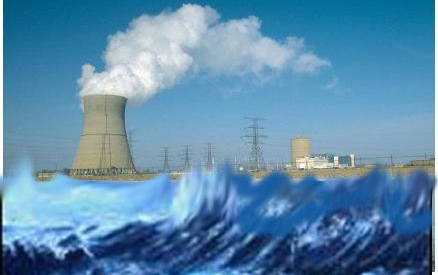 6-foot tsunami that hit near New Jersey nuclear plant may be first of its kind in U.S. — People injured, swept out to sea by wave detected as far as Puerto Rico — NOAA said continental shelf may have slumped, now suspects ‘atmospheric event’ (VIDEO) http://enenews.com/6-foot-tsunami-that-hit-near-new-jersey-nuclear-plant-may-be-first-of-its-kind-in-u-s-people-injured-swept-out-to-sea-by-wave-detected-as-far-as-puerto-rico-noaa-said-continental-shelf-may-hav
2014 Ocean Sciences Meeting — CODAR Ocean Sensors & Rutgers University, Dec. 14, 2013: Tsunamis are generally thought of as low-frequency waves that are generated by an underwater disturbance be it an earthquake or landslide. A tsunami can also be generated by an atmospheric disturbance such as a rapid pressure change. These tsunamis are referred to as meteotsunamis because of their meteorological origin. A meteotsunami was detected and tracked off the coast of New Jersey on June 13, 2013. […]
NOAA Tsunami Simulation (Published Dec. 9, 2013)
CODAR Newsletter, Fall 2013: A strange series of blogs and anecdotal community gossip described people getting swept off breakwaters and out to sea in New Jersey on June 13. It received only local attention for several days. Later someone put these together with an unusual storm system […] and proposed it may have launched a “meteotsunami” […] rarely mentioned in the U.S. [NOAA] stepped in to investigate this 13 June event, and put forward another possible origin besides meteorological: an undersea landslide in the Hudson Canyon. The fact that it was indeed a tsunami was confirmed by 30 tide gages [sic] along the East coast up through New England, and as far away as Puerto Rico. […] A panel of scientists was convened by NOAA to study this event […] A number of tentative conclusions were reached […] The tsunami was definitely spawned by the “derecho” atmospheric event depicted in the first figure, not an undersea landslide. […] this event is considered a “first” in the U.S., supported by extensive observations and modeling […]
Red marker: Oyster Creek nuclear power plant — Hand: Barnegat Inlet
NPR report from two weeks after the event: NOAA: A Rare Tsunami Hit The East Coast […] The West Coast and Alaska Tsunami Warning Center said the source of the wave is “complex and under review,” but they believe it was caused by a strong storm and perhaps even the “the slumping at the continental shelf east of New Jersey.”
NOAA’s National Weather Service:: A first-hand description was provided by Brian Coen who observed the event at Barnegat Inlet in New Jersey: Around 3:30pm on Thursday June 13, 2013, Brian Coen was spear fishing near the mouth of Barnegat Inlet […] At approximately 3:30, the outgoing tide was amplified by strong currents which carried divers over the submerged breakwater (normally 3-4 feet deep). This strong outrush continued for 1-2 minutes and eventually the rocks in the submerged breakwater were exposed. Brian backed his boat out before being sucked over as well. At this point, Brian noticed a large wave coming in, approximately 6 feet peak-to-trough and spanning across the inlet. The upper 2 feet of the wave was breaking. This wave occurred in conjunction with a reversal of the current such that even though the tide was going out, a strong surge was entering the inlet. This surge carried the divers back over the submerged reef and into the inlet from where they were picked up. On the south jetty three people were swept off the rocks which were 5 to 6 feet above sea level at the time. At least two were injured requiring medical treatment. […]
Watch NOAA’s latest simulation of the tsunami published Dec. 9, 2013 here
Yet another record year for renewable energy for Scotland
Another Record Year For Renewables In Scotland , 26 Dec13 Renewables met a record-breaking 40.3 per cent of gross electricity consumption in Scotland in 2012 and quarterly data up to Q3 2013 shows that renewable generation this year will likely beat that……http://www.energymatters.com.au/index.php?main_page=news_article&article_id=4093
Great potential of renewable energy for Michigan
 We need to submit public comments to the EPA stating that we support the EPA’s new proposed strong standards to reduce power plant carbon emissions. When writing to the EPA, mention docket EPA-HQ-OAR-2013-0495, and remind them about the importance of increasing renewable energy as a way to cut carbon pollution.
If we work together, we can make a clean, energy-secure future possible.
| Michiganders Need Renewable Energy Now http://www.opednews.com/articles/Michiganders-Need-Renewabl-by-William-McMullin-Energy_Energy-Wind_Environment_Fracking-131225-956.html |
By William McMullin (about the author) We need to get to work on promoting clean energy. Clean energy is more sustainable and reliable than fossil fuels, requires the same daily planning for grid operators, and keeps energy prices stable.
Michigan predominantly gets its energy from coal and natural gas. Coal causes environmental harm from its mining to its burning. Pollution resulting from coal includes fly ash, bottom ash, mercury, and other harmful materials. The use of coal causes many negative health effects such as respiratory problems, asthma attacks, cancer, etc. Coal is believed to shorten the lives of about 24,000 Americans a year [“Thousands of Early Deaths Tied to Emissions,” June 9, 2004,nbcnews.com].
Hydraulic fracturing or “fracking” wastes exorbitant amounts of water from the Great Lakes and blasts chemicals into the environment and our drinking water. Michigan does not even require companies to disclose which chemicals they use. Fracking not only contaminates our groundwater, it also pollutes our air and causes surface contamination from spills.
Michigan is already on track to achieve 10% of its energy from renewable sources by 2015. A recent report by Michigan’s Public Service Commission concluded the state’s utility companies could get 30% of energy from renewable sources economically and reliably by 2035 [“Michigan Can Triple Its Wind, Solar Energy Production by 2035, Report Finds,” Detroit Free Press, September 20, 2013]. A study by the National Renewable Energy Laboratory shows it is possible for renewable energy technology that we already have today to make up 80% of our electricity generation by 2050 [nrel.gov].
While it’s true the wind isn’t always blowing and the sun isn’t always shining, all forms of energy — including fossil fuels and renewables — poses challenges to the energy grid. The grid operators have to be able to switch to other or additional power plants at a moment’s notice if there is a surge of power use, power outages, planned maintenance, etc. Renewable energy causes no more planning and spontaneous changes to the grid than coal or natural gas. In fact, renewable energy has its benefits. Coal-burning power plants are so large that they make the grid less flexible and more prone to cause blackouts when they do go offline.
To further improve reliability of renewable energy, the Federal Energy Regulatory Commission (FERC), a federal agency that regulates the transmission and wholesale sale of energy, is working on new ways to manage the grid. For instance, using different sources of renewable energy over a larger geographic area creates better balance on the grid. If the sun isn’t shining is one geographic area, it is in another. This can be achieved by upgrading our transmission lines to handle transmission over a greater geographic area. New lines would also increase energy transportation efficiency, allow the implementation of large scale use of renewables, and lower costs.
Renewable energy is also financially beneficial to consumers. Renewable energy prices are steadily dropping while prices of dirty fuels are rising and are very volatile. Rate stability would be very much welcomed by consumers in this economy.
Luckily, we as citizens can take action to promote renewable energy. We can contact our members of Congress to support the bipartisan Master Limited Partnerships Parity Act, which would give renewable energy companies the same low-cost financing and tax benefits that fossil fuel producers receive. If this passes, it would open the floodgate for private investment. We also need to ask Congress to extend the clean energy tax credits expiring at the end of the year.
We need to submit public comments to the EPA stating that we support the EPA’s new proposed strong standards to reduce power plant carbon emissions. When writing to the EPA, mention docket EPA-HQ-OAR-2013-0495, and remind them about the importance of increasing renewable energy as a way to cut carbon pollution.
If we work together, we can make a clean, energy-secure future possible.
Medical experts criticise UNSCEAR report for playing down consequences of Fukushima nuclear accident
Published on 3 Nov 2013
Medical experts are critical of the latest UNSCEAR report which plays down health impact of Fukushima nuclear accident
UNSCEAR (the United Nations Scientific Committee on the Effect of Atomic Radiation) recently published a report titled “Sources, Effects and Risks of Ionizing Radiation” with a special focus on levels and effects of radiation exposure due to the nuclear accident after the 2011 Great East-Japan earthquake and tsunami .
The report has received criticism from medical experts who are researching on health effects of radiation. In the interview with 3Sat, Dr. Alex Rosen, a German pediatrician and member of German IPPNW (International Physicians for the Prevention of Nuclear War), harshly criticizes the playing down of radiation impact by UNSCEAR and the nuclear lobby. Professor Wolfgang Hoffmann, a German epidemiologist and radiobiologist, holds views similar to those of Dr. Alex Rosen. He assumes that those who criticize this report would be officially blamed for panic mongering and that any claims for damages and compensation could also be preempted on the basis of this report.
It seems, however, that the report did not receive unanimous support within UNSCEAR. According to Belgian journalist Marc Molitor, the Belgian delegation to UNSCEAR initially criticized the report, claiming that it is minimizing health effects of radiation after the Fukushima nuclear accident . When contacted by 3Sat, however, Dr. Vanmarcke, Chief of Belgian delegation to UNSCEAR, did not wish to talk about the issue which implicates pressure put on him and his delegation by the international nuclear lobby.
Dr. Keith Baverstock, a former researcher at WHO, also commented on the lack of independence of WHO in the research of the health impact of radiation. The existence of the mutual agreement between IAEA and WHO signed in 1959 hinders independent research of WHO on the health effects of radiation .
1 This Month


Tell the Ukrainian Government to Drop Prosecution of Peace Activist Yurii Sheliazhenko

Petition to revoke the licensing of the Near Surface Nuclear Disposal Facility (NSDF) at Chalk River. https://www.ourcommons.ca/petitions/en/Petition/Details?Petition=e-7247


of the week – STOP SMALL MODULAR REACTORS IN CANADA
To see nuclear-related stories in greater depth and intensity – go to https://nuclearinformation.wordpress.com
-
Archives
- March 2026 (193)
- February 2026 (268)
- January 2026 (308)
- December 2025 (358)
- November 2025 (359)
- October 2025 (376)
- September 2025 (258)
- August 2025 (319)
- July 2025 (230)
- June 2025 (348)
- May 2025 (261)
- April 2025 (305)
-
Categories
- 1
- 1 NUCLEAR ISSUES
- business and costs
- climate change
- culture and arts
- ENERGY
- environment
- health
- history
- indigenous issues
- Legal
- marketing of nuclear
- media
- opposition to nuclear
- PERSONAL STORIES
- politics
- politics international
- Religion and ethics
- safety
- secrets,lies and civil liberties
- spinbuster
- technology
- Uranium
- wastes
- weapons and war
- Women
- 2 WORLD
- ACTION
- AFRICA
- Atrocities
- AUSTRALIA
- Christina's notes
- Christina's themes
- culture and arts
- Events
- Fuk 2022
- Fuk 2023
- Fukushima 2017
- Fukushima 2018
- fukushima 2019
- Fukushima 2020
- Fukushima 2021
- general
- global warming
- Humour (God we need it)
- Nuclear
- RARE EARTHS
- Reference
- resources – print
- Resources -audiovicual
- Weekly Newsletter
- World
- World Nuclear
- YouTube
-
RSS
Entries RSS
Comments RSS
 nuclear-news