In 2013 the world’s carbon emissions reach a new record high
 Carbon emissions most in history http://www.smh.com.au/national/carbon-emissions–most-in-history-20131119-2xtnh.html#ixzz2lDChdy76 November 20, 2013 Larissa Nicholson Journalist at The Canberra Times. The world will release more carbon dioxide through the burning of fossil fuels in 2013 than any other year in human history, putting it on track to reach 2C above pre-industrial times in 30 years.
That is the verdict of the Global Carbon Project’s annual carbon budget, a report card on carbon for the world, released on Wednesday.The report, put together by leading scientists, says worldwide carbon emissions caused by burning fossil fuels will reach 36billion tonnes in 2013, an unprecedented level.
It says worldwide carbon emissions caused by fossil fuels are set to grow 2.1 per cent this year, slightly less than the average 3.1 per cent since 2000. The Global Carbon Project is based in Canberra and led by CSIRO marine and atmospheric research scientist Josep Canadell.
It brings together experts from around the world to collaborate in measuring greenhouse gasses in the atmosphere.The scientists consider worldwide energy consumption and the resulting carbon emissions, and the impact of changing land use and deforestation. They also take into account how much carbon gets taken up by plants and trees and how much ends up in the ocean,
then use the information to report on how much carbon dioxide humans are emitting and how much is ending up in the atmosphere.
Report co-author Michael Raupach, a CSIRO fellow, said if worldwide emissions continued to grow as they had since 2000, the Earth’s climate would warm by 2C, a temperature international policymakers have agreed should not be exceeded.
”Worldwide, emissions have not peaked and started to decline,” he said The countries and regions responsible for the largest portion of worldwide emissions in 2012 were China, at 27 per cent, the USA, 14 per cent, the European Union, 10 per cent and India, 6 per cent.
The USA and European Union managed to reduce their greenhouse gas emissions between 2011 and 2012 by 3.7 per cent and 1.3 per cent respectively, but China and India increased their emissions by 5.9 per cent and 7.7 per cent each.In 2012, China was responsible for the largest increase in emissions at 71 per cent and the USA for the largest decrease of 26 per cent.
Australia contributed a 6 per cent decrease in overall emissions.
In 2012, burning coal was the biggest producer of greenhouse gas emissions. Dr Raupach said a particularly large amount of carbon had been absorbed by the land in 2011, because a lot of rain and indirect radiation from the sun meant plants grew strongly and absorbed CO2. ”The land sink was amazingly strong, an all-time record in that year, and in 2012 it was a lot weaker … and came back something close to the trend over the last decade,” he said.
At UN Climate Summit – the call for 100% renewable energy strategies
100% renewables ‘key to CO2 fight http://renews.biz/54420/call-for-100-renewables-targets/ re News, 19 Nov 13, The Global 100% Renewable Energy Coalition has called on governments to commit to 100% renewable energy targets and strategies.
A joint statement at the UN climate summit today asserted that “communicating and proving the urgency and feasibility of 100% renewable energy is key to breaking the climate deadlock”.
Members of the coalition including the World Wind Energy Association, World Bioenergy Association and the Fraunhofer ISE Institute also criticised “the ongoing stagnancy of the climate negotiations and their struggle to agree upon and implement measures that effectively combat the crisis”.
World Wind Energy Association secretary general Stefan Gsänger said: “The growing global movement shows that making the transition to 100% renewable energy is primarily a political, not technical, challenge. The necessary technologies and knowledge already exist.”
In Germany, 74 regions and municipalities have already reached 100% renewable energy. Entire nations like Denmark, Iceland, Scotland, Costa Rica, Maldives Islands, Cook Islands, Tuvalu, and Tokelau “have set and already partly achieved this ambitious target”, the group said.
“Climate change debates have become all too often associated with failing political negotiations and inadequate actions. There is an urgent need to change this,” added World Bioenergy Association president Heinz Kopetz.
10MW-sized battery parks – a revolution in solar energy storage
 The battery storage system that could close down coal power REneweconomy, By Giles Parkinson on 19 November 2013 (Editors note: This is part of a series of interviews and stories that will run over the next few weeks looking at Germany’s Energiewende, and the transition of Germany’s energy grid to one dominated by renewable energy. You can find them all in our Insight section).
You don’t have to go far inside the headquarters of German battery storage company Younicos, or even their website for that matter, to find out what they are about. “Let the fossils rest in peace,” the logo suggests. Another sign at their technology centre east of Berlin proclaims: “You are now leaving the CO2 producing sector of the world.”
This sign is designed to mimic those which adorned the checkpoints that separated the various sectors of east and west Berlin before the wall was torn down. Younicos believe they have a technology that is equally disruptive, and can break down one of the last barriers to 100 per cent renewable energy: the need to run fossil fuel generation to control the “frequency” of the grid, and the other system services such as voltage control.
The company, based in Berlin Adlershof, on the eastern outskirts of the capital, is developing 10MW-sized battery parks, using battery systems that it says can stabilise the grid faster, cheaper and with greater precision that conventional generation. Continue reading
Britain’s successful Community Funded Solar Power
 Community Funded Solar Powering Ahead In The UK http://www.energymatters.com.au/index.php?main_page=news_article&article_id=4029 19 Nov 13 The UK’s Brighton Energy Coop (BEC) has raised more than £200,000 in just 3 weeks for a 200kW rooftop solar panel system project – the largest in the city.
Like other solar co-ops, members of the community chip in for the installation of solar array. Revenue is generated through feed in tariffs and sale of the power generated to the “solar landlords”, the businesses where the systems are installed.
BEC offers cash payments to building owners of up to £10,000 to host solar panels, plus discounted electricity for 20 years.
Brighton Energy Co-operative intends to pay investors interest of 5% average per annum, commencing a year after installation ends. Investments may also qualify for 30% tax relief under the UK’s Enterprise Investment Scheme (EIS). Shares cost just £1 each and the minimum buy-in is £400.
“By taking the power into our own hands, BEC is showing that the roll out of renewable energy – such an obvious way of transforming our energy supply – can be done with the power of community support,” says the BEC’s Will Cottrell.
Last year, the BEC raised £240,000 for solar PV projects in Brighton and Portslade. At Shoreham Port, systems were installed on five buildings at the Hove Enterprise Centre. A 35kW system was also installed on City Coast Church in Portslade and a 10kw PV system on St George’s Church in Kemptown.
There are now more than 50 similar solar co-ops in the UK.
Gridline from Wyoming to Idaho a leap ahead for wind energy
 Obama’s Renewable Energy Initiative Changing US Landscape http://www.ibtimes.com/obamas-renewable-energy-initiative-changing-us-landscape-1474130 By David Kashi November 18 2013 The Department of Interior has approved the first major U.S. energy transmission project that will integrate existing renewable sources of electricity spanning the western U.S.
The 900-mile Gateway West Transmission Line project, proposed by Idaho Power and Rocky Mountain Power, will stretch from southern Wyoming to southern Idaho and will carry 1,500 gigawatts of energy, mostly generated by wind farms. A gigawatt of energy is 1,000 megawatts, and one megawatt can sustain about 1,000 homes for one hour.
The project is part of Obama’s 2009 initiative to revamp the U.S. transmission infrastructure through an interagency initiative called the Rapid Response Team for Transmission.
“Gateway West is a high-priority project of the president’s power infrastructure initiative – a commonsense approach that is speeding job creation in the near term while spurring the economy and increasing the nation’s competitiveness in the long term,” Sally Jewell, head of the Department of Interior, announced last week. “The line will strengthen the Western grid, bringing a diversified portfolio of renewable and conventional energy to meet the region’s projected growth in electricity demand.” Gateway West is one of seven pilot projects that will span the U.S. It’s estimated that at peak construction the seven projects will create around 1,200 jobs.
The development of the project went through a rigorous environmental impact and public comment period, results from which included the route for the transmission lines being crafted to use existing transmission corridors to avoid harming sensitive landscapes.
“Transmission is a vital component of our nation’s energy portfolio, and these seven lines, when completed, will serve as important links across our country to increase our power grid’s capacity and reliability,” Ken Salazar, former secretary of the Department of Interior, said in October. “This is the kind of critical infrastructure we should be working together to advance in order to create jobs and move our nation toward energy independence.”
 |
Click here to Reply or Forward
|
It’s just getting worse – the Hanford nuclear cleanup
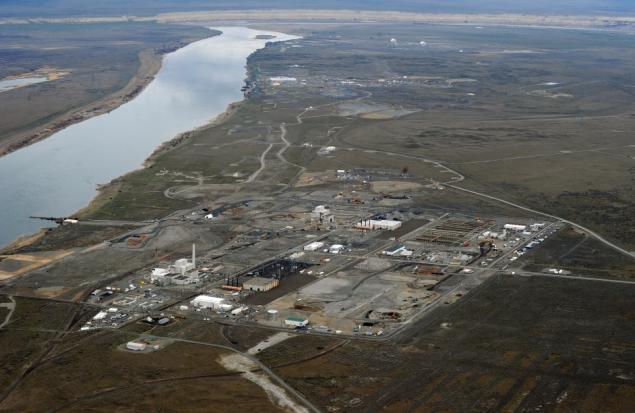 Hanford nuclear site clean-up: The mess gets worse NBC News InvestigAtions, By Rebecca LaFlure, The Center for Public Integrity 18 Nov 13 The government’s multi-billion-dollar effort to clean up the nation’s largest nuclear dump has become its own dysfunctional mess.
But progress has been slow, the project’s budget is rising by billions of dollars, and a long-running technical dispute has sown ill will between the project’s senior engineering staff, the Energy Department, and its lead contractors.
The waste is a legacy of the Cold War, when the site housed nuclear reactors churning out radioactive plutonium for thousands of atomic bombs. To clean up the mess, the Department of Energy (DOE) started building a factory 12 years ago to encase the nuclear leftovers in stable glass for long-term storage. But today, construction of the factory is only two-thirds complete after billions of dollars in spending, leaving partially constructed buildings and heavy machinery scattered across the 65-acre site, a short distance from the Columbia River.
Technical personnel have expressed concerns about the plant’s ability to operate safely, and say the government and its contractor have tried to discredit them, and in some cases harassed and punished them. Experts also say that some of the tanks have already leaked radioactive waste into the groundwater below, and worry that the contamination is now making its way to the river, a major regional source of drinking water.
Some lawmakers say Hanford has been an early — and so far dismaying— test of whether DOE Secretary Ernest Moniz, previously an MIT physics professor, can turn the problem-plagued department around through improved scientific rigor and better management of its faltering, costly projects. They have accused his aides of standing by while a well-known whistleblower was dismissed last month. Meanwhile, DOE officials are considering spending an extra $2 billion to $3 billion to help the plant safely process the waste. Doing so could delay the cleanup’s completion for years, the Government Accountability Office estimated in December.
In an Oct. 9 letter, Sen. Edward J. Markey, D-Mass., demanded that Moniz take new steps to ensure that the project’s technical experts are well-treated. Four organizations have reviewed their complaints, he said, and “all have agreed that the project is deeply troubled, and all have affirmed the underlying technical problems.”………http://investigations.nbcnews.com/_news/2013/11/18/21482804-hanford-nuclear-site-clean-up-the-mess-gets-worse?lite
TEPCO releases photos of fuel removed from Fukushima Unit 4
Unit 4 Fuel Loaded In Cask At Fukushima Daiichi, Simply Info November 18th, 2013 | TEPCO has released photos of the first fuel successfully removed from the fuel racks at unit 4. NHK reports the removal of some of the unused fuel from the pool to the transfer cask. TEPCO estimates it may take a week to load the first cask of 22 fuel assemblies before they can remove it from the pool…….http://www.fukuleaks.org/web/?p=11770
On the brink of nuclear catastrophe at Fukuhsima
IMPENDING FUKUSHIMA NUCLEAR DISASTER WILL BE ‘WORSE THAN CHERNOBYL’ – WHAT YOU NEED TO KNOW Scriptonite Daily, 13 Nov 13 “…….,the stricken Fukushima Daiichi Power Plant in North East Japan has suffered core meltdowns, leaked thousands of tonnes of radioactive water into the ground water of Japan and the Pacific Ocean, and a series of other calamities. The Tokyo Electric Power Company (TEPCO) responsible for the plant has appeared incompetent, secretive and unfit to manage the most complex clean-up operation in the history of nuclear power. TEPCO are about to engage in the removal of highly radioactive, unstable fuel rods. If they make a mistake, we would witness the worst radiological disaster in history. The advice of Nuclear expert Arnie Gunderson in the case of such a mistake? Evacuate the Northern Hemisphere.
The boiling water nuclear reactors of the Fukushima Daiichi Power Plant were not designed or planned by TEPCO. The world’s third largest corporation, American firm GE, designed the four main reactors, which stand at the Pacific Ocean side of the site. A legal case in the 70’s revealed thatGE knew these reactor designs were flawed and the reactors prone to explode due to insufficiently robust ‘pressure containment systems’ – meaning that in the case of a build-up of gas or other pressure, the containment system was not strong enough to hold in the radioactive contents. GE continued to sell them across the world anyway. Not only this, but in the case of Fukushima, they designed the cooling pumps and reactors far too close to the Ocean, given the likelihood of seismic events, making the probability and impact of unsustainable pressure build-ups all the higher………
The biggest crisis at Fukushima though are the impacts of three meltdowns in reactors 1-3, and the fate of the fuel pools. After prolonged exposure the fuel rods melt, forming a boiling pool of radioactive fuel at the bottom of the vessel containing the reactor. Reactors 1, 3 and 4 are believed to be at this stage. However, it is clear that reactor 2 suffered a breach of containment at its core. In fact, TEPCO still have no idea where the cores of the four reactors are. In the worst case scenario, the cores will continue to melt through all material below them until they reach the groundwater, where heat and steam will build until an explosion occurs, releasing the entire nuclear payload of the four stations into the atmosphere.
Without a steady coolant supply, the reactor cores boiled off the water around them, exposing the fuel rods – leaving them damaged and unstable. In the case of reactor 4, this was of an increased seriousness as the fuel pools were exposed to the elements, 18m in the air on a buckled and tilting structure. Inside this fuel pool is 400 tonnes of highly radioactive spent fuel. The radioactive fuel rods are inserted into assemblies of 60-70 rods each. TEPCO need to remove more than 1,500assemblies from the pool before it collapses. The company have issued placatory statements on the matter, telling the Guardian:
“Removing spent fuel is done at any ordinary nuclear power plant, and the equipment and methods we’ll be using here are not that different.”
This statement is disingenuous in the extreme. Nuclear and fuel rod expert Arnie Gunderson uses an excellent metaphor to explain the issues.
“Now nuclear fuel is like cigarettes in a pack of cigarettes. If the pack is new, you can pull a cigarette out pretty easily. But if the pack is distorted and you pull too hard, you’ll snap the cigarette. Same thing can happen inside this fuel pool.”
Removing the rods from the pool is a delicate task normally assisted by computers according toToshio Kimura, a former TEPCO technician, who worked at Fukushima Daiichi for 11 years.
“Previously it was a computer-controlled process that memorized the exact locations of the rods down to the millimeter and now they don’t have that. It has to be done manually so there is a high risk that they will drop and break one of the fuel rods,” Kimura said.
These spent fuel rods contain Plutonium, the most toxic material on earth – trace amounts of which can kill a human being.
Krypton 85 is also likely to be released into the air – this radiation is absorbed by the lungs, is fat soluble and damages sperm and eggs resulting in genetic diseases and deformities.
According to independent consultants Mycle Schneider and Anthony Froggatt, writing in the recentWorld Nuclear Industry Status Report:
“”Full release from the Unit-4 spent fuel pool, without any containment or control, could cause by far the most serious radiological disaster to date,”, releasing three times the radioactive material of the 1986 Chernobyl disaster, or 14,000 Hiroshimas.”
This piece of work starts this month.
If TEPCO, who have so far proven vastly incompetent, somehow manage to pull off this unprecedented activity without creating a nuclear holocaust, they still have to perform the same effort with reactors 1 and 2, which will be much more complex due to even greater damage to the buildings.https://www.scriptonitedaily.com/2013/11/13/impending-fukushima-nuclear-disaster-will-be-worse-than-chernobyl-what-you-need-to-know/
Water shortage affecting uranium mining industry in Namibia
Rio Tinto, Paladin Uranium Mines in Namibia Face Water Shortage, Bloomberg News By Felix Njini November 18, 2013 Uranium mines operated by companies including Rio Tinto Plc (RIO) and Paladin Energy Ltd. in Namibia face a water shortage as a drought in the southwest African nation curbs supply to the operations and three coastal towns.
Volumes from the Omaruru Delta acquifer, about 200 kilometers (124 miles) northwest of the capital, Windhoek, have declined to 4 million cubic meters this year from 9 million cubic meters a year earlier, said Nehemia Abraham, under-secretary for water and forestry in the Ministry of Agriculture.
The source is in the semi-arid Erongo region, which supplies the towns of Swakopmund, Walvis Bay and Henties Bay and suffers from severe shortages. Water from a desalination plant owned by Areva SA (AREVA), the country’s first such facility, isn’t enough to meet needs of Paladin’s Langer Heinrich uranium mine, China Guangdong Nuclear Power Co.’s Husab uranium project and Rio’s Rossing complex.
“The water-supply situation at the coastal area has become too critical,” Abraham said by phone yesterday. “Mining companies in the area will have to operate with less water. We are reviewing the situation now and from end of November we might be unable to get enough water from the aquifer to supply to mines.”
Langer Heinrich spokeswoman Ratonda Murangi didn’t immediately respond to e-mailed questions. Botha Ellis, a spokesman for Rossing, directed queries to Namibia Water Corp., the country’s state-owned utility known as Namwater.
Water Needs
Rossing’s total water requirement for 2012 was 7.48 million cubic meters, 41 percent of which was for fresh water, while the rest was recycled, according to its website.
The three towns use about 4.5 million cubic meters and there is currently no spare capacity from the aquifer, known as Omdel, Abraham said…… http://www.businessweek.com/news/2013-11-18/rio-tinto-paladin-uranium-mines-in-namibia-face-water-shortage
Hazards of radiation in deep space
UNH scientists document, quantify deep-space radiation hazards Science News18, 2013 – 14:05 in Astronomy & Space Scientists from the University of New Hampshire and colleagues have published comprehensive findings on space-based radiation as measured by a UNH-led detector aboard NASA’s Lunar Reconnaissance Orbiter (LRO). The data provide critical information on the radiation hazards that will be faced by astronauts on extended missions to deep space such as those to Mars. The papers in a special issue of the journal Space Weatherdocument and quantify measurements made since 2009 by the Cosmic Ray Telescope for the Effects of Radiation (CRaTER) radiation detector.
“These data are a fundamental reference for the radiation hazards in near Earth ‘geospace’ out to Mars and other regions of our sun’s vast heliosphere,” says CRaTER principal investigator Nathan Schwadron of the UNH Institute for the Study of Earth, Oceans, and Space (EOS).
The space environment poses significant risks to both humans and satellites due to harmful radiation from galactic cosmic rays and solar energetic particles that can easily penetrate typical shielding and damage electronics. When this radiation impacts biological cells, it can cause an increased risk of cancer…..http://esciencenews.com/articles/2013/11/18/unh.scientists.document.quantify.deep.space.radiation.hazards
Harvey Wasserman: Risky Operation at Fukushima Demands World Action
Published on 19 Nov 2013
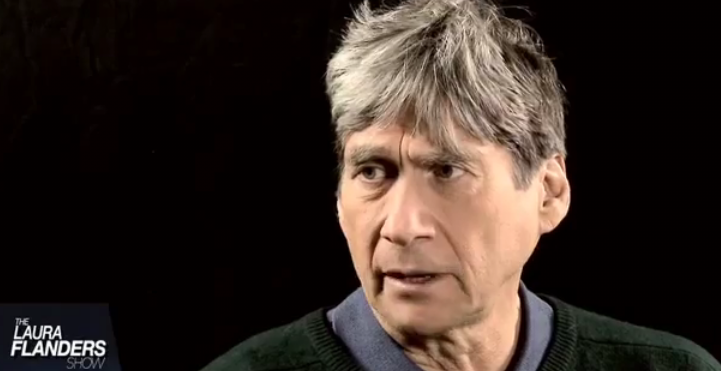
Laura Flanders’ show streams at GRITtv.org This week, the operator of Japan’s crippled Fukushima nuclear plant began the process to remove 400 tons of highly irradiated spent fuel, Nuclear researcher Harvey Wasserman talks about the risks involved and need for world intervention. Distributed by OneLoad.com
A BIT ON THE CYANIDE – Mining in Romania
“A global problem requires a global solution!” We call on all affected communities to unite to protect their rights for a clean and healthy environment. United against irresponsible mining!
http://www.schnews.org.uk/stories/A-BIT-ON-THE-CYANIDE/
Published on 18th November 2013

In the dark caves of Transylvania something creeps but it is not vampires you should be worried about. The real blood sucking threat to Romania is Gabriel Resources, the company behind the Rosia Montana gold mining project. Protesters have been gathering outside Westminster every Sunday since the 1st of September to raise awareness about this ecological catastrophe that is currently unfolding in Romania. They are holding weekly demonstrations. Check facebook event. Schnews took a look at the most recent one:
Around 100 Save Rosia Montana campaigners showed up in cold temperatures to raise concerns over the mining project. There were banners inscribed with “Together We Will Save Rosia Montana”, “Our mountains are not for sale”, “You shall not pass”, and they’d brought a dusky green authentic Romanian banger with the number plates of BRJ 135K to drive the point home. The demonstration this Sunday(11th) was due to start at 2.30pm but protesters were told by the Met to start demonstrating at 3pm instead as there was a clash with Remembrance Day and they were then forced to move down the road so instead of standing by Parliament Square they reassembled by the George V statue. To further complicate matters, their allocated area was host to another demonstrating group, the Egypt anti-coup protesters.

There was uncertainty of how the two would demonstrate together at the same spot without shitting on each other’s parade but in a true revolutionary spirit of solidarity and show of camaraderie each group took the microphone for two minutes and took it in turns to shout, “We do not want cyanide”, “From the river to the sea, Egypt, Egypt will be free”, “Say NO Cyanide”, “BBC don’t you see, SISI killed democracy”, “Romanian Government Shame On You”. This was the way of it for two hours until the final hour commenced and a choir had formed, made up of Romanian and Egyptian protesters shouting each other’s woeful and powerful slogans. One demonstrator took the stand and led their songs of protest as well as the conductor of the London Philharmonic orchestra would have. Cars sporadically beeped in support as they drove by.
Artistic ripples
There is an open piece collective art project, Echo Rosia Montana, being created for the campaign (and against fracking, and for the Global Ecological Revolution) initiated by Artist Emanuela Marcu. People are encouraged to participate, starting with one person drawing a small leaf in the middle of a blank piece of paper or canvas and then writing their name at the bottom of the page then the following person traces a line around the leaf, reflecting the initial image like an echo and signs their name next to the last person’s, linking their names together. At the end this artistic process creates an image that depicts the rippling effect. This is meant to show “in the same way as the protest, from a small gesture of inner resistance, to a movement as vast as a shoreless ocean spreading around you, that you will have moved from stillness to irrepressible, waving life”. New York, Paris, Torino and London are some of the cities that have taken part in creating canvasses for the revolution. It will result in an end piece signed by thousands of people in many cities across the world. Echo for Rosia Montana will be delivered to the hands of UNESCO Paris along with a global plea to add Rosia Montana to the World Heritage List.
The Save Rosia Montana campaign has recently grabbed the attention of some better known players. Last week Kumi Naidoo (Executive Director of Greenpeace International) attended a demonstration and showed his support. Serban Cantacuzino (President of Pro Patrimonio – The National Trust of Romania) and Nicolae Ratiu (Chairman of The Ratiu Foundation) both of the Romanian Cultural Institute have publicly pledged their support.
Fool’s Gold
Bolivia says it’s on track to develop nuclear power but not if the USA has its way!
Morales said Bolivia would go ahead with the program despite opposition from “some countries” with nuclear power that don’t want others to have it — a reference to stated U.S. reservations on Bolivia’s plans.
Nov. 19, 2013
Bolivia’s nuclear energy approach is evolving into a two-pronged policy that’s set to lead to a more vigorous government pursuit of a domestic nuclear power generation program and exploration, development and export of the country’s numerous deposits, reports in Los Tiempos and other local media said.
The U.N. International Atomic Energy Agency in Vienna notes on its website that not all data about Bolivia’s uranium deposits are readily available.
Morales told an energy conference in Tarija, southern Bolivia, in October the country has achieved conditions necessary to obtain nuclear power for “pacific ends,” Los Tiempos reported. Morales did not elaborate, nor did he offer details when he announced Argentina and France would help Bolivia attain nuclear power generation capacity.
1 This Month

of the week – Shut Down Drone Warfare!


Tell the Ukrainian Government to Drop Prosecution of Peace Activist Yurii Sheliazhenko

Petition to revoke the licensing of the Near Surface Nuclear Disposal Facility (NSDF) at Chalk River. https://www.ourcommons.ca/petitions/en/Petition/Details?Petition=e-7247
To see nuclear-related stories in greater depth and intensity – go to https://nuclearinformation.wordpress.com
-
Archives
- April 2026 (57)
- March 2026 (251)
- February 2026 (268)
- January 2026 (308)
- December 2025 (358)
- November 2025 (359)
- October 2025 (376)
- September 2025 (257)
- August 2025 (319)
- July 2025 (230)
- June 2025 (348)
- May 2025 (261)
-
Categories
- 1
- 1 NUCLEAR ISSUES
- business and costs
- climate change
- culture and arts
- ENERGY
- environment
- health
- history
- indigenous issues
- Legal
- marketing of nuclear
- media
- opposition to nuclear
- PERSONAL STORIES
- politics
- politics international
- Religion and ethics
- safety
- secrets,lies and civil liberties
- spinbuster
- technology
- Uranium
- wastes
- weapons and war
- Women
- 2 WORLD
- ACTION
- AFRICA
- Atrocities
- AUSTRALIA
- Christina's notes
- Christina's themes
- culture and arts
- Events
- Fuk 2022
- Fuk 2023
- Fukushima 2017
- Fukushima 2018
- fukushima 2019
- Fukushima 2020
- Fukushima 2021
- general
- global warming
- Humour (God we need it)
- Nuclear
- RARE EARTHS
- Reference
- resources – print
- Resources -audiovicual
- Weekly Newsletter
- World
- World Nuclear
- YouTube
-
RSS
Entries RSS
Comments RSS
 nuclear-news