Here’s a nice compilation making it’s way around social media. Please help it along for those who still don’t get it.
I do want to mention that the estimation from Tepco that 300 tons of contaminated water are flowing into the Pacific each day is way too low. Anywhere from 1000-4000 tons flow through the site daily, along with 3-400 tons that Tepco is pouring. How does the bulk of that water magically avoid the corium lava-field underground? I don’t think it does. So the worst case, which should ALWAYS be assumed in a radiological accident with wide implications for public health, and in this case contamination of the entire Pacific Ocean, is that 10x more contaminated water than what Tepco states is flowing into the Pacific. Possible as much as 4000 tons, not 300 as indicated in this video or the ‘official story”. Imo. No one else is talking about this MAJOR discrepancy. We need ground penetrating radar to formulate a plan and get a handle on what is happening.
**For more in-depth info about the current status of Fukushima and the Pacific Ocean
see this link: James Fetzer of “The Real Deal” interviews Leuren Moret and RadChick from Oct 24 2013 (also remixable): http://www.youtube.com/watch?v=50C7Um…
Summary As a result of the disaster at the Fukushima Nuclear Plant, the children of Fukushima have been forbidden to play outside. Children in Fukushima usually forced to spend most of their time in doors. We do not want the children to be forced to spend their vacation indoors this year, and would like to provide a similar educational opportunity as the rest of the children in Japan, in which they will be able to learn and grow. What is the issue, problem, or challenge? Even in the present, over one year after the Fukushima Daiichi nuclear disaster, there are restrictions on children playing outside in areas of Fukushima prefecture due to the high levels of radiation. Because of this, their physical strength has declined greatly due to insufficient exercise and they are also experiencing mental stress. How will this project solve this problem? By sending them to Hokkaido (*) for a long period during long break and allowing them to feel relaxed and unconstrained and to participate in hands-on activities and learning activities, we can return smiles to the faces of these children as well as their health. The children will play outside, study, go on a trip to a neighboring town and so on. It also relieves the worries of the parents as they wait for the return of their children. (*) Hokkaido is in northern part of Japan. Potential Long Term Impact A spirit of supporting one another and of thankfulness will be fostered among the participating children, students involved with volunteering and the local families who take the children in. It has also inspired a strong desire in them to work hard for the reconstruction. Funding Information Total Funding Received to Date: $67,014
Remaining Goal to be Funded: $32,986
Total Funding Goal: $100,000 Resources
Donate by US Mobile Phone Text GIVE 10634 to 80088 to donate $10 to Bring smiles to 500 children of Fukushima. Message and data rates may apply. Only works for US mobile phones. TXT MSG from our lawyers: Note that your $10 donation will be made to the GlobalGiving Foundation-Bring smiles to 500 children of Fukushima project. Charges will appear on your wireless bill, or be deducted from your prepaid balance. All purchases must be authorized by the account holder. You must reply YES to the confirmation message. You must be 18 years of age or have parental permission to participate. Text STOP to 80088 to stop all communication. Text HELP to 80088 for help. Message and data rates may apply. Full Terms: www.mGive.org/T. Privacy Policy: goto.gg/privacy.
I have just got back from the appeal hearing and it has not been allowed. In some ways I can understand the decision as they do not have the remit to look at the criminal element involved. Although the removal of a lymph node has not caused any real harm, it is the psychological effect of not knowing what was discovered that is the worrying aspect. Having gone to the Doctor on many occasions regarding the abdominal pain in the earlier years I stopped attending when they were never able to diagnose the cause of the pain. Pain Killers eased the pain so I took them.
It appears the Ministry of Defence have ‘Carte Blanche’ to use British Servicemen and their Allies for any human experiments they wish and do not have to answer the consequences. This is akin to the NAZI Doctor Joseph Mengele removing body parts from human specimens alive and dead without having to account for their actions.
I have attached a full set of notes and pages referred to.
Will have to wait for the London cases now. There is a case conference for these next Friday (15th), although I am not going to the conference in London I will be linked to it by phone. I will now have to start and prepare for that one.
All the best
Dave
end quote.
The Crown might try and conceal the tons of U237 the nuclear veterans on Christmas Island were subjected to. But it has failed. The Crown might deny the request to release the doses suffered on the grounds of causing an international scandal, as it has, but the veterans know the Crown has lied for decades over the actual doses received.
The Crown might maintain the resultant suffering, death and deformity did not occur, but it did. The Crown alleges no link between the suffering of Dave and the cause for the need of his lymph gland removal.
But we know the cause and the effect.
The Crown might deny justice but we know the truth.
How much they paid the doctors and how deep down in the bowels of the Crown secret pockets the documents reside is an open question. It is time the vault was pillaged so that people might see with their own eyes, rather than with the pat reassurances of political puppets the evidence of deception.
Nothing has changed. The song remains the same. Pretend, by all means, that no victims exist.
But too many people know that victims did, and do, exist. Nuclear pollution is not “normal” . It is a crime.
If one reads the writings of nuclear authorities on the issue of thyroid cancer caused by the nucelar pollution of Chernobyl, one can see the fairly uniform atempt to minimize the import and impact of this disease upon the suffering victims. It is, they say, a minor disease, easily diagnosed and treated. A simple operation, followed by a lifetime of synthetic endocrine replacement therapy. No worries, nothing else, and no other possible impact from the pollution. What patent bullshit.
Like the soldier above, who had to have a lymph gland taken out, no worries. No sure link in any case, out the door, and the claim of over diagnosis.
For the umpteenth time, Iran and the P5+1 are holding talks to “resolve’ the impasse in dealing with Iran’s nuclear program. And for the umpteenth time, the absurdity of these meetings is reflected in the futile, repetitious, meaningless dialogue amidst threats and ultimatums. Feigned smiles and optimism add to the theatrics. While theatrics are part and parcel of US foreign policy, surely one must wonder why the rest participate in this absurd political drama.
The current negotiations, as with past talks, place a great deal of emphasis on Iran’s enrichment activities, giving the impression that enrichment is at the crux of the matter. It is, as far as Iran goes, but this is not the whole narrative. There is far more at stake in the outcome of these talks — America’s power to shape and implement international treaties according to its whim.
Leading up to the latest round of negotiations, Undersecretary of State Wendy Sherman claimed that, “… it has always been the U.S. position that article IV of the Nuclear Nonproliferation Treaty does not speak about the right of enrichment at all [and] doesn’t speak to enrichment, period.” (Eminent scholars have successfully argued that Iran has the right to enrich uranium under the Treaty). This has not always been America’s ‘position’.
There is clear indication of a direct correlation between America’s ‘position’ on Article IV and the degree to which a nation is willing to comply with American demands. In this case, during the rule of the Shah, one of America’s pet dictators, Iran had the right not recognized today. During the administration of President Ford National Security Decision Memorandum (NSDM) 292, dated April 22, 1975, stated that the U.S. shall “Permit U.S. materials to be fabricated into fuel in Iran for use in its own reactors and for pass-through to third countries with whom we have Agreements.”
A year later, the United States went from giving its permission to enrich to demanding that Iran do so. In NSDM 324, dated April 20, 1976, President Ford authorized the U.S. negotiating team to “Seek a strong political commitment from Iran to pursue the multinational/binational reprocessing plant concept, according the U.S. the opportunity to participate in the project.” The United States was looking to make a profit from Iran’s nuclear-enrichment activities.
However, the 1979 Iranian Revolution put an end to American plans and aspirations. Iranians sent a clear message: Iran would no longer seek America’s “permission” to declare its rights under international treaties. Iran’s insistence on reclaiming its sovereignty led to a decision by the United States to stop Iran’s nuclear program in its tracks (and overthrow the regime). It failed.
These negotiations are not about Iran, but they are centered on Iran. The outcome of these talks is equally important to all countries, specifically to Russia and China –and, to a lesser degree, Europe. For the first time since the end of the Cold War, there is a perception of a shift away from the unipolar world. At this fateful juncture, should America prevail in hijacking international law to suit its policies of the day (dictated by Israel), then all nations will be subjugated — including Russia and China.
Founded in 1943 by members of the Religious Society of Friends (Quakers), FCNL’s nonpartisan, multi-issue advocacy connects historic Quaker testimonies on peace, equality, simplicity, and truth with peace and social justice issues. FCNL fields the largest team of registered peace lobbyists in Washington, DC.
5:00-6:30 p.m., Harald Müller and Carmen Wunderlich, Peace Research Institute Frankfurt, book launch of “Norm Dynamics in Multilateral Arms Control.” Vienna Center for Disarmament and Non-Proliferation, Andromeda Tower, Floor 13, Donau-City-Strasse 6, Vienna. RSVP online.
Nov. 11
Yukiya Amano, Director General, International Atomic Energy Agency, meets with senior Iranian officials for negotiations on Iran’s nuclear program. Tehran.
Nov. 11
Veterans Day (federal holiday).
Nov. 12
8:00-9:30 a.m., Paul Ingram, British American Security Information Council, and Peter Huessy, GeoStrategic Analysis, “Cost and Benefits to U.S. Strategic Interests from U.K. Renewal of Trident.” Sponsored by the British American Security Information Council. At the Capitol Hill Club, 300 First St., SE, Washington. RSVP by Nov. 7 to Kate Nelson by email or at (202) 546-8055, ext. 105.
Nov. 12
9:00 a.m.-3:15 p.m., Atlantic Council and the Norwegian Institute for Defence Studies, “NATO’s Deterrence and Collective Defense.” Atlantic Council, 12th Floor, 1030 15th St., NW, Washington. RSVP online.
Nov. 12
5:30-8:00 p.m., Joe Cirincione, Ploughshares Fund, “Nuclear Nightmares: Real Threats, Real Solutions.” Sponsored by the World Affairs Council of Kentucky and Southern Indiana. At the Marriott Downtown, 280 W. Jefferson St., Louisville, KY. Register online.
Nov. 13
10:00 a.m., House Foreign Affairs Committee, hearing on “Examining Nuclear Negotiations: Iran After Rouhani’s First 100 Days,” with Mark Dubowitz, Foundation for Defense of Democracies; Danielle Pletka, American Enterprise Institute; and Colin Kahl, Georgetown University. 2172 Rayburn House Office Building, Washington. Webcast on the committee website.
Nov. 13
10:00 a.m., House-Senate conference committee continues on the budget resolution, H.Con.Res. 25 and S.Con.Res. 8. 1100 Longworth House Office Building, Washington.
9:00 a.m.-7:30 p.m., Bulletin of the Atomic Scientists, “Communicating Catastrophe.” At the American Association for the Advancement of Science, 1200 New York Ave., NW, Washington. To RSVP, fill out this form and send to Lisa McCabe by email.
Nov. 14
12:30-1:30 p.m., Laura Rozen, Al-Monitor; and Barbara Slavin, Atlantic Council, “Reporting on Iran.” American Security Project, Seventh Floor, 1100 New York Ave., NW, Washington. RSVP by Nov. 12 online.
Friends Committee on National Legislation (Quakers), lobby day (Nov. 14) and annual meeting (Nov. 14-17). Washington Plaza Hotel, 10 Thomas Circle, Washington.
I’ll be honest — I’m not a “nuclear power hater.” But if you look at nuclear power objectively and calculate its costs — including insurance costs and waste management costs — it is simply a bad deal. It’s very, very expensive. The private industry would never develop nuclear on its own. The only way it gets built anywhere is from huge government support.
Dr David Toke, Reader in Energy Politics in the Department of Politics and International Relations at the University of Aberdeen, recently took a brief look at how nuclear power gets extra-special treatment from the UK government. First of all, he took a look at assumptions regarding the working lifetime of wind turbines vs nuclear reactors:
Ed Davey’s excuse for limiting wind power contracts to 15 years whilst Hinkley C gets a whopping 35 year contract is blown away by some elementary history checking. Lots of wind turbines in Altamont Pass – installed during the so-called Californian ‘windrush’ – are still turning after 31 years. Davey claims that the contracts he has awarded are in proportion to the technologies’ design life expectancy. Yet the Altamont turbines will be turning until 2015, a 33 year lifetime, and only then taken down because of a repowering exercise, and also modern planning conditions which they did not have back in 1982. See http://www.sustainablebusiness.com/index.cfm/go/news.display/id/23757. I am given to understand by a leading authority on the subject that it is likely that quite a few machines built in the early 1980s are expected to carry on running past 2015….
Certainly one can expect modern wind turbines to last a lot longer than these efforts right at the start of the modern windmill era.
So using the Davey formula (about 60 per cent of lifetime as a contract length), using even 33 years as an example, wind power should get a 20 year contracts, not 15. But if this happened, the ‘strike price’ for wind (£95 per MWh at year 2018) would be reduced below that set for Hinkley C.This would breed trouble as the UK Government tries to claim that they are giving the same incentives to renewables as nuclear to pass through the EU’s state-aid regulations (see previous blog post).
Dave then touched on the under-discussed issue of nuclear power loan guarantees:
Then there is the loan guarantee for Hinkley C, all £10 billion of it, that constitutes 65 per cent of the capital cost of the 3.2GW development. If wind power got such guarantees, their costs could be reduced much further as well, since the borrowing costs would be a lot less. Indeed borrowing costs could be reduced by at least 2 per cent – which makes a big difference to the economics of wind power.
And then he did a simple calculation on what the overall price effect would be from if two things were made the same for wind power as they are for nuclear power:
I have calculated what the effects of these two changes – increasing the contract length from 15 years to 20 years, and giving loan guarantees for 65 per cent of the capital costs. The result is that if this was applied to wind power then a strike price of £75 would be the equivalent of the £95 per MWh the Government is offering wind power from 2018. This figure is considerably less than what the Government is giving to Hinkley C.
Nuclear reactors are not a viable source of new power in the West, Morningstar analysts conclude in a report this month to institutional investors.
Nuclear’s “enormous costs, political and popular opposition, and regulatory uncertainty” render new reactors infeasible even in regions where they make economic sense, according to Morningstar’s Utilities Observer report for November.
“Aside from the two new nuclear projects in the U.S., one in France, and a possible one in the U.K., we think new-build nuclear in the West is dead,” Morningstar analysts Mark Barnett and Travis Miller say in the report.
This view puts Morningstar on the same page as former Exelon CEO John Rowe, who said in early 2012 that new nuclear plants “don’t make any sense right now” and won’t become economically viable for the forseeable future.
Some nuclear cheerleaders continue to champion reactors as a source of new power, like members of an industry panel I covered last year who declared a renaissance of the nuclear renaissance and predicted nuclear plants would replace aging fossil fuel plants. They include the executive director of Exelon Nuclear Partners, who said, “The future of nuclear is looking pretty good.”
The Morningstar analysts call the nuclear renaissnace a “fiction” and a “fantasy,” at least in the West.
“The economies of scale experienced in France during its initial build-out and the related strength of supply chain and labor pool were imagined by the dreamers who have coined the term ‘nuclear renaissance’ for the rest of the world. But outside of China and possibly South Korea this concept seems a fantasy, as should become clearer examining even theoretical projections for new nuclear build today.”
Tom “Smitty” Smith, Texas director for Ralph Nader’s watchdog group Public Citizen, told the Fort Worth Star-Telegram he had suspected that Energy Future Holdings has been keeping the Comanche Peak expansion application alive because “they would be valuable assets in bankruptcy.”
“This stunning decision shows how little bankers on Wall Street value nuclear power,” he said..
DALLAS (AP) — The owner of a North Texas nuclear power plant has tabled its request for federal permission to expand.
Dallas-based Luminant Generation had asked the U.S. Nuclear Regulatory Commission for a license to double the number of nuclear reactors at its Comanche Peak plant from two to four.
However, in a letter to the NRC on Friday, Luminant said its Japanese-based reactor partner had decided to focus on restoring nuclear power in Japan after the 2011 earthquake and tsunami led to a disaster at the Fukushima nuclear power plant.
Mitsubishi Heavy Industries “has informed us that they will materially slow the development of their design control document for their new reactor design (for Comanche Peak) by several years. In addition, both (Mitsubishi) and Luminant understand the current economic reality of low Texas power prices driven in large part by the boom in natural gas,” Luminant said in a corporate statement.
That boom was ignited by the use of hydraulic fracturing to release abundant natural gas resources in North Texas. Natural gas is used to fire the boilers of numerous electric power generating plants.
“Currently, it’s just not competitive with gas,” Ross Baldick, University of Texas engineering professor, told The Dallas Morning News. “Nuclear’s capital costs are so high you can’t win on it.”
Also in the background is Dallas-based corporate parent Energy Future Holdings’ flirtation with bankruptcy.
Luminant is keeping its application on file with the NRC, though.
“Luminant will continue to support nuclear power as part of the solution to Texas electric reliability and re-evaluate this decision as conditions change,” according to the company statement.
The plant is situated about 40 miles southwest of Fort Worth near the town of Glen Rose. Its two nuclear reactors have the capacity to generate 2,300 megawatts of electric power — enough to power about 1.15 million homes in normal conditions and 460,000 homes in periods of peak demand, according to the company. The plans to add two more reactors would have lifted the plant’s generating capacity to 5,700 megawatts.
The project drew opposition from environmental groups, which were heartened by Luminant’s decision to place the expansion on hold.
Tom “Smitty” Smith, Texas director for Ralph Nader’s watchdog group Public Citizen, told the Fort Worth Star-Telegram he had suspected that Energy Future Holdings has been keeping the Comanche Peak expansion application alive because “they would be valuable assets in bankruptcy.”
“This stunning decision shows how little bankers on Wall Street value nuclear power,” he said.
Abu Dhabi: The Emirates Nuclear Energy Corporation (ENEC), the company developing the UAE’s peaceful nuclear energy programme, will host the inaugural New Nuclear International Conference (NNIC) in Abu Dhabi next week.
The conference will bring together nuclear energy leaders from more than 40 countries to discuss the opportunities for new and developing nuclear energy programmes around the world, exploring all aspects of the nuclear energy lifecycle. Key decision makers of nuclear energy programmes, energy policy makers from around the world, nuclear regulators, industry vendors, and legal and project finance specialists will all be represented during the Abu Dhabi-based event.
The conference is held under the patronage of Suhail Mohammad Al Mazroui, UAE Minister of Energy.
The conference will provide an opportunity for the UAE to share its experiences as the first nation in more than three decades to break ground on a nuclear energy plant. The UAE programme has been heralded as the “Gold Standard” for nations considering developing nuclear energy for the first time.
“We are looking forward to welcoming the world’s nuclear energy industry to Abu Dhabi to discuss important issues facing nuclear energy nations worldwide,” said Al Mazroui. “The UAE has much to share from its experiences in nuclear energy, we also have much to gain from the experiences of other nations to ensure our peaceful nuclear energy program remains a model for others to follow.”
Today, more than 430 nuclear energy plants operating in 30 countries worldwide generate 12.3 per cent of the world’s electricity. This number is set to rise, with 71 new nuclear plants currently under construction in 14 countries, and more than 40 countries who are seriously considering nuclear as a source of electricity.
WASHINGTON, October 11 (RIA Novosti) – The US Air Force on Friday fired the general in charge of its entire arsenal of nuclear missiles, citing “a loss of trust and confidence in his leadership and judgment.”
Maj. Gen. Michael Carey was removed from his command of the 20th Air Force, which is responsible for the nation’s three wings of intercontinental ballistic missiles (ICBMs), the US Air Force Global Strike Command (AFGSC) said in a statement.
The three wings of ICBMs consist of a total of 450 missiles at three bases across the country, The Associated Press reported.
The decision to fire Carey was made by the commander of AFGSC, Lt. Gen. James Kowalski, “based on information from an Inspector General investigation into Carey’s behavior during a temporary duty assignment,” the statement said.
Kowalski is in charge of all of the Air Force’s nuclear weapons.
Officials would not say what led to Carey’s dismissal, but the statement said it had nothing to do with his command of the nation’s nuclear weapons or sexual misconduct.
The vice commander of AFGSC, Maj. Gen. Jack Weinstein, has been named Carey’s interim replacement.
Official campaigning began Sunday for the Fukushima mayoral election, with the incumbent and two challengers filing candidacy papers.
Among the biggest issues in the Nov. 17 election are how to protect the health of citizens and decontaminate areas affected by the Fukushima Daiichi nuclear crisis as well as efforts to speed up recovery after the deadly earthquake and tsunami in March 2011.
Incumbent Mayor Takanori Seto, 66, seeking a fourth four-year term, will face independent challenger Kaoru Kobayashi, 54, and Yutaka Yamada, a 58-year-old backed by the Japanese Communist Party.
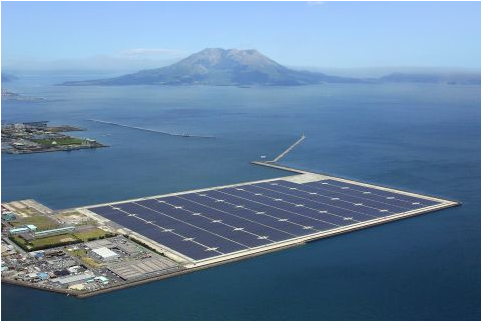
Nearly 300,000 offshore solar panels will provide enough power for 22,000 homes as post-Fukushima Japan struggles with energy sources.
Kagoshima in southern Japan is known for its puffing volcano Sakurajima, green tea, and rocket launchpads. Now it has a new superlative — the country’s largest solar plant.
Smartphone maker Kyocera recently launched the Kagoshima Nanatsujima Mega Solar Power Plant, a 70-megawatt facility that can generate enough electricity to power about 22,000 homes.
The move comes as Japan struggles with energy sources as nuclear power plants were shut down after meltdowns hit Tokyo Electric Power Co.’s Fukushima plant in 2011.
Set on Kagoshima Bay, the sprawling Nanatsujima plant commands sweeping views of Sakurajima, an active stratovolcano that soars to 3,665 feet.
It has 290,000 solar panels and takes up about 314 acres, roughly three times the total area of Vatican City.
Kyocera established the facility with six other firms as well as a company to run the plant. It will sell electricity generated to the local utility, Kyushu Electric Power Co.
A Japanese government program that began in 2012 compels utilities to buy 100 percent of electricity from certain renewable energy power plants.
To spread its solar philosophy, the Kagoshima plant hopes to attract tourists, students, and other visitors to an observation room overlooking the installation, which joins other photovoltaic attractions in Japan such as the Sanyo Solar Ark.
If you can’t make it, check out the Japanese promo ad from Kyocera in the vid below.
KYOCERA THINKING ENERGY」歴史を変えるメガソーラー篇(30秒)
A Japanese prime ministerial envoy secretly promised to the United States that Japan would resume its controversial “pluthermal” program, using light-water reactors to burn plutonium, according to documents obtained by the Mainichi.
***
The revelation comes as Japan’s pluthermal project remains suspended in the wake of the Fukushima No. 1 Nuclear Power Plant disaster due to safety concerns. The fact that a Japanese official promised to the U.S. to implement such a controversial project without a prior explanation to the Japanese public is expected to stir up controversy.
***
Under the pluthermal plan, spent nuclear fuel generated in light-water reactors is reprocessed to extract plutonium, which is then mixed with uranium to create mixed-oxide (MOX) fuel for use in power generation. However, many experts have raised questions about the program, citing its high costs and the risks posed by the fuel’s comparatively low melting point and the decreased effectiveness of control rods.
***
The documents that the Mainichi obtained are a compilation of cables recording the Ogushi-Poneman talks in the U.S. on Sept. 12 last year. During the meeting, Ogushi explained that Japan would inject all available policy resources to break away from nuclear power generation in the 2030s, that it would steadfastly promote the nuclear fuel cycle program in the medium and long term….
***
Despite the country not knowing which nuclear reactors will be authorized to resume operations following the July implementation of the new regulatory standards, the government has been pushing ahead with its plans to restart the controversial pluthermal program.
“It is abnormal for sure,” said one official with the Agency for Natural Resources and Energy. “But it can’t be helped if the Rokkasho plant is to be put into operation.”
The former Japanese Ambassador to Switzerland – Mitsuhei Murata – said recently:
In the US there are 31 [sic] units the same type of that of Fukushima nuclear plant [23 are virtually identical to Fukushima]. So, if the accident be spread too far that really embarrasses the US. So that is why the crisis of Unit 4 has been toned down recently. The USA is actually the main reason.







 nuclear-news