Zevacor Molecular Awards IBA Contract to Build Only Commercial 70 MeV Cyclotron Dedicated to Medical Use in the United States
INDIANAPOLIS, Nov. 4, 2013 /PRNewswire/ —

Image source ; http://experimentsccb.ifj.edu.pl/?static=2
Zevacor Molecular, an independently owned healthcare firm that manufactures and distributes PET and SPECT radiopharmaceuticals, has purchased the first 70 MeV Cyclotron dedicated to medical use in the United States from Ion Beam Applications, S.A., (IBA).
The purchase of IBA’s Cyclone 70 is the first of several investments Zevacor is making to securethe future of nuclear medicine and molecular imaging. The 70 MeV Cyclotron is expected to be operational in the fall of 2016 and will help to stabilize the domestic supply of medical isotopes needed to diagnose and treat critical illnesses.
In addition to the cyclotron, Zevacor will also invest in significant infrastructure to create a new, state of the art manufacturing facility to house the Cyclone 70 as well as other cyclotrons and manufacturing equipment.A location is expected to be determined by the end of 2013.
“This is just the beginning,” said John Zehner, Executive Vice President and Chief Operating Officer, Zevacor Molecular. “With strategic investments like the purchase of the Cyclone 70, Zevacor and our partners will help hospitals improve the diagnosis and treatment of cancer, cardiovascular disease and other critical illnesses. Our goal is to support the current needs of the nuclear medicine and molecular imaging community and assist in the growth and development of new diagnostics and therapeutics.”
The main focus of the first 70 MeV Cyclotron will be the commercial manufacture of Strontium 82 to ensure ample, stable United States based supply of Strontium 82/Rubidium 82 generators for use in the diagnosis of cardiovascular disease. This important radiotracer has no current commercial supplier, and only has United States and foreign based supply from national labs.
Although the primary focus is the manufacture of Strontium 82, the Cyclone 70 is capable of producing a wide variety of other radionuclides for both research and clinical applications.
High thyroid cancer rates detected in Fukushima children – Audio
5 October 2013
A prominent former thyroid surgeon, who is also a veteran of the Chernobyl disaster, has told the ABC’s Foreign Correspondent program that the number of cancer cases in Fukushima are emerging faster than expected. However, another cancer specialist says the high rate is simply a product of widespread, sensitive screening, and no-one should be alarmed.
morsi defiant.
Source: AM | Duration: 4min 26sec
http://www.abc.net.au/news/2013-11-05/high-thyroid-cancer-rates-detected-in-fukushima/5069760
Transcript
TONY EASTLEY: One of the terrible legacies of the radioactive fallout from the Russian disaster at Chernobyl is now being visited upon people in Japan.
Researchers in Fukushima are uncovering higher than expected rates of thyroid cancer in children.
One prominent former thyroid surgeon – a veteran of the Chernobyl disaster – has told the ABC’s Foreign Correspondent program that the number of cancer cases in Fukushima are emerging faster than expected.
But another cancer specialist says that the high rate is simply a product of widespread, sensitive screening and no-one should be alarmed.
The ABC’s North Asia correspondent Mark Willacy reports from Fukushima.
(Sound of child crying)
MARK WILLACY: Two-year-old Yuta Koike is having none of it. Every time the nurse tries to run the probe over his neck he cries, kicks, and tries to slide off the bed.
His mother, Tomoko Koike, has brought Yuta and his four-year-old sister Saki in for a thyroid gland screening because she fears the fallout from the nearby Fukushima nuclear plant.
(Sound of Tomoko Koike speaking in Japanese).
“I am worried,” she tells me, “but I believe they’re okay. I am hoping they’re okay,” she adds.
Before the nuclear meltdowns, health authorities estimated thyroid cancer rates among Fukushima’s children at between one and two cases in every million.
Since the disaster the Fukushima local government has carried out a large-scale screening program and with about 200,000 children tested, there have been 18 confirmed cases of thyroid cancer and 25 more suspected cases – an unexpectedly high rate.
Akira Sugenoya is the mayor of Matsumoto City in Nagano but he’s also a respected thyroid surgeon who spent five years treating children in Ukraine and Belarus who developed thyroid cancer after the Chernobyl disaster.
(Sound of Akira Sugenoya speaking in Japanese).
“When I look at Fukushima now the number of thyroid cancer cases in kids is quite high,” says Dr Sugenoya. “The doctors in Fukushima say that it shouldn’t be emerging this fast, so they say it’s not related to the accident. But that’s very unscientific, and it’s not a reason that we can accept,” he says.
But other experts believe there’s nothing to fear.
GERALDINE THOMAS: Following Fukushima I doubt that there’ll be any rise in thyroid cancers in Japan.
MARK WILLACY: Professor Geraldine Thomas is a specialist in the molecular pathology of cancer at Imperial College London.
She also helped establish the Chernobyl Tissue Bank, which analyses samples from people exposed to radiation after the nuclear disaster in 1986.
She argues that there’s a simple reason for the higher than expected incidence of thyroid cancer among Fukushima’s children.
GERALDINE THOMAS: If you look for a problem, especially if you use an incredibly sensitive technique, which is what the Japanese are actually doing, you will find something.
Fukushima radiation reaching Alaskan coast, but it’s not being measured
 Radiation from Japan nuclear plant arrives on Alaska coast http://www.cbc.ca/news/canada/north/radiation-from-japan-nuclear-plant-arrives-on-alaska-coast-1.2335668 Scientists concerned about lack of monitoring plan CBC News Nov 02, 2013 Scientists at the University of Alaska are concerned about radiation leaking from Japan’s damaged Fukushima nuclear plant, and the lack of a monitoring plan.
Some radiation has arrived in northern Alaska and along the west coast. That’s raised concern over contamination of fish and wildlife. More may be heading toward coastal communities like Haines and Skagway.
Douglas Dasher, a researcher at the University of Alaska Fairbanks, says radiation levels in Alaskan waters could reach Cold War levels.”The levels they are projecting in some of the models are in the ballpark of what they saw in the North Pacific in the 1960s,” he said.
John Kelley, a professor emeritus at the University of Alaska Fairbanks, says he’s not sure contamination will reach dangerous levels for humans but says without better data, who will know? “The data they will need is not only past data but current data, and if no one is sampling anything then we won’t really know it, will we?
“The general concern was, is the food supply safe? And I don’t think anyone can really answer that definitively.” He says much of the monitoring is being done pro bono by universities, NGOs and state organizations.
Certainty of nuclear disaster in Europe within next 30 years
Study on IAEA website: Core meltdown risk now around 1,000% higher because of Fukushima — Engineer: Nuclear disaster “a certainty” over next 30 years in Europe http://enenews.com/study-iaea-website-core-meltdown-risk-around-1000-higher-because-fukushima-engineer-nuclear-disaster-certainty-next-30-years-europe
Title: How did Fukushima-Dai-ichi core meltdown change the probability of nuclear accidents?Title: How did Fukushima-Dai-ichi core meltdown change the probability of nuclear accidents?
Source: Available from the INIS Liaison Officer for France
Authors: Escobar Rangel, Lina; Leveque, Francois
Date: October 2012
How to predict the probability of a nuclear accident using past observations? What increase in probability the Fukushima Dai-ichi event does entail? […] We find an increase in the risk of a core meltdown accident for the next year in the world by a factor of ten owing to the new major accident that took place in Japan in 2011. […]
Two months after the fukushima Dai ichi meltdown, a French newspaper published an article coauthored by a French engineer and an economist1. They both argued that the risk of a nuclear accident in Europe in the next thirty years is not unlikely but on the contrary, it is a certainty. They claimed that in France the risk is near to 50% and more than 100% in Europe. […]
The Fukushima Dai-ichi results in a huge increase in the probability of an accident. […]
The Fukushima Dai-ichi effect of [delta] 43 could appear as not realistic. In fact, at first glance the triple meltdown seems very specific and caused by a series of exceptional events. For most observers, however, the Fuskushima Dai-ichi accident is not a black swan. […] It has also been ignored by the nuclear safety agency NISA because as well-demonstrated now the Nippon agency was captured by the nuclear operators (Gundersen (2012)). [Gundersen, A. (2012), The echo chamber: Regulatory capture and the fukushima daiichi disaster, Technical report]
[…] Unfortunately, it is likely that several NPPs in the world have been built in hazardous areas, have not been retrofitted to take into account better information on natural risks collected after their construction, and are under-regulated by a non-independent and poorly equipped safety agency as NISA. […] a massive release of radioactive elements from a nuclear power plant into the environment is no longer a risk limited to a few unstable countries where scientific knowledge and technological capabilities are still scarce. […] View the study here
Nuclear Regulatory Commission’s “Waste Confidence” rule is indeed a “con”
Of greatest concern are Limerick’s fuel pools, already packed beyond design capacity, and dangerously vulnerable to meltdowns with potential for unthinkable health and economic devastation. Limerick’s two fuel pools hold more than two and a half times the amount of fuel rod assemblies (6,200) than four fuel pools at Fukushima (2,400) and far more than other older U.S. nuclear plants like TMI and Oyster Creek. NRC can’t or won’t tell ACE why.
Shedding light on NRC’s nuke waste con game http://www.pottsmerc.com/opinion/20131101/op-ed-shedding-light-on-nrcs-nuke-waste-con-game 10/31/13,
Evan Brandt’s article on Oct. 5, “Gov’t Shutdown May Delay Relicensing of Limerick Nuke Plant”, explained that NRC’s 2012 court-ordered spent fuel study would be delayed by the 2013 government shutdown. Actually, the government shutdown shed light on NRC’s nuke waste con game.
There is NO safe solution for radioactive fuel rods that can remain radioactive for a million years (EPA). They’re among the deadliest materials on earth. Yet, NRC’s “Nuclear Waste Confidence” game makes unsubstantiated claims that high-level radioactive wastes can be stored safely, soundly, and securely, virtually forever. This applies to nuclear plant sites like Limerick and allows them to continue producing and piling up deadly radioactive wastes under the absurd pretense that there is a safe solution.

Unthinkable devastating health and economic consequences threaten our future whether stored in fuel pools, above ground casks, from reprocessing, or from dangerous transport to a central location. NRC’s assumptions are far-fetched and negligent, including that dry cask storage systems, structures, and components can and will be entirely replaced once per century. NRC fails to identify astronomical public costs or where funds would come from for expensive massive replacements forever. NRC irrationally assumes society is willing or able to pay such costs, even if replacement is possible.
It was insanity for NRC to even consider relicensing Limerick Nuclear Plant when there is no safe solution for its deadly radioactive wastes. Continue reading
Fukushima “aid” from French nuclear industry – calls radiation illnesses “psychological”
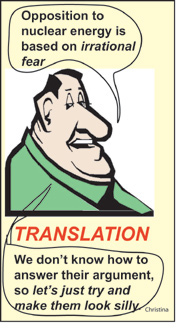
Chernobyl Children Fukushima Children The French nuclear industry establishes Fukushima “aid” programs right now, with co-support by Fukushima Medical University. The aim is: All Fukushima diseases are psychological and “pure panic reaction” – people overreact. NGOs who talk of danger are irrelevant and irresponsible. These “aid” programs work closely together with local government and are even supported by some anti-nuclear activists and vip’s – national and abroad. Scientists and journalists also cooperate. Meanwhile radioactive atoms remain invisible in breast milk, and bone sarcomas grow fast.
Germany’s grid copes with Renewable energy load – 59% of all energy produced
Germany Reaches 59% Renewable Energy Peak, Power Grid Doesn’t Blow Up http://www.the9billion.com/2013/10/30/germany-59-percent-renewable-energy-peak/ by JOHN JOHNSTON on 10/30/2013 Earlier this month on a very sunny and windy day, Germany managed to hit a peak of 59.1% renewable power generation, and what’s more, the heavily industrialized county’s power grid did not explode, Greentechmedia has pointed out. t was around midday on October 3, which just happened to be Germany’s annual Reunification Day holiday, when the sun was at its fullest and the significant peak was reached. Over the entire day, 36.4% of total electricity generation was achieved with solar and wind power; solar panels contributed 11.2% on their own. At its peak, solar accounted for 20.5 gigawatts.
Although the electrical grid withstood the large amount of renewable energy flowing to it, you’ll be pleased to know that electricity prices also dived. A drop in demand from big, conventional power plants led the electricity price index at 2:00pm to 2.75 cents per kilowatt hour. The index covers Germany, Austria, France, and Switzerland.

So there you have it. A country and large and industrialized as Germany can and did operate successfully, albeit on a national holiday, using a large percentage of renewable energy. And this is only the beginning.
How badly Hansford nuclear whistleblower was treated
 Shocking Treatment of US Nuclear Whisteblowers: Sent to office in basement with rat poison after warning of Fukushima-like explosion — Another given office in storage room with drums of radioactive waste and asbestos soon after having chemotherapy (VIDEO) http://enenews.com/shocking-treatment-of-us-nuclear-whisteblowers-sent-to-office-in-basement-with-rat-poison-after-warning-of-fukushima-like-explosion-another-given-office-in-storage-room-with-drums-of-radioactive-w
KING 5 News,, Nov. 1, 2013: Hanford whistleblower: ‘I was now the enemy’ […] [Dr. Walt] Tamosaitis determined that the mixers, as designed, would not be able to mix the waste sufficiently, posing a risk that heavy radioactive elements would collect at the bottom of the tanks and begin a nuclear chain reaction. The reaction, in turn, would generate large amounts of explosive hydrogen gas (a similar hydrogen build up at the Fukushima nuclear plant in Japan caused large explosions after the 2011 Tsunami damaged that facility). […] “The worst case scenario would be a criticality and trapping of hydrogen gas which could lead to a hydrogen explosion,” said Tamosaitis. […] URS moved Tamosaitis to another building where he was assigned to a makeshift office in the basement. He sat alone in a cramped space full of storage boxes, rat poison feeders and copy machines. He was not assigned any work and had no boss to report to. “The message was, ‘Don’t do what Walter did. Don’t raise issues. Shut up (and) do what we say,’” said Tamosaitis. […] The Defense Nuclear Facility Safety Board and the Government Accountability Office both issued reports highlighting Tamosaitis’ work. And in early 2012 Energy Secretary Steven Chu ordered a halt to WTP construction. Continue reading
Greenland Sea has warmed 10 times faster than global ocean
 “We have to keep in mind, that 90 per cent of all this warming that we are generating is accumulated in the ocean.”..
Study to focus on Arctic after Greenland Sea found to have warmed 10 times faster than global ocean ABC News, By Phoebe McDonald Sat 2 Nov 2013,Scientists have revealed plans to examine temperature changes in the Arctic Ocean after a long-term study found the Greenland Sea is warming 10 times faster than the global ocean.
Scientists from Germany’s Alfred Wegener Institute (AWI) analysed temperature data from the Greenland Sea between 1950 and 2010.
Their results show that during the past 30 years water temperatures between two kilometres deep and the ocean floor have risen by 0.3 degrees Celsius.
Dr Raquel Somavilla Cabrillo, AWI scientist and lead author of the study, says researchers are surprised by the results. Continue reading
Unanswered questions about proposed uranium mine in South Dakota
 Uranium mine hearings reveal questions about proposed project Rapid City Journal 3 Nov 13 After two weeks of public testimony, one thing has become clear about the proposed uranium mine that would operate near Edgemont: many things about the project remain unclear.
The process paperwork and permit applications …..
“It consists of nearly 80,000 pages of documents, very complex documents,” said Hickey, who represents the Black Hills Wild Horse Sanctuary. ,,,,,,
 As a pair of governor-appointed state permit boards decide whether to allow uranium mining to South Dakota, the stakes couldn’t be higher, and yet the issue couldn’t be murkier. As he testified at last week’s hearings, John Mays, vice president of engineering for Powertech, didn’t ease the concerns of opponents who worry over potential groundwater contamination.
Under questioning, Mays refused to commit Powertech to cleaning water in the mining area to its pre-mining condition. Mays said it was a primary goal, but not a requirement.
Nor would Mays specify what other heavy metals might be extracted along with uranium and then injected back into the aquifers.
Mays testified that only uranium and vanadium — another metal the company hopes to mine — are certain to circulate in and out of the ground. As for arsenic, selenium, molybdenum, and other potentially harmful metals, Mays wouldn’t say.
“What you’re telling this board is that you don’t really know what’s in that ore yet?” Bruce Ellison asked Mays. Ellison is an attorney for Clean Water Alliance, a group of mining opponents. “You haven’t done enough testing?” Continue reading
The Cold War very nearly brought global nuclear catastrophe
 “Even though the cold war ended more than 20 years ago, thousands of warheads are still actively deployed by the nuclear-armed states,” “We continue to face unacceptably high risks and will continue to do so until we have taken steps to abolish these exceptionally dangerous weapons.”.
 How a war game brought the world to the brink of nuclear disaster Former classified documents show how close the Soviet Union came to launching an attack in 1983 The Guardian, Jamie Doward The Observer, Sunday 3 November 2013 Chilling new evidence that Britain and America came close to provoking the Soviet Union into launching a nuclear attack has emerged in former classified documents written at the height of the cold war.
Cabinet memos and briefing papers released under the Freedom of Information Act reveal that a major war games exercise, Operation Able Art, conducted in November 1983 by the US and its Nato allies was so realistic it made the Russians believe that a nuclear strike on its territory was a real possibility. Continue reading
Iran’s supreme leader curbing hard liners against America
 Khamenei tells Iran’s hardliners not to undermine nuclear talks By Yeganeh Torbati 4 Oct 13, DUBAI (Reuters) – Iran’s supreme leader gave strong backing on Sunday to his president’s push for nuclear negotiations, warning hardliners not to accuse Hassan Rouhani of compromising with the old enemy America.
Ayatollah Ali Khamenei’s comments will help shield Rouhani, who has sought to thaw relations with the West since his surprise election in June, from accusations of being soft on the United States, often characterized in the Islamic Republic as the “Great Satan”.
Iran will resume negotiations with six world powers, including the United States, in Geneva on Thursday, talks aimed at ending a standoff over its nuclear work that Tehran denies is weapons-related. Rouhani hopes a deal there will mean an end to sanctions that have cut the OPEC country’s oil exports and hurt the wider economy, but any concession that looks like Iran is compromising on what it sees as its sovereign right to peaceful nuclear technology will be strongly resisted by conservatives.
“No one should consider our negotiators as compromisers,” Khamenei said in a speech, a day before the November 4 anniversary of the 1979 seizure of the U.S. Embassy in Tehran, a pivotal event in U.S.-Iranian relations, the ISNA news agency reported.
“They have a difficult mission and no one must weaken an official who is busy with work,” said Khamenei, who wields ultimate power in Iran’s dual clerical-republic system, including over the nuclear program. ENEMY WHO SMILES
Hardline factions, who oppose any thaw in relations with the United States, have criticized Rouhani’s negotiating team for not releasing details of the proposal they made to world powers at a previous round of talks in Geneva last month.
They have also resisted calls from moderate Iranian newspapers and prominent figures including former President Akbar Hashemi Rafsanjani to drop the “Death to America” chant, often heard at Friday prayers throughout Iran……..
In September, U.S. President Barack Obama insisted that the United States would “take no options off the table, including military options, in terms of making sure that we do not have nuclear weapons in Iran.” http://ca.news.yahoo.com/khamenei-tells-irans-hardliners-not-undermine-nuclear-talks-120352798.html
Climaye change denial specialists – the American Tea Party Republicans
 Tea party Republicans are biggest climate change deniers, new Pew poll finds WP, BY JULIET EILPERIN AND SCOTT CLEMENT November 1 Tea party Republicans are now the only group of Americans who think the Earth is not warming, according to a new poll by the Pew Research Center, with just 25 percent of tea party Republicans saying global warming is happening. By contrast, 67 percent of all Americans say there is evidence climate change is underway, including 61 percent of non-tea party Republicans.
Democrats and independents are more confident about global warming: 88 percent of Democrats and 62 percent of independents say there is solid evidence climate change has taken place over the past few decades.
Despite broad belief in warming overall, fewer than half the public believes human activity is to blame (44 percent), a number hardly changed from last year (42 percent). That’s despite a significant rise in the share of Americans who believe scientists generally agree the Earth is getting warmer because of human activity, from 45 percent last year to 54 percent now…….http://www.washingtonpost.com/blogs/the-fix/wp/2013/11/01/only-tea-party-members-believe-climate-change-is-not-happening-new-pew-poll-finds/?tid=hpModule_ba0d4c2a-86a2-11e2-9d71-f0feafdd1394
Renewable energy storage – a cheaper method
The Future Of Renewable Energy Can Now Be Found Inside A Shipping Container Sitting Off The I-95 Corridor BUSINESS INSIDER, ROB WILE NOV 2 2013, If you want to see the future of renewable energy in the U.S., you should check out the large container sitting next to a nondescript office building off the I-95 corridor in Maryland.
Inside of it is a system that helps solve one of the key problems in the renewable industry: how to store power for longer periods of time in an economical way……. The parts to focus on are the inverter, the batteries, and the transformer.
The inverter is used to convert the electricity generated by Konterra’s new rooftop solar panels, which come with the system, into a usable current to power either the building or the local grid. The battery, which is actually just an off-the-shelf lithium ion package, can be tapped by the local grid to temporarily charge or discharge excess power in the surrounding area.
Finally, the transformer can remove the Konterra building from the grid in case of a regional power outage, providing up to four hours-worth of backup supply. Current renewable storage set ups are pretty expensive. This system helps make it more economical………..http://www.businessinsider.com.au/konterra-solar-2013-11
Most of Nicaragua’s energy now comes from renewable sources
 Winds of Change: Nicaragua’s renewable energy revolution By Tim Rogers / Nicaragua Dispatch November 3, 2013 Nicaragua remains one of the most attractive countries in Latin America for investment in renewable energies, according to “Climatescope 2013,” an annual report and index measuring the ability of 26 nations to foster low-carbon energy growth.
The report, produced by the Inter-American Development Bank and Bloomberg New Energy Finance, ranks Nicaragua third in the region––and first in Central America––for its “high penetration of renewable energies in the country’s energy matrix and the important influx of investment (in renewable energies) in proportion to the small size of its economy.” Nicaragua, which ranked second to Brazil in last year’s inaugural report, ceded the number two spot to Chile in this year’s index, but continued to show its potential to compete with larger economies in the region.
According to the Climatescope 2013, Nicaragua’s installed capacity for renewable energies reached 36% last year, up from around 30% the year before. Nicaragua’s Ministry of Energy and Mines says that percentage has since grown to around 52% in 2013, meaning most of the country’s energy is now provided by renewable sources (compared to only 20% six years ago). Nicaragua last year attracted $292 million investment in additional renewable energy production, as the country seeks to shift its energy matrix to 92% renewable by 2016…….. http://www.nicaraguadispatch.com/news/2013/11/nicaragua-ranks-third-in-region-for-renewable-energy-market/8309
1 This Month

of the week – Shut Down Drone Warfare!


Tell the Ukrainian Government to Drop Prosecution of Peace Activist Yurii Sheliazhenko

Petition to revoke the licensing of the Near Surface Nuclear Disposal Facility (NSDF) at Chalk River. https://www.ourcommons.ca/petitions/en/Petition/Details?Petition=e-7247
To see nuclear-related stories in greater depth and intensity – go to https://nuclearinformation.wordpress.com
-
Archives
- April 2026 (103)
- March 2026 (251)
- February 2026 (268)
- January 2026 (308)
- December 2025 (358)
- November 2025 (359)
- October 2025 (376)
- September 2025 (257)
- August 2025 (319)
- July 2025 (230)
- June 2025 (348)
- May 2025 (261)
-
Categories
- 1
- 1 NUCLEAR ISSUES
- business and costs
- climate change
- culture and arts
- ENERGY
- environment
- health
- history
- indigenous issues
- Legal
- marketing of nuclear
- media
- opposition to nuclear
- PERSONAL STORIES
- politics
- politics international
- Religion and ethics
- safety
- secrets,lies and civil liberties
- spinbuster
- technology
- Uranium
- wastes
- weapons and war
- Women
- 2 WORLD
- ACTION
- AFRICA
- Atrocities
- AUSTRALIA
- Christina's notes
- Christina's themes
- culture and arts
- Events
- Fuk 2022
- Fuk 2023
- Fukushima 2017
- Fukushima 2018
- fukushima 2019
- Fukushima 2020
- Fukushima 2021
- general
- global warming
- Humour (God we need it)
- Nuclear
- RARE EARTHS
- Reference
- resources – print
- Resources -audiovicual
- Weekly Newsletter
- World
- World Nuclear
- YouTube
-
RSS
Entries RSS
Comments RSS
 nuclear-news