‘Japanese government doesn’t give enough money for nuclear cleanup’
14 October 2013
Radiation levels in seawater outside one of the crippled Fukushima reactors has spiked to the highest level in two years. That’s according to TEPCO, the operator of the Fukushima nuclear power plant. It said that radiation levels on Wednesday, the day six workers were exposed to highly radioactive water, jumped 13 times the previous day’s reading. A TEPCO spokesman said that the sudden spike in radiation was caused by construction work near the No. 2 building.
This week’s significant spike in radiation levels is seen as the latest setback for TEPCO. It has repeatedly been slammed for its handling of the nuclear disaster after a massive quake and tsunami that hit the Fukushima nuclear plant in March 2011, triggering three reactor meltdowns.
TEPCO, which is pouring hundreds of tons of water to keep reactors cool, has struggled to contain the build-up of radioactive water at the plant.
In the latest incident, six workers were exposed to radiation after a pipe connected to a contaminated water treatment system was mistakenly detached. As a result, at least 7 tons of contaminated water escaped the system.
Meanwhile, Japanese officials have said that there is no environmental threat to other countries as radiation will be diluted by the sea. Tokyo, despite lingering concerns over the long-term safety situation at Fukushima, was selected last month to host the 2020 Olympic Games.
The Voice of Russia spoke with Arnie Gundersen, Chief Engineer at Fairewinds Energy Education, on this issue.
Does everyone really understand the real troubles posed by Fukushima disaster? Is there anything else to discover?
This is a problem that doesn’t seem to go away. And there are 3-4 pieces to it. There is buildup of order in thousand tanks, each tank has a thousand cubic meters of water in it and there is a thousand of those tanks, some of which are leaking directly into the ground. That is problem number one. But problem number two is that the building basements are also leaking and the building basements have lots of radiation left over from the meltdown 2 years ago. So, water flowing in from the ground is in contact with the radiation and now all the buildings on the site are highly radioactive as well. So, Tokyo Electric solution is to build a wall of ice all the way around the entire reactor about 2 km long but the problem is they won’t have it done for at least 2 years. So, the problems we are experiencing now are going to get worse over the next 2 years before Tokyo Electric can begin to turn the corner.
Is the wall of ice the best solution in this case or is there something that would work faster and more effectively?
I had proposed an idea 2 years ago that would have been better. I had proposed instead of keeping the water from leaking into the Pacific, the right solution is to keep clean water from leaking into the building. It is like having a bathtub. Tokyo Electric choice is to build the sides of the bathtub higher to keep the water in the bathtub. My solution is to turn the tap off and prevent the water from filling the tub in the first place. I was told 2 years ago that Tokyo Electric couldn’t afford that. But the solution they are proposing is much more costly. That really gets to the root of the problem. Your question is right on the mark. Tokyo Electric is not an engineering front and they have been asked to do engineering when in fact they’ve been an operating company. And on top of that they don’t have enough money, the Japanese government isn’t giving them enough for an adequate cleanup. So, you have an inadequate firm underfunded from the Japanese government and until those 2 problems get solved we will have leaks and building failures in the future.
How much of a risk is this for the rest of the world and why haven’t members of the worldwide community really stepped in to offer help, to offer funding and consulting services to help liquidate the disaster?
The Japanese government hasn’t asked for help and I don’t know whether that pride or fear that they might find out how bad things really are. Just last week Prime Minister Abe asked for help. But I’ve been contacted by three Americans firms who’ve gone over and bagged to give them their technology and they’ve been rebuffed by the Japanese. So, I really don’t believe that the Japanese want to have an adequate solution here because they can’t afford it. And on the environmental effects of the Pacific, we are contaminating the Pacific Ocean. There was some caesium in the ocean from bomb testing, from mainly the US and Russian programs but also others, but Fukushima is putting in 10 times more caesium than there was before the accident happened. And that is going to work its way up to food chain. The organisms on the bottom of the ocean will become contaminated and then those who eat that will be contaminated and ultimately it will show up in the top fish, the salmon and the tuna.
Read more: http://voiceofrussia.com/2013_10_14/Japanese-government-doesnt-give-enough-money-for-cleanup-after-Fukushima-disaster-expert-2649/
Fukushima nuclear plant: tourist attraction
Japanese critic issues controversial call for destroyed plant to be promoted for sightseeing.
By Toby Manhire In The Internaut
A Japanese philosophy professor and cultural critic has stirred up controversy with a call for Fukushima to be made a tourist attraction.
The best way to “make sure the memories of the disaster don’t fade away,” Hiroki Azuma tells the Asahi Shimbun, is promote the destroyed No 1 Nuclear Power Plant as “a sightseeing spot”.
He proposes that a nearby disused sports facility should be converted into “an immense visitor centre for both amusement and education”, which would “allow people to tour the plant as the cleanup work continues”.
Opponents say that Azuma has no personal stake in the fate of Fukushima, and so should avoid “butting in”, reports the newspaper.
But he contends that Chernobyl, which eventually developed a museum and embraced visitors after years of “dark tourism” shows the value of such an approach.
It wasn’t about “building a theme part on a disaster site,” he tells the Asahi Shimbun, but encouraging “a complete disclosure of information”.
The UK Daily Telegraph in a report from August, has more detail on the proposal supported by Azuma:
Tourists will be able to check into hotels that have been constructed to protect guests from elevated levels of radiation that are still to be found in pockets in the area. The village will also have restaurants and souvenir shops, as well as a museum dedicated to the impact the disaster has had on local people …
Dressed in protective suits and wearing respirators, tourists will be able to take photos of the shattered reactor buildings and the workers who are still trying to render the reactors safe.
It wasn’t about “building a theme part on a disaster site,” Azuma tells the Asahi Shimbun, but encouraging “a complete disclosure of information”.
For the survivors of the 2011 earthquake and tsunami, he says, “their greatest fear is that memories of the accident will fade”, while they note “the therapeutic effort and self-affirmation talking about their experience in the disaster gave them”.
And the import goes wider than that, he says. A tourist attraction also operates as a sort of warning. “This accident doesn’t just affect Fukushima, it affects all of humanity.”
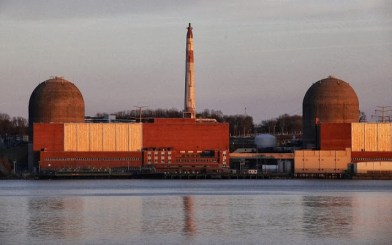
Fukushima on the Hudson: Could a nuclear accident happen near NYC?
Tuesday, 15 October 2013
New Nuclear Reactor Claims to be Meltdown-Proof but poor power output
By Joao Peixe |
Mon, 14 October 2013
The nuclear power industry has faced a tough time since March 2011, when an earthquake and tidal wave hit the Fukushima nuclear power plant causing a meltdown in three of its reactors. Many countries have lost interest in nuclear power, whilst others have increased the safety regulations regarding nuclear power plants.

In order to improve the safety of nuclear reactors, and reduce the chance of a meltdown, people have been researching and inventing new designs for producing energy from nuclear fusion reaction.
The NY Times has written an article detailing one idea that could become popular, that of Jose N. Reyes, co-founder and chief technology officer at NuScale Power. Who has designed a nuclear reactor that is so small, that if any problems were to occur, then the core would be small enough to cool on its own, in a fairly in a short space of time.
The reactor is basically just a mini version of reactors that are being built at traditional power plants across the US, which tower over 200 feet into the air and 120 feet in diameter. Reyes’ design, housed in a sealed container, would measure just 80 feet tall and 15 feet in diameter, producing approximately one twentieth of the power of normal reactors.
The compact size of the reactors allows them to be submerged in giant 10 million gallon tanks of water, which Reyes claims will reduce the chance of a meltdown to a thousandth of those of conventional reactors.
During a computer simulation, NuScale Power demonstrated that if a pump failed in the reactor and the water began to boil over, the steam would hit the walls of the container, which are kept permanently cool due to the giant water tank that it is submersed in, and then condense, and fall as water back down into the reactor chamber, cooling the reactor once more. They claim that this makes their reactor completely safe, and virtually immune to meltdowns.
Related article: How Our Inability to Calculate Risk Opened the Doors for Fukushima
NuScale Power has applied to the Nuclear Regulatory Commission (NRC) for a permit to begin production, one day hoping to begin commercial sales in the US. Unfortunately achieving a license to produce the reactors could cost as much as $1 billion.
Some critics have claimed that even with a license from the NRC, the designs may prove worthless. The tiny size of the reactors means that they produce far less power, so investors need to be convinced that this design will require less stringent containment structures, smaller evacuation zones, and fewer personnel to operate them. If not, then economies of scale suggest that building larger reactors will be more profitable.
By. Joao Peixe of Oilprice.com
40% of Japanese nuclear export parts have not had safety checks
TOKYO —
Oct. 15, 2013
Japan neglected carrying out safety checks on at least 40% of nuclear reactor parts exported over a decade, a report said Monday, in the latest controversy to strike its troubled nuclear industry.
Nuclear reactor parts—including pressure vessels which contain the fuel in power plants—worth about 51.1 billion yen ($520 million) were shipped to 17 countries, as well as Taiwan, without undergoing safety checks, the Mainichi Shimbun newspaper reported.
Britain, Germany, Australia, Russia and Italy were among the countries that took delivery of the potentially unsafe equipment, the daily said, citing manufacturers and an industrial body among its sources.
Japan exported nuclear reactor parts worth 124.8 billion yen to more than 20 countries from 2003-2012, the Mainichi Shimbun said, citing official trade figures.
But safety checks, entailing simple examinations of documents, were only required for exports tied to loans from the state-run Japan Bank for International Cooperation or guarantees by the public agency Nippon Export and Investment Insurance, the daily said.
The unchecked parts included reactor pressure vessels shipped to Taiwan in 2004 and control rod drives, which regulate the rate of nuclear fission, supplied to Sweden and Brazil, Mainichi said.
The rest of the exports are thought to have undergone government safety checks before being shipped to China, the United States, France, Belgium and Finland, the daily said, citing the country’s Agency for Natural Resources and Energy.
But much of the data disclosed by the agency was blacked out, raising the possibility that those exports may too have been shipped without being checked, Mainichi said.
Safety has been a huge concern for Japan’s nuclear industry since a massive earthquake and tsunami ravaged the country’s northeast coast and triggered a meltdown at the Fukushima nuclear power plant in March 2011.
But the country has continued overseas sales of nuclear reactor technology, with Prime Minister Shinzo Abe assuring buyers the industry is among the world’s safest.
1 This Month


Tell the Ukrainian Government to Drop Prosecution of Peace Activist Yurii Sheliazhenko

Petition to revoke the licensing of the Near Surface Nuclear Disposal Facility (NSDF) at Chalk River. https://www.ourcommons.ca/petitions/en/Petition/Details?Petition=e-7247


of the week – STOP SMALL MODULAR REACTORS IN CANADA
To see nuclear-related stories in greater depth and intensity – go to https://nuclearinformation.wordpress.com
-
Archives
- March 2026 (204)
- February 2026 (268)
- January 2026 (308)
- December 2025 (358)
- November 2025 (359)
- October 2025 (376)
- September 2025 (258)
- August 2025 (319)
- July 2025 (230)
- June 2025 (348)
- May 2025 (261)
- April 2025 (305)
-
Categories
- 1
- 1 NUCLEAR ISSUES
- business and costs
- climate change
- culture and arts
- ENERGY
- environment
- health
- history
- indigenous issues
- Legal
- marketing of nuclear
- media
- opposition to nuclear
- PERSONAL STORIES
- politics
- politics international
- Religion and ethics
- safety
- secrets,lies and civil liberties
- spinbuster
- technology
- Uranium
- wastes
- weapons and war
- Women
- 2 WORLD
- ACTION
- AFRICA
- Atrocities
- AUSTRALIA
- Christina's notes
- Christina's themes
- culture and arts
- Events
- Fuk 2022
- Fuk 2023
- Fukushima 2017
- Fukushima 2018
- fukushima 2019
- Fukushima 2020
- Fukushima 2021
- general
- global warming
- Humour (God we need it)
- Nuclear
- RARE EARTHS
- Reference
- resources – print
- Resources -audiovicual
- Weekly Newsletter
- World
- World Nuclear
- YouTube
-
RSS
Entries RSS
Comments RSS
 nuclear-news