Breaking! Manmohan Singh`s Nuclear Gamble: Now a political liability – Video
NDTV
Inside Story
19 September 2013
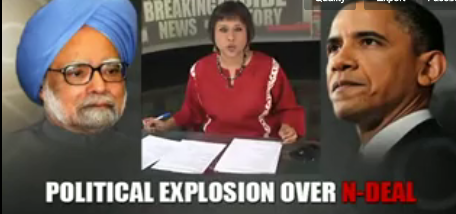
The political opposition in India are rebelling against prime minister Singh`s proposals to ignore Indian law concerning nuclear liability/insurance costs.. A raging discussion is breaking out in India concerning this matter (In English – first 90 seconds of video approx)
http://www.dailymotion.com/video/x14wtt7_prime-minister-s-nuclear-gamble-a-lost-legacy_news
Two years on: How nuclear sells itself post-Fukushima
LONDON (Reuters) –
http://www.firstpost.com/world/two-years-on-how-nuclear-sells-itself-post-fukushima-1121567.html
(Additional reporting by Alissa de Carbonnel in Moscow; editing by Keiron Henderson)
18 September 2013
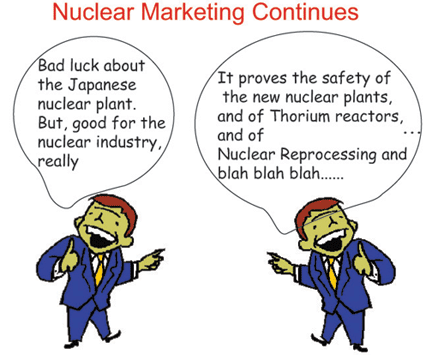
Two years after catastrophe at Japan’s Fukushima plant, sellers of atomic reactors woo potential buyers with the promise that lessons learned from one of the world’s worst nuclear disasters make the technology safer than ever.
The March 2011 earthquake and tsunami triggered meltdowns and radiation leaks at the plant, 150 miles (240 km) northeast of Tokyo, causing widespread contamination and prompting mass evacuations. The shockwave through the nuclear industry has not subsided and Fukushima plant owner Tepco is still struggling to contain the consequences.
Last month the firm said new spots of high radiation had been found near storage tanks holding highly contaminated water, raising fear of fresh leaks. Barbara Judge, a UK-based nuclear expert appointed by Tepco to improve its safety culture, says the disaster has made safety the top priority. “My opinion is that after Fukushima everything will be safer and that the safety agenda will be first in everyone’s minds,” she said In the aftermath of the accident many reactor developers reviewed their designs following government guidance and engaged in deep soul-searching that continues more than two years later.
Germany, with a traditionally anti-nuclear voting force, went as far as completely shunning nuclear power, vowing to switch off its nuclear fleet by the early 2020s. As a consequence of the political rethinking on nuclear power after Fukushima, companies such as France’s Areva (AREVA.PA), Toshiba’s Westinghouse unit or GE-Hitachi have seen orders dry up and costs for new plants explode due to additional safety requirements set by regulators.
At the end of 2010, 120 nuclear reactors were planned across the world.. By the end of last year this number had dropped to 102, according to statistics published by the International Atomic Energy Agency.
The International Energy Agency (IEA) also scaled back the 2035 nuclear capacity forecast by some 50 gigawatts in its latest World Energy Outlook due to policy changes. “The prospects for nuclear power worldwide have been clouded by the uncertainty surrounding nuclear policies after the Fukushima Daiichi accident in March 2011,” said IEA analysts in the outlook.
In a bid to win new business, nuclear reactor makers largely ignore references to the Fukushima accident in marketing material, and those who do refer to it say the event has made their designs safer. “Since March 2011, the context has changed, but the fundamentals remain the same,” Areva’s chief commercial officer, Tarik Choho, says in a statement in a brochure promoting the company.
Areva has long realised that chasing nuclear customers alone is not a sustainable business and has been selling renewable energy technology alongside nuclear reactors since 2006. Its stall at the London-based annual conference of the World Nuclear Association last week had a picture of an offshore wind turbine that caught the eye before images of its nuclear plants.
In two bold examples showcasing how costly it is to build new reactors, Areva’s European Pressurised Water Reactor (EPR) projects in Finland and in its home market in France are billions of euros over budget and years behind schedule. “
Utilities worldwide are increasingly required to reduce emissions, while adapting to regional resources and producing profitable, competitive electricity – with the utmost safety,” he said.
UK Office of Nuclear Regulation grants nuclear site licence for new Hinckley NPP to EDF
19 September 2013
“Although a significant step, it is important to note that granting a nuclear site licence does not constitute permission to start construction of nuclear safety-related plant. That requires permission from ONR, permits from the Environment Agency and planning consent from the Secretary of State.”

The licence has been granted to NNB Generation Company (NNB GenCo), which wants to build a new nuclear power station at Hinkley Point in Somerset.
It represents a significant amount of work by the UK’s independent nuclear regulator – the result of more than three years and the equivalent of 6000 days spent engaging with and assessing NNB GenCo’s suitability, capability and competence to hold a nuclear site licence.
HM Chief Nuclear Inspector Mike Weightman said:
“To get us to this point, ONR’s experienced, expert assessors have been assessing the adequacy of NNB GenCo’s organisation, its arrangements for complying with conditions attached to the licence, the suitability of the site and NNB GenCo’s ability to prepare a safety report for the proposed installation at Hinkley Point C.”
“Although a significant step, it is important to note that granting a nuclear site licence does not constitute permission to start construction of nuclear safety-related plant. That requires permission from ONR, permits from the Environment Agency and planning consent from the Secretary of State.”
“Granting a nuclear site licence enhances our regulatory control of the activities associated with designing and constructing nuclear facilities. NNB GenCo will now be required to comply with 36 conditions attached to a nuclear site licence. These conditions provide ONR with the necessary regulatory powers to ensure the protection of people and society from the hazards associated with such nuclear power generation.”
NNB GenCo is proposing to build two UK European Pressurised Water Reactors (EPR) at Hinkley Point C and in parallel with its assessment of the site licence application; ONR is working with the Environment Agency to assess the generic design of this reactor.
Both regulators, through a process called generic design assessment (GDA), issued interim acceptance for the UK EPR design in December 2011. Subject to the receipt of necessary information from the designers to close a number of issues, they could make a decision on granting final acceptance before the end of this year. The reactor nuclear island cannot be built in the UK until these issues are resolved.
Having completed the planned assessment of NNB GenCo’s site licence application ONR has today published a project assessment report on its website explaining its decision to grant a nuclear site licence in more detail.
AUDIO: No way to get at Fukushima’s molten nuclear fuel, no solution known
 Today on Your Call: How concerned should we be about Fukushima? http://kalw.org/post/today-your-call-how-concerned-should-we-be-about-fukushima
Today on Your Call: How concerned should we be about Fukushima? http://kalw.org/post/today-your-call-how-concerned-should-we-be-about-fukushima
NPR: How can Fukushima’s molten fuel be contained so it stops contaminating the planet? Nuclear Expert: There’s no way to get at molten fuel… I’ve not seen a solution to this (AUDIO) http://enenews.com/nuclear-expert-melted-fukushima-fuel-solution-problem-audio
Title: How concerned should we be about Fukushima?
Host: Rose Aguilar
Date: Aug. 29, 2013 Kevin in Felton, California: Considering the fact that the containment buildings and vessels are breached, that the floors of the structures are breached — What methodology exists to actually re-establish containment of this burned fuel, so that they can then control the water leakage that’s contaminating the planet? How are they going to re-establish a seal around this burned fuel? […]
Arjun Makhijani, Nuclear expert and President of Institute for Energy and Environmental Research: To the caller’s question, the main problem of the molten fuel at the bottom of the reactor — that is going to much more intractable, because, as I said, the infrastructure on the site has been destroyed, and how they’re going to get at that molten fuel and actually extract it, at least I have not seen any reasonable solutions to this problem.
See also: UC Berkeley Nuclear Professor: Work to go on for thousands of years at Fukushima site if they can’t retrieve melted fuel (AUDIO)
Melting through reactor floors – Fukushima’s molten nuclear fuel cores
 Nuclear Expert: We believe molten fuel already melted through floors of Fukushima reactor buildings, or is still in process of melting through (AUDIO) http://enenews.com/nuclear-expert-believe-molten-fuel-already-melted-floors-fukushima-reactor-buildings-process-melting-audio
Title: THE DEEPENING CRISIS AT FUKUSHIMA
Source: Green Power and Wellness
Host: Harvey Wasserman
Date: Aug. 12, 2013
Harvey Wasserman, host: We don’t even know where these cores are, do we? That’s a really amazing situation.
Gordon Edwards, nuclear expert and president of the Canadian Coalition for Nuclear Responsibility: That’s correct. What’s happening is, how far these cores have penetrated through the floor of the reactor building, or not, is really unknown because the radiation levels are so intense, that not only can humans not go in there […] but even robots that they sent in there, the gamma radiation is so intense that it fries the electronic components after a few minutes. So the robots are of only very limited use for a short time.
The result is they just don’t know what the state is, but we believe that the molten core has melted through the bottom of the containment vessel, it’s onto the floor, and it’s probably either melted through the floor, or is in the process of melting through the floor… Units 1, 2, and 3. Now some of those units are perhaps in worse condition than others.
No nuclear weapons for Iran: President Rouhani
 Rouhani says Iran will never develop nuclear weapons: NBC
  interview (Reuters) Reporting By Matt Spetalnick; Editing by Christopher Wilson and Xavier Briand, 18 Sept 13, – Iranian President Hassan Rouhani said in a television interview on Wednesday that his government would never develop nuclear weapons and that he has full authority to negotiate a nuclear deal with the West, NBC News reported.
Speaking to the U.S. network at his presidential compound in Tehran, Iran’s new president also said the tone of a letter he had received from President Barack Obama, part of a recent exchange of messages between the two leaders, was “positive and constructive.”
“It could be subtle and tiny steps for a very important future,” Rouhani said, in another sign that he may be seeking a thaw between Iran and the West after years locked in a standoff over Tehran’s nuclear program.
Rouhani’s comments came just six days before he will be in New York to address the U.N. General Assembly, a speech that will be closely watched for fresh diplomatic overtures.
Echoing what Iranian leaders have said before, Rouhani was quoted by NBC as declaring that his government would “never develop nuclear weapons” under any circumstances………
Since Rouhani was elected president in June, the centrist cleric has called for “constructive interaction” with the world, a dramatic shift in tone from the fiery anti-Western rhetoric of his predecessor, Mahmoud Ahmadinejad……..http://www.reuters.com/article/2013/09/18/us-iran-nuclear-rouhani-idUSBRE98H11S20130918
Manmohan Singh tries to kow tow to USA on Nuclear Liability Law
Since 17(b) suggests Parliament intended to hold suppliers responsible even if there is no contractual liability, it is not clear how a public sector undertaking like NPCIL, which is answerable to Parliament, could give its suppliers a free pass.
 Manmohan may carry nuclear liability dilution as gift for U.S. companies THE HINDU, SANDEEP DIKSHITJ. VENKATESAN It is for operator to exercise ‘right of recourse’ under section 17 of Civil Liability for Nuclear Damage Act
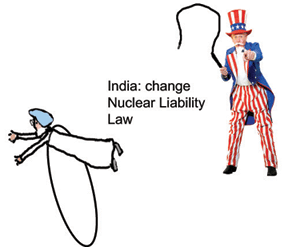
Under sustained pressure from the Obama administration, the Manmohan Singh government is looking to use the opinion of the Attorney- General to effectively neutralise a key provision of India’s nuclear liability law that would hold American reactor suppliers liable in the event of an accident caused by faulty or defective equipment.
In an opinion to the Department of Atomic Energy, which referred the matter to him on September 4, Goolam Vahanvati has said it is for the operator of a nuclear plant in India to decide whether it wished to exercise the ‘right of recourse’ provided to it by section 17 of the Civil Liability for Nuclear Damage Act.
The AG’s opinion effectively paves the way for the Nuclear Power Corporation of India Ltd, which will operate any nuclear plant using imported reactors, to repudiate a right that Parliament explicitly wrote into section 17(b) of the law to ensure that foreign suppliers don’t get away scot-free if a nuclear accident is traced back to “equipment or material with patent or latent defects or sub standard services.” Continue reading
Move away from nuclear power – Head of Japan’s Ministry of Economy, Trade and Industry METI

 Japan Govt. “Wants To Lower Dependence On Nuclear Power” http://www.fukuleaks.org/web/?p=11428 September 17th, 2013 Not what anyone expected to hear out of the current LDP government in Japan. The current head of METI made this statement to the press that Japan should lower their dependence on nuclear power. This is an unusual statement considering the utterly pro-nuclear agenda of the current government.
USA’s renewable energy progress races ahead in Western States
 US West Leads The Renewable Energy Way http://www.energymatters.com.au/index.php?main_page=news_article&article_id=3949 19 Sept 13, According to the American Council on Renewable Energy, western US states are leading the charge on good clean energy policy and investment and other regions in the nation need to follow their lead.
In the first instalment of its annual “Renewable Energy In The 50 States” report, ACORE reviewed the renewable energy policies, programs and investment environment in the 13 states that make up the Western Region, and judged the potential for future growth of the renewables sector.
Three more reports, focusing on the Midwest, Northeast, and the Southeast, are due for release in coming months.
The ACORE report found while all states had benefited from enhanced federal government support for wind, solar, and other renewable technologies over the last ten years, “In no part of the U.S. is this truer than in the West,” said Michael Brower, ACORE’s Interim President and CEO.
“With strong renewable portfolio standards (RPS), the political will to protect and/or expand them, and the nearly half of 2012’s new build asset finance for renewable energy, the West is far and away in the national renewable energy vanguard. America needs all the states in our three other regions to quickly follow their lead.” Continue reading
All things considered, renewable energy is cheapest source for Americans
Renewable energy now the cheapest option for Americans, study finds http://www.pv-magazine.com/news/details/beitrag/renewable-energy-now-the-cheapest-option-for-americans–study-finds_100012772/#ixzz2fN7x8IOZ 18. SEPTEMBER 2013 BY: IAN CLOVER
Clean energy sources such as solar and wind are more cost-effective than coal-fired power plants when health and climate impacts are factored in, according to Springer’s Journal of Environmental Studies and Sciences. Factor in the social, health and environmental costs caused by coal-fired power plants in the U.S. and clean energy is the cheaper option, according to a study published in Springer’s Journal of Environmental Studies and Sciences.
Based on official U.S. government estimates totting up the combined toll on health and the environment caused by the burning of fossil fuels, it is also cheaper to replace existing power plants with clean energy alternatives rather than keep the old plant running, added the study.
The journal further stated that America should not be reticent when it comes to replacing its coal-fired power with renewable power, stating that such a move would be cost-effective as well as environmentally friendly. Continue reading
A weapons proliferation threat: India’s nuclear submarine
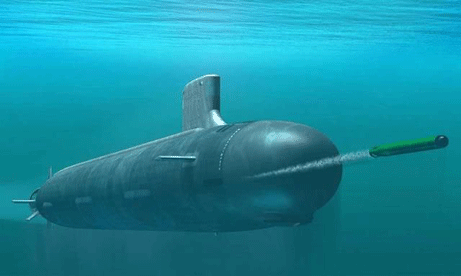 India’s Undersea Nuclear Deterrent Poses Proliferation Challenges WPR, By Yogesh Joshi, on 18 Sep 2013 Despite India’s graduation from outlier to tepidly accepted member of the global nuclear order, one area of New Delhi’s nuclear activities continues to raise alarm: its undersea nuclear deterrent. India unveiled its first nuclear submarine, the INS Arihant, in July 2009. Though the ship was largely indigenous, Russia helped in designing the miniaturized nuclear reactor. Just last month, the nuclear reactor in INS Arihant went critical, clearing the way for its final operational trials in the Bay of Bengal. India has designs to produce four to five nuclear submarines by the end of this decade. When integrated with nuclear-tipped sea-launched ballistic missiles (SLBMs), these submarines will provide India with an underwater nuclear deterrent capability.
This technical development has posed two new challenges to the nuclear nonproliferation regime. First, the highly enriched uranium (HEU) used in naval nuclear propulsion for India’s nuclear submarines could be diverted for weapons purposes. India has a dedicated enrichment facility for its naval nuclear program at Rattehali, and some of the uranium from this facility was used for India’s 1998 nuclear weapons tests. According to Princeton nuclear scientist and scholar M.V. Ramana, Rattehali has the capacity to produce 22 kilograms of 90 percent enriched uranium annually, or the equivalent of 40-70 kilograms of 45 percent enriched uranium. However, new analysis reveals (.pdf) that qualitative changes in India’s enrichment technology may have increased this capacity to 48 kilograms of 90 percent enriched uranium annually. This capacity is destined to grow as India prepares to launch more nuclear submarines in the future. ..(.subscrbers only) http://www.worldpoliticsreview.com/articles/13222/india-s-undersea-nuclear-deterrent-poses-proliferation-challenges
Ionising radiation is dangerous -that doesn’t prove that electromagnetic radiation is safe!
Doctors weigh in on dangers of Wi-Fi signal exposure http://www.fox5vegas.com/story/23465182/doctors-weigh-in-on-the-dangers-of-radiation-exposure Sep 18, 2013
Doctor Harold Naiman of Healthcare Partners Nevada said there are several potential dangers when it comes to using your laptop, iPad, tablet or other handheld devices like smart phones, explaining how these devices emit microwave radiation.
“This exposure is especially threatening to our children because of their developing brains and thinner skulls,” Naiman said. “We know that their heads are bigger than adults, relatively speaking, and are less dense so transmission can be increased, plus there’s a lot of brain marrow there.”
Naiman said studies have shown exposure can interfere with development, cause infertility in males and even contribute to memory loss and degenerative diseases like cancer. Continue reading
-
Archives
- February 2026 (228)
- January 2026 (308)
- December 2025 (358)
- November 2025 (359)
- October 2025 (376)
- September 2025 (258)
- August 2025 (319)
- July 2025 (230)
- June 2025 (348)
- May 2025 (261)
- April 2025 (305)
- March 2025 (319)
-
Categories
- 1
- 1 NUCLEAR ISSUES
- business and costs
- climate change
- culture and arts
- ENERGY
- environment
- health
- history
- indigenous issues
- Legal
- marketing of nuclear
- media
- opposition to nuclear
- PERSONAL STORIES
- politics
- politics international
- Religion and ethics
- safety
- secrets,lies and civil liberties
- spinbuster
- technology
- Uranium
- wastes
- weapons and war
- Women
- 2 WORLD
- ACTION
- AFRICA
- Atrocities
- AUSTRALIA
- Christina's notes
- Christina's themes
- culture and arts
- Events
- Fuk 2022
- Fuk 2023
- Fukushima 2017
- Fukushima 2018
- fukushima 2019
- Fukushima 2020
- Fukushima 2021
- general
- global warming
- Humour (God we need it)
- Nuclear
- RARE EARTHS
- Reference
- resources – print
- Resources -audiovicual
- Weekly Newsletter
- World
- World Nuclear
- YouTube
-
RSS
Entries RSS
Comments RSS
 nuclear-news