Leukemias near Nuclear Power stations: A preliminary critique of the new study – Ian Fairlie
Bithell et al September 2013.
Interim response

As many agencies and individuals have requested my comments, this is an initial response to the new Bithell et al study on childhood leukemias near nuclear power stations. Its methodology raises several questions to which answers are not yet available. This reply should therefore be viewed as interim.
Contrary to many other studies, the new report fails to find an increase in leukemias and non-Hodgkin lymphomas near nuclear power stations. However the authors admit that their negative findings are not statistically significant and that their study is statistically underpowered compared with many other studies, especially the powerful KiKK study, which do find increases. The normal rule is that weak epidemiological studies which are not strong enough to pick up effects should be careful about making negative conclusions, as this one does unfortunately.
Bithell et al (2013) (see references below) have published a new study on the numbers of cases of childhood leukaemia + non-Hodgkin lymphoma (LNHL) in Great Britain between 1962 and 2007. These were compared with matched controls and analysed by regression to estimate the risk of residential proximity to UK nuclear power plants (NPPs). The comparisons were made in two ways – by residence at the time of birth and by residence at the time of diagnosis.
The authors stated their results showed little evidence of an increase in risk of LNHL to children from living in the vicinity of 13 UK NPPs. In essence, the authors found 13 cases of LNHL among under fives living within five km of the UK NPPs. These 13 cases were fewer than the 14 matched controls near NPPs, so the authors concluded there was “little evidence of an increased risk”.
However there are several problems apparent with the new study.
First is the discrepancy between their observed 13 LNHL cases (residence at time of diagnosis) and the 20 LNHL cases found in the 14th COMARE report (COMARE, 2011). This is so even though their new study period (1962 to 2007) is 10 years longer than the 14th COMARE report (1969 to 2004). Other things being equal, the new study should have found more, not fewer, cancers.
I have contacted Dr Bithell about this and will amend this interim post in the light of his reply.
Second, the results of the new study are inconsistent with the very large number (over 60) of epidemiology studies of cancers near NPPs around the world, the large majority of which have found increased risks. These studies have been discussed by me previously (Fairlie, 2010).
In particular, the new study’s results conflict with several recent powerful studies including the German KiKK study (Kaatsch et al, 2008) which found increased risks. The authors themselves state that their derived risk estimates are incompatible with the KiKK risk estimates.
In addition, their results do not agree with a recent meta-analysis of four European studies (Körblein and Fairlie, 2012) nor with the COMARE 14 report itself which found a 22% increase in LNHL. Some discussion of possible reasons for this inconsistency with previous studies is necessary.
Third, there are several problematic technical points such as the authors’ use of “other cancers” instead of no cancers for the controls in their diagnosis analysis. This depends on their hypothesis (that there is no association between increased risks and proximity to NPPs) being true when it might not be true.
Fourth, the authors themselves admit their study is statistically underpowered, certainly when compared with the more powerful KiKK study. They also admit that their findings are not statistically significant. The usual rule is that weak epidemiological studies which are not strong enough to pick up effects should be careful about making negative conclusions. As Altman and Bland (1995) have stated, absence of evidence – as found in this study – should not be construed to mean evidence of absence.
More later.
References
Altman DG, Bland J. Absence of evidence is not evidence of absence. BMJ. 1995;311:485.
Bithell JF, M F G Murphy, C A Stiller, E Toumpakari, T Vincent and R Wakeford. (2013) Leukaemia in young children in the vicinity of British nuclear power plants: a case–control study. Br J Cancer. advance online publication, September 12, 2013; doi:10.1038/bjc.2013.560.
Bithell JT, Keegan TJ, Kroll ME, Murphy MFG and Vincent TJ. (2008). Childhood leukaemia near British Nuclear Installations: Methodological Issues and Recent Results. Radiation Protection Dosimetry. vol 45:1–7.
COMARE (2011) Committee on Medical Aspects of Radiation in the Environment Fourteenth Report. Further Consideration of the Incidence of Childhood Leukaemia Around Nuclear Power Plants in Great Britain. HMSO: London. (http://www.comare.org.uk/).
Fairlie I (2010) Hypothesis to explain childhood cancer near nuclear powerplants. Int J Occup Environ Health 16: 341–350.
Körblein A and Fairlie I (2012) French Geocap study confirms increased leukemiarisks in young children near nuclear power plants. Int J Cancer 131: 2970–2971.
Endless Fukushima catastrophe: Many generations’ health at stake 永遠に続く福島原発の大惨事; 何世代と続く健康被害
Tuesday, 17 September 2013
(Source)
http://rt.com/op-edge/fukushima-catastrophe-health-japan-803/
Dr Helen Caldicott is one of the most articulate and passionate advocates of citizen action to remedy the nuclear and environmental crises.

Image source ; http://www.architectsofpeace.org/architects-of-peace/helen-caldicott
Bio-accumulation of radioactive elements around Fukushima will devastate many future Japanese generations, while the Pacific Ocean is also being contaminated by leaking radioactive water. Yet there is still no good solution from the Japanese government.
[…]
Medical implications
Water in the bay beside Fukushima is highly contaminated with tritium, which is constantly increasing in concentration and now measures 4,700 Becquerels per liter – the highest level ever recorded in seawater. Furthermore a total of 20 to 40 trillion Becquerels of tritium have now been discharged into the Pacific Ocean –a Becquerel is one disintegration of radiation per second. Tritium is radioactive hydrogen, H3. It combines with oxygen to form tritiated water HTO, which is very dangerous. It emits an electron, or beta particle which, if lodged in the body, is very energetic.
Tritium combines within the DNA molecule inducing mutations. In numerous animal experiments tritium causes birth defects, cancers of various organs including brain and ovaries, and it induces testicular atrophy and mental retardation at surprisingly low doses. Tritium is organically taken up in food and is concentrated in fish, vegetables, and other food groups, and it remains radioactive for over 120 years. Ingestion of contaminated food causes 10 percent to combine in the human body where it can remain for many years continuously irradiating cells.
One of the main elements is cesium, a potassium mimicker, which concentrates in the heart, endocrine organs and muscles where it can induce cardiac irregularities, heart attacks, diabetes, hypothyroidism or thyroid cancer and a very malignant muscle cancer called rhabdomyosarcoma. Cesium remains radioactive for 300 years and concentrates in the food chain.
Another very dangerous element is strontium 90, which also is poisonous for 300 years. Analogous to calcium, it concentrates in grass and milk, then relocates into bones, teeth and breast milk where it can cause bone cancer, leukemia or breast cancer.
Amongst the many other radioactive elements which are almost certainly escaping into the sea is plutonium which lasts for 240,000 years and is one of the most potent carcinogens known, such that a millionth of a gram can cause cancer. Each reactor core contains 500lbs of plutonium, but Reactor 3 contains even more, because it also contained plutonium/uranium fuel rods which were placed inside the core as an experiment.
As plutonium resembles iron in the body, it induces cancers in the lung if inhaled, and also cancers in the liver, bone, testicle and ovary. As an iron analogue, it readily crosses the placenta causing severe birth deformities similar to those produced by the drug thalidomide. All radioactive elements which irradiate the reproductive organs will induce genetic mutations in the sperm and eggs, thereby increasing the incidence of genetic diseases over future generations such as diabetes, cystic fibrosis, hemophilia, hemochromatosis and 6000 others.
These are only several of over 100 deadly radioactive poisons polluting the Pacific Ocean and the air, each of which has its own pathway in the food chain and the human body. Radioactive elements are tasteless, odorless and invisible, and it takes many years for cancers and other radiation-related diseases to manifest – five to 80 years for most cancers.
Children are 10 to 20 times more sensitive to the carcinogenic effects of radiation than adults, fetuses are thousands of times more so. One x-ray to the pregnant abdomen doubles the likelihood of leukemia in the baby. Females are also more sensitive than men at all ages. Radiation is cumulative, there is no safe dose and each dose received by a person adds to the risk of developing cancer.
Of great concern is the fact that 18 cases of childhood thyroid cancer in children under the age of 18 have already been diagnosed and 25 more are suspected in Fukushima. This is a remarkably short incubation time for cancer, indicating that these children almost certainly received a very high dose of iodine 131 plus other carcinogenic radioactive elements that were and are still being inhaled and ingested.
Thyroid cancer in Chernobyl victims did not appear for four years. Thyroid cancer is rarely found in young children. Iodine 131 is radioactive for 100 days, and is a potent carcinogen. Iodine 129 on the other hand lasts millions of years.
Over 350,000 children still live and go to school in highly radioactive areas, and as juvenile thyroid cancers are arising, so the number of leukemia cases will start to increase about two years from now, with solid cancers of various organs diagnosed about 11 years later. These will increase in frequency for the next 70 -80 years.
Food in the contaminated zone will remain radioactive for hundreds of years because it will continue to bio-accumulate radioactive elements from the soil, thus ensuring that an increased incidence of cancer will devastate many future Japanese generations.
Medical doctors in Japan are reporting that they have been ordered by their superiors not to tell the patients that their problems are radiation related.
[…]
Posted by Mia
http://fukushimaappeal.blogspot.co.uk/2013/09/endless-fukushima-catastrophe-many.html
UNSCEAR is a mechanism for radiation damage cover up. DO NOT BELIEVE THEM.国連科学は放射能汚染による被害を隠蔽する機械のような団体 彼らの言うことを、信じないで!
Monday, 16 September 2013
posted by Mia [with some additions from Arclight2011 ]
http://fukushimaappeal.blogspot.co.uk/2013/09/unscaer-is-machinery-for-radiation.html
(Source)
In response to…

http://www.world-nuclear-news.org/RS_Fear_and_Fukushima_0309131.html

Abel J. González has worked in radiation protection for the last four decades, most recently as Director of Radiation, Transport and Waste Safety, the senior radiation safety official of the International Atomic Energy Agency (IAEA). Previously, in his native Argentina, he was a Director of the Argentine National Atomic Energy Commission and President of the Argentine Nuclear Power Plant Corporation. He is a founding member of the Argentine Radiation Protection Society.Mr González was a member of International Commission on Radiological Protection (ICRP) Committee 4 from 1978 to 2000 and is currently an ICRP commisioner, member of the ICRP Main Commission. He is one of the longest serving participants of the United Nations Committee on the Effects of Atomic Radiation (UNSCEAR). He is also member of the IAEA Commission on Safety Standards.
He has been honoured with a number of awards, notably: the IAEA Distinguished Service Award in recognition of his work for the International Chernobyl Project; the Morgan Award of the Health Physics Society (twice); the Lauriston S. Taylor Award of the National Council on Radiation Protection and Measurements; and, most recently, the Sievert Award for outstanding contributions to the field of radiation protection.
Mr. González graduated in 1964 from the University of Buenos Aires (UBA) with the highest diploma in engineering. In 1962, while still an undergraduate, he began his professional career as a staff member of the Argentine National Atomic Energy Commission (CNEA) specializing in the fields of radiation protection, safety of radioactive waste management and of radioactive materials transport, and related aspects of nuclear safety.
[And this upcoming meeting Dr Gonzales and friends – Arclight]
Invited speaker I: Dr. Abel J. Gonzalez (Argentina/NRA)
“Current Status of the Global Levels of Radiation Exposures”
|
Thursday, 10 October 2013 |
||
|
Time |
Agenda |
|
|
08.00 – 09.00 |
Registration desk open, set up for posters |
|
|
09.00 – 09.45 |
Opening session:
|
|
|
09.45 – 10.30 |
Keynote speaker: Malcolm Crick, Secretary, UNSCEAR
“The Works of the United Nations Committee on the Effects of Atomic Radiation”
|
|
|
10.30 – 10.45 |
Tea/Coffee Break |
|
|
10.45 – 11.30 |
Invited speaker I: Dr. Abel J. Gonzalez (Argentina/NRA)
“Current Status of the Global Levels of Radiation Exposures”
|
|
|
11.30 – 12.15 |
Invited Speaker II: Dr. Ohtsura Niwa (Japan/Emiritus Prof., Kyoto University)
“Estimating Radiation Risks in the Aftermath of
Fukushima Accident”
|
|
Departure of Abel González from ICRP
Main Commission member Academician Abel J. González has decided to leave ICRP after 36 years of membership. At the time of his departure, Abel was the longest serving member of ICRP. He joined Committee 4 in 1977, under Committee 4 Chair Henri Jammet (France). ICRP Chairman and Vice-Chairman at the time were Bo Lindell (Sweden) and Dan Beninson (Argentina). In 2001 Abel was elected to the Main Commission under ICRP Chairman Roger Clarke (UK), and he served as ICRP Vice-Chairman from 2008 to 2013.
His long and active service to ICRP will be honoured at a Gala Dinner on October 22, 2013, as part of the 2nd International Symposium on the System of Radiological Protection in Abu Dhabi.
http://www.icrp.org/page.asp?id=181
And Dr Gonzalez also has a much more detailed account of his work here.. He shared the 2005 Nobel Peace Prize with the IAEA for instance ,, Arclight2011
And there is this…
CONSEQUENCES OF CHERNOBYL WORSE THAN ASSUMED
At the last international meeting organised by the IAEA in 1991 on the consequences of Chernobyl, they concluded “future increases over the natural incidence of cancers or hereditary effects would be difficult to discern, even with large and well designed long term epidemiological studies”(The International Chernobyl Project, Assessment of Radiological Consequences and Evaluation of Protective Measures. Conclusion and Recommendations of a report by an international advisory committee, 1991.). This prediction has proved to be totally incorrect…..
In particular the Greenpeace report points to:* Increases in diseases, such as immune deficiencies, diseases of the digestive organs, cardiovascular systems and malignant tumours have all been noted in both some of those involved in the clean-up (800,000 so called “liquidators”) and some of those living in contaminated areas.* Several studies have showed a clear relationship between radiation dose and particular morbidity’s (e.g. malignant tumours) among liquidators. These findings are based on substantial epidemiological data and cannot be ignored.In addition to underestimating the health consequences serious errors have come to light in recent months regarding the total radioactivity released.
Since 1986 international experts have claimed that the total radioactivity released was around50 million curies. However in February this year the Nuclear Energy Agency(NEA), part of the Organisation for Economic Co-operation and Development (OECD) reviewed the discharge and established that 140 million curies was released.The figures for total land contaminated in the three republics most affected (Belarus, Russian and Ukraine) range from 100.000 to 160.000 square kilometres, with the cost to those countries estimated to rise to a staggering $300 billion, by 2015.To date an estimated 375 000 people have been relocated with a further 270 000 requiring evacuation due to the high radiation levels. In total at least 9 million people have been affected by the accident.
“It is difficult to comprehend the enormity of the Chernobyl accident” said Antony Froggatt of Greenpeace International, “
and ten years later the health, environmental and social costs have not yet peaked and are unlikely to do so for years if not decades”.Despite the massive media and public attention, the resources available to the United Nations Trust for Chernobyl have been exhausted and without further support from the international community the UN’s efforts will simply cease.http://www.witch.plus.com/chernobyl.html
五輪でJヴィレッジ活用を 楢葉町長「復興の後押しに」 Fukushima: Naraha-machi Governor, Mr. Matsumoto wanting J village to be used as a practice place for Tokyo Olympic
Sunday, 15 September 2013
Posted by Mia
http://fukushimaappeal.blogspot.co.uk/2013/09/fukushima-naraha-machi-governor-mr.html

Citizen symposium to challenge the UNSCEAR and WHO report deception – Tokyo
“Studies and surveys concerned with Fukushima should be shared with international radiation protection communities….”
“… The health examination for disaster victims is conducted only in Fukushima Prefecture; furthermore, the examination focuses thyroid cancer and checks a small number of health areas, and is conducted on an extremely limited number of population. Under the name of “communication opportunities with stakeholders including locals,” the International Commission on Radiological Protection (ICRP) is holding seminars that deliver one-sided views….” (see bottom of article for UNSCEAR links Arclight)

The Third Citizen–Scientist International Symposium on Radiation Protection – 2013.09.17 Tue
http://csrp.blog.fc2.com/blog-entry-44.html
This symposium aims at scientifically examining the health effects of exposure to radiation resulting from the Fukushima Daiichi Nuclear Power Plant disaster, and realizing the implementation of health protection measures
Since March 2011, we have been committed to minimizing damage and radiation exposure resulting from the Fukushima Daiichi Nuclear Power Plant disaster in our individual positions. Victims, children and citizens, who are concerned about radioactive contamination, demand the establishment of better radiation protection measures and radioactivity control measures. To satisfy these demands, we need to scientifically examine the health effects of radiation, a major part of which is unknown. The purpose of the Third Citizen–Scientist International Symposium, which will take place in October 2013 in Tokyo, is to provide citizen scientists from within and outside of Japan with an opportunity of discussing health effects from radiation and prevention measures, thus contributing to the establishment of an extensive international network for radiation protection. We would appreciate your cooperation.
The two-day symposium will include lecture sessions on day 1, October 13. On day 2, October 14, working sessions will be held in the morning and round-table sessions in the International Conference Room in the afternoon.
We plan to hold three working sessions. The planned themes of the working sessions are as follows:
Session 1. Biological effect and its mechanism
Session 2. Epidemiology and dose assessment
Session 3. Laws and rights for public health
Currently, the Japanese government is taking steady steps to restart nuclear power plants in Japan and to export Japanese nuclear power technologies to other countries. On the other hand, dozens of years is expected to be spent to settle the crippled Fukushima Daiichi Nuclear Power Plant reactors to a stable condition. It is said that we will need to wait 30 years until “stone coffins” for the crippled reactors, like the one covering the Chernobyl reactor, start to be built to enclose them. It is not certain we, who experienced the disaster, can see the completion of the coffins. At the Fukushima disaster site, no effective solutions have been found to handle the increasing volumes of contaminated water. Onsite workers, who are already immense in number and expected to increase further, are operating under extremely severe conditions, where they can be exposed to radiation. During the dozens of years spent to handle the crippled reactors, an adverse event may occur unexpectedly. Many people are concerned about the recurrence of the days when they will need to lead a life while fearing radiation.
In spite of these gloomy expectations, the Japanese government and the radiation experts hired by it say, in the guise of science, that low dose radiation hardly has effects on health, and are talking evacuees into returning to the areas whose yearly dose is determined to be under 20 mSv by the government and experts. The health examination for disaster victims is conducted only in Fukushima Prefecture; furthermore, the examination focuses thyroid cancer and checks a small number of health areas, and is conducted on an extremely limited number of population. Under the name of “communication opportunities with stakeholders including locals,” the International Commission on Radiological Protection (ICRP) is holding seminars that deliver one-sided views. The United Nations Scientific Committee on the Effects of Atomic Radiation (UNSCEAR) released a report telling “no health effects attributable to radiation exposure have been observed,” based on the dose estimates presented in discussion with the radiation experts designated as representatives by the Japanese government, supporting the Japanese government’s actions. The disguise used in Hiroshima and Nagasaki after the U.S. atomic bombing, in the three Chernobyl-hit countries which were formerly part of the Soviet Union, and in many sites of calamity where nuclear weapons were developed or tested, is being repeated here.
The Statute on Protection and Support for the Children and other Victims of Tokyo Electric Power Company Nuclear Power Plant Disaster (Children and Victims Protection Law) was established last year by the initiation of lawmakers recognizes the right of moving to prevent radiation exposure and specifies that the government should assume the responsibility of providing victims with health examinations during their entire lives, exempting them from medical care cost or otherwise reducing the cost, and organizing and promoting the surveys and studies of health effects. The report of the United Nations Human Rights Council recommends the implementation of the Children and Victims Protection Law in the areas where the extra yearly exposure dose is 1 mSv or higher. The report also indicates that the risk versus benefit assessment based on which the ICRP report was written prioritizes collective benefits over the rights of individuals and is not appropriate to examine the framework concerning health rights. However, the Japanese government postponed the establishment of the basic policies for the implementation of the Law for more than one year and thus neglected to designate the regions where the Law would take effect, and announced on August 30, 2013 that the Law would be implemented with a miscellany of conventional policies and measures, without incorporating the purposes of the Law or the wills of the lawmakers and victims. The government has been repeating the tremendous abuse of human rights.
The only way to resist such strong policies of trying to divide those who are suffering from the disaster is that citizens begin with measuring radiation and radioactivity by themselves, learning the scientific and medical knowledge of health effects, and come up with the measures for stopping the expansion of damage. If citizens expand their networks while learning with Japanese and international scientists and conducting surveys and actions together, we will eventually obtain great power. We expect that the Citizen–Scientist International Symposium will help achieving this goal.
The first Citizen–Scientist International Symposium was conducted in October 2011, immediately after the an international symposium on radiation and health risks was organized by the Nippon Foundation at the Fukushima Medical University in September 2011, six months after the Fukushima Daiichi disaster, to critically review the symposium. It assessed the Japanese government’s actions taken in response to the disaster, and pointed out the problem that the framework of the governmental health examination scheme, which was limited to Fukushima Prefecture, was established by an extremely biased initiative of a small group of experts who had been hopping around international organizations.
The second Citizen–Scientist International Symposium was held in Inawashiro Town, Fukushima Prefecture, in June 2012, when the Act for Establishment of the Nuclear Regulation Authority and the Children and Victims Protection Law were established coincidentally. The symposium started with the examination of basic concepts concerning the health effects of radiation, based on the knowledge obtained by the multifaceted review of nuclear power, including the development and use of nuclear technology that started in the 20th century, the civilian use and accidents of nuclear power, and the health effects of medical radiation use. The symposium then summarized the contamination and exposure to radiation resulting from the Tokyo Electric Power Fukushima Daiichi Nuclear Power Plant disaster and discussed how to take effective actions through dose measurement and health consultation programs. At the conference, it was made clear through the voices of local people that exposure to radiation and health are not only a scientific, medical issue but also a social issue — an issue of human rights.
While the third symposium is coming up soon, the health examination in Fukushima Prefecture is proceeding to a new stage: International nuclear organizations, international experts promoting nuclear development, and Japanese nuclear and radiation-effect experts are going to interpret the findings of the health examination in favor of them. The symposium organizing committee hopes to create the starting points of establishing a third-party organization that can closely examine their health-effect studies and epidemiological surveys , performing independent surveys and studies that will be verifiable , and building a specific program based on which to implement necessary medical actions and care . Concerning Hiroshima, Nagasaki, Three-mile Island, and Chernobyl, a great number of studies have been publicized but many things remain unknown concerning the details and extensions of health effects and their connection with exposure or contamination. As for the health effects that may emerge over a long period of time, studies should be performed in a great variety of areas in the future, and we human beings have not found no ultimate answer to them.
Studies and surveys concerned with Fukushima should be shared with international radiation protection communities. At this symposium, we hope to discuss how to verify, criticize, and use the surveys and studies by the government and its hired experts, how to use them for radiation protection, medical actions and care, in what ways citizens should perform measurement, surveys, studies, and actions, and what problems remain in terms of laws, ethics, and society.
Citizen–Scientist International Symposium Organizing Committee
Wataru Iwata
On the same date there are 2 separate UNSCEAR meetings discussing radiation and its non effects on the environment and humans,,

No obvious mention of the Fukushima disaster on this link.. they are nuclear promoting in the asias (ref IAEA)
http://www.batan.go.id/serir_conference/index.php/conference-details/programme-structure.html
As described above the WHO report (delivered by a non health professional and not a member of the World Health Organisation?)
MELODI Workshop Opening Ceremony
Moderator: Frank Hardeman (SCK•CEN, B)
8 October 2013
Fukushima: Emergency, Dosimetry, Environment, Health
Moderators: J.-R. Jourdain (IRSN, F) & J. Camps (SCK•CEN, B)
1.
Jean-René Jourdain (IRSN, F), UNSCEAR Fukushima
Report : UNSCEAR’s Assessment of Levels and Effects
of Radiation Exposure due to the Nuclear Accident
after the 2011 Great East-Japan Earthquake and
Tsunami
2. Richard Wakeford (UMan, UK), WHO Fukushima
Report
3. Peter Jacob (HMGU, DE), Ultrasonography Surveys
and Thyroid Cancer after the Fukushima Accident
4. Johan Camps (SCK•CEN, B), Response of SCK•CEN to
the Fukushima Nuclear Accident in the Context of the
Protection of Belgian Citizens
Iran’s President Rohani prepared to shut uranium enrichment plant
 Rohani Ready to Shut Uranium Plant to Ease Sanctions: Spiegel http://www.bloomberg.
 com/news/2013-09-16/rohani-ready-to-shut-uranium-plant-to-ease-sanctions-spiegel.html By Kambiz Foroohar – Sep 16, 2013 President Hassan Rohani ready to decommission Iran’s Fordo uranium enrichment facility, near the city of Qom, in exchange for an easing of international sanctions, Der Spiegel says. *Magazine cites unidentified intelligence officials on decommissioning. *Rohani will close down Fordo, which started operations in late 2011, and allow international inspectors to monitor removal of centrifuges, according to German publication. *Rohani may demand U.S. and EU rescind sanctions against Iran, lift ban on oil exports and allow central bank to conduct business overseas: Spiegel. *Rohani is scheduled to address the United Nations General Assembly on Sept. 24 in New York.To contact the reporter on this story: Kambiz Foroohar in New York atkforoohar@bloomberg.netVbcx
The nuclear lobby’s grip on the International Olympic Committee (IOC)
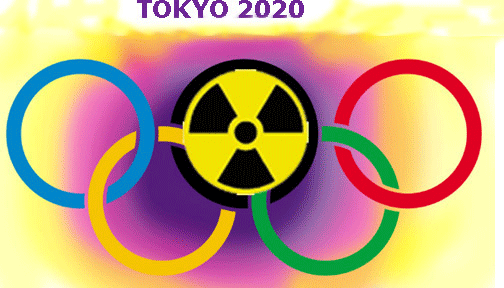 Tokyo Olympics Bid was Fixed by the International Olympic Committee’s Nuclear Lobby Prime Minister Shinzo Abe’s blatant lies about Fukushima radiation leaks being under control By Yoichi Shimatsu Global Research, September 16, 2013 The lame acquiescence of International Olympic Committee to Japanese Prime Minister Shinzo Abe’s blatant lies about Fukushima radiation leaks being under control” is an act of reckless negligence on the health risk to young athletes aiming for a spot at the 2020 Olympics……..
The Nuclear Grip…….. Every corporation on the IOC global sponsor list is, in fact, connected with the nuclear industry, and some directly with the melted-down of the Fukushima plant. Here’s a look at the list: Continue reading
Call on America’s EPA to withdraw its weakened guidelines on ionising radiation
 More than 100 Groups Call on EPA to Withdraw Dramatically Weakened Radiation Guides http://www.enewspf.com/latest-news/science/science-a-environmental/46251-more-than-100-groups-call-on-epa-to-withdraw-dramatically-weakened-radiation-guides.html 2013 WASHINGTON–(ENEWSPF)–September 16 – Over 100 environmental organizations today called on U.S. Environmental Protection Agency (EPA) Administrator Gina McCarthy to withdraw EPA’s controversial new Protective Action Guides (PAGs), which would allow exposure to very high doses from radiation releases before government would take action to protect the public. The PAGs are intended to guide the response to nuclear power reactor accidents (like Fukushima in Japan, Chernobyl in Ukraine and Three Mile Island in the U.S.), “dirty bomb” explosions, radioactive releases from nuclear fuel and weapons facilities, nuclear transportation accidents, and other radioactive releases.
Although official estimates of health risks from radiation have gone up substantially (even higher for women) since promulgation of the old PAGs, the new EPA guidance contemplates radically increased “allowable” exposures in the intermediate and long-term periods after radiation releases.
The new PAGs
- propose five options for drinking water which would dramatically increase the permitted concentrations of radioactivity in drinking water, by as much as 27,000 times, compared to EPA’s current Safe Drinking Water Act limits;
- suggest markedly relaxing long-term cleanup standards;
- incorporate very high and outdated allowable food contamination levels;
- eliminate requirements to evacuate people threatened with high projected radiation doses to the thyroid and skin;
- eliminate limits on lifetime whole body doses; and
- recommend dumping radioactive waste in municipal garbage dumps not designed for such waste.
“Rather than requiring protective actions to limit public radiation exposures, EPA is now saying it would allow the public to be exposed to doses far higher than ever before considered acceptable,” said Daniel Hirsch, president of Committee to Bridge the Gap.
“Even though EPA now admits radiation is more harmful than previously thought, it is weakening rather than tightening radiation protections,” said Diane D’Arrigo of the Nuclear Information and Resource Service.
The full letter is at http://committeetobridgethegap.org/GroupPAGltr9-16-13.pdf
###NIRS/WISE is the information and networking center for people and organizations concerned about nuclear power, radioactive waste, radiation, and sustainable energy issues.Source: commondreams.org
Britain’s Liberal Democrats succumb to the powerful influence of the well funded nuclear lobby
Is it because the nuclear industry still has a lot of cash, a lot of lobbying power (as does the oil and gas industry with fracking), unlike the alternatives – energy conservation and renewable energy? We’re definitely on to something there – this is a government that’s remarkably prone to sway before the push of a well-funded lobbying campaign – whether it’s on plain cigarette packets, alcohol minimum pricing or banking regulation.
Yet it’s really quite simple to dismiss the arguments for nuclear
this is no longer the same party that its activists, members, and voters, have known over the years.
 The Lib Dems are wrong on nuclear power – the arguments don’t add up http://www.theguardian.com/commentisfree/2013/sep/16/lib-dems-nuclear-power Natalie Bennett 16 Sept 13, As Japan and much of the world rows back on nuclear power, why have the Lib Dems made a U-turn to support it? “….The Liberal Democrat party, once one of the champions of opposition to nuclear power and weapons, has just voted at its conference to accept the “limited” use of nuclear power plants.
This came as Japan, once a world champion of the technology, prepared to switch off its last operating nuclear power plant. This reflects what is happening elsewhere around the developed world: Germany has promised to phase it out by 2022; in the US you “can’t even come close to making the maths work on building new nuclear plants”; even France, with its remarkably relaxed attitude towards nuclear risks (a cause of concern for its neighbours) is planning a partial phase-out of nuclear power, closing 24 reactors by 2025. So why is Britain heading in a radically different direction to the rest of the developed world?
There’s one argument that we can dismiss quickly. Yes, this government did pledge to be the “greenest government ever”, but surely even its greatest fan couldn’t continue to make that claim with a straight face, when they are spending not a penny on insulating our leaky, expensive-to-heat homes, when they are refusing to include “decarbonisation by 2030” in the energy bill, despite widespread support not just from green campaigners but also the business community. So it’s not that Britain’s government is “greener” than all the others.
Is it because we have a confused, directionless energy policy that’s marked by inaction, confusion and the lack of an evidence base? Well that’s probably part of the explanation. A large, mass-generating nuclear plant looks like a comfortingly solid solution to a hole – a large lump of concrete in the dyke. Continue reading
Sentence delayed for Sister Megan Rice and friends
Sentencing delayed for Duluth nuclear protester, Duluth News Tribune A judge has delayed a sentencing hearing for a Duluth man and two other protesters for breaking into a nuclear weapons plant in Tennessee. By: Associated Press staff,, 16 Sept 13 A judge has delayed a sentencing hearing for a Duluth man and two other protesters for breaking into a nuclear weapons plant in Tennessee.
U.S. District Judge Amul Thapar granted a motion last week from defense attorneys asking to postpone the date.
The sentencing, which had been scheduled for this month, was reset for Jan. 28 in Knoxville.
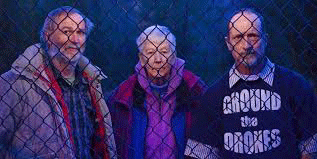
Defense attorneys said they needed more time to prepare for the proceeding.
The defendants — Greg Boertje-Obed of Duluth, Sister Megan Rice and Michael Walli — were convicted in May of sabotaging the plant and damaging federal property last year at the Y-12 National Security Complex in Oak Ridge.
Numerous letters have been sent to the federal judge asking for leniency and objecting to the government’s labeling of pacifists as terrorists.
“The court continues to receive a large volume of letters,” Thapar wrote in the order postponing the hearing.
The defendants remain in federal custody.http://www.duluthnewstribune.com/event/article/id/278086/
Climate denialism in 5 easy stages, and with Rupert Murdoch’s blessing
 The 5 stages of climate denial are on display ahead of the IPCC report, The Guardian, by Dana Nuccitelli Monday 16 September Climate contrarians appear to be running damage control in the media before the next IPCC report is published The fifth Intergovernmental Panel on Climate Change (IPCC) report is due out on September 27th, and is expected to reaffirm with growing confidence that humans are driving global warming and climate change. In anticipation of the widespread news coverage of this esteemed report, climate contrarians appear to be in damage control mode, trying to build up skeptical spin in media climate stories. Just in the past week we’ve seen:
- The David Rose Mail on Sunday piece that treated scientific evidence in much the way bakers treat pretzel dough.
- Dr. John Christy interviewed by the Daily Mail;
- Christy’s colleague Dr. Roy Spencer in The Christian Post;
- Andrew Montford in Rupert Murdoch’s The Australian;
- Matt Ridley in Rupert Murdoch’s Wall Street Journal; and
- Bjorn Lomborg in The Washington Post.
Interestingly, these pieces spanned nearly the full spectrum of the 5 stages of global warming denial.
Stage 1: Deny the Problem Exists.……..Most climate contrarians have come to accept that the planet has warmed significantly. Unfortunately many have regressed back into Stage 1 denial through the new myth that global warming magically stopped 15 years ago (most recently exemplified by David Rose in the Mail on Sunday). The error in that argument involves ignoring about 98 percent of the warming of the planet, most of which goes into heating the oceans. When we account for all of the data, global warming actually appears to be accelerating………
Stage 2: Deny We’re the Cause Continue reading
No nuclear power restart- say 9000 protestors in Tokyo
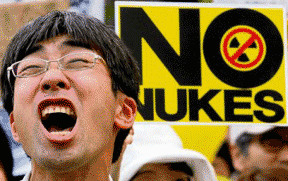 9,000 anti-nuclear advocates protest in Tokyo against reactor restarts http://japandailypress.com/9000-anti-nuclear-advocates-protest-in-tokyo-against-reactor-restarts-1635960/ Sep 16, 2013 About 9,000 anti-nuclear advocates marched in Japan’s capital on Saturday, the day before the last online nuclear reactor in the country would go offline for inspection. They were calling for the end of Japan’s dependency on nuclear energy, reminding the government of the meltdown of the Fukushima nuclear plant more than two years ago.
The anti-nuclear protest was organized by none other than novelistKenzaburo Oe, who won the Nobel Prize for Literature in 1994. “We want to keep telling what is happening at Fukushima even though everybody is talking about the Olympics,” Oe said. At the protest, he reminded everyone to “hand down an environment in which children can live without fear.” The advocates gathered at the Kameido Chuo Park then marched close to JR Kinshicho Station and around theTokyo Skytree.
The claims from Prime Minister Shinzo Abe that the situation in Fukushima is “under control” were also questioned. “Can you say the situation is under control even though contaminated water keeps leaking?” asked writer Keiko Ochiai. Katsumi Hasegawa, another speaker, was among the victims of the disaster, spoke strongly against having nuclear power plants. “With the future of my children tainted, I have realized that radiation and human beings cannot coexist,” said Hasegawa, whose family volunteered to evacuate from the city of Koriyama in Fukushima Prefecture to the city of Fujinomiya in Shizuoka Prefecture.
Japan shuts down its last nuclear reactor
100% nuclear free: Japan shuts down its last reactor Tree Hugger, Michael Graham Richard September 16, 2013 On Monday (Sunday locally), Japan switched off the last of its operating nuclear reactors and became 100% nuclear-free for the first time in decades, apart from soon after the devastating 2011 Tsunami. Kansai Electric Power took offline the No. 4 reactor at its Oi nuclear plant in the western prefecture of Fukui at 1:33 a.m. (1633 GMT Sunday) for inspection. Right now there is no scheduled date for the reactor to be turned back on.
This is impressive because nuclear power used to supply about 1/3 of Japan’s electricity, which is a lot because the country is still the world’s third biggest economy.
Prime Minister Shinzo Abe has openly backed a return to the widespread use of atomic energy, but the public remains divided over his support, with opponents concerned on safety grounds……..http://www.treehugger.com/energy-policy/japan-shuts-down-its-last-nuclear-reactor-goes-100-nuclear-free.html
Saugeen Ojibway Nations (SON) community won’t agree to Ontario nuclear waste dump in any hurry
Securing approval for nuclear waste site won’t be ‘quick or easy process’: First Nations “If things go south in a hurry, where do our people go? We do not have the luxury of picking up and leaving.” The Star, By: John Spears Business reporter, on Mon Sep 16 2013 KINCARDINE—First Nations communities near Ontario Power Generation’s proposed nuclear waste disposal facility won’t be rushed into supporting the project, a federal hearing has been told. Continue reading
UK: Liberal Democrats sold out their principles on nuclear power
Nuclear fuel on the bonfire of Liberal Democrat principles http://www.theguardian.com/politics/2013/sep/16/nuclear-bonfire-liberal-democrat-principles The Guardian, Caroline Lucas MP, Tuesday 17 September 2013 As Liberal Democrat opposition to nuclear power joins opposition to secret courts and tuition fees on the bonfire of Lib Dem commitments, voters could be forgiven for wondering whether the party has any “red lines” of policy or principle left (Climate fears bring U-turn on nuclear power generation, 16 September).
The weasel-worded capitulation on nuclear power suggests it has a role to play “providing concerns about safety, disposal of radioactive waste and cost are adequately addressed and … without allowing any public subsidy for new build”.
As the Lib Dem leadership well knows, the new energy bill has been crafted precisely to give generous subsidies to nuclear through so-called contracts for difference. It is thought likely that, for Hinkley C alone, a transfer of £30bn-£50bn from British householders and businesses to the French company EDF will be required. Moreover, it is proposed that nuclear operators’ liability be capped at just £1bn per plant, when the total costs of the Fukushima disaster, for example, may well exceed £300bn.
There are far cheaper, safer, quicker, more efficient ways of addressing the climate challenge than pursuing nuclear power. Accelerating the deployment of energy-efficiency measures, demand-response, demand-reduction and distributed-generation policies, and renewable technologies, would help drive wholesale electricity costs down and deliver more value for money as a pathway to decarbonising electricity generation.
The Green New Deal Group, of which I am part, outlined just such an approach in a report last week. Investment in renewables, alongside a nationwide project to make every building in the country energy-efficient, would create hundreds of thousands of high-quality jobs across the country, as well as reducing both fuel bills and emissions.
1 This Month


18 March Webinar @ 1 PM EST: An Assessment of SMR Projects: The Case of Canada
register for the zoom:
https://us02web.zoom.us/webinar/register/WN_o8BIIOUvQ2ONJR1nta65DQ#/registration


of the week – STOP SMALL MODULAR REACTORS IN CANADA
To see nuclear-related stories in greater depth and intensity – go to https://nuclearinformation.wordpress.com
-
Archives
- March 2026 (140)
- February 2026 (268)
- January 2026 (308)
- December 2025 (358)
- November 2025 (359)
- October 2025 (376)
- September 2025 (258)
- August 2025 (319)
- July 2025 (230)
- June 2025 (348)
- May 2025 (261)
- April 2025 (305)
-
Categories
- 1
- 1 NUCLEAR ISSUES
- business and costs
- climate change
- culture and arts
- ENERGY
- environment
- health
- history
- indigenous issues
- Legal
- marketing of nuclear
- media
- opposition to nuclear
- PERSONAL STORIES
- politics
- politics international
- Religion and ethics
- safety
- secrets,lies and civil liberties
- spinbuster
- technology
- Uranium
- wastes
- weapons and war
- Women
- 2 WORLD
- ACTION
- AFRICA
- Atrocities
- AUSTRALIA
- Christina's notes
- Christina's themes
- culture and arts
- Events
- Fuk 2022
- Fuk 2023
- Fukushima 2017
- Fukushima 2018
- fukushima 2019
- Fukushima 2020
- Fukushima 2021
- general
- global warming
- Humour (God we need it)
- Nuclear
- RARE EARTHS
- Reference
- resources – print
- Resources -audiovicual
- Weekly Newsletter
- World
- World Nuclear
- YouTube
-
RSS
Entries RSS
Comments RSS
 nuclear-news