Russia Offers to Help Clean Up Fukushima as Tepco Calls for Help but Russia blames others.
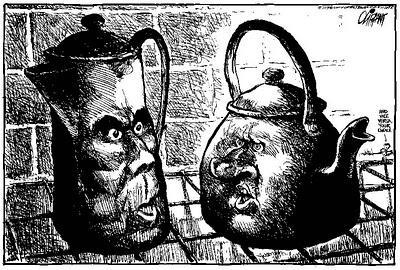
August 25, 2013
Russia repeated an offer first made two years ago to help Japan clean-up its accident-ravaged Fukushima nuclear station, welcoming Tokyo Electric Power Co. (9501)’s decision to seek outside help.
As Tokyo Electric pumps thousands of metric tons of water through the wrecked Fukushima station to cool its melted cores, the tainted run-off was found to be leaking into groundwater and the ocean. The approach to cooling and decommissioning the station will need to change and include technologies developed outside of Japan if the clean-up is to succeed, said Vladimir Asmolov, first deputy director general of Rosenergoatom, the state-owned Russian nuclear utility.
“In our globalized nuclear industry we don’t have national accidents, they are all international,” Asmolov said. Since Japan’s new government took over in December, talks on cooperating between the two countries on the Fukushima clean-up have turned “positive” and Russia is ready to offer its assistance, he said by phone from Moscow last week.
After 29 months of trying to contain radiation from Fukushima’s molten atomic cores, Tokyo Electric said last week it will reach out for international expertise in handling the crisis. The water leaks alone have so far sent more than 100 times the annual norms of radioactive elements into the ocean, raising concern it will enter the food chain through fish.
‘Last to Realize’
The latest leak of 300 metric tons of irradiated water prompted Japan’s nuclear regulator to label the incident “serious” and question Tokyo Electric’s ability to deal with the crisis, echoing comments made by Prime Minister Shinzo Abe earlier this month. Zengo Aizawa, a vice president at Tepco, as the Tokyo-based utility is known, made the call for help at a press briefing in Japan’s capital on Aug. 21.
“It was clear for a long time that Tepco was not adequately coping with the situation,” Asmolov said. “It looks like Tepco management were the last to realize this,” he said. “Japan has the technologies to do this, but they lacked a system to deal with this kind of situation.”
The Fukushima accident of March 2011 is the world’s biggest nuclear disaster since the Soviet Union faced the explosion at Chernobyl in 1986.
So far, Tokyo’s solution to cooling melted nuclear rods at Fukushima that otherwise could overheat into criticality, or a self-sustained nuclear chain reaction, has been to pour water over them. That’s left more than 330,000 tons of irradiated water in storage tanks at the site so far. The water is treated to remove some of the cesium particles in it, which in turn leaves behind contaminated filters.
‘Vast Volumes’
The sheer quantity of water used is the most at a nuclear accident since the 1972 London convention banned the dumping of waste and radioactive water into the sea, said Peter Burns, formerly Australia’s representative on the United Nations scientific committee on the effects of atomic radiation.
“Until they figure out how to deal with such vast volumes of water, how to manage it, the problem” including of leaks will persist, Burns, a retired radiation physicist, said from Melbourne.
Retaining thousands of tons of radioactive water in tanks was the wrong strategy from the start and Tepco’s handling of the task is a “textbook picture of a failure of management,” Michael Friedlander, who has 13 years of experience running nuclear stations in the U.S., said in an interview with Bloomberg TV in Hong Kong.
Pumping Water
The idea of pumping water for cooling was never going to be anything but a “machine for generating radioactive water,” Asmolov said. Other more complex methods such as the use of special absorbents like thermoxide to clean contaminated water and the introduction of air cooling should be used, he said.
Russia’s nuclear company, Rosatom, of which Rosenergoatom is a unit, sent Japan a 5 kilogram (11 pound) sample of an absorbent that could be used at Fukushima almost three years ago, Asmolov said. It also formed working groups ready to help Japan on health effect assessment, decontamination, and fuel management, among others, Asmolov said. The assistance was never used, he said.
“Since the arrival of the new Japanese government, the attitude’s changed,” he said. “So far the talks have been on a diplomatic level, but they are much more positive. And we remain open to working together on this issue. To follow developments I monitor Fukushima news every morning.”
Tap Experts
Japan can tap experts in France and the U.S. as well as Russia to help it tackle the situation at Fukushima, he said.
The U.S.’s long history with atomic research, including the nuclear weapons site at the Hanford Engineer Works in Washington state, has provided expertise in cleaning up contaminated sites, said Kathryn Higley, who heads the nuclear engineering and radiation health physics department at Oregon State University in Corvallis.
And some Russian pollution news here…
Norwegian scientific group refutes claims that Norway is polluting Russia
http://www.bellona.org/articles/articles_2013/Nilu_responds
The Norwegian Institute for Air Research (NILU) yesterday slammed claims by a Russian-government connected NGO that Norway and other western European countries were responsible for poor air quality in Russia’s northwest Murmansk region.
The Russian group, called Green Patrol, last week made its claims public in a press conference held in the Murmansk Region, whose pollution has long been a flashpoint of tensions between Norway and Russia due emissions from the Kola Mining and Metallurgy Company (KMMC), a daughter enterprise of Russia giant Norilsk Nikel, which is located a mere 7 kilometers from the Norwegian border.
Norway, in particular, has for decades complained of high levels of toxic sulfur dioxide wafting across its border from the KMMC to the tune of 100,000 tons a year, according to NILU studies in cooperation with various Russian research agencies. NILU has also establshed high concentrations of heavy metals from the KMMC in northern Norway.
Communities in Northern Norway, as studies by NILU and its Russian counterpart, the Russian State Hydrometeorology and Environmental Monitoring Agency (RosGidromet) have shown, bear the brunt of this pollution – an issue that was earlier this summer brought to the fore by a Northern Norwegian mayor from Sør-Varanger and her highly publicized but failed effort to lodge a police complaint against the KMMC.
At its press conference, Green Patrol, in conjunction with the St. Petersburg-based research institute Atmosfera , accused Norway as well as Germany, Poland and Finland, of causing 45 percent of the overall pollution in the Murmansk Region.
Green Patrol offered no written substantiation of its claims, and the group still has not published a description of its methodology or how it reached it conclusions.
Fukushima raises disturbing questions in Saudi Arabia
…As Fukushima sends shock waves round the world, experts are asking whether developing nations can safely develop nuclear power facilities of their own. Japan is a highly developed nation, so well prepared for disasters. If it can end up in such a mess, what hope do poorer, less well-organized countries have of preventing disasters at nuclear facilities?
This issue is currently exercising countries along the Pacific “ring of fire”, as well as those in Asia and Africa. In India where sustained protests – hunger strikes, rallies, fishing strike – against a nuclear power plant in Kudankulam in the southern state of Tamil Nadu have been going on for sometime now, the public debate is intense. After all, the Bhopal gas tragedy has shown how ill-equipped Third World countries are to cope with disasters involving First World technology….
Fukushima raises disturbing questions
http://www.saudigazette.com.sa/index.cfm?method=home.regcon&contentid=20130826178158
Japan is expected to issue its gravest warning about the state of the wrecked Fukushima Daiichi nuclear power plant on Wednesday — gravest since the facility on the Pacific Coast suffered a triple meltdown in 2011. Even if the warning does not come for some reasons — the plant’s operator, Tokyo Electric Power Co (Tepco), has been accused of covering up the extent of the problems at the plant — things look pretty grim. The “worsening situation” at Fukushima has prompted a former Japanese ambassador to Switzerland to call for the withdrawal of Tokyo’s Olympic bid. South Korea’s Asiana Airlines Inc. said it would cancel charter flights between Seoul and Fukushima city in October due to public concerns over the radioactive water leaks. Shunichi Tanaka, chairman of Japan’s Nuclear Regulation Authority, likens the stricken nuclear plant to a house of horrors at an amusement park.
One hopes the world will not be called upon to witness horrors unrelieved by any kind of amusement or fun. But three hundred tons of highly contaminated water that a storage tank at the ravaged plant has leaked is raising new fears of an environmental calamity. Nuclear experts believe the current water leaks at Fukushima are much worse than the authorities are prepared to admit.
As the plant is in an active earthquake zone, there is a danger that further tremors could spill much of the stored water. Water in the latest leak is so contaminated that a person standing close to it for an hour would receive five times the annual recommended limit for nuclear workers.
The tainted water could eventually reach the ocean, adding to the tons of radioactive fluids that have already leaked into the sea.
The leak is the single most dangerous failure at the plant since the meltdown, placing it on the same level as the Chernobyl disaster 25 years earlier.
The new leak raises disturbing questions not merely about the durability of the nearly 1,000 huge tanks Tepco has installed about 500 yards from the site’s shoreline, but about the safety and costs, financial and environmental, of nuclear plants the world over. The 2011disaster has profoundly shaken confidence in the future of nuclear power from Taiwan to Berlin, with rising costs exacerbating the situation.
In Taiwan, MPs resorted to fisticuffs as they debated a referendum on a new nuclear power station. Only days after Fukushima, German Chancellor Angela Merkel reversed her long-held support for nuclear power and, a year after announcing a 10-year extension, she promised to phase it out by 2022.
As Fukushima sends shock waves round the world, experts are asking whether developing nations can safely develop nuclear power facilities of their own. Japan is a highly developed nation, so well prepared for disasters. If it can end up in such a mess, what hope do poorer, less well-organized countries have of preventing disasters at nuclear facilities?
This issue is currently exercising countries along the Pacific “ring of fire”, as well as those in Asia and Africa. In India where sustained protests – hunger strikes, rallies, fishing strike – against a nuclear power plant in Kudankulam in the southern state of Tamil Nadu have been going on for sometime now, the public debate is intense. After all, the Bhopal gas tragedy has shown how ill-equipped Third World countries are to cope with disasters involving First World technology.
Recent hopeful pro nuclear headline from Saudi Arabia…
Saudi Arabia – 16 nuclear reactors to be ready by 2030 in one of the hottest countries in the world but labour is cheap!
Sunday 25 August 2013
2 Earthquakes off the UK coast by Sellafield nuclear site (near the fracking sites)
“This part of the Irish Sea has not seen any significant seismic activity in recent years but ultimately their cause is likely to be no different than any other earthquakes in Britain and Ireland,” said Tom Blake from the School of Cosmic Physics in the Dublin Institute for Advanced Studies (DIAS).
Image source ; http://fullfact.org/factchecks/david_cameron_prime_minister_shale_gas_fracking-29151

Both of the quakes happened close to the English coastline with the larger registering a 3.3 on the Richter scale.
http://www.thejournal.ie/earthquake-irish-sea-2-1052903-Aug2013/
25 August 2013
SO DID THE earth move for you this morning?
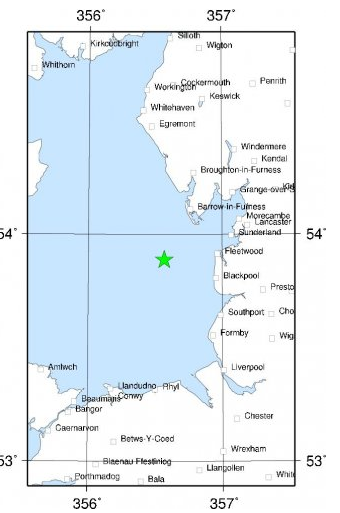
Two earthquakes were recorded in the Irish Sea today, both taking place close to the English coastline.
The British Geological Survey says the first earthquake hit at 5.37am and registered a magnitude of 2.4 on the Richter scale. The earthquake happened near Fleetwood in England, 185km from Dublin.
The second earthquake was bigger, measuring a 3.3 on the Richter scale when it hit at 9.58am in the same location. It was felt on the British mainland and recorded by seismometers in both Donegal and Wexford.
The Irish National Seismic Network said the quakes were most likely the result of glacial rebound – the process whereby stresses built up by the weight of glaciers from the last Ice Age are slowly released.
The head of the INSN said only people living close to the epicentre of today’s earthquakes would have felt any shaking – and that further tremors are possible during the coming days.
“This part of the Irish Sea has not seen any significant seismic activity in recent years but ultimately their cause is likely to be no different than any other earthquakes in Britain and Ireland,” said Tom Blake from the School of Cosmic Physics in the Dublin Institute for Advanced Studies (DIAS).
“The last earthquake recorded in this part of the Irish Sea occurred in 1843 and is estimated to have been a magnitude 4 quake,” he said, adding:
Although Britain and Ireland are far from any plate boundaries, much of the region is still experiencing quakes due to the removal of the weight of ice sheets that once covered the land.Occasionally this post-glacial isostatic rebound – the phenomenon of the land surface gradually returning to its pre-glacial contours – results in earthquakes of this magnitude, particularly in the northern half of the islands.
The largest known British earthquake happened in 1931 with a magnitude of 6.1, while the largest to impact Ireland happened on the Llyn peninsula in Wales on 19 July 1984 with a magnitude of 5.4. The quake was felt throughout Ireland’s east coast.
A researcher at the DIAS said in June that there has been an increase in seismic activity in recent months, including an earthquake with a magnitude of 3.8 which struck on 29 May and was felt across parts of Ireland.
Another earthquake on 26 June registered as 2.8 on the Richter scale.
| Date & Time | Latitude | Longitude | Depth | Mag | Region name |
| UTC | degrees | degrees | km | [+] | [+] |
| 2013-06-26 22:28:01.0 | 52.88 N | 4.72 W | 9 | 3 | WALES, UNITED KINGDOM |
| 2013-05-29 03:16:26.0 | 52.90 N | 4.91 W | 8 | 4 | WALES, UNITED KINGDOM |
http://hisz.rsoe.hu/alertmap/site/index.php?pageid=seism_index&rid=348404
Wow: Bonus Info: Emergency Level At Fukushima Raised From 1 To 3! F#ck You MSM!

Published on 24 Aug 2013
TEPCO CONTINUES TANK INVESTIGATION http://youtu.be/kPSGu-BKl_c
(thanks RumorECurioso)
The operator of the damaged Fukushima Daiichi nuclear power plant is investigating the leakage of radioactive water from a holding tank.
Officials at Tokyo Electric Power Company estimate more than 300 tons of highly radioactive water leaked from a tank near the Number 4 reactor this month. Some of the water is believed to have drained into the ocean through a ditch.
TEPCO officials said on Saturday the tank sank 20 centimeters into the ground in a test carried out in July, 2011.
They said the sinking may have deformed or damaged the tank. They said they are investigating whether this has anything to do with the leak.
However, they say workers disassembled the tank and reassembled it at the current site after a contractor confirmed that there were no problems with it.
TEPCO officials say there are 2 other tanks that also sank during tests. No radioactive water has been found leaking from them but workers will nevertheless transfer the contaminated water to different tanks.
The utility apologized on Saturday after it was discovered that a valve on a pipe connected to a barrier surrounding the tanks had been left open allowing the toxic water to flow out.
Aug. 24, 2013 – Updated 13:32 UTC
New Scientist: Dump all Fukushima nuclear waste in Pacific, no risk to U.S. — “They have to make people understand low levels of radiation don’t matter” — “None of this is going to do anything health wise”
Published: August 23rd, 2013 at 5:28 pm ET
By ENENews
Title: Should Fukushima’s radioactive water be dumped at sea?
Source: New Scientist
Author: Andy Coghlan
Date: Aug 23, 2013
Should Fukushima’s radioactive water be dumped at sea? […]
On an international level, even if all the waste from Fukushima was dumped neat into the Pacific, dilution would eliminate any radiation risks to distant countries like the US, says Simon Boxall of the National Oceanography Centre in Southampton, UK.
The ocean would be the safest place for the waste water, says Geraldine Thomas, who runs the Chernobyl Tissue Bank at Imperial College London. “But to make that politically acceptable they have to talk to the local population. They have to make people understand that low levels of radiation don’t matter because we’re all exposed to it all the time.”
In other words, it is more of a communication problem than a public health problem. “None of this is going to do anything health wise,” she says. “Fukushima is nothing compared to Chernobyl.” [See Buesseler link below]
[…] “Anything they can do to remove the more dangerous compounds and dilute the others [before dumping] is almost the only solution,” says Ken Buesseler of Woods Hole Oceanographic Institution in Massachusetts.
The New Nuclear Craze
By MARK BITTMAN
August 23, 2013, 10:02 pm
There is a new discussion [ http://www.nytimes.com/2013/08/21/business/economy/coming-full-circle-in-energy.html ] about nuclear energy, prompted by well-founded concerns about carbon emissions and fueled by a pro-nuclear documentary called “Pandora’s Promise [ http://pandoraspromise.com/ ].” Add a statement by James E. Hansen [ http://topics.nytimes.com/top/reference/timestopics/people/h/james_e_hansen/index.html ] — who famously sounded the alarm on climate change — and, of course, industry propaganda, and presto: We Love Nukes.
Before we all become pro-nuclear greens, however, you’ve got to ask three questions: Is nuclear power safe and clean? Is it economical? And are there better alternatives?
No, no and yes. So let’s not swap the pending environmental disaster of climate change for another that may be equally risky.
Despite all-out efforts and international cooperation, Fukushima, which scared Germany right out of the nuclear power business, still isn’t under control [ http://www.reuters.com/article/2013/08/20/us-japan-fukushima-leak-idUSBRE97J02920130820 ]. Proponents of nuclear power promise new and safer technology, but these discussions are filled with “coulds”; no such plants exist. Nor would they reduce the risks of proliferation. (Oh, that little thing.)
Nor would they do much to mitigate the all-too-infrequently discussed dangers of uranium mining [ http://www.nrdc.org/nuclear/files/uranium-mining-report.pdf ], which uses vast amounts of water in the West — an area that can ill afford it — and is barely regulated or even studied. Thousands of uranium mines have been abandoned [ http://www.moabsunnews.com/news/article_6005cca8-b743-11e2-a81e-001a4bcf6878.html ], and no one seems to know how many remain to be cleaned up. The cost of that cleanup, of course, will be borne by taxpayers, not industry.
Then there’s disposal of spent fuel, which is not contained at the same safety level as active fuel, itself a scary thought. Decades into the nuclear age there remains, incredibly, no real plan for this; a patchwork scheme by the Nuclear Regulatory Commission, which appears to be even more industry-friendly than most federal agencies, was rejected by an appeals court [ http://www.nytimes.com/2012/06/09/science/earth/court-says-nuclear-agency-must-rethink-fuel-storage.html ] last year, and the Obama administration is standing by its campaign promise [ http://www.nature.com/news/2008/080903/full/455446a.html ] (shocking, I know) to abandon the nuclear repository at Yucca Mountain in Nevada.
The economic viability of nuclear power is no more encouraging. Plants continue to close and generation rates continue to drop [ http://www.boell.org/web/139-World-Nuclear-Industry-Status-Report-2013.html ]. Operators may indeed continue to make money on reactors, but that’s only because federal subsidies are enormous [ http://www.taxpayer.net/library/article/nuclear-subsidies-past-and-present ]. Insurance costs are limited. Loans are guaranteed (the Solyndra loan guarantee was half a billion dollars; in contrast, loan guarantees for new nuclear plants may run $8 billion [ http://moneymorning.com/2010/02/18/nuclear-power/ ]); cost recovery and return on investment are also assured for decades, and some operators are able to collect costs from ratepayers (and pay dividends to shareholders) years before plants come online — even if they never come online.
So they’re economical as long as you’re the owner, because historically, subsidies for nuclear power have been more than double [ http://www.ucsusa.org/assets/documents/nuclear_power/nuclear_subsidies_summary.pdf ] the expense of power generation itself. While estimates of the costs of power generation vary wildly — allowing both proponents and detractors of any given power technology to make their cases — few of them take externalities (costs to the environment or to public health, for example) into account. And nuclear power’s externalities could exceed those for any other form of power generation except coal.
That’s why we’re reducing coal usage [ http://www.ucsusa.org/news/press_release/eia-2009-outlook-coal-0178.html ] — if we had a strong climate policy it would be gone in a couple of deades, and nuclear should be right behind it. It’s likely that no new nuclear plants will be built before true renewables are able to take the place of scary, highly damaging energy sources.
Which brings us full circle: the new proponents of nuclear power say that since nuclear power is arguably preferable to coal, maybe we should subsidize the building of new plants.
If those were the only options, maybe that argument would be a sound one. But they’re not. Energy efficiency (remember that?), natural gas (imperfect, yes, but improvable) and wind are all cheaper. Even solar is already less expensive [ http://www.ncwarn.org/wp-content/uploads/2010/07/NCW-SolarReport_final1.pdf ] than nuclear power in good locations.
Some studies show [ http://www.nrel.gov/analysis/re_futures/ ] that renewables can generate 80 percent of our electricity in 2050, using current technologies, while reducing carbon emissions from the electric sector by 80 percent. Climate change fears should be driving not old and disproven technologies but renewable ones, which are more practical. These technologies remain relatively small — non-hydro renewables were around 5 percent of the total last year [ http://www.eia.gov/electricity/monthly/epm_table_grapher.cfm?t=epmt_1_01 ] — but they’re growing so fast (wind and solar use have quadrupled in the last five years) that just this week the chairman of the Federal Energy Regulatory Commission predicted that solar power could soon begin to double every two years [ http://www.greentechmedia.com/articles/read/ferc-chair-wellinghoff-sees-a-solar-future-and-a-utility-of-the-future ].
Utilities are afraid that solar power will be to the electrical grid what PCs were to mainframes [ http://www.businessweek.com/articles/2013-08-22/homegrown-green-energy-is-making-power-utilities-irrelevant ], or e-mail to the Postal Service: a technology that will simply kill its predecessors. Coal and nuclear power are both doomed, and the profit-making power grid with it. That’s all to our benefit.
© 2013 The New York Times Company
http://opinionator.blogs.nytimes.com/2013/08/23/the-new-nuclear-craze/
Saudi Arabia – 16 nuclear reactors to be ready by 2030 in one of the hottest countries in the world but labour is cheap!

…Melaibari said the cost of building and operating nuclear plants in France, Russia, South Korea and Japan differs from one country to another, depending on the technology they adopt, infrastructure facilities in place and the availability of cheap manpower…
Saturday, July 13, 2013
California: Saudi consulate pays $5 Million bail for Muslim Princess arrested for slavery
In California this week, a Saudi princess was charged with human trafficking, in a case involving enslaving a maid. Muslim royalty keeping slaves in the US. The Saudi consulate bailed her out — of course. Slavery under Islam is sanctioned.

Saudi Princess on secret recruitment drive for disposable nuclear workers..
RIYADH: ARAB NEWS
Published — Sunday 25 August 2013
Saudi Arabia intends to become a leader in renewable energy by building 16 nuclear reactors with a combined capacity of 22GW, which is about half of the Kingdom’s current electricity output. The project is estimated to cost of more than $100 billion.
Abdul Ghani bin Melaibari, coordinator of scientific collaboration at King Abdullah City for Atomic and Renewable Energy, confirmed the plan, adding that the first two reactors would be ready within 10 years.
However, he pointed out the cost building nuclear reactors in the Kingdom would be comparatively higher because of its extreme hot climate. He also stressed the need to train Saudis to operate and maintain such plants.
Melaibari said the cost of building and operating nuclear plants in France, Russia, South Korea and Japan differs from one country to another, depending on the technology they adopt, infrastructure facilities in place and the availability of cheap manpower.
Saudi Arabia and its Gulf neighbors regard nuclear power as a way to meet rising electricity demand while reducing reliance on polluting fossil fuels, say analysts.
“After 10 years we will have the first two reactors,” Melaibari told Arab News. “After that, every year we will establish two, until we have 16 by 2030. We would like to cover 20 percent of electricity needs using nuclear energy.”
He estimated the cost of each reactor to be around $7 billion, adding that the Kingdom is in the process of concluding deals with specialized companies to implement the project.
Many nations have taken a step back from nuclear plans following the accident at the Fukushima Daiichi plant in Japan. But GCC states are pursuing their plans with major investments in nuclear power.
The UAE in December 2009 awarded a South Korean consortium the contract to build four nuclear power plants worth $20.4 billion.
Power demand in Saudi Arabia is estimated to grow seven to eight percent during the next 10 years. It is the largest economy of the GCC, with an annual GDP of $622 billion and a GDP per capita of $24,200.
http://arabnews.com/news/462415
Up date ; https://nuclear-news.net/2013/08/25/fukushima-raises-disturbing-questions-in-saudi-arabia/
Japan’s FM visits Chernobyl nuclear plant and shares in the art of lies and deception!!
No other details were immediately available.
While no one is officially recorded as having died as a direct result of the meltdown at the reactors
According to Ukrainian official figures, more than 25,000 of the cleanup workers from then-Soviet Ukraine, Russia and Belarus have died since the disaster.
00:20 Mon Aug 26 2013
Japan’s foreign minister has travelled to Chernobyl in Ukraine, the site of the world’s worst nuclear disaster, to compare notes on relief efforts following Japan’s own disaster at Fukushima.
Foreign Minister Fumio Kishida’s trip is “the first visit to Ukraine by a Japanese foreign minister over the past seven years,” a spokesperson for the Japanese embassy told AFP.
As part of his three-day visit, Kishida went on a fact-finding mission to Chernobyl with the aim of sharing experience in overcoming the consequences of nuclear disasters, the spokesperson said.
In Chernobyl, he met with the station’s director, an AFP photographer said.
No other details were immediately available.
On Monday, Japan’s top diplomat is expected to hold talks with Ukraine’s Foreign Minister Leonid Kozhara.
The two men will discuss cooperation in studying and overcoming the consequences of nuclear disasters in Japan and Ukraine, said a spokesman for the Ukrainian foreign ministry without providing further details.
In March 2011, an earthquake and tsunami caused meltdowns at the Fukushima nuclear plant in northeast Japan.
While no one is officially recorded as having died as a direct result of the meltdown at the reactors, large areas around the plant had to be evacuated, with tens of thousands of people still unable to return.
The explosion at reactor number four at the Chernobyl power plant in the early hours of April 26, 1986 sent radioactive fallout into the atmosphere that spread from the Soviet Union across Europe.
According to Ukrainian official figures, more than 25,000 of the cleanup workers from then-Soviet Ukraine, Russia and Belarus have died since the disaster.
The two catastrophes are the world’s only nuclear disasters to have been categorised as level seven on the United Nations’ seven-point International Nuclear Event Scale (INES).
http://news.msn.co.nz/article.aspx?id=8712208
Chernobyl London meeting (27 April 2013) Speech by Tamara Krasitskava from Zemlyaki
On Sunday the 27 April 2013 in a little room somewhere off Grays Inn road London, a meeting took place. In this meeting was Ms Tamara Krasitskava of the Ukrainian NGO “Zemlyaki”.
In this meeting she quoted that only 40 percent of the evacuees that moved to Kiev after the disaster are alive today! And lets leave the statistics out of it for a moment and we find out of 44,000 evacuated to Kiev only 19,000 are left alive. None made it much passed 40 years old

…..3.2 million with health effects and this includes 1 million children…
T .Kraisitskava
“….I was told to not talk of the results from Belarus as the UK public were not allowed to know the results we were finding!….”
A.Cameron (Belarus health worker from UK)
China – Fukushima contamination reaches the 20 degrees north latitude – IAEA are still silent on lack of monitoring.
Posted by Nuclear-news.net
Author- Arclight2011
25 August 2013

Below is a collection of links in which I try to describe the IAEA`s part in the lack of monitoring of radionuclides off the coast of Japan and some of the politics involved. The Iaea quickly became the central organisation that the pacific countries had to rely on for testing of radionuclides in water, fish and sediment in the whole of the Pacific.
I could find little results for measured data and China have commented that the pollution is continuing to spread in Japanese waters. China claims its territorial waters are apparently at an acceptable levels of contamination.
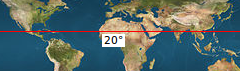
The Chinese report outlines the need for testing off the coast of Japan and states that the contamination has reached the 20 degrees north latitude (see diagram below )
The Chinese are working with the IAEA. The IAEA has done little research these past few years and now are just setting up groups and training to monitor the situation. This is the same thing they have been saying all along. As the IAEA speak but dont DO! There seems precious little testing being done and therefore little data for scientists to work with.
China has done testing but needs to save a much pressed Chinese Sea fisheries from collapse. The Chinese are starting to target bloggers who say “illegal thoughts ” concerning Fukushima et al. (link provided) to bring them in line with the censorship and harassment of their Japanese anti nuclear blogger counterparts.
It might be worth noting that China has a BIG investments in nuclear technology and have many trade deals with the west that are NOT impacted by other disputes (Japan for example). This is helped by the IAEA and those they represent.
China is developing a MOX plutonium fuel cycle and waste processing technology. So, China needs to play down the Daichi Number 3 MOX explosion and the contamination from MOX during normal processing operations. The IAEA is fully supporting China with their MOX future plans and covering up the MOX explosion so as to not burden the MOX industry with new Fukushima style regulations.
Despite Fukushima, IAEA sees global progress on nuclear safety

* IAEA says significant progress made on safety globally
* Greenpeace disagrees, says “not much” achieved
Aug 23 (Reuters) – Japan may be suffering persistent problems with its wrecked Fukushima nuclear power plant, but the U.N. atomic agency says “considerable progress” has been made globally in the past year to strengthen reactor safety.
http://uk.reuters.com/article/2013/08/23/nuclear-iaea-safety-idUKL6N0GO1BD20130823
Extracts from supporting articles
08-25-2013
China’s State Oceanic Administration says the seas within China’s territory have not been directly affected by radioactive pollutants from Japan’s Fukushima Nuclear Power Plant.
The State Oceanic Administration has been monitoring the open seas in the west Pacific Ocean for three consecutive years since the Fukushima Nuclear disaster.
Results show the impact of radioactive pollutants in the sea has expanded, with radioactive substances from the Fukushima plant detected at around 20 degrees north latitude. It says, however, that the pollutants do not threaten the safety of seas administered by China.
http://english.cntv.cn/program/newsupdate/20130825/102557.shtml
10 August 2013
An IAEA expert mission composed of 16 experts from eight countries and IAEA staff visited Fukushima Prefecture from July 21 to 26, to start implementation of the “Practical Arrangements,” a set of signed agreements between the Fukushima Prefecture and the IAEA.
The three-year assistance plan focuses on issues of remediation, decontamination and low level radioactive waste management in Fukushima Prefecture. The remediation efforts aim to prevent the movement of radioactive contaminants into waterways, the food chain or air.
The IAEA team also conferred with Fukushima Prefectural officials on the various steps taken for the safe management of materials that contain traces of low level of radioactive nuclides, assistance for temporary storages sites for possible contaminated materials. Another issue discussed during the meeting was to undertake a survey of radionuclides in the environment, including its absorption in soil, and the examination of status radionuclides in rivers and lakes and mapping surveys of the Fukushima Prefecture for dissemination to the public.
http://ens-newswire.com/2013/08/10/fukushimas-radioactive-leaks-to-the-pacific-alarm-japan/
Beijing August 25, 2013
The latest monitoring data showed that contaminated water areas have expanded, but no immediate impact on waters under the jurisdiction of China has been reported, the State Oceanic Administration (SOA) said.
The SOA has carried out regular monitoring of the Western Pacific Ocean since the Fukushima nuclear accident in March 2011, state-run Xinhua news agency reported today.
Follow-up monitoring will be continued to safeguard China’s maritime rights and interests, it said, adding monitoring can also be conducted in waters near Fukushima to detect new developments in the nuclear crisis.
The Fukushima Monitoring Database
(FMD) was developed by the IAEA’s Incident and Emergency Centre (IEC) to provide Member States and the public with a record of the results of radiological monitoring performed in Japan that was officially reported to the IAEA during the emergency phase of the accident, which ended on 16 December 2011 when Cold Shutdown Condition was achieved.
The IAEA would like to acknowledge the cooperation of the Government of Japan during the preparation of this database.
12 December 2012
A joint project between the IAEA, 20 IAEA Member States and three non-Member States from the Asia and Pacific region is building the analytical skills and infrastructure needed to monitor the region’s marine environment and derive high-quality data to evaluate the possible impact of the release of radioactivity.
Launched in July 2011, training events and expert missions have taken place at the IAEA’s Environment Laboratory in Monaco and in Korea during the first year of the project. Member States are gaining experience in using quality management systems for marine water radioactivity measurements, as well as on quality assurance and data management.
http://www.iaea.org/newscenter/news/2012/radioactiverelease.html
Prime minister Noda goes to China to cut a secret deal on nuclear in late 2011. does this ensure Chinese co-operation on matters concerning food contamination etc??
CNNC 18/11/11 China fuel cycle
The China Institute for Atomic Energy expects two 40t/yr MOX plants to be operating by about 2018.
http://www.world-nuclear.org/WNA/Publications/Weekly-Digest/Archive/Archive-2011/#.UhoU1rxx0nk
China says that its transparent in nuclear matters and this is supported by the IAEA. Yet we see worrying articles such as this:
Papers support move against online ‘rumour-mongers’
But some worry detentions by Beijing police just another attempt by central government to stifle online criticism
The China Youth Daily said it saw a “clear chain of cybercrime in the Erma case”, but said there were also concerns that some in authority might attack dissidents under the guise of “governance”. It said excessive intervention could negatively affect people’s freedom of expression.
The Beijing Times praised the arrests, saying the creation and spreading of internet rumours were out of control. It suggested that subversive elements were using hot-button issues to stir up, confuse and sometimes directly attack people. It cited the case of the man who helped create a public panic after claiming that radiation from Japan’s Fukushima nuclear power plant had polluted the sea around Shandong .
Australia’s old Has-Been Hawke – in the grip of the nuclear lobby
Greens condemn plan to turn Australia into the world’s nuclear waste dump Australian Greens spokesperson on nuclear policy, Senator Scott Ludlam. 24 August 2013. The Greens have strongly rejected the proposal by former Labor Prime Minister Bob Hawke to turn Australia into a dump for the world’s nuclear waste.
Greens spokesperson Senator Scott Ludlam said the plan was “the worst imaginable way to raise revenue”.
“What Mr. Hawke is proposing is criminal activity. The Parliament passed Greens amendments last year to prohibit the importation of nuclear waste.

“Mr Hawke seems to think the way to fill the Budget hole is to fill a hole in Australia with the world’s nuclear waste. The Labor Party and the Coalition must rule out this dangerous proposal immediately.
“Having seen both the Howard and Rudd-Gillard Governments make an absolute mess of trying to force a dump for Australian nuclear waste on Tenant Creek in the Northern Territory, heaven help us if they were trying to deal with nuclear waste from around the world as well.
“The question is – is Mr Hawke expressing this view as a hobby or as an earner on the side? If he has any commercial interests in a waste management company he should make that clear now
Fracking Boom Slouching Toward Bust
Stop me if you’ve heard this one. What’s an obscenity that starts with “f” and ends with “ck”?
Oh wait, sorry, this is supposed to be a serious article about fracking. That’s right, we’re talking about The Biggest Development in the energy world since the birth of the sun, the Revolution that is freeing America forever from bondage to oil imports.
But here’s the thing: though this revolution is only a few years old, it’s already losing steam. There are two big reasons why.
The first has to do with environmental problems that can’t be swept under the carpet any longer. The image of a homeowner lighting his tap water on fire in Josh Fox’s documentary film “Gasland” has become a cliché; still, for a while the industry was successfully able to argue that adverse impacts from fracking to water, air, soil, wildlife, livestock, and human health are negligible. Industry-funded studies declared the practice safe, and the EPA appeared to back them up.
Drilling companies tended to target economically depressed regions, where poverty forced most townsfolk to take whatever short-term jobs and production royalties were offered, while stuffing their concerns about nosebleeds, headaches, dying pets, intolerable noise, and tainted water. Meanwhile, citizens who suffered the worst health effects or property damage were led to sign non-disclosure agreements in order to receive settlement payoffs (including two children ages 7 and 10 who have been given lifetime bans from speaking about fracking), thus keeping their plight out of public view.
But the bad news just keeps leaking, like methane through a bad well casing. Former Mobil Oil VP Louis W. Allstadt, who spent his career running oil production operations and company mergers, now speaks on behalf of anti-fracking resistance groups, pointing to studies revealing that compromised casings (and resulting instances of water contamination) are far more common than the industry claims.
Birgitta Jónsdóttir video for Brown/Hammond support
Published on 20 Aug 2013
August 19th, 2013
http://freebarrettbrown.org | http://freejeremy.net
1 This Month


Tell the Ukrainian Government to Drop Prosecution of Peace Activist Yurii Sheliazhenko

Petition to revoke the licensing of the Near Surface Nuclear Disposal Facility (NSDF) at Chalk River. https://www.ourcommons.ca/petitions/en/Petition/Details?Petition=e-7247


of the week – STOP SMALL MODULAR REACTORS IN CANADA
To see nuclear-related stories in greater depth and intensity – go to https://nuclearinformation.wordpress.com
-
Archives
- March 2026 (176)
- February 2026 (268)
- January 2026 (308)
- December 2025 (358)
- November 2025 (359)
- October 2025 (376)
- September 2025 (258)
- August 2025 (319)
- July 2025 (230)
- June 2025 (348)
- May 2025 (261)
- April 2025 (305)
-
Categories
- 1
- 1 NUCLEAR ISSUES
- business and costs
- climate change
- culture and arts
- ENERGY
- environment
- health
- history
- indigenous issues
- Legal
- marketing of nuclear
- media
- opposition to nuclear
- PERSONAL STORIES
- politics
- politics international
- Religion and ethics
- safety
- secrets,lies and civil liberties
- spinbuster
- technology
- Uranium
- wastes
- weapons and war
- Women
- 2 WORLD
- ACTION
- AFRICA
- Atrocities
- AUSTRALIA
- Christina's notes
- Christina's themes
- culture and arts
- Events
- Fuk 2022
- Fuk 2023
- Fukushima 2017
- Fukushima 2018
- fukushima 2019
- Fukushima 2020
- Fukushima 2021
- general
- global warming
- Humour (God we need it)
- Nuclear
- RARE EARTHS
- Reference
- resources – print
- Resources -audiovicual
- Weekly Newsletter
- World
- World Nuclear
- YouTube
-
RSS
Entries RSS
Comments RSS
 nuclear-news