Residents of Fukushima no-entry zone make hometown visit to family graves
Radiation protective suits to visit cemetary
August 13, 2013

Eiichi Tomita, right, and his wife Mutsuko visit their family grave in Okuma, Fukushima Prefecture, on Aug. 12 during the “Bon” festival period. The couple is clad in radiation protective gear because the area is designated as a “difficult-to-return zone.” (Mainichi)
http://mainichi.jp/english/english/newsselect/news/20130813p2a00m0na007000c.html
OKUMA, Fukushima — Residents of this town that was reorganized into a new evacuation zone last year visited their family graves on Aug. 12 for the first time since the onset of the Fukushima No. 1 nuclear plant disaster in March 2011.
Areas home to 96 percent of residents from Okuma, Fukushima Prefecture, were rezoned into a “difficult-to-return area,” where evacuees are not allowed to return for at least five years. Residents of Okuma, as well as three other towns in the area, were allowed to enter their hometowns to visit their family graves during the “Bon” festival period until Aug. 25, although they have to wear radiation protection suits.
Eiichi Tomita, 70, and his 71-year-old wife Mutsuko came back to Okuma from a temporary housing unit in the prefectural city of Aizuwakamatsu just for this day to lay flowers in front of their family grave, which was knocked over by the 2011 Great East Japan Earthquake.
“We’re a bit relieved to see the grave cleaned thanks to decontamination work, but we can’t come back here as radiation dosages are still high,” the couple said.
Japan’s nuclear clean-up is costly and at risk of failing
.…Japan’s plan to scrub clean the area around Fukushima and remove radioactive debris was beset by difficulties from the beginning.
Nothing on the same scale had ever been attempted before. After the Chernobyl accident in 1986, highly contaminated houses were entombed in concrete and the surrounding area was abandoned…
Evacuees from the town of Okuma near the stricken nuclear plant in Fukushima Prefecture pray while dressed in radiation suits as they visit their ancestrial graves for the Obon festival yesterday for the first time since the tsunami and nuclear accident.Aug 16, 2013
‘NO COMPREHENSIVE PLAN’:The government has allocated US$15 billion to scrubbing areas clean of radiation, but remediation is difficult and people may never return home

Reuters, KAWAUCHI, Japan
http://www.taipeitimes.com/News/world/archives/2013/08/16/2003569842
Fri, Aug 16, 2013
The most ambitious radiation clean-up ever attempted has proved costly, complex and time-consuming since the Japanese government began it more than two years in the wake of the Fukushima Dai-ichi nuclear power plant meltdown. It may also fail.
Doubts are mounting that the effort to decontaminate hotspots in an area the size of Connecticut will succeed in its ultimate aim — luring more than 100,000 nuclear evacuees back home. If thousands of former residents cannot or will not return, parts of the farming and fishing region could remain an abandoned wilderness for decades.
In many areas, radiation remains well above targeted levels because of bureaucratic delays and ineffective work on the ground. As a result, some experts fear the US$15 billion allocated to the scheme so far will be largely squandered.
The deep-seated problems facing the clean-up are both economic and operational, according to a Reuters review of decontamination contracts and interviews with dozens of workers, managers and officials involved.
In Kawauchi, a heavily forested village in Fukushima Prefecture, decontamination crews have finished cleaning up houses, but few of their former inhabitants are prepared to move back. Just over 500 of the 3,000 people who once lived here have returned since the March 2011 meltdown at the Fukushima nuclear plant 25km to the east.
Even after being deemed safe enough for people to return, Kawauchi has no functioning hospital or high school.
The mushrooms that used to provide a livelihood for foragers are now steeped in dangerous levels of caesium. The only jobs on offer in town are menial. Some houses are so mildewed after three summers of abandonment that they need to be torn down.
The village has not only shrunk; its population has also aged. While the elderly used to make up a third of the town, they now account for 70 percent of residents.
The same pattern has played out across Fukushima as the nuclear accident turned the slow drip of urban flight by younger residents into a torrent, creating a demographic skew that decontamination is unlikely to reverse.
Kawauchi is one of the 11 townships that were most heavily contaminated after the accident, when rain and snow showered radioactive particles onto the verdant hills as the plume from the plant passed overhead. Half of it lies in the still-evacuated area where the national government has assumed control of the clean-up.
Critically dangerous – removing radioactive rods from Fukushima’s elevated cooling pool
The deadliest part of Japan’s nuclear clean-up Stuff.co.NZ AARON SHELDRICK AND ANTONI SLODKOWSKI 14 Aug 13, The operator of Japan’s crippled Fukushima nuclear plant is preparing to remove 400 tonnes of highly irradiated spent fuel from a damaged reactor building, a dangerous operation that has never been attempted before on this scale.
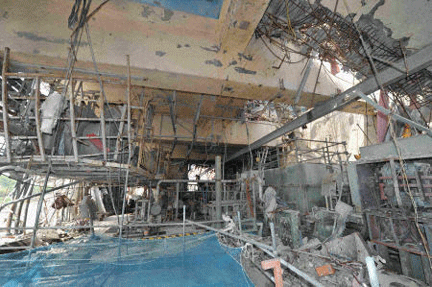
INADVERTENT CRITICALITY “There is a risk of an inadvertent criticality if the bundles are distorted and get too close to each other,” Gundersen said. He was referring to an atomic chain reaction that left unchecked could result in a large release of radiation and heat that the fuel pool cooling system isn’t designed to absorb.
“The problem with a fuel pool criticality is that you can’t stop it. There are no control rods to control it,” Gundersen said. “The spent fuel pool cooling system is designed only to remove decay heat, not heat from an ongoing nuclear reaction.”
The rods are also vulnerable to fire should they be exposed to air, Gundersen said.
The fuel assemblies are situated in a 10 metre by 12 metre concrete pool, the base of which is 18 metres above ground level. The fuel rods are covered by 7 metres of water, Nagai said.
The pool was exposed to the air after an explosion a few days after the quake and tsunami blew off the roof. The cranes and equipment normally used to extract used fuel from the reactor’s core were also destroyed. Tepco has shored up the building, which may have tilted and was bulging after the explosion, a source of global concern that has been raised in the US Congress……….
Under normal circumstances, the operation to remove all the fuel would take about 100 days. Tepco initially planned to take two years before reducing the schedule to one year in recognition of the urgency. But that may be an optimistic estimate.
“I think it’ll probably be longer than they think and they’re probably going to run into some issues,” said Murray Jennex, an associate professor at San Diego State University who is an expert on nuclear containment and worked at the San Onofre nuclear plant in California.
“I don’t know if anyone has looked into the experience of Chernobyl, building a concrete sarcophagus, but they don’t seem to last well with all that contamination.” Corrosion from the salt water will have also weakened the building and equipment, he said….. http://www.stuff.co.nz/world/asia/9041215/The-deadliest-part-of-Japans-nuclear-clean-up
PETITION: World Health Organisation called on for truth on Iraq birth defects

 Petitioning Dr Margaret Chan , Director General of World Health Organisation, by Samira Alaani Fallujah, Iraq
“………….The research is now complete and we were promised that it would be published at the beginning of 2013, yet six months later the WHO has announced more delays. We worry that this is now politics, not science. We have already waited years for the truth and my patients cannot wait any longer. The WHO has another option. The data should be published in an  open access journal for independent peer review. The process would be fast, rigorous and transparent.
My patients need to know the truth, they need to know why they miscarried, they need to know why their babies are so ill but, most importantly, they need to know that something is being done about it. The Iraqi Ministry of Health and the World Health Organisation need to release this data and give us answers.
Please sign this petition and show that the rest of the world has not forgotten about the people of Iraq……..
Delay in World Health Organisation reporting on causes of Iraq birth defects
In March 2013, BBC World broadcast a documentary on the story. As with other media reports, Born Under A Bad Sign visited the hospitals and spoke with parents and doctors – all of whom were convinced that the health problems they were witnessing were linked to the war.
Broadcast of the BBC report in March was followed by updates to the WHO’s FAQ. Gone was the petulant ‘No, absolutely not’ from the line on depleted uranium and the first of a series of procedural delays was announced as committees were formed and new analyses proposed. For campaigners seeking disclosure of the data as a first step towards focused research and humanitarian assistance in Iraq, the delays were worrying.
So how can civil society and individuals influence an organisation as monolithic and apparently compromised as the WHO? On the 31st July, Dr Al’aani launched an online petition through Change.org (with the associated twitter hashtag of #Act4Iraq) calling for the WHO to immediately publish the collected data for independent peer review, so that scientific conclusions can be drawn and the affected parents can finally understand what has happened to their children
Birth Defects: Did The Occupation of Iraq Leave a Toxic Legacy? http://www.newleftproject.org/index.php/site/article_comments/birth_defects_did_the_occupation_of_iraq_leave_a_toxic_legacy 6 Aug 13, During the occupation of Iraq, the city of Fallujah bore witness to some of the most intense US combat operations since Vietnam, with 2004’s OperationPhantom Fury widely condemned for its ferocity and disregard for international law.
Paediatrician Dr Samira Al’aani has worked in the city since 1997. In 2006 she began to notice an increase in the number of babies being born with congenital birth defects (CBD). Concerned, she began to log the cases that she saw. Through careful record keeping she has determined that at Fallujah General Hospital, 144 babies are now born with a deformity for every 1000 live births. This is nearly six times higher than the average rate in the UK between 2006 and 2010, and one strong suspicion is that contamination from the toxic constituents of munitions used by occupying forces could be the cause. (photo of Dr A;’aani by Donna Mulhearn)
Now a new nationwide study by the Iraqi Ministry of Health, in collaboration with the World Health Organisation, has the potential to catalyse efforts to understand and confront the issue, but only if science can be allowed to rise above politics. Continue reading
Fukushima’s ice wall fraught with problems, but what else can they do?
At Fukushima, those problems will be even more extreme, but the cost of doing nothing is even higher
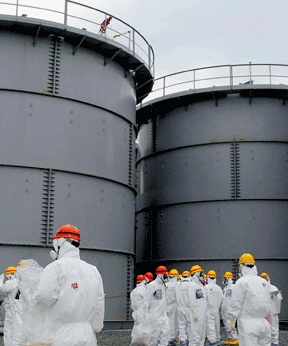 How to Build an Ice Wall Around a Leaking Nuclear Reactor Yahoo News, Alexis C. Madrigal, The Atlantic 14 Aug 13 Building cryogenic barriers sounds like the specialty of an obscure supervillain, but it’s a well-established technique in civil engineering, used regularly for tunnel boring and mining. Ground freezing was even tested as a way of containing radioactive waste in the 1990s at Oak Ridge National Laboratory and performed admirably.
at left, workers near Fukushima radioactive water storage tanks
Joe Sopko, the civil engineering firm Moretrench’s director of ground freezing, has spoken with several consultants about the details of the project, and he’s convinced it’s certainly possible. “This is not a complicated freeze job. It really isn’t,” he told me. “However, the installation, because of the radiation, is.”…….
Here’s how it works. Freeze pipes, made from normal steel, are sunk into the ground at regular intervals. The spacing is normally about one meter. Then, some type of coolant is fed into the pipes. Sopko uses a brine — salty liquid which can be cooled far below the freezing point of fresh water without turning into a solid. On the surface, a big refrigerator chills the liquid, which is pumped into the pipes. The liquid extracts heat from the ground, and returns to the chiller, where it is recooled and sent back down. It’s not a fast process and can take many months. (Sometimes, for speed’s sake an expendable refrigerant like liquid nitrogen is used, but it requires trucking in tanks full of the stuff.) Continue reading
Japan’s only 2 operating nuclear reactors to shut indefinitely
 Japan to go nuclear-free during safety checks Fox News, August 14, 2013 OKYO (AFP) – Japan will go without nuclear power for a period starting September when its only two operating reactors are shut down for mandatory safety checks, a utility company said Wednesday.
Kansai Electric Power, which runs both reactors at the Oi nuclear plant in  western Japan, said the units will go offline on September 2 and 15 respectively for an indefinite duration…… The two Oi reactors resumed operation in July last year while two other units at the same plant have remained offline for safety checks…… A vocal anti-atomic campaign, whose leading lights say the industry had an overly cosy relationship with its regulators in the decades leading up to the disaster, nudged the government into establishing a new industry watchdog.
It has set stricter standards that operators must show they can meet before they will be granted permission to re-start idle reactors. http://www.foxnews.com/world/2013/08/14/japan-to-go-nuclear-free-during-safety-checks/#ixzz2c5cMEa00
Court rules that NRC must review Yucca nuclear waste plan
 Court Keeps Yucca Mountain in Play http://online.wsj.com/article/SB10001424127887323446404579011122577985720.html WSJ, TENNILLE TRACY and KEITH JOHNSON, 13 Aug 13 WASHINGTON—A federal court on Tuesday directed the Obama administration to revive consideration of the Yucca Mountain nuclear-waste project in Nevada, breathing new life into a long-running controversy over a final resting place for the country’s roughly 70,000 metric tons of spent commercial nuclear fuel.

The ruling by the U.S. Court of Appeals for the District of Columbia Circuit said the Nuclear Regulatory Commission was “simply flouting the law” by refusing to take up a Yucca Mountain license application roughly five years after it was submitted by the Bush administration.
The Obama administration has attempted to abandon the project, in part because it wants local support for any nuclear-waste repository and Yucca Mountain faces opposition in Nevada.
The appeals court, citing a 1982 law directing the NRC to complete reviews within three years of an application, said “the president and federal agencies may not ignore statutory mandates or prohibitions merely because of policy disagreements.”
The ruling doesn’t guarantee that Yucca Mountain, about 100 miles northwest of Las Vegas, will move forward. Rather, it applies pressure on Congress to finally decide the project’s fate since it controls its funding. Continue reading
“Decommissioning” – a pretty word for taking radioactive trash
 Nuclear Laundry Outsourced for 4 years , Radiation Free Lakeland UK,By mariannewildart on January 14, 2013 “……...Shortridge tell us that they have been washing Sellafield laundry for 4 years on a contingency basis i.e. when the power is insufficient (from Fellside Gas power station) at Sellafield, the washing is outsourced. Highly Active work wear and towels go to Wales and the Non Active laundry of towels and underwear goes to Shortridge at Lillyhall. Shortridge do not have a discharge license or any means of monitoring the laundry once it reaches them, relying wholly on Sellafield to monitor and we know that they always get it right!
Shortridge are understandably angry that we have drawn attention to their contract with Sellafield and asked that the original blog post be taken off immediately. What we feel is deeper than anger, Shortridge is a business looking at the bottom line, they see themselves as “innocent bystanders.” At Lillyhall, a previously non nuclear site, Nuclear Studsvik is now recycling radioactive scrap metal, radioactive waste from Chapel Cross and elsewhere is now going into landfill and Shortridge is now washing nuclear laundry.
Government, the regulators and the nuclear ‘industry’ are actively encouraging private business to take government contracts often under the guise of “decommissioning.” The result is new pathways for accidental and routine release of radiation into the wider environment of Cumbria away from Sellafield. Why is there no contingency laundry with its own generators on the Sellafield site?
A cynic might suspect that the nuclear industry is deliberately trying to annihilate Cumbria’s reputation as an attractive and healthy tourist destination so that all we are left with is the “huge opportunity” of the worlds largest nuclear dump and new nuclear developments. Barbed wire, security wall and armed guards around the whole of Cumbria? If tourism is most at threat from the nuclear industry’s agenda then it is clear that the nuclear agenda in Cumbria is most at threat from tourism. Baroness Verma’s promised “Brand Protection” is meaningless and has the added benefit for government of being the scapegoat to detract from nuclear if the tourist industry crashes i.e. the “brand protection strategy” has failed.
The only brand protection worth having is to ensure that Sellafield is banned from contracting out pathways (whether that’s a mega nuclear dump or nuclear laundry) that allow the accidental or routine release of radioactivity to the wider environment. http://mariannewildart.wordpress.com/2013/01/14/nuclear-laundry-outsourced-for-4-years/
Public Service Board may find Vermont nuclear plant “not in the public good”
the ruling affirmed that the Public Service Board has a say in the future of the plant, based on whether the plant’s operation is in the public’s interest.
the court’s decision clearly leaves the Public Service Board with authority over the plant.
“There’s a valid basis for the Public Service Board to find it’s not in the public good to operate the plant,”
Vermont Yankee focus shifts to Public Service Board after appeal court ruling, Burlington Free Press, 14 Aug 13 Appeals court: Legislature overstepped authority  regarding Vermont Yankee All eyes are on a state Public Service Board decision expected later this year after a federal appeals court rejected the Legislature’s efforts to shut down the Vermont Yankee nuclear power plant.
Although the state tried to argue otherwise, the court ruled Wednesday that legislators were overwhelmingly concerned with nuclear safety as they sought to close the Vernon plant when its license expired in 2012. States have no authority over nuclear safety, which is regulated by the federal government.
“We conclude that Vermont lawmakers have undertaken a sustained effort to shut down Vermont Yankee based on this impermissible reason,” a three-judge panel of the 2nd U.S. Circuit Court of Appeals stated in its decision. “We have considered the legislative history … and found that it contains innumerable expressions of concern for radiological safety from Vermont legislators and regulators.”
The 53-page ruling, which affirmed a 2012 decision from Judge J. Garvan Murtha at U.S. District Court in Brattleboro, dealt another blow to the state’s effort to have a say in the fate of Vermont Yankee……. Continue reading
Court rules against Vermont State’s attempt to close nuclear plant
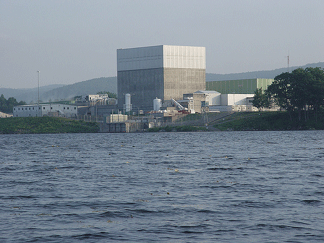 Court: Vt. Can’t Use Law to Close Nuclear Plant abc news, MONTPELIER, Vt. August 14, 2013 (AP)By DAVE GRAM Associated Press Vermont’s attempts to close its lone nuclear power plant were deceptive and misleading, a federal appeals court ruled Wednesday in largely upholding a lower-court ruling against the state.
State legislators passed laws in 2005, 2006 and 2008 making it harder for the Vermont Yankee plant to win permission to operate for another 20 years. They were concerned about the plant’s safety but tried to hide that because they were aware that nuclear safety is the sole province of the U.S. government under federal law, a three-judge panel of the 2nd U.S. Circuit Court of Appeals wrote.
There was “obvious coaching of Vermont legislators to avoid explicit statements about nuclear safety,” the court wrote.
A state board is expected to rule this year on whether allow the plant to continue operating, but the laws passed last decade injected the Legislature into the state’s decision-making process. They require that lawmakers vote to approve the plant’s continued operation.
Plant owner New Orleans-based Entergy Corp. has argued in court that the state has no say over whether to keep the plant open and points to the federal Nuclear Regulatory Commission’s decision to extend the plant’s license to operate in 2011…….
Vermont Attorney General William Sorrell called the ruling disappointing. He said the state could ask the full appeals court to reconsider the three-judge panel’s decision, or, more likely, appeal the decision directly to the U.S. Supreme Court.
Sandra Levine of the Conservation Law Foundation, one of several New England-based groups seeking the plant’s closure, called the decision “a disappointing failure to allow Vermont a stronger say in regulating this tired old plant on the banks of the Connecticut River.” http://abcnews.go.com/US/wireStory/court-vt-law-close-nuclear-plant-19957625
Petition to NRC – Pilgrim Nuclear plant can’t afford safety costs
 “In recent months, an escalating number of equipment failures, especially related to Fitzpatrick’s condenser have made the plant unreliable and have unduly put the public at risk,” Jessica Azulay, of the Alliance for a Green Economy, said. “We believe the dire financial situation at Fitzpatrick is an underlying cause.
PILGRIM STATION: Can Entergy afford Pilgrim Petition says ‘no’By Frank Mand Wicked Local Plymouth
Aug 14, 2013 PLYMOUTH —
The Nuclear Regulatory Commission has accepted for review a petition alleging that Pilgrim-owner Entergy no longer meets the NRC’s minimum financial standards for safely operating nuclear power plants.
The petition groups Pilgrim with two other Entergy-owned plants, Vermont Yankee and the James A. Fitzpatrick facility in upstate New York.
The four petitioners – Citizens Awareness Network, Alliance for a Green Economy, Vermont Citizens Awareness Network and Duxbury-based Pilgrim Watch – were denied their request for an immediate shutdown of the reactors, but the NRC is allowing their petition to move to the next step in the review process. Continue reading
Clean wind power to help boost dirty nuclear weapons in USA
Nuclear Wind The government’s largest wind farm is to be used to generate electricity for atomic bombs. TIME By Mark Thompson @MarkThompson_DCAug. 14, 2013 The Obama Administration is building the nation’s biggest wind farm to generate electricity to help…assemble the nation’s nuclear arsenal.
It’s boasting of the great environmental stewardship the project represents – breezes for bombs? — and has contracted with Siemens USA, the American subsidiary of a German company, for the wind turbines at the heart of the operation.
The government broke ground Tuesday for the Pantex Renewable Energy Project. When finished next summer, it will include five 2.3 megawatt wind turbines on 1,500 acres of government-owned property east of the Pantex plant in the Texas panhandle…….
The wind farm “will be funded by the energy savings guaranteed by Siemens,” Pantex says – an estimated $50 million over 18 years.
Read more: http://swampland.time.com/2013/08/14/nuclear-wind/#ixzz2c5WBzzzc
Unfortunate halt in USA-Russia moves to limit nuclear warheads
The End of a Nuclear Era NYT, By JAMES E. GOODBY August 14, 2013 PALO ALTO, California — President Barack Obama’s cancellation of his planned meeting next month with President Vladimir Putin was followed by a statement at his Aug. 9 press conference regarding a “pause” to “reassess where it is that Russia is going.”
The president had hoped that before his term ended U.S. and Russian nuclear weapons could be limited to ceilings of about 1,000 warheads for each country. That was going to be hard to do even without a pause, given disputes over U.S. ballistic-missile defense programs and Russian short-range nuclear weapons. Now the odds are against any U.S.-Russian treaty calling for deeper reductions than those already achieved in the 2011 New Start treaty during the remaining years of the Obama administration.
It is a lost opportunity, but does it matter? Mutual assured destruction, the essence of U.S. deterrence policy during the Cold War, remains a condition of life in the 21st century. It will remain so for as long as thousands of nuclear weapons continue to exist. Ninety percent of those nuclear warheads are held by the United States and Russia. So, yes, that lost opportunity makes a difference…… http://www.nytimes.com/2013/08/15/opinion/global/the-end-of-a-nuclear-era.html
Questions raised on safety of U.S. nuclear missile force,
Another nuclear stumble by Air Force raises doubts Boston.com, 14 Aug 13WASHINGTON (AP) — Another embarrassing stumble by the U.S. nuclear missile force, this time a safety and security inspection failure, is raising questions about the Air Force’s management of arguably the military’s most sensitive mission.
The head of nuclear air forces, Lt. Gen. James M. Kowalski, revealed to The Associated Press on Tuesday that the 341st Missile Wing at Malmstrom Air Force Base, Mont., had failed what the military calls a ‘‘surety’’ inspection — a formal check on the unit’s adherence to rules ensuring the safety, security and control of its nuclear weapons.
The 341st is one of three units that operate the Air Force’s 450 Minuteman 3 intercontinental ballistic missiles, or ICBMs……. http://www.boston.com/news/nation/washington/2013/08/14/another-nuclear-stumble-air-force-raises-doubts/rDGNmeaq4Li2VB7xfIkBwK/story.html
1 This Month
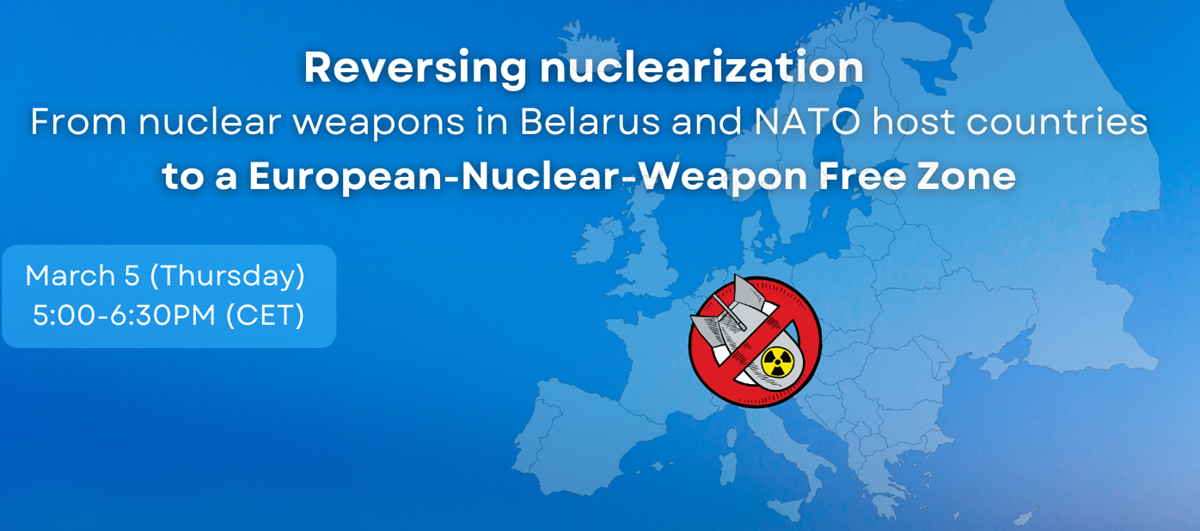
5 March -Online – Reversing nuclearization:
From nuclear weapons in Belarus and NATO host countries to a European-Nuclear-Weapon Free Zone
11am-12:30pm Eastern Time USA / 5pm-6:30pm CET

of the week – Advocating for a
nuclear free beach – https://www.samuellawrencefoundation.org/
The Samuel Lawrence Foundation advocates for a Nuclear Waste Free Beach at San Onofre, join us and take action!

10 March A LIVE WEBINAR THE REAL EFFECTS OF NUCLEAR POWER
What the Industry Isn’t Telling Us
1:00 PM Mountain, 2 pm Central, 3 pm Eastern. Live on the Keepers of the Water Facebook page

18 March Webinar @ 1 PM EST: An Assessment of SMR Projects: The Case of Canada
register for the zoom:
https://us02web.zoom.us/webinar/register/WN_o8BIIOUvQ2ONJR1nta65DQ#/registration

of the week – STOP SMALL MODULAR REACTORS IN CANADA
To see nuclear-related stories in greater depth and intensity – go to https://nuclearinformation.wordpress.com
-
Archives
- March 2026 (38)
- February 2026 (268)
- January 2026 (308)
- December 2025 (358)
- November 2025 (359)
- October 2025 (376)
- September 2025 (258)
- August 2025 (319)
- July 2025 (230)
- June 2025 (348)
- May 2025 (261)
- April 2025 (305)
-
Categories
- 1
- 1 NUCLEAR ISSUES
- business and costs
- climate change
- culture and arts
- ENERGY
- environment
- health
- history
- indigenous issues
- Legal
- marketing of nuclear
- media
- opposition to nuclear
- PERSONAL STORIES
- politics
- politics international
- Religion and ethics
- safety
- secrets,lies and civil liberties
- spinbuster
- technology
- Uranium
- wastes
- weapons and war
- Women
- 2 WORLD
- ACTION
- AFRICA
- Atrocities
- AUSTRALIA
- Christina's notes
- Christina's themes
- culture and arts
- Events
- Fuk 2022
- Fuk 2023
- Fukushima 2017
- Fukushima 2018
- fukushima 2019
- Fukushima 2020
- Fukushima 2021
- general
- global warming
- Humour (God we need it)
- Nuclear
- RARE EARTHS
- Reference
- resources – print
- Resources -audiovicual
- Weekly Newsletter
- World
- World Nuclear
- YouTube
-
RSS
Entries RSS
Comments RSS
 nuclear-news