Engineers Warn Reactor Units May Topple at Fukushima update
…Well, I happen to be a geologist, specialized in soil and groundwater contamination. I am sure that the geology and geohydrology of the site are known…
Image source ;http://www.physicsforums.com/showpost.php?p=3345426&postcount=9285
And this ;
…“I have talked with some of my colleagues (geology professors) today, and some of them knew for many years/decades that the bed rock of the Fukushima Daiichi Nuke Power Plant is soft sedimentary rock. They do not know why government (both national and local/prefectural) approved for the construction of the plant on such a bad spot, and can only think of*unethical acts of polititians and the industry.*Also,*my colleagues warn that the type of bed rock, which geologists identify,*and the strength/suitability of the*bed rock, which soil/geo-engineers determine, is different, even though I would*still support that*young sedimentary rocks below the Fukushima Daiichi Nuke Plant is NOT*suitable for constructing buildings that have to endure earthquakes. ”….”
http://www.physicsforums.com/showpost.php?p=3356008&postcount=9753
Engineers Warn Reactor Units May Topple
Published on 13 Aug 2013
Published on Aug 13, 2013 by NibiruMagick2012 (please feel free to remix this or any of my or his videos). http://youtu.be/Y5mCEuYhS8Y
New Fukushima Article from ZeroHedge not discussed in this video:
The Secret GOOD NEWS from Fukushima
http://tinyurl.com/k8run6m
Agenda 21
http://tinyurl.com/yz76b9o
Latest Headlines: http://enenews.com/
MSN: Nuclear experts call for testing U.S. West Coast waters and Pacific seafood for Fukushima contamination — “I definitely recommend FDA and EPA increase their vigilance”
TV: They are turning ground into quicksand at Fukushima plant — Engineers warn reactor units may topple (VIDEO)
Tepco “deeply apologizes for mistake” — Admits ‘sprayed’ Fukushima workers actually exposed to 5 times ‘safe’ radiation limit — Radioactive dust to blame, not water spray? — Just In: Worker taken urgently to hospital in ‘bad condition’ (VIDEO)
Radiation Expert: Enormous amount of contamination flowing from Fukushima will probably imperil entire Pacific Ocean — Threatens other countries, food chain — Absolutely can reach U.S. and Canadian shores (VIDEO)
NHK Special Report on Fukushima: “We are still in an emergency… Not much time left… We can’t afford to wait” — Asahi: Fear of contaminated water overflowing from well that’s nearby trench leaking 3 billion Bq/liter into ground (VIDEO)
AP: ‘Time bomb’ in leaking Fukushima trenches — If Tepco removes extremely contaminated water as planned, it will only make more flow in since reactor buildings connect to trenches
Over 15 quadrillion becquerels of radioactive substances suspected in trench that Tepco now admits is leaking into groundwater at Fukushima
Contamination sprayed on men at Fukushima plant — Alarm sounds over radioactivity levels — Worker: They never told us Reactor 3 building was steaming, “I found out about it on TV” (VIDEO)
Tepco: Trench connected to Unit No. 2 is what’s contaminating groundwater at Fukushima — Has extremely high levels of over 3 billion Bq/liter of radioactive substances — Water is flowing in from reactor building (VIDEO)
Fukushima Workers: Another accident is inevitable — There’s always risk of another explosion, I fear that a lot (AUDIO)
Korea Times: Quarter-billion liters of Fukushima contaminated water flowed into Pacific — Japan cover-up could violate international law — Hid global issue of environmental concern?
Report: The people of Japan are responsible for poisoning of world’s food chain due to Fukushima catastrophe — They have to stand up and take action — “The buck has to stop somewhere” (VIDEO)
NBC Nightly News: Urgent situation after frightening discovery at Fukushima — Planned ice wall shows Tepco is grasping at straws and can’t stop plant leaking like a sieve — Now almost 900 straight days of contamination flowing in Pacific (VIDEO)
TV: China, Korea, Taiwan, New Zealand, and others are going to want to know just how out of control this newly revealed radiation emergency is at Fukushima (VIDEO)
“Nuclear leaks poison the Pacific” — “We’re talking about the Pacific Ocean, so it’s not just Fukushima that’s affected” — “Criticism will be worldwide” if contamination keeps flowing from plant
FDA “paying attention to the leaks” at Fukushima — “Do not worry about radioactive fish” — Will test seafood “as needed”
Tepco: We’ve known for 2 years that massive amount of water flows under Fukushima plant — Official “unable to explain” why they kept secret (VIDEO)
“Japan Gov’t in Chaos”: Completely out of control at Fukushima — Melted reactor cores contaminating Pacific with full range of radioactive material (VIDEO)
TV: Very likely some of Fukushima’s melted cores have moved into the earth — “It’s beyond containment right now” (VIDEO)
http://www.world-nuclear-news.org/RS_…
http://tinyurl.com/kf3lsnq
1 Comment »
Leave a comment
1 This Month
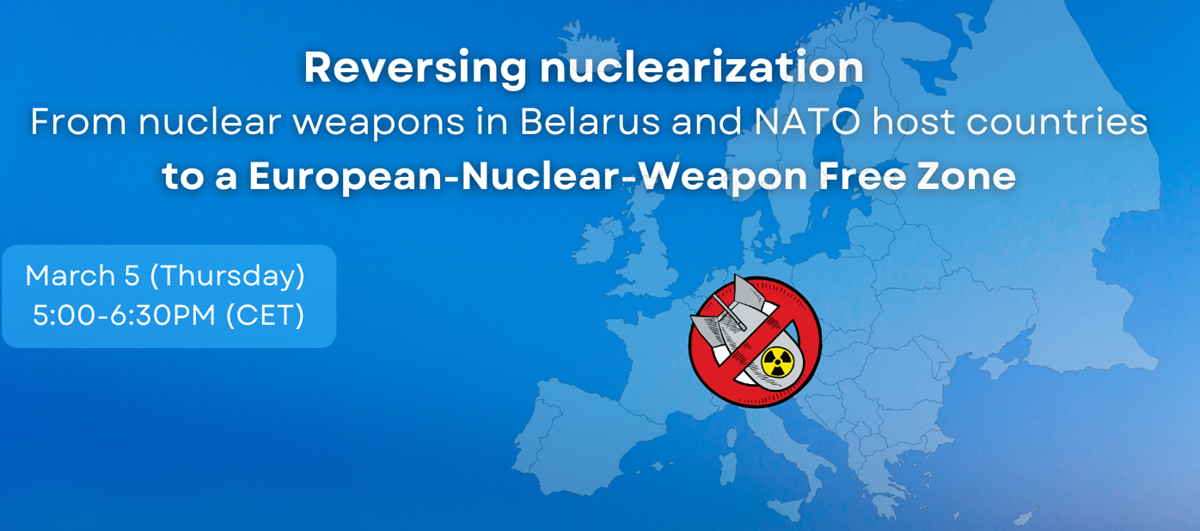
5 March -Online – Reversing nuclearization:
From nuclear weapons in Belarus and NATO host countries to a European-Nuclear-Weapon Free Zone
11am-12:30pm Eastern Time USA / 5pm-6:30pm CET

of the week – Advocating for a
nuclear free beach – https://www.samuellawrencefoundation.org/
The Samuel Lawrence Foundation advocates for a Nuclear Waste Free Beach at San Onofre, join us and take action!

10 March A LIVE WEBINAR THE REAL EFFECTS OF NUCLEAR POWER
What the Industry Isn’t Telling Us
1:00 PM Mountain, 2 pm Central, 3 pm Eastern. Live on the Keepers of the Water Facebook page

18 March Webinar @ 1 PM EST: An Assessment of SMR Projects: The Case of Canada
register for the zoom:
https://us02web.zoom.us/webinar/register/WN_o8BIIOUvQ2ONJR1nta65DQ#/registration

of the week – STOP SMALL MODULAR REACTORS IN CANADA
To see nuclear-related stories in greater depth and intensity – go to https://nuclearinformation.wordpress.com
-
Archives
- March 2026 (38)
- February 2026 (268)
- January 2026 (308)
- December 2025 (358)
- November 2025 (359)
- October 2025 (376)
- September 2025 (258)
- August 2025 (319)
- July 2025 (230)
- June 2025 (348)
- May 2025 (261)
- April 2025 (305)
-
Categories
- 1
- 1 NUCLEAR ISSUES
- business and costs
- climate change
- culture and arts
- ENERGY
- environment
- health
- history
- indigenous issues
- Legal
- marketing of nuclear
- media
- opposition to nuclear
- PERSONAL STORIES
- politics
- politics international
- Religion and ethics
- safety
- secrets,lies and civil liberties
- spinbuster
- technology
- Uranium
- wastes
- weapons and war
- Women
- 2 WORLD
- ACTION
- AFRICA
- Atrocities
- AUSTRALIA
- Christina's notes
- Christina's themes
- culture and arts
- Events
- Fuk 2022
- Fuk 2023
- Fukushima 2017
- Fukushima 2018
- fukushima 2019
- Fukushima 2020
- Fukushima 2021
- general
- global warming
- Humour (God we need it)
- Nuclear
- RARE EARTHS
- Reference
- resources – print
- Resources -audiovicual
- Weekly Newsletter
- World
- World Nuclear
- YouTube
-
RSS
Entries RSS
Comments RSS
 nuclear-news
About the geology of the Fukushima area, I was able to consult a Japanese specialist, a professor of geology at a leading Japanese university, who provided lengthy and detailed explanations. Because he has been misquoted in the press recently he is reluctant to be identified publicly here, but has agreed to let me quote him anonymously. I’ve encouraged him to sign up and participate here, and maybe he will at some point. I asked him specifically about the solidity of the rock on which Fukushima Daiichi sits, and about the groundwater system in the area and implications for the spread of contamination by that route. His replies (excerpted, and even then it’s pretty long):
“As for your question, there are limited number of info available, and the lack of info is more severe for English-language versions. Nuclear Plants are usually built on a stable rock, and granite is an ideal one: they are not only strong, but also deep-seated. I believe most of the nuclear plants in Japan are built on granite, and if it is not available, on other hard rock such as metamorphic rocks, but not for soft rocks such as sedimentary rock (or soft sediments) which would be suicidal*in terms of nuclear safety. Fukushima`s bed rock is a hard-rock complex called Abukuma Massif, and is made of granite and metamorphic rocks (= former sedimentary rocks which*was then*hardened by high pressure and temperature in the underground). So people thought the region is relatively safer in terms of bed rocks and fault systems. But after the 3-11 earthquake, many “inactive” fault systems moved, causing some problems such as landslides or forming sink holes. Some of these faults CUT through these hard rocks, which people, including many geologists, thought quite unusual (if not impossible) utill they saw the consequence of the 3-11 Earthquake in Tohoku. Even in the areas of hard bed-rocks, it might be covered by a veneer of soft sediments or soft rocks, and if the reactor is built in such areas, the degree of tremor due to earthquake will increase. Unfortunately in the case of Fukushima Daiichi Plant, there are thick sedimentary rocks of the Quaternary (Pliocene) age called*the Taga Group covers the Abukuma Massif (hard bed rock in depth here), and there are a few active faults around*the plant*(they have been recently*found to be active after the 3-11 Earthquake).*”
[snip]
“As for Fukushima`s geology, *yes, it has been long known that around the Fukushima Daiichi Plant is sedimentary rock Taga Group; around the plant this rock is called the Tomioka Formation, whch is made of coarse sandstone (or Grit) and tuffaceous siltstone. It`s pity that*no*geologists*(as*far as I know)*have warned the vulnebility of the Fukushima Daiichi Plant in terms of geology, as it won’t take a rocket science (but so simple and clear) to check this out. But instead, I think most of us trusted info provided by Tepco, such as videos in*nuclear safety which states that “this region*of Fukushima Daiichi Plant have never experienced major earthquake or tsunami over the past 400 years”. *
As for the groundwater-flow information, I don`t know. I checked several website, but I could not find one, including the one in Japanese. As the bedrock of the area is made of coarse sandstone, the rock is highly permeable and has plenty of waters flowing in the underground of the plain (but in a very very*slow speed) around the*nuke plant. The source (catchment of rain) is the nearby Abukuma mountains, and the groundwater of this nature will spend hundred or more years to flow from the mountains to the coastline. But I do not have data to prove this – I am just stating a general rule.”
[snip]
“I have talked with some of my colleagues (geology professors) today, and some of them knew for many years/decades that the bed rock of the Fukushima Daiichi Nuke Power Plant is soft sedimentary rock. They do not know why government (both national and local/prefectural) approved for the construction of the plant on such a bad spot, and can only think of*unethical acts of polititians and the industry.*Also,*my colleagues warn that the type of bed rock, which geologists identify,*and the strength/suitability of the*bed rock, which soil/geo-engineers determine, is different, even though I would*still support that*young sedimentary rocks below the Fukushima Daiichi Nuke Plant is NOT*suitable for constructing buildings that have to endure earthquakes. ”
[snip]
“One of my colleagues told me that ground water research have been usually done by local/prefectural municipal office(s), consulting firms, and AIST in Tsukuba, especially when the geothermal gradient of the region is high – as it might be leading to the discovery and development of onsen and other hot spa resort. Unfortunately Fukushima does not have such areas along the coast (but inlands such as Aizu), so he doubt that detailed measurements of groundwater have been done by these organizations (but those associated with the nuclear industry), and even if they do have such info, they might have not made it publically available (but you could try to inquire about the info to these organizations using the contact info I provided in the earlier e-mail). Just for my curiosity, I have checked the report map on the geology (or Hazard map) *of Fukushima Daiichi nuclear plant. It is in Japanese. It states/shows that the plant is away from active volcanoes and active faults (closest ones are about 8-9 km away) and supporting its safety against natural disasters. BUT THE MAP DOES NOT SHOW OR MENTION ANYTHING ABOUT THE BED-ROCK GEOLOGY OR GROUND WATER. The following is the link to this “Hazard map” issued by NUMO(Nuclear Waste Management Organization of Japan):
*
Click to access 07546.pdf
[snip]
“This is all I could answer with my knowledge (and inputs from my colleagues). I think you may be able to get info of bedrock geology and groundwater (hydrology) by contacting
(1) GSI Japan
*http://www.gsi.go.jp/ENGLISH/index.html
*
(2) Fukushima Prefecture Construction Dept
http://wwwcms.pref.fukushima.jp/pcp_…TENTS_ID=11045
(3) AIST (advanced institute of science and technology, Japan, in Tsukuba)
http://www.aist.go.jp/index_en.html
(4) other agencies/institutions re: nuclear energy and disposable sites. But I doubt that they make the info open-access.
[end quote]
*
http://www.physicsforums.com/showpost.php?p=3345426&postcount=9285