Fukushima media cover-up – PR success but public health disaster

Published on 12 Aug 2013
Recorded in 2011
Prof. Robert Jacobs gives an interview describing the situation in Japan
Coming soon – The Peoples Voice TV – Mainstream Media becoming irrelevant?
Published on 31 May 2013
Click here for more information and to donate: http://igg.me/at/davidicke
The people are stirring and the lion is preparing to roar
This is its microphone…

This entry was posted on July 17, 2013.
We have 30 days from today to raise the money that will put this TV and Radio station on air within months to expose the information across multiple subjects that the mainstream media will not cover and to give a voice to the currently voiceless all over the world.
Let us put aside that which divides us and come together as One Global Human Voice – The People’s Voice.
ENOUGH – we are not taking this shit anymore!
The people can have a voice that brings us together and bypasses mainstream censorship all over the world – but we need your help to make this happen within months.
Click here for more information and to donate: http://igg.me/at/davidicke
South Africa – Kelvin Kemm’s “Pro-Nuke Puff” and the Africans reaction
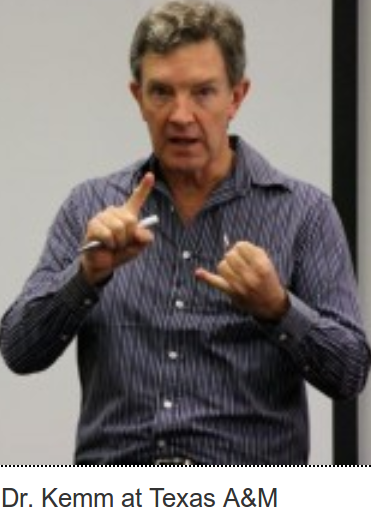
It is difficult to know where to begin to point out the many examples of misinformation, skewed information and pro-nuclear spin in “Nuclear power is a big opportunity for SA business” (Business Report, August 7).
The Energy Intensive User Group, the biggest industrial users of electricity in our country, is not in favour of nuclear power. The industry is clear on the open-ended upside potential of the cost of nuclear power, as Steve Kidd, the director of Strategy and Research from the World Nuclear Association, said in 2008: “What is clear is that it is completely impossible to produce definitive estimates for new nuclear costs at this time.”
Areva, one of the hopeful bidders for our proposed “nuclear fleet”, confirms that a high level of localisation is highly unlikely in South Africa.
On April 18, wind and solar produced a record amount of electricity in Germany, more than that of 30 nuclear plants.
Kelvin Kemm, a nuclear physicist and the chief executive of Nuclear Africa, proceeds to misquote civil society opposed to more nuclear power – our position is that the proposed fleet would run to more than R1 trillion (not billion). Our source is the Department of Trade and Industry’s Industrial Policy Action Plan of February 2010.
Add to this plans to build and license three radioactive waste metal smelters that will release radioactive metal into our markets (leading to product recalls, as happened in the US and the UK this year from contaminated metal) and possible enrichment plants, we are talking a large number.
Failure to mention the releases of radiation from Chernobyl (which Russian scientists confirm will lead to nearly a million deaths) and the ongoing releases from Fukushima is disingenuous.
One would think the final nail in the nuclear coffin would be the peer-reviewed study, The End of Cheap Uranium (Michael Dittmar, Institute of Particle Physics, Switzerland – published in Science of the Total Environment) which confirms that uranium mining and production will not be sufficient to fuel existing and planned nuclear power plants during the next 10 to 20 years.
They state: “We thus suggest that a worldwide nuclear energy phase-out is in order.” We heartily concur.
Muna Lakhani
Earthlife Africa Cape Town
Harmless solar park is a far better option
Kelvin Kemm’s inflated puff for nuclear power states: “Some years ago the government declared its intention was to double its electricity-generating capacity by 2035.”
On September 25, 2007, then director-general of the Department of Public Enterprises, Portia Molefe, stated that a higher gross domestic product (GDP) growth had been “assumed” to provide a projected electricity growth revision from 2.3 percent a year to 4 percent, in order to “align with AsgiSA’s 6 percent GDP growth target”.
This over-optimistic sentiment was echoed by Kannan Lakmeeharan, then Eskom’s managing director of system operations and planning, and a crucial architect of the Integrated Resource Plan 2. Eskom’s chief executive, Brian Dames, stated on August 25, 2011, that electricity demand growth over the preceding period was about 1.4 percent year on year, below Eskom’s 2 percent growth forecast for the full year, while Business Report, reported on July 6, 2012 that peak demand of 34 105 megawatts was forecast, or 256 MW below the stated figure for 2007.
There had been no growth in electricity demand over the period 2007 to 2011 thanks to non-existent economic growth, electricity price hikes, and a natural drive for conservation and energy efficiency.
Kemm claims that “half the electrical power to the Western Cape comes from Koeberg nuclear power station”. If this were true, then the many and frequently lengthy shutdowns from the ageing power station would long ago have crippled the province.
Taiwan Says Nuclear Water Still Leaking from 2 spent fuel pools
12-Aug-2013 Intellasia | Bloomberg

Taiwanese authorities said a water leak that began 3 1/2 years ago inside a state-owned atomic power plant is yet to be halted, as lawmakers debate whether to put the island’s nuclear future to an island-wide vote.
About 19.8 litres (5.2 gallons) has been collected from two leaking used-fuel pools inside Taiwan Power Co.’s No. 1 plant in the period, according to a report from the state oversight body, the Control Yuan. The Ministry of Economic Affairs was faulted for failing to properly supervise the utility, the report shows.
Image ; A reactor is seen at Taiwan Power Co.’s No. 2 nuclear power plant in Wanli, Taipei county, in 2010. Photographer: Maurice Tsai/Bloomberg
Opposition lawmakers brawled in the legislature on August 2 to stave off an island-wide referendum on a fourth nuclear plant under construction 40 kilometers (25 miles) east of Taipei and estimated to cost almost $9 billion. President Ma Ying-jeou has pledged to abandon atomic energy as soon as economically and environmentally viable alternatives are found.
“The water collected was condensate from vapor during and after maintenance,” said Tsaiji Wu, general manager at Taiwan Power’s No. 1 plant. “It is contained in the plant and poses no danger to the environment or health of the staff.”
Taiwan Power, which first disclosed the leaks in 2011, is working to strengthen the sealing on the pools, Wu said. The Economic Affairs Ministry didn’t reply to phone and e-mail requests for comment.
“The amount of water leaked seems to have increased over the years,” according to the August 7 Control Yuan report, which also said Taiwan Power had given inconsistent explanations. It called for the government’s atomic-energy regulator to determine the cause to stop the leak.
Nuclear energy accounts for a fifth of power supply on Taiwan, where coal, gas and natural gas are also used to generate electricity. Operating licenses for the No. 1 plant’s two units expire in 2018 and 2019, according to the Atomic Energy Council.
New well near Fukushima has radioactive tritium
 Toxic water detected in newly built well at Fukushima nuclear plant, Japan Times, 11 Aug 13 KYODO Tokyo Electric Power Co. said Sunday it has detected radioactive tritium in groundwater collected from a newly built observation well by the sea at the crippled Fukushima No. 1 nuclear power plant.
The groundwater sample collected Saturday from the well contained 34,000 becquerels of tritium per liter, up from 23,000 becquerels detected in a sample collected Thursday, a day after the well was installed some 4 meters away from the sea, the plant operator said.
The observation well was set up Wednesday about 4 meters north of the water intake for the No. 1 reactor.
Radioactive water is increasing at the Fukushima complex daily because groundwater is contaminated as it passes through the plant’s premises, where three reactors experienced meltdowns following the March 2011 earthquake and tsunami disaster.
The utility suspects that groundwater has been contaminated at an underground trench by the sea that is connected to the No. 2 reactor building. The newly built well is located some 160 meters north of the trench…… http://www.japantimes.co.jp/news/2013/08/11/national/toxic-water-detected-in-newly-built-well-at-fukushima-nuclear-plant/#.UgkymNJwo6I
Water poisoned by uranium mining, atomic tests, nuclear energy
VIDEO: South Dakota: ‘Hot Water’ exposes uranium mining contamination in water http://bsnorrell.blogspot.com.au/2013/08/south-dakota-hot-water-exposes-uranium.html Filmmakers Liz Rogers and Kevin Flint go to South Dakota following a story about Uranium contamination only to discover that the problem flows much farther, and runs deeper than they could have imagined. Three years and thousands of miles later, “Hot Water” tells of those impacted by Uranium mining, atomic testing, nuclear energy and the contamination that runs through our air, soil and even more dramatically, our water.
HOT WATER
Dutch translation by Alice Holemans, NAIS Gazette, thank you!
http://www.bloggen.be/natam/archief.php?ID=2291511
Entergy’s finances being probed by Nuclear Regulatory Commission
 NRC to probe Entergy’s nuclear plant finances Rutland Herald, By Susan Smallheer
Deb Katz, executive director of the Citizens Awareness Network, said Saturday that the NRC accepting the petition for review was a major accomplishment for the groups. She said she hoped the NRC would get answers to many people’s questions about Entergy’s financial status.
Katz made her remarks during the “Flotilla 2013” rally and protest Saturday on the banks of the Connecticut River, directly across from the Vermont Yankee plant in Vernon, Vt. Entergy, the corporate parent of Vermont Yankee, announced last month it was laying off 800 employees out of its workforce of 15,000 nationwide. The cuts translate to a 4.6 percent staff cut at Yankee, which will lose 30 employees out of a total of 650.
Earlier in the year, the company announced it had been forced to write down the value of Vermont Yankee from $517 million to $162 million due to ongoing financial problems.
The NRC announced late last week that it was accepting the petition and would delve into Entergy’s finances. Continue reading
Massachusetts town saves money while leading on renewable energy
 A Town Saves Money with Renewable Energy Engineering.com, Tom Lombardo posted on August 11, 2013 Scituate is the first town in Massachusetts to power all of its government services using only renewable energy. All municipal services – including water, sewer, municipal buildings, and streetlights – will soon be powered by the sun and the wind. The town expects to save over $400,000 per year in electricity costs and the best part is that they didn’t have to buy the solar panels or wind turbine.
Too good to be true? Here’s the deal. Private investors purchased and installed the equipment on municipal land, so those companies paid for and own the equipment. In exchange, the town agreed to purchase its electrical power from the owners at a rate that’s about 40% lower than what they’d be paying the utility. These agreements are becoming more common in the residential market, as consumers want to lower their electricity costs but can’t afford a large initial investment. This is the first time I’ve heard of a municipality doing it.
 First, Use Less Energy

The first step in saving money on energy is not to generate your own, but to use less. Once you make yourself more efficient, then you consider ways to generate power. Several years ago the town of Scituate formed a committee to investigate clean energy. They sent out requests for proposals (RFPs) on energy efficiency and renewable energy production. After an electric load analysis, they found ways to use less electricity by replacing lighting fixtures, transformers, and other electrical equipment with more efficient models. A heating/cooling energy audit determined that they could also save energy through improvements in insulation, replacing oil-burning furnaces with gas-burning furnaces, etc. They invested almost $6M to upgrade this equipment based on the promise of energy savings over the next eighteen years.
 Next, Generate Energy

After improving their efficiency, they hired a consulting firm to do a wind site analysis. In addition to taking wind measurements at various locations over a 12-month period, they also considered logistical factors such as proximity to transmission lines. In spring of 2012, a 1.5 megawatt wind turbine was installed. Over its first year, the turbine generated 3.2 million kWh. At an electric rate of $0.143/kWh – the utility rate in that area – that’s almost half a million dollars worth of energy that the town received; they paid less than $300k for that energy. ……..
Use the Grid for “Virtual Storage”
Through a net-metering agreement with the utility, any excess energy that the town generates is sold to the grid at retail rates. When demand exceeds generating capacity, they buy power from the grid. In effect, the grid is acting as a free storage medium for excess energy…….
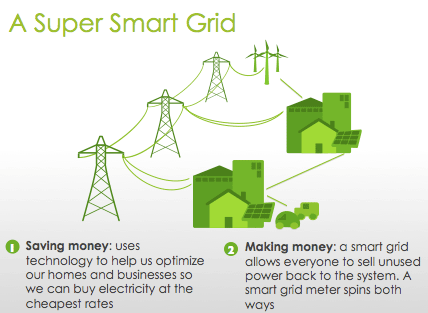
Reduce Government Spending and Boost Business
Disregarding the optional purchases to improve energy efficiency, the town of Scituate reduced its electric rate by 40% with virtually no investment on its part. In addition, the projects created jobs, gave a boost to a burgeoning industry, and produced science/technology/engineering/math (STEM) lessons for schools. Will other municipalities follow suit? I hope so. http://www.engineering.com/ElectronicsDesign/ElectronicsDesignArticles/ArticleID/6125/A-Town-Saves-Money-with-Renewable-Energy.aspx
August 19: Michigan’s state Rep. Sarah Roberts to speak on nuclear waste site plan
U.S. officials urging debate of Canadian nuclear waste site (includes video) http://www.macombdaily.com/article/20130810/NEWS01/130819996/u-s-officials-urging-debate-of-canadian-nuclear-waste-site By GINA JOSEPH gina.joseph@macombdaily.com; @ginaljoseph
While Michigan residents enjoy the benefits of the surrounding Great Lakes, Ontario waterfront residents ponder the idea of becoming the final resting spot for Canada’s nuclear waste, and it has local legislators and environmentalists concerned.
Ontario Power Generation wants the Canadian federal government to approve its plan to bury low and intermediate level radioactive nuclear waste under the Bruce Nuclear Power Plant, on the shore of Lake Huron in the municipality of Kincardine.
Kincardine is less than 3 hours from the Blue Water Bridge in Port Huron and north of Grand Bend, Ont.
 She will also co-host a public forum on the proposal on Monday, Aug. 19, at Wayne State University in Detroit. “This site is dangerously risky to the public’s health and the quality of our water. I just don’t understand their logic,” said Roberts, who in the past worked for the environmental group Clean Water Action.
Cheryl Grace, a member of the Ontario citizens’ group Save Our Saugeen Shores, said money is complicating the issue. By agreeing to be the host community for the deep geologic repository (DGR), Kincardine and nearby towns receive payments every year, including Grace’s community of Saugeen Shores.
Heat pollution of Connecticut River from Vermont Yankee Nuclear Power Plant

 NRC to probe Entergy’s nuclear plant finances Rutland Herald, By Susan Smallheer Staff Writer | August 11,2013 HINSDALE, N.H. ”……….Saturday’s protest was designed to bring public attention to the fact that Vermont Yankee daily dumps 200 million gallons of “hot” water into the Connecticut River to save money by not running its cooling towers.
Dr. Andrew Larkin, a retired internist from Northampton, Mass., said the Connecticut River was 10 degrees warmer near the plant’s discharge than other spots in the river he tested.
“The heated water coming from the reactor confused us, but still we persisted,” Schakman said, adding that only one in 10 shad get past all the dams on the Connecticut River, “only to be cooked by the reactor.” “We have lost so many, now we are down to a few, but still we persist,” he said.
This is the second year that the SAGE Alliance, a coalition of antinuclear groups, has organized the flotilla to focus public attention on the water discharge. About two dozen kayaks and canoes took to the water, with an equal number of people on shore to protest the daily discharge of warm water. Some people wrote messages to Entergy on cedar shingles and set them floating on the river.
“No nuclear accidents. All it takes is one,” wrote Elo-Mai Noormets of Westminster, Vt.
“Peace and health to this river,” wrote Leslie Sullivan Sachs of Brattleboro, Vt. http://rutlandherald.com/article/20130811/THISJUSTIN/708119973
Escalating costs at Nuclear Plant Vogtle as Public Service Commission dilly dallies
 State defers showdown on Ga. nuclear plant costs News Tribune, : August 11, 2013 By RAY HENRY — Associated Press ATLANTA — A debate over the rising cost of building a first-of-its-kind nuclear plant in Georgia will be pushed far into the future.
Regulators at the Public Service Commission were facing a legal dilemma ever since Southern Co. subsidiary Georgia Power asked in February to raise its construction budget for building two more nuclear reactors at Plant Vogtle by $737 million to $6.85 billion. That request raised expectations that PSC staffers would seek this month to block the utility from passing along some of its costs to customers, but that didn’t happen. Instead, Southern Co. and Georgia utility officials recently reached a preliminary deal that would postpone a major budget debate until at least January 2018, when the first reactor is projected to come online.
A glimmer of the state’s strategy emerged Friday in a report filed by nuclear engineer William Jacobs Jr. and PSC analyst Steven Roetger. Their report lays out the reasons why regulators could try to force the utility to absorb losses because of construction mishaps, but it stops short of recommending that regulators reject any spending now…….
Former Commissioner Robert Baker, who has represented a consumer watchdog group critical of the utility’s spending, said regulators should object to spending now, not wait years into the future. Baker said he believes the preliminary agreement might delay a major review until 2020.
“The new commission in 2020 that looks at this is not going to have the institutional memory, have gone through the entire process up to that time,” he said. “They’re not going to want to second guess what happened seven years ago or eight years ago.” http://www.thenewstribune.com/2013/08/11/2725340/state-defers-showdown-on-ga-nuclear.html
Cost and safety impediments to Small Modular Nuclear Reactors (SMRs)
 Think Too Much: Is this the time to rethink nuclear power? By Mike McInally, Albany Democrat-Herald NuScale, the Corvallis company that’s trying to develop smaller, modular nuclear reactors, got caught in a national crossfire last week.
It’s all part of a fascinating national debate about the future of nuclear power – and, frankly, it only was a matter of time before NuScale, which is working to commercialize technology developed at Oregon State University, got drawn into the debate.
A bit of background: NuScale is one of a number of companies trying to develop these smaller reactors. NuScale says its design is safer and more cost-effective than traditional, larger nuclear reactors. The company, like others involved in developing these so-called SMRs (small, modular reactors), still faces a lengthy process to get its design licensed by the federal government.
Last week, though, a Washington think tank, the Institute for Energy and Environmental Research, launched a broadside against the entire SMR notion.
The organization, which is upfront about its anti-nuclear agenda, challenged both of the key ideas helping to propel work on the smaller reactors.
First, the institute questioned the idea that the smaller reactors would, in fact, be cheaper to build. In essence, the institute’s position is that building the reactors would require enormous government subsidies to create the necessary supply chains.
The institute also questioned the idea of whether the smaller reactors would, in fact, be safer…
1 This Month

of the week – Shut Down Drone Warfare!


Tell the Ukrainian Government to Drop Prosecution of Peace Activist Yurii Sheliazhenko

Petition to revoke the licensing of the Near Surface Nuclear Disposal Facility (NSDF) at Chalk River. https://www.ourcommons.ca/petitions/en/Petition/Details?Petition=e-7247
To see nuclear-related stories in greater depth and intensity – go to https://nuclearinformation.wordpress.com
-
Archives
- April 2026 (91)
- March 2026 (251)
- February 2026 (268)
- January 2026 (308)
- December 2025 (358)
- November 2025 (359)
- October 2025 (376)
- September 2025 (257)
- August 2025 (319)
- July 2025 (230)
- June 2025 (348)
- May 2025 (261)
-
Categories
- 1
- 1 NUCLEAR ISSUES
- business and costs
- climate change
- culture and arts
- ENERGY
- environment
- health
- history
- indigenous issues
- Legal
- marketing of nuclear
- media
- opposition to nuclear
- PERSONAL STORIES
- politics
- politics international
- Religion and ethics
- safety
- secrets,lies and civil liberties
- spinbuster
- technology
- Uranium
- wastes
- weapons and war
- Women
- 2 WORLD
- ACTION
- AFRICA
- Atrocities
- AUSTRALIA
- Christina's notes
- Christina's themes
- culture and arts
- Events
- Fuk 2022
- Fuk 2023
- Fukushima 2017
- Fukushima 2018
- fukushima 2019
- Fukushima 2020
- Fukushima 2021
- general
- global warming
- Humour (God we need it)
- Nuclear
- RARE EARTHS
- Reference
- resources – print
- Resources -audiovicual
- Weekly Newsletter
- World
- World Nuclear
- YouTube
-
RSS
Entries RSS
Comments RSS
 nuclear-news