Nuclear Test Ban Treaty ended all but underground nuclear bomb testing
History was made fifty years ago today, as the superpowers agreed to end all nuclear weapons tests in the atmosphere, water, and outer space. The treaty signed on August 5, 1963 sharply reduced the amount of dangerous nuclear fallout in the human diet, and saved thousands, perhaps millions of lives worldwide. Now we need to extend the ban to nuclear power plants to achieve the same benefits to humankind.
The test ban marked the end of a long and sometimes terrifying period of history. Just four years after the U.S. dropped the first atom bombs on Japan, the Soviet Union successfully developed its own nuclear devices, putting these unprecedented weapons of mass destruction at the core of the Cold War. The Communist goal of world domination and the determination of anti-Communists to prevent it now became entangled with a sprint to win an all-out nuclear war.
The arms race meant that the Americans and Soviets ultimately conducted 422 nuclear weapons tests that spewed nuclear isotopes into the atmosphere in an effort to stockpile staggering numbers of nuclear weapons. The eventual peak number of weapons was 26,000 for the U.S. and 37,000 for the Soviet Union. Some were hydrogen bombs, which were thousands of times more powerful than those used in Japan…………….http://www.counterpunch.org/2013/08/05/the-legacy-of-the-comprehensive-test-ban-treaty/
Bahrain to set up nuclear radiation monitoring centre
CENTRE TO MONITOR NUCLEAR RADIATION http://www.gulf-daily-news.com/NewsDetails.aspx?storyid=358742By Ahmed Al Omari , Tuesday, August 06, 2013
MANAMA: Bahrain may soon set up a nuclear radiation monitoring centre.
This comes amidst growing concerns over threats of a fallout from Iran’s disputed nuclear power plant at Bushehr, just 300km away from Bahrain, across the Gulf.
The GCC last month raised concerns about radiation leaks from the facility after a 6.3 magnitude earthquake hit Iran in April earlier this year, killing more than 60 people.
Supreme Council for Environment (SCE) director-general Dr Adel Al Zayani believes a National Centre for Radiation could be approved within a week – the National Disaster Committee is currently studying a SCE proposal in this regard.
He said the nuclear threat has become larger with neighbouring countries moving toward using atomic facilities for energy production.
Saudi Arabia has announced plans to set up 16 nuclear reactors within the next 20 years and two are already being built in the UAE.
Dr Al Zayani said the proposed centre is designed to become a resource for the field of radiation and to prevent local disasters if they occur regionally.
“The centre will give Bahrain a more dedicated and faster radiation warning and reporting system.”
The centre will also give training to Bahrainis in subjects such as nuclear physics..
SOUTH KOREA’s snowballing nuclear scandal
SOUTH KOREA’s snowballing scandal over compromised safety issues at its nuclear power plants has uncanny similarities with the beleaguered nuclear industry in Japan. By Gomati Jagadeesan
6 July 2013
Subscription only
(Not surprising that BAD nuclear news is left behind a firewall!! Though you can enter your details for more…. 🙂 arclight2011part2)
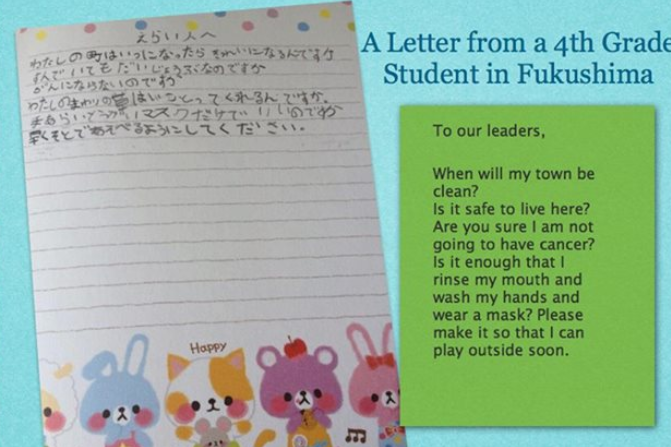
You Won’t BELIEVE What’s Going On at Fukushima Right Now

“…The fact that radioactive substances are still being released into the ground, the sea and the air is irrefutable proof that the nuclear disaster of March 2011 is not over. The responsible parties must take this situation gravely ….”
Submitted by George Washington on 08/01/2013 14:23 -0400
ZERO HEDGE
http://www.zerohedge.com/contributed/2013-08-01/fukushima-worse-you-know
You’ve heard bad news about Fukushima recently.
But it’s worse than you know.
The Wall Street Journal notes that radiation levels outside the plant are likely higher than inside the reactor:
NRA [Nuclear Regulation Authority] officials said highly contaminated water may be leaking into the soil from a number of trenches, allowing the water to seep into the site’s groundwater and eventually into the ocean.
***
Both radioactive substances are considered harmful to health. An NRA official said Monday that the very high levels were likely to be even higher than those within the reactor units themselves.
***
It was by far the highest concentration of radioactivity detected since soon after Japan’s March 2011 earthquake and tsunami ….
How could it be more radioactive outside the nuclear reactors? The reactors have lost containment, and experts have no idea where the nuclear cores are.
And the problems which have been detected at ground-level are only the tip of the iceberg. Japan Times points out:
Cesium levels in water under Fukushima No. 1 plant soar the deeper it gets, Tepco reveals
***
Tepco found 950 million becquerels of cesium and 520 million becquerels of beta ray-emitting radioactive substances, including strontium, in the water from 13 meters [~43 feet] underground.
Water from 1 meter down contained 340 million becquerels, and a sample from 7 meters down contained 350 million becquerels.
***
Cesium, a metallic element, is subject to gravity.
Yomiuri reports that highly-radioactive groundwater could start coming to the surface at the Fukushima plant:
TEPCO spokesman Noriyuki Imaizumi revealed the water level of the tainted groundwater in a test well located on the sea side of the No. 2 reactor has risen rapidly.
“If the water level continues to rise, it could reach the ground surface,” Imaizumi, an acting general manager of the company’s nuclear power-related division, said at a press conference Monday.
According to the company, the water level has risen about 70 centimeters over the past 20 days.
***
To prevent contaminated groundwater from leaking into the sea, TEPCO is working to reinforce the ground foundation of seawalls. The rising water level in the test well means the measures to prevent leakage have been working.
However, the company apparently failed to give much thought to the fact that the groundwater would have nowhere else to go ….
Even Tepco admits that the groundwater problems are due to a lack of planning. NHK points out:
[Tepco] learnt on Wednesday that its efforts to prevent radiation-tainted groundwater from seeping into the sea are failing.
***
TEPCO has been trying to solidify the embankment of the crippled power plant.
***
TEPCO says water levels in one of the contaminated wells have risen by about 1 meter since the work began in early July.
It says this is likely the result of its work to solidify the ground [to a depth of 16 meters], using chemicals.
The company says soil up to 2 meters below the ground cannot be hardened, and water may be seeping out.
In addition, a top expert says that radioactive water could be flowing beneath the seafloor … and could well up outside of the port “containment” zone:
Atsunao Marui, head of the Groundwater Research Group at the National Institute of Advanced Industrial Science and Technology, said, “Groundwater also flows beneath the seafloor, so it’s possible that contaminated groundwater could spring up outside the port.”
Marui added that water outside the port also needs to be carefully checked.
Reuters notes that the bolts in Fukushima’s tanks will corrode in just a few years, and a plant workers reveal — “Tepco says it doesn’t know how long tanks will hold”:
Experts say Tepco is attempting the most ambitious nuclear clean-up in history, even greater than the Chernobyl disaster ….
***
Radioactive water that cools the reactors …]mixes with some 400 tonnes of fresh groundwater pouring into the plant daily.
Abe pledges to seek to eliminate nuclear weapons
HIROSHIMA —
Aug. 06, 2013

Japan on Tuesday marked the 68th anniversary of the atomic bombing of Hiroshima with a somber ceremony to honor the dead and pledges to seek to eliminate nuclear weapons.
Some 50,000 people stood for a minute of silence in Hiroshima’s peace park near the epicenter of the 8:15 a.m. blast on Aug. 6, 1945, that killed up to 140,000 people. The bombing of Nagasaki three days later killed tens of thousands more, prompting Japan’s surrender to the World War II Allies.
Prime Minister Shinzo Abe said that as the sole country to face nuclear attack, Japan has the duty to seek to wipe out nuclear weapons.
The anniversary comes as Japan is torn over restarting nuclear power plants shut down since the massive earthquake and tsunami in 2011 damaged reactors at a plant in Fukushima, causing meltdowns. More than 100,000 people remain displaced because of radioactivity near the plant. Abe favors restarting plants under new safety guidelines, while many Japanese oppose such restarts.
In a “peace declaration” speech, Hiroshima’s mayor, Kazumi Matsui, chided the government for its efforts to restart the nuclear plants and to export nuclear technology to other countries.
“This summer, eastern Japan is still suffering the aftermath of the great earthquake and the nuclear accident. The desperate struggle to recover hometowns continues. The people of Hiroshima know well the ordeal of recovery,” Matsui said.
“We urge the national government to rapidly develop and implement a responsible energy policy that places top priority on safety and the livelihoods of the people,” he said.
A recent agreement on discussing nuclear energy cooperation with India, he said, would likely hinder efforts to abolish nuclear weapons.
The Allied powers have long argued that the twin attacks brought a quick end to the war by speeding up Japan’s surrender, preventing millions more casualties from a land invasion planned for later in the year.
Many atomic bomb survivors, known as “hibakusha”, oppose both military and civil use of nuclear power, pointing to the tens of thousands who were killed instantly in the Hiroshima blast and the many more who later died from radiation sickness and cancers linked to the attack.
1 This Month

of the week – Shut Down Drone Warfare!


Tell the Ukrainian Government to Drop Prosecution of Peace Activist Yurii Sheliazhenko

Petition to revoke the licensing of the Near Surface Nuclear Disposal Facility (NSDF) at Chalk River. https://www.ourcommons.ca/petitions/en/Petition/Details?Petition=e-7247
To see nuclear-related stories in greater depth and intensity – go to https://nuclearinformation.wordpress.com
-
Archives
- April 2026 (103)
- March 2026 (251)
- February 2026 (268)
- January 2026 (308)
- December 2025 (358)
- November 2025 (359)
- October 2025 (376)
- September 2025 (257)
- August 2025 (319)
- July 2025 (230)
- June 2025 (348)
- May 2025 (261)
-
Categories
- 1
- 1 NUCLEAR ISSUES
- business and costs
- climate change
- culture and arts
- ENERGY
- environment
- health
- history
- indigenous issues
- Legal
- marketing of nuclear
- media
- opposition to nuclear
- PERSONAL STORIES
- politics
- politics international
- Religion and ethics
- safety
- secrets,lies and civil liberties
- spinbuster
- technology
- Uranium
- wastes
- weapons and war
- Women
- 2 WORLD
- ACTION
- AFRICA
- Atrocities
- AUSTRALIA
- Christina's notes
- Christina's themes
- culture and arts
- Events
- Fuk 2022
- Fuk 2023
- Fukushima 2017
- Fukushima 2018
- fukushima 2019
- Fukushima 2020
- Fukushima 2021
- general
- global warming
- Humour (God we need it)
- Nuclear
- RARE EARTHS
- Reference
- resources – print
- Resources -audiovicual
- Weekly Newsletter
- World
- World Nuclear
- YouTube
-
RSS
Entries RSS
Comments RSS
 nuclear-news